which lens has the most 3D POP?
p.154 #1which lens has the most 3D POP?
Very flat light, very unexciting subject, no composition to write home about. Still pretty "3D" to me.
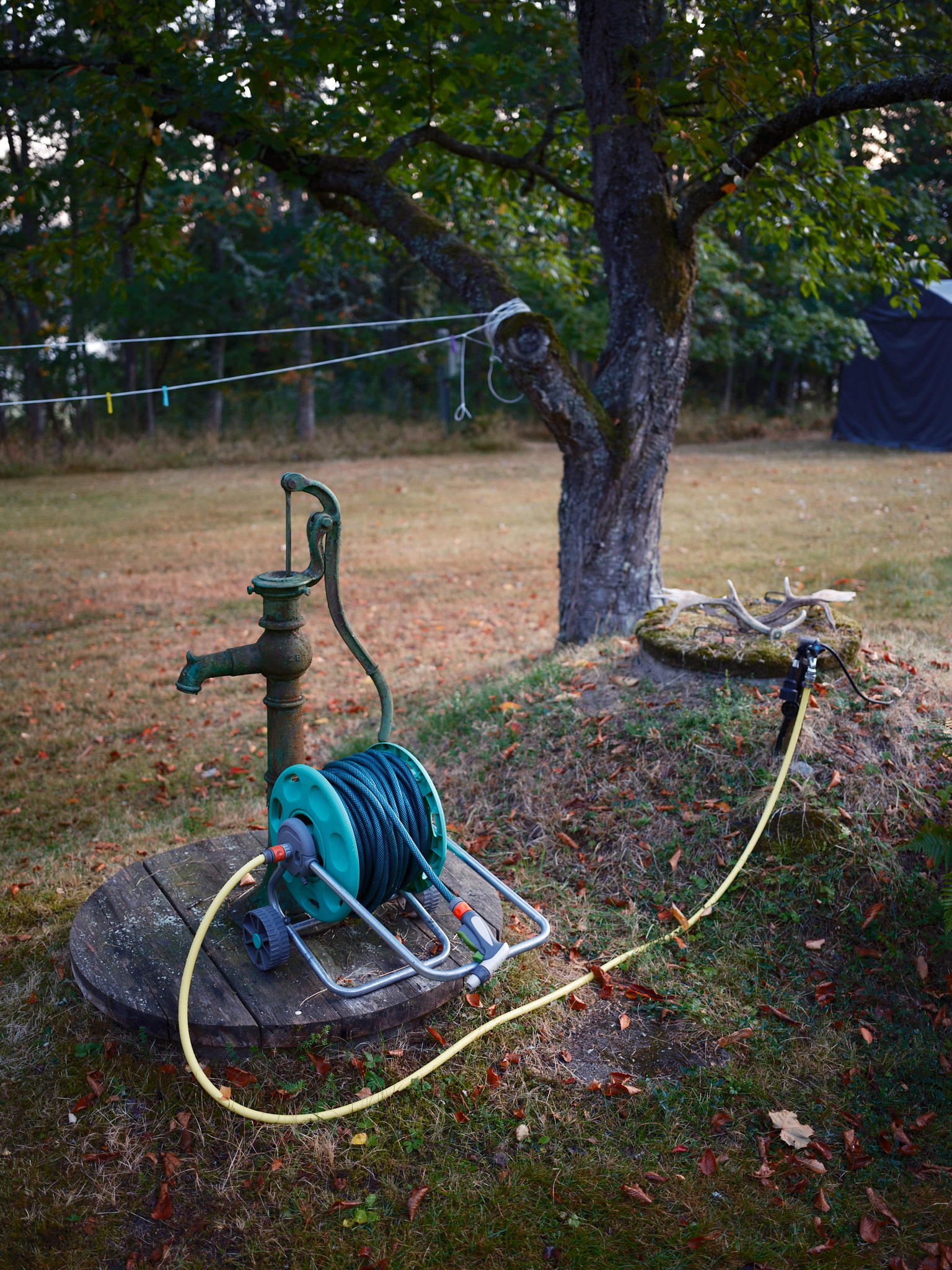
GFX50S II Fujifilm Fujinon GF45mm F2.8 R WR lens 45mm f/2.8 1/4s 1250 ISO +0.7 EV
Aug 28, 2026 at 07:27 AM
p.154 #2which lens has the most 3D POP?
Jack Flesher wrote:
Yep. Photographs are 2 dimensional in nature so any perceived dimension in a photos is implied by the elements in the frame, and you can achieve that sense of dimension in a number of ways. No absolute single way to define it, or single path to achieve it. Photographers have a tendency to be self indulgent lol but painters understood this long before the idea of a camera existed. But we're getting into theory here and definitely not what the OP intended.>>But we're getting into theory here and definitely not what the OP intended. <<
I'm not so sure... The harsh reality is while lens character has some input, it's lighting and processing that are far more important; and to the point I'd say almost any lens of reasonable quality can render 3-D pop with proper lighting, composition and processing...
My .02 anyway.
PS: Do we know if the OP is even still interested?
I cannot help wondering how a "lens input" can be seen without processing raw files?
Even in the case of minimalistic processing, when a raw file is demosaiced without further corrections, there is a curve applied on the raw data.
This curve can be different in different color profiles, and there are options and choices.
Does this part of processing count as a "correction"?
So much of the discussion on the previous pages involved considerations of "contrast" and "micro contrast."
Shall we agree that the "contrast" part is significantly due to the curve applied on the demosaiced data?
How about the Levels - this tool can have a major impact on image contrast. Is this allowed when evaluating a "lens input"?
Fundamentally, I see a technical problem of defining standard conditions and settings for comparing the "lens input" of different lenses. I confidently expect that independent processing of a raw file (with as minimal processing as possible) in Lightroom, Capture One, and DxO Photolab (or in-camera) shall give different results, with different contrast and micro contrast.
My point is that both the contrast and micro contrast in a processed image are overwhelmingly the products of processing.
The contribution of a lens is the DoF together with aberrations. The field of focus can be significantly distorted from being flat, in simple and complex (e.g., an inverted W-shape) ways. The DoF and aberrations and distortions can impact an image.
However, I doubt that "contrast" and "micro contrast," attributed to a lens, are that important, simply because these can be dramatically manipulated in post.
In general, when a 3D "pop" is reported in an image, I am inclined to think of that as 99% due to composition and processing, unless a specialty lens has been used that is known to contribute major aberrations. While exploring such lenses can be fun, I am in favour of advocating the development of compositional and raw processing skills as the more meaningful and productive mainstream way of achieving success in photography, than investing in a collection of lenses that have some "rendering."
Mystik wrote
Jack Flesher wrote
Lighting contours shape and form, and multiple source lights and modification of them can mold, enhance or soften the effects. Next focus points, DoF and the character of the focus falloff can add to or detract from the effects depending. So end of day, it’s a combination of lighting and lens characteristics that render the look. And finally how the image is processed after capture, can further enhance —or as often— destroy said effect.I'm not so sure... The harsh reality is while lens character has some input, it's lighting and processing that are far more important; and to the point I'd say almost any lens of reasonable quality can render 3-D pop with proper lighting, composition and processing...
My .02 anyway.
PS: Do we know if the OP is even still interested?
I cannot help wondering how a "lens input" can be seen without processing raw files?
Even in the case of minimalistic processing, when a raw file is demosaiced without further corrections, there is a curve applied on the raw data.
This curve can be different in different color profiles, and there are options and choices.
Does this part of processing count as a "correction"?
So much of the discussion on the previous pages involved considerations of "contrast" and "micro contrast."
Shall we agree that the "contrast" part is significantly due to the curve applied on the demosaiced data?
How about the Levels - this tool can have a major impact on image contrast. Is this allowed when evaluating a "lens input"?
Fundamentally, I see a technical problem of defining standard conditions and settings for comparing the "lens input" of different lenses. I confidently expect that independent processing of a raw file (with as minimal processing as possible) in Lightroom, Capture One, and DxO Photolab (or in-camera) shall give different results, with different contrast and micro contrast.
My point is that both the contrast and micro contrast in a processed image are overwhelmingly the products of processing.
The contribution of a lens is the DoF together with aberrations. The field of focus can be significantly distorted from being flat, in simple and complex (e.g., an inverted W-shape) ways. The DoF and aberrations and distortions can impact an image.
However, I doubt that "contrast" and "micro contrast," attributed to a lens, are that important, simply because these can be dramatically manipulated in post.
In general, when a 3D "pop" is reported in an image, I am inclined to think of that as 99% due to composition and processing, unless a specialty lens has been used that is known to contribute major aberrations. While exploring such lenses can be fun, I am in favour of advocating the development of compositional and raw processing skills as the more meaningful and productive mainstream way of achieving success in photography, than investing in a collection of lenses that have some "rendering."
Aug 28, 2026 at 08:20 AM
p.154 #3which lens has the most 3D POP?
Makten wrote:
Very flat light, very unexciting subject, no composition to write home about. Still pretty "3D" to me.
I agree.
It would be interesting to see this scene photographed with the lens closed to f/4, side-by-side with the f/2.8 image.
I am wondering whether closing the lens to f/4 might have enhanced the effect (or not).
Aug 28, 2026 at 08:24 AM
p.154 #4which lens has the most 3D POP?
ruthenium wrote:
Yep. Photographs are 2 dimensional in nature so any perceived dimension in a photos is implied by the elements in the frame, and you can achieve that sense of dimension in a number of ways. No absolute single way to define it, or single path to achieve it. Photographers have a tendency to be self indulgent lol but painters understood this long before the idea of a camera existed. But we're getting into theory here and definitely not what the OP intended.>>But we're getting into theory here and definitely not what the OP intended. <<
I'm not so sure... The harsh reality is while lens character has some input, it's lighting and processing that are far more important; and to the point I'd say almost any lens of reasonable quality can render 3-D pop with proper lighting, composition and processing...
My .02 anyway.
PS: Do we know if the OP is even still interested?I cannot help wondering how a "lens input" can be seen without processing raw files?
Even in the case of minimalistic processing, when a raw file is demosaiced without further corrections, there is a curve applied on the raw data.
This curve can be different in different color profiles, and there are options and choices.
Does this part of processing count as a "correction"?
So much of the discussion on the previous pages involved considerations of "contrast" and "micro contrast."
Shall we agree that the "contrast" part is significantly due to the curve applied on the demosaiced data?
How about the Levels - this tool can...Show more →
>> In general, when a 3D "pop" is reported in an image, I am inclined to think of that as 99% due to composition and processing,<<
Exactly my point. 👍
Jack Flesher wrote
Mystik wrote
Jack Flesher wrote
Lighting contours shape and form, and multiple source lights and modification of them can mold, enhance or soften the effects. Next focus points, DoF and the character of the focus falloff can add to or detract from the effects depending. So end of day, it’s a combination of lighting and lens characteristics that render the look. And finally how the image is processed after capture, can further enhance —or as often— destroy said effect.I'm not so sure... The harsh reality is while lens character has some input, it's lighting and processing that are far more important; and to the point I'd say almost any lens of reasonable quality can render 3-D pop with proper lighting, composition and processing...
My .02 anyway.
PS: Do we know if the OP is even still interested?
Even in the case of minimalistic processing, when a raw file is demosaiced without further corrections, there is a curve applied on the raw data.
This curve can be different in different color profiles, and there are options and choices.
Does this part of processing count as a "correction"?
So much of the discussion on the previous pages involved considerations of "contrast" and "micro contrast."
Shall we agree that the "contrast" part is significantly due to the curve applied on the demosaiced data?
How about the Levels - this tool can...Show more →
>> In general, when a 3D "pop" is reported in an image, I am inclined to think of that as 99% due to composition and processing,<<
Exactly my point. 👍
Aug 28, 2026 at 08:38 AM
p.154 #5which lens has the most 3D POP?
Jack Flesher wrote:
Yep. Photographs are 2 dimensional in nature so any perceived dimension in a photos is implied by the elements in the frame, and you can achieve that sense of dimension in a number of ways. No absolute single way to define it, or single path to achieve it. Photographers have a tendency to be self indulgent lol but painters understood this long before the idea of a camera existed. But we're getting into theory here and definitely not what the OP intended.>>But we're getting into theory here and definitely not what the OP intended. <<
I'm not so sure... The harsh reality is while lens character has some input, it's lighting and processing that are far more important; and to the point I'd say almost any lens of reasonable quality can render 3-D pop with proper lighting, composition and processing...
My .02 anyway.
PS: Do we know if the OP is even still interested?I cannot help wondering how a "lens input" can be seen without processing raw files?
Even in the case of minimalistic processing, when a raw file is demosaiced without further corrections, there is a curve applied on the raw data.
This curve can be different in different color profiles, and there are options and choices.
Does this part of processing count as a "correction"?
So much of the discussion on the previous pages involved considerations of "contrast" and "micro contrast."
Shall we agree that the "contrast" part is significantly due to the curve applied on the demosaiced data?
How about the Levels - this tool can have a major impact on image contrast. Is this allowed when evaluating a "lens input"?
Fundamentally, I see a technical problem of defining standard conditions and settings for comparing the "lens input" of different lenses. I confidently expect that independent processing of a raw file (with as minimal processing as possible) in Lightroom, Capture One, and DxO Photolab (or in-camera) shall give different results, with different contrast and micro contrast.
My point is that both the contrast and micro contrast in a processed image are overwhelmingly the products of processing.
The contribution of a lens is the DoF together with aberrations. The field of focus can be significantly distorted from being flat, in simple and complex (e.g., an inverted W-shape) ways. The DoF and aberrations and distortions can impact an image.
However, I doubt that "contrast" and "micro contrast," attributed to a lens, are that important, simply because these can be dramatically manipulated in post.
In general, when a 3D "pop" is reported in an image, I am inclined to think of that as 99% due to composition and processing, unless a specialty lens has been used that is known to contribute major aberrations. While exploring such lenses can be fun, I am in favour of advocating the development of compositional and raw processing skills as the more meaningful and productive mainstream way of achieving success in photography, than investing in a collection of lenses that have some "rendering.">> In general, when a 3D "pop" is reported in an image, I am inclined to think of that as 99% due to composition and processing,<<
Exactly my point. 👍
I'd say more like "at least 99.9%." ;-)
ruthenium wrote
Jack Flesher wrote
Mystik wrote
Jack Flesher wrote
Lighting contours shape and form, and multiple source lights and modification of them can mold, enhance or soften the effects. Next focus points, DoF and the character of the focus falloff can add to or detract from the effects depending. So end of day, it’s a combination of lighting and lens characteristics that render the look. And finally how the image is processed after capture, can further enhance —or as often— destroy said effect.I'm not so sure... The harsh reality is while lens character has some input, it's lighting and processing that are far more important; and to the point I'd say almost any lens of reasonable quality can render 3-D pop with proper lighting, composition and processing...
My .02 anyway.
PS: Do we know if the OP is even still interested?
Even in the case of minimalistic processing, when a raw file is demosaiced without further corrections, there is a curve applied on the raw data.
This curve can be different in different color profiles, and there are options and choices.
Does this part of processing count as a "correction"?
So much of the discussion on the previous pages involved considerations of "contrast" and "micro contrast."
Shall we agree that the "contrast" part is significantly due to the curve applied on the demosaiced data?
How about the Levels - this tool can have a major impact on image contrast. Is this allowed when evaluating a "lens input"?
Fundamentally, I see a technical problem of defining standard conditions and settings for comparing the "lens input" of different lenses. I confidently expect that independent processing of a raw file (with as minimal processing as possible) in Lightroom, Capture One, and DxO Photolab (or in-camera) shall give different results, with different contrast and micro contrast.
My point is that both the contrast and micro contrast in a processed image are overwhelmingly the products of processing.
The contribution of a lens is the DoF together with aberrations. The field of focus can be significantly distorted from being flat, in simple and complex (e.g., an inverted W-shape) ways. The DoF and aberrations and distortions can impact an image.
However, I doubt that "contrast" and "micro contrast," attributed to a lens, are that important, simply because these can be dramatically manipulated in post.
In general, when a 3D "pop" is reported in an image, I am inclined to think of that as 99% due to composition and processing, unless a specialty lens has been used that is known to contribute major aberrations. While exploring such lenses can be fun, I am in favour of advocating the development of compositional and raw processing skills as the more meaningful and productive mainstream way of achieving success in photography, than investing in a collection of lenses that have some "rendering."
Exactly my point. 👍
I'd say more like "at least 99.9%." ;-)
Aug 28, 2026 at 09:50 AM
p.154 #6which lens has the most 3D POP?
gdanmitchell wrote:
Jack Flesher wrote
ruthenium wrote
Jack Flesher wrote
Mystik wrote
Jack Flesher wrote
Lighting contours shape and form, and multiple source lights and modification of them can mold, enhance or soften the effects. Next focus points, DoF and the character of the focus falloff can add to or detract from the effects depending. So end of day, it’s a combination of lighting and lens characteristics that render the look. And finally how the image is processed after capture, can further enhance —or as often— destroy said effect.I'm not so sure... The harsh reality is while lens character has some input, it's lighting and processing that are far more important; and to the point I'd say almost any lens of reasonable quality can render 3-D pop with proper lighting, composition and processing...
My .02 anyway.
PS: Do we know if the OP is even still interested?
Even in the case of minimalistic processing, when a raw file is demosaiced without further corrections, there is a curve applied on the raw data.
This curve can be different in different color profiles, and there are options and choices.
Does this part of processing count as a "correction"?
So much of the discussion on the previous pages involved considerations of "contrast" and "micro contrast."
Shall we agree that the "contrast" part is significantly due to the curve applied on the demosaiced data?
How about the Levels - this tool can have a major impact on image contrast. Is this allowed when evaluating a "lens input"?
Fundamentally, I see a technical problem of defining standard conditions and settings for comparing the "lens input" of different lenses. I confidently expect that independent processing of a raw file (with as minimal processing as possible) in Lightroom, Capture One, and DxO Photolab (or in-camera) shall give different results, with different contrast and micro contrast.
My point is that both the contrast and micro contrast in a processed image are overwhelmingly the products of processing.
The contribution of a lens is the DoF together with aberrations. The field of focus can be significantly distorted from being flat, in simple and complex (e.g., an inverted W-shape) ways. The DoF and aberrations and distortions can impact an image.
However, I doubt that "contrast" and "micro contrast," attributed to a lens, are that important, simply because these can be dramatically manipulated in post.
In general, when a 3D "pop" is reported in an image, I am inclined to think of that as 99% due to composition and processing, unless a specialty lens has been used that is known to contribute major aberrations. While exploring such lenses can be fun, I am in favour of advocating the development of compositional and raw processing skills as the more meaningful and productive mainstream way of achieving success in photography, than investing in a collection of lenses that have some "rendering."
Exactly my point. 👍
Does that fall under the 0.01%? 😇
 DSC09015 by Werner Wurst, on Flickr
Aug 28, 2026 at 10:17 AM
p.154 #7which lens has the most 3D POP?
ruthenium wrote:
I agree.
It would be interesting to see this scene photographed with the lens closed to f/4, side-by-side with the f/2.8 image.
I am wondering whether closing the lens to f/4 might have enhanced the effect (or not).
Yes, I think so. But as you can see from the EXIF, it was pretty darn dark and I was already at 1/4 second hand-held. More noise would definitely not help.
Edit: BTW, pretty good argument against the crowd saying "medium format is useless without a tripod".
--------
Of course the composition and light will affect any perceived 3D, but IMO the lens has a big role here. Less aberrations = more 3D. Almost as simple as that. No matter what you do with a crappy lens, it will seldom or never look "3D". At least not to me, but obviously people have different definitions of what they call 3D.
Makten wrote
Very flat light, very unexciting subject, no composition to write home about. Still pretty "3D" to me.It would be interesting to see this scene photographed with the lens closed to f/4, side-by-side with the f/2.8 image.
I am wondering whether closing the lens to f/4 might have enhanced the effect (or not).
Yes, I think so. But as you can see from the EXIF, it was pretty darn dark and I was already at 1/4 second hand-held. More noise would definitely not help.
Edit: BTW, pretty good argument against the crowd saying "medium format is useless without a tripod".
--------
Of course the composition and light will affect any perceived 3D, but IMO the lens has a big role here. Less aberrations = more 3D. Almost as simple as that. No matter what you do with a crappy lens, it will seldom or never look "3D". At least not to me, but obviously people have different definitions of what they call 3D.
Aug 28, 2026 at 11:04 AM
p.154 #8which lens has the most 3D POP?
Makten wrote:
I agree.
It would be interesting to see this scene photographed with the lens closed to f/4, side-by-side with the f/2.8 image.
I am wondering whether closing the lens to f/4 might have enhanced the effect (or not).Yes, I think so. But as you can see from the EXIF, it was pretty darn dark and I was already at 1/4 second hand-held. More noise would definitely not help.
Edit: BTW, pretty good argument against the crowd saying "medium format is useless without a tripod".
--------
Of course the composition and light will affect any perceived 3D, but IMO the lens has a big role here. Less aberrations = more 3D. Almost as simple as that. No matter what you do with a crappy lens, it will seldom or never look "3D". At least not to me, but...Show more →
I use the GFX100S II hand-held, with the shutter speed as slow as 1/2s when the subject permits, in the 20 to 50 mm range. With the GF500 mm lens, my minimum SS is 1/15 s, although in practice most subjects require faster SS at 400-500mm.
I must admit that your several posts about the GF45mm F2.8 lens have made me decide that I shall add this lens to my kit.
The main interest is in using it for travelling light, when I would like to keep one lens on the body most times.
My thinking of this lens is that it is like three lenses in one (while it weights mere 490g/1.08 lbs):
35.5mm F2.2 (native, full-frame equivalent) - 45mm F2.8 (in the full-frame crop) - 63mm F4.0 (in the near APS-C crop, when 45mm is cropped by 1.4).
This covers a range that is very useful, even if it might not be wide enough for some subjects.
ruthenium wrote
Makten wrote
Very flat light, very unexciting subject, no composition to write home about. Still pretty "3D" to me.It would be interesting to see this scene photographed with the lens closed to f/4, side-by-side with the f/2.8 image.
I am wondering whether closing the lens to f/4 might have enhanced the effect (or not).
Edit: BTW, pretty good argument against the crowd saying "medium format is useless without a tripod".
--------
Of course the composition and light will affect any perceived 3D, but IMO the lens has a big role here. Less aberrations = more 3D. Almost as simple as that. No matter what you do with a crappy lens, it will seldom or never look "3D". At least not to me, but...Show more →
I use the GFX100S II hand-held, with the shutter speed as slow as 1/2s when the subject permits, in the 20 to 50 mm range. With the GF500 mm lens, my minimum SS is 1/15 s, although in practice most subjects require faster SS at 400-500mm.
I must admit that your several posts about the GF45mm F2.8 lens have made me decide that I shall add this lens to my kit.
The main interest is in using it for travelling light, when I would like to keep one lens on the body most times.
My thinking of this lens is that it is like three lenses in one (while it weights mere 490g/1.08 lbs):
35.5mm F2.2 (native, full-frame equivalent) - 45mm F2.8 (in the full-frame crop) - 63mm F4.0 (in the near APS-C crop, when 45mm is cropped by 1.4).
This covers a range that is very useful, even if it might not be wide enough for some subjects.
Aug 28, 2026 at 12:23 PM
p.154 #9which lens has the most 3D POP?
Makten wrote:
Less aberrations = more 3D. Almost as simple as that.
That’s ironic, given that a subset of folks claiming that his or that lens is the optimal “3D pop” tool point to old lenses that are characterized by what are objectively “lens flaws” such as vignetting or corner softness, etc.
Less aberrations = more 3D. Almost as simple as that.
That’s ironic, given that a subset of folks claiming that his or that lens is the optimal “3D pop” tool point to old lenses that are characterized by what are objectively “lens flaws” such as vignetting or corner softness, etc.
Aug 28, 2026 at 02:36 PM
p.154 #10which lens has the most 3D POP?
gdanmitchell wrote:
That’s ironic, given that a subset of folks claiming that his or that lens is the optimal “3D pop” tool point to old lenses that are characterized by what are objectively “lens flaws” such as vignetting or corner softness, etc.
I haven't seen any such comments. I also don't understand why it's "ironic" since it's not my opinion and you are talking to me.
Edit: BTW, we could also conclude that you are in a subset of people that don't believe that the lens matters. I certainly do and I'm trying to prove it with images.
Feel free to post your own images with what you would describe as "3D" look, where the lens didn't matter.
Makten wrote
Less aberrations = more 3D. Almost as simple as that.I haven't seen any such comments. I also don't understand why it's "ironic" since it's not my opinion and you are talking to me.
Edit: BTW, we could also conclude that you are in a subset of people that don't believe that the lens matters. I certainly do and I'm trying to prove it with images.
Feel free to post your own images with what you would describe as "3D" look, where the lens didn't matter.
Aug 28, 2026 at 03:12 PM
|
p.154 #11which lens has the most 3D POP?
gdanmitchell wrote:
That’s ironic, given that a subset of folks claiming that his or that lens is the optimal “3D pop” tool point to old lenses that are characterized by what are objectively “lens flaws” such as vignetting or corner softness, etc.
Not all aberrations aid character. Spherical aberrations can render smoother edge and corner resolution falloff. By contrast, chromatic aberrations can render busier bokeh. Natural light falloff or vignetting occurs with spherically ground lens elements. Vintage lenses frequently had both spherical resolution and light falloff, combining pleasantly for their legacy look. APO chromatic correcting elements further aided creamier bokeh by eliminating oof edge definition. Then the introduction first of superior transmission coatings and later of aspheric elements significantly attenuated the degree of the older design lens' resolution and light falloff combos, all but killing the vintage look. It wasn't long afterward that subtle net and diffusion filters became popular
Makten wrote
Less aberrations = more 3D. Almost as simple as that.Not all aberrations aid character. Spherical aberrations can render smoother edge and corner resolution falloff. By contrast, chromatic aberrations can render busier bokeh. Natural light falloff or vignetting occurs with spherically ground lens elements. Vintage lenses frequently had both spherical resolution and light falloff, combining pleasantly for their legacy look. APO chromatic correcting elements further aided creamier bokeh by eliminating oof edge definition. Then the introduction first of superior transmission coatings and later of aspheric elements significantly attenuated the degree of the older design lens' resolution and light falloff combos, all but killing the vintage look. It wasn't long afterward that subtle net and diffusion filters became popular
Aug 28, 2026 at 04:09 PM
p.154 #12which lens has the most 3D POP?
Jack Flesher wrote:
That’s ironic, given that a subset of folks claiming that his or that lens is the optimal “3D pop” tool point to old lenses that are characterized by what are objectively “lens flaws” such as vignetting or corner softness, etc.Not all aberrations aid character. Spherical aberrations can render smoother edge and corner resolution falloff. By contrast, chromatic aberrations can render busier bokeh. Natural light falloff or vignetting occurs with spherically ground lens elements. Vintage lenses frequently had both spherical resolution and light falloff, combining pleasantly for their legacy look. APO chromatic correcting elements further aided creamier bokeh by eliminating oof edge definition. Then the introduction first of superior transmission coatings and later of aspheric elements significantly attenuated the degree of the older design lens' resolution and light falloff combos, all but killing the vintage look. It wasn't long...Show more →
That's a lot of wrong in one single post.
* Chromatic aberration has generally nothing with bokeh smoothness to do. In fact, it's much easier to design for smooth bokeh if you don't care about CA.
* Natural light falloff occurs with circular lenses. It has nothing with spherical shape to do. Cut a circular hole in a paper and look through it at an angle. There's your source of natural vignetting. Older lenses vignetting more is because they didn't oversize them as much.
* APO glass has nothing with creamy bokeh to do. It aids the correction of chromatic aberration.
* Coatings generally don't affect resolution (but it depends on how you measure; nyquist or contrast at a certain frequency). They enhance contrast (lower frequencies) and lessen the risk of flare.
gdanmitchell wrote
Makten wrote
Less aberrations = more 3D. Almost as simple as that.That's a lot of wrong in one single post.
* Chromatic aberration has generally nothing with bokeh smoothness to do. In fact, it's much easier to design for smooth bokeh if you don't care about CA.
* Natural light falloff occurs with circular lenses. It has nothing with spherical shape to do. Cut a circular hole in a paper and look through it at an angle. There's your source of natural vignetting. Older lenses vignetting more is because they didn't oversize them as much.
* APO glass has nothing with creamy bokeh to do. It aids the correction of chromatic aberration.
* Coatings generally don't affect resolution (but it depends on how you measure; nyquist or contrast at a certain frequency). They enhance contrast (lower frequencies) and lessen the risk of flare.
Aug 29, 2026 at 12:23 AM
p.154 #13which lens has the most 3D POP?
Sigh. Take it up with Mandler… Then read a book.
Aug 29, 2026 at 04:25 AM
p.154 #14which lens has the most 3D POP?
Jack Flesher wrote:
Sigh. Take it up with Mandler… Then read a book.
You have obviously no idea of what you are talking about, yet making a lot of false claims. Let's hope that you're not fooling anyone, and good luck with your made up theories.
Sigh. Take it up with Mandler… Then read a book.
You have obviously no idea of what you are talking about, yet making a lot of false claims. Let's hope that you're not fooling anyone, and good luck with your made up theories.
Aug 29, 2026 at 05:39 AM
p.154 #15which lens has the most 3D POP?
The situation here in that thread regarding expertise in photographic optics is much like that of intelligence in life generally: everyone is convinced they possess more of it than the person they are dealing with. 😄
Aug 29, 2026 at 06:28 AM
p.154 #16which lens has the most 3D POP?
Maybe Kevin should join this thread!
I think I heard 3D pop a dozen of times in this video.
https://youtu.be/QiZ6VkkJ6hA
I think I heard 3D pop a dozen of times in this video.
https://youtu.be/QiZ6VkkJ6hA
Aug 29, 2026 at 06:58 AM
p.154 #17which lens has the most 3D POP?
Fred Miranda wrote:
Maybe Kevin should join this thread!
I think I heard 3D pop a dozen of times on this video.
https://youtu.be/QiZ6VkkJ6hA
I remember seeing this, when it appeared in my yew-tuber feed. Impressive lens! I simply do not keep that kind of cash in my back pocket, for the lens, plus, a camera capable of mounting the lens. I had not remembered that he used “3D pop,” to describe it, but, indeed, he over-uses “3D pop.”
Whatever “3D pop” may be, my brain seems wired to like the rendering of Leica Summilux-M 50mm ASPH, when shot wide-open, with a suitable background at a suitable distance, to produce the desired effect. I am glad to have been able to realize this dream, in 2018, and still believe that I “started at the top,” when I added the Leica M system.
Other Peter Karbe lenses can render similarly. Some Walter Mandler lenses can render in ways I like, too.
The Carl Zeiss 135mm f/2 APO Sonnar, ZE and ZF.2, for Canon EF and Nikon F mounts, respectively, which I acquired before adding the Leica M system, have their own way of rendering, which I love.
I combined “Zeiss Look” with the Leica M10 color palette with the Zeiss Distagon 35mm f/1,4 ZM.
I still do not truly “know” what “3D Pop” might be, but I have arrived at what I like, and have stopped* searching. Life is good.
I am not asserting that my way is THE Way.
*Oh, I may yet buy another nice lens, or two. Zeiss has started making the “ML” series, and I did just add the Nikon ZR. No rush. No frenzy. No anxiety.
Aug 29, 2026 at 07:52 AM
p.154 #18which lens has the most 3D POP?
On a side note, I like lenses with a nicely “3D barrel,” to service as my preferred “add-on accessory grip.” What does this have to do with “pop?” Well, I might have to pop a miscreant, on or about the hea-, uh, I mean hand, hand, if he tries to take something from me, without my consent.
What does this have to do with “pop?” Well, I might have to pop a miscreant, on or about the hea-, uh, I mean hand, hand, if he tries to take something from me, without my consent. Aug 29, 2026 at 08:43 AM
p.154 #19which lens has the most 3D POP?
A challenging terrain for 3D, I encountered earlier during my walk. Vegetation in the foreground and background. The main subject was also vegetation, that lacking solid areas, clear boundaries, and has the same color, brightness and contrast as everything around it. But I think the Nokton 1.2 35 performed well.
 DSC09713 by Werner Wurst, on Flickr
Aug 29, 2026 at 11:20 AM
p.154 #20which lens has the most 3D POP?
Makten wrote:
Very flat light, very unexciting subject, no composition to write home about. Still pretty "3D" to me.
Can you post the un-edited version of this one? I agree it does pop- Would like to see the unedited version if you don't mind
Thanks!
Very flat light, very unexciting subject, no composition to write home about. Still pretty "3D" to me.
Can you post the un-edited version of this one? I agree it does pop- Would like to see the unedited version if you don't mind
Thanks!
Aug 29, 2026 at 11:52 AM