which lens has the most 3D POP?
p.130 #1which lens has the most 3D POP?
Still waiting for someone to post pop pics from the new Sigma 35/1.4 DG II Art Lens. Here are a couple from the old 35/1.4 DG HSM Art with A7V @ f/1.4.


Apr 10, 2026 at 07:10 PM


p.130 #3which lens has the most 3D POP?
That’s just more proof that the fewer the elements, the better.
OregonSun wrote:
Pinhole POP, no lens required. I think the wind-blown brush is doing a lot of the work to add depth to this one.
Reality so Subtle .3mm pinhole
https://live.staticflickr.com/65535/54518389418_22a47e606c_o.jpg
Edited on Apr 12, 2026 at 07:54 AM · View previous versions
OregonSun wrote:
Pinhole POP, no lens required. I think the wind-blown brush is doing a lot of the work to add depth to this one.
Reality so Subtle .3mm pinhole
https://live.staticflickr.com/65535/54518389418_22a47e606c_o.jpg
Edited on Apr 12, 2026 at 07:54 AM · View previous versions
Apr 11, 2026 at 04:25 PM
p.130 #4which lens has the most 3D POP?
I just did an inventory check of all the diverse lenses I've used over a 22 year period in the challenging environment of the high altitude regions of Tibet, Ladakh, Spiti and Zanskar. Medium format film rangefinders and Sony DSLR/a7/RX1 cameras, many adapted lenses. Light is always flat, with a lot of UV.
Out of 16 prime lenses, they panned out as follows, regarding number of elements and number of ED elements in brackets:
lenses element count: number of lenses (number of elements with ED)
five elements: 3 (0)
six elements: 3 (0)
seven elements: 4 (3 APD in Loxia 85mm)
eight elements: 3 (0)
nine elements: 2 (2 APD, one each in Sony 85/1.8 and CV 21/3.5)
15 elements: 1 (0)
If we exclude the problematic Loxia 85/2.4 (that did not produce reasonable 3D) that leaves 15 lenses with collectively half the number of ED elements included just in Sony's 20 element (!) GM 24-70/2.8 II. I dislike the Loxia 85mm and I no longer use either nine element lens or the 15/13 CY 21/2.8.
In that time I also used a CY 35-70/3.4 with just 10 elements (no ED or asph); and a CY 100-300mm with just 12 elements; and a Fuji GA645zi with 10 elements. All are wonderful. So, unwittingly, I have been a consistent low element count lens user all this time. Most of these above listed lenses contain lead. Note that lead oxide is renowned for clarity, high saturation and tonal gradients.
So yes, 'the few of the elements, the better' has been true for me. It seems to be a big factor in 3D, and ED is something to be suspicious about, if used carelessly in lens designs.
Thypoch and Viltrox have done a good job of over-matching the ED (low dispersion) element lenses with high refractive index (HRI) elements. Taken together, the five Simeras use just seven ED elements and all of fourteen HRI elements. I won't be parting with my low ED, low element count lenses, despite having the Simeras now (not included in above list) for broader photographic purposes.
Apr 11, 2026 at 10:40 PM
p.130 #5which lens has the most 3D POP?
Two from one of those five element lenses, the CY 100/3.5. It's no coincidence that 3D is a cinema world concern, because what are serious movies all about? People photography. You won't read about it but facial presentations vary between lenses, for too many reasons to go into now.
Thanks to the golden age coatings formula, the Schott glass and the settled look that slow lenses provide (and the lead effect) - these all add to the near-perfect skin tones. Slow longer short teles really need to produce excellent bokeh and this one has a dreamy quality, plus high saturation, low contrast out-of-focus content, still with some decent shape retention for a 100mm. Subjects have great authenticity, and are 'embedded' in the image.
..
Thanks to the golden age coatings formula, the Schott glass and the settled look that slow lenses provide (and the lead effect) - these all add to the near-perfect skin tones. Slow longer short teles really need to produce excellent bokeh and this one has a dreamy quality, plus high saturation, low contrast out-of-focus content, still with some decent shape retention for a 100mm. Subjects have great authenticity, and are 'embedded' in the image.
 |
||
 |
||
|
..
|
||
 |
||
|
Apr 12, 2026 at 12:35 AM
p.130 #6which lens has the most 3D POP?
It's cold out there today, but it's cold out there every day in Punxsutawney.
Apr 12, 2026 at 04:10 AM
p.130 #7which lens has the most 3D POP?
I prefer the use of a wider angle lens for the environmental portraits but these are excellent. Love your work Philip! You have 16 prime lenses? Do you have a 35mm prime? 40mm? If you have these fast 35-40mm primes vs. a fast 24-70 lens which one would you pick for the Himalayas' environmental portraits? I'm thinking of a Silk Road trip and looking for ideas of which lens to take. It's either a Sigma 17-40/1.8 on A6700 or Sony 40/2.5G with the A7V.
Apr 12, 2026 at 05:44 AM
p.130 #8which lens has the most 3D POP?
I would be very careful to attribute 3D to less element design. The reasons of low element counts are really design technology limitation,(computer aid), material availability (ASPH or reflection Index), cost and resolution requirement.
Zeiss master primes or Leica Summilux C used quite a bit of elements at their time for their well regarded cinema lenses design.
It is understandable modern Leica M use less elements due to size and weight limitation for M, old Zeiss and Leica use less elements most likely are due to tech limitation, cost constrain and film optical requirement was simply much lower.
And Chinese new lenses(at least many M types) are really just copy old formula. And let’s be honest, even patents are expired, these are really not something to brag about.
For me, I love classic glasses such as old Leica M, R, Zeiss c645 planar, ZF.2 classic, not because of 3D or they are more fidelity but really the special “flawed” rendering or character and size/ weight, as well as mechanical build quality. and sometimes, color rendition. (for example, I love Zeiss ZF color vs Nikon counterpart at the time) They withstand the test of time. They were used by masters of our time to create tons of timeless masterpieces remembered for ages.
I respect disagree with you regarding 3D vs lenses elements count. And firmly don’t think we should put thypoch in the same group as those classic Zeiss and Leica in the same group which one is carrying historic meaning, and true “value” withstand the test of time. The others are more or less a copycat, laziness in product design, missing originality and high moral standard of brand image. I am seeing no true value for me for their product other than cheaper price.
My experience with most Knock off designs are: coating is not good and color is dull or duller usually compare to Leica Zeiss counterpart, mechanical design usually have hidden issue. I have to say what you pay what you got is always true in free market. They are cheaper compare to classic design but not actually offer better “value”. Their asking price reflected their true value. IMHO, even more over priced compare classic Leica Zeiss.
My 2c.
philip_pj wrote:
I just did an inventory check of all the diverse lenses I've used over a 22 year period in the challenging environment of the high altitude regions of Tibet, Ladakh, Spiti and Zanskar. Medium format film rangefinders and Sony DSLR/a7/RX1 cameras, many adapted lenses. Light is always flat, with a lot of UV.
Out of 16 prime lenses, they panned out as follows, regarding number of elements and number of ED elements in brackets:
lenses element count: number of lenses (number of elements with ED)
five elements: 3 (0)
six elements: 3 (0)
seven elements: 4 (3 APD in Loxia 85mm)
eight elements: 3 (0)
nine elements:...Show more →
Apr 12, 2026 at 04:41 PM
p.130 #9which lens has the most 3D POP?
Firstly, respect is fundamental to any discussion, so thank you for that. I usually do little more than skim comments in this thread, not out of any disdain for the views of others here but, to put it simply, I don't want to have anything to do with the many haters here, people who want to attack you personally for having different opinions, instead of doing what cultured people do by addressing the actual issues and comments one might make. It's of course a sign of psychological issues rather than actual matters of photography.
So apologies to those caught up in the net of this habit of mine. I've been called shallow, ridiculous, fanciful, imaginary, hallucinatory, a technophobe - all merely for having different opinions. They don't know anything about you, your professional career, skills and life knowledge. I was a systems analyst for decades. One wonders what these people are like to deal with in real life. None too pleasant, I suspect.
So apologies to those caught up in the net of this habit of mine. I've been called shallow, ridiculous, fanciful, imaginary, hallucinatory, a technophobe - all merely for having different opinions. They don't know anything about you, your professional career, skills and life knowledge. I was a systems analyst for decades. One wonders what these people are like to deal with in real life. None too pleasant, I suspect.
Apr 12, 2026 at 06:49 PM
p.130 #10which lens has the most 3D POP?
Now to your points. Zeiss were justifiably proud of their 1993 15 element lens, an ultra-complex lens that is now 33 years ago, so very much 'vintage' for most. I've seen the extraordinary lens structure diagrams. Asph and ED were known long before, in the 50s and 60s. At this stage let me add that I research all I write, often with citations, but not always due to space. And people hate to read, I understand that.
Cost, in Carl Zeiss' own words, was not a big issue for this lens. It's an unbelievable lens even by today's standards. So it's not accurate to say they had primitive or technical limitations. And we see that film era lenses do just great on modern wide DR sensors.
However, it is not a 3D king! We have very different people doing lens design these days, a very different generation, all seemingly hellbent on eradicating their one real enemy - chromatic aberration.
Cine lenses are always striving for the best results, and back in the days of the Summ-C etc and even today, that means complexity. Did you know cinema attendance has dropped 50% over the last 20 years? People dislike the look of modern lens design even in cine applications. I read this material too.
Chinese lenses, I believe, have plenty to brag about. Most here are very serious about their work, and you see the consensus building that they see very fine results from Viltrox and Thypoch. Thypoch have access to DZO specialists (parent company) inside the Shenzhen technology zone - they do both modified M lenses and cutting edge designs of their own. You can look at the results and see for yourself. FM is close to being a CV stronghold, so not many Thy users are here. DZO make several (many in fact) lens ranges which feature advanced coating tech.
'Using advanced multi-layer nano-coating technology, the Arles series features a specially calibrated blue coating that ensures precise flare control with minimal stray light and ghosting, plus exceptional color accuracy across the spectrum.'
You can take a look:
https://store.dzofilm.com/products/arles-ff-vv-prime-cine-5-lens-set-arri-pl
..and read reviews from experts in the field.
We need a different conversation of what exactly constitutes a 'flaw' in an artistic field whose very existence relies on the production of appealing imagery, be it cine or stills. Flat lenses are obviously 'flawed' and the cine industry is now responding.
The race is on to see what is the best mix of optical strengths and weaknesses (putting it in sheer tech terms) that can deliver the best aesthetics. Designers like Iain Neil market 'add-on' that dial in aberrations, he designed the Summ-C series. ARRI will tear apart a $25000 lens to move element spacing around, just to obtain a 'better' look the cinematog/director want. Zeiss just released a 'soft' range - the Aatmas, and Leica has the great Thalias and Hektors, then there is Cooke.
ZEF series were arguably a step down from CY/N due to their overly harsh macro-contrast, not least in the 21/2.8. They do better nowadays thanks to greater DR, which Sony pioneered.
I'm delighted with my low element count lenses WRT 3D, for the reasons I've outlined above: slow apertures, few glass-air surfaces, greater saturation (lead), more pleasing coatings, less optical work for correction, no ED.
No one needs to agree of course, but the middle Simeras are far from knock-offs, and that is why many M users opted for the 50/1.4 in place of the M lens it uses as a source design. In time, the 28mm will take its place as a classic lens, it's already on the way. All have very different MTF than the M source lenses, which again you can look up if your impartiality stretches that far.
https://thypoch.com/en/
I've been through a lot of lenses, some fancied ones too, and the Simeras are outstanding in my work environments, far better for me than all but the CY optics.
And f1.4 /FLE / weight / size / structure retaining bokeh / 14 blade irises, and more besides..a funny story, I got interested in them when I saw members laughing at the unusual spacing of aperture ring markings, which is actually carryover from cine lens practice - those folks know that most effort is needed at wide open and near to it, so they provided more precise rotation. cheers.
Apr 12, 2026 at 07:03 PM
|
p.130 #11which lens has the most 3D POP?
So, I took three shots.
I’ll leave out what equipment I used for now. The processing should have removed any color differences, so it’s purely about the impression of plasticity, depth, or the legendary 3D pop – that “I can almost touch it” feeling, not just drowning everything in brutal blur ✨😁

3D Pop – who did it better? 1, 2, 3? by Oliver Gross, auf Flickr
I’ll leave out what equipment I used for now. The processing should have removed any color differences, so it’s purely about the impression of plasticity, depth, or the legendary 3D pop – that “I can almost touch it” feeling, not just drowning everything in brutal blur ✨😁
3D Pop – who did it better? 1, 2, 3? by Oliver Gross, auf Flickr
Apr 13, 2026 at 07:48 AM
p.130 #12which lens has the most 3D POP?
They all 3D pop to me. For environmental portrait per se, I'll pick the one in the middle.
Apr 13, 2026 at 08:25 AM
p.130 #13which lens has the most 3D POP?
philip_pj wrote:
Firstly, respect is fundamental to any discussion, so thank you for that. I usually do little more than skim comments in this thread, not out of any disdain for the views of others here but, to put it simply, I don't want to have anything to do with the many haters here, people who want to attack you personally for having different opinions, instead of doing what cultured people do by addressing the actual issues and comments one might make. It's of course a sign of psychological issues rather than actual matters of photography.
Ad hominem is the last tool of those whose arguments are unconvincing.
Apr 13, 2026 at 09:14 AM
p.130 #14which lens has the most 3D POP?
philip_pj wrote:
Did you know cinema attendance has dropped 50% over the last 20 years? People dislike the look of modern lens design even in cine applications. I read this material too.
Just when you think things can't get any worse, you're proven wrong.
Are you seriously suggesting a causal link between declining cinema attendance and the supposedly poor rendering of modern lenses? That's like asking if you've noticed that the number of handwritten letters has decreased by almost 100% in the last 30 years, and that this is due to the fact that modern fountain pen nibs don't glide as smoothly across the paper as they used to.
Perhaps you've missed it, but in the last 20 years, a streaming market has developed where everyone can stream any film shortly after its release (and even many films that never make it to cinemas) to their giant screen or onto a projector at home. At the same time, cinema prices have skyrocketed, and let's not even talk about the many series and the cinema closures caused by Covid.
Seriously. Since I don't believe anyone is truly so naive as not to recognize this, it's just further proof to me that you're only interested in deception. For whatever reason.
Apr 13, 2026 at 09:49 AM
p.130 #15which lens has the most 3D POP?
gammarART wrote:
So, I took three shots.
I’ll leave out what equipment I used for now. The processing should have removed any color differences, so it’s purely about the impression of plasticity, depth, or the legendary 3D pop – that “I can almost touch it” feeling, not just drowning everything in brutal blur ✨😁
https://live.staticflickr.com/65535/55205206080_6a68b8b84d_b.jpg
3D Pop – who did it better? 1, 2, 3? by Oliver Gross, auf Flickr
On my iPad I see zero 3D, only focus separation. On my cheap Phillips monitor driven by the MBP, all three give some 3D, all equal.
Apr 13, 2026 at 07:03 PM
p.130 #17which lens has the most 3D POP?
gammarART wrote:
So, I took three shots.
I’ll leave out what equipment I used for now. The processing should have removed any color differences, so it’s purely about the impression of plasticity, depth, or the legendary 3D pop – that “I can almost touch it” feeling, not just drowning everything in brutal blur ✨😁
https://live.staticflickr.com/65535/55205206080_6a68b8b84d_b.jpg
3D Pop – who did it better? 1, 2, 3? by Oliver Gross, auf Flickr
It's a nice comparison, but it doesn't really produce that much pop in my eyes ...
So, I took three shots.
I’ll leave out what equipment I used for now. The processing should have removed any color differences, so it’s purely about the impression of plasticity, depth, or the legendary 3D pop – that “I can almost touch it” feeling, not just drowning everything in brutal blur ✨😁
https://live.staticflickr.com/65535/55205206080_6a68b8b84d_b.jpg
3D Pop – who did it better? 1, 2, 3? by Oliver Gross, auf Flickr
It's a nice comparison, but it doesn't really produce that much pop in my eyes
...Apr 14, 2026 at 04:33 PM
p.130 #18which lens has the most 3D POP?
darwinphoto wrote:
I’ll leave out what equipment I used for now. The processing should have removed any color differences, so it’s purely about the impression of plasticity, depth, or the legendary 3D pop – that “I can almost touch it” feeling, not just drowning everything in brutal blur ✨😁
https://live.staticflickr.com/65535/55205206080_6a68b8b84d_b.jpg
3D Pop – who did it better? 1, 2, 3? by Oliver Gross, auf FlickrOn my iPad I see zero 3D, only focus separation. On my cheap Phillips monitor driven by the MBP, all three give some 3D, all equal.
This goes back to a point I tried to make way earlier in this thread a long time ago regarding method of viewing. I think that a lot of this effect disappears when the images are not being viewed in higher resolution on larger screens. Some images will exhibit the trait regardless of whether you're looking at it on a phone or on an 80" screen. But I've seen plenty images (including my own) that definitely don't have the same level of effect when looking at it on the FM thread on my phone versus on my larger computer monitor at higher res.
---------------------------------------------
j4nu wrote:
I’ll leave out what equipment I used for now. The processing should have removed any color differences, so it’s purely about the impression of plasticity, depth, or the legendary 3D pop – that “I can almost touch it” feeling, not just drowning everything in brutal blur ✨😁
https://live.staticflickr.com/65535/55205206080_6a68b8b84d_b.jpg
3D Pop – who did it better? 1, 2, 3? by Oliver Gross, auf FlickrIt's a nice comparison, but it doesn't really produce that much pop in my eyes ...
Concur
Here's another recent one with the GM24.
 GM24 by John Dizzo, on Flickr
gammarART wrote
So, I took three shots.I’ll leave out what equipment I used for now. The processing should have removed any color differences, so it’s purely about the impression of plasticity, depth, or the legendary 3D pop – that “I can almost touch it” feeling, not just drowning everything in brutal blur ✨😁
https://live.staticflickr.com/65535/55205206080_6a68b8b84d_b.jpg
3D Pop – who did it better? 1, 2, 3? by Oliver Gross, auf Flickr
This goes back to a point I tried to make way earlier in this thread a long time ago regarding method of viewing. I think that a lot of this effect disappears when the images are not being viewed in higher resolution on larger screens. Some images will exhibit the trait regardless of whether you're looking at it on a phone or on an 80" screen. But I've seen plenty images (including my own) that definitely don't have the same level of effect when looking at it on the FM thread on my phone versus on my larger computer monitor at higher res.
---------------------------------------------
j4nu wrote:
gammarART wrote
So, I took three shots.I’ll leave out what equipment I used for now. The processing should have removed any color differences, so it’s purely about the impression of plasticity, depth, or the legendary 3D pop – that “I can almost touch it” feeling, not just drowning everything in brutal blur ✨😁
https://live.staticflickr.com/65535/55205206080_6a68b8b84d_b.jpg
3D Pop – who did it better? 1, 2, 3? by Oliver Gross, auf Flickr
...Concur
Here's another recent one with the GM24.
GM24 by John Dizzo, on FlickrApr 14, 2026 at 11:47 PM
p.130 #19which lens has the most 3D POP?
JohnDizzo15 wrote:
darwinphoto wrote
gammarART wrote
So, I took three shots.I’ll leave out what equipment I used for now. The processing should have removed any color differences, so it’s purely about the impression of plasticity, depth, or the legendary 3D pop – that “I can almost touch it” feeling, not just drowning everything in brutal blur ✨😁
https://live.staticflickr.com/65535/55205206080_6a68b8b84d_b.jpg
3D Pop – who did it better? 1, 2, 3? by Oliver Gross, auf Flickr
j4nu wrote
gammarART wrote
So, I took three shots.I’ll leave out what equipment I used for now. The processing should have removed any color differences, so it’s purely about the impression of plasticity, depth, or the legendary 3D pop – that “I can almost touch it” feeling, not just drowning everything in brutal blur ✨😁
https://live.staticflickr.com/65535/55205206080_6a68b8b84d_b.jpg
3D Pop – who did it better? 1, 2, 3? by Oliver Gross, auf Flickr
...First, you could kindly tell the person in this photo that there are better ways of holding a camera when shooting.
Second, I am curious if the subject was masked when you processed the raw - would you be able to confirm/comment on this?
Apr 15, 2026 at 06:59 AM
p.130 #20which lens has the most 3D POP?
ruthenium wrote:
First, you could kindly tell the person in this photo that there are better ways of holding a camera when shooting.
Why the arrogance on this. There are many ways to effectively hold a camera. Some of the best photographers of our time hold their cameras in a similar fashion.
Steve McCurry is just one example....
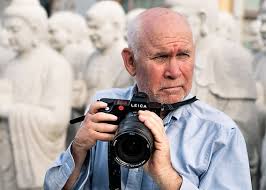

First, you could kindly tell the person in this photo that there are better ways of holding a camera when shooting.
Why the arrogance on this. There are many ways to effectively hold a camera. Some of the best photographers of our time hold their cameras in a similar fashion.
Steve McCurry is just one example....
Apr 15, 2026 at 07:39 AM