which lens has the most 3D POP?
p.115 #1which lens has the most 3D POP?
Hi Philip, where was the first one taken?
I have the Sonnar 55/1.8 as well. It's my pound-for-pound champ. I've only used it with my APS-C cameras and it is superb for portraiture including head shots. Looking forward to using it with my A7V. BTW, I don't see any threads for the Sonnar 55. Ummm, I might just post it here.
I have the Sonnar 55/1.8 as well. It's my pound-for-pound champ. I've only used it with my APS-C cameras and it is superb for portraiture including head shots. Looking forward to using it with my A7V. BTW, I don't see any threads for the Sonnar 55. Ummm, I might just post it here.
Mar 16, 2026 at 05:18 PM
p.115 #2which lens has the most 3D POP?
Anyway, the lens with "the most 3D pop" is actually the Zeiss Classic 35mm f/2 ZE/ZF ;D
Mar 16, 2026 at 07:50 PM
p.115 #3which lens has the most 3D POP?
MKRhodes wrote:
Anyway, the lens with "the most 3D pop" is actually the Zeiss Classic 35mm f/2 ZE/ZF ;D
One of my favourite landscape lenses.
Anyway, the lens with "the most 3D pop" is actually the Zeiss Classic 35mm f/2 ZE/ZF ;D
One of my favourite landscape lenses.
Mar 16, 2026 at 08:17 PM
p.115 #4which lens has the most 3D POP?
I'll throw an image out there for review. I took this in the Paris Pantheon last week with the 35GM and looking at it on my big screen, I see a lot of 3D. Anyone else see it in this image? The 35GM is a beauty of a lens.
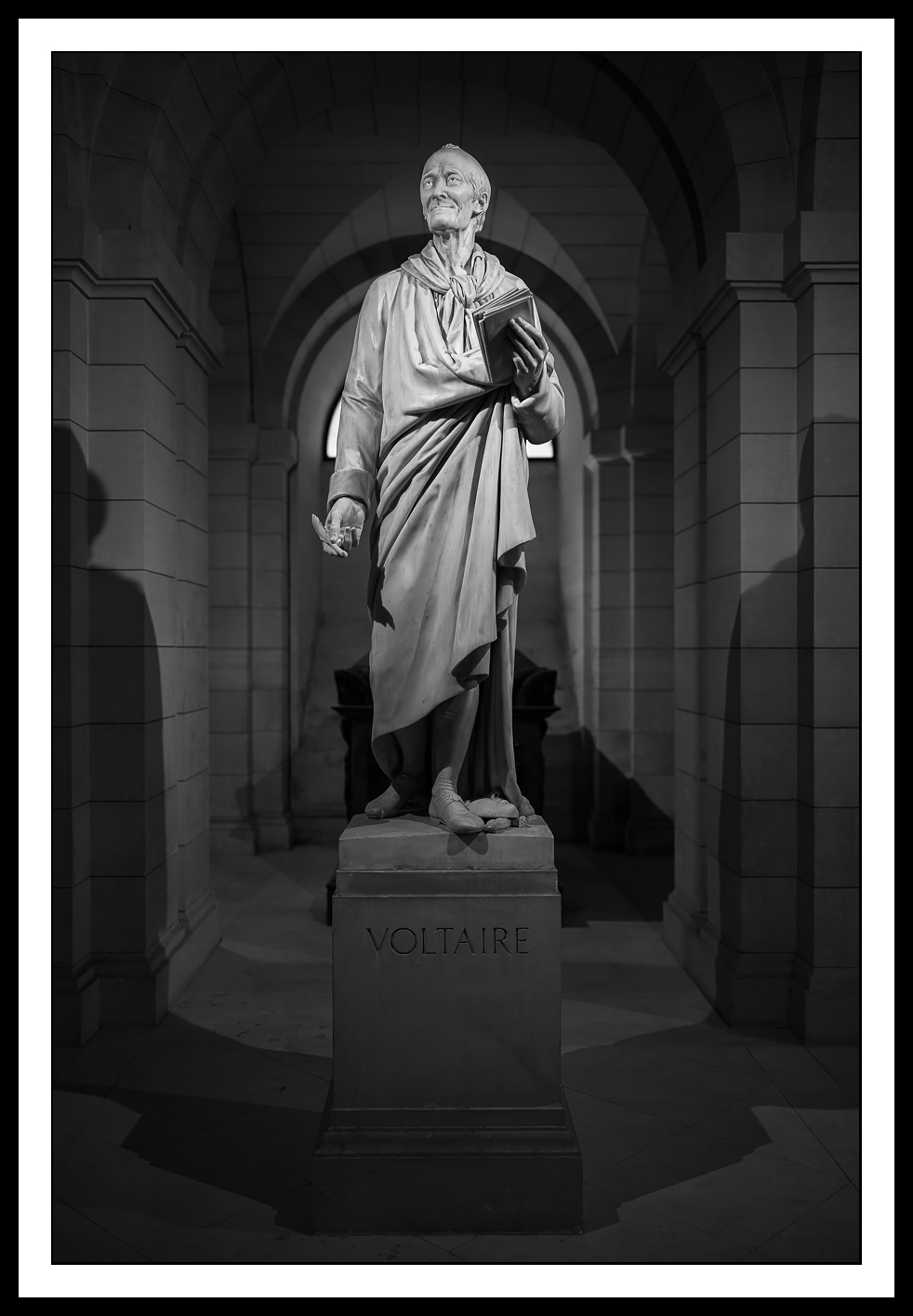
ILCE-7RM5 35mm f/1.4 1/30s 100 ISO -0.7 EV
Mar 17, 2026 at 11:20 AM
p.115 #5which lens has the most 3D POP?
mudlake wrote:
I'll throw an image out there for review. I took this in the Paris Pantheon last week with the 35GM and looking at it on my big screen, I see a lot of 3D. Anyone else see it in this image? The 35GM is a beauty of a lens.
It does evoke that 3D feeling. I believe it's mostly caused by the lightning and composition in this case though ...
I'll throw an image out there for review. I took this in the Paris Pantheon last week with the 35GM and looking at it on my big screen, I see a lot of 3D. Anyone else see it in this image? The 35GM is a beauty of a lens.
It does evoke that 3D feeling. I believe it's mostly caused by the lightning and composition in this case though
...Mar 17, 2026 at 11:52 AM
p.115 #6which lens has the most 3D POP?
What about those 2 ? sonnar 55mm
 25A06056 by amit Garmadon, on Flickr
 25A06064 by amit Garmadon, on Flickr
25A06056 by amit Garmadon, on Flickr25A06064 by amit Garmadon, on FlickrMar 17, 2026 at 11:56 AM
p.115 #7which lens has the most 3D POP?
mudlake wrote:
I'll throw an image out there for review. I took this in the Paris Pantheon last week with the 35GM and looking at it on my big screen, I see a lot of 3D. Anyone else see it in this image?
That's what I think of as 3D: a graceful fade of a coherent background rather than extreme subject isolation.
I'll throw an image out there for review. I took this in the Paris Pantheon last week with the 35GM and looking at it on my big screen, I see a lot of 3D. Anyone else see it in this image?
That's what I think of as 3D: a graceful fade of a coherent background rather than extreme subject isolation.
Mar 17, 2026 at 12:06 PM
RoamingScott
Offline
Activity
[X]
Details
p.115 #8which lens has the most 3D POP?
mudlake wrote:
I'll throw an image out there for review. I took this in the Paris Pantheon last week with the 35GM and looking at it on my big screen, I see a lot of 3D. Anyone else see it in this image? The 35GM is a beauty of a lens.
Yes, for the exact lighting reasons I've laid out in this thread
I'll throw an image out there for review. I took this in the Paris Pantheon last week with the 35GM and looking at it on my big screen, I see a lot of 3D. Anyone else see it in this image? The 35GM is a beauty of a lens.
Yes, for the exact lighting reasons I've laid out in this thread
Mar 17, 2026 at 12:09 PM
p.115 #9which lens has the most 3D POP?
mudlake wrote:
I'll throw an image out there for review. I took this in the Paris Pantheon last week with the 35GM and looking at it on my big screen, I see a lot of 3D. Anyone else see it in this image? The 35GM is a beauty of a lens.
Some depth cues from the background being a bit oof, but mostly the way the subject is lit and especially the balance between light on the subject and a darker background.
This example is really all about the light and not the lens.
Mar 17, 2026 at 12:28 PM

p.115 #10which lens has the most 3D POP?
fjablo wrote:
Some depth cues from the background being a bit oof, but mostly the way the subject is lit and especially the balance between light on the subject and a darker background.
This example is really all about the light and not the lens.
Another +1 for the contribution of the lighting is significant in this image.
The subject has high contrast lighting on it ... cross lighting in this instance, which affords the modeling intensity.
The background has a lower contrast lighting.
So, the transitional cues of near > far do transition from acute contrast > diffuse / low contrast. That is in context of a physiological depth cue.
That's not to say the lens isn't contributing a fast / slow transition rate ... but, when the lighting is this strong of a cue, the lens contribution is harder to discern its contribution. But, TBH ... I don't see much on this one that makes me think of this lens as something in the league of the VM 40/1.2 or other fav's that folks have. Likely the lighting contribution is "overshadowing" the lens contribution here.
Since there are a variety of potential cues (general to all) ... I think those lenses that have more rapid transition rates ... they "stand out" more when the strength of the lighting cues are absent / reduced. There, the credence to the lens contribution (vs. modest light modeling / depth cues) can be a bit more noticeable ... predicated on the optical attributes.
At the end of the day, the combination of the various elements work together to yield the total rendering ... that includes both optical / non-optical aspects. e.g. the brighter (forward projection) subject face vs. darker (receding) background is but ONE of such (rate of change) physiological response cues, regarding depth interpretation.
mudlake wrote
I'll throw an image out there for review. I took this in the Paris Pantheon last week with the 35GM and looking at it on my big screen, I see a lot of 3D. Anyone else see it in this image? The 35GM is a beauty of a lens.This example is really all about the light and not the lens.
Another +1 for the contribution of the lighting is significant in this image.
The subject has high contrast lighting on it ... cross lighting in this instance, which affords the modeling intensity.
The background has a lower contrast lighting.
So, the transitional cues of near > far do transition from acute contrast > diffuse / low contrast. That is in context of a physiological depth cue.
That's not to say the lens isn't contributing a fast / slow transition rate ... but, when the lighting is this strong of a cue, the lens contribution is harder to discern its contribution. But, TBH ... I don't see much on this one that makes me think of this lens as something in the league of the VM 40/1.2 or other fav's that folks have. Likely the lighting contribution is "overshadowing" the lens contribution here.
Since there are a variety of potential cues (general to all) ... I think those lenses that have more rapid transition rates ... they "stand out" more when the strength of the lighting cues are absent / reduced. There, the credence to the lens contribution (vs. modest light modeling / depth cues) can be a bit more noticeable ... predicated on the optical attributes.
At the end of the day, the combination of the various elements work together to yield the total rendering ... that includes both optical / non-optical aspects. e.g. the brighter (forward projection) subject face vs. darker (receding) background is but ONE of such (rate of change) physiological response cues, regarding depth interpretation.
Mar 17, 2026 at 08:57 PM
|
p.115 #11which lens has the most 3D POP?
A few from the GM24 which is still one that regularly helps produce it for me.
 GM 24 by John Dizzo, on Flickr
 GM 24 by John Dizzo, on Flickr
 GM 24 by John Dizzo, on Flickr
GM 24 by John Dizzo, on FlickrGM 24 by John Dizzo, on FlickrMar 17, 2026 at 11:14 PM
p.115 #12which lens has the most 3D POP?
Garmadon wrote:
What about those 2 ? sonnar 55mm
https://live.staticflickr.com/65535/55130923517_78269b9ed6_b.jpg25A06056 by amit Garmadon, on Flickr
https://live.staticflickr.com/65535/55132046689_629c4fa1fb_b.jpg25A06064 by amit Garmadon, on Flickr
Those look really good Garmadon. I was hoping someone would show some pics from the Sonnar 55/1.8 recently (I just couldn't go through all of the pages of this thread). I've used mine with APS-C A6xxx and looking forward to shooting some with the A7V. Thanks for sharing!
Mar 18, 2026 at 05:04 AM
p.115 #13which lens has the most 3D POP?
It was my first emount lens and I used it as my only lens for some time. I love it .
Over the years I opened threads looking for a lens that has the same "magic" in it .
I used to think it is just sharpness but Im sure it is somthing else.
Maybe thay are right about the low element build and no ed glass...
 DSC08979 by amit Garmadon, on Flickr
 DSC08544_1 by amit Garmadon, on Flickr
 DSC02419 by amit Garmadon, on Flickr
 DSC02585 by amit Garmadon, on Flickr
jojib wrote:
https://live.staticflickr.com/65535/55130923517_78269b9ed6_b.jpg25A06056 by amit Garmadon, on Flickr
https://live.staticflickr.com/65535/55132046689_629c4fa1fb_b.jpg25A06064 by amit Garmadon, on FlickrThose look really good Garmadon. I was hoping someone would show some pics from the Sonnar 55/1.8 recently (I just couldn't go through all of the pages of this thread). I've used mine with APS-C A6xxx and looking forward to shooting some with the A7V. Thanks for sharing!
Over the years I opened threads looking for a lens that has the same "magic" in it .
I used to think it is just sharpness but Im sure it is somthing else.
Maybe thay are right about the low element build and no ed glass...
DSC08979 by amit Garmadon, on FlickrDSC08544_1 by amit Garmadon, on FlickrDSC02419 by amit Garmadon, on FlickrDSC02585 by amit Garmadon, on Flickrjojib wrote:
Garmadon wrote
What about those 2 ? sonnar 55mmhttps://live.staticflickr.com/65535/55130923517_78269b9ed6_b.jpg25A06056 by amit Garmadon, on Flickr
https://live.staticflickr.com/65535/55132046689_629c4fa1fb_b.jpg25A06064 by amit Garmadon, on Flickr
Mar 18, 2026 at 05:46 AM
p.115 #14which lens has the most 3D POP?
Those are beautiful pics! It really matches my criterion of 3D pop----it's like the subject about to leap out from my monitor towards me like it was cut off and pasted in a photo. Can't wait to shoot with my nifty again!
Mar 18, 2026 at 05:49 AM
p.115 #15which lens has the most 3D POP?
By the way , I think the Loxia 50mm has crazy pop, look at this one (not mine) :
https://flic.kr/p/Bp89uZ
jojib wrote:
Those are beautiful pics! It really matches my criterion of 3D pop----it's like the subject about to leap out from my monitor towards me like it was cut off and pasted in a photo. Can't wait to shoot with my nifty again!
https://flic.kr/p/Bp89uZ
jojib wrote:
Those are beautiful pics! It really matches my criterion of 3D pop----it's like the subject about to leap out from my monitor towards me like it was cut off and pasted in a photo. Can't wait to shoot with my nifty again!
Mar 18, 2026 at 06:12 AM
p.115 #16which lens has the most 3D POP?
115 pgs of discussion, but all know its
zeiss 35 1.4zm

zeiss 35 1.4zm
Mar 18, 2026 at 06:48 AM
p.115 #17which lens has the most 3D POP?
JohnDizzo15 wrote:
A few from the GM24 which is still one that regularly helps produce it for me.
https://live.staticflickr.com/7913/46508884411_c424073a1b_b.jpgGM 24 by John Dizzo, on Flickr
https://live.staticflickr.com/65535/55151889961_0934250dc1_b.jpgGM 24 by John Dizzo, on Flickr
https://live.staticflickr.com/65535/55150994777_053efc8706_b.jpgGM 24 by John Dizzo, on Flickr
So THAT’S the amazing “pop” that everyone is searching for!
Mar 18, 2026 at 08:13 AM
p.115 #18which lens has the most 3D POP?
gdanmitchell wrote:
https://live.staticflickr.com/7913/46508884411_c424073a1b_b.jpgGM 24 by John Dizzo, on Flickr
https://live.staticflickr.com/65535/55151889961_0934250dc1_b.jpgGM 24 by John Dizzo, on Flickr
https://live.staticflickr.com/65535/55150994777_053efc8706_b.jpgGM 24 by John Dizzo, on FlickrSo THAT’S the amazing “pop” that everyone is searching for!
No. Just examples of very average shots that didn’t necessarily have the best lighting conditions to produce the effect, but still had it to some degree (to my eye), which is not something that I get from all of my lenses. You know, since we are talking about potential lens roles in this effect.
JohnDizzo15 wrote
A few from the GM24 which is still one that regularly helps produce it for me.https://live.staticflickr.com/7913/46508884411_c424073a1b_b.jpgGM 24 by John Dizzo, on Flickr
https://live.staticflickr.com/65535/55151889961_0934250dc1_b.jpgGM 24 by John Dizzo, on Flickr
https://live.staticflickr.com/65535/55150994777_053efc8706_b.jpgGM 24 by John Dizzo, on Flickr
No. Just examples of very average shots that didn’t necessarily have the best lighting conditions to produce the effect, but still had it to some degree (to my eye), which is not something that I get from all of my lenses. You know, since we are talking about potential lens roles in this effect.
Mar 18, 2026 at 08:29 AM
p.115 #19which lens has the most 3D POP?
gdanmitchell wrote:
https://live.staticflickr.com/7913/46508884411_c424073a1b_b.jpgGM 24 by John Dizzo, on Flickr
https://live.staticflickr.com/65535/55151889961_0934250dc1_b.jpgGM 24 by John Dizzo, on Flickr
https://live.staticflickr.com/65535/55150994777_053efc8706_b.jpgGM 24 by John Dizzo, on FlickrSo THAT’S the amazing “pop” that everyone is searching for!
Why the sarcasm?
JohnDizzo15 wrote
A few from the GM24 which is still one that regularly helps produce it for me.https://live.staticflickr.com/7913/46508884411_c424073a1b_b.jpgGM 24 by John Dizzo, on Flickr
https://live.staticflickr.com/65535/55151889961_0934250dc1_b.jpgGM 24 by John Dizzo, on Flickr
https://live.staticflickr.com/65535/55150994777_053efc8706_b.jpgGM 24 by John Dizzo, on Flickr
Why the sarcasm?
Mar 18, 2026 at 09:10 AM
p.115 #20which lens has the most 3D POP?
j4nu wrote:
https://live.staticflickr.com/7913/46508884411_c424073a1b_b.jpgGM 24 by John Dizzo, on Flickr
https://live.staticflickr.com/65535/55151889961_0934250dc1_b.jpgGM 24 by John Dizzo, on Flickr
https://live.staticflickr.com/65535/55150994777_053efc8706_b.jpgGM 24 by John Dizzo, on FlickrSo THAT’S the amazing “pop” that everyone is searching for!Why the sarcasm?
Because he just cannot help himself.
gdanmitchell wrote
JohnDizzo15 wrote
A few from the GM24 which is still one that regularly helps produce it for me.https://live.staticflickr.com/7913/46508884411_c424073a1b_b.jpgGM 24 by John Dizzo, on Flickr
https://live.staticflickr.com/65535/55151889961_0934250dc1_b.jpgGM 24 by John Dizzo, on Flickr
https://live.staticflickr.com/65535/55150994777_053efc8706_b.jpgGM 24 by John Dizzo, on Flickr
Because he just cannot help himself.
Mar 18, 2026 at 09:15 AM