SiMuMe wrote: Nikon 1001 Nights latest article covers the NIKKOR-H 85mm f/1.8 which I have and which Colin just compared to modern lenses a page back.
More relevant to this community is a bonus technical section at the end of the article that mentions consideration for MFNG in the thickness of the low pass filter during design of Nikon Z cameras.
I usually like those articles a lot, but it's bit of a shame that this one doesn't mention the Zeiss Biotar 75mm f1.5 at all.
The optical design of this Nikkor is an almost 1:1 copy of the Biotar. They do mention that it's a double-gauss but I think it would be fair to mention the original lens that introduced this formula for a short telephoto.
And sure, they made some slight tweaks to change the focal length and aperture a bit (85/1.8 is not too different from 75/1.5 in terms of physical aperture size) and used special glass to tame some of the characteristics. But the design is so heavily based on the Biotar even calling it an "inspiration" would be an understatement.
The Biotar was designed in 1927 and available for 35mm since 1938/1939.
Most Soviet and early Japanese lenses were actually just copies or minor evolutions of Zeiss designs, after WW II.. Probably goes against Japanese culture to admit that, but I would appreciate if they would.
fjablo wrote:
I usually like those articles a lot, but it's bit of a shame that this one doesn't mention the Zeiss Biotar 75mm f1.5 at all.
... But the design is so heavily based on the Biotar even calling it an "inspiration" would be an understatement.
Unfortunately your link to the Biotar doesn't work. I would have liked to read it. (Edit: I copied the ULR text and added www. to the front. That worked. Thanks for the link.) However one could say that the idea of making a new lens based on a 1927 design was indeed an inspiration. Almost everything we do in science, engineering, or design is based on older work.. When you are trying to develop something new, recognizing the value of work done decades ago requires an appreciation of it and an understanding. So don't be too hard on them.
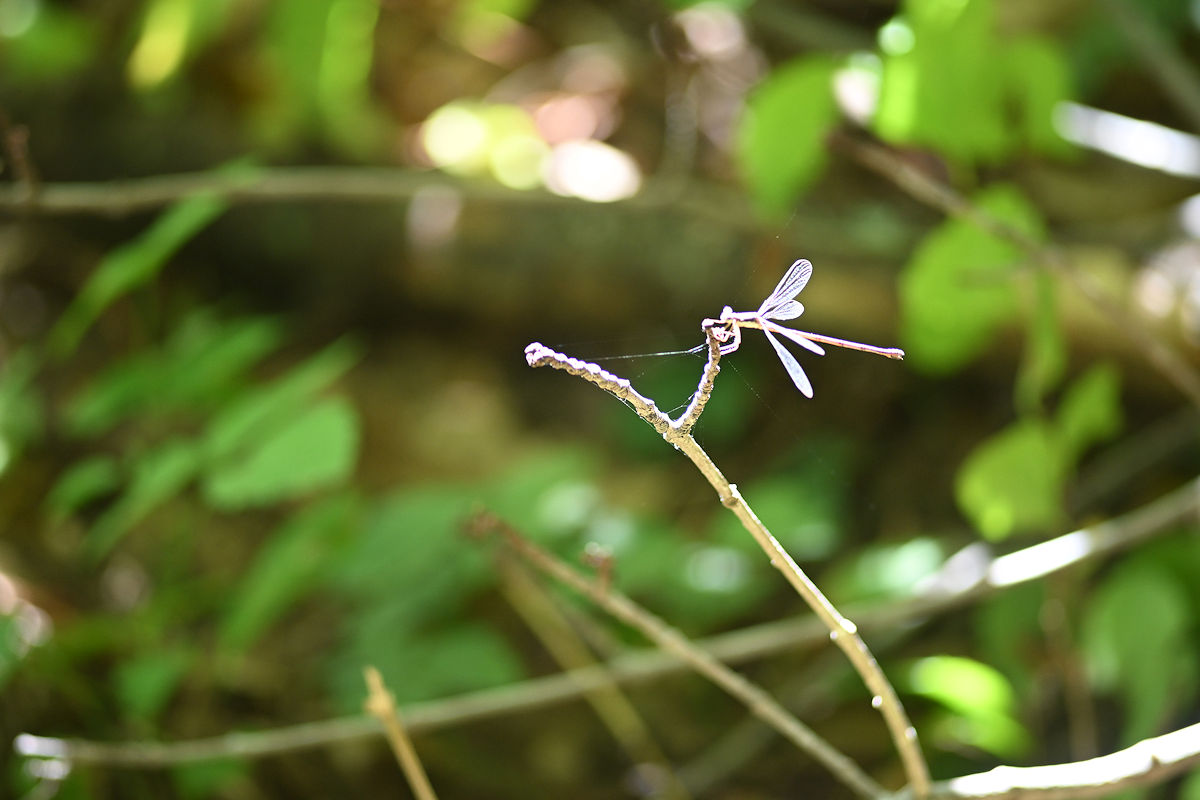
Like SiMuMe, I like to learn about lenses I own, so I enjoyed reading the entries on the original 200mm f/4.0 Q Auto described in #48, redesigned to be the New 200mm described in #87. Back around '73 or '74 I bought what turned out to be the last rendition of the Q Auto (ah, not quite last. they gave it multi-coating for a year after mine). I really like it. To keep this in the realm of posting MFNG pics, here is one of the first pics I took, using that lens with my new Z5II. I could not have gotten this with anything else I was using.
A year or so after I bought my 200mm I saw that Nikon had changed the 200. It looked shorter and had a different exterior. I wondered what was different, was it better, and if so, how? #87 explained it! The designer Teruyoshi Tsunashima was trying to make it smaller, not better. It could be made smaller (i.e. smaller telephoto ratio) by adding a rear concave lens group, but that drastically increased chromatic aberration. So the challenge was to maintain the sharpness. It took him three years and four design proposals before it went into production. The hard part wasn't how to do it, but how to do it well.
Knowing all that doesn't make me a better photographer or help me use the 200 any better. But it does give me an appreciation of what I have.
fjablo wrote:
I usually like those articles a lot, but it's bit of a shame that this one doesn't mention the Zeiss Biotar 75mm f1.5 at all.
The optical design of this Nikkor is an almost 1:1 copy of the Biotar. They do mention that it's a double-gauss but I think it would be fair to mention the original lens that introduced this formula for a short telephoto.
And sure, they made some slight tweaks to change the focal length and aperture a bit (85/1.8 is not too different from 75/1.5 in terms of physical aperture size) and used special glass to tame some of the characteristics. But the design is so heavily based on the Biotar even calling it an "inspiration" would be an understatement.
The Biotar was designed in 1927 and available for 35mm since 1938/1939.
Most Soviet and early Japanese lenses were actually just copies or minor evolutions of Zeiss designs, after WW II.. Probably goes against Japanese culture to admit that, but I would appreciate if they would.
I use to collect Exakta (Exa) cameras and lens. Out of all the lenses - the 58mm f2 17 aperture blade Carl Zeiss Jena Biotar was my favorite. Edge and corners weren't great, but the center was sharp, and the oof and bokeh were amazing.
Edit
That busy bokeh from your link is exactly the same as the 24mm f2.0 ais. Problem is - the Nikkor copy I had wasn't sharp wide open in any part of the frame.
I want to take this opportunity to thank you all for welcoming me into your community. Happy New Year, and may 2026 be more blessed, safer, and happier than 2025.
Happy New Year, all, another year around the sun completed! I was reading something, and suddenly, a trip to Montreal popped into my head. Weebeesee if it happens.
Beware the devil, I'm sure he's still lurking here somewhere....
Unfortunately your link to the Biotar doesn't work. I would have liked to read it. (Edit: I copied the ULR text and added www. to the front. That worked. Thanks for the link.) However one could say that the idea of making a new lens based on a 1927 design was indeed an inspiration. Almost everything we do in science, engineering, or design is based on older work.. When you are trying to develop something new, recognizing the value of work done decades ago requires an appreciation of it and an understanding. So don't be too hard on them.
Like SiMuMe, I like to learn about lenses I own, so I enjoyed reading the entries on the original 200mm f/4.0 Q Auto described in #48, redesigned to be the New 200mm described in #87. Back around '73 or '74 I bought what turned out to be the last rendition of the Q Auto. I really like it. To keep this in the realm of posting MFNG pics, here is one of the first pics I took, using that lens with my new Z5II. I could not have gotten this with anything else I was using.
A year or so after I bought my 200mm I saw that Nikon had changed the 200. It looked shorter and had a different exterior. I wondered what was different, was it better, and if so, how? #87 explained it! The designer Teruyoshi Tsunashima was trying to make it smaller, not better. It could be made smaller (i.e. smaller telephoto ratio) by adding a rear concave lens group, but that drastically increased chromatic aberration. So the challenge was to maintain the sharpness. It took him three years and four design proposals before it went into production. The hard part wasn't how to do it, but how to do it well.
Knowing all that doesn't make me a better photographer or help me use the 200 any better. But it does give me an appreciation of what I have....Show more →
Absolutely true but at least in science the original work is usually credited. I guess one could argue Nikon sort of does that by acknowledging the double gauss design..
But usually in science there is also significant contribution from the new work. If you compare the optical design of theses two lenses however, the differences are incredibly minor. Imo it’s a copy, not a new design.
As I said I usually enjoy the 1001 nights articles a lot, it’s great that Nikon does them. I’ve also been to the Nikon museum in Tokyo, which is a fantastic tribute to their legacy. They have every lens they ever built for S, F and Z mounts and a nice little gallery where one of their engineers took pictures with various lenses over a couple of decades. I think he might be one of the authors of the 1001 nights stories as well, but I forgot his name unfortunately.
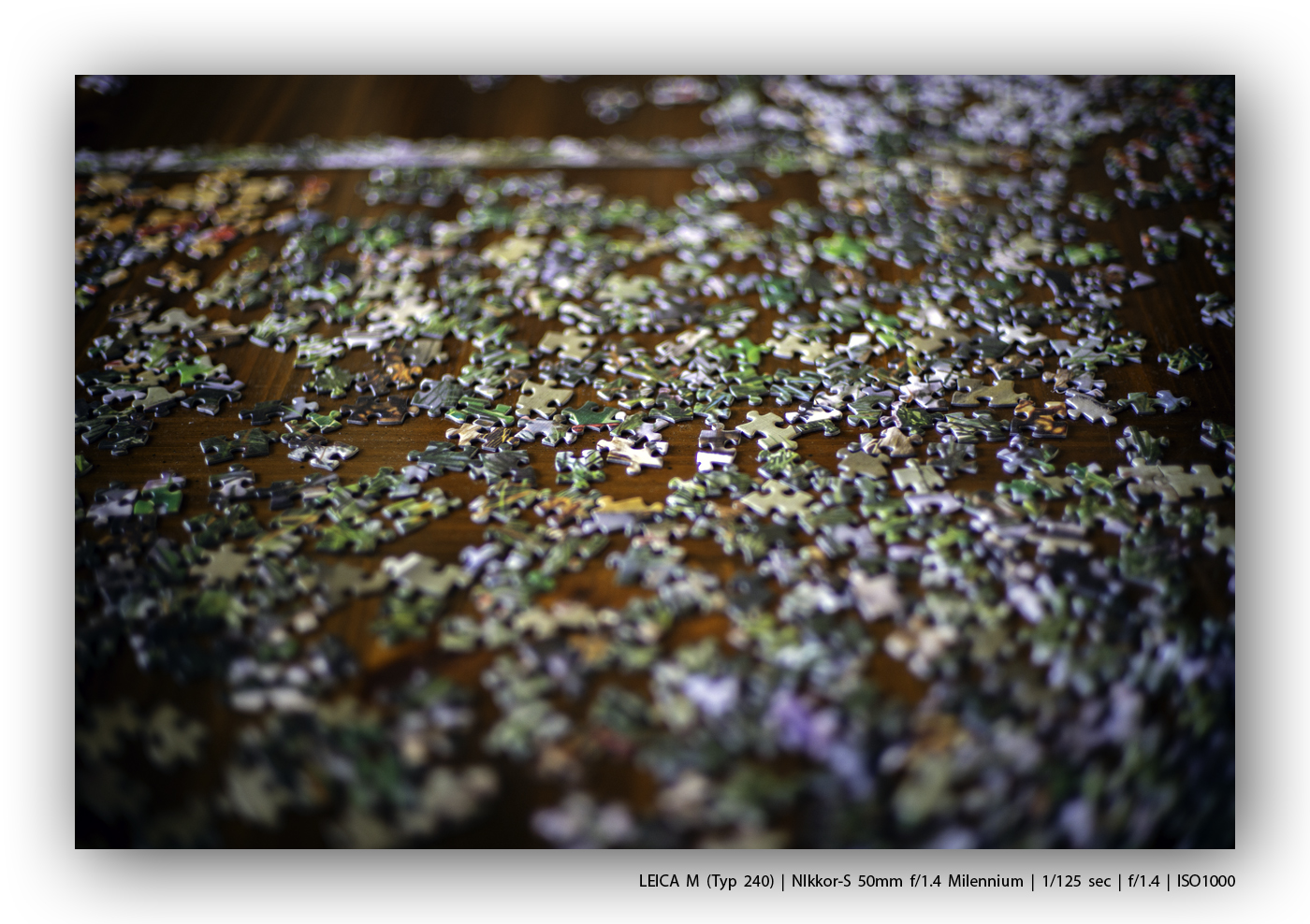
New year and a new puzzle to figure out. Both literally and figuratively
George
Ooh! I see a piece. That one there.
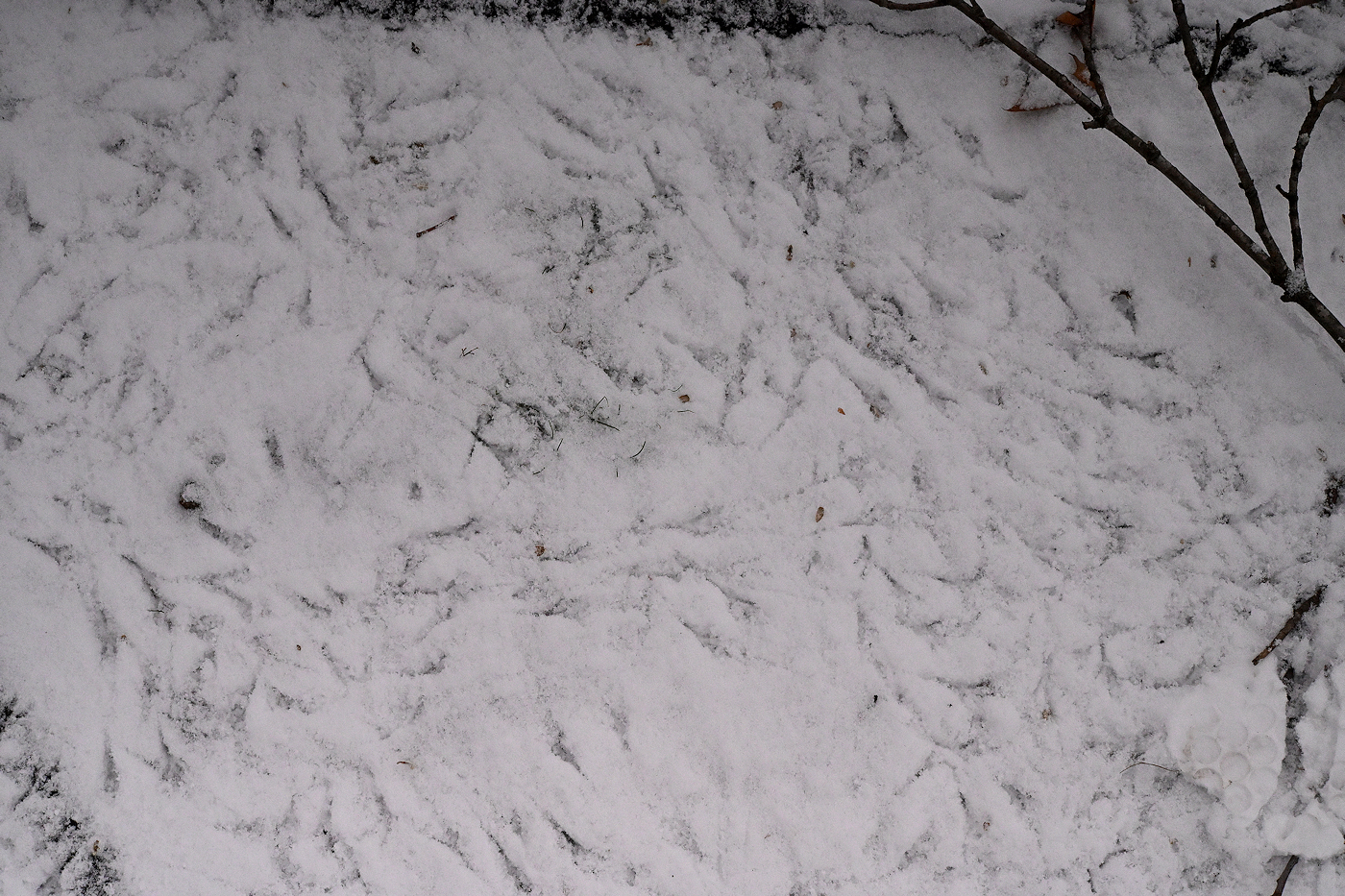
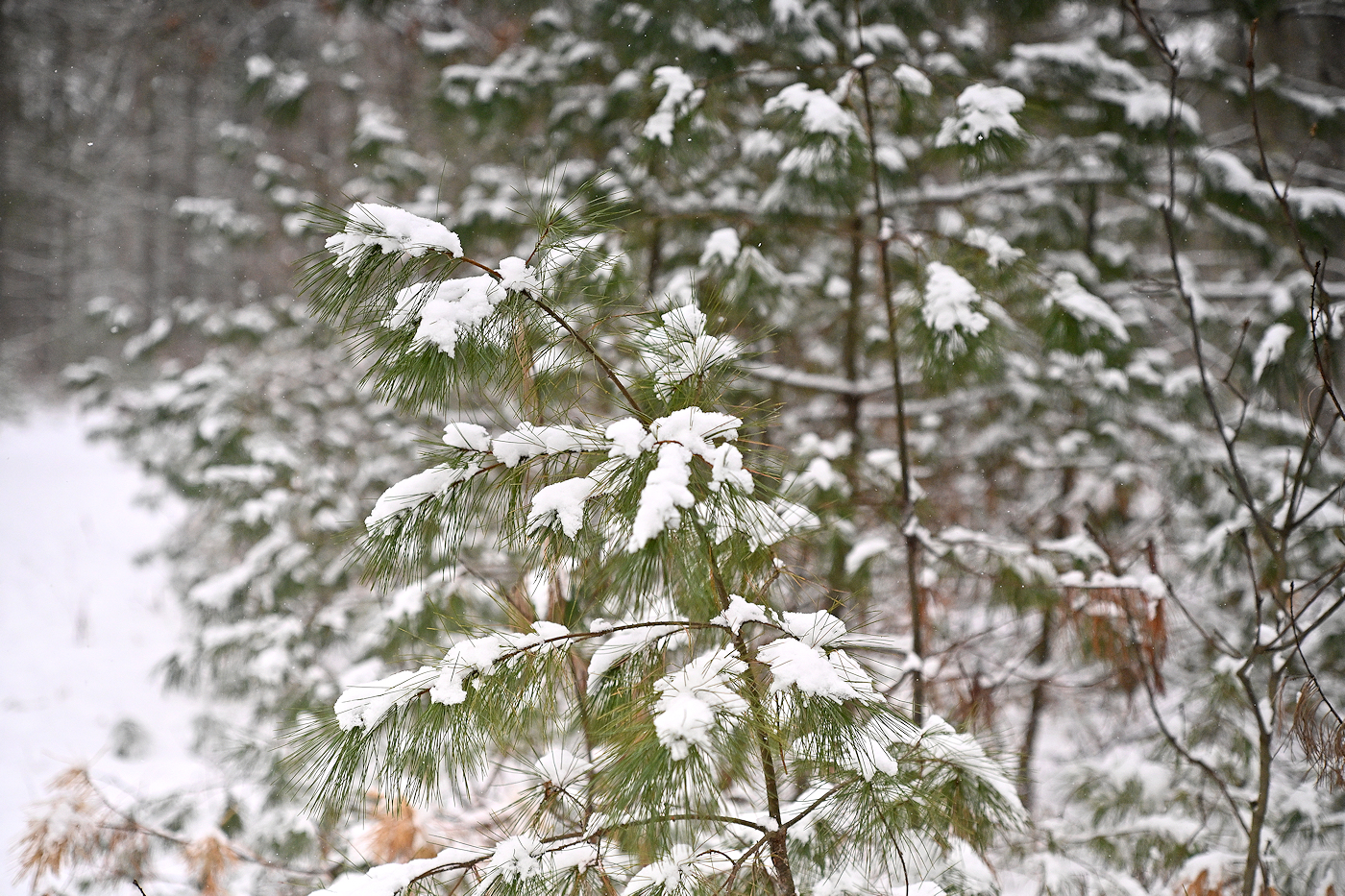
You would never guess from these next pics what kind of weather we had last night.
First, bird tracks. Tracks like these suggest food higher up, which is to say a feeder.
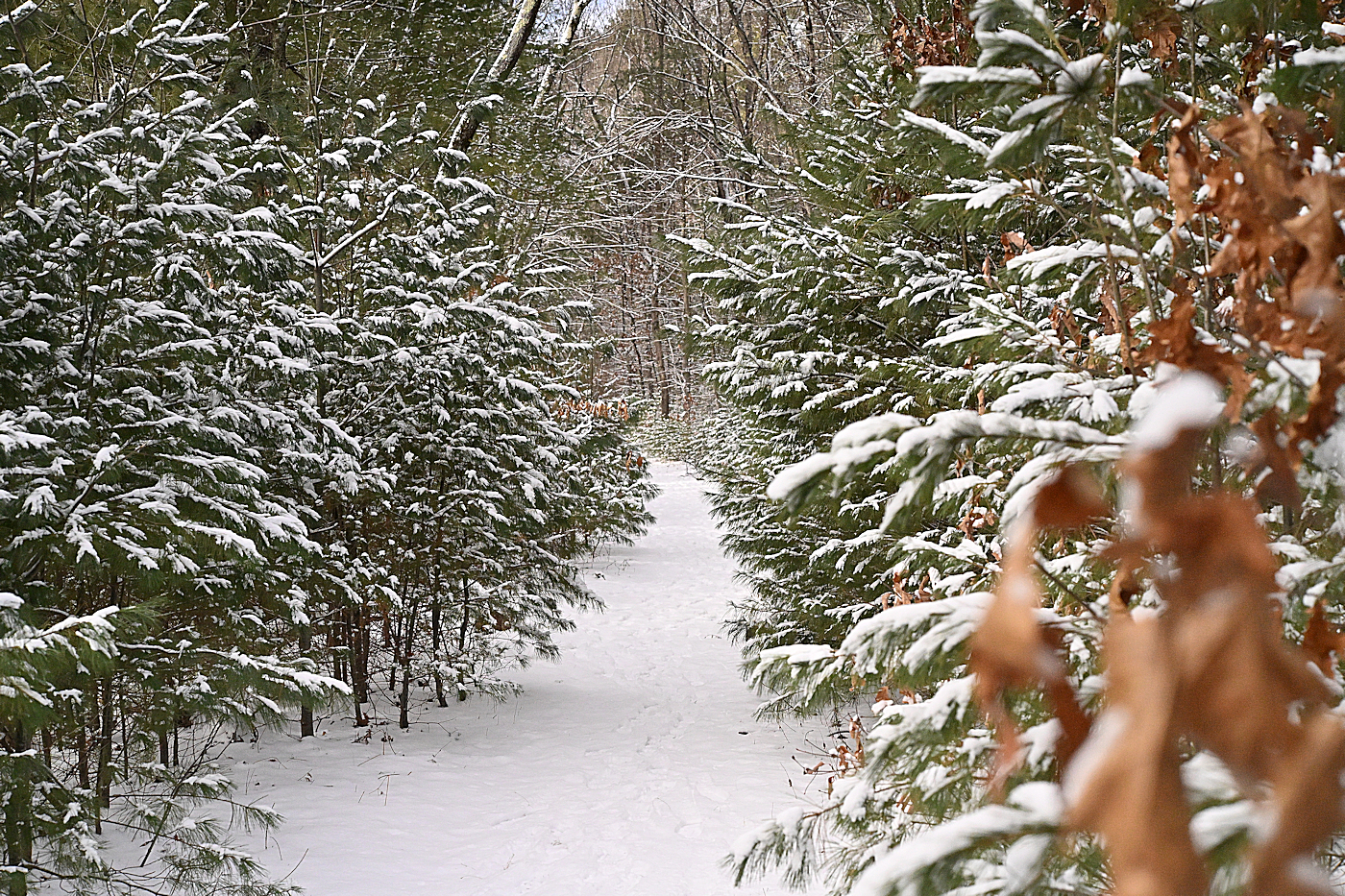
Then out into the woods. This time of year everything outdoors looks like this. Everything indoors is less interesting.
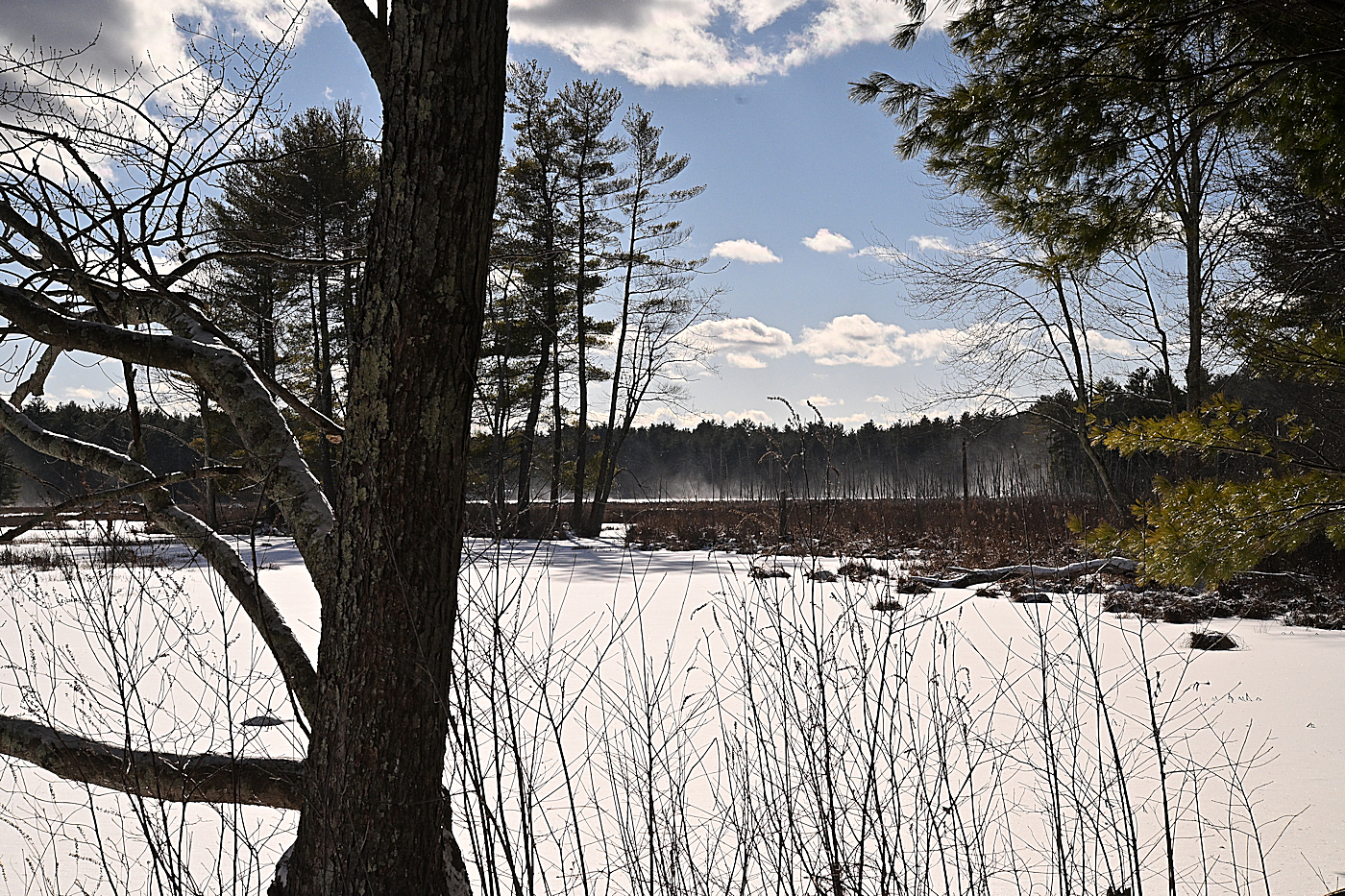
I should have mentioned, so I will now, that these shots were all taken with the 55mm f/3.5. Blame James Markus for that! I'm liking it. Even my sweetie mentioned how sharp it is. So credit James Markus for that.
Then out into the woods. This time of year everything outdoors looks like this. Everything indoors is less interesting.
.
.
I should have mentioned, so I will now, that these shots were all taken with the 55mm f/3.5. Blame James Markus for that! I'm liking it. Even my sweetie mentioned how sharp it is. So credit James Markus for that.
Scrolling down I was thinking, must be the 55, must be the 55. Great that it has revealed its magic to you. It's a slippery slope from here. Hold on to your wallet.
Happy New Year all
Thanks for 2025 - so glad I found this thread with fellow MF fans
Every New Year's Eve, we walk the dogs in the late afternoon so they’re nice and tired before the fireworks start. Very beautiful weather - sunset, frost and fog
BLLX wrote:
Happy New Year all
Thanks for 2025 - so glad I found this thread with fellow MF fans
Every New Year's Eve, we walk the dogs in the late afternoon so they’re nice and tired before the fireworks start. Very beautiful weather - sunset, frost and fog
Scrolling down, I had an indescribable illusion when I first looked at this picture. Only when I picked up the faint tree trunks did it end. Now I can't replicate it .
BLLX wrote:
Happy New Year all
Thanks for 2025 - so glad I found this thread with fellow MF fans
Every New Year's Eve, we walk the dogs in the late afternoon so they’re nice and tired before the fireworks start. Very beautiful weather - sunset, frost and fog
SiMuMe wrote:
Scrolling down, I had an indescribable illusion when I first looked at this picture. Only when I picked up the faint tree trunks did it end. Now I can't replicate it .
Nice one.
Me too. I saw it first as a smaller image on my phone. The trees appeared as a deep void overhung with ragged clouds. Calming yet unsettling. It works when viewed larger too, of course, just different.
------------------------------------------
SiMuMe wrote:
Scrolling down I was thinking, must be the 55, must be the 55. Great that it has revealed its magic to you. It's a slippery slope from here. Hold on to your wallet.
Thanks for the comment and the advice!
Interesting that you would identify the 55. Those shots have a subtlety but I'm not sure what's different. They are uncropped and unedited except for resizing. Obviously the trail and pine shots were composed so I could chose the aperture carefully.
The last one was point & click. We had been standing further to the left where the view opens up. I had taken a few shots, but the marsh was mostly featureless so they weren't interesting. As we walked uphill past that opening I saw the wind whipping up the snow in the distance. The focus and aperture (probably f/16 or smaller) were whatever I had just used, so without twiddling anything I just put the camera to my eye and clicked once, figured it wouldn't amount to much. When we got home and I saw it on a bigger screen I was astonished at how it captured not only the blowing snow but also the detail on everything.
It's another lesson on why it's important to be ready for "the moment". And I still don't know how the 55 is different, whether my 50 would have produced the same effect. But I'll take it!