Alpha_Geist wroteI wish I could walk to work. Would be nice to have photo ops to and from work.
I'm lucky enough to walk to work, but unfortunately it's not a particularly interesting walk these last 10 years or so!
I am forcing myself to take the camera these days anyway and at least hometime is currently aligned with sunset.
Here's 'the road by the park', testing out my newly acquired 90 Summicron-R pre-AA.(1992)
Still getting used to it. Love to hear any tips/feedback on using one.
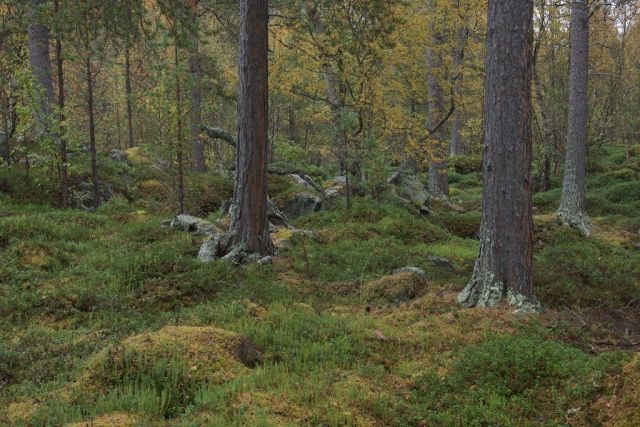
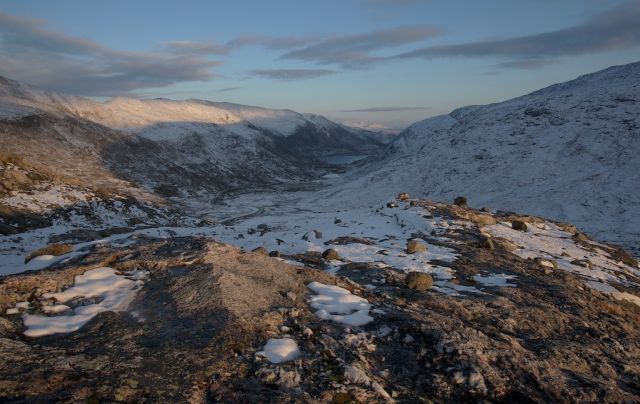
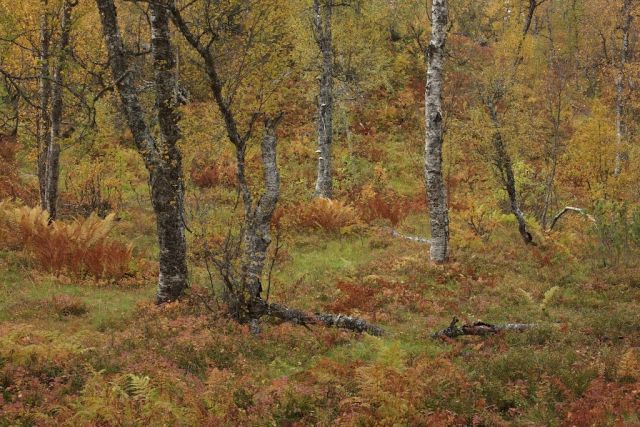
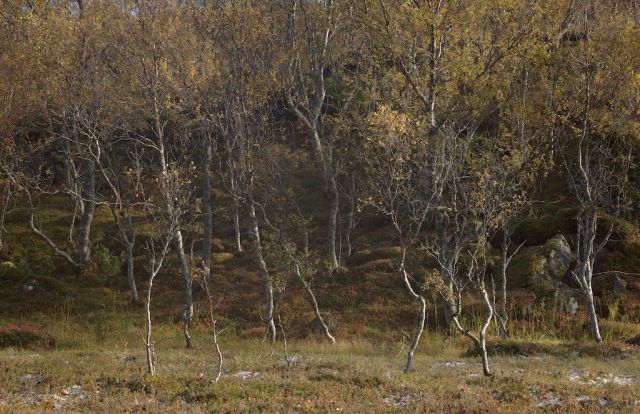
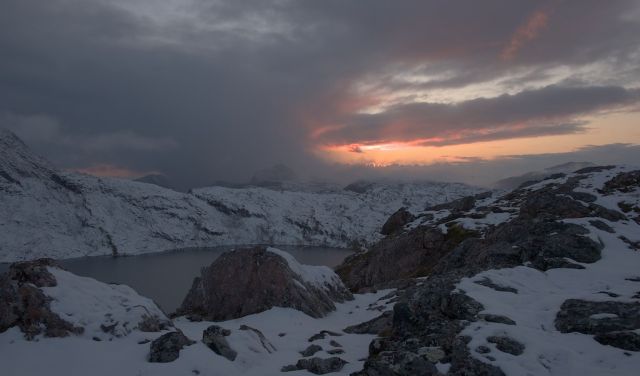
This past week, due to personal finances, I decided the wisest course of action would be to sell my favorite lens, the 21-35. I could make do with a new-to-me 24mm and my 35mm and still put a useful cushion in my bank account. Three days later, a long term prospect arose and came to fruition. Long story short, I went out today and shot with my 21-35 to celebrate the fact that I'll be keeping it after all.
These shots aren't great, especially given their brief editing treatment and poor coloring, but they mean something to me just because of what they're associated with.
coogee wrote:
Still getting used to it. Love to hear any tips/feedback on using one.
I'm a fan of my ~1980 Summicron 90, even though I use it only rarely. The only tip I can offer about it is that there is considerable field curvature toward the corners. For example, see my second photo here, which shows the trees coming into focus toward the upper right edge of the frame. So, be aware of this when trying to blur the background. Admittedly, this was shot on a Speed Booster, which may be exacerbating the effect.
Otherwise, it behaves like a lot of manual focus short tele lenses (though, I think, with better color correction). It is pleasantly soft wide open but sharpens very quickly when stopped down. The very shallow depth of field offered is easier to abuse than to use effectively, though I recommend abusing it until you find out which uses work best for you. Although the 90 AA is clearly better, I've never shot this older lens and felt that it lacked something other than operator (my) skill...which isn't too great, as I mostly practice with wider lenses.
What all short tele lenses enforce on their users is an awareness of front-back depth among elements in the frame. (Wide lenses are similar, but handle perspective with lines and vanishing points, while long lenses have subjects on top of each other and perspective comes from relative size and focus.) Simply being aware of how far away the different elements in the frame are will help you envision what the lens will render, allowing you to create the image that you want. My process with any new tool: see the scene; judge the subjects; envision the image; capture the photo; compare the image to your ideal; repeat.
Thanks Jon, really helpful. I will abuse... and repeat for now
I love this focal length more than any other for the, not-excessive, compression it provides.
I'll walk home a little slower this week I think!
Hello. I have a sony a7r and a few Leica R lenses (28 mm v2 and sumilux 35 mm). I like these lenses but try to find a wide angle. I've a possibility to buy a 19 mm Leica r v2 but I don't find anything about this lense on the Sony a7r. Does it worth the value or is it better another wide angle like zeiss distagon 21 mm (render,...)?
Thank you very much for your help and advices
mikwest wrote:
Hello. I have a sony a7r and a few Leica R lenses (28 mm v2 and sumilux 35 mm). I like these lenses but try to find a wide angle. I've a possibility to buy a 19 mm Leica r v2 but I don't find anything about this lense on the Sony a7r. Does it worth the value or is it better another wide angle like zeiss distagon 21 mm (render,...)?
Thank you very much for your help and advices
Maybe Snowboarder (Andrew) can check in on this. He may be the only one that I know to have this lens. Many of the rest of us are using the Contax (C/Y) 21mm f2.8 Zeiss Distagon or the newer 21mm f2.8 Zeiss Distagon ZE or ZF lenses.
mikwest wrote:
Hello. I have a sony a7r and a few Leica R lenses (28 mm v2 and sumilux 35 mm). I like these lenses but try to find a wide angle. I've a possibility to buy a 19 mm Leica r v2 but I don't find anything about this lense on the Sony a7r. Does it worth the value or is it better another wide angle like zeiss distagon 21 mm (render,...)?
Thank you very much for your help and advices
I have used both Leica Elmarit-R 19/2,8 V2 and Zeiss ZF Distagon 21/2,8. They are both excellent performers on the A7/r but they are pretty large lenses and are not ideal for A7 body size.
Among the two, I felt that Zeiss ZF Distagon 21/2,8 is sharper for being an 21mm focal length and has a bit stronger micro-contrast in the center. On the other hand, the Leica Elmarit has a smoother rendition wide open. It has a kinder and gentler feel to it, which I personally prefer. Here are two images that I posted on this thread some time ago:
Thank you very much for your answers.
it's very difficult to know if the 19 mm V2 is a good choice because you don't find a lot of tests and experiences in numeric. It seems that the problem is in the corner. And for the price, you want the best (like for the 28 mm V2).
I've owned the 21 mm Zeiss Distagon on 5d mark2. I liked the micro contrast of this lens. However, he's very big.
There isn't a lot of choice for wide angles.
The other problem with the 19 mm is the lack of possibility for ND filter...
An other choice is the Leica WATE... but it's more expensive...
nb: sorry for my poor english... I come from Belgium
If you are using the wide angle for landscape and 21mm is wide enough for you, then the Zeiss ZF 21 will be an excellent choice. If you want a bit wider than 21mm, then you may want to consider the Leica R19 II, or the Leica WATE. Personally, I still like the the Leica R19-II the best as it has some optical characters that I prefer. I hope that I will take the R19-II out this coming weekend. When/if I do, I will post some images here.
You may also want to wait for results of the soon to be released Zeiss 16mm-35mm FE lens. We still have little info on this along with MTF figures as well as some posted test images. Then there will be the Zeiss Loxia lenses that will hopefully be coming later next year. Zeiss at this point only has the 50mm and the 35mm Loxia lenses scheduled for release. The 50mm lens is supposed to be released imminently and the 35mm at the end of 2014. When anything wider is released we have no idea. But, I will try to prod the Zeiss National Sales manager about this and what is their goal and expectation at PhotoPlus in NYC at the end of next month.
JonPB wrote:
Long story short, I went out today and shot with my 21-35 to celebrate the fact that I'll be keeping it after all.
I think you've dodged a nasty bullet there Despite some continuing reservations, from a landscape perspective I've really warmed to this lens for its size, weight, IQ stopped down, versatility and build quality.
Jon Tainton wrote:
I think you've dodged a nasty bullet there Despite some continuing reservations, from a landscape perspective I've really warmed to this lens for its size, weight, IQ stopped down, versatility and build quality.
I agree. There are so many things to like about this lens, but some people give it a miss because it isn't perfect.
Of the many things I could wax poetic about, I feel compelled to mention distortion. The 21-35 at 21mm has about 3.5% barrel distortion. Horrible, right? What I've learned is that, simply stated, no, it isn't horrible at all. Distortion is like bokeh. There is pleasant and unpleasant bokeh, and there are pleasant and unpleasant uses of bokeh; the same applies to distortion. There are two kinds of distortion: linear and areal. Having straight lines (low linear distortion) requires having stretched surfaces (high areal distortion). Balancing between the two, and how they trade off out to the extreme corners, is a lot like how bokeh can take on different shapes and intensity profiles. I've found that linear distortion is immediately apparent, but disappears when an image is closely inspected; and that areal distortion isn't immediately noticeable, but becomes pernicious when the image is viewed critically. Balancing between the two is a personal choice, but I've found that having moderate linear distortion, with the ability to straighten in post, is far preferable to starting with no linear distortion at all. (And either is preferable to mustache distortion. I think mustaches bug me the way blurry corners bother other people, and that's coming from someone who wears a full beard.) The 21-35 has a steady progression out to the corners and it achieves a good balance between linear and areal distortions.
That felt good to write. I've been wanting to put together a primer on distortion for a while, because my impression is that most people think "less distortion is always better," and there aren't many discussions about the nuances of distortion like there are for the nuances of bokeh. I could just be nuts. If others think the idea is worth exploring, though, I might be persuaded to put something together with samples.
JonPB wrote:
There are so many things to like about this lens, but some people give it a miss because it isn't perfect.
I've tried digging out some info on leica's design philosophy for this lens, aside from Erwin Puts' observations and Leica's tech data, there's not much info out there, aside from less than insightful analysis from disappointed buyers and happy owners - I can empathise with both camps. I'm also aware that wide angle MTF charts may not reveal the true lens character, so, ideally I'd like to sit down with the lens optical designer and get the low down, sadly, that isn't going to happen. So, it's been a case of field testing, slowly establishing its 'character' and wondering more than once if this is some sort of occult initiation.
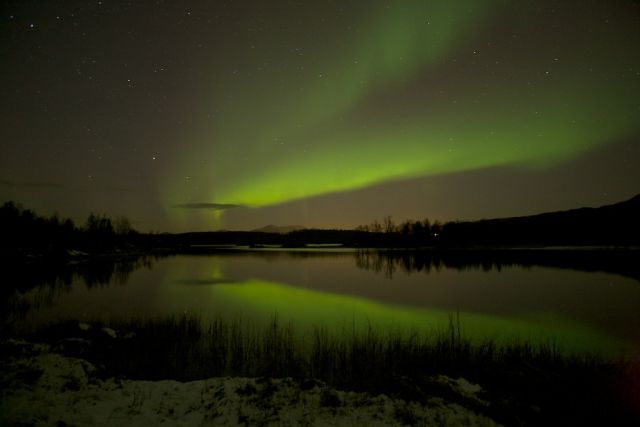
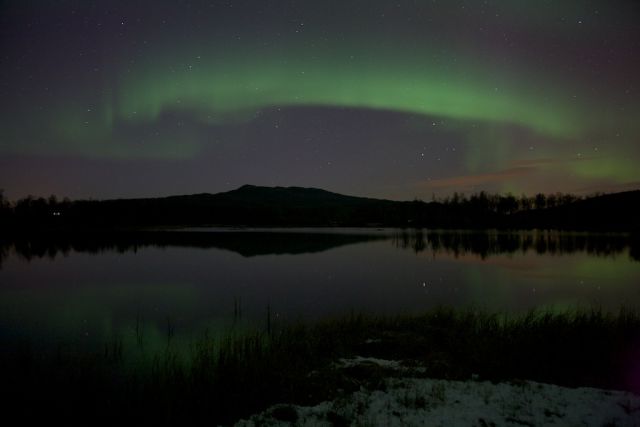
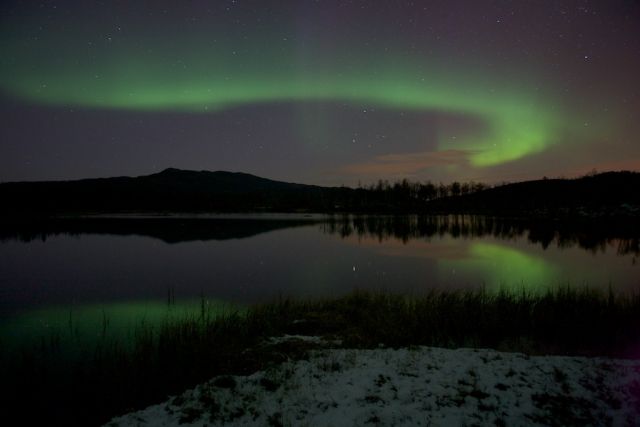
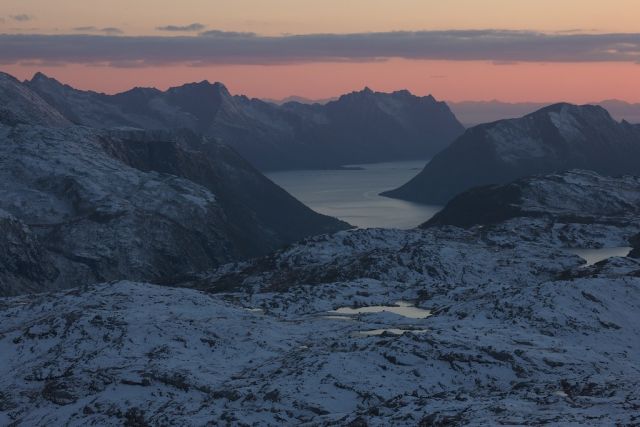
A good example of the 21-35 versatility follows. I'm currently in Troms, Norway and whilst I haven't much enthusiasm for photographing the Northern Lights, the wife has. So, the trip was scheduled to coincide with a new moon and high probability of solar activity around the equinox. Last night conditions were promising and so at the anointed time and location, she'd bagged the best spot and the 'fast wide prime'. I'd forgot my remote shutter release and my 'fast wide' was therefore the 21-35/3.5-4, all the images below are ISO 1600, f3.5, 21mm, 30 sec exposure.
EDIT - The images are SOOC raw conversions, with no lens corrections nor camera dark frame taken.
I'd forgotten to take the lens out of the rucksack from an earlier excursion, fortuitous as the added weight proved useful in generating some much needed warmth on the slog/trek up here
I've been thinking about what I like about my 21-35 and about Leica R lenses in general. I have lots of thoughts, many of which conflict. There's only one thing that's fairly consistent:
I owe everyone who posts here a big "thank you." Michael, Jon T, Rich, Douglas, Jack, John H, and many others have all given me quite a lot of enjoyment and education. It staggers me how much beautiful work is shared here, for free and for the sheer passion of photography.
mikwest wrote:
Thank you very much for your answers.
it's very difficult to know if the 19 mm V2 is a good choice because you don't find a lot of tests and experiences in numeric. It seems that the problem is in the corner. And for the price, you want the best (like for the 28 mm V2).
I've owned the 21 mm Zeiss Distagon on 5d mark2. I liked the micro contrast of this lens. However, he's very big.
There isn't a lot of choice for wide angles.
The other problem with the 19 mm is the lack of possibility for ND filter...
I haven't handled the D21, but I just got the R19v2, which appears much more compact. In any case the 19 handles very well.
There's also Matt Duclos' 77mm step-up ring. Mechanically it's very nice. But in FF, vignetting occurs immediately when a filter of any thickness of mounted to it (even something as thin as the Cooke Harmonie uv filter). I just bought this and haven't decided what to do. I may buy a 72mm UV filter and glue to the adapter (I just want protection, not filtration). Or perhaps it's possible to grind it down.


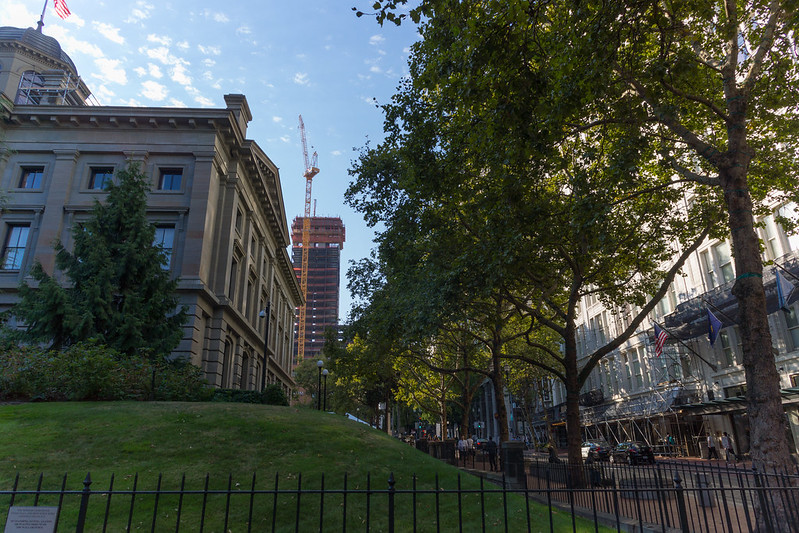
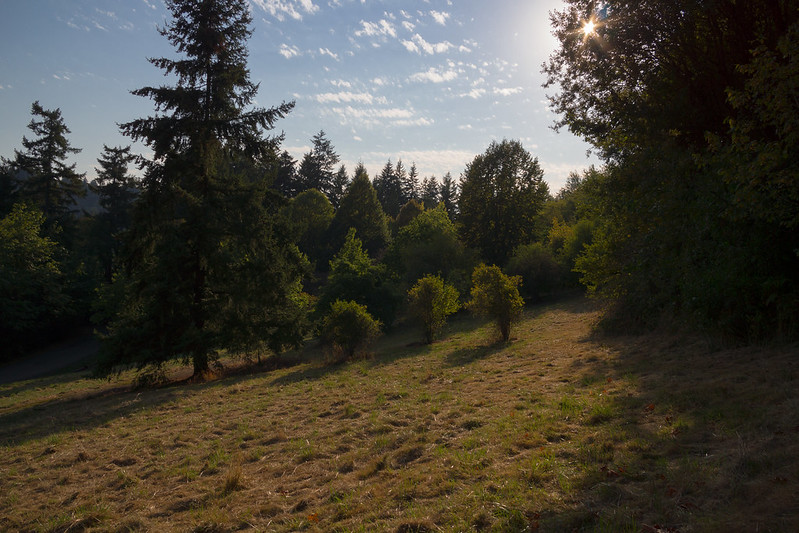
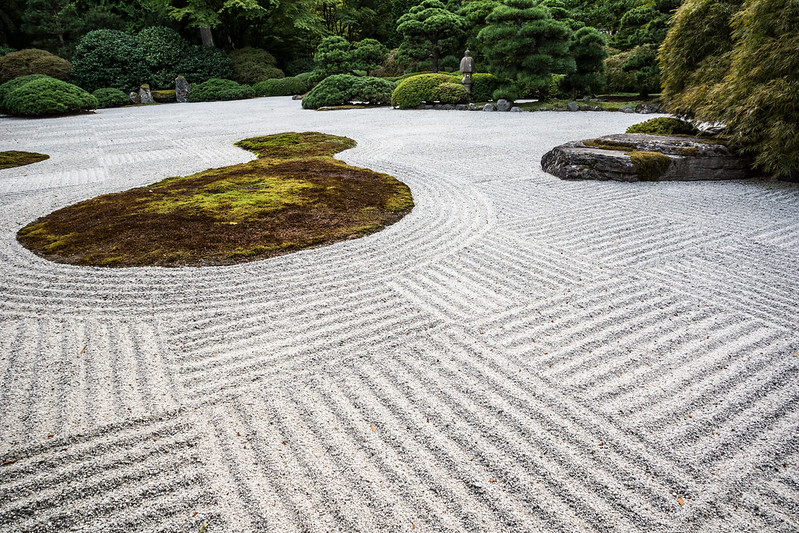
 The extreme corners aren't so great wide open, but the rest is excellent.