The first one is from the same seller that I purchased mine at the end of November that had been in M or M- condition, but 3 cam. The seller accepted my offer at the end of November for $4700 for what I remember was an asking price of $5500.
I could also post if anyone wants the listings for the 80-200mm f4 Vario Elmar lenses on ebay. I was fortunate to find mine in early December in M/M- condition from Igor's Camera for $1100. The ebay prices right now range between $1550 or BO to $1899 or BO.
Obviously it is going to be a bumpy ride for some of the special and best R lenses that any of us may wish to purchase.
Taylor Sherman wrote:
Wow, the field curvature of that picture with the radio telescope is indeed very strange.
I think R lens prices are up a bit because of the Speedbooster, too. I know I've been browsing / bidding on much more of them lately.
Me too, still trying to found 90cron and 80lux at good price. not a good time for sure. I am patient though, I don't use focal length more than 50 often.
Worldinlens wrote:
I think this is a temporary phenomenon. Especially, while generally I do not see in the new camera that will make at least think about it. IMHO
My guess: when Zeiss (and others) start turning out longer high-performing APO lenses for 30,40, 50+ MP sensors, along the lines of the premium fast primes set to accompany the anticipated 55/1.4 or the new 2/135 APO, only then will we see a moderation of R prices.
I doubt demand for Leica R is driven by much more than a belated recognition of the quality they deliver, and the special character they imbue in images, M lenses are a limit case after all, and the company put their heart into the R range as well...the adaptor/mount market has facilitated this, along with the web, and better sensors of course - blame Sony! Video demand plays a part, but prices will always rise for a limited volume of high end lenses, each year more get dropped, damaged, lost..
Makes you wonder what would have happened to CY prices if Zeiss chose to ignore the DLSR market as Leica have. The 21mm Distagon is 20 years old, and fetches the same money as the current ZE model. Several of mine cost $1000 or more. Some of the newer ZEs are great already, the 135/2, 15/2.8
Prices also come and go in shorter cycles within the long term trend, and when people realise how poor the new M is for Leica R lenses, the less well-known ones will maybe fall somewhat. Then there is the looming debt crisis as the world wakes up to crazy Keynesianism, as if austerity was ever an option.
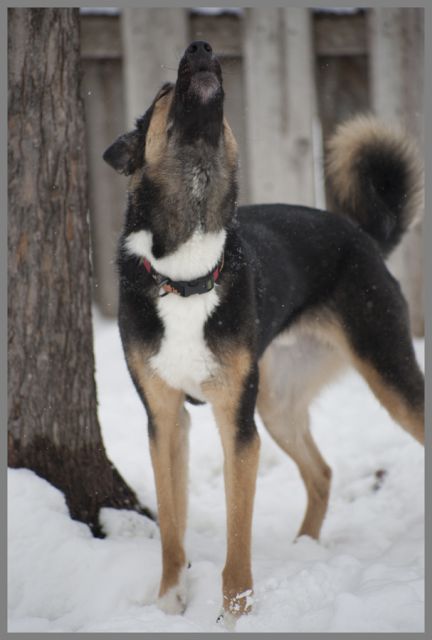
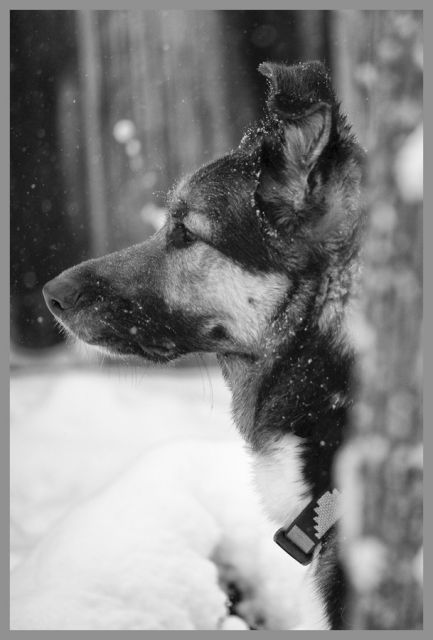
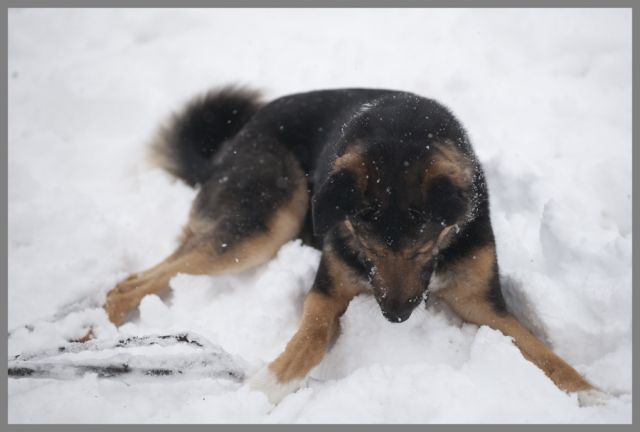
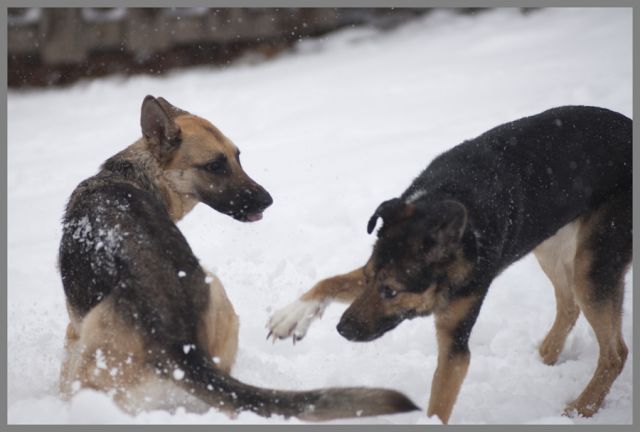
Here are 4 photo that I took yesterday with my tripod mounted Fujifilm X-E1 camera as it is approaching sunset at the Lock Ridge Park (the site of an old Iron Furnace works), Alburtis, PA. All images processed in LR4.4RC. The first 2 are of the remnants of the Carpentry Shop and were taken using my Leica 35-70mm f4 Vario Elmar zoom lens. The second 2 images taken with my Leica 80-200mm f4 Vario Elmar lens.
A quick question to those of you who have experience with both the AE180/2.8 and the AT280/4: I currently have the option to buy an example of the latter model that has recently been to Solms for CLA. Compared to my AE180, I noticed that the focusing ring requires quite a lot of force to turn and seems rather 'sticky' if it hasn't been turned in about half a minute or longer. Is this normal? I should add that my AE180 focuses very smoothly and easily, allowing focusing with just one finger.
Funny you should mention that, Ron. I was using my 180/2.8vII and 250/4 yesterday and noticed the 180 requires significantly more force to turn than my 250/4. I bring it up because the 180 came back from a CLA in Solms before I bought it. I don't think the 250's ever been CLA'd (from the looks of it, it was somebody's shelf or bag queen). Maybe Solms repair feels we should be building up our wrist and finger strength.
First two with the 250 wide open, last two with the 180 wide open.
Thanks for your feedback, Almass! I thought this to be the case. Am I right that the focusing rings of both lenses use ball bearings rather than the more usual friction bearings? I should probably note that the lens in question is P/N 11263.
freaklikeme wrote:
Maybe Solms repair feels we should be building up our wrist and finger strength.
Perhaps this will loosen over time as the lubricant distributes? It's not a major issue. Another thing I've noticed is that the filter drawer sits quite loosely in its locked position. It has quite a bit of play and the resulting gaps would quite easily allow dust or water drops to enter the lens. IMO, this doesn't fall in line with Leica's usual standards regarding fit, finish and tolerances. I would appreciate any thoughts on this as well.
Ron Pfister wrote:
Another thing I've noticed is that the filter drawer sits quite loosely in its locked position. It has quite a bit of play and the resulting gaps would quite easily allow dust or water drops to enter the lens. IMO, this doesn't fall in line with Leica's usual standards regarding fit, finish and tolerances. I would appreciate any thoughts on this as well.
This doesn't sound quite right, either. On my 280/4, the filter drawer snaps solidly into place. It will jiggle side to side, front and back by ~0.5mm if you move it, but the felt lining between it and and lens never opens up gaps that look like dust/water leaks (there's always a downward spring force that keeps it seated against the lens). Also, the focus ring has a very light touch (a little bit stiffer than one-fingertip movable, but no sticking/tightness).
Agree with Michael. The lens has a long throw, and I can detect variation in friction based on position and direction, but only at the anal level. Touch is light overall because of the internal focus design. The filter is secured by (I believe) spring-loaded ball bearings, and I have no looseness or gaps. If your lens has clean glass, and delivers optically, keep it. Lubrication breaks in with use, and you can get mechanicals tweaked in the next service call.
I have a 180/3.4 that has an extremely stiff, damped, feeling when extending the hood, and the hood feels rock solid when extended. I just got a 180/2 which feels a fair bit looser when extending the hood, and whose hood can rock back and forth a bit (not nearly as much as some Nikkors, but a bit) when extended. Is this normal?
I have a 180/3.4 that has an extremely stiff, damped, feeling when extending the hood, and the hood feels rock solid when extended. I just got a 180/2 which feels a fair bit looser when extending the hood, and whose hood can rock back and forth a bit (not nearly as much as some Nikkors, but a bit) when extended. Is this normal?
Sometimes it can help.
All R-hoods have on the inner surface the felt pad, which provides the necessary friction.
You can try to moisten it with water a bit and move the hood many times, to remove excess water. Felt pad inside of the hood is completely dry in a week. Then often the hood moves much more freely.
This advice at your own risk, of course, do not need to put the lens into the shower