I dont think so...The bokeh is highly distracting which really does'nt help and because its been taken at a wide apeture the forground is'nt that sharp and DOF is shallow enough thats theres poor seperation of forground from background.
I suspect its taken with a fast 50?, which, going by this thread, dont seem to be too good for producing 3D images and it seems that that most lenses that are able to give a 3D effect, in the right conditions, have focal lengths of at least 85mm or more, with 135mm being optimal for the effect...But thats just going by the pics in this thread. Is this because they have simply used very sharp 85-135mm lenses with really nice bokeh?...Probably. Is its essential to have very sharp 85-135mm lenses with really nice bokeh to produce the effect? No but it certainly seems to help.
Its strange that I dont recall anyone posting any pics from lenses of over 200mm in this thread that show the effect, although I think my 180mm pics did. (not everyone agreed though).
after seeing the watering can here's my take on the subject.
what we perceive to be '3D' is what matches our vision the most. you experience "depth of field" all the time with your own eyes. right now reading this post, you're concentrating on the screen, and the other objects in your room are "blurred" by your eye's bokeh. whichever lens approximates that the most seems the most "3D", or "real", because that's what you're used to seeing with your eyes. does that make sense?
i used to shoot with the CZ 50/1.4 a lot, and it definitely had that effect, whether wide open with short DOF, or stopped down a little bit.
@loudtiger
I understand that, and for the most part photos with just the right amount of DOF appear 3d to me.
Reading back into the previous pages, the only photo that really strikes me as 3d is the photo of the rocks on the beach.
Everything is in focus, yet the rocks seem three dimensional. They're almost bulging out of my screen. How is this possible? What makes one lens be able to do that and another lens not.
I've been researching alt lenses all day today, and I can honestly say that I'm not seeing MASSIVE differences between most lenses.
Other than CA and some sharpness and color differences, all these lenses are seeming extremely similar to me.
If I'm not detecting these differences, do they really matter?
Richard probably would associate lens design with 3d look. While I agree to a certain extent, I still strongly believe micro contrast will play the biggest role.
What's 1 thing that all zeiss lenses have in common? Not the design, some are Planar some are Sonnar some are Tessar, some are primes and some are zooms. But all of them to a certain degree are successful at introducing 'pop' into the scene (nothing music related here ). Which leads me to deduct the secret must be what all those Zeiss have in common, T* coating.
T* coating is extremely adept at retaining micro contrast, even under unfavorable lighting conditions, of course it can still flare or ghost if the lens design is too complicated (e.g, C/Y Contax Distagon 21mm), but for the most part subtle tonal details are conserved. This helps produce a 'live' and vivid look which our eyes are accustomed too.
If you think about it, for a subject's form to 'pop', 2 conditions should be met:
1./ it's surface texture should be there
2./ edge contrast should be there
A lens that fails to render subtle texture on the surface of an object will make the subject itself appear flat and lifeless; on the other hand a lens with good micro contrast will retain all those subtle details. And edge contrast is pretty self explanatory, it determines whether the subject blends into the background or gets lifted off it, here micro contrast will help render those tiny details at the edges of the subject, before the DOF falls off completely and transits into the blur background. Lens design would help tremendously here, smooth or abrupt transition also contributes to whether things pop or blend with background.
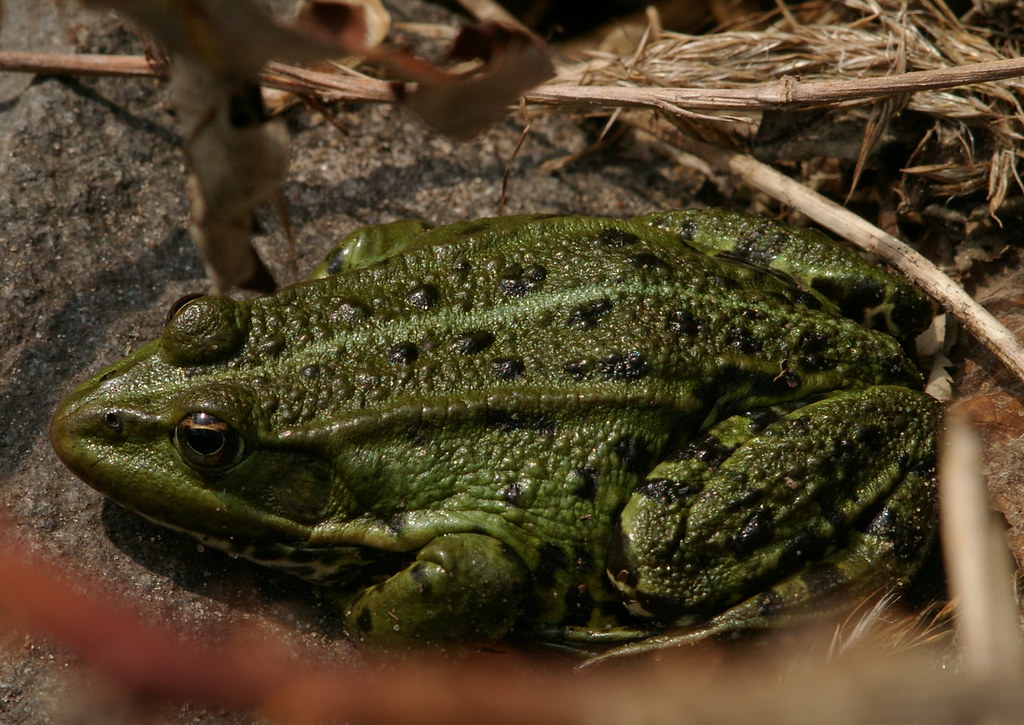
IMO the frog has some 3D going on. The other two have a sense of depth, due to the many layers, but I don't see any 3D, i.e. nothing in there has that strong feeling of shape. The possibly minor exception would be the balloons.
Thanks for coming back Carsten ! I understand you are linking 3D less to depth and more to a bodily appearance a.k.a. 'perception of roundness'.
I'd think so, too (like people's heads in portraits). One variable is the size of the image, and I think most pics look more 3D the bigger they are displayed.
BTW none of those pics have been pp'd but some are cropped. One is Zeiss East, one West, one Leica .-)
Best, Georg
Thanks Espresso, as I said no pp at all, the red tree has had a polarizer though.
In general I'd say you have a very good chance with good lights (-angles), nailing the exposure and the focus as well - the other part of the equation is a lens that does excel in the micro-contrast department (MTF>50). Those are more demanding so you really gotta nail the rest.
I get a feeling of depth in those two images, but no real feeling of 3D, i.e. form. I think in the second one, the depth of field is actually too shallow to lend a 3D feeling to the objects in the scene!
carstenw wrote:
I get a feeling of depth in those two images
+1 ... which is still a good thing
Probably hapens to many of us ... striving for 3D, obtaining depth. Sometimes, I think of it as 2.9D ... I'm getting there, but I didn't quite make it THIS time.


 ). Which leads me to deduct the secret must be what all those Zeiss have in common, T* coating.