Bifurcator wrote:
Hehehe, it seems like we've come full circle and we're back to "It's DOF with micro-contrast (detailed texture)" yet again.
I don't see it that way. Subject of picture can be 3D if it has shape in photograph. In order to have shape the object needs to have texture. Depth (if you think shallow DOF = depth - I think depth can be caused by other means as well) can help/enhance viewer perception of 3D in whole image, but I don't think is is the cause for 3D look on the subject.
However there must be secret ingredient :-) in this formula since this just doesn't happen with all lenses, no matter which conditions I have...
Bifurcator wrote:
Well, you said you saw it a little bit in one of my images and those are all crappy point and shoot shots.
And where it's defined that point and shoot needs to be crappy... For example Panasonic LX-3 can produce "something similar to the 3D thing we are talking in this thread" in some macro and close-up photos (never seen in "normal" photos), assuming RAW image is converted without Panasonic's horrible Silky Pix or other software using Panasonic's "remove barrel distortion, make everything blurred"-corrections.
Bifurcator wrote:
And please forgive me but I'm still not sure why we have to redefine what has already been defined in much more detail, scientifically, and without imaginary "feelings" or a magic ingredient. <shrug>
When you find this document describing 3D "much more detail, scientifically, and without imaginary "feelings" or a magic ingredient. " please send me a link, I'm interested to read that one. However whatever is written to some document won't change what I'm seeing - even the document would claim that DOF makes 3D being at same time very detailed and scientific I still would see 3D in cogitech castle photo and you would not, or does reading a document change what you perceive?
Or were these random links to photography "articles" there to provide this "more detail, scientific" explanation? I was familiar with majority of them, and the unknow I checked. Only one touching this 3D was the the first link which had some funny descriptions to "bokeh" etc. photography words: "Three dimensional – probably the same as pop, although because of the extra syllables not so frequently used by the random praise brigade."
This sounds very scientific and more detailed
I just finished skimming through most of what you just posted. Assuming you have read it all yourself, I am really lost why you say that imaginary feelings come into play in this discussion.
We are at the point of agreeing to some sort of common terms, breaking down the wide and unclear term of '3d' and 'pop' into more defined and precise terms. This should help us actually point out which of any of those qualities a picture has. Specifically because you keep on hammering about definition and all the misunderstandings that come with it.
We are not actually redifining anyting, but analysing a phenomenon through breaking it down in independent qualities. What is wrong with that? Your contribution in this thread underlines a need for a common approach to this phenomenon, what else are we discussing about?
Texture points to the object photographed, not to the resolution or detail of a photo itself. It is not just a collection of pixels that form a shape recognisable as a picture of an object. When a picture has much texture, I am less aware that I am looking at a picture, rather than the thing itself (das ding an sich!). To some degree you know how the object might feel.
Since I was mentioned in a previous post I thought I'd respond to this thread and throw a different perspective out there.
Neuroscientist Susan Barry, Ph.D. documents in her book "Fixing My Gaze" her journey from being someone born with the inability to see stereopsis (3D) due to crossed eyes at birth to (with the help of surgery and vision therapy) acquiring the ability to see in 3D in her fourties.
What this book explains is how the brain processes binocular vision. Over time it becomes ingrained and we see everything in stereoscopic depth - even when we are looking at single perspective photographs.
How?
We use a combination of things to see 3D that all combine to support the most powerful component: stereopsis (the fusion of each eye's perspective into a single image). Stereopsis becomes so ingrained that when the brain is imaged, binocular neurons are seen to fire even when people are looking at single perspective imagery. In addition to stereopsis, the brain uses perspective, shadows, focus and in the case of motion pictures motion parallax to solidify 3D in the brain. It is important to note how Dr. Barry could not see motion parallax prior to gaining the ability to see stereopsis. It is the ability to fuse 2 perspectives into one that is the most powerful component.
So, all photographs are seen (referentially at least) with a level of 3D that is based upon the 3D cues within the photograph. However, as compared to a photograph that contains different perspectives (autostereoscopic 3D photographs) the perceived depth is no longer referential or interpreted, it is direct and considerable.
Bifurcator wrote:
I dunno ... my basic thinking never attempt to use a term like "3D" to describe a photograph again.
3D-ish in a 2D medium is ... and will always be ... an illusion that renders the viewer with a greater sense of dimensionality (insert many other words here).
I can't help but think of other 2D mediums, from an artist's charcoal to an engineer's CAD, that do an excellent job of rendering this 3D-ish illusion. There are many things that go into their drawings (scale, contrast, shading, etc.) that combine to achieve the illusion to one degree or another ... I would expect that someone working with charcoal would argue that product A gives them the ability to render that effect better than product B (i.e. paper, charcoal, eraser, etc.).
The dialogue of 'HOW' it is achieved (or WHAT casues it), is a different one from 'WHAT' is it. But to suggest that the term 3D should not be used simply because there is not a universal consensus on How / What casues it ... would be akin to asking all the art teachers & master artists of the world throughout history to recant their works that have been lauded as having 3D-ish workmanship qualities.
Until someone can wake the dead and change the entire world's utilization of the term 3D relative to 2D mediums ... the term is valid ... highly subjectively, but valid.
My .02
BTW ... can we get back to some great pics of 3D-ish examples. I tried to shoot some yesterday ... they were all VERY 2D
RustyBug, I have never seen painting or drawing which looks like photo which has 3D-ish qualities. Neither CAD drawing. And I have seen very many of both, I still plan to see paintings/drawings but if I can live without CAD drawings I don't mind . In the painting/drawing classes instructors did teach about these "cues" (not sure about english name, but based on this thread I think it's the same thing) and if I see those cues in paintings/drawings I know "ok now I have to thing that light is coming from that direction, and based on shading the subject artist had drawn is this and that shape" - however I have NEVER got any feeling of looking 3D subject in painting/drawing. If I close my eyes and think, I maybe can imagine it. On other hand this 3D-ish thing in photos, when it happens I see it without using my imagination and closing eyes...
RustyBug wrote:
BTW ... can we get back to some great pics of 3D-ish examples. I tried to shoot some yesterday ... they were all VERY 2D
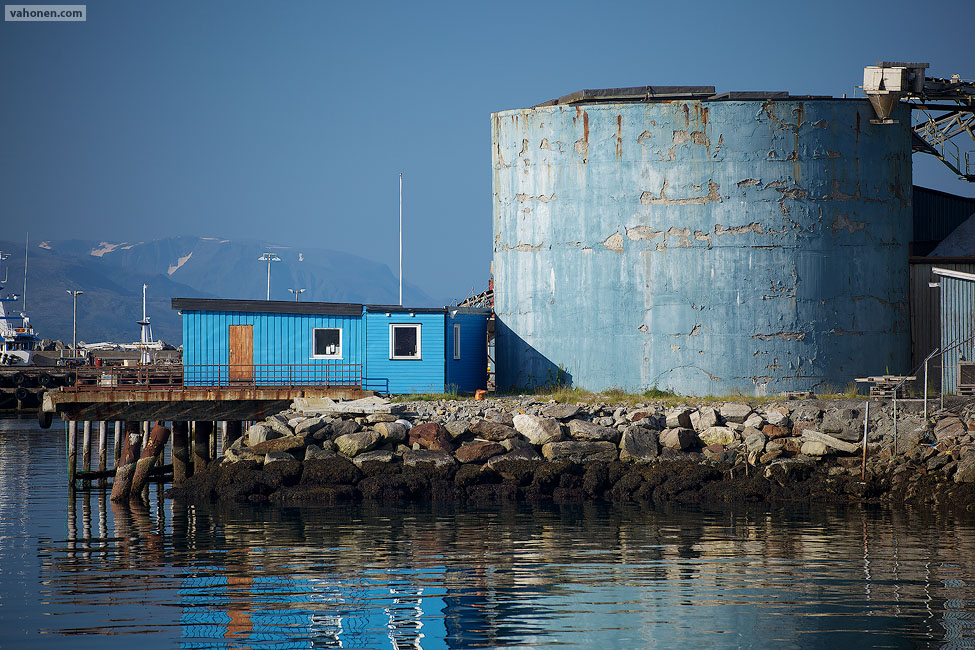
Sure photos are much more fun that talking BS. This time I have anti-example of 3D-ish photo. This scene has all good signs to produce 3D-ish, and I really expected to get it:
- nice side lightning
- rough texture on the big round container (the huge light blue thing)
- subject separation by light, color and DOF (DOF only on A3 print, not on this small webthumbnail)
- rocks on the front give 1000+1 possibilities for 3D-ish look
However I made mistake: I did use wrong lens, I already had Leica Vario-Elmar-R 80-200mm f/4 lens in use, and I was lazy and didn't change to Contax Sonnar T* 2.8/135. As a result I have photo which I kind of like like but it's lacking this 3D-ish look and fails as photograph (if one prefers strong feeling of presense through 3D-ish look - I do), this doesn't even work as large print (when printing 3D is typically better than in screen). Well, next time I know...
I think the shot looks great, but I know what you mean by less 3d. The colors are sublime and i love your composition, but it does not "pop" like a few of your nature shots, that just jumps out at you!
What Ulrik said. Fabulous drawing style, but it is a picture one sees rather than feeling "there". Exactly why I sold all my Canon lenses, and they weren't as good as this (nor I as good, for that matter...).
biotar wrote:
I just finished skimming through most of what you just posted. Assuming you have read it all yourself, I am really lost why you say that imaginary feelings come into play in this discussion.
Mmm, I think it's because the discussion is convoluted and no one can agree on anything where it breaks down into comments like "There must be some magic ingredient." Or "Lens X does it better." . The "3D" in traditional art that had been so kindly explained and explained fairly well just above - has already been defined. There are various techniques that can be used by themselves or in combination including but not limited to: Micro Contrast, Local Contrast, Color Contrast, Perspective, Convergence, Lighting, and DOF Blur. Each of these can be used as depth cues and all of these always affect depth. Each group of links I pasted offers an explanation or tutorial on each of those. I did this to show that we already have the terms needed to discuss and comment on photographs that contain those attributes.
From reading the rest of your post and the posts below we are essentially saying the same things but from opposite points of view. I'm saying we already have the terms for the attributes. And it seems like this thread is saying let's create a term that describes those attributes - and here's the part that bugs me - but only when I personally can recognize them. This is so subjective that it's influenced by feelings about gear, feelings about the person posting, feelings about the subject matter, individual memory, the seating position in relation to the monitor, the size of the monitor, the individual's color IQ, individual's ability to recognize shapes and patterns, and literally even "magic".
Oh my goodness, why?
Anyway, it's all good fun. I'm not actually suggesting that anyone stop doing this. It's kind of interesting after all. I'm just trying to express how I feel as I read on. It's like reading someone say "wow because of the colors that REALLY pops off the page!!" and I'm sitting here going: Yes, that's known as color contrast. And then watching the discussion mature about "pop" as each element that is brought into the discussion in an attempt to try and describe how a person feels about "pop" is really something that's already been defined whether it be lens contrast, or what have you.
The discussion isn't evil or anything, I just have a tendency to use established and definable terms with a solid usage history in the scientific community. That way everyone knows what I'm talking about or can look it up - unlike "pop" or "3D" is when describing a photograph.
I know its all in good fun of course. I try to take your comments seriously and honour your observations with an honest reply. I do however get the feeling that you do not take my and other peoples observations seriously when we break apart many qualities that pictures simply can contain.
I read from your post that you think people are approaching the subject with neologisms, while I repeat to say that terms as depth and texture have been well defined and have been coined throughout art history for many years. While I do see a role for the spectator to experience this which indeed is a very subjective excersise, no magic comes into play here.
-edit: and please excuse my crappy english above. Its getting late now
No problem! Your english isn't crappy. I even learned a new word from you: neologism. (a newly coined word or expression. The coining or use of new words.)
While I think the neologists here are stepping out of the realm of definability with their new vaguely defined terms, I do take their observations seriously. I'm not sure what would give you the impression that I don't. <shrug>
PS: By "magic" I just mean fleeting or undefined cognitive process. Something people "can't quite put their finger on".
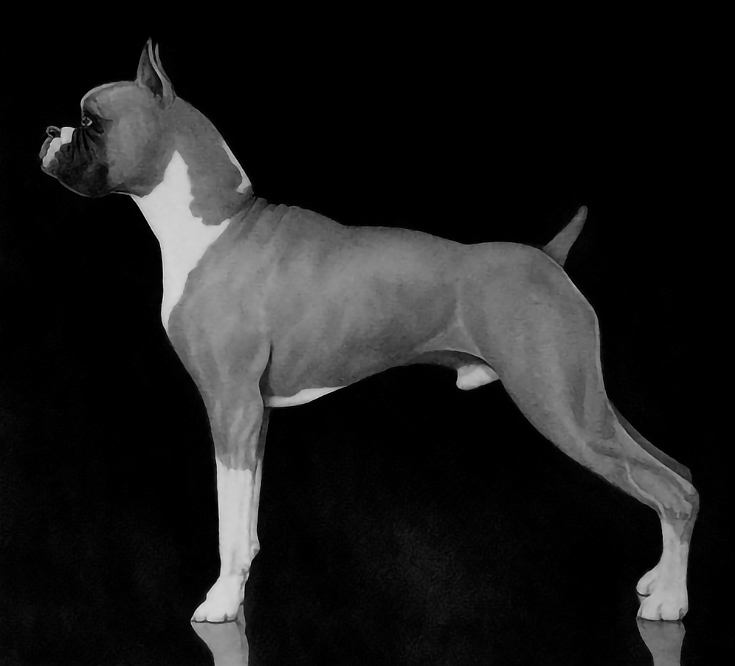
It does for me. Depth wise it's got perspective convergence of lines, angles, and curves, plus the vignetting offers an additional level of depth. I can also put myself "into" the image as an imaginary spectator and participant. When I defocus my eyes slightly I get a sense of 3D shape. It's not the popping 3D definition that started this thread - as I understood it. But it has the illusion of depth - which I think the discussion has recently come to qualify as "3D".
Bifurcator wrote:
Yep, I think both this and Samuli Vahonen's water-tank have certain depth cues that lend them a greater than average sense of depth.
Bifurcator,
The photo above was posted as example of NOT HAVING ANY 3D-ISH LOOK BUT BEING EXTREME FLAT where other lens from other "lens family" would most probably have drawn 3D-ish look. For me the picture is absolute failure since it looks flat, every other aspect in this photo I like (I like old thing in bad shape more than new thing clean and shiny when it comes to human made things as subjects in photography, I like the colors, I like that in A3 print I can see individual wires in the fence etc. small detail and I like the composition).
I think I now start to get why we are constantly arguing about this: you talk about different topic than other of people here. You are talking ONLY about these depth cues as 3D. These require that you think "ok light is coming from there, based on the lightness in object it's the water tank is round shape". While many other people in this thread have been referring to the phenomenon which leads viewer to see for example the shape of the castle in cogitech castle shot, this does not require any thinking "based on shadows the rocks on the wall of castle are rough textured and this and that shaped", but you can see that without thinking.
I don't know why you don't see it, maybe you are so fixated to your thinking "Ok here we have photo, let's start to look at the depth cues - none found - OK this is not having 3D-ish look" or then there are physical differences how humans are able to process image on computer monitor. On other hand, even there are 100000 depth cues in photo but not the 3D-ish look majority of people here talking here, I don't see any 3D without starting to think the cues and how they are visible in photo. Due to this I have not yet ever seen drawing/painting, which would appear 3D-ish the same way as some photos having this quality.
Based on that you don't see it, you keep arguing about unrelevant stuff, which kind of makes sense if thinking from your point of view. However from now on I try to understand that you are only talking about these classical art depth cues while majority of people are talking about other thing, makes this whole discussion much more understandable.
Thinking about it a little more, I don't recall seeing what I thought was 3D in a shot with a very large scale.
I think that the 3D feeling is a trick that the mind plays on us when certain conditions are fulfilled. Richard has mentioned this before as well. I think that the mind can more easily see 3D in a 2D image when what it sees *could* be something that we really see directly *as the image portrays it*. The eye sees in a very specific way, and so I surmise that we have to try to mimic this to try to trick the brain into thinking that it is really seeing directly what is actually an image.
One obstacle is the low resolution of most screens. There is simply a limit to how many pixels per inch a screen can have, but there is no limit to how much detail can be in a square millimeter in the real world, and I think the brain picks up on this. That shots only show 3D when they have high micro-contrast plays to this. Over-sharpened or smeared images are immediately detected by the brain as "fake".
Already touched upon is the amount of blur in the background. I don't know what effective aperture the eye has, but it has to be fairly small, perhaps f/16 in the daytime (although the background of what I see is softer than what I would see with a 135 camera, it also stays sharper than what I might see in the background if I focused very close). Nothing ever seems very blurred in the background. On the other hand it doesn't seem to act the same way as a lens does, i.e. whether I focus near or far, I seem to get about the same amount of blur. When a photo has too much blur, I *think* the brain also rejects it as non-real, in general. The more detailed Zeiss blur plays to this. This could also be why some people prefer Leica (abstraction, surreality) and others Zeiss (realistic, 3D).
The perspective is another point. It seems that 3D mostly shows up in the 35-85 range, with a few exceptions like the 21 Distagon and 100 Planar. I have never seen 3D from a long lens, unless it was shot at very close distance, like portraits with a 180/2 or 200/1.8. In other words, the perspective has to be pretty natural for 3D to easily kick in. Perhaps this is why Samuli's water tank shot doesn't have 3D. The distance is too great. Samuli, try going closer and shooting it with a 35.
I wonder if all the pixels on the screen which are not the photo are distracting the brain? It might be interesting to hold up a black cardboard frame around the photo in which we are trying to see 3D... It could trick the brain into thinking that we are looking out a window.
Anyway, just some thoughts. In summary, I think that the closer to reality a shot is, the easier it is to see 3D.
I dunno. I don't think that's the deal at all. Here. Allow me to dissect your post without taking it as a reply. Only what I think when I read what you're actually saying. OK? This might sound argumentative but it's just the raw thoughts I have when reading and not meant to be. So if it sounds kurt or condescending PLEASE forgive me in advance as it's not the purpose of this text - there is no emotional content on any kind of personal level here at all. Cool?
Bifurcator wrote:
Yep, I think both this and Samuli Vahonen's water-tank have certain depth cues that lend them a greater than average sense of depth.
Samuli Vahonen wrote:
The photo above was posted as example of NOT HAVING ANY 3D-ISH LOOK BUT BEING EXTREME FLAT where other lens from other "lens family" would most probably have drawn 3D-ish look. For me the picture is absolute failure since it looks flat, every other aspect in this photo I like (I like old thing in bad shape more than new thing clean and shiny when it comes to human made things as subjects in photography, I like the colors, I like that in A3 print I can see individual wires in the fence etc. small detail and I like the composition)....Show more →
Flat? not to me. Flat means solid color without tone variations across surfaces - that image has those. Flat means there are no recognizable BG or FG shapes that "without thinking" are immediately identifiable as distant or near. That image has both - the mountains and the ocean and the hamper in front of the water tank to put that in perspective. Flat means no lines or edges that define shape - OK, not so many of those. Flat means no shading (equal lighting values across the surfaces.) this image has that - the tank is immediately revealed as round, the shack is square and casting another revealing shadow. Flat means that textures maintain an even scale with no depth cues on angle or via distance. "Without thinking" the ocean has that itself, the water-tank has that - again showing roundness, and the mountains in the BG have that - but it's subtle.
Wow that's a lot of depth cues that were naturally in the image (which I didn't have to think about) that all hit me at once - at a glance.
I think I now start to get why we are constantly arguing about this: you talk about different topic than other of people here. You are talking ONLY about these depth cues as 3D.
I can't follow that logic, there is no 3D without depth cues. It has to be reliant on some or some combination of cues (attributes).
These require that you think "ok light is coming from there, based on the lightness in object it's the water tank is round shape". While many other people in this thread have been referring to the phenomenon which leads viewer to see for example the shape of the castle in cogitech castle shot, this does not require any thinking "based on shadows the rocks on the wall of castle are rough textured and this and that shaped", but you can see that without thinking.
What is he talking about? That makes no sense at all. Of course, every image is "just looked at". It either feels deep or it doesn't. From there if we want to know why THEN we pick it apart aspect by aspect to analyze why or why not. No one looks and before feeling the impression says to themselves: Oh there's a shadow, it must have 3D. Huh?
I don't know why you don't see it,
I do see it! I just said I did and explained why on both the B&W and your water tank. Even though you yourself don't see it on the water-tank. I do and defined the attributes that caused that impression.
...maybe you are so fixated to your thinking "Ok here we have photo, let's start to look at the depth cues - none found - OK this is not having 3D-ish look" or then there are physical differences how humans are able to process image on computer monitor. On other hand, even there are 100000 depth cues in photo but not the 3D-ish look majority of people here talking here,
I'm not analyzing the image prior to my natural impression of it as I said, and every time you or anyone attempt to describe and define this "3D-look" they directly describe one or more of the depth cues apparent in the image - and that have been named by me a few posts up in this thread. Is there another aspect outside of these given definitions that makes this 3D-look? If there is no one is capable of describing it other than to say "it looks 3D-ish to me". Which is no technical or analytical description at all. That's just the impression. OK, define it please.
I don't see any 3D without starting to think the cues and how they are visible in photo. Due to this I have not yet ever seen drawing/painting, which would appear 3D-ish the same way as some photos having this quality.
Again I feel it first as all human beings do. And my initial thought is that you haven't seen a lot of drawings and paintings. I've seen paintings and drawings both that are indistinguishable from photographs - yeah, they're not so common but...
Based on that you don't see it,
I do see it. I just don't see the same as you. No one does. No one can without your eyes and your brain. But I see "3D-ish" looking photographs and one's that aren't so much so. The only difference I can detect between us is that I can describe what I see with real terms that have precise definitions whereas your adjectives are fuzzy-ish and not precisely definable like the word "love" or "3d-ish" or "pops off the page" or "I can feel the shape". I can identify WHY it pops off the page and WHY I can feel the shape and you don't seem to like that.
you keep arguing about unrelevant (SIC) stuff,
Aside from this message and how it may sound, I'm not arguing at all and I don't see how using accepted terminology to define various aspects of a photograph (which contribute to a "3d-ish look") can be called irrelevant when that's the topic of the tread.
which kind of makes sense if thinking from your point of view. However from now on I try to understand that you are only talking about these classical art depth cues while majority of people are talking about other thing, makes this whole discussion much more understandable.
Another "thing"?? Thing? Define this "thing" in accurate precise accepted terminology please. It's almost as if you're so desperate to create or coin something so completely new that you're refusing to accept or apply any preexisting definitions. Definitions that in total define ALL aspects of a photograph besides the actual objects being photographed (meaning a definition of the actual water-tank itself - as in your example shot) including the optical illusions that have been discussed.
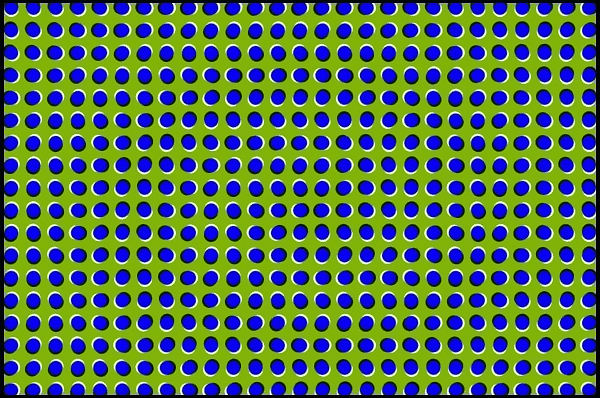
Here's a neat optical illusion just for fun:
--
Again, please don't take any of this the wrong way. It's just mean to show the contrast between your words and my thoughts on this topic. It's all good, you're cool! We're cool!
Bifurcator, I can't keep up with you and other people here. I just simply don't know the terminology well enough to write this stuff in English. I do speak mostly English at work but it's about business, technology, IT and "how are you doing"-BS - of which ANY doesn't help on discussing arts in English... So sorry for using the wrongs terms:
- flat (when referring the water tank shot): by this I did mean I don't get the same feeling as cogitech castle shot in which I geel the shape of the castle when watching photo - if I think about the cues, yes I can understand that the tank is round etc. but the shape doesn't come out from picture
- "thing" in the end - like said I have enjoyed watching other people discussing this since you guys are doing it so well. I do not have word for this, however the "thing" is that what is visible in cogitech castle shot, brainiacs wide angle face shot etc. I think we used 3D before you declared we are not allowed to use it since that word is reserved for the classical art cues to determine shape/3D. Carstens used "3D feeling" in his latest post.
By saying you are not seeing it I'm referring to that you don't see the 3D in cogitech castle shot. If you still feel so then you do not have no clue what I mean when I say the water tank shot is flat and cogitech castle is 3D ==> we are talking about different things, not matter do I have proper word for it or not.
You are right that I have not seen that many drawings just 20-30 exhibitions during my life this far, but paintings I have seen plenty and painted myself as well. From your examples only the cat image (the wall behind, the cat itself flat at least on this miniature version) appears to have some 3D feeling. And it has something very distracting at same time even at this minimalistic size (at least the black halo on the left edge of cat, like oversharpening halo). All other examples look very photographic & real FOR a drawing/painting and do have classic art clues about 3D, but to me they do not have this phenomenon what is apparent in cogitech castle shot. Like said we are talking about different topic.
However I think that I'll better back off from your definition discussion since I don't have the skills for the definition of the "thing" And the more I think about this the less I care about the scientifical/theoretical definition as long as I can get it to my photos.
I'm not taking this wrong, we are cool
Carsten, this was shot at 135mm, I would love to go again to Norway and shoot it again, but 3rd year in a row might be little too much as summer vacation destination I agree that the 3D feeling is easiest to achieve with 35mm or 50mm lens, while 85mm and 28mm has worked as well but require more from the conditions. I have success also with 135mm but only with Contax Sonnar T* 2.8/135, not with Canon L or Leica zoom (which is definitely sharpest lens I have, when used it's optimum spot at 135mm - the A3 print has almost unbelievable detail everywhere in this photo). Also conditions need to be very good, like in the flat water tank photo; side lightning, shooting distance has to be more than 4 meters (Sonnar is optimized for longer distances, at least it's not as good optically at close-ups as it's at distance), and aperture f/5.6-8 since f/2.8-4 is too soft and at f/11 diffraction eats too much microcontrast.
Regards having not enough pixels in screens; I have not found it personally big problem. I mainly evaluate my photos based on A3 prints and if 3D feeling is there, it has >90% of cases been in screen as well. The reason why the ~10% of pictures fail in screen is that when picture is shrunk to ~1000 pixels the apparent depth of field gets larger, and sometimes also the texture gets lost too since detail is just too small. Big problem on computer screen/web are bad sharpening/resizing techniques. Many people even let Flickr or some similar service to do their sharpening/resizing. Quite often when resizing/sharpening is done badly the photo looses it qualities making it look real.


 . The "3D" in traditional art that had been so kindly explained and explained fairly well just above - has already been defined. There are various techniques that can be used by themselves or in combination including but not limited to: Micro Contrast, Local Contrast, Color Contrast, Perspective, Convergence, Lighting, and DOF Blur. Each of these can be used as depth cues and all of these always affect depth. Each group of links I pasted offers an explanation or tutorial on each of those. I did this to show that we already have the terms needed to discuss and comment on photographs that contain those attributes.


 how would that help or hinder isolating a definition for the identical affect created pgotographically?<br />
<br />
<br />
<span class=) Based on that you don't see it,
Based on that you don't see it,