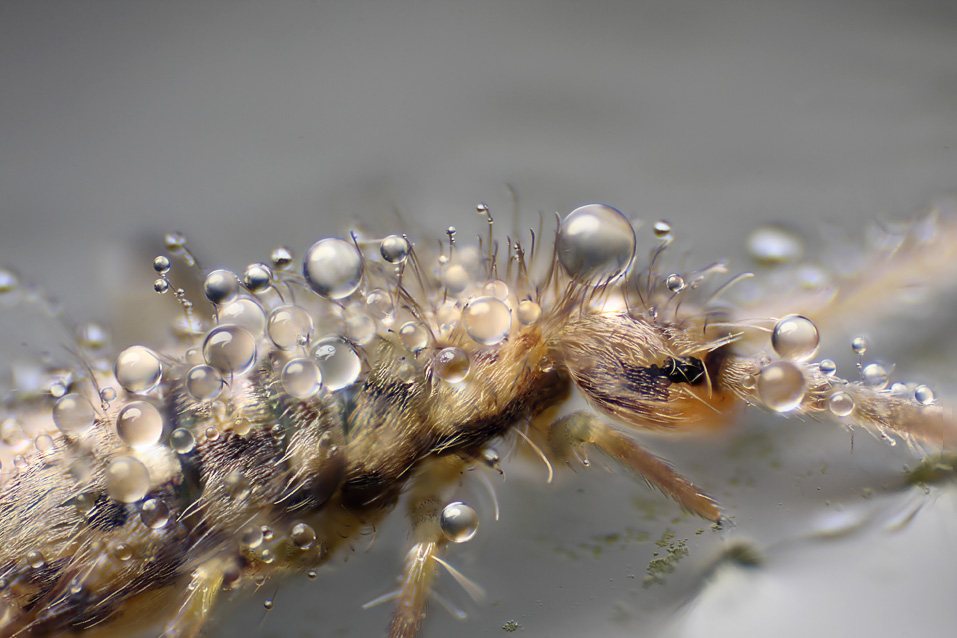
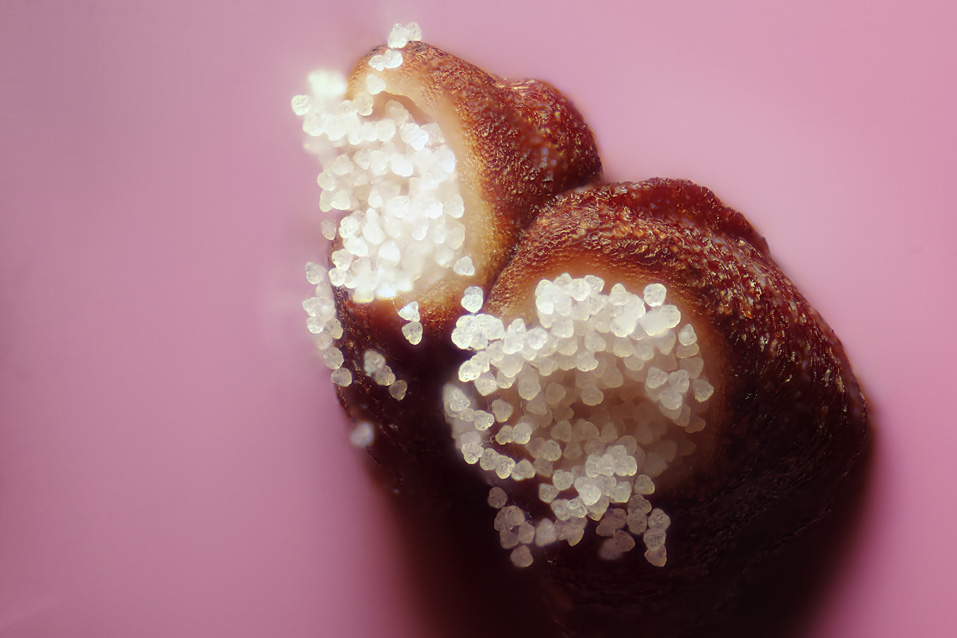
Early morning sun filtered through haze and thin clouds -nothing special, just kept the sun at my back. Canon's 180L macro + an 81A warming filter. In post I added an adjustment layer and changed it's property to "soft light" and then set the opacity slider from 25 to 50 % (adjusted until I got the color / contrast that I wanted). It's a cheap trick that boosts contrast (and ultimately the color) without pushing the contrast slider and I use it to varying degrees on all of my images.
Sorry if this is a stupid question, or too basic for this forum. I have not done much with macro photography, and I'm just wondering what you guys mean by 1:1, full size, 1/2 life size, etc. I don't understand what those terms mean. I bought some macro rings, but haven't played with them much yet.
If it's too complicated to explain it here, can someone point me where I can find all this out? Thanks!
1:1 means your subject = the size of the image on you sensor i.e. 1/4 inch subject would result in an image that was 1/4 inch on your sensor
1/2 life size = an image on the sensor that is 1/2 times the true size of the subject. Using the example of 1/4 inch subject the image on the sensor would be 1/8 of an inch.
I have not defined the size of the sensor as it is irrelevant.
2:1, 3:1 etc. now are meaning the the image on the sensor is magnified twice and three times the true size of the subject. (some times noted as 2X, 3X etc)
I suspect this is not what Tom meant in the original get out of your comfort zone but shooting at 10:1 with a microscope lens on a camera hand held is definitely outside my comfort zone
Brian this is just the kind of thing i'm talking about . I have watched your progress at this , and have to say I'm impressed. You wouldn't think flower petals would be so soft with all those bumps on them. I know it's only a matter of a few weeks and you will have gotten this down pat. It must be a real challenge on the focus end and getting the different focus zones you need to create those wonderful stacks .
Tom Hicks wrote:
Brian this is just the kind of thing i'm talking about . I have watched your progress at this , and have to say I'm impressed. You wouldn't think flower petals would be so soft with all those bumps on them. I know it's only a matter of a few weeks and you will have gotten this down pat. It must be a real challenge on the focus end and getting the different focus zones you need to create those wonderful stacks .
Have enjoyed the progress.
Tom
Thanks Tom
Still getting used to the focusing but gradually improving
Brian v.
I've been challenged to try macros without the use of flash to freeze moviment, natural lighting on a tripod
gave it a try in my last outing when I found some quiet bugs in a place without breeze, the grasshopper I shot handheld while there was still light available, and for the sleeping bees I had to try my cheapo tripod (which didnt held my 70-300 very well), it came lacking sharpness but I cant tell the cause, maybe vibration (2 seconds timer only) or 5 seconds of exposure is too much for the smallest of the breeze to act
here they are:
worth a lot for the experience I think, I never imagined myself with this kind of shot... in fact its the first time I got to see sleeping bees, I dont walk much on grasslands and was birding when I saw these, for bugs I'm mostly under the canopy
Hey Tech,
To me it looks like the bee on the left is in focus, and I can see the texture in the grass that they are clamped onto. A possible depth issue with that one?
For scenes like the grasshopper don't forget to either go vertical with the camera, or "cheat" and turn the images 90 degrees in post. Grass growing on a hillside doesn't necessarily go straight up, so take some artistic license in post
Love the color, contrast, and the overall quality of the light in both shots. IMHO this is an area where you should invest some time since you've obviously got an eye for the light...