Jonas B wrote:
This is a try to collect opinions on bokeh of all sorts (and also a try to save the Sigma 50 -thread from getting carried away). When I say bokeh of all sorts I mean it...
OK! Here's mine then:
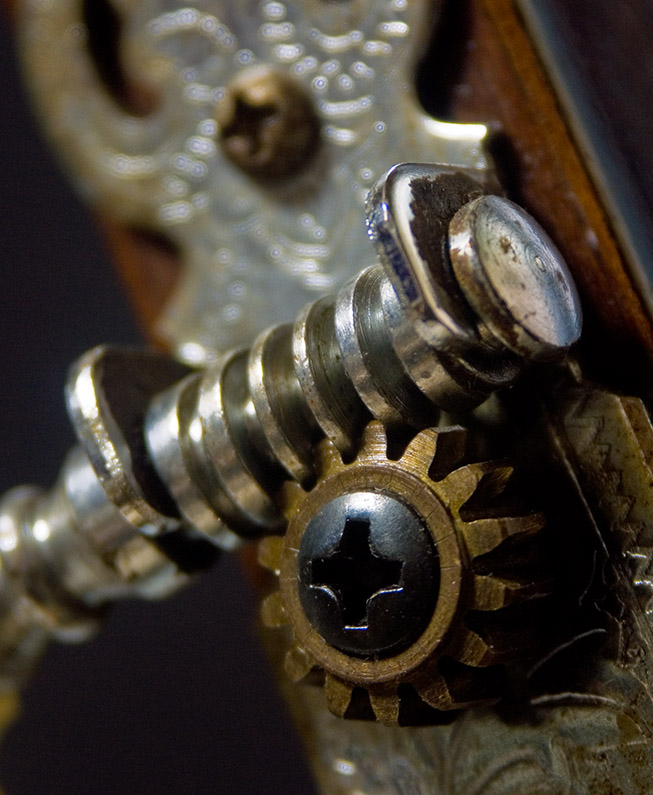
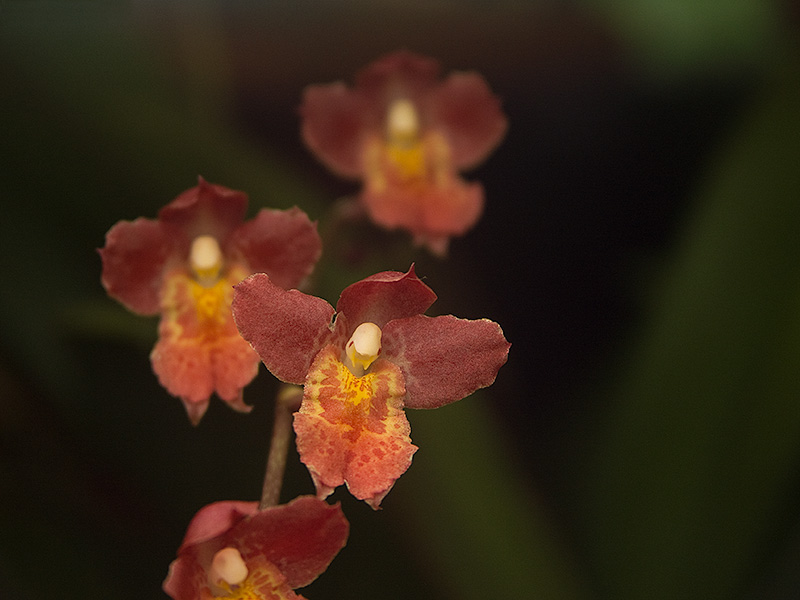
These are all produced with the Knoica Minolta GT lens. I believe it's an achromat consisting of 16 elements in 13 groups, including two AD (anomalous dispersion) glass elements and two aspheric surfaces. It might actually classify as an Apochromatic design but I don't know the materials used (kind of glass) for the two AD elements so I guess I better not jump. It's 7.2mm ~ 50.8mm (f/2.3 ~ f3.2) which on a 2/3" sensor is the 35mm equivalent of 28mm ~ 200mm. It has a macro switch that can be positioned when at either end of it's focal length so there' a 160 ~ 200 zoomable macro at the top end and a fixed 28mm macro at the bottom end.
It's probably not important to this discussion but since the lens is not user replaceable it might be interesting to note that the auto-focus system is a "Video AF system," which uses phase-detection focusing technology rather than the much more common contrast-detection. This makes focus tracking with the system very very nice and speeds up AF in general. With this system the camera not only determines whether or not the lens is in focus, but also how far out of focus it is, and in which direction (near or far).
Subject Distances as specified (below) are measured from the sensor surface plane.
I believe you can only get this lens by purchasing one of the cameras (DiMAGE 7D, A1, A2, and A200) built around it by the now defunct (out of the camera business) Minolta or Konica/Minolta companies. I think the A200 is still selling for about $450 (new) and all the others should be obtainable for under $200.
Lol, what's going on here.... Don't people read all 100 pages before posting?!
helimat wrote:
Uh oh... Macro shots. Jonas's head might explode...
Heh. Yeah, or implode; I have decided not to become upset until the World Soccer Championships.
burningheart wrote:
I thought it was also to show what a lens does bokeh wise, not what the computer can do.
If possible. Sometimes we have to show off, it's part of being photographer I guess. There is a tendency, since long, to show spectacular images rather than clinical boring describing evaluative images. I try to act as a model...
Bifurcator, you're welcome. Our friends are thinking of my wish as expressed for example here.
Makten wrote:
Leica Summicron-C 40/2 @ f/2 on M8(...)
This lens is a bit wierd since the bokeh gets harsher at closer distances. The opposite is the most common.
Ah, you never know with relative distances... "gets harsher"? Hmm, well, everyting isn't admirable.
I have a, to me new, Olympus Pen FT 42/1.2 sent for service and I'm looking forward to see how it renders OOF areas. I suspect it can look like your compact Summicron sometimes. It's very fun to play with these small old lenses!
Bifurcator wrote:
Can you tell which ones are the natural bokeh of the lens, which ones are rendered in software, and which ones are staged?
kakomu wrote:
The point of the thread is to let everyone know where it came from...not to force them to guess.
burningheart wrote:
I thought it was also to show what a lens does bokeh wise, not what the computer can do bokeh wise.
Oh, OK. So only real lenses and they should be named. OK, I'll straighten up my act.
helimat wrote:
Uh oh... Macro shots. Jonas's head might explode...
I hope his head will be OK. That sounds painful!
I straightened up my post above and added some information about the lens. Here's another shot with the same lens this time a distance shot taken about 4 to 5 meters from the focus point (subject).
Jonas B wrote:
If possible. Sometimes we have to show off, it's part of being photographer I guess. There is a tendency, since long, to show spectacular images rather than clinical boring describing evaluative images. I try to act as a model...
Embarrassingly honest. Is that even allowed here? I like it!
Bifurcator, you're welcome. Our friends are thinking of my wish as expressed for example here.
Ah, way back on page 25. Yeah, sorry, I took all my direction from the initial post. Hehehe, It looks like I clobbered every one of your suggested revisions. Sorry about that. Oh well, it's all good... (I hope).
Makten wrote:
Leica Summicron-C 40/2 @ f/2 on M8(...)
This lens is a bit wierd since the bokeh gets harsher at closer distances. The opposite is the most common.
Jonas B wrote:
Ah, you never know with relative distances... "gets harsher"? Hmm, well, everyting isn't admirable.
This begs the question (from me at least) of HOW to evaluate "bokeh". What traits are desirable and undesirable? Is it just a personal preference thing? Is it case by case based on whether or not that "bokeh" adds interest to a specific image? Something else?
It contains no specular highlights, so it's hard to assess the bokeh, but the out of focus blur looks uniform which is typically desirable.
What most people consider desirable is an airy disk that is uniform without a bright ring or edge around it nor with a brighter dot in the centre. Also, a lens that doesn't produce a green or purple shift in the out of focus areas is also favourable.
But at the end of the day it's subjective and if it adds interest to a shot without taking away from the primary subject then I'd consider it good.
Bifurcator wrote:
This begs the question (from me at least) of HOW to evaluate "bokeh". What traits are desirable and undesirable? Is it just a personal preference thing? Is it case by case based on whether or not that "bokeh" adds interest to a specific image? Something else?
I know I have my personal preferences (as do many others), but it seems that there are several characteristics that generally regarded as more pleasing than others. For instance, many people like bokeh that has a smooth transition between gradients. Harsher bokeh has less smooth transitions. For instance, given a circular out of focus highlight, you might notice a ridge around the circle that clearly defines the circle. This makes the background blur look "busy". THere are other factors, such as the shape of the out of focus highlights, which are in the shape of the aperture. Rounded apertures are more desirable than apertures that have sharp blades. Now, this is a purely qualitative approach to judging bokeh. You have to judge whether these factors are good or bad looking to you.
For instance, I'm the type of person that likes to buck the trends and go with things that are less than desirable. The best example I can think of is the donut bokeh of mirror lenses. The second mirror in the center of a mirror lens produces out of focus highlights that have a black circle in the center. People are quick to decry this sort of bokeh as bad and bad mouth it quite frequently. I, personally, find it interesting as it lends a different approach to some photos.
So, in the end, "good bokeh" is in the eye of the beholder.
thrice wrote:
It contains no specular highlights, so it's hard to assess the bokeh, but the out of focus blur looks uniform which is typically desirable.
What most people consider desirable is an airy disk that is uniform without a bright ring or edge around it nor with a brighter dot in the centre. Also, a lens that doesn't produce a green or purple shift in the out of focus areas is also favourable.
Specular highlights are reflections on surfaces that give the viewer cues about the shape of an object. I think what you're thinking of are "out of focus highlights" which could be any point source of light.
Also, from what I've read, most people tend to like airy disks that have a smooth transition from the center to the edge. A uniform disk would lead to "harsher" bokeh.
So this is the PSF response of the optics as expressed and quantified by the airy disk and CoC with the aesthetic value being largely subjective? OK, I think I got it.
kakomu, you're right, I meant to write out of focus highlight.
Technically a fuzzy airy disk would produce softer out of focus areas, but with loss of any kind of definition in such areas, making for boring a-la sigma 50 bokeh. Like I said, subjective. Zeiss tend to have a more uniform airy disk, this means they sometimes have some double edging in their bokeh. Perhaps it plays a part in the 3d quality of their images due to increased microcontrast and crisper airy disks.
I might be getting airy disk and circle of confusion confused
Bifurcator wrote:
So this is the PSF response of the optics as expressed and quantified by the airy disk and CoC with the aesthetic value being largely subjective? OK, I think I got it.
Thanks guys!
Something like that. For some images I can like a more wild bokeh of the type shown in your image No 2. I remember some interesting nisen type of bokeh images from my Monilta A2 days.
Back to policing... Not only would it be nice to hold back on the close-ups but also on the duplicates...
Bifurcator wrote:
So this is the PSF response of the optics as expressed and quantified by the airy disk and CoC with the aesthetic value being largely subjective? OK, I think I got it.
Thanks guys!
Essentially. There's something to be said about the ability of the lens to render images without much spherical or chromatic aberration (which leads to a loss of detail) wide open as both types of aberrations tend to make the bokeh less "pretty".
Then again, a large quantity of photographic concepts and aesthetics are largely subjective, yet fall into trends that many people follow without much critical though. In my opinion, this makes a lot of photographs look rather drab as many people try to emulate what other people like. Each of the forums devoted to a specific type of photography (save for maybe the still-life or macro forums) will have a lot of people that give the same criticisms over and over again. This forms a paradigm that is infrequently broken. Then again, that's pop-culture in a nutshell. Them's the breaks, I s'pose.
thrice wrote:
kakomu, you're right, I meant to write out of focus highlight.
Technically a fuzzy airy disk would produce softer out of focus areas, but with loss of any kind of definition in such areas, making for boring a-la sigma 50 bokeh. Like I said, subjective. Zeiss tend to have a more uniform airy disk, this means they sometimes have some double edging in their bokeh. Perhaps it plays a part in the 3d quality of their images due to increased microcontrast and crisper airy disks.
I know that when I go to the Canon-mount forum, everyone there is falling head over heels for the Sigma 50 because it produces "creamy bokeh" (a phrase that still makes me facepalm to this day). I couldn't tell you what I prefer, because I just buy cheap lenses. My most expensive lens to this day was my fisheye zoom at $450. The vast majority of my lenses were < $200 each (5 of which were < $100). I just go with what I can afford and hope for the best









 Weird huh? A single leaf growing out of the main trunk of a tree.