I first met Peter several years back because I was looking for someone to do some drum scans for me and possibly teach me the process. I wasn't that happy with the quality and pricing of the labs in LA, so Peter did one scan for me and I learned about the process. I was so inspired that I quickly researched and bought a drum scanner of my own, a Howtek 4500. It was a great decision that I've never regretted, but as Peter mentioned, the learning curve can be a bit steep with the old hardware and software and with the mounting process. Yet once that's mastered, the freedom it offers by not having to pay for or rely on someone else to do your scans is priceless. In fact, I've successfully scanned images that I never would have paid someone to do. It was an experiment that worked!
Since that time, I'm now fortunate to call Peter a very good friend and a mentor.
And the rest of the story is, is that Mike B (at least two Mikes in this thread recently) also met and married the other photographer I share the studio with and they both live exactly one block away in Culver City. Well, that's the short version of the story.
Peter Figen wrote:
And the rest of the story is, is that Mike B (at least two Mikes in this thread recently) also met and married the other photographer I share the studio with and they both live exactly one block away in Culver City. Well, that's the short version of the story.
Well, there ya go filling in the details... Now get back to painting!!!
Scans look great Corposant. I'd love to be able to get all of mine drum scanned. I like the increase in sharpness and definition of grain instead of it being all smudged (Epson 4990). I just don't have many that call for it yet. It's hard for me to tell a difference in prints if there aren't densities the drum scanner could read through. Not saying drum scans aren't worth it, because they are fantastic scans. Lenny Eiger does great work too and is a contributor over on LargeFormat Forums.
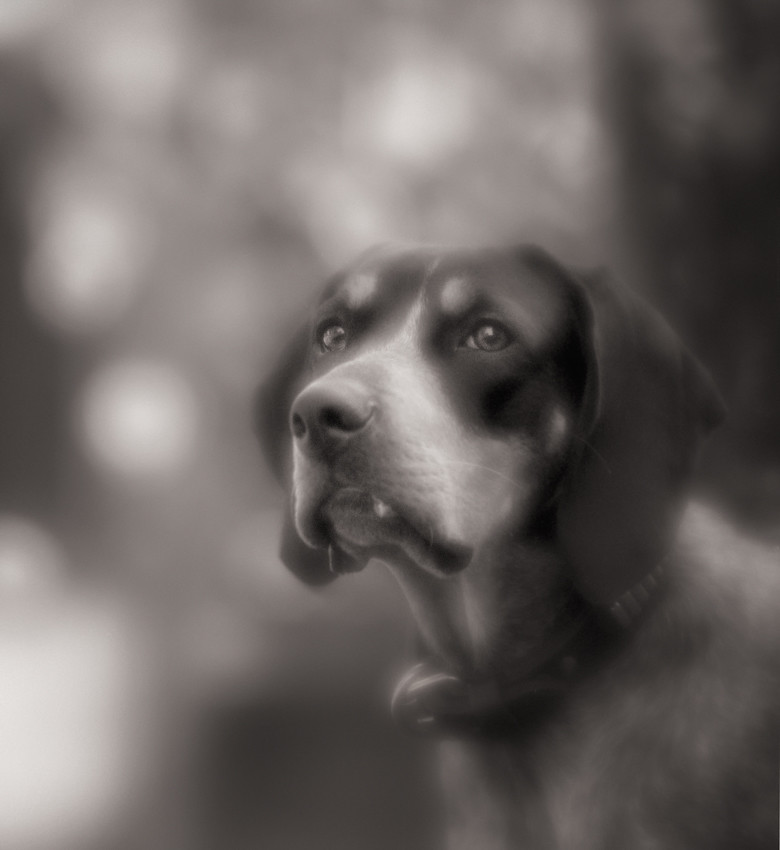
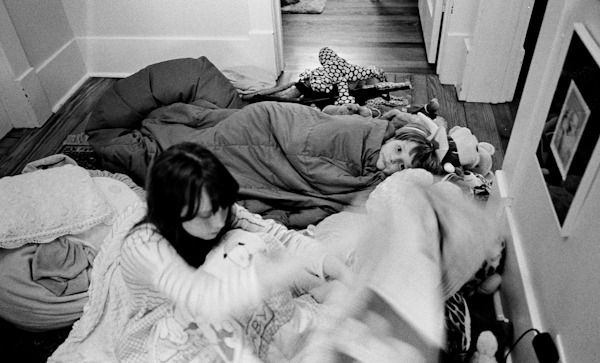
4x5 Ilford HP5+
Speed Graphic
Wollensak Verito 210mm f/4 Soft Focus
Stand developed in Rodinal 1:100 for 1 hour. 1 minute initial agitation.
Haven't had much luck with the Verito yet. All my negatives have been thin even in mid-day sun. I'd really love to bring out the smooth tonality of the lens. Not sure why the negatives are thin. My Speed's focal plane shutter was about 1 stop fast but I was down at 1/300 in full on sunlight at f/4 with HP5. Maybe it's faster than I thought. Probably, considering I handheld a couple at a slower shutter speed than that and the camera shaking like crazy.
corposant wrote:
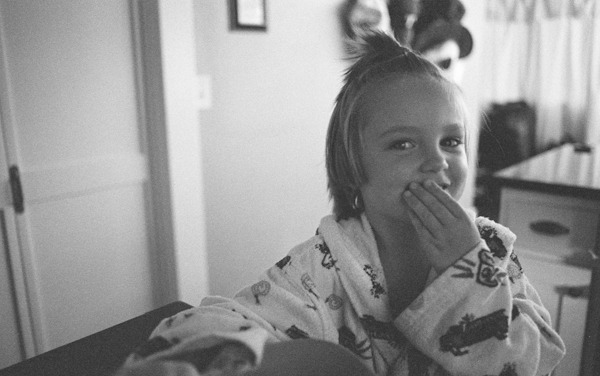
It's very "slice of life" - ever thought about PJing for your local newspaper?
Thanks Mike! Actually, yes I have. I need another year until the youngest is gone to school, then I am probably going to try to get a day gig. I do work now, from home ... we own several businesses and I do all the bookkeeping (I was an HR director in my former life).
kop.cppua wrote:
Awesome shot, Zaitz! .. somehow I am drawn to the softness of the image similarly like the ones from the aero ektar ..
love to see more ..
CP
Thank you and thanks Katie. It is certainly easier to focus hand held with the f/4 Verito than with the f2.5 Aero Ektar. Though, my new method for focusing has been nearly 100% successful. It means I am limited to exactly one working distance and use my feet to focus but there is no error in the rangefinder accuracy this way. The cams for the rangefinder can only be so accurate over the entire range.
corposant wrote:
It's very "slice of life" - ever thought about PJing for your local newspaper?
Zaitz - great! agree with kop - when are we seeing more from the Aero-Ektar, and what makes a lens "soft focus?"
Thanks. I took a few with the Aero Ektar yesterday but haven't really dabbled with it for a while. I need to get more HP5 in some film holders as I am all out.
Soft focus lenses came about sometime in the mid-late 1800's. Spherical aberrations are usually the cause of the softness and intentionally when designed as such. Some lenses allow adjustments to be made to the cell spacing to control the amount of softness to the photo. The Universal Heliar being one and Cooke Knuckler another. There are diy modifications that can be done easily with some large format lenses where you just unscrew slightly the front or rear element, if I remember correctly.
Took me quite a while to like them but, when done right, they can impart a fantastic look to the photo. Most of my negatives so far have looked like junk for some reason. Very underexposed.
Closest digital lens I have used is the Nikon 135mm f/2 DC. I loved the DC feature but most do not. I believe that adjusted the spacing of the elements inside. I could see on my d300s split prism screen the image come 'out of focus'.
KatieInTexas wrote:
THANKS! I really appreciate it ... it's so nice to know that someone enjoys this stuff! HAHA!
I quietly enjoy your family pics as posted here on FM, and on RFF. Something about film lends a timeless touch to your photographic eye. I shoot a bit of film for the family archive, but it's color (and I don't develop film myself anymore).
Kodak Gold 100, Leica IIIb from 1939, postwar Elmar 50/3.5, and Sunny 16.


 Now get back to painting!!!