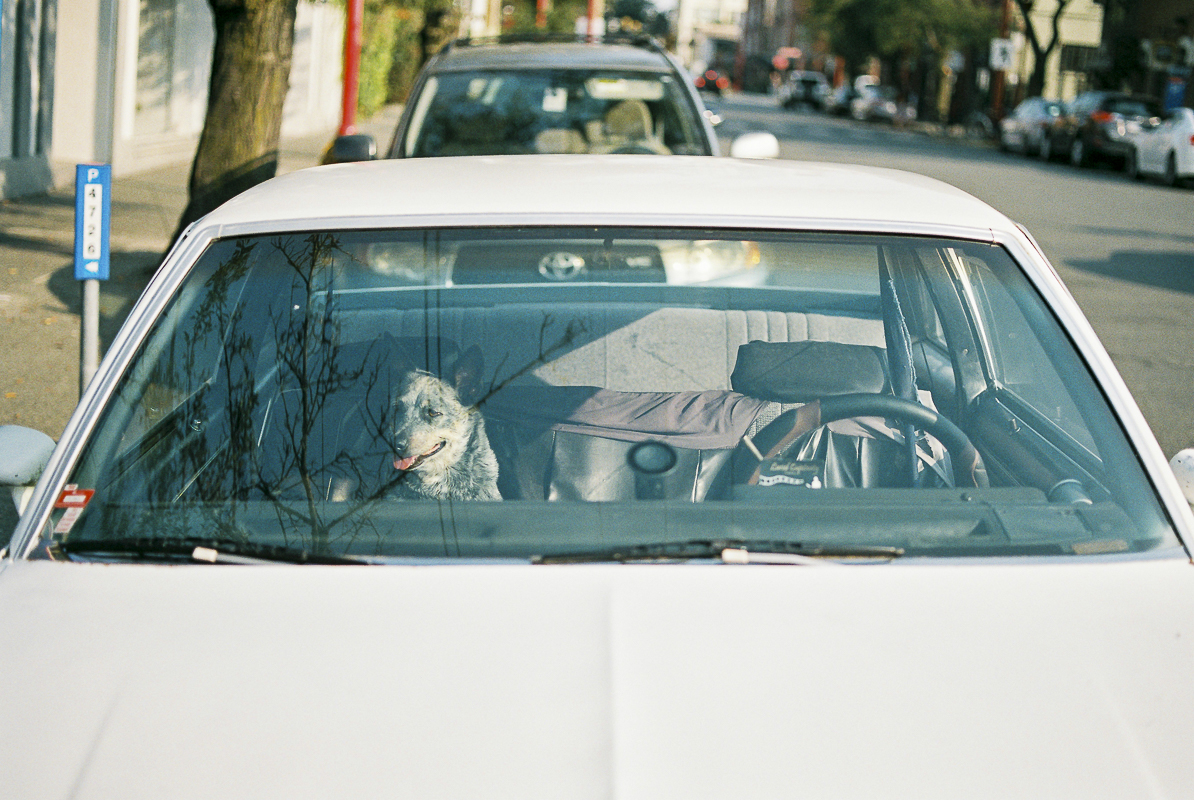
_jim_ wrote:
Ok. Here's a fun one to ponder. The question: what the fudge is happening here? The setup - I used to live in Japan. At that time, Fuji Neopan 400 was between ¥250-300 for a roll of 36 exposures. It was silly cheap. And it was a good film (RIP). I shot a lot of it. At any rate, I was recently doing a bunch of re-scanning of old negatives and to my dismay, I discovered that many of my old Neopan 400 negatives are decaying in a bizarre way - small cracks and marks in the emulsion. None of the other brands of black and white film I shot from that time period show this defect (and I developed everything with the same chem/developer...T-Max). Not all of the Neopan is as bad as this example...some of it is on its way, some of it seems unaffected (so far), but a lot of it is...kinda ruined. So, what the fudge?
I'm going to guess a temperature differential during processing. You may not have noticed it at the time, and a print may have smoothed out the edges of the defects - like some good enlarging lenses do to grain. You may be able to fix it with a Photoshop Fourier Transform plugin, because it could likely be a pattern that can be mathematically corrected.
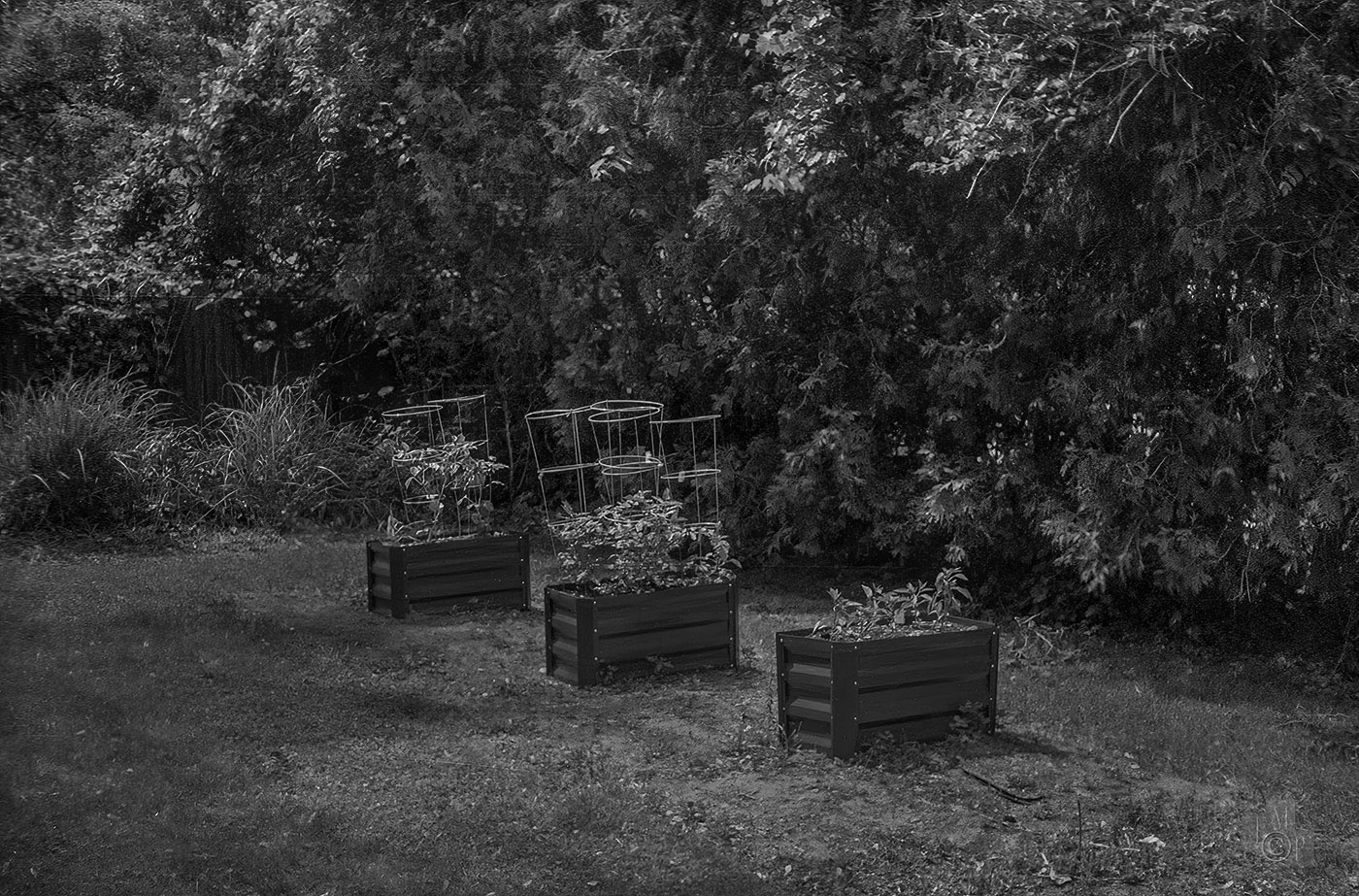
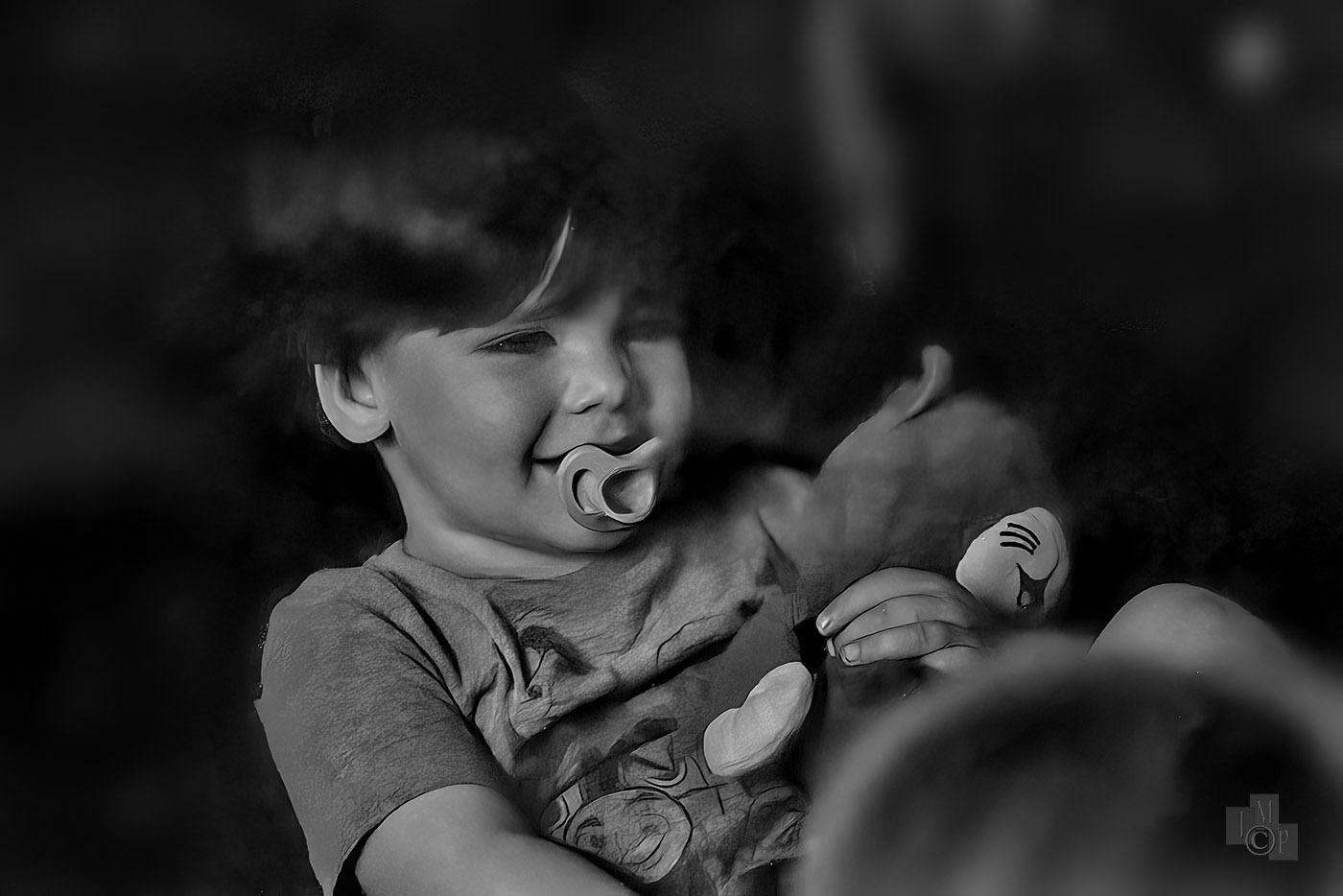
I finished the roll of film (Kentmere 100 @ 400 iso - over developed in xtol) from the Yashica Electro 35 GT I fixed. Though I can hear the shutter change speeds depending on the ambient light (auto shutter speed so only aperture priority). The result was the thinnest images I have ever achieved. But, the good news is that it was consistently the wrong exposure. So, I will do another roll of 400 @ 100 iso setting. Interestingly, I was able to salvage 12 images out of literally thin air - or at least it looks like clear film base to the naked eye. I wanted to see if the 45mm f1.7 Yashinon-DX worked as good as it looks.
James Markus wrote:
I finished the roll of film (Kentmere 100 @ 400 iso - over developed in xtol) from the Yashica Electro 35 GT I fixed. Though I can hear the shutter change speeds depending on the ambient light (auto shutter speed so only aperture priority). The result was the thinnest images I have ever achieved. But, the good news is that it was consistently the wrong exposure. So, I will do another roll of 400 @ 100 iso setting. Interestingly, I was able to salvage 12 images out of literally thin air - or at least it looks like clear film base to the naked eye. I wanted to see if the 45mm f1.7 Yashinon-DX worked as good as it looks....Show more →
Those look remarkably good! I assume the blurry stuff on the toddler are due to the thin neg?
Desmolicious wrote:
Those look remarkably good! I assume the blurry stuff on the toddler are due to the thin neg?
I think the blurry bits are my Photoshop actions that I wrote using blending modes to add density - specifically, "multiply". They can accentuate something insignificant, and make it stand out. I should have used the history brush on those areas. All the negatives were scanned on a LS-4000 that I fixed using Vuescan. Vuescan has "linear" adjustments that look like a foreign language to a "curves" dialog addict like me. I think what is happening is the luminosity range is extremely compressed, but in 16 bit raw - I can find enough midtone adjustment to make something out of nothing. Black and white points must be literally right next to each other. I saved one of the representative scanner settings in case I ever run into such thin negatives again - hopefully not.
James Markus wrote:
I think the blurry bits are my Photoshop actions that I wrote using blending modes to add density - specifically, "multiply". They can accentuate something insignificant, and make it stand out. I should have used the history brush on those areas. All the negatives were scanned on a LS-4000 that I fixed using Vuescan. Vuescan has "linear" adjustments that look like a foreign language to a "curves" dialog addict like me. I think what is happening is the luminosity range is extremely compressed, but in 16 bit raw - I can find enough midtone adjustment to make something out of nothing. Black and white points must be literally right next to each other. I saved one of the representative scanner settings in case I ever run into such thin negatives again - hopefully not.
Then, for comparison sake (versus a dreamy, soft lens like the Artizlab) the sharpest 35mm lens you can use on any film body (sharper than the 35 Summilux...sharper than the Zeiss 35/1.4 ZM...uncomfortably sharp...ouch).
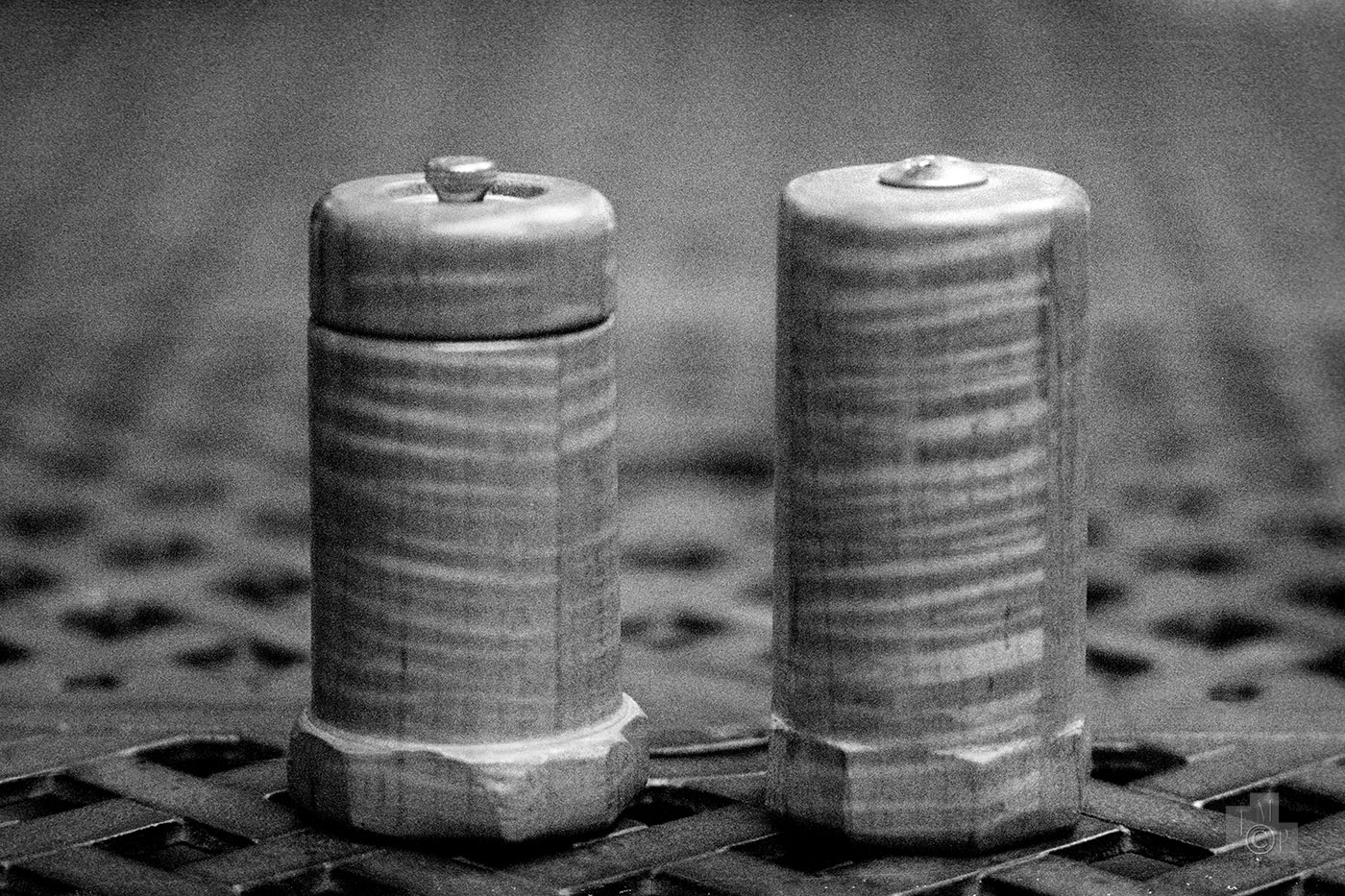
Leftover quilted maple ends from a rolling pin I made for my wife. Now salt and pepper shakers. 20 year expired Tri-x souped in df96 monobath, version 2 of the Nikon FM, and the Nikkor 105mm f2.5 ais


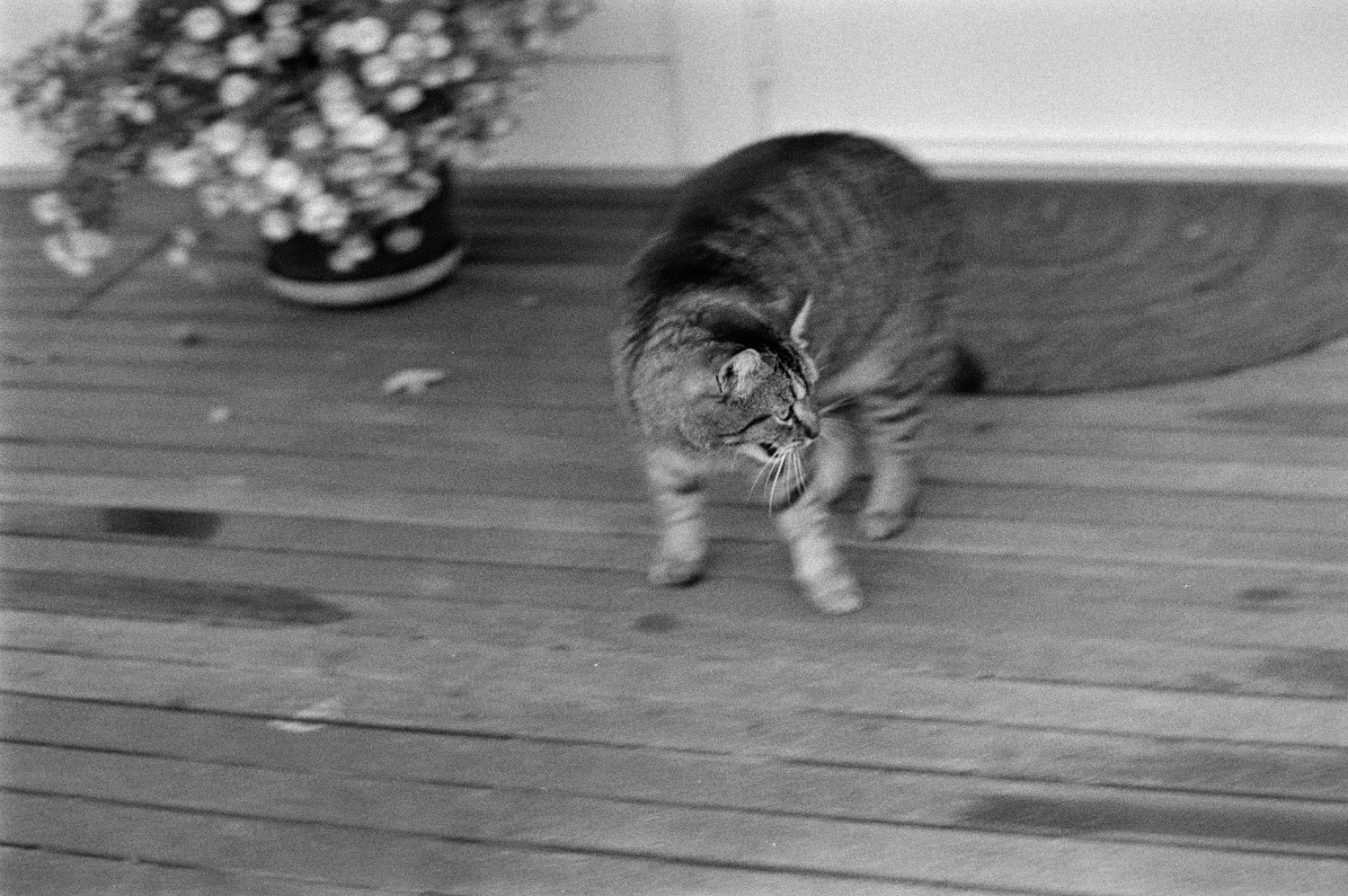

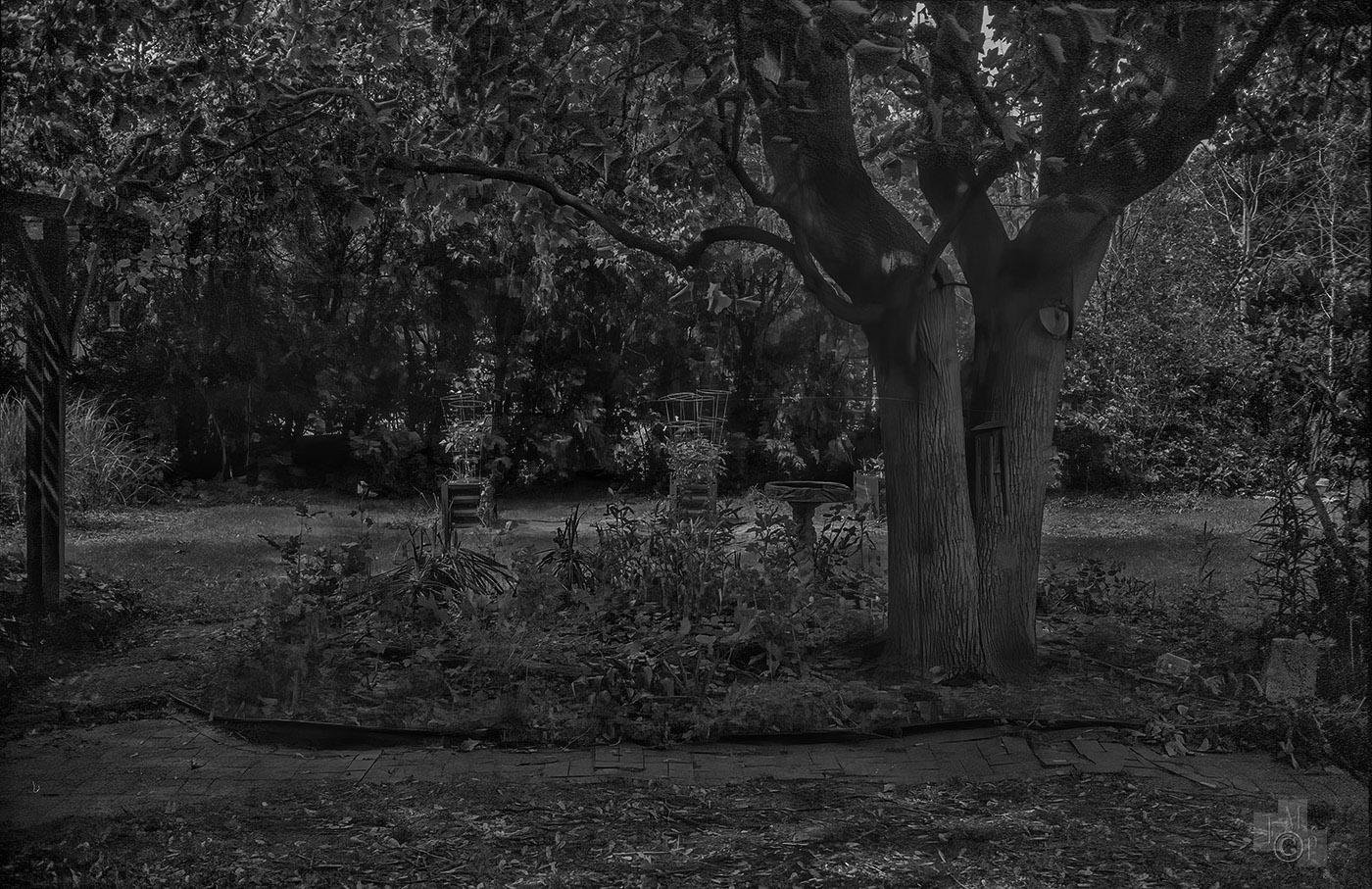


 ) and the 28/1.4 @1.8 on HP5 Plus. I need to take some time to dial in NLP for both color and b/w.