Share an article - The Scam: An In-Depth Look at Replica Leica Vintage L...
p.1 #1Share an article - The Scam: An In-Depth Look at Replica Leica Vintage Lenses in Recent Years in China By old Turtle
The following article was written by a photography enthusiast and blogger with a large following in China. He is very familiar with China’s replica lens industry and has access to insider information that most Western photographers may find difficult to obtain.
Please keep in mind that the views and opinions expressed in the article are entirely his own. I am simply sharing his perspective and passing along the information for discussion. I am not necessarily endorsing every statement or agreeing with every conclusion. I have tried to preserve the author’s strongly critical, sarcastic, and confrontational tone.
So, if you disagree with his views or take issue with anything in the article, please don’t shoot the messenger!
Best wishes and have a happy holiday
The Scam: An In-Depth Look at Replica Leica Vintage Lenses in Recent Years
By old Turtle
In recent years, Chinese manufacturers of manual-focus M-mount lenses have introduced a large number of new products. At the same time, however, an increasing number of lenses claiming to be reproductions of vintage Leica lenses have appeared on the market. Starting with the famous Eight-Element (35mm f2 Summicron V1), followed by the currently popular “Holy Glow” (35mm f1.4 V1), and now the Seven-Element (35mm f2 Summicron V4), these reproduction lenses, priced anywhere from RMB 3,000 ($450) to RMB 5,000 ($740), have attracted a following of buyers. The trend shows every sign of becoming increasingly widespread.
About a year ago, I wrote an article discussing the increasingly outrageous business of Chinese-made reproduction Leica lenses. More than a year has passed, and instead of cooling down, the situation has become even more absurd, with additional reproductions of vintage Leica lenses appearing on the market.
The company that replica 35mm f1.4 V1 lens at the end of 2024 subsequently made a 50mm f/1.4 V1 lens. In addition, another replica of the Seven-Element lens has appeared. Meanwhile, the pioneer of this business, Lao Zhou Studio (LLL Mr. Zhou), seems to have lost some momentum after replica several aspherical lenses.
There are now even dedicated communities in China devoted to these lenses, complete with their own rankings and classifications.
Today, I want to take another close look at this phenomenon.
Given the large number of followers of this public account, I am sure many of you have purchased these lenses. Of course, I am not referring to you as the people responsible for this situation. Essentially, you are the victims. There may be only one category of buyers who are not victims: people who already own the original Leica lenses and purchase the replicas purely for fun and comparison. Naturally, collectors at that level are unlikely to care about the money involved.
These lenses are not particularly expensive, but the fact remains that we have been deceived. Sometimes, we even become the butt of other people’s jokes, which is understandably unpleasant.
Unless you are buying one purely for your own amusement, be prepared for criticism if you have friends who are into photography, especially Leica photography. You will probably get some harsh comments.
My hope is that this article will help those who have already purchased these lenses avoid feeling too bad about their decisions, while helping those who have not yet bought one understand the reality of the situation. If your only intention is to support Chinese-made products, there are better ways to do that. You could buy some Lucky Film and shoot with it, or purchase a DJI drone and fly it around. Chinese-made manual-focus lenses have become so numerous that Japanese writers can now write entire books about them.
First, let’s establish exactly what these so-called replica vintage Leica lenses are:
Counterfeit products. Fake merchandise.
Everyone needs to understand one thing clearly: these lenses are not Leica lenses at all. They merely look like them on the outside.
Camera lenses involve numerous patented technologies, ranging from materials to optical and mechanical designs. These so-called replica lenses have absolutely none of the original Leica patented technologies behind them. Technically speaking, they have no connection whatsoever with the original lenses.
As for optical designs, everyone should understand that many lenses share essentially the same basic optical configurations. Therefore, simply having the same optical structure does not make a lens a reproduction of another lens.
And don’t even get me started on the glass. Glass is what really matters in a lens, and Chinese-made lenses generally use domestically produced optical glass grades.
So, to be clear:
These are not Leica lenses. They possess none of the brand value associated with Leica.
They merely resemble Leica lenses externally. They contain none of Leica’s lens technology.
They are assembled in China. Their assembly has absolutely nothing to do with Leica.
The term reproduction should refer to a manufacturer resuming production of a product that it previously made but discontinued. This must include the original trademark, although even then, the technology may have changed to some extent.
These Chinese-made reproductions of vintage Leica lenses are essentially acts of counterfeiting and selling counterfeit goods. In principle, such conduct may already violate Article 140 of China’s Criminal Law. The only reason these operations continue is that the amounts involved are relatively small and hardly anyone actually reports them. If they were operating on the same scale as counterfeit LEGO businesses, their owners could end up behind bars.
Why Leica?
Have you ever stopped to consider this question?
Why Leica? Why not another brand?
Why not Zeiss? Why not Biogon? Why not Hologon? (My note: Mr. Zhou AKA LLL tried but failed to make a 15mm f8 due to technique difficult) Why not Voigtländer’s Nokton? Why not APO-LANTHAR?
Why Leica?
Because of Leica’s unique brand value and the mythology that has accumulated around the brand over many decades.
Among all lens systems, the Leica M lens system has probably been mythologized more than any other. It inspires tremendous fascination. Something that should be a matter of physics has been transformed into literature and even philosophy.
People have come to believe that Leica lenses possess certain mysterious, almost supernatural capabilities that other lenses from the same era do not have. They supposedly produce images and visual effects that other lenses simply cannot reproduce.
And, of course, Leica carries prestige. It represents taste, sophistication, and status.
When you participate in photography with a group of people, comparisons are inevitable. Having a Leica makes you feel different. Within Leica circles, people often compete over who owns the limited-edition models and whose lenses are more expensive.
Essentially, these vintage lenses exploit human weaknesses.
Perhaps it is curiosity: people want to find out just how magical vintage Leica lenses really are.
Perhaps it is vanity: they cannot afford a genuine Leica lens, so they buy a reproduction to experience something similar.
Why do I call this a scam?
Because the entire scheme was deliberately designed by the manufacturers from the very beginning. It was a scam by design.
Imagine a lens with the following characteristics:
An outdated, symmetrical double-Gauss optical design.
Terrible optical performance.
Little contrast and poor resolution.
Inexpensive, low-grade domestic optical glass.
Poor-quality lens coatings.
The ordinary appearance of a manual-focus lens.
Would you buy it?
I doubt it.
But what if you changed the exterior housing? What if you added an attractive story? What if you associated this cheaply made Chinese lens with a prestigious vintage Leica lens?
Everything would be different.
Suddenly, it would no longer be a lens with poor contrast, poor resolution, and excessive flare!
It would be the beautiful, gentle character of a vintage lens!
It would be the legendary Leica look!
It would be… Leica!
To sell this lens, someone gives it an exterior housing identical to that of an old Leica lens and then leads you to believe that the piece of junk in front of you has some deep and meaningful connection with vintage Leica optics.
They even feed you all kinds of bizarre ideas, such as the claim that modern lenses are boring and that only vintage lenses have character.
But the reality is that this lens has absolutely nothing to do with Leica.
It does not use Leica glass. It does not incorporate Leica patents. It does not employ Leica technology. It is not assembled by Leica. And, most importantly, it does not carry the Leica trademark.
All it has is an identical-looking exterior and an appealing story that has absolutely nothing to do with the lens itself.
Unfortunately, you do not actually own a Leica lens.
What you own is a counterfeit, inferior-quality lens featuring a double-Gauss optical design, poor-quality domestic glass, crude manual assembly, and an overwhelming 99% of attention devoted to the exterior appearance and engraved lettering. To make matters worse, its paint can easily chip off.
How did this market develop in China?
Around the year 2000, Leica cameras had already become popular on early Chinese internet forums.
With the arrival of the internet age, platforms such as Renren and Douban helped spread the enthusiasm. Praise originating in Japan for certain early Leica lenses also made its way into China.
However, relatively few people owned Leica lenses back then. Single-lens reflex cameras were still dominant, and there were relatively few cameras capable of using Leica M-mount lenses. Apart from Leica cameras themselves, the main alternative was Voigtländer’s BESSA R series of rangefinder cameras.
Consequently, the mythology surrounding certain Leica lenses has a historical foundation. This is also why many Leica M lenses never acquired much of a legendary reputation and remain surprisingly inexpensive—almost ridiculously cheap.
After mirrorless cameras entered the market, adapting Leica M-mount lenses to various mirrorless systems became much easier. Meanwhile, the number of digital M-mount camera users continued to grow.
Some Chinese manufacturers recognized the business opportunity in the M-mount market. One of the earliest was Zhongyi Optics, which produced several M-mount lenses.
Later, a number of new Chinese manual-lens manufacturers began producing M-mount lenses that imitated the exterior appearance of Leica lenses. However, these products merely copied the appearance. Their advertising, particularly their claims about performance, did not explicitly associate them with Leica lenses.
As more Chinese manual-lens manufacturers emerged, a domestic supply chain for assembling manual lenses gradually took shape.
The development of this supply chain made it possible for private workshops to manufacture optical lenses in batches.
One important point needs to be understood: these so-called privately manufactured Chinese lenses are not made in the same way as those produced by Japanese lens craftsman Sadayasu Miyazaki. Miyazaki essentially sources his own materials and personally manufactures his lenses.
In China, there is an established industrial supply chain.
The most important part is the optical glass. These manufacturers primarily use various commercially available grades of optical glass. Therefore, stories about researching original materials, sourcing old glass, and grinding special optical elements are largely nonsense intended to deceive consumers.
For example, the glass elements in the so-called Eight-Element replica are made from old, commercially available lead glass blocks that were discontinued long ago.
As for Leica’s specially specified glass used in lenses such as the 50mm f/1.2, domestic workshops simply cannot find glass with sufficiently similar specifications.
For aspherical elements, some manufacturers use imported Japanese glass. However, these elements are also molded aspherical glass, which is not particularly expensive.
The profits from reproducing vintage lenses can be substantial.
Suppose a lens sells for RMB 4,000 ($600) and the manufacturer produces 1,000 units. If all of them are sold, that amounts to RMB 4 million ($600000) in revenue. That is certainly not a small business.
Many of these lenses are products with no proper manufacturer identification or documentation. Some cannot even provide an official invoice. They may not have to pay taxes, making the profit margins even greater.
The overall manufacturing costs of these lenses are not particularly high. Most are produced through centralized contract manufacturing at various workshops.
In recent years, some of these contract manufacturers have started producing their own small batches of lenses to make additional money.
They also have almost no need for conventional advertising or marketing expenses. They simply find a few people to publish articles on Xiaohongshu and WeChat public accounts, create a chat group, hype up the products, and the lenses sell.
Exactly how much money they make depends on manufacturing precision, but earning RMB 2 million to RMB 3 million from a production run is certainly possible.
If you do not believe me, take a look at lenses from TTArtisan that sell for just over RMB 2,000. Their manufacturing precision is roughly comparable.
This marketing model—putting a Leica-like exterior on a lens and selling it with an appealing story—is extremely effective. Many people have been fooled.
This is precisely why these private workshops keep developing one reproduction lens after another, and why more and more people are entering this business.
They simply do not need to worry about technology. The most important thing is to come up with a convincing story.
Of course, there is another reason why vintage Leica lenses are being knockoffed: the original lenses are expensive.
That is why these manufacturers concentrate on copying the exterior designs of early Leica lenses that were produced in relatively small quantities. Their sales pitch is essentially: “The original is too expensive. Why not buy ours instead?”
Furthermore, these reproduction lenses almost always advertise themselves as reproducing the original optical structure and restoring the character of vintage lenses.
Unlike the earlier Chinese M-mount lenses, which merely imitated Leica’s exterior appearance, these new products are marketed in a way that makes buyers feel they are effectively purchasing a Leica lens.
In other words, they are presented as Leica lenses without the Leica name.
I have already explained that these lenses have absolutely nothing to do with Leica. Therefore, this is a carefully engineered, thoroughly deceptive scam.
If these lenses were manufactured to a genuinely high standard, with excellent manufacturing precision and quality control, they might reasonably sell for around RMB 2,000.
But judging from what I have seen, their manufacturing precision is probably worth only about RMB 1,000.
Selling them for RMB 3,000 to RMB 4,000 is simply treating buyers like fools.
What about the supposedly special character of vintage lenses?
The so-called vintage lens look that these manufacturers promote is essentially the result of optical shortcomings caused by the relatively poor optical performance of lenses from that era.
These shortcomings are not unique to Leica.
Other vintage lenses, as well as COSINA M-mount lenses from the early 2000s, exhibit similar characteristics.
To reproduce these characteristics, some manufacturers have even introduced single-coated versions of their lenses.
Furthermore, certain optical aberrations and characteristics were closely related to the quality of the glass available at the time. Those original optical materials are no longer obtainable today.
Therefore, the so-called vintage look is really nothing more than a matter of personal perception.
If all you want is to experience the characteristics of vintage lenses, there are plenty of inexpensive alternatives.
Forget about COSINA for a moment.
Take a Nikon FM2, mount Nikon’s 35mm f/2 lens, and show the resulting photograph to people.
How many of them could actually tell which photograph was taken with the Leica Eight-Element lens and which was taken with the Nikon?
The truth is that much of what people say about lenses is simply hindsight and subjective interpretation.
In other words, even if you genuinely believe in the Leica mythology, that mythology is inseparable from Leica itself.
Although there is certainly some price inflation, the high price is itself part of the Leica legend. That mythology cannot simply be transferred to another product.
From the perspective of lens value, these so-called replica lenses have neither meaningful practical value nor any genuine Leica-related collectible or investment value.
Leica is Leica. COSINA is COSINA. Chinese-made lenses are Chinese-made lenses.
They are fundamentally different things.
Even lenses replicated by Leica itself can have different performance and characteristics from the original vintage versions.
One thing you must remember: Leica is Leica. Only Leica itself can embody the brand value of Leica.
If we look purely at optical performance, these vintage Leica lenses are not particularly impressive.
Even in the 1950s, their optical performance was not considered superior to that of Zeiss and Voigtländer lenses.
The reason they sell for such high prices is simply that they are Leica lenses and that Japanese enthusiasts went overboard in promoting their reputation.
Without the Leica association, they would simply be a collection of relatively mediocre vintage lenses worth a few hundred to around RMB 1,000.
But that argument does not really hold, because they are, after all, genuine Leica lenses.
I have no fundamental objection to manufacturing lenses.
But what is happening here is no longer simply manufacturing lenses. It is deceiving people.
That changes the entire nature of the business. It amounts to treating customers like fools.
This is also why we see replicas of only the most popular vintage lenses. Nobody seems interested in reproducing the 90mm f/2.8, even though Leica itself has actually reproduced a 90mm lens.
Unless you already own the original Leica lenses and are simply curious enough to buy one of these reproductions for fun, do not buy this junk.
The assembly quality of these Chinese lenses is extremely inconsistent. Many suffer from focus misalignment, and some may initially work properly but develop focusing problems after a short period of use.
Factory adjustments are crude, and in some cases, the lenses may not have been properly adjusted at all.
Besides, if you have already spent thousands dollars on an M-mount camera body, such as an M10 or M11, you should really be mounting a Leica lens on it.
Putting some obscure, no-name Chinese lens on a Leica camera body is, quite frankly, a rather strange combination.
Of course, the people who suffer the most are those who get criticized by Leica fundamentalists.
No matter what arguments you make, you simply cannot win:
“Vintage Leica lenses are too expensive because people have driven up the prices.” — That’s not Leica.
“This lens performs just like the vintage Leica.” — That’s not Leica.
“This lens looks just like the vintage Leica.” — That’s not Leica.
“This lens gives us the Leica experience.” — That’s not Leica.
Nothing you say will help, because it is not Leica.
If you try to argue with Leica fundamentalists while using one of these lenses, you will have no choice but to resort to unreasonable arguments. Even if you do, people will still look down on you.
Actually, all you need to do is open up the aperture, and you can get background blur.
Buy a Voigtländer 35mm f/1.4 and insist that the photograph was taken with Leica 35mm Summilux V1 lens or Summicron V1.
Let’s see how many people can tell the difference!
Nov 25, 2026 at 11:07 PM
p.1 #2Share an article - The Scam: An In-Depth Look at Replica Leica Vintage Lenses in Recent Years in China By old Turtle
I know you just shared this so my response is to the contents of the article and not directed at you:
The whole thing reeks of elitism that embodies the stereotypes that a lot of people attribute to Leica owners/shooters. You can argue the ethics and semantics of barrel design but these lenses are not counterfeit or a scam unless they are being sold explicity as Leica lenses complete with branding. If people buy a lens for a specific look and they receive a working product, that is a transaction, not a scam.
People can use their money to buy whatever lens/product they want. If there is a legal claim to trademark/patent/design infringement, that is for the legal systems to decide if/when Leica decides to pursue it.
The author seems to entirely miss the point of these lenses for the majority of people who are buying them. They aren't buying them for perceived value or to pretend they are using Leica gear, they are buying them for fun and because using them gives them enjoyment. Anyone who truly cares about photography should be thrilled if any product brings more people happiness or new users to the hobby/profession. Gatekeeping or looking down on others for what they buy with their own money that makes them happy to take photographs is insufferable.
Sorry, didn't mean to write this much but the discourse on Chinese lenses has wormed its way into so many discussions lately with elitism, racism, whataboutism and much more plaguing any mere mention of a non-Leica lens on a Leica body.
The whole thing reeks of elitism that embodies the stereotypes that a lot of people attribute to Leica owners/shooters. You can argue the ethics and semantics of barrel design but these lenses are not counterfeit or a scam unless they are being sold explicity as Leica lenses complete with branding. If people buy a lens for a specific look and they receive a working product, that is a transaction, not a scam.
People can use their money to buy whatever lens/product they want. If there is a legal claim to trademark/patent/design infringement, that is for the legal systems to decide if/when Leica decides to pursue it.
The author seems to entirely miss the point of these lenses for the majority of people who are buying them. They aren't buying them for perceived value or to pretend they are using Leica gear, they are buying them for fun and because using them gives them enjoyment. Anyone who truly cares about photography should be thrilled if any product brings more people happiness or new users to the hobby/profession. Gatekeeping or looking down on others for what they buy with their own money that makes them happy to take photographs is insufferable.
- So much emphasis is put on perceived value and brand recognition. These reproduction lenses are not putting a dent into the value of true vintage lenses, though one could make an argument that they may impede sales of current Leica reproductions. I for instance am one of the people that did buy the Peace Optics 35/1.4 vs the Steel Rim reissue because the Peace Lens was more crazy wide open and also had a 0.7m MFD vs the 1m MFD on the Leica.
- The author says anyone who already owns the originals are the one category of people who are not victims if they decide to buy for fun or comparison. So what about the other people who are buying a lens for fun and who would never buy the originals?
- Makes a note that people should be prepared to become the butt of jokes and receive criticism from others who enjoy photography. I'd argue that people who actually ENJOY photography don't go around criticizing other people's gear or choices on what they buy because they know that whatever gets someone out shooting is a positive. I have brought my M11-P Safari around the world with both Leica lenses and odd Chinese lenses and most people even in high end shops show equal interest in each, with maybe eyebrows raised a little higher at the Leica combo probably because they're doing the mental math at how much the combo costs.
- A lot centers on brand identity and looks. Some people may just want a clean barrel design. When you break it down, how many simple clean designs can a small M-mount lens have with regard to barrel, an aperture ring, and a focusing ring? It reminds me of when smart phones were progressing and people were arguing over how a rounded edge was ripping off another company. Now everything is almost ubiquitous aside from camera bumps/notches and button placement. My Light Lens Lab and Peace Lens Optics lenses have Chinese characters right on the barrel, some saying "CHINA" on the front ring. If they wanted to deceive people these would be the first thing to go.
- Multiple instances of calling Chinese lenses cheap or of inferior quality. As with any manufacturing process, a lower cost comes at the expense of something somewhere along the way. I have had issues with some Chinese lenses, but the majority of them have been of solid build quality matching or exceeding what I would expect for the price. For Leica's cost there should be a noticeable increase in quality and a reduction in quality control issues, yet you still see issues with brand new products. I know people who have received an M11 mis-calibrated out of the box, another with dust already present in the viewfinder. My first Safari Summilux 35/1.4 had a speck of dust under the front element from factory and a slightly wobbly aperture ring. Not great for a lens Leica wants $7300 USD for.
- He goes on a lengthy tangent discussing optical performance. Simply put people will buy what is needed or pleasing to their eye. I buy some lenses based on performance and I buy others based simply on the feeling I get looking at pictures shot with that lens where performance matters very little if at all.
- "Besides, if you have already spent thousands dollars on an M-mount camera body, such as an M10 or M11, you should really be mounting a Leica lens on it." I bought the M11-P Safari and have matching Leica Safari 28/2, 35/1.4, 50/2, 50/1.4, and 90/2 lenses... 95% of the time a non-Leica lens in on my body to achieve a look the Leica lenses don't give me. Maybe I'm allowed to do that because according to his rules I might not be part of those who have been "scammed" since I apparently have spent enough money to now have "fun" buying Chinese lenses.
- Again he reiterates others criticizing people who use Chinese lenses on their Leica bodies as being a downside, yet he spends the entire article effectively doing this. Not once in person have I ever encountered someone who has had an issue with a non-Leica lens on my Leica. If I ever met one of those people, they wouldn't be someone I'd go out of my way to hang out with again.
Sorry, didn't mean to write this much but the discourse on Chinese lenses has wormed its way into so many discussions lately with elitism, racism, whataboutism and much more plaguing any mere mention of a non-Leica lens on a Leica body.
Nov 26, 2026 at 01:06 AM
p.1 #3Share an article - The Scam: An In-Depth Look at Replica Leica Vintage Lenses in Recent Years in China By old Turtle
Great post. We shouldn't even be giving the garbage in the OP the time of day.
endergemini wrote:
I know you just shared this so my response is to the contents of the article and not directed at you:
The whole thing reeks of elitism that embodies the stereotypes that a lot of people attribute to Leica owners/shooters. You can argue the ethics and semantics of barrel design but these lenses are not counterfeit or a scam unless they are being sold explicity as Leica lenses complete with branding. If people buy a lens for a specific look and they receive a working product, that is a transaction, not a scam.
People can use their money to buy whatever lens/product...Show more →
Nov 26, 2026 at 01:27 AM
p.1 #4Share an article - The Scam: An In-Depth Look at Replica Leica Vintage Lenses in Recent Years in China By old Turtle
endergemini wrote:
If people buy a lens for a specific look and they receive a working product, that is a transaction, not a scam.
50/1.2 1966 is completely different from the Leica Noctilux.
50/1.5 Z21 is completely different from the Angénieux S21.
50/1.9 ZS-6 is completely different from the Dallmeyer Super-Six.
75/2 SPII is completely different from the Cooke Speed Panchro SerII.
...
Most of these replica lenses have completely different performance from the originals. They just mimic the exterior housing to mislead users. They are practically untouchable because 99.9% of users never have the chance to compare them with a genuine lens. Doesn't that border on a scam?
Without the Angénieux-style housing and name plate, how much would you pay for a Chinese-made, 6-element 50mm f/1.5 lens?
That is the real value of the Z21.😉
Nov 26, 2026 at 02:11 AM
p.1 #5Share an article - The Scam: An In-Depth Look at Replica Leica Vintage Lenses in Recent Years in China By old Turtle
DIXI 50 wrote:
50/1.2 1966 is completely different from the Leica Noctilux.
50/1.5 Z21 is completely different from the Angénieux S21.
50/1.9 ZS-6 is completely different from the Dallmeyer Super-Six.
75/2 SPII is completely different from the Cooke Speed Panchro SerII.
...
Most of these replica lenses have completely different performance from the originals. They just mimic the exterior housing to mislead users. They are practically untouchable because 99.9% of users never have the chance to compare them with a genuine lens. Doesn't that border on a scam?
Without the Angénieux-style housing and name plate, how much would you pay for a Chinese-made, 6-element 50mm f/1.5 lens?...Show more →
I mean I paid ~$2000 USD for a low review count, Chinese-made, 7-element 50mm f/1.5 lens that recreates a British lens from the ~1950's and I bought the version that does not mimic the exterior of the original lens it recreates. Does that answer your question? I'll buy any lens that appeals to me and how much I like the rendering of the lens directly correlates to the price I'm willing to pay. I don't care if it's Chinese or production line made or hand made.
I bought 3 copies of the LLL Hua before the recent official release, just to see if there are really major differences between each copy and I really like the 40mm focal length.
What I meant by "specific look" is what is shown through sample images and review photos that most people look at before making a lens purchase.
I also own:
-LLL: 50/1.2 1966, 50/1.9 ZS-6 LC, 50/2 SPII, 35/2 8E, 35/1.4 AA, 35/2 APO
-Peace Lens: 35/1.4, 50/1.4, 50/1.2, (35/1.2 on order)
-LAILENS (DJ Optical): KP2 50/1.1, 35/3.5
-Shoten (DJ Optical): Tribute 50/1.1
-Mandler: 7E
-DK-Optic: Chiaro 38/1.9
+more non "reproduction" style Chinese lenses
The only Chinese lenses I have had issues with so far have been the DK-Optic Impastolite 50/1.5 mentioned above, and a QC issue on my LLL 35/2 APO which has been sent for exchange. So two out of a multitude of lenses. And if I could guarantee a perfect copy of the Impastolite, I would re-purchase it but unfortunately their distribution to the US isn't as built as other companies.
Not all of them are perfect, quality and value vary, but I have not felt "scammed" by any of them because I did research before buying and have generally enjoyed them.
Directly from the product page of the LLL Z21: "Homage to the legendary 50mm f/1.5 "S21" Closely follows the original element design and performance characteristics with improvements in contrast and line transfer."
From 75mm SPII page: "Optical Heritage: Homage to a historically significant 1940s Double-Gaussian optical design, forming part of the SP-II lineage. Enhanced Optical Performance: Refined for modern high-resolution digital sensors, with expanded coverage up to 44 × 33 mm.
From Mandler 7E product page: "A Contemporary Interpretation of Classic Optics
Inspired by the classic optical structure, the Mandler 35mm f/2 combines contemporary precision manufacturing to create an optical product that blends traditional aesthetics with modern performance."
Key words/phrases: homage, closely follows, enhanced, refined, interpretation... If a buyer doesn't read descriptions or look at reviews or pictures taken with the actual lens before purchasing, then that is on them, not the company selling the product. Nobody is forcing people to buy these lenses; buyers have agency to make informed decisions on whether or not a lens is right for them.
endergemini wrote
If people buy a lens for a specific look and they receive a working product, that is a transaction, not a scam.50/1.5 Z21 is completely different from the Angénieux S21.
50/1.9 ZS-6 is completely different from the Dallmeyer Super-Six.
75/2 SPII is completely different from the Cooke Speed Panchro SerII.
...
Most of these replica lenses have completely different performance from the originals. They just mimic the exterior housing to mislead users. They are practically untouchable because 99.9% of users never have the chance to compare them with a genuine lens. Doesn't that border on a scam?
Without the Angénieux-style housing and name plate, how much would you pay for a Chinese-made, 6-element 50mm f/1.5 lens?...Show more →
I mean I paid ~$2000 USD for a low review count, Chinese-made, 7-element 50mm f/1.5 lens that recreates a British lens from the ~1950's and I bought the version that does not mimic the exterior of the original lens it recreates. Does that answer your question? I'll buy any lens that appeals to me and how much I like the rendering of the lens directly correlates to the price I'm willing to pay. I don't care if it's Chinese or production line made or hand made.
I bought 3 copies of the LLL Hua before the recent official release, just to see if there are really major differences between each copy and I really like the 40mm focal length.
What I meant by "specific look" is what is shown through sample images and review photos that most people look at before making a lens purchase.
I also own:
-LLL: 50/1.2 1966, 50/1.9 ZS-6 LC, 50/2 SPII, 35/2 8E, 35/1.4 AA, 35/2 APO
-Peace Lens: 35/1.4, 50/1.4, 50/1.2, (35/1.2 on order)
-LAILENS (DJ Optical): KP2 50/1.1, 35/3.5
-Shoten (DJ Optical): Tribute 50/1.1
-Mandler: 7E
-DK-Optic: Chiaro 38/1.9
+more non "reproduction" style Chinese lenses
The only Chinese lenses I have had issues with so far have been the DK-Optic Impastolite 50/1.5 mentioned above, and a QC issue on my LLL 35/2 APO which has been sent for exchange. So two out of a multitude of lenses. And if I could guarantee a perfect copy of the Impastolite, I would re-purchase it but unfortunately their distribution to the US isn't as built as other companies.
Not all of them are perfect, quality and value vary, but I have not felt "scammed" by any of them because I did research before buying and have generally enjoyed them.
Directly from the product page of the LLL Z21: "Homage to the legendary 50mm f/1.5 "S21" Closely follows the original element design and performance characteristics with improvements in contrast and line transfer."
From 75mm SPII page: "Optical Heritage: Homage to a historically significant 1940s Double-Gaussian optical design, forming part of the SP-II lineage. Enhanced Optical Performance: Refined for modern high-resolution digital sensors, with expanded coverage up to 44 × 33 mm.
From Mandler 7E product page: "A Contemporary Interpretation of Classic Optics
Inspired by the classic optical structure, the Mandler 35mm f/2 combines contemporary precision manufacturing to create an optical product that blends traditional aesthetics with modern performance."
Key words/phrases: homage, closely follows, enhanced, refined, interpretation... If a buyer doesn't read descriptions or look at reviews or pictures taken with the actual lens before purchasing, then that is on them, not the company selling the product. Nobody is forcing people to buy these lenses; buyers have agency to make informed decisions on whether or not a lens is right for them.
Nov 26, 2026 at 05:16 AM
p.1 #6Share an article - The Scam: An In-Depth Look at Replica Leica Vintage Lenses in Recent Years in China By old Turtle
A friend of mine used to play in a Beatles tribute band. They dressed like the Beatles (even with wigs), sang like the Beatles, played all the Beatles songs with the same arrangements. But nobody called them a scam. Everyone knew they weren't the Beatles. They weren't trying to fool anyone, and I don't think the Chinese lens makers are trying to fool anyone either.
There's a big difference between "homage" or "modern replica" lenses that carry the names of their modern makers versus counterfeit copies of expensive lenses that have no obvious visual differences from the originals. And a lot of work went into designing and making these lenses; I see no reason why they should be sold at a tiny fraction of their current asking prices.
The Leica world is full of self-appointed gatekeepers who say things like "only Leica lenses on Leica cameras," or "the reason to buy a Leica camera is to use Leica lenses." Total nonsense, of course.
Nov 26, 2026 at 05:51 AM
p.1 #7Share an article - The Scam: An In-Depth Look at Replica Leica Vintage Lenses in Recent Years in China By old Turtle
endergemini wrote:
I mean I paid ~$2000 USD for a low review count, Chinese-made, 7-element 50mm f/1.5 lens that recreates a British lens from the ~1950's and I bought the version that does not mimic the exterior of the original lens it recreates. Does that answer your question?
My bad—YOU ARE WRONG.
The DK Impostolite is a 100% exterior copy of a genuine Dallmeyer Septac.
The chrome version.
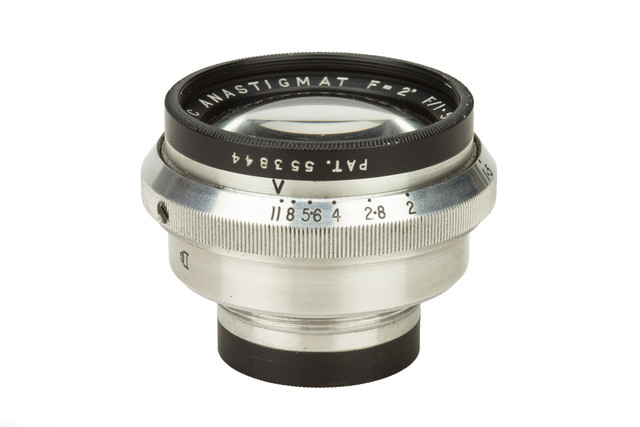
The black version.
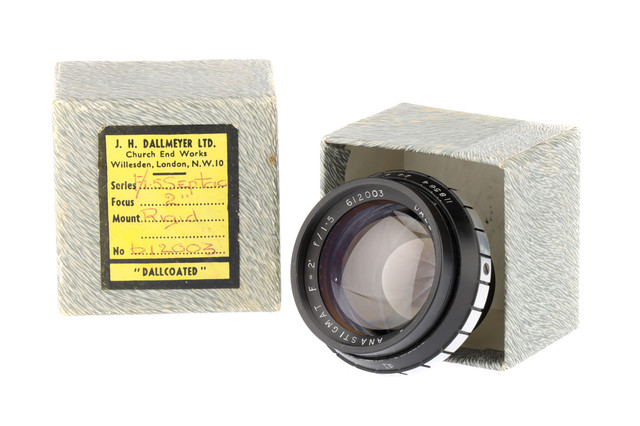
The Z21 has a different rendering from the S21, even though both are 6-element lenses.
The LLL 75mm SPII is even worse. The original Cooke 75mm Speed Panchro SerII is an Ernostar design, NOT a Double-Gauss. They put a completely different type of optical design inside a mimic barrel and still claim it "pays homage" to Cooke?
Just as I said, 99.9% of users never get the chance to compare it with a genuine lens, so most users don't realize that the description of the LLL 75 SPII page is totally a lie. They only know that this unsharp lens is a replica of the so-called "Cooke look"!
endergemini wrote:
Key words/phrases: homage, closely follows, enhanced, refined, interpretation... If a buyer doesn't read descriptions or look at reviews or pictures taken with the actual lens before purchasing, then that is on them, not the company selling the product. Nobody is forcing people to buy these lenses; buyers have agency to make informed decisions on whether or not a lens is right for them.
I mean I paid ~$2000 USD for a low review count, Chinese-made, 7-element 50mm f/1.5 lens that recreates a British lens from the ~1950's and I bought the version that does not mimic the exterior of the original lens it recreates. Does that answer your question?
My bad—YOU ARE WRONG.
The DK Impostolite is a 100% exterior copy of a genuine Dallmeyer Septac.
The chrome version.
The black version.
The Z21 has a different rendering from the S21, even though both are 6-element lenses.
The LLL 75mm SPII is even worse. The original Cooke 75mm Speed Panchro SerII is an Ernostar design, NOT a Double-Gauss. They put a completely different type of optical design inside a mimic barrel and still claim it "pays homage" to Cooke?
Just as I said, 99.9% of users never get the chance to compare it with a genuine lens, so most users don't realize that the description of the LLL 75 SPII page is totally a lie. They only know that this unsharp lens is a replica of the so-called "Cooke look"!
endergemini wrote:
Key words/phrases: homage, closely follows, enhanced, refined, interpretation... If a buyer doesn't read descriptions or look at reviews or pictures taken with the actual lens before purchasing, then that is on them, not the company selling the product. Nobody is forcing people to buy these lenses; buyers have agency to make informed decisions on whether or not a lens is right for them.
Nov 26, 2026 at 06:25 AM
|
p.1 #8Share an article - The Scam: An In-Depth Look at Replica Leica Vintage Lenses in Recent Years in China By old Turtle
DIXI 50 wrote:
The LLL 75mm SPII is even worse. The original Cooke 75mm Speed Panchro SerII is an Ernostar design, NOT a Double-Gauss. They put a completely different type of optical design inside a mimic barrel and still claim it "pays homage" to Cooke?
Just as I said, 99.9% of users never get the chance to compare it with a genuine lens, so most users don't realize that the description of the LLL 75 SPII page is totally a lie. They only know that this unsharp lens is a replica of the so-called "Cooke look"!
"Independently researched and developed optical design, created to define our own signature 'Z21' rendering rather than follow an existing formula." Accompanied by a diagram of the lens elements.
Where is the lie?
Nov 26, 2026 at 07:55 AM
p.1 #9Share an article - The Scam: An In-Depth Look at Replica Leica Vintage Lenses in Recent Years in China By old Turtle
DIXI 50 wrote:
My bad—YOU ARE WRONG.
The DK Impostolite is a 100% exterior copy of a genuine Dallmeyer Septac.
The chrome version.
https://i.ibb.co/mCs7n6mJ/Septac-S.jpg
The black version.
https://i.ibb.co/sdvHbCBf/Septac.jpg
The Z21 has a different rendering from the S21, even though both are 6-element lenses.
The LLL 75mm SPII is even worse. The original Cooke 75mm Speed Panchro SerII is an Ernostar design, NOT a Double-Gauss. They put a completely different type of optical design inside a mimic barrel and still claim it "pays homage" to Cooke?
Just as I said, 99.9% of users never get the chance to compare it with a genuine lens, so most users don't realize that the. They only know that this unsharp lens is a replica of the so-called "Cooke look"!
...Show more →
Yeah sure looks like the silver uncoated version of the Impastolite is a 100% copy of the Septac:
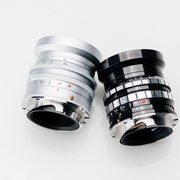
The black version isn't even a 100% copy. Even though it does reproduce the aesthetic, the dimensions and other details are obviously different. You can see the inspiration but to call them a 100% copy is disingenuous.
I think maybe you should reconsider the meaning of the word "homage" before going on a tirade about optical designs not being a 100% recreation. Though I do find it odd you are upset that some exterior designs are too close to being 100% copies but the optical designs not being 100% copies is also bothering you.
The LLL 75mm SPII says it "pays homage to a historically significant 1940s Double-Gaussian optical design, forming part of the SP-II lineage" but doesn't state specifically it is paying homage to the Cooke 75mm SerII which had a different design than the other Cooke SerII lenses. The other Cooke SerII lenses as far as I'm aware DID use double-gaussian optical designs, which is probably what they are referring to. As this is a lens line that they are planning to be adding to, they probably wanted consistent rendering between all of their lenses in the lineup and therefore will use similar optical designs for all the focal lengths.
It's clear you have some sort of bone to pick with Chinese lens companies or at least the ones offering recreations of some sort. I'm not sure who you are trying to convince here; as stated above, people are buying these lenses because of the images they help make regardless of whether or not their optical designs or rendering 100% match up with the lenses they are paying homage to. You're basically just yelling "Hey, don't you know the optical designs are different?! Stop buying things that make you happy and are fun to use," when the majority of people who bought the lenses did so after researching them.
endergemini wrote
I mean I paid ~$2000 USD for a low review count, Chinese-made, 7-element 50mm f/1.5 lens that recreates a British lens from the ~1950's and I bought the version that does not mimic the exterior of the original lens it recreates. Does that answer your question?The DK Impostolite is a 100% exterior copy of a genuine Dallmeyer Septac.
The chrome version.
https://i.ibb.co/mCs7n6mJ/Septac-S.jpg
The black version.
https://i.ibb.co/sdvHbCBf/Septac.jpg
The Z21 has a different rendering from the S21, even though both are 6-element lenses.
The LLL 75mm SPII is even worse. The original Cooke 75mm Speed Panchro SerII is an Ernostar design, NOT a Double-Gauss. They put a completely different type of optical design inside a mimic barrel and still claim it "pays homage" to Cooke?
Just as I said, 99.9% of users never get the chance to compare it with a genuine lens, so most users don't realize that the. They only know that this unsharp lens is a replica of the so-called "Cooke look"!
...Show more →
endergemini wrote
Key words/phrases: homage, closely follows, enhanced, refined, interpretation... If a buyer doesn't read descriptions or look at reviews or pictures taken with the actual lens before purchasing, then that is on them, not the company selling the product. Nobody is forcing people to buy these lenses; buyers have agency to make informed decisions on whether or not a lens is right for them.Yeah sure looks like the silver uncoated version of the Impastolite is a 100% copy of the Septac:
The black version isn't even a 100% copy. Even though it does reproduce the aesthetic, the dimensions and other details are obviously different. You can see the inspiration but to call them a 100% copy is disingenuous.
I think maybe you should reconsider the meaning of the word "homage" before going on a tirade about optical designs not being a 100% recreation. Though I do find it odd you are upset that some exterior designs are too close to being 100% copies but the optical designs not being 100% copies is also bothering you.
The LLL 75mm SPII says it "pays homage to a historically significant 1940s Double-Gaussian optical design, forming part of the SP-II lineage" but doesn't state specifically it is paying homage to the Cooke 75mm SerII which had a different design than the other Cooke SerII lenses. The other Cooke SerII lenses as far as I'm aware DID use double-gaussian optical designs, which is probably what they are referring to. As this is a lens line that they are planning to be adding to, they probably wanted consistent rendering between all of their lenses in the lineup and therefore will use similar optical designs for all the focal lengths.
It's clear you have some sort of bone to pick with Chinese lens companies or at least the ones offering recreations of some sort. I'm not sure who you are trying to convince here; as stated above, people are buying these lenses because of the images they help make regardless of whether or not their optical designs or rendering 100% match up with the lenses they are paying homage to. You're basically just yelling "Hey, don't you know the optical designs are different?! Stop buying things that make you happy and are fun to use," when the majority of people who bought the lenses did so after researching them.
Nov 26, 2026 at 08:06 AM
p.1 #10Share an article - The Scam: An In-Depth Look at Replica Leica Vintage Lenses in Recent Years in China By old Turtle
This article sure got a response.
Nov 26, 2026 at 08:49 AM
p.1 #11Share an article - The Scam: An In-Depth Look at Replica Leica Vintage Lenses in Recent Years in China By old Turtle
mgscheu wrote:
"Independently researched and developed optical design, created to define our own signature 'Z21' rendering rather than follow an existing formula." Accompanied by a diagram of the lens elements.
Where is the lie?
What is the LLL so-called "unique signature" of the Z21's rendering? Isn't it just based on an illusion of the Angénieux S21?
Nov 26, 2026 at 08:52 AM
p.1 #12Share an article - The Scam: An In-Depth Look at Replica Leica Vintage Lenses in Recent Years in China By old Turtle
endergemini wrote:
I think maybe you should reconsider the meaning of the word "homage" before going on a tirade about optical designs not being a 100% recreation. Though I do find it odd you are upset that some exterior designs are too close to being 100% copies but the optical designs not being 100% copies is also bothering you.
As optical replicas, most third-party lenses fail, they perform completely differently from a genuine lens.
Then they glamorizes those failed attempts as "an homage, following the original optical formula with improvements in contrast."
NEARLY ALL CHINESE M-MOUNT LENSES are based on some legacy optical designs with modern improvements in contrast, they just don't copy the Angénieux, Dallmeyer or Leica-style barrels and claim to be replicas.
Nov 26, 2026 at 08:55 AM
p.1 #13Share an article - The Scam: An In-Depth Look at Replica Leica Vintage Lenses in Recent Years in China By old Turtle
DIXI 50 wrote:
Where is the lie?What is the LLL so-called "unique signature" of the Z21's rendering? Isn't it just based on an illusion of the Angénieux S21?
My point is that there is no lie. They clearly stated exactly what the lens is. Moving the goalposts doesn’t change that.
mgscheu wrote
"Independently researched and developed optical design, created to define our own signature 'Z21' rendering rather than follow an existing formula." Accompanied by a diagram of the lens elements.Where is the lie?
My point is that there is no lie. They clearly stated exactly what the lens is. Moving the goalposts doesn’t change that.
Nov 26, 2026 at 09:02 AM