Light Lens Lab 35mm f/2 Apochromatic Review
p.1 #1Light Lens Lab 35mm f/2 Apochromatic Review
|

At the moment, this lens is available for purchase directly from https://lightlenslab.com.
Get a 5% discount when you use the FREDMIRANDA code at checkout.
_____________
About the Light Lens Lab 35mm f/2 "Apochromatic" lens:
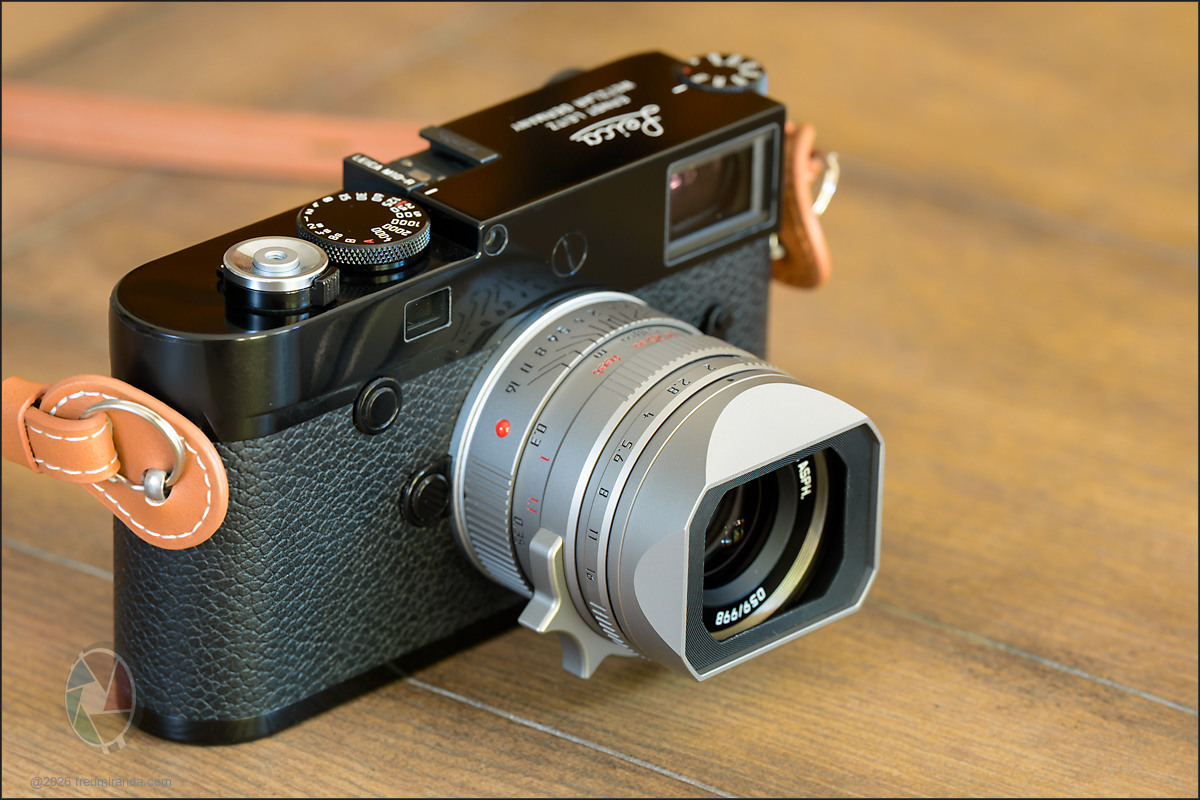
Light Lens Lab released their 35mm f/2 "Apochromatic" in August 2026 as the first lens in their new High Performance / Apochromatic Series Project. Unlike their earlier work recreating rare historical designs, this is an independently developed modern optical formula. It is not a reverse-engineered copy of any existing lens (the design uses 11 elements in 6 groups with four aspherical surfaces).
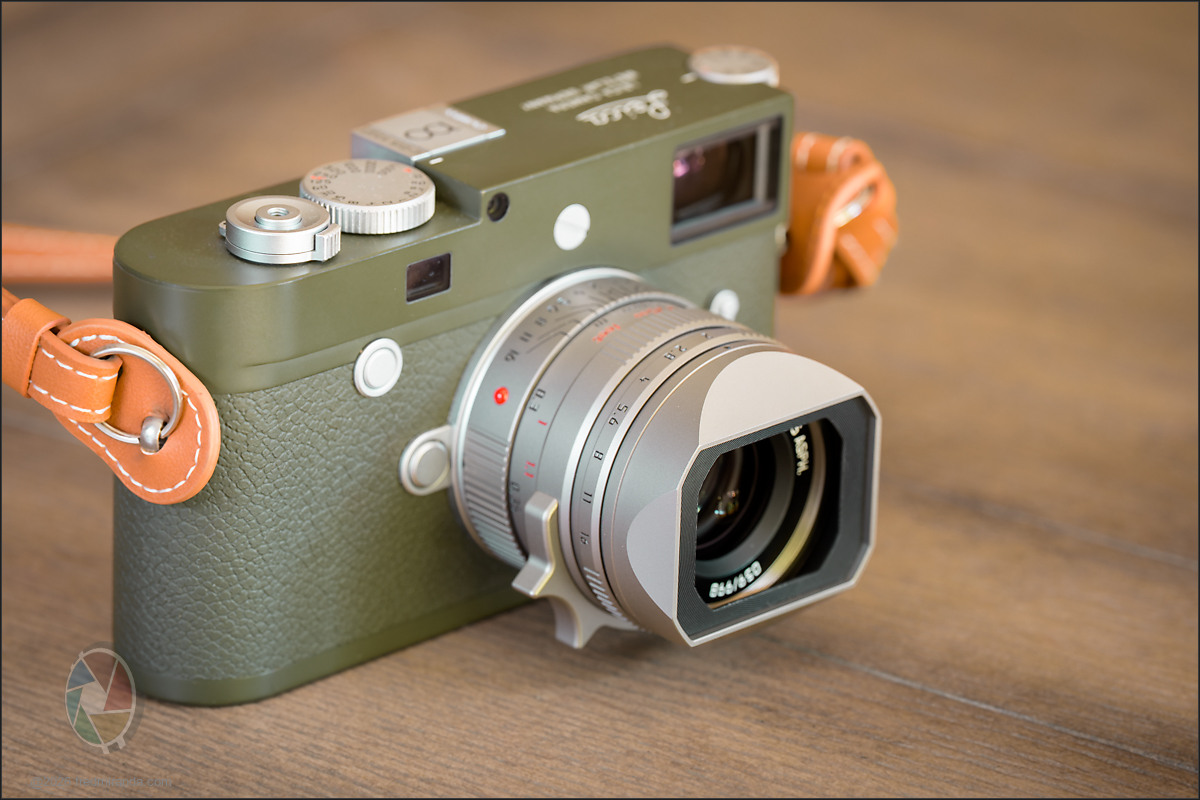
For this review, I received the Titanium Grey Limited Edition version. Aside from the finish and material, the optical design is identical to the black paint and silver chrome aluminum versions.
 |
||
 |
||
|
Review Quick Links:
- Initial thoughts
- Infinity Resolution and Contrast: Light Lens Lab 35mm f/2 Aspherical
- Infinity Resolution and Contrast compared to Voigtlander 35mm f/2 APO-Lanthar
- Distortion
- Field Curvature
- Minimal Focus Distance performance and Focus Shift
- Sunstar Rendering
- Vignetting
- Flare Resistance
- Chromatic Aberration control
- Optical Vignetting and Specular Highlights shape
- Rendering comparison: Light Lens Lab 35mm f/1.4 Aspherical vs Voigtlander 35mm f/2 APO-Lanthar
- Final Thoughts
- Samples
|
||
 |
||
|
Specs (from Light Lens Lab, with measured weights):
• Design frame coverage: 35mm Full Frame (24mm x 36mm)
• Number of lenses/assemblies: 11 Elements in 6 groups (4 aspherical elements / surfaces)
• Focusing system: Floating lens-element optical system
• Focus range: 0.3 meters to infinity (rangefinder coupled to 0.7 m)
• Diaphragm f-stop range: f/2 – f/16 (1/2-stop clicks)
• Number of aperture blades: 11
• Lens mount: M-Mount
• Filter diameter: E39
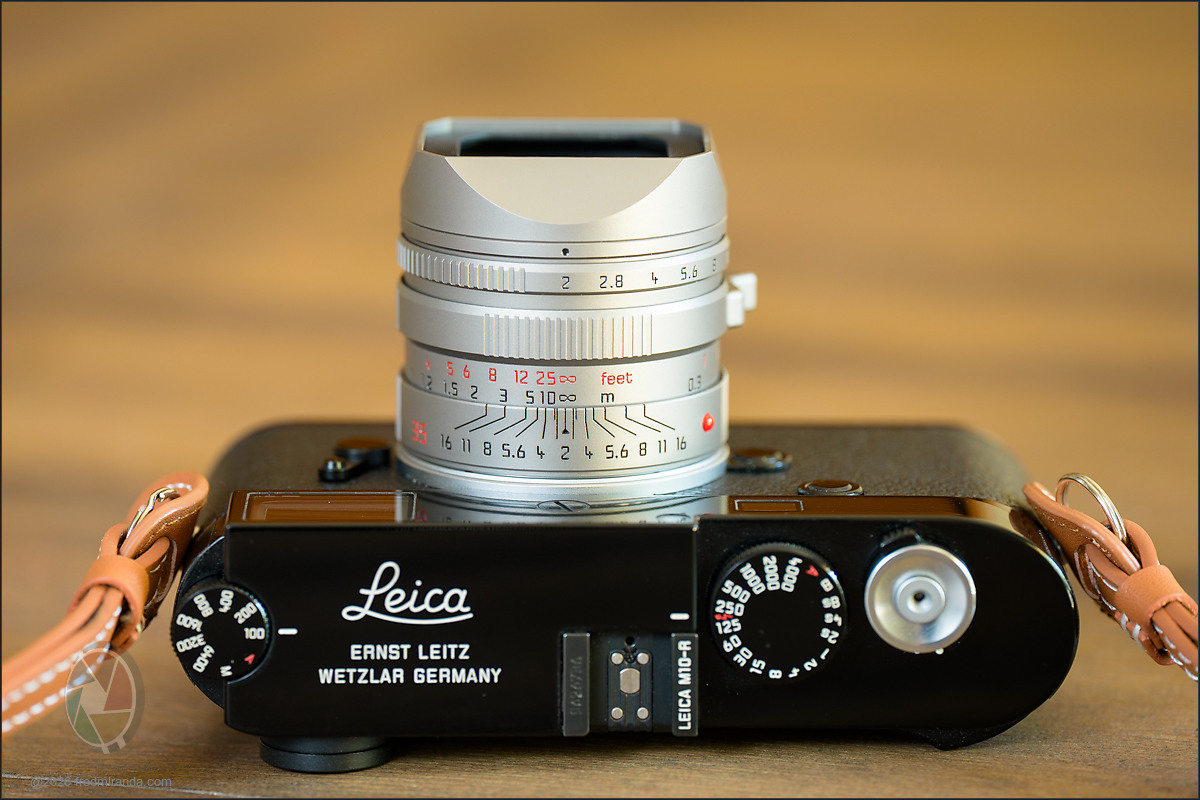
• Lens Hood: E39 screw-on (magnetic clip-on hood exclusive to Titanium edition)
• Length: Approx. 40.9 mm without hood; 49.3 mm with hood
• Diameter: Approx. 53 mm
• Weight (Titanium): 331 g (without hood), 353 g (with hood) — both measured
|
||
 |
||
|
Back to Quick Links
Initial Thoughts:
Light Lens Lab built its reputation by looking backward and faithfully recreating rare and historically significant optics such as the 50mm f/1.2 "1966", the 35mm f/2 eight-element, and most recently the 35mm f/1.4 Double Aspherical "11873". The 35mm f/2 "Apochromatic" marks a clear shift in direction. This is the first lens from their new High Performance / Apochromatic Series Project, and it is an original optical design rather than a historical recreation.
|
||
 |
||
|
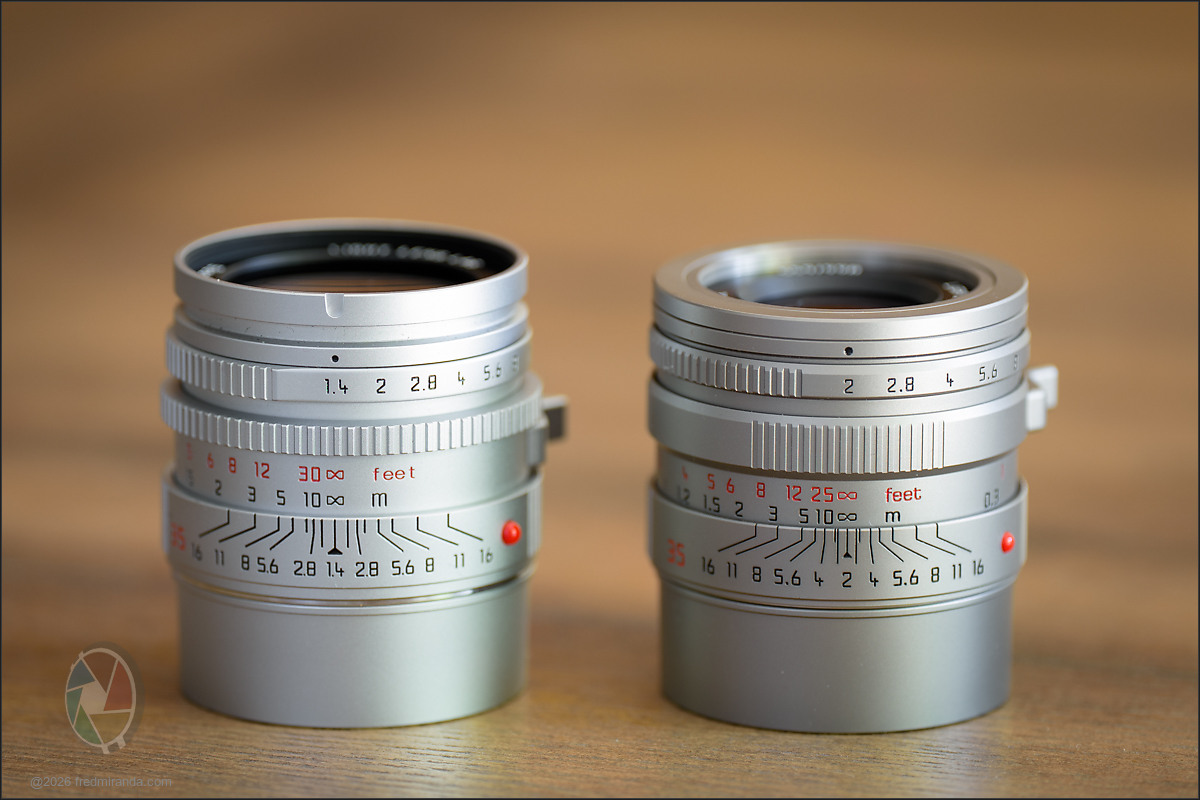
The exterior proportions and overall styling clearly reference contemporary high-performance 35mm designs, which has invited inevitable comparisons and some debate. Underneath the familiar-looking barrel, however, sits a completely independent 11-element, 6-group formula that incorporates four aspherical elements, multiple ultra-low-dispersion and anomalous partial-dispersion glass types, a floating group, and a new high-transmission multilayer coating. Light Lens Lab positions this as the foundation for a new family of apochromatic designs.
What makes the lens interesting is the ambition. It aims for the kind of high-contrast, highly corrected performance expected from modern apochromatic optics while remaining relatively compact for an M-mount 35mm with close-focus capability down to 0.3 m.
|
||
  |
||
|
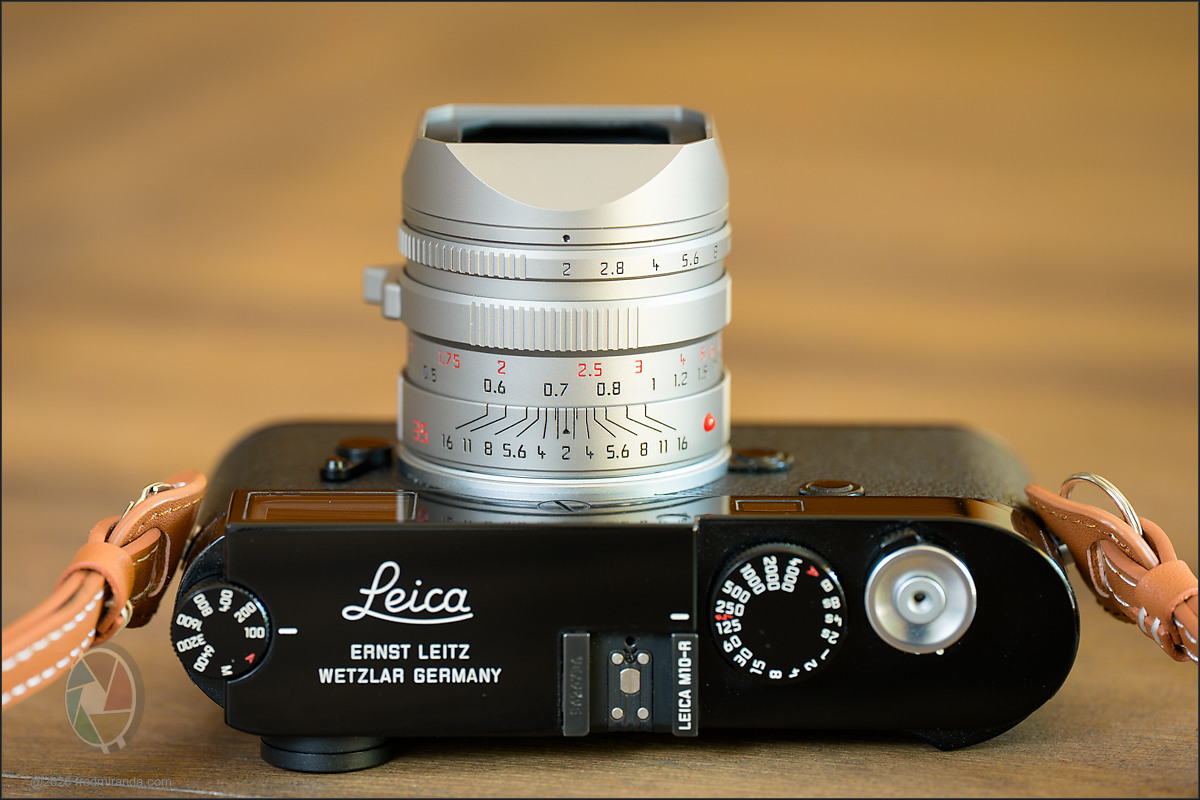
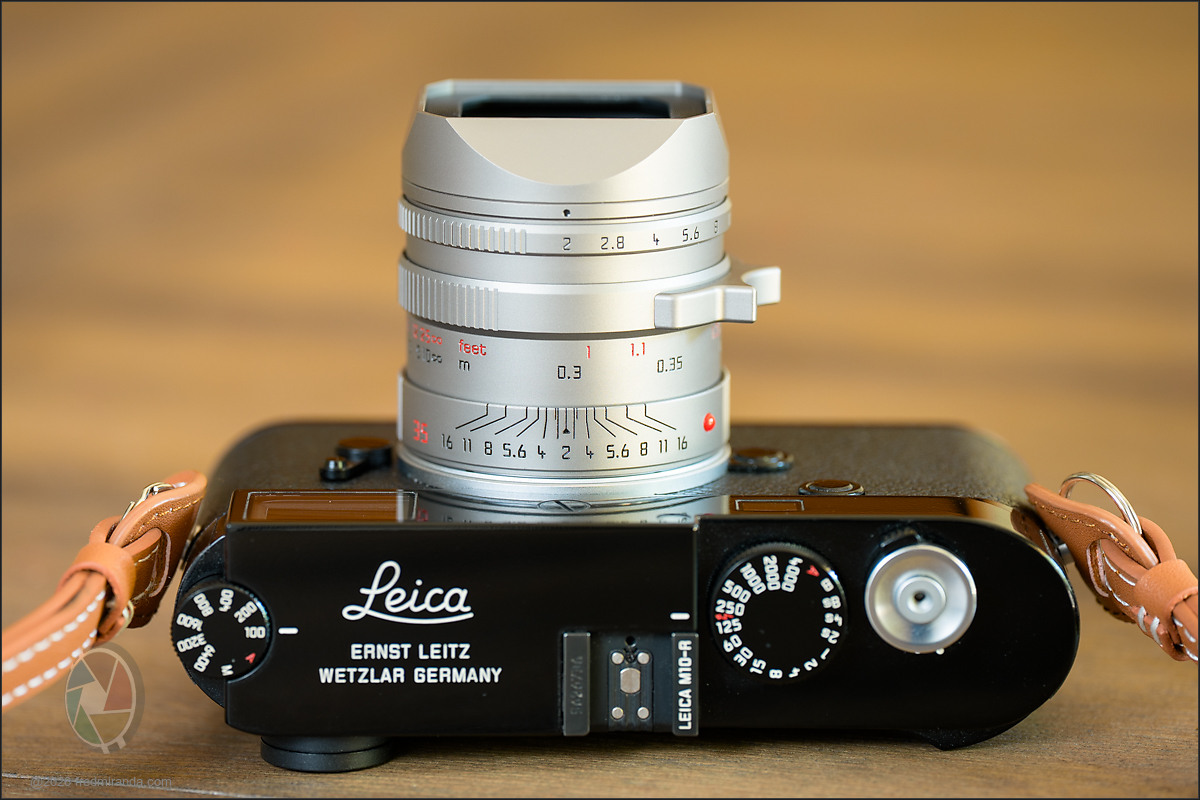
Key practical features include the floating optical system that maintains performance down to 0.3 m (well beyond the rangefinder coupling limit of most M bodies), an 11-bladed aperture for smoother highlight rendering, and the option of either a smooth barrel or a close-focus knurled barrel. The Titanium Grey Limited Edition adds a magnetic hood, matching titanium UV filter, and slightly higher mass, but the optical formula remains the same across finishes.
My review copy is well centered and accurately calibrated to the rangefinder. Focus accuracy has not been an issue at the infinity hard stop or other distances, and the focusing ring feels smooth and precise with good damping. The aperture ring offers firm, crisp half-stop clicks with essentially zero play. Mechanically it feels like a premium M lens rather than a budget alternative.
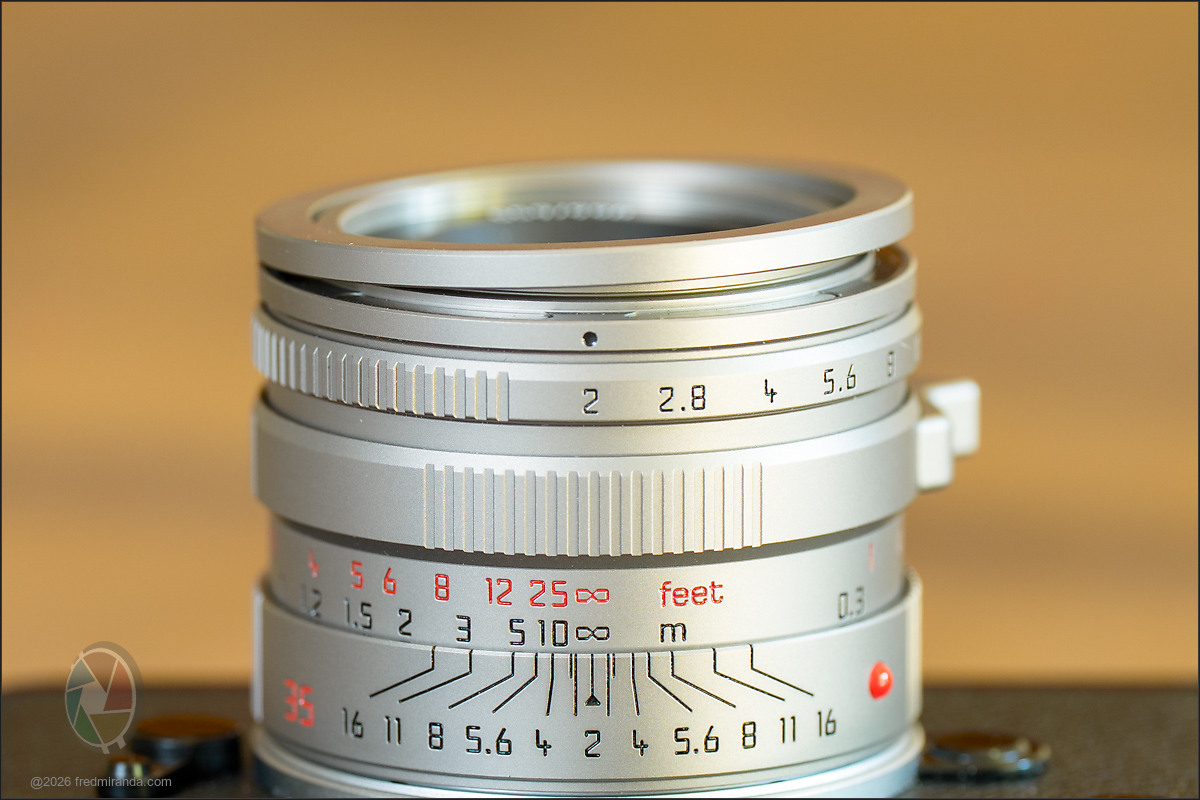
Past 0.7 m, a distinct tactile bump signals the transition into closer focusing via Live View, rotating all the way down to 0.3 m. The focus throw is roughly 100 degrees from 0.7 m to infinity, and about 280 degrees from 0.3 m to infinity. Because of that long throw at close distances, the knurled ring makes focusing much easier.
The Titanium Edition also uses a clever, practical system to mount and unmount the included hood or filter thread adapter. LLL built in strong magnets that hold either accessory securely in place, which is a much simpler approach than having to screw them onto the lens.
|
||
 |
||
|
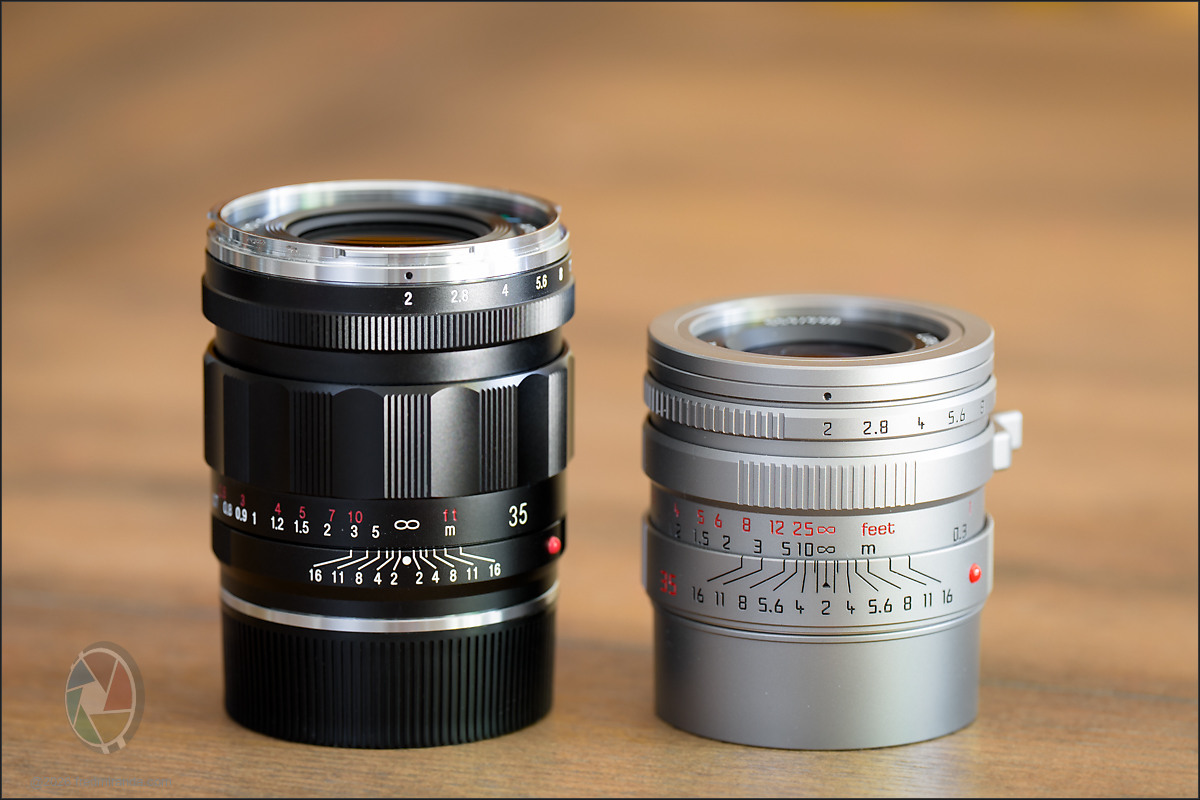
This review will focus primarily on comparisons with another high-performance lens, the Voigtlander 35mm f/2 APO-Lanthar. This lens is the sharpest 35mm I've tested to date, capturing very fine detail from center to the very edges of the frame even wide open, but it has a downside: it's noticeably larger than the Light Lens Lab 35mm f/2 Apochromatic. I will compare their performance in this review. I will also examine real-world rendering, close-focus behavior, flare resistance, distortion, and many other aspects.
|
||
 |
||
|
Based on my own early real-world shooting and published MTF charts, center performance is already very strong at f/2, with high contrast and excellent resolution that holds up well into the mid-frame and corners. Chromatic aberration control appears to be a clear priority of the design. As expected, proper resolution, contrast, and aberration tests will form a core part of this review.
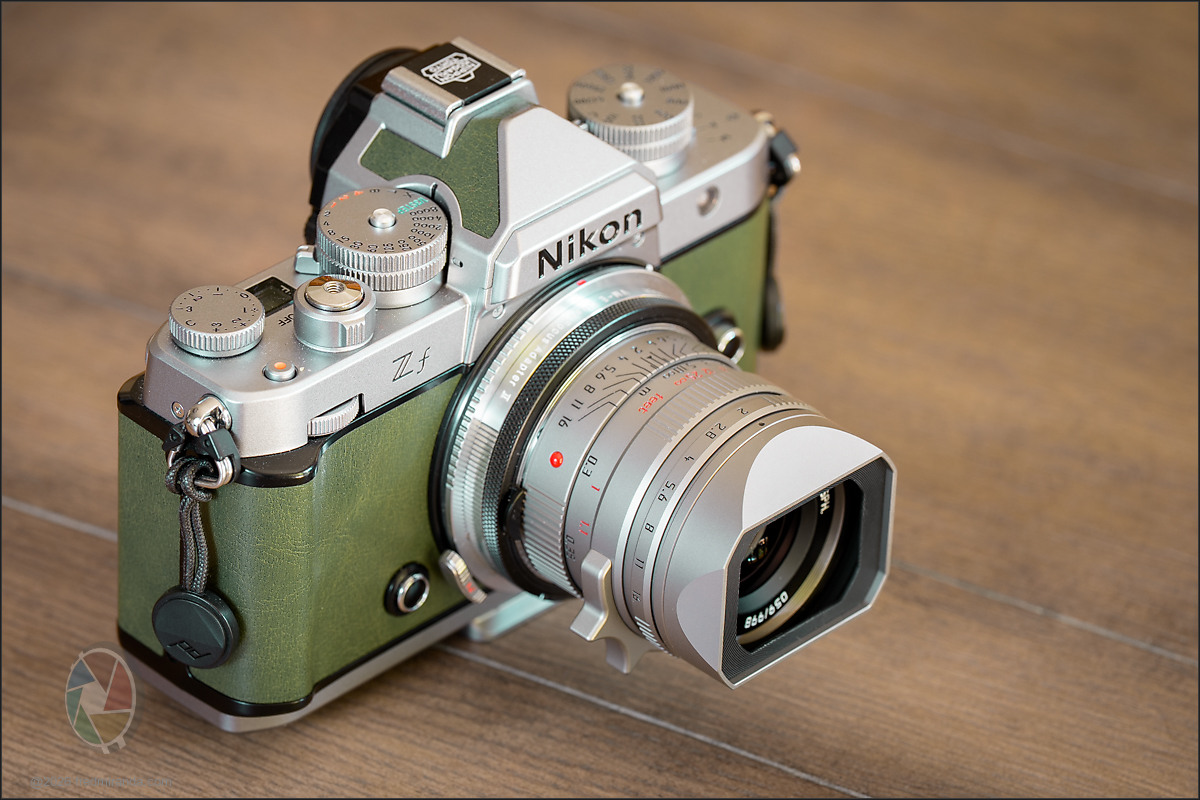
I also plan to test the Light Lens Lab 35mm f/2 APO adapted on bodies like the Sony A7CR and Nikon Zf to see how a thicker sensor stack impacts its overall performance and field curvature.
|
||
 |
||
|
In the rest of this review I will focus on how the lens actually performs in real-world shooting as well as strict technical tests, what it does well, where it falls short relative to my reference benchmark, and whether the "Apochromatic" designation is fully justified by the files it produces.
Nov 15, 2026 at 02:29 PM
