A little fluff
p.1 #1A little fluff
A couple of old shots with newer post-processing.
Many western hummingbirds are remarkably tolerant of sub-freezing (and even, for a few days at a time, sub-zero) temperatures. This makes sense, since many of them nest in cold climates, including elevations near timberline in the Rockies or Cascades, or as far north as southcentral Alaska. Rufous hummingbirds may return to their nesting grounds in Alaska or British Columbia as early as April, when the snow still lies deep in the forest. Anna's hummingbirds routinely winter as far north as British Columbia, coming to snow-covered feeders.
One important adaptation these western hummingbirds possess is the ability to go into a deep,...Show more →
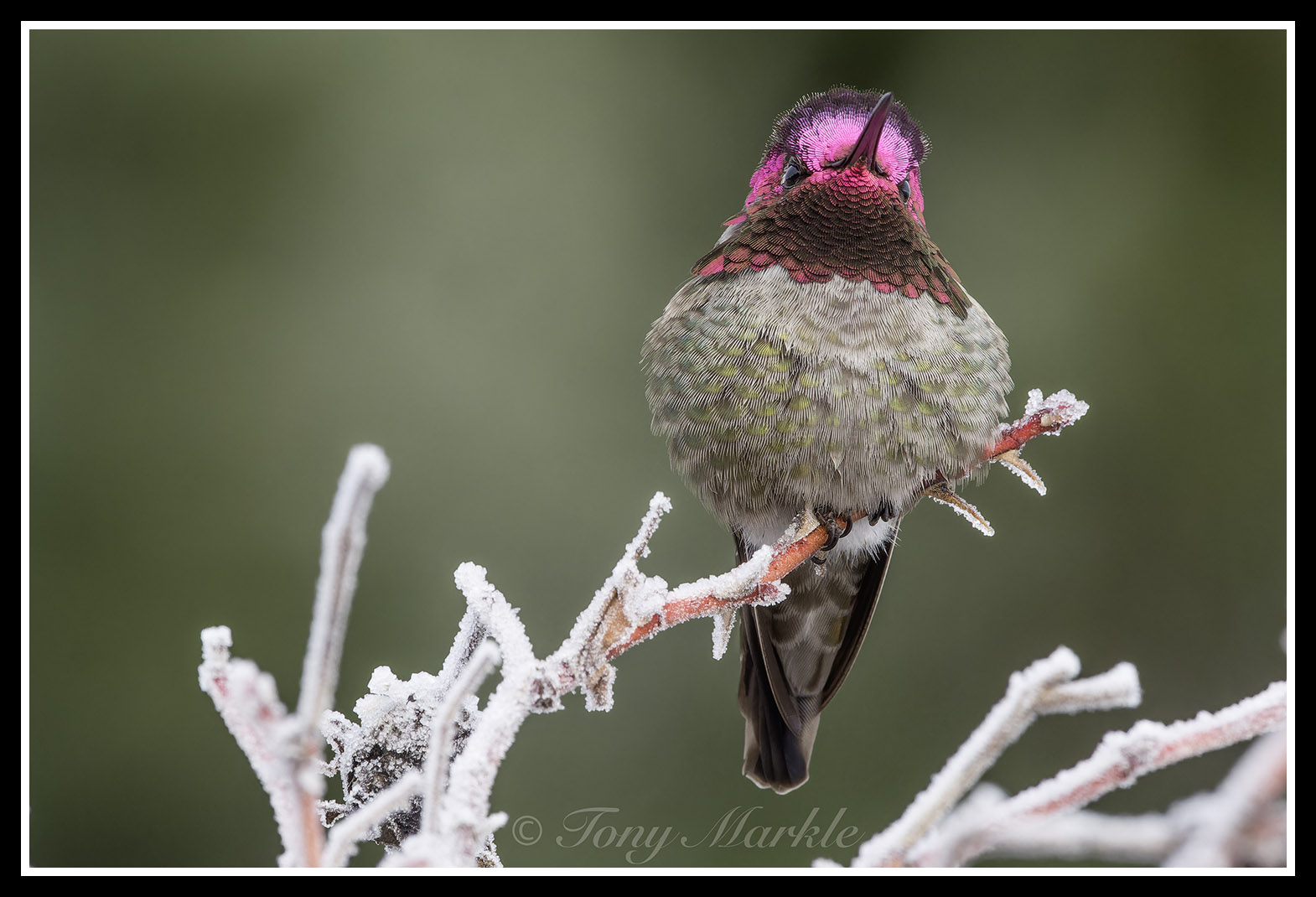
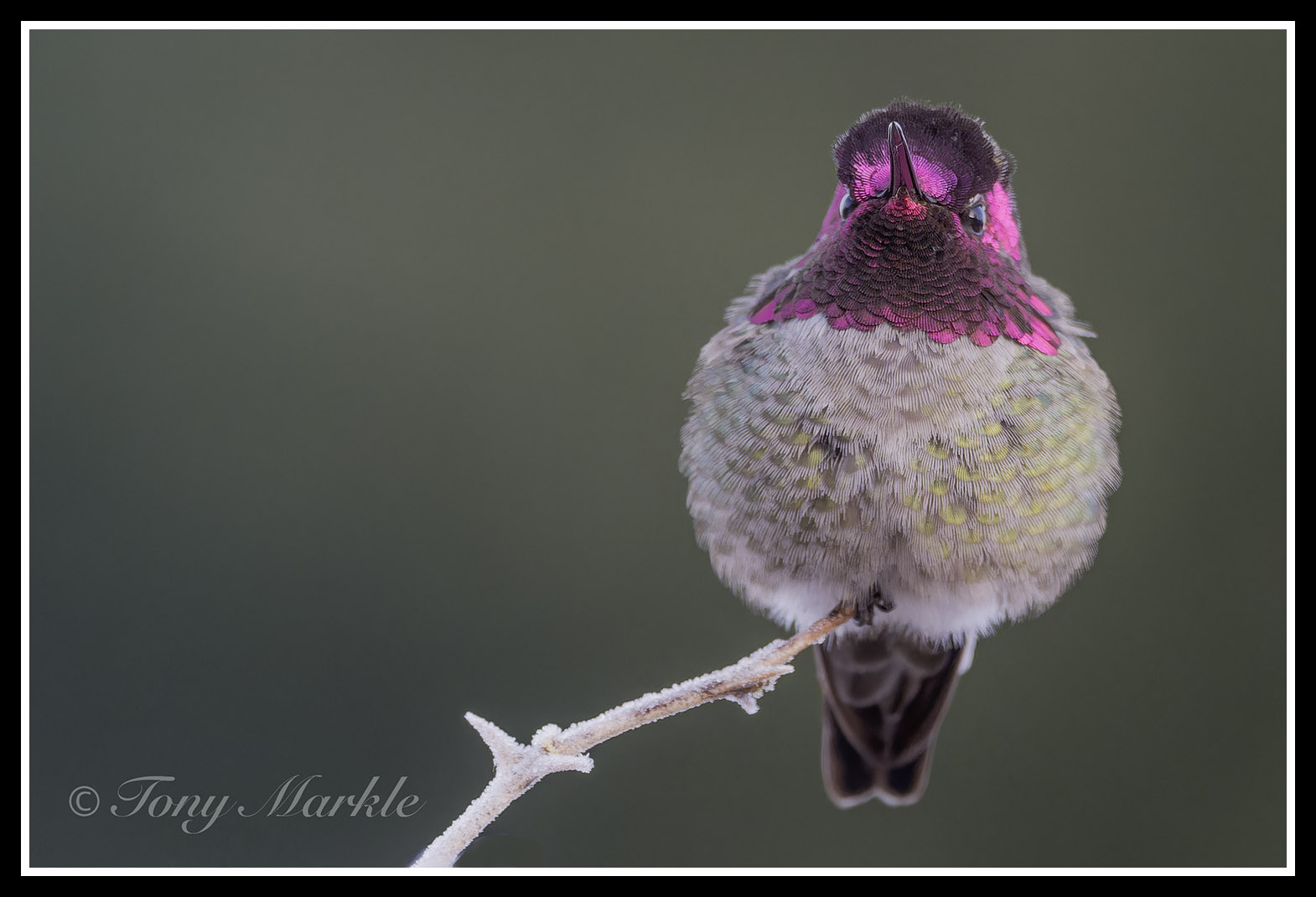
Many western hummingbirds are remarkably tolerant of sub-freezing (and even, for a few days at a time, sub-zero) temperatures. This makes sense, since many of them nest in cold climates, including elevations near timberline in the Rockies or Cascades, or as far north as southcentral Alaska. Rufous hummingbirds may return to their nesting grounds in Alaska or British Columbia as early as April, when the snow still lies deep in the forest. Anna's hummingbirds routinely winter as far north as British Columbia, coming to snow-covered feeders.
One important adaptation these western hummingbirds possess is the ability to go into a deep,...Show more →
E-M1MarkII M.300mm F4.0 + MC-14 lens 420mm f/11.0 1/250s 2500 ISO 0.0 EV
E-M1MarkII M.300mm F4.0 + MC-14 lens 420mm f/5.6 1/500s 2500 ISO -0.5 EV
Nov 06, 2026 at 08:41 PM