Sony 400/4.5 GM vs 400/2.8GM and 600/6.3 vs 600/4.0 comparison
p.2 #1Sony 400/4.5 GM vs 400/2.8GM and 600/6.3 vs 600/4.0 comparison
James Burden wrote:
I'm patiently waiting to see 840/f9 actual photos of wildlife not test charts.... 🦁🦜🐻
840/f9 was not a problem shooting wildlife the Nikon 600mm f6.3 with 1.4X, so I don't think it will be a problem with this lens. The Sony looks a little sharper and higher contrast than I remember the Nikon being so it may even be a bit more tolerant of atmospheric distortion than the Nikon was.
I'll post some shots as soon as mine comes in
Sep 22, 2026 at 09:02 PM
p.2 #2Sony 400/4.5 GM vs 400/2.8GM and 600/6.3 vs 600/4.0 comparison
I truly appreciate the amount of work that went into this, especially when the results boil down to inspecting differences in eyebrow hair on a banknote while zoomed from 6.5 meters away.
In other words, this is about what I would expect from comparing modern GM lenses. It’s so easy to forget how impressive glass is these days.
Looks like the it comes down to individual use cases and budget.
In other words, this is about what I would expect from comparing modern GM lenses. It’s so easy to forget how impressive glass is these days.
Looks like the it comes down to individual use cases and budget.
Sep 22, 2026 at 11:36 PM
p.2 #3Sony 400/4.5 GM vs 400/2.8GM and 600/6.3 vs 600/4.0 comparison
Like most people nothing to add other than thanks for completing these tests
Sep 23, 2026 at 12:15 AM
p.2 #4Sony 400/4.5 GM vs 400/2.8GM and 600/6.3 vs 600/4.0 comparison
michal.narozny wrote:
Lens correction was turned off in LR. Their default value of sharpening was not adjusted. Zero other adjustments. Files were put into frames in PS. Each frame was either 1920/3 or 1920/2 pixels tall and 1080p wide. Within the frame files were enlarged to 200% and moved so they were more or less aligned. Finally 1920*1080 frames were exported. Anyway every file was treated in a same way.
Dof at such distance 1-2cm at least. Thats why i framed the shots as much to the center as i could and I avoided comparing edges.
Tilt head was used - sunaway photo...Show more →
Hi, Thanks for your feedback.
And of course, I understand that this isn't a lab test.
I assume the goal is to give people a reliable impression of how the new lenses compare to the older ones. In that context, the additional information you provided is important for getting a better understanding of the results.
And yes, Lightroom has sharpening and detail enhancement enabled by default. That's not the case in DxO, for example. So, in my view, when you're discussing lens sharpness, details like these are important so that others don't end up comparing apples to oranges.
It's always helpful to have as much information as possible to get a reliable picture before making a purchase.
Thanks again for putting in the effort and for giving us some insight into your testing setup.
Sep 23, 2026 at 12:49 AM
p.2 #5Sony 400/4.5 GM vs 400/2.8GM and 600/6.3 vs 600/4.0 comparison
biggles2002 wrote:
400/4.5/2.0tc vs 600/6.3/1.4tc
The 400/4.5 with 2.0xTC seems to be better
Indeed, or at least near identical. The 400 with 2x really pairs well (in this particular combo).
400/4.5/2.0tc vs 600/6.3/1.4tc
The 400/4.5 with 2.0xTC seems to be better
Indeed, or at least near identical. The 400 with 2x really pairs well (in this particular combo).
Sep 23, 2026 at 12:53 AM
p.2 #6Sony 400/4.5 GM vs 400/2.8GM and 600/6.3 vs 600/4.0 comparison
Kooppers wrote:
And what do you think about the AF for the 400/4.5 +2.0tc versus 600/6.3 +1.4tc ?
With my eyes, they look neraly identical. Very pleased with how the 400 handles the 2x.
And what do you think about the AF for the 400/4.5 +2.0tc versus 600/6.3 +1.4tc ?
With my eyes, they look neraly identical. Very pleased with how the 400 handles the 2x.
Sep 23, 2026 at 12:56 AM
p.2 #7Sony 400/4.5 GM vs 400/2.8GM and 600/6.3 vs 600/4.0 comparison
James Burden wrote:
I'm patiently waiting to see 840/f9 actual photos of wildlife not test charts.... 🦁🦜🐻
Jan Wegener is working on his review. Chatted with him yesterday, and now I see he is looking for a 2x converter...
I'm patiently waiting to see 840/f9 actual photos of wildlife not test charts.... 🦁🦜🐻
Jan Wegener is working on his review. Chatted with him yesterday, and now I see he is looking for a 2x converter...
Sep 23, 2026 at 01:29 AM
p.2 #8Sony 400/4.5 GM vs 400/2.8GM and 600/6.3 vs 600/4.0 comparison
Settepotet wrote:
The 400/4.5 with 2.0xTC seems to be betterIndeed, or at least near identical. The 400 with 2x really pairs well (in this particular combo).
Yes it performs very well in this scenario, I assume he's using Sony 2.0XTC.
other reviewers on youtube used the Viltrox2.0xTC and with that one it was worse than the FE600+1.4xTC
biggles2002 wrote
400/4.5/2.0tc vs 600/6.3/1.4tcThe 400/4.5 with 2.0xTC seems to be better
Yes it performs very well in this scenario, I assume he's using Sony 2.0XTC.
other reviewers on youtube used the Viltrox2.0xTC and with that one it was worse than the FE600+1.4xTC
Sep 23, 2026 at 02:25 AM
p.2 #9Sony 400/4.5 GM vs 400/2.8GM and 600/6.3 vs 600/4.0 comparison
James Burden wrote:
I'm patiently waiting to see 840/f9 actual photos of wildlife not test charts.... 🦁🦜🐻
I will check what I have taken with this combo. But these might not be good/attractive photos to the eye.
I'm patiently waiting to see 840/f9 actual photos of wildlife not test charts.... 🦁🦜🐻
I will check what I have taken with this combo. But these might not be good/attractive photos to the eye.
Sep 23, 2026 at 03:11 AM
p.2 #10Sony 400/4.5 GM vs 400/2.8GM and 600/6.3 vs 600/4.0 comparison
Some thoughts I had after viewing these samples...
Amazed how noticeable the 400/4.5 is better than the 400/2.8. I never liked my 400/2.8 with either TC but thought the bare lens was still very impressive.
400/1.4TC vs 600 seems very close in these examples. If I had to award a winner it would probably be the 400/1.4TC though.
400/2x vs 600/1.4 seems to be a bit more obvious favouring the 400/2x. That is impressive for the 400.
Using TCs on the 400 vs cropping the TCs show a noticeable advantage at every level.
Using TCs on the 600 vs cropping shows very similar results. Still looks like a slight advantage to the TCs (at least the 1.4) but not by much. Is this down to diffraction? But then you'd think the 400/2x wouldn't show as much of an advantage as it does??
If I was evaluating these lenses on IQ alone I think I'd probably go for the 400 over the 600.
However, I'm even more interested in AF performance and with every Sony lens I've owned (including the TC champ 300GM) I can certainly notice a drop in AF performance as you add each subsequent TC magnification. Therefore I still think I will purchase the 600 just to have the maximum AF performance at 600mm. I still have the 300GM for amazing AF at 420mm. It remains to be seen if the 400/4.5 has better AF than the 300GM/1.4TC.
Side note....I'm surprised that there have been no comparisons of the new lenses to the 300GM/TCs. To me that is the biggest competition to these new lenses if one was deciding on what to buy.
I'm sure Steve Perry and Jan Wegener will have the 300GM in their upcoming reviews.
Sep 23, 2026 at 07:09 AM
|
p.2 #11Sony 400/4.5 GM vs 400/2.8GM and 600/6.3 vs 600/4.0 comparison
arbitrage wrote:
Some thoughts I had after viewing these samples...
Amazed how noticeable the 400/4.5 is better than the 400/2.8. I never liked my 400/2.8 with either TC but thought the bare lens was still very impressive.
400/1.4TC vs 600 seems very close in these examples. If I had to award a winner it would probably be the 400/1.4TC though.
400/2x vs 600/1.4 seems to be a bit more obvious favouring the 400/2x. That is impressive for the 400.
Using TCs on the 400 vs cropping the TCs show a noticeable advantage at every level.
Using TCs on the 600 vs cropping shows very similar results. Still...Show more →
You summary is same as mine. I think 400 will be at least equal to 300+1.4 in sharpness and AF (because there's no TC involved with 400)
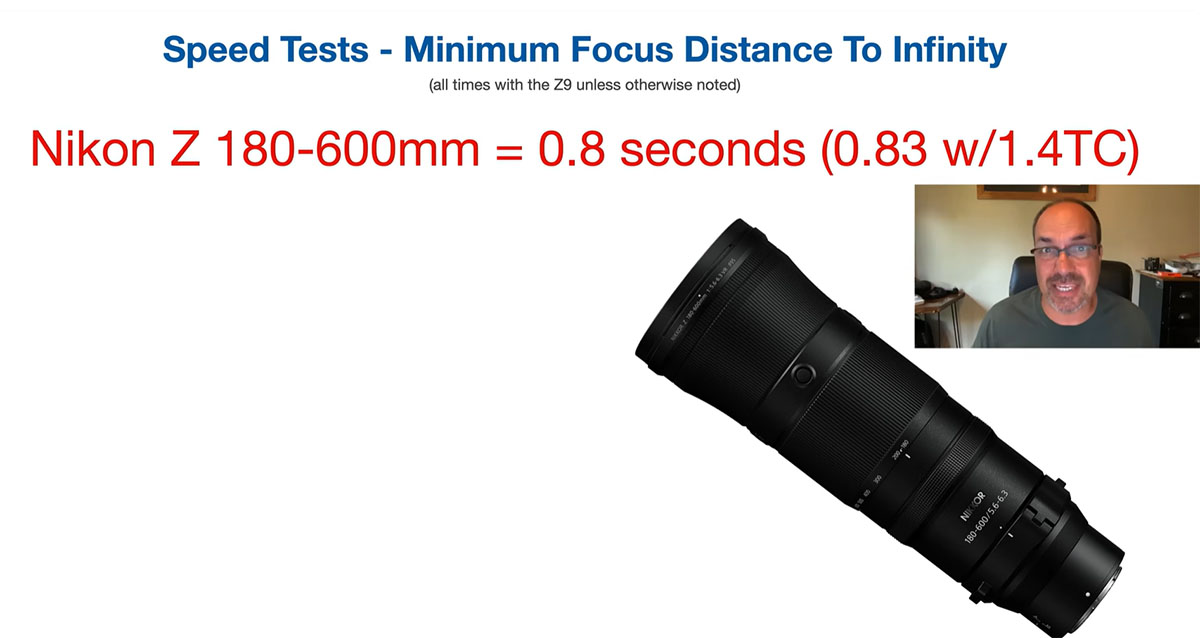
I saw some argument that adding TC doesn't necessarily affect AF, the aperture does. If that's true 560/6.3 and 600/6.3 should have similar AF. I could be wrong here. However in one of the speed test videos from Steve Perry shows TC doesn't reduce 'AF Speed' (moving from minimum FD to infinity and back) much on MIRRORLESS cameras. I know this doesn't mean TC doesn't affect the accuracy. Unfortunately it's one of the hardest thing to measure.
Some thoughts I had after viewing these samples...
Amazed how noticeable the 400/4.5 is better than the 400/2.8. I never liked my 400/2.8 with either TC but thought the bare lens was still very impressive.
400/1.4TC vs 600 seems very close in these examples. If I had to award a winner it would probably be the 400/1.4TC though.
400/2x vs 600/1.4 seems to be a bit more obvious favouring the 400/2x. That is impressive for the 400.
Using TCs on the 400 vs cropping the TCs show a noticeable advantage at every level.
Using TCs on the 600 vs cropping shows very similar results. Still...Show more →
You summary is same as mine. I think 400 will be at least equal to 300+1.4 in sharpness and AF (because there's no TC involved with 400)
I saw some argument that adding TC doesn't necessarily affect AF, the aperture does. If that's true 560/6.3 and 600/6.3 should have similar AF. I could be wrong here. However in one of the speed test videos from Steve Perry shows TC doesn't reduce 'AF Speed' (moving from minimum FD to infinity and back) much on MIRRORLESS cameras. I know this doesn't mean TC doesn't affect the accuracy. Unfortunately it's one of the hardest thing to measure.
Sep 23, 2026 at 08:25 AM
p.2 #12Sony 400/4.5 GM vs 400/2.8GM and 600/6.3 vs 600/4.0 comparison
While the 400 + 2X does look impressive. On par, or perhaps slightly better than the 600 + 1.4x. AF performance with the 2X is an unknown
As Steve Perry has shown over the years, adding TC’s does slow down the AF during his MFD to infinity tests. I even remember one of Canon’s video starring Rudy, saying how they purposely slow down the AF when TC’s are attached. Although this was back in the DSLR days. Not sure if it still holds true for mirrorless
Even in my personal experience, adding a 1.4x on my 300GM slows AF slightly. A little more with the 2X. So even though the 400 + 2X looks very impressive. If maximum reach is the priority, I think the 600 + 1.4x may have a slight AF advantage
Looking forward to hearing some real world experience when the lenses start shipping
Sep 23, 2026 at 09:01 AM
p.2 #13Sony 400/4.5 GM vs 400/2.8GM and 600/6.3 vs 600/4.0 comparison
My guess is TC’s slower AF response is primarily due to the loss of micro contrast and darker aperture created by them; and in this it makes sense the 2x impairs both more than the 1.4x.
Side note. I think it’s nuts for anyone to buy a third party 2x for any Sony lens that accepts the Sony converters, but that’s me.
Side note. I think it’s nuts for anyone to buy a third party 2x for any Sony lens that accepts the Sony converters, but that’s me.
Sep 23, 2026 at 09:16 AM
p.2 #14Sony 400/4.5 GM vs 400/2.8GM and 600/6.3 vs 600/4.0 comparison
Jack Flesher wrote:
My guess is TC’s slower AF response is primarily due to the loss of micro contrast and darker aperture created by them; and in this it makes sense the 2x impairs both more than the 1.4x.
Side note. I think it’s nuts for anyone to buy a third party 2x for any Sony lens that accepts the Sony converters, but that’s me.
That brings up an interesting question. If AF speed is primarily governed by aperture, do the 400mm + 2x @ f9 and 600mm + 1.4x also @ f9 have equal AF speed?
And if we want to get even nerdier about it, does stopping down a lens for better sharpness actually hurt AF performance slightly?
Back in the DSLR days (also in the early mirrorless days) the lens would open the aperture wide open during AF and only close down to the working aperture when taking the photo. So stopping down wouldn’t affect AF
But now that mirrorless cameras focus at the final aperture without opening up. Does, for example, stopping down a 200-600mm from f6.3 to f7.1-f8 for extra sharpness hurt your AF speed?
Edited on Sep 23, 2026 at 09:42 AM · View previous versions
Sep 23, 2026 at 09:23 AM
p.2 #15Sony 400/4.5 GM vs 400/2.8GM and 600/6.3 vs 600/4.0 comparison
robert614 wrote:
As Steve Perry has shown over the years, adding TC’s does slow down the AF during his MFD to infinity tests.
Off topic rant: MFD to infinity tests seem to be pretty poor predictors of AF performance when tracking fast subjects. They are as dependent on the camera and available light as on the lens. A camera may not even try to drive the lens at its maximum speed when it sees nothing to focus on and top lens speed is a quite different thing from top lens acceleration.
Sep 23, 2026 at 09:39 AM
p.2 #16Sony 400/4.5 GM vs 400/2.8GM and 600/6.3 vs 600/4.0 comparison
Daran wrote:
robert614 wrote
As Steve Perry has shown over the years, adding TC’s does slow down the AF during his MFD to infinity tests.You could be right about that. But there does seem to be some correlation though. The highest end lenses also seem to have the fastest times. That has to mean something. Or at least that’s what I tell myself to justify spending so much money on a lens 😄
Sep 23, 2026 at 09:46 AM
p.2 #17Sony 400/4.5 GM vs 400/2.8GM and 600/6.3 vs 600/4.0 comparison
robert614 wrote:
Side note. I think it’s nuts for anyone to buy a third party 2x for any Sony lens that accepts the Sony converters, but that’s me.That brings up an interesting question. If AF speed is primarily governed by aperture, do the 400mm + 2x @ f9 and 600mm + 1.4x also @ f9 have equal AF speed?
And if we want to get even nerdier about it, does stopping down a lens for better sharpness actually hurt AF performance slightly?
Back in the DSLR days (also in the early mirrorless days) the lens would open the aperture wide open during AF and only close down to the working aperture when taking the photo. So stopping down wouldn’t affect AF
But now that mirrorless cameras focus at the...Show more →
"And if we want to get even nerdier about it, does stopping down a lens for better sharpness actually hurt AF performance slightly?"
Definitely not. Camera focuses using max aperture for focusing. Stops down only when camera takes the picture. Otherwise DSLR/SLR wouldn't focus at all when stopped down below 5.6
Jack Flesher wrote
My guess is TC’s slower AF response is primarily due to the loss of micro contrast and darker aperture created by them; and in this it makes sense the 2x impairs both more than the 1.4x.Side note. I think it’s nuts for anyone to buy a third party 2x for any Sony lens that accepts the Sony converters, but that’s me.
And if we want to get even nerdier about it, does stopping down a lens for better sharpness actually hurt AF performance slightly?
Back in the DSLR days (also in the early mirrorless days) the lens would open the aperture wide open during AF and only close down to the working aperture when taking the photo. So stopping down wouldn’t affect AF
But now that mirrorless cameras focus at the...Show more →
"And if we want to get even nerdier about it, does stopping down a lens for better sharpness actually hurt AF performance slightly?"
Definitely not. Camera focuses using max aperture for focusing. Stops down only when camera takes the picture. Otherwise DSLR/SLR wouldn't focus at all when stopped down below 5.6
Sep 23, 2026 at 09:50 AM
p.2 #18Sony 400/4.5 GM vs 400/2.8GM and 600/6.3 vs 600/4.0 comparison
Jemini wrote:
robert614 wrote
Jack Flesher wrote
My guess is TC’s slower AF response is primarily due to the loss of micro contrast and darker aperture created by them; and in this it makes sense the 2x impairs both more than the 1.4x.Side note. I think it’s nuts for anyone to buy a third party 2x for any Sony lens that accepts the Sony converters, but that’s me.
And if we want to get even nerdier about it, does stopping down a lens for better sharpness actually hurt AF performance slightly?
Back in the DSLR days (also in the early mirrorless days) the lens would open the aperture wide open during AF and only close down to the working aperture when taking the photo. So stopping down wouldn’t affect AF
But now that mirrorless cameras focus at the final aperture without opening up. Does, for example, stopping down a 200-600mm from f6.3 to f7.1-f8 for extra sharpness hurt your AF speed?
Definitely not. Camera focuses using max aperture for focusing. Stops down only when camera takes the picture. Otherwise DSLR/SLR wouldn't focus at all when stopped down below 5.6
I know that was true in the DSLR days. Even the early days of mirrorless. But I believe (correct me if I’m wrong) that modern mirrorless bodies focus at the final aperture without opening up during AF
Sep 23, 2026 at 09:58 AM
p.2 #19Sony 400/4.5 GM vs 400/2.8GM and 600/6.3 vs 600/4.0 comparison
robert614 wrote:
Side note. I think it’s nuts for anyone to buy a third party 2x for any Sony lens that accepts the Sony converters, but that’s me.That brings up an interesting question. If AF speed is primarily governed by aperture, do the 400mm + 2x @ f9 and 600mm + 1.4x also @ f9 have equal AF speed?
And if we want to get even nerdier about it, does stopping down a lens for better sharpness actually hurt AF performance slightly?
Back in the DSLR days (also in the early mirrorless days) the lens would open the aperture wide open during AF and only close down to the working aperture when taking the photo. So stopping down wouldn’t affect AF
But now that mirrorless cameras focus at the final aperture without opening up. Does, for example, stopping down a 200-600mm from f6.3 to f7.1-f8 for extra sharpness hurt your AF speed?"And if we want to get even nerdier about it, does stopping down a lens for better sharpness actually hurt AF performance slightly?"
Definitely not. Camera focuses using max aperture for focusing. Stops down only when camera takes the picture. Otherwise DSLR/SLR wouldn't focus at all when stopped down below 5.6I know that was true in the DSLR days. Even the early days of mirrorless. But I believe (correct me if I’m wrong) that modern mirrorless bodies focus at the final aperture without opening up during AF
Given the focus shift, I would imagine they would have to? (At least until you're stopped down so much that they can't acquire focus at all - perhaps then some sort of hybrid approach is necessary?)
Jemini wrote
robert614 wrote
Jack Flesher wrote
My guess is TC’s slower AF response is primarily due to the loss of micro contrast and darker aperture created by them; and in this it makes sense the 2x impairs both more than the 1.4x.Side note. I think it’s nuts for anyone to buy a third party 2x for any Sony lens that accepts the Sony converters, but that’s me.
And if we want to get even nerdier about it, does stopping down a lens for better sharpness actually hurt AF performance slightly?
Back in the DSLR days (also in the early mirrorless days) the lens would open the aperture wide open during AF and only close down to the working aperture when taking the photo. So stopping down wouldn’t affect AF
But now that mirrorless cameras focus at the final aperture without opening up. Does, for example, stopping down a 200-600mm from f6.3 to f7.1-f8 for extra sharpness hurt your AF speed?
Definitely not. Camera focuses using max aperture for focusing. Stops down only when camera takes the picture. Otherwise DSLR/SLR wouldn't focus at all when stopped down below 5.6
Given the focus shift, I would imagine they would have to? (At least until you're stopped down so much that they can't acquire focus at all - perhaps then some sort of hybrid approach is necessary?)
Sep 23, 2026 at 10:38 AM
p.2 #20Sony 400/4.5 GM vs 400/2.8GM and 600/6.3 vs 600/4.0 comparison
arbitrage wrote:
Some thoughts I had after viewing these samples...
Amazed how noticeable the 400/4.5 is better than the 400/2.8. I never liked my 400/2.8 with either TC but thought the bare lens was still very impressive.
400/1.4TC vs 600 seems very close in these examples. If I had to award a winner it would probably be the 400/1.4TC though.
400/2x vs 600/1.4 seems to be a bit more obvious favouring the 400/2x. That is impressive for the 400.
Using TCs on the 400 vs cropping the TCs show a noticeable advantage at every level.
Using TCs on the 600 vs cropping shows very similar results. Still...Show more →
Your summary is in line with the expectation that the design of the 400mm is a native design whereas the 600mm is an adjusted 400mm, albeit not very scientifically expressed. I am accustomed to 600mm f4 designs being superior to 400mm 2.8 + TC across all brands and they are considerably larger and have a different design formula.
With that said, the 600mm performed admirably in this test. I am still not interested in it for myself but it will be a solid recommendation for many people.
On your remark regarding the 400mm 2.8, I am really looking forward to its successor, at the risk of sounding like a broken record , most curious to see if they will attain the benchmark level they set with the 300mm 2.8.
Some thoughts I had after viewing these samples...
Amazed how noticeable the 400/4.5 is better than the 400/2.8. I never liked my 400/2.8 with either TC but thought the bare lens was still very impressive.
400/1.4TC vs 600 seems very close in these examples. If I had to award a winner it would probably be the 400/1.4TC though.
400/2x vs 600/1.4 seems to be a bit more obvious favouring the 400/2x. That is impressive for the 400.
Using TCs on the 400 vs cropping the TCs show a noticeable advantage at every level.
Using TCs on the 600 vs cropping shows very similar results. Still...Show more →
Your summary is in line with the expectation that the design of the 400mm is a native design whereas the 600mm is an adjusted 400mm, albeit not very scientifically expressed. I am accustomed to 600mm f4 designs being superior to 400mm 2.8 + TC across all brands and they are considerably larger and have a different design formula.
With that said, the 600mm performed admirably in this test. I am still not interested in it for myself but it will be a solid recommendation for many people.
On your remark regarding the 400mm 2.8, I am really looking forward to its successor, at the risk of sounding like a broken record
, most curious to see if they will attain the benchmark level they set with the 300mm 2.8. Sep 23, 2026 at 11:04 AM