Just sold my M11 and will now only use my M-mount lenses on Canon RF. There is, however, one focal length with which I'm not happy with the current setup and for which I have no real alternative within my MFT kit either and that is 28mm.
For street photography, I prefer a small lens that allows for zone focusing. At the moment, I have three lenses that allow me to do that with the Canon R8 that I prefer for FF street photography: the Elmarit 28mm f/2.8, the film-era Olympus 28mm f/2.8 and the film-era Contax G 28mm. The Olympus becomes kind of large with the adapter, while the focusing setup with the Contax isn't ideal.
The Elmarit is thus the nicest option, but also causes quite a bit of color fringing. So, I'm looking for an alternative. Claude.AI indicates that the Voigtländer Ultron 28mm f/2 (for M-mount) is the best affordable option, but also says there are no actual examples or user experiences. It's just based on lens design.
I'm in Europe, so renting a lens isn't easy and my local store doesn't have the Voigtlander in stock either.
So, anyone with experience of using that lens on Canon RF cameras, esp with the sensor in the R6II or R8?
I have that lens and I have the R6II. It may be a few days before I can get back to you.
I can check color fringing but with respect to across-frame sharpness, my copy was not as good on Leica M as what Fred reported in his review, so not sure how that will correspond to sharpness performance with Canon's sensor stack.
Canon's RF 28/2.8 actually looks really good, but it won't satisfy your zone focusing requirements.
These are what I found with my gears...
Voigtländer Ultron 28mm f/2 with Shoten adapter on RP -> colour fringing
Voigtländer Ultron 28mm f/2 with Shoten adapter on R5 -> no colour fringing
I don't have R6II or R8. But I believe the sensor stack thickness of R5, R6II and R8 are the same at around 1.25mm.
dumchidumchi wrote:
These are what I found with my gears...
Voigtländer Ultron 28mm f/2 with Shoten adapter on RP -> colour fringing
Voigtländer Ultron 28mm f/2 with Shoten adapter on R5 -> no colour fringing
I don't have R6II or R8. But I believe the sensor stack thickness of R5, R6II and R8 are the same at around 1.25mm.
Thanks. My experience shows that my M lenses do much better on my R5 than on my R6II or R8. Pretty sure the sensor stack thickness is less on the R5. I like the R8 because it's so small and light and prefer that for street over the R5.
Small without fringing is always going to be tough, let alone when you're using lenses on systems they weren't designed for.
I can't stand 'zone focusing', so I have no suggestions which take that into account, but putting that point aside I can recommend the 28mm f/2 APO-Lanthar. I've borrowed it a few times (don't own it, sadly) on my R5 and while it doesn't stay perfectly APO, what fringing there is is so irrelevantly small and so limited to the only the most extreme edges that it would be insane to say it mattered. And that's on 45mp at 100%; your R8's 24mp demands so little of a lens that I have full confidence saying the Lanthar is over-qualified for it.
The other recommendation you should consider is Canon's own EF 28mm f/2.8 IS USM. While not as clean as an APO lens, it's still very well optically corrected, it's got a distance scale, I remember the manual focus feeling... alright—about as good as it ever can on a lens primarily meant for autofocus—and you have the benefits of IS and AF if you ever want or need them. And since it's an actual Canon lens, you can even make use of proper correction profiles and the DLO if you like, to ensure there's no fringing at all. (Unless you like to photograph lots of chrome in midday sun!)
Both lenses only weigh 260g and are about 5cm long. I don't know what your definition of 'small' is, but for a full frame Canon/Nikon/Sony system, those are within my idea of small and light, especially if you also expect anything that is decently optically-corrected. Anything smaller will be compromised in some fashion, whether inherently or as a result of adapting.
I mean, personally I like the Voigt 28mm f/2.8 Color Skopar Type II and Kistar 28mm f/3.2, but those are definitely not free from fringing, halation, or other 'faults'...
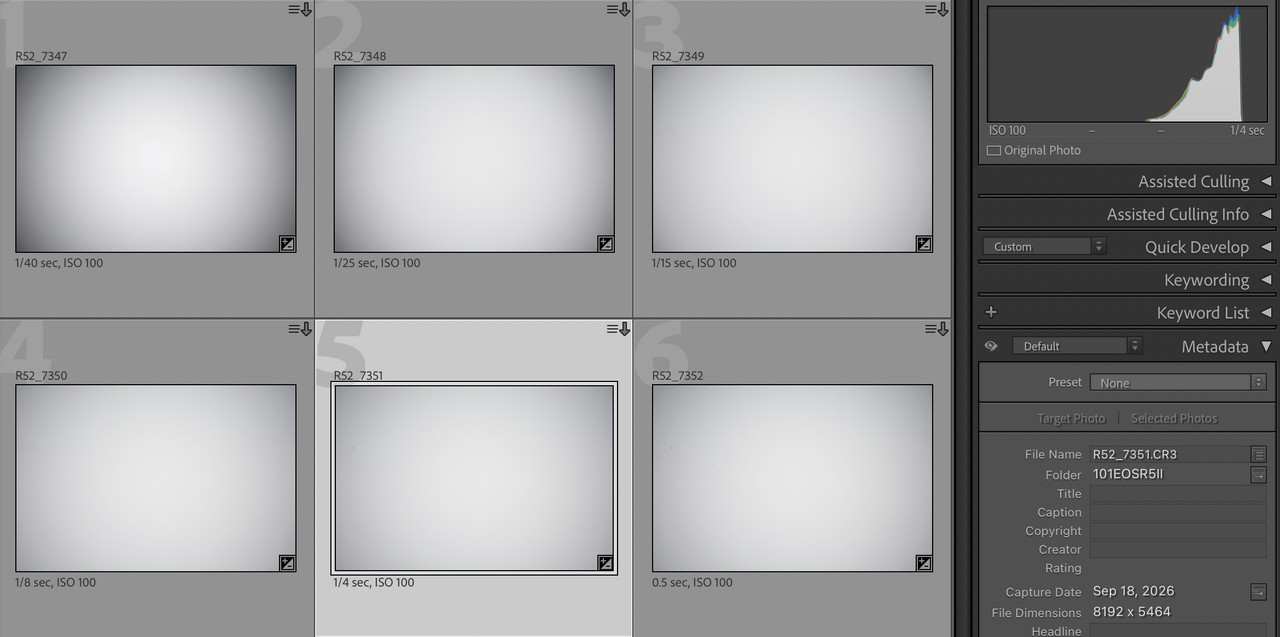
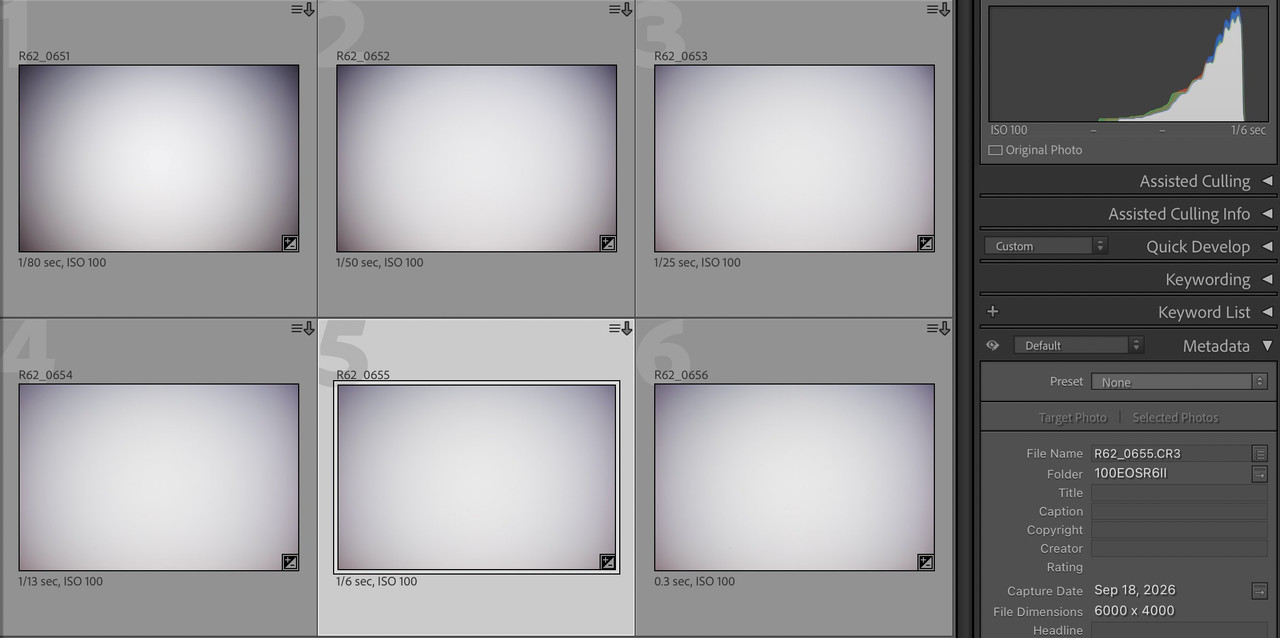
I was able to do a quick non-scientific test. VM 28/2 v2 on both the R6II and R5II, focused at infinity to force worst-case edge color shift, shot f/2 through f/11. Images were imported to LRC, f/8 image from each camera was chosen and click-WB set at centre of image and applied to that camera and lens combo. Center of image brightness was equalized for both cameras based on the f/8 image from each, about a stop down from nearly clipping because a darker image will better show edge color shift.
Bottom line: there is color shift/cast with the R6II and barely any with the R5II. The obvious reason might be that the R6II's sensor is FSI while the R5II is BSI, however I believe the R5 also performs better than the R6II, yet is also FSI. My understanding about edge color shift is that it's due to how strongly oblique light rays interact with the physical pixel well structure of a sensor and microlenses, rather than specifically due to sensor stack thickness. Where sensor stack could be a factor is with uneven IR blocking/absorption because peripheral light rays passing through the stack at an angle travel farther through the glass and have more IR blocked/absorbed than light passing the shortest distance straight through the centre of the stack. Based on what I've seen, this appears as blue-cyan (minus red) color shift, however the color shift seen in the R6II images is red-magenta.
Based on the f/8 histogram from each camera with this lens, the R6II also results in slightly stronger vignetting. Probably due to the FSI sensor and/or microlens configuration.
Below are screenshots of the f/2-f/11 thumbnails for each camera. If you don't see anything, give it time to load as it currently appears the server/service hosting these images is very slow.
These obviously don't touch on possible image sharpness degradation caused by the sensor stack.
I know nothing about canons R full frame cameras, so please ignore my ignorance
If you were using the RF pancake 28/2.8 isn’t there a way to view the lens focus distance in the EVF? I just naturally assumed canon had provided for this?? I’m shocked if they haven’t.
What I’m implying is if you can set the focal distance, you can also set the aperture too… à la hyperfocal
Pixelpuffin wrote:
I know nothing about canons R full frame cameras, so please ignore my ignorance
If you were using the RF pancake 28/2.8 isn’t there a way to view the lens focus distance in the EVF? I just naturally assumed canon had provided for this?? I’m shocked if they haven’t.
What I’m implying is if you can set the focal distance, you can also set the aperture too… à la hyperfocal
There may be a way to see it, but if there is, it's not as easy as having an aperture ring and DoF scale on your lens. You also want the aperture ring to not move easily and when it does, you want to be able to quickly check where it's at.
rscheffler wrote:
I was able to do a quick non-scientific test. VM 28/2 v2 on both the R6II and R5II, focused at infinity to force worst-case edge color shift, shot f/2 through f/11. Images were imported to LRC, f/8 image from each camera was chosen and click-WB set at centre of image and applied to that camera and lens combo. Center of image brightness was equalized for both cameras based on the f/8 image from each, about a stop down from nearly clipping because a darker image will better show edge color shift.
Bottom line: there is color shift/cast with the R6II and barely any with the R5II. The obvious reason might be that the R6II's sensor is FSI while the R5II is BSI, however I believe the R5 also performs better than the R6II, yet is also FSI. My understanding about edge color shift is that it's due to how strongly oblique light rays interact with the physical pixel well structure of a sensor and microlenses, rather than specifically due to sensor stack thickness. Where sensor stack could be a factor is with uneven IR blocking/absorption because peripheral light rays passing through the stack at an angle travel farther through the glass and have more IR blocked/absorbed than light passing the shortest distance straight through the centre of the stack. Based on what I've seen, this appears as blue-cyan (minus red) color shift, however the color shift seen in the R6II images is red-magenta.
Based on the f/8 histogram from each camera with this lens, the R6II also results in slightly stronger vignetting. Probably due to the FSI sensor and/or microlens configuration.
Below are screenshots of the f/2-f/11 thumbnails for each camera. If you don't see anything, give it time to load as it currently appears the server/service hosting these images is very slow.
These obviously don't touch on possible image sharpness degradation caused by the sensor stack.
p.1 #10 · Voigtländer Ultron 28mm f/2 on Canon RF?
pressedbunny wrote:
Small without fringing is always going to be tough, let alone when you're using lenses on systems they weren't designed for.
I can't stand 'zone focusing', so I have no suggestions which take that into account, but putting that point aside I can recommend the 28mm f/2 APO-Lanthar. I've borrowed it a few times (don't own it, sadly) on my R5 and while it doesn't stay perfectly APO, what fringing there is is so irrelevantly small and so limited to the only the most extreme edges that it would be insane to say it mattered. And that's on 45mp at 100%; your R8's 24mp demands so little of a lens that I have full confidence saying the Lanthar is over-qualified for it.
The other recommendation you should consider is Canon's own EF 28mm f/2.8 IS USM. While not as clean as an APO lens, it's still very well optically corrected, it's got a distance scale, I remember the manual focus feeling... alright—about as good as it ever can on a lens primarily meant for autofocus—and you have the benefits of IS and AF if you ever want or need them. And since it's an actual Canon lens, you can even make use of proper correction profiles and the DLO if you like, to ensure there's no fringing at all. (Unless you like to photograph lots of chrome in midday sun!)
Both lenses only weigh 260g and are about 5cm long. I don't know what your definition of 'small' is, but for a full frame Canon/Nikon/Sony system, those are within my idea of small and light, especially if you also expect anything that is decently optically-corrected. Anything smaller will be compromised in some fashion, whether inherently or as a result of adapting.
I mean, personally I like the Voigt 28mm f/2.8 Color Skopar Type II and Kistar 28mm f/3.2, but those are definitely not free from fringing, halation, or other 'faults'......Show more →
The Canon EF is an interesting option. The only issue is that the EF-RF is much larger and somewhat heavier than the M-RF adapters. I actually have a film-era Olympus 28mm f/2.8 lens that’s lighter than both the VL APO or the Canon EF and that’s with the OM-RF adapter. Maybe I should give that a shot, though that adapter is pretty long.