Jack Flesher wrote:
I hear you Dan, and I accept my above curve intersection thoughts coupled with a given lens’ optimal resolution aperture curve overlaying on that same graph, the situational image setup may allow for a broader or tighter aperture range inside the resulting trisectional overlap zone.
Regardless, the concerning point is I am seeing more detectable diffraction loss in my images than I’ve ever noticed previously. Whether that’s due to the camera sensor or better lenses —and given the somewhat insignificant changes post-processing sharpening adjustments make, it’s probably a combination of both— I’m noticing diffraction softening more and hence the deeper dive query.
Or perhaps good enough is, and I’m tilting at windmills…...Show more →
The blessing and curse of high-resolution sensors You might also want to look into deconvolution workflows to see how much acuity can be restored in post. I haven't played with that myself.
snapsy wrote:
The blessing and curse of high-resolution sensors You might also want to look into deconvolution workflows to see how much acuity can be restored in post. I haven't played with that myself.
I’ve only lightly delved into that. My initial findings are that raw sharpening is no longer the savior it used to be, hence my comment above about sharpening adjustment tweaks being almost irrelevant. Even with ACR’s newly added AI “Raw Details” sharpening, it’s impact has been irrelevant or in many cases actually worsening the micro details.
In that same vein and perhaps ironically, the surprising revelation is that utilizing ACR’s AI “Super Resolution.” This action quadruples your image size and the resulting resolution and detail is frankly remarkable considering the 4x resolution gained. For me it seemingly renders pixel-shift irrelevant. The fact that it works so well adds to me believing the base files are pretty close to ideal after deconvolution.
PS: with the A7R6 and my sharpest lenses, my current ACR sharpening is radius 0.6, amount 50, details 25. At this setting, haloing at the highest frequency details are prevented. Bump amount or radius up and they start creeping in. Finally, adding in a bit of clarity and structure usually enhances the sharpening appearance a bit.
Jack Flesher wrote:
I hear you Dan, and I accept my above curve intersection thoughts coupled with a given lens’ optimal resolution aperture curve overlaying on that same graph, the situational image setup may allow for a broader or tighter aperture range inside the resulting trisectional overlap zone.
Regardless, the concerning point is I am seeing more detectable diffraction loss in my images than I’ve ever noticed previously. Whether that’s due to the camera sensor or better lenses —and given the somewhat insignificant changes post-processing sharpening adjustments make, it’s probably a combination of both— I’m noticing diffraction softening more and hence the deeper dive query.
Or perhaps good enough is, and I’m tilting at windmills…...Show more →
The good news — often misunderstood — is that there is no increase in diffraction blur with the higher res sensor. The amount of diffraction at a given aperture, expressed as a fraction of image width, if you will, is exactly the same whether you use a 8MP FF camera or a 66Mp FF camera. In other words, if you make two otherwise identical images (same lens, same aperture, etc.) on two such cameras and make two prints at the same size… they each have the exact same amount of diffraction blur.
It only seems like there’s “more diffraction blur” because when we look at, say, a 1000 x 1000 bit of an image from the higher resolution system we are simply looking at the same amount of blur but magnified more.
More good news: In some situations you can obtain some advantage from the higher resolution sensor and a slightlyl larger aperture and take advantage of lower diffraction at those apertures. Of course, gaining that extra little bit of potential sharpness has (as all things do) its own set of minuses. For example, you’ll get a smaller DOF. Unless you use really good lenses, it is possible (though not certain) that you could have some corner issues.
So it is a balancing act, isn’t it? If you need the extra DOF you can use he same apertures that you’d choose with a 30MP or 16MP FF camera and you won’t lose anything — you’ll still get an image that is at least as sharp as what you got with an older, lower res camera. If sharpness trumps that DOF increase you’ll choose the larger aperture and live with it or possibly resort of focus stacking or a TS lens instead.
I'd second the idea of looking at deconvolution sharpening. Diffraction is different from other things that soften an image in that it is exactly calculable based on the f number. Its not like an aberration, which varies from one lens to another. So sharpening algorithms can do more to correct diffraction than other things. If you have Lightroom that is controlled by the Detail slider. The higher it is the more deconvolution sharpening you are using.
But I'd also say that looking at all your images at 100% on the screen is maybe sending you down a rabbit hole that is not worthwhile. I think the advent of pixel peeping has made us all much more sensitive to pixel level image qualities rather than whole image qualities. But I think for a viewer things like contrast, which is a lower resolution sharpness, and the relative sharpness of various element in the scene is more important. That's why getting uniform image sharpness through the depth of an image may be more important than optimizing sharpness at 100%.
Sure, in some cases you really need the pixel level sharpness, and in that case you need to focus stack. But I will note that many landscape photographers whose work I admire frequently are creating images at f/16.
Finally, no matter whether you want pixel level sharpness or not, there really can't be an optimal f/number balancing DOF and diffraction because every scene has a different depth and a different set of subject distances. For a relatively flat scene, you surely want something like f/5.6, but for a near to far landscape that aperture won't work without focus stacking.
gdanmitchell wrote:
The good news — often misunderstood — is that there is no increase in diffraction blur with the higher res sensor. The amount of diffraction at a given aperture, expressed as a fraction of image width, if you will, is exactly the same whether you use a 8MP FF camera or a 66Mp FF camera. In other words, if you make two otherwise identical images (same lens, same aperture, etc.) on two such cameras and make two prints at the same size… they each have the exact same amount of diffraction blur.
It only seems like there’s “more diffraction blur” because when we look at, say, a 1000 x 1000 bit of an image from the higher resolution system we are simply looking at the same amount of blur but magnified more.
More good news: In some situations you can obtain some advantage from the higher resolution sensor and a slightlyl larger aperture and take advantage of lower diffraction at those apertures. Of course, gaining that extra little bit of potential sharpness has (as all things do) its own set of minuses. For example, you’ll get a smaller DOF. Unless you use really good lenses, it is possible (though not certain) that you could have some corner issues.
So it is a balancing act, isn’t it? If you need the extra DOF you can use he same apertures that you’d choose with a 30MP or 16MP FF camera and you won’t lose anything — you’ll still get an image that is at least as sharp as what you got with an older, lower res camera. If sharpness trumps that DOF increase you’ll choose the larger aperture and live with it or possibly resort of focus stacking or a TS lens instead....Show more →
Yes but. The fact remains it is more visible. You will understand my conundrum when you get these files in front of you. Add to this a few new workflow options AI is allowing. One example I’ve been experimenting with that may interest you, is a bastardized fractal print sharpening process utilizing ACR’s “Super Resolution” along with PS’s intelligent “sharper” down-sizing protocol — the resulting print file is compelling. A small gain in most cases, but compelling.
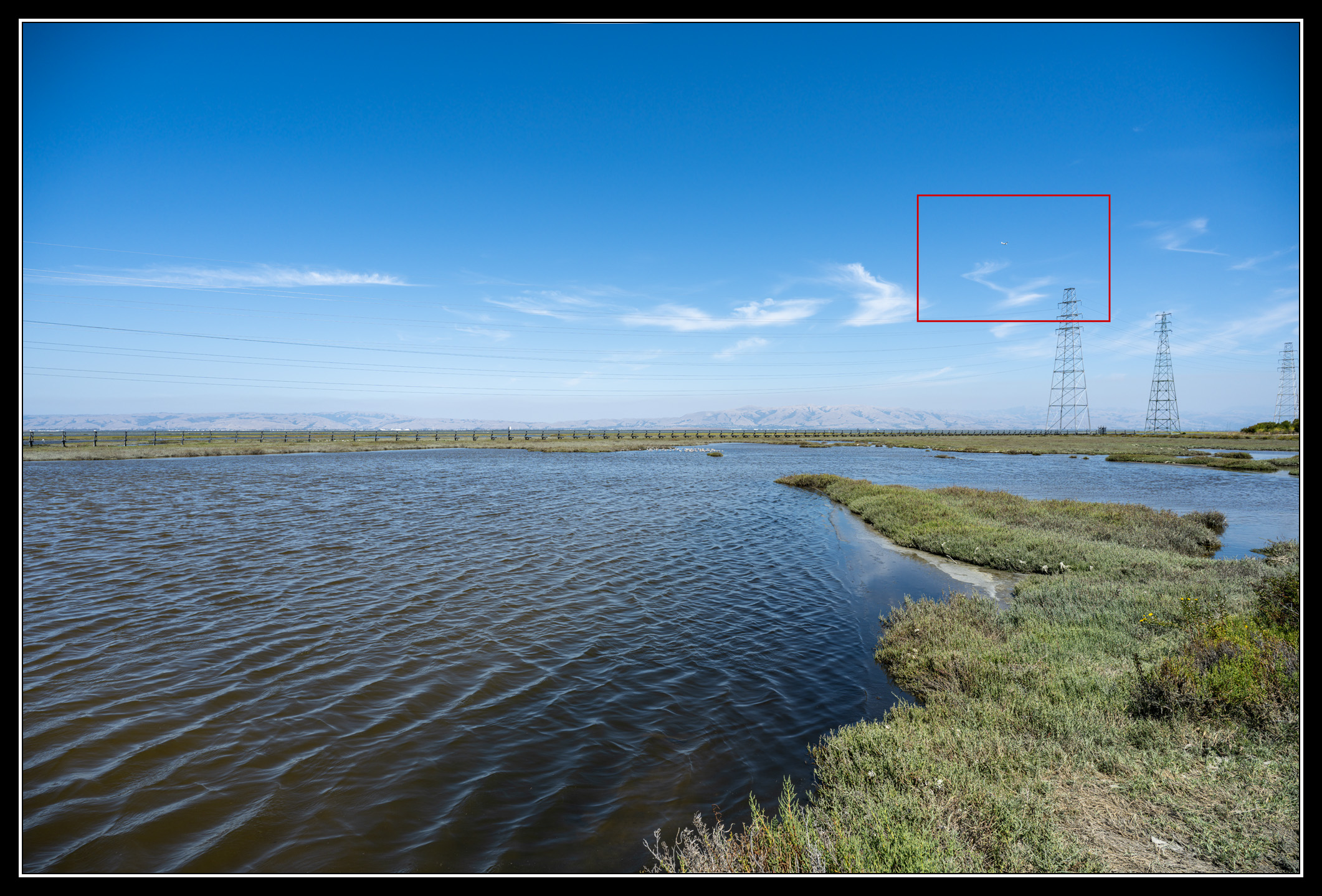
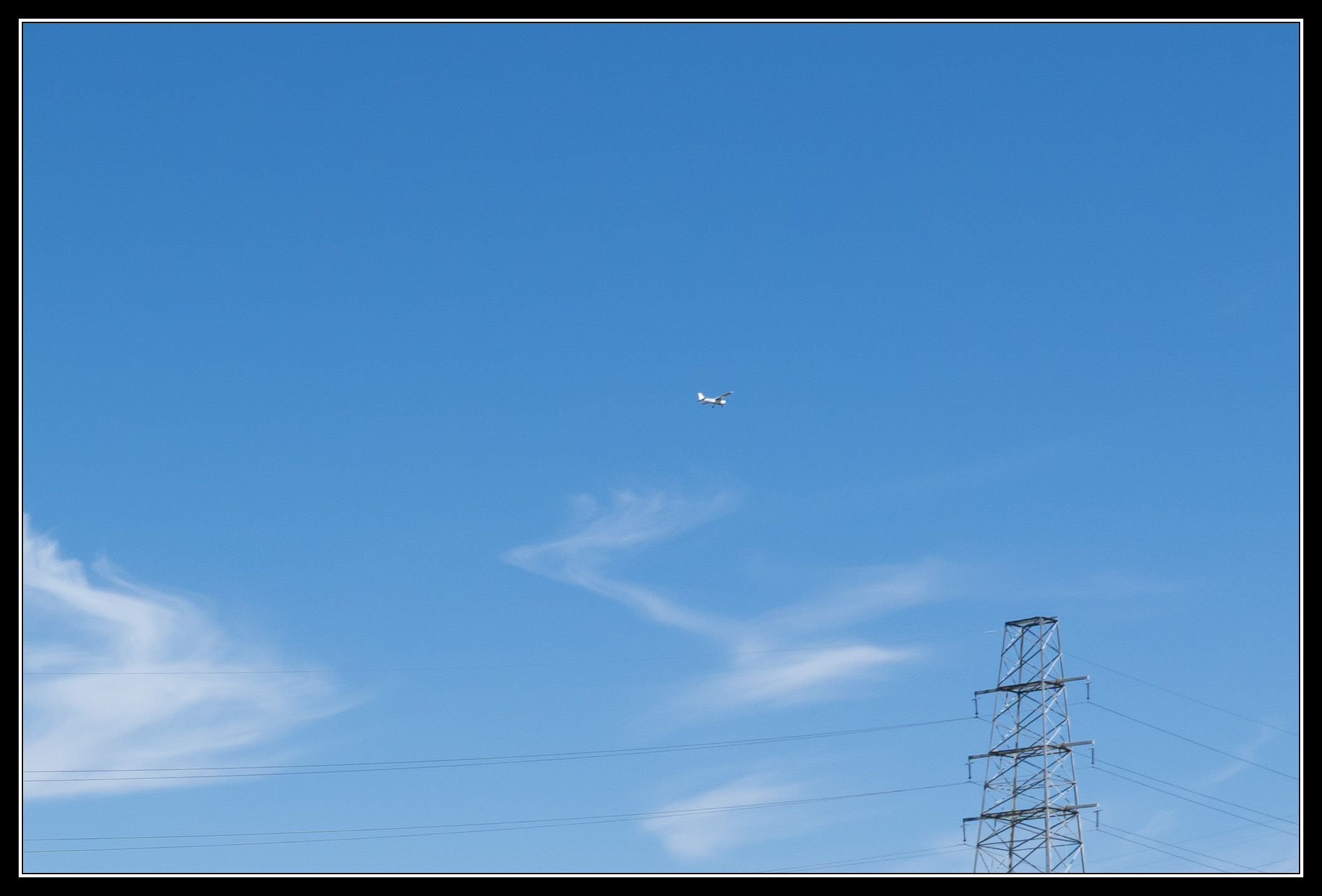
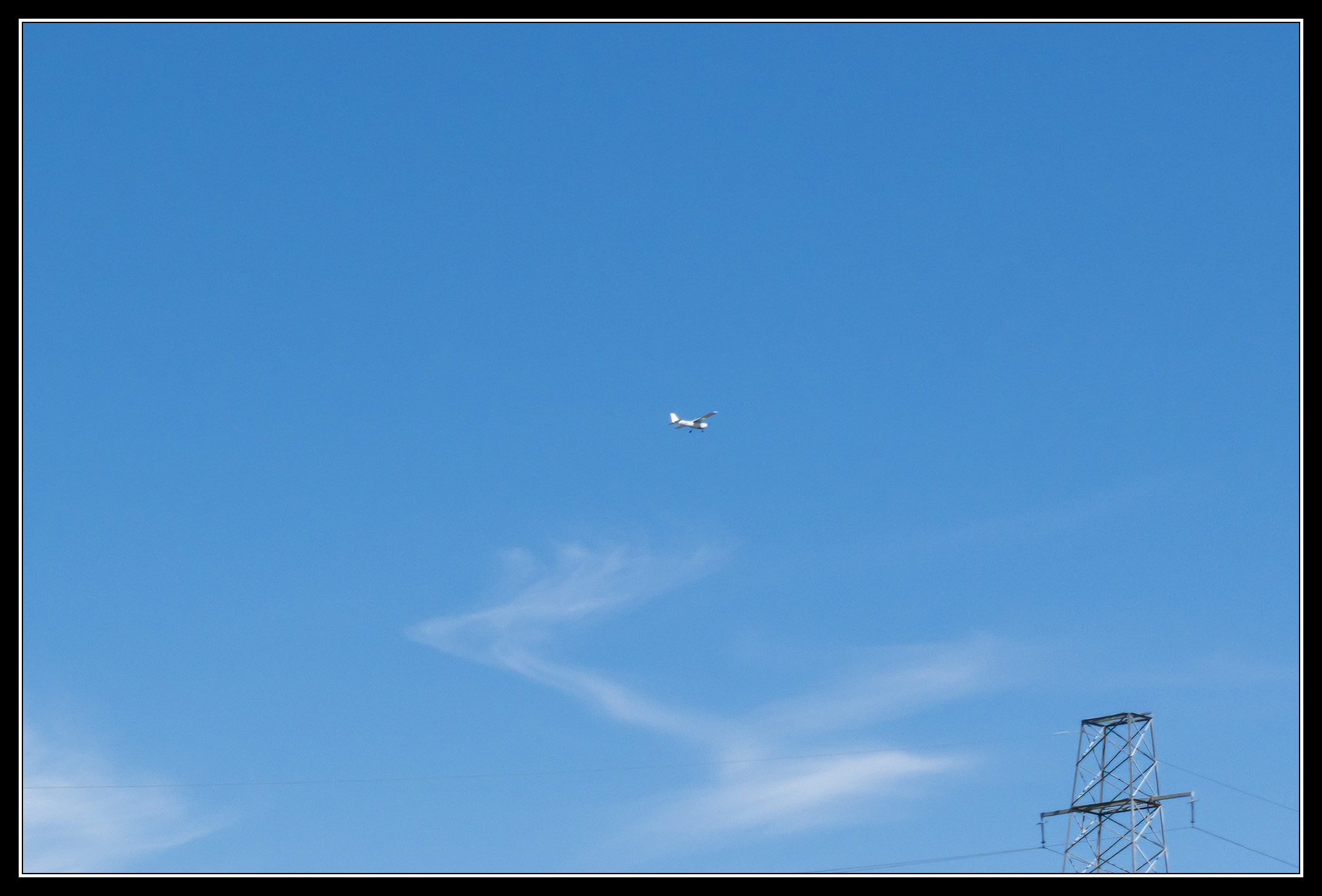
I realize I am veering OT, and apologies. But this is somewhat relevant to the discussion I think. Here is an image I captured hand-held with the Sony 20-70 at 20mm and f8. I think it sort of underscores the above. This lens at 20mm is not at it's best and f8 appears to work well, and I am reasonably confident the plane is in the acceptable DoF. I used the fractal sharpening mentioned to enhance the micro-detail on the plane -- it definitely showed a bit of diffraction degrading. These are both sized to 2048 px wide before the frame so view them appropriately.
First is the full image for reference. Next is the as-shot plane resolution, processed raw with as close to the ideal sharpening settings as I have found with the tools I have. Final is the Super Res>partial downsampled final, which I feel shows a slight increase in rendering. This final full size image was 13378 px wide which would render a 45" wide print at 300ppi while the native file would be 33" wide at 300ppi for reference.
My conclusion is I need to resort to further empirical testing. In this case I have confirmed f8 is fine to use and can probably get to f9 without much additional loss. I will experiment when next out using f11 at various focal lengths to see how they react, but I remain dubious
ILCE-7RM6FE 20-70mm F4 G lens20mmf/8.01/400s100 ISO0.0 EV
WillR wrote:
But I'd also say that looking at all your images at 100% on the screen is maybe sending you down a rabbit hole that is not worthwhile. I think the advent of pixel peeping has made us all much more sensitive to pixel level image qualities rather than whole image qualities. But I think for a viewer things like contrast, which is a lower resolution sharpness, and the relative sharpness of various element in the scene is more important. That's why getting uniform image sharpness through the depth of an image may be more important than optimizing sharpness at 100%.
I also agree. As with a lot of dogmatic statements about this versus that in photography, most are not terribly relevant. Along with many others I am occasionally guilty of the "sharpness at all costs" approach. I focus stack way too much. As I've matured, I'm now officially "elderly," I've realized that the overall quality of the image is what matters, not so much the technical aspects.
Others have said more eloquently that the equipment used by many of the 20th century's most famous photographers (Adams, Weston, Cartier-Bresson and many others) would not even be considered by today's pixel-peeping fanatics.
I'm not saying sharpness is not important, it is, but focusing (pun intended) on that above all else is foolish. Unless one does side by side comparisons, which most people do not do, these differences pale in comparison to an evaluation of the image as a whole. Sadly, whether it be on a screen or a print, (the only way a photograph is "real" to me) the few seconds most people give to evaluating an image makes such concerns even less relevant.
doc4x5 wrote:
I also agree. As with a lot of dogmatic statements about this versus that in photography, most are not terribly relevant. Along with many others I am occasionally guilty of the "sharpness at all costs" approach. I focus stack way too much. As I've matured, I'm now officially "elderly," I've realized that the overall quality of the image is what matters, not so much the technical aspects.
Others have said more eloquently that the equipment used by many of the 20th century's most famous photographers (Adams, Weston, Cartier-Bresson and many others) would not even be considered by today's pixel-peeping fanatics.
I'm not saying sharpness is not important, it is, but focusing (pun intended) on that above all else is foolish. Unless one does side by side comparisons, which most people do not do, these differences pale in comparison to an evaluation of the image as a whole. Sadly, whether it be on a screen or a print, (the only way a photograph is "real" to me) the few seconds most people give to evaluating an image makes such concerns even less relevant. ...Show more →
On a few occasions I have had very strong emotional/esthetic reactions to particular photographs — almost always that I’ve viewed in the form of prints: two exhibits of the huge prints by Jeff Wall (who oddly seems mostly unknown to many photographers), another time to exhibits of some Avedon prints. Once it was a surprising reaction to an Adams image that I had seen many times as a print — it was an image that I viewed in the back of an airlines in-flight magazine where I was struck by the stark difference between that very “quiet” image and the situation I was currently experiencing.
In no case, these or others, have I ever been moved by the sharpness of a print.
I have been moved by many prints that were not sharp at the level we are postulating about here.
The 20-70/4 is not the sharpest tool in the shed and has mandatory computational correction for severe distortion at the wider focal lengths. You may indeed need f/8 to optimize results although suffering from some diffarction.


 You might also want to look into deconvolution workflows to see how much acuity can be restored in post. I haven't played with that myself.