Fred Miranda
Offline
Admin
Upload & Sell: On
|
 p.1 #1 · Voigtlander 90mm f/4 APO-Lanthar Close-Focus Review p.1 #1 · Voigtlander 90mm f/4 APO-Lanthar Close-Focus Review | |
The Voigtlander 90mm f/4 APO-Lanthar Close-Focus is now in stock.
Cameraquest: Black | Silver
B&H Photo: Black | Silver
______
Review Quick Links:
- About the lens
- Resolution and Contrast on Leica M10-R (41MP)
- Resolution and Contrast on Leica M11-D (60MP)
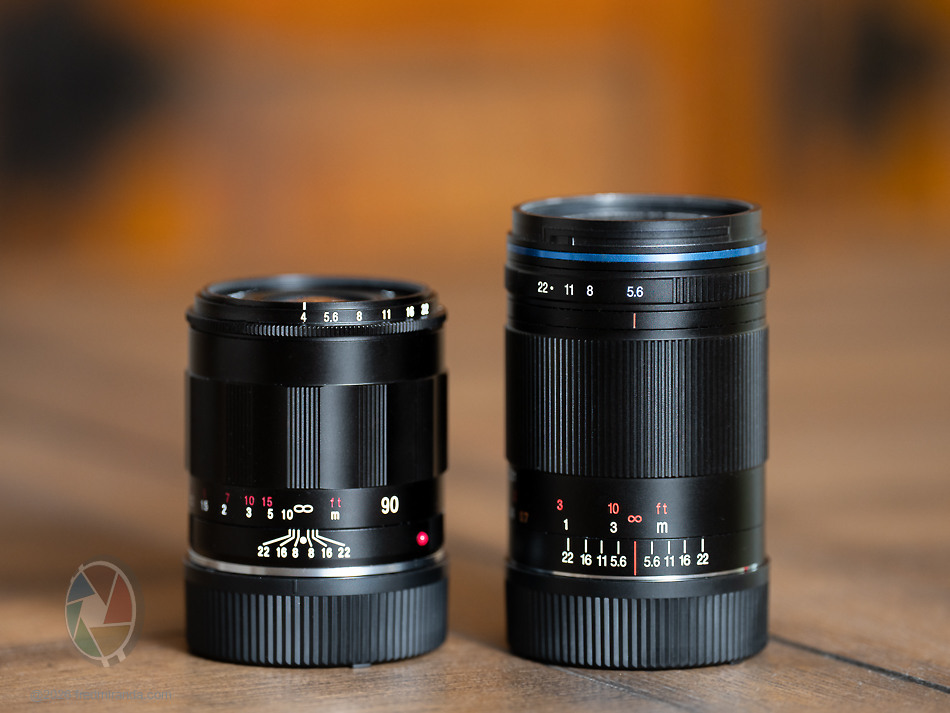
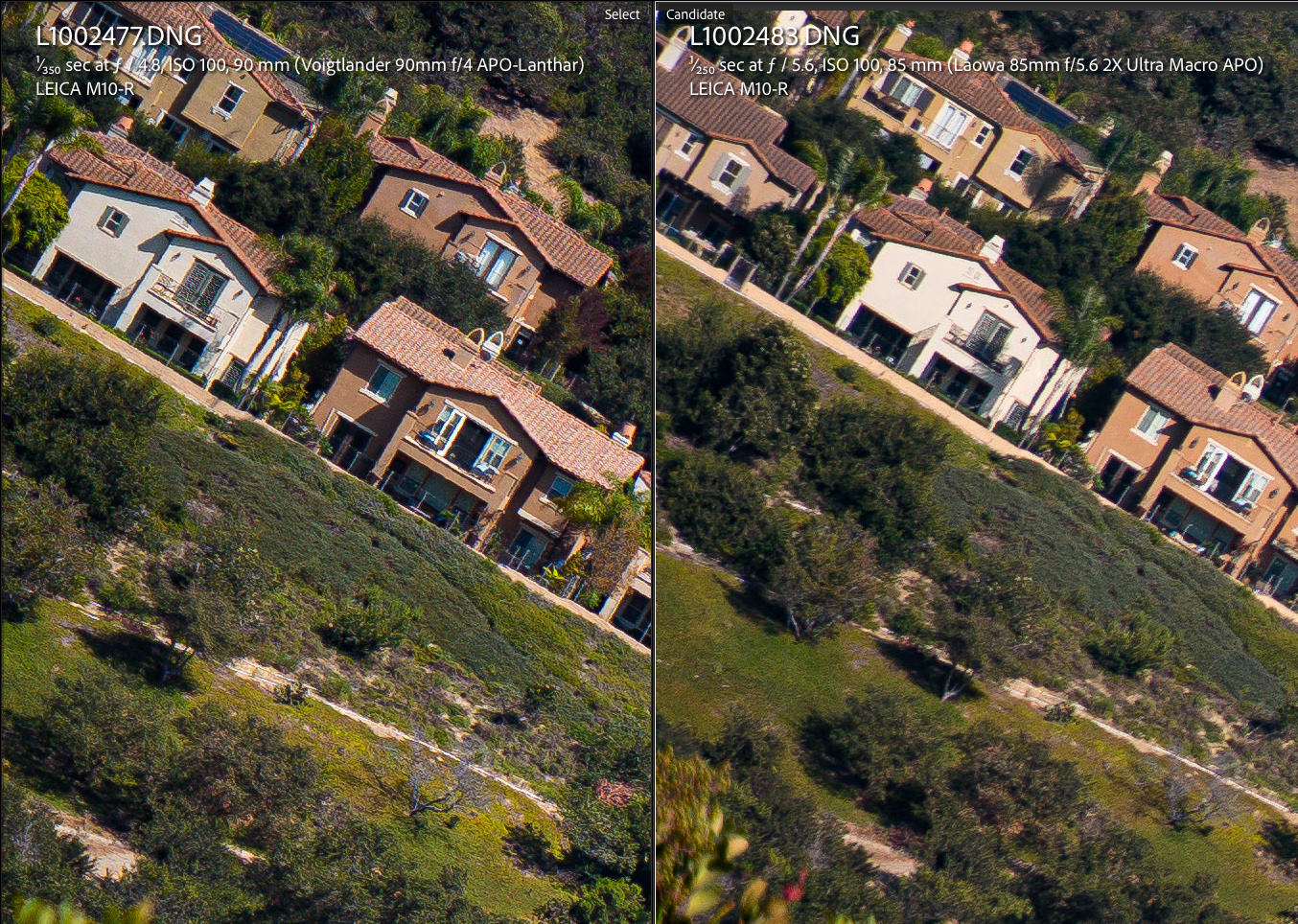
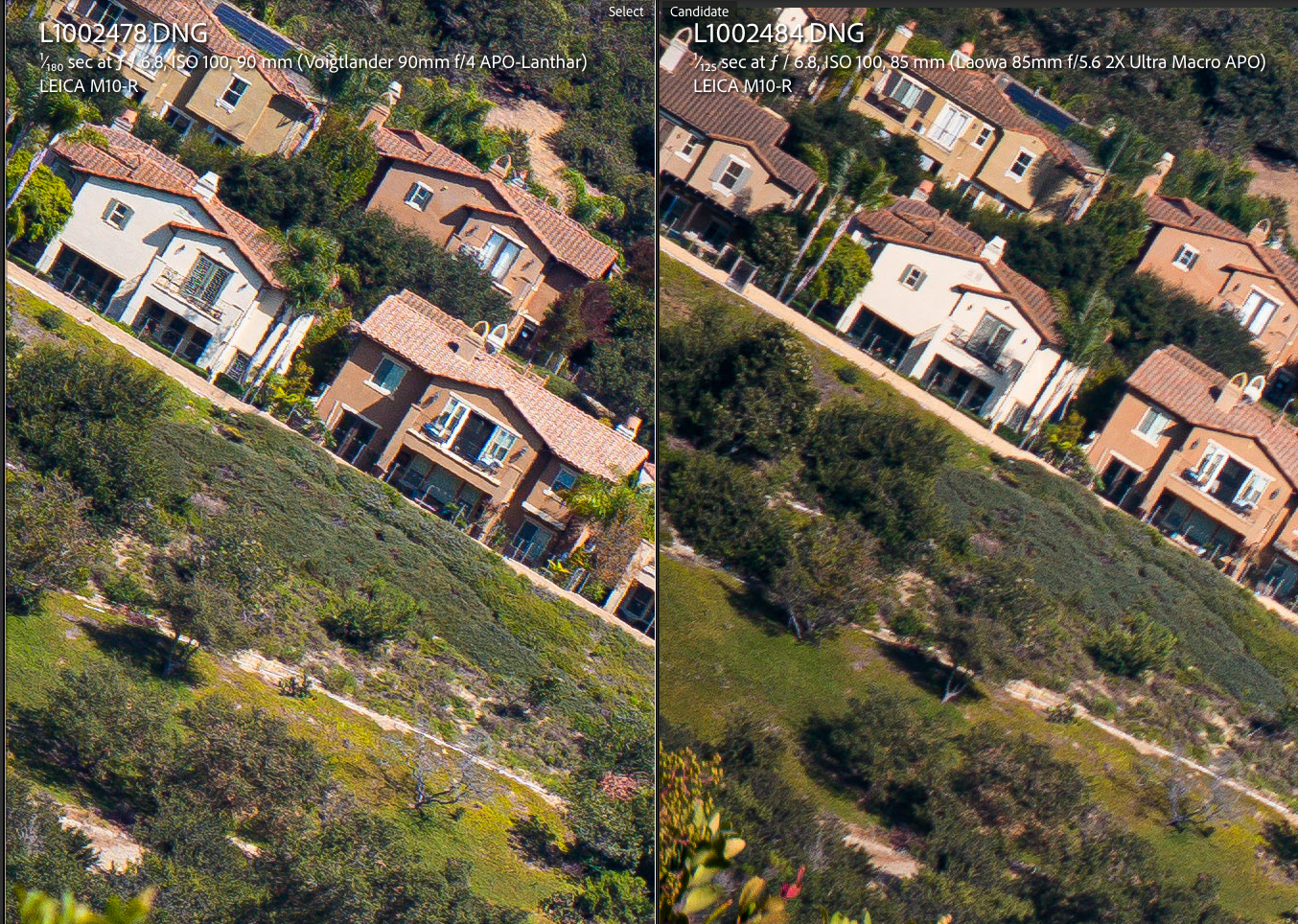
- Resolution and Contrast compared to Laowa 85mm f/5.6 2x Macro APO
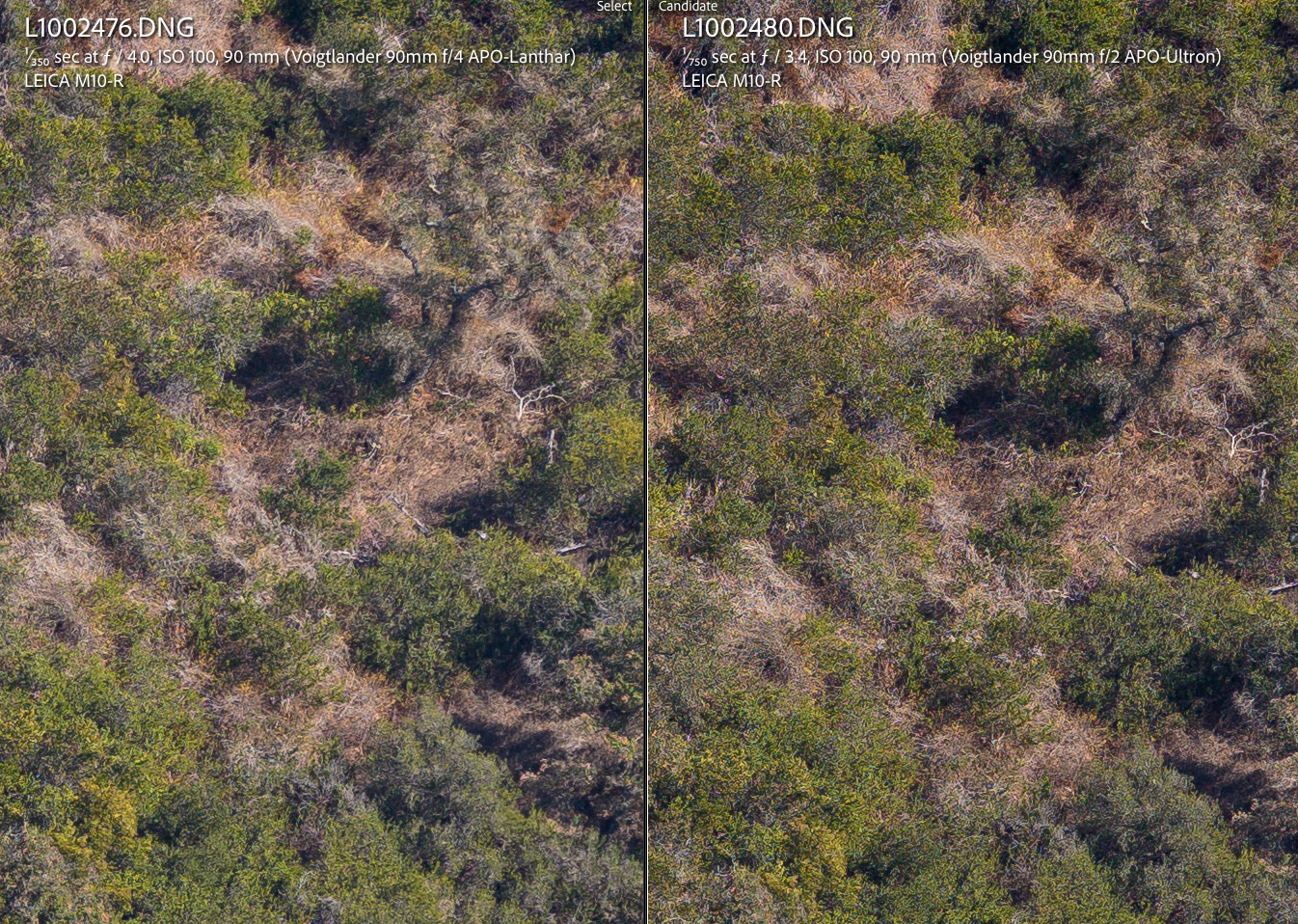
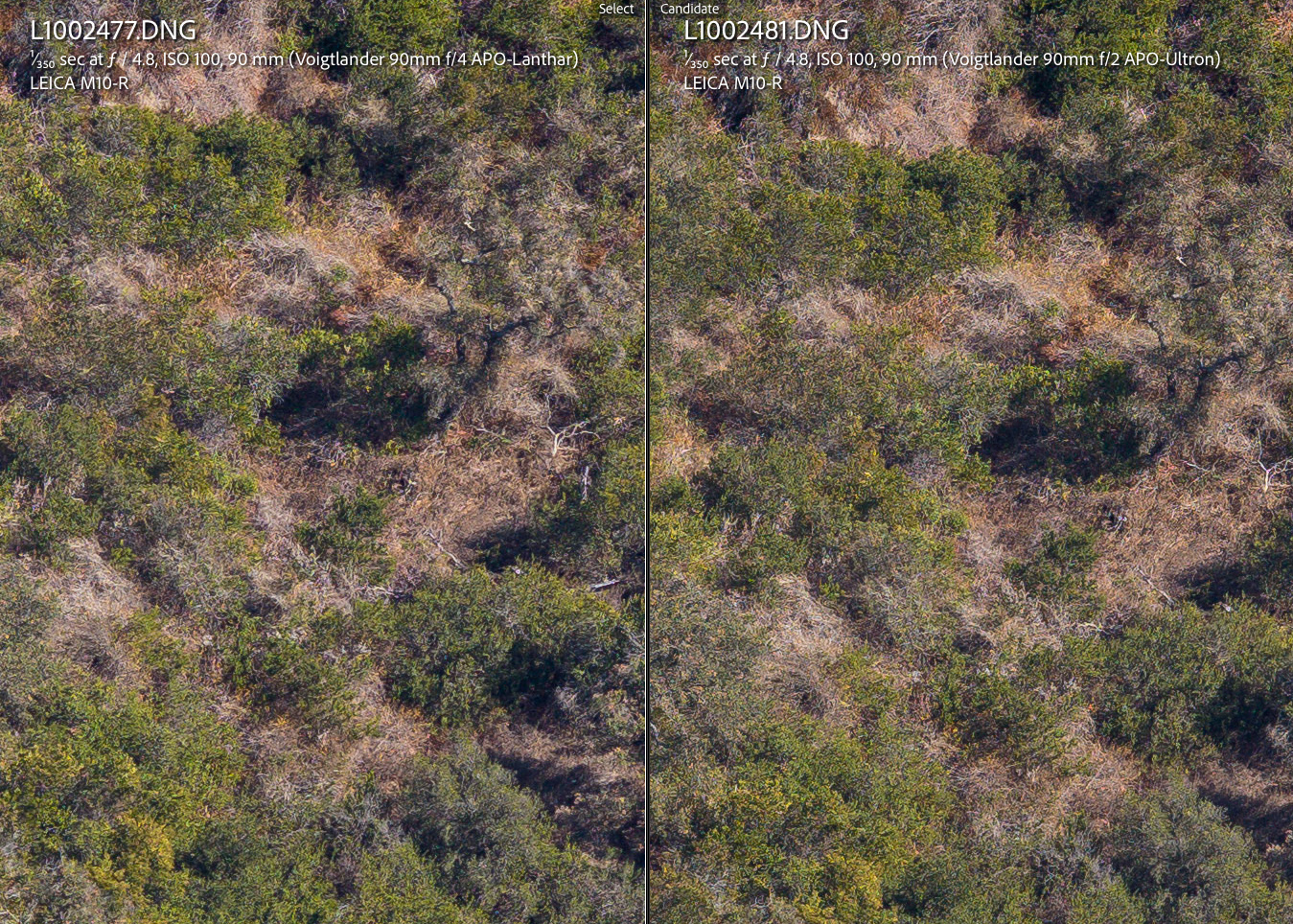
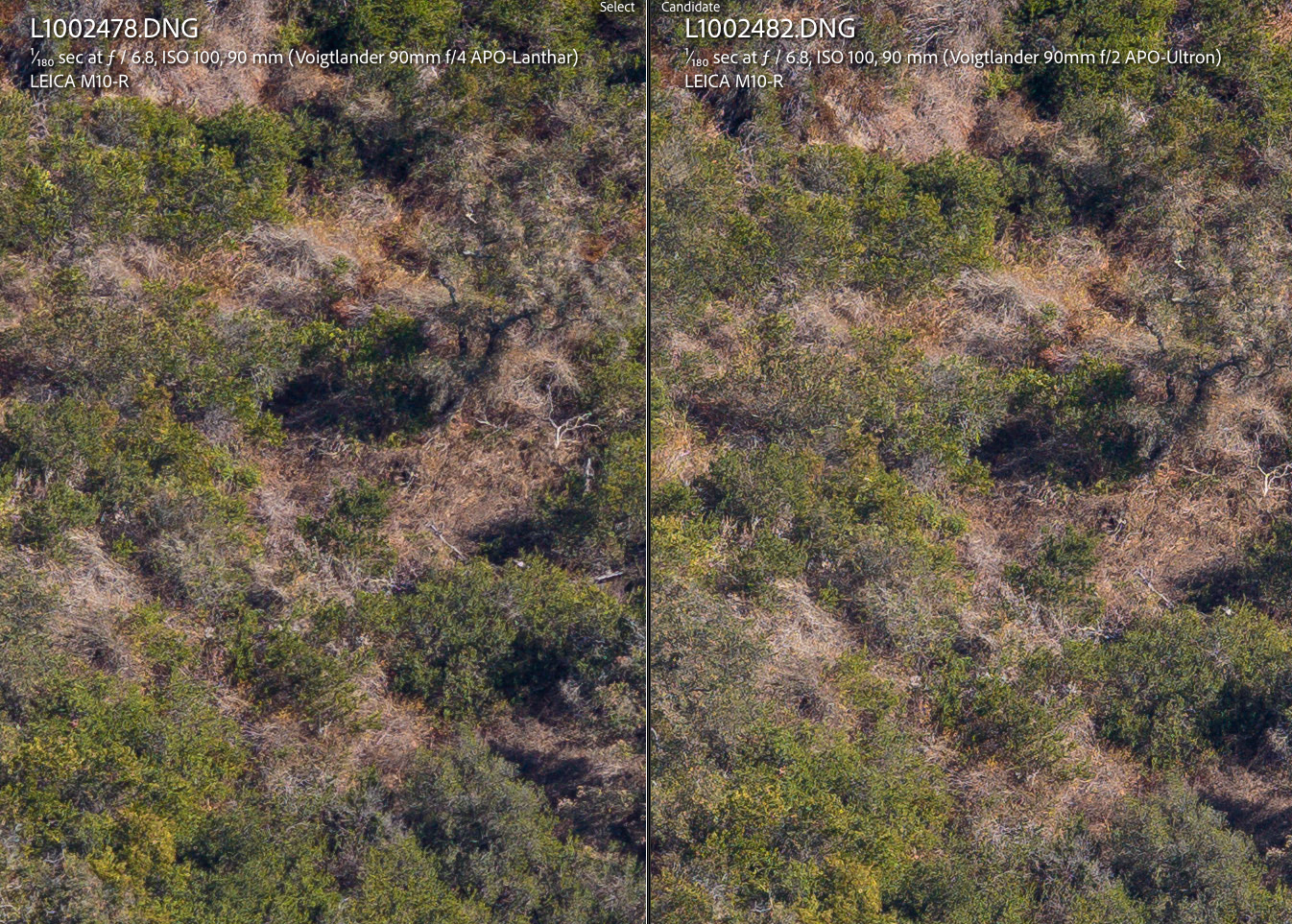
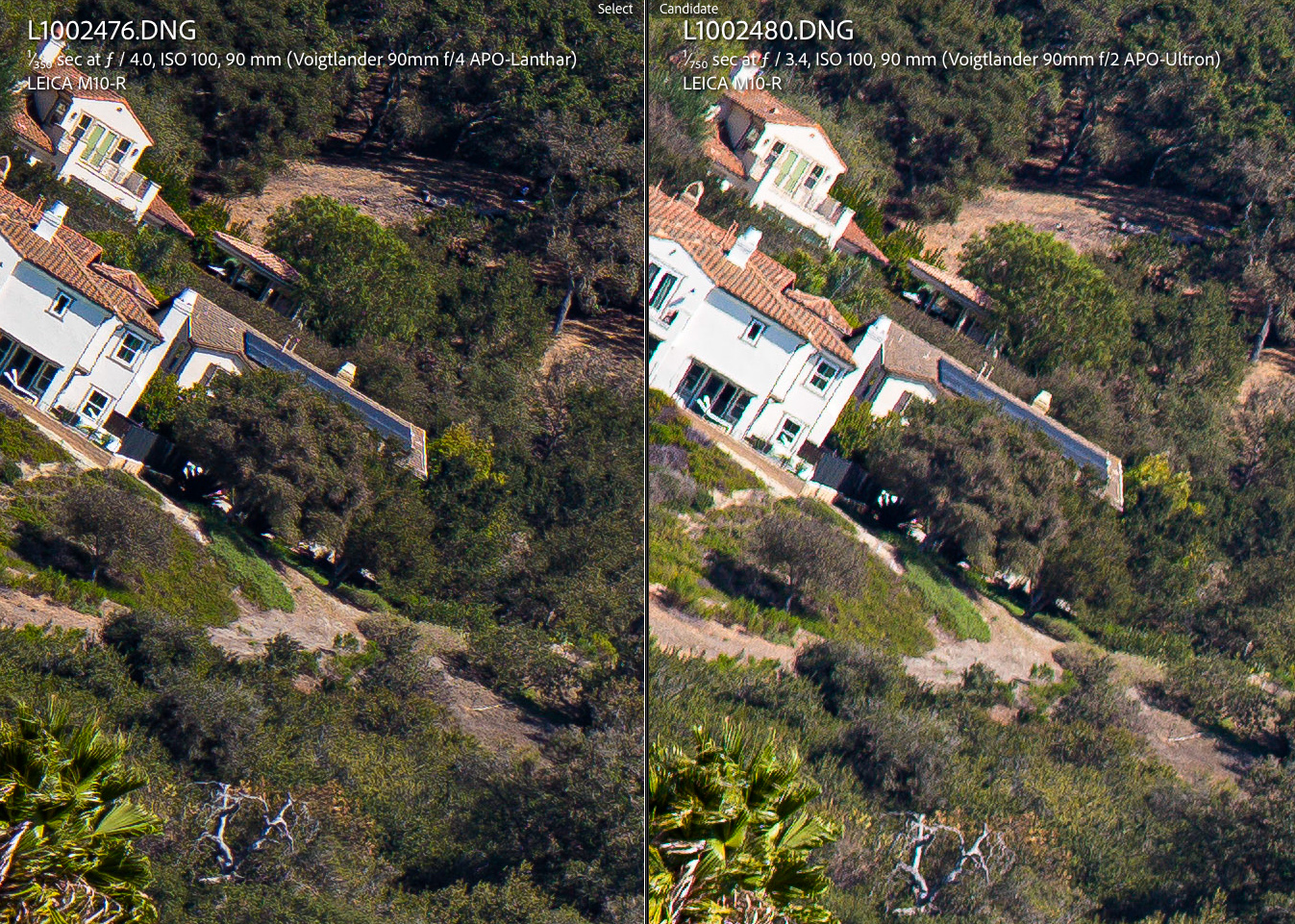
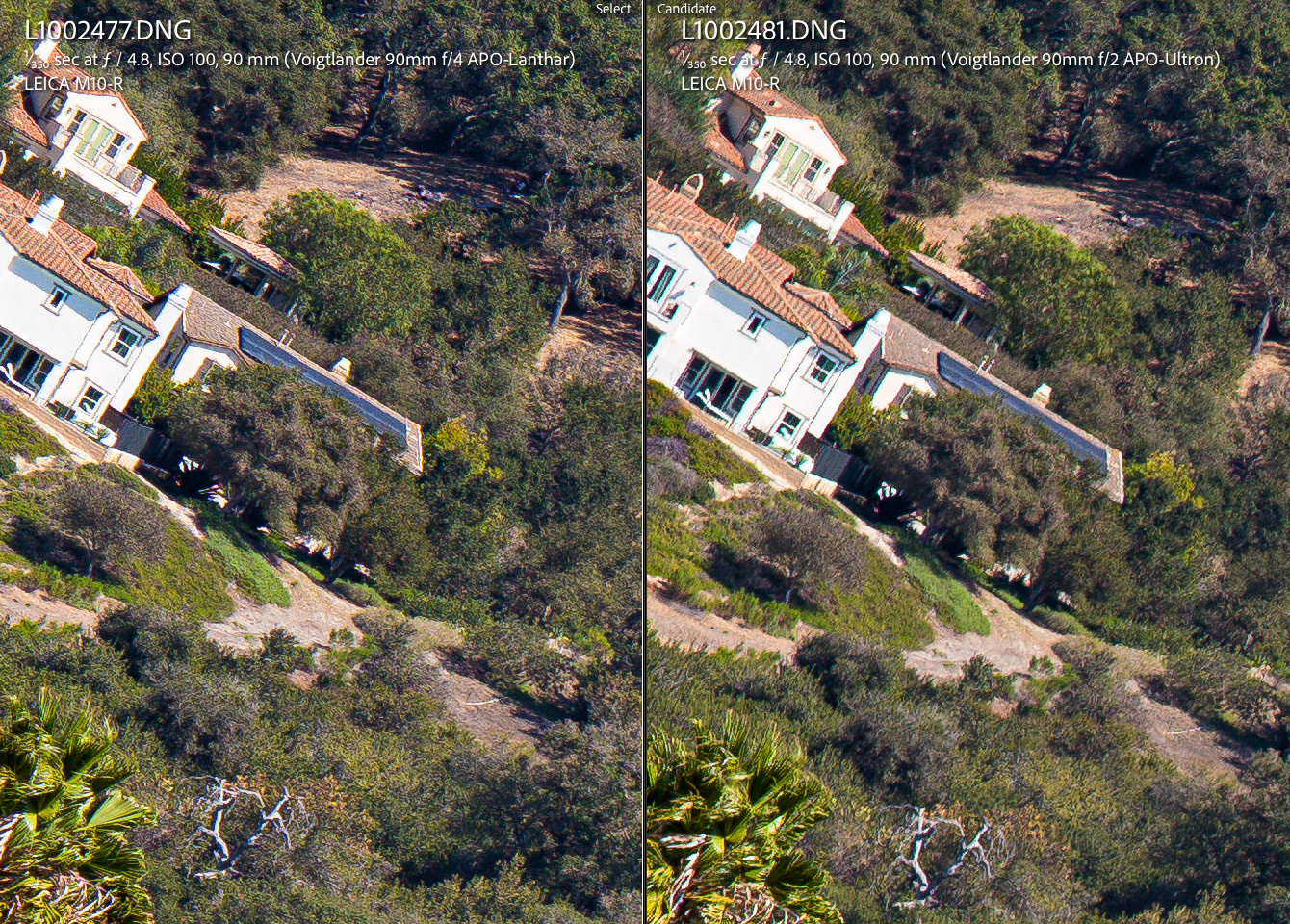
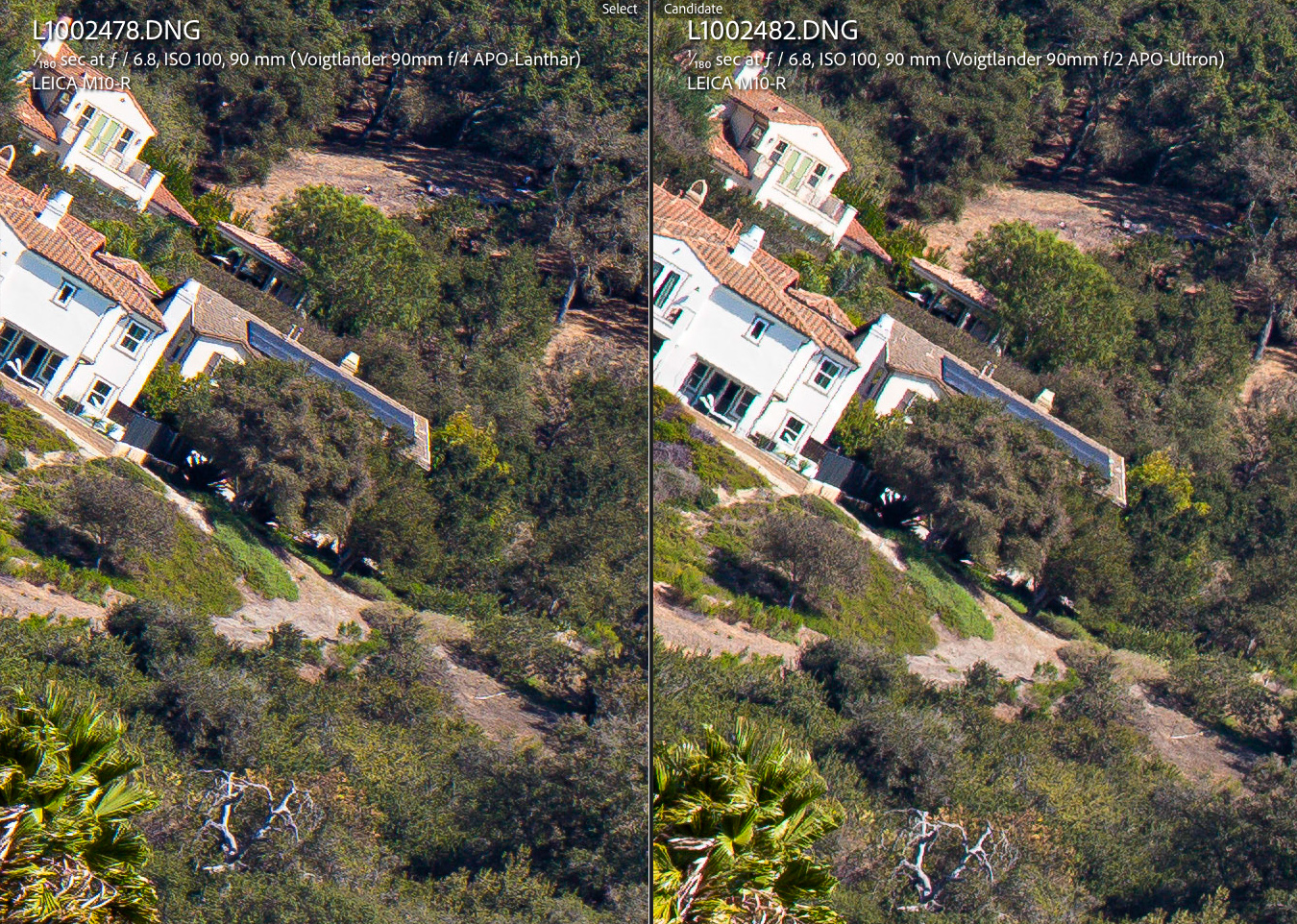
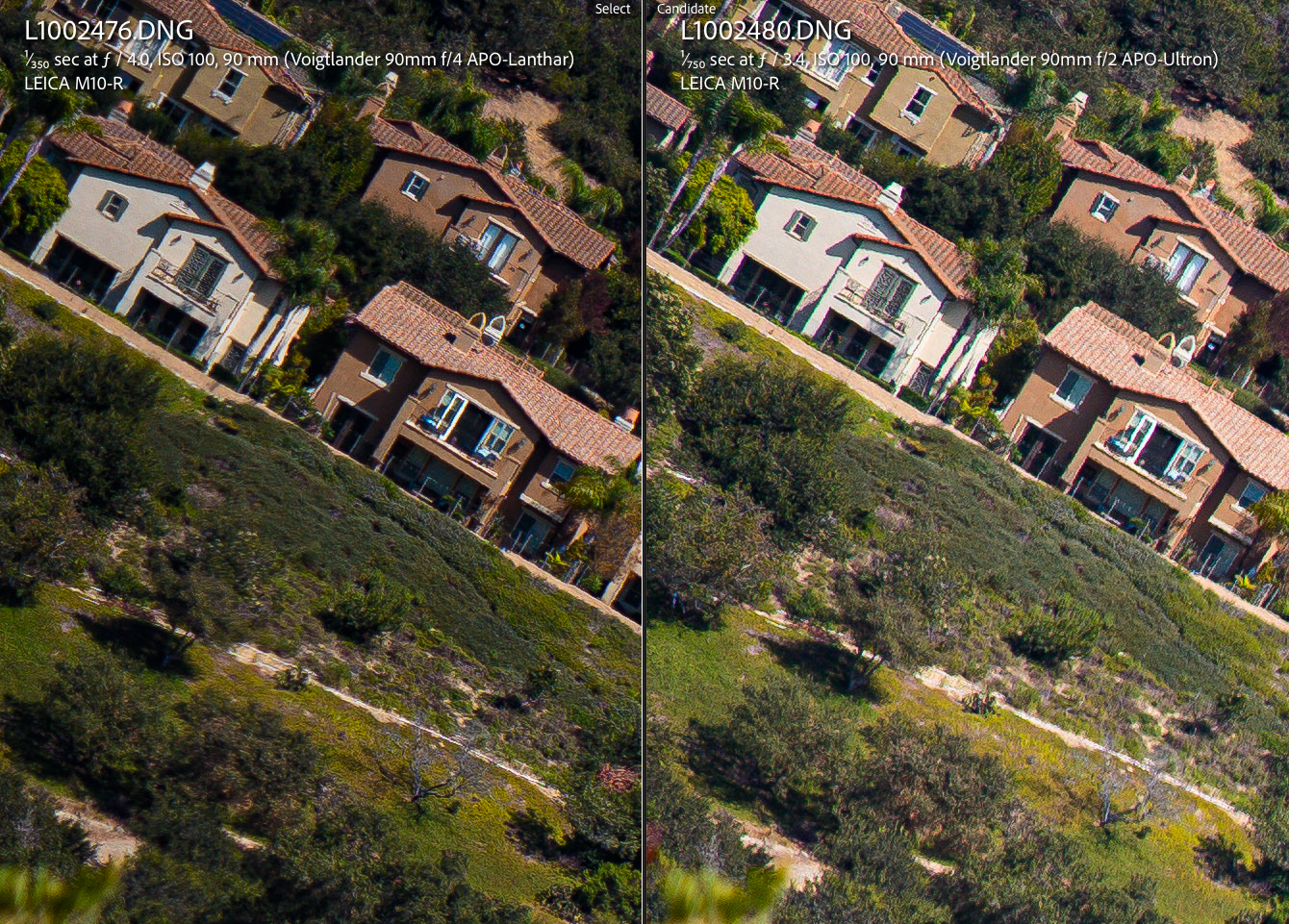
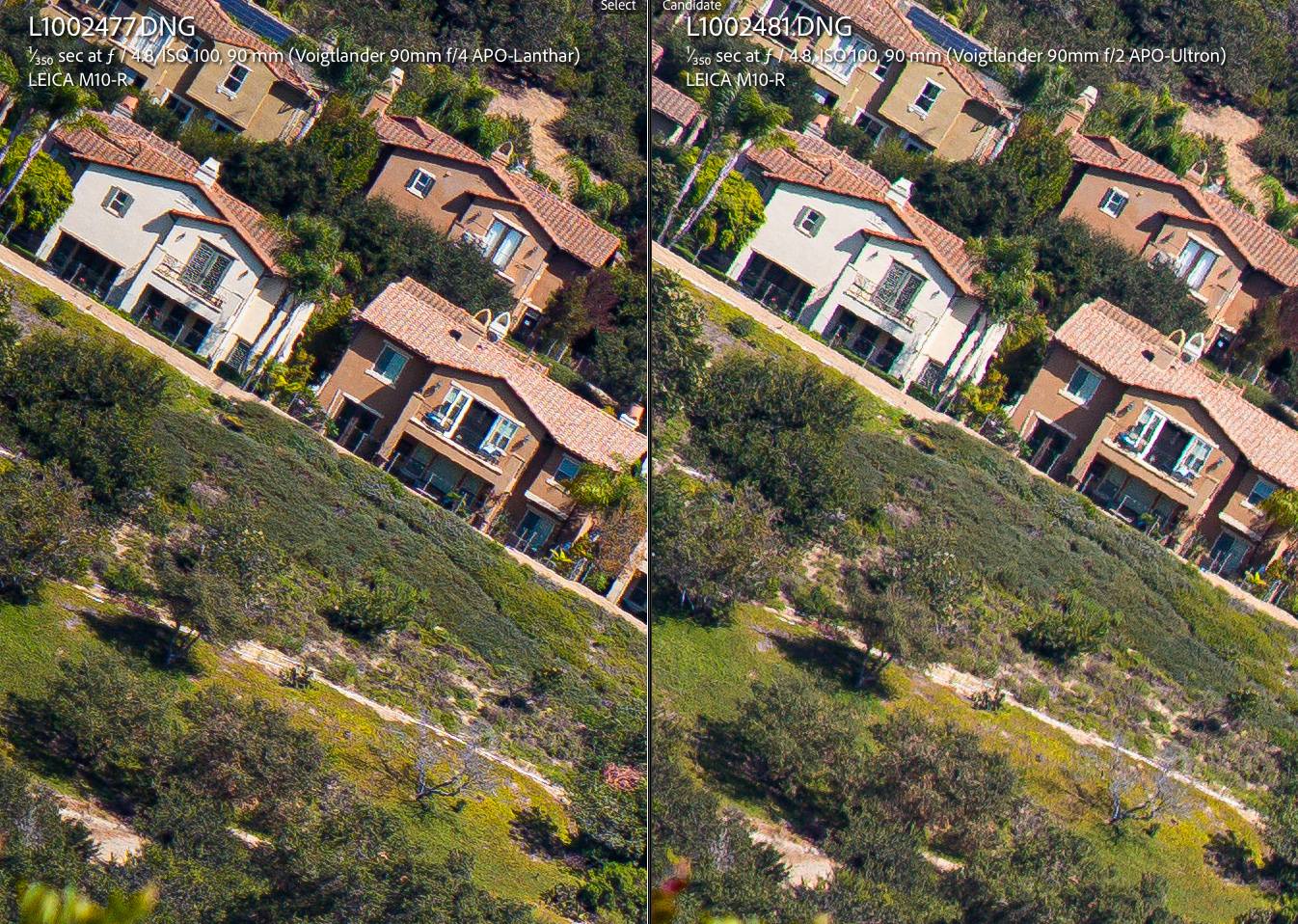
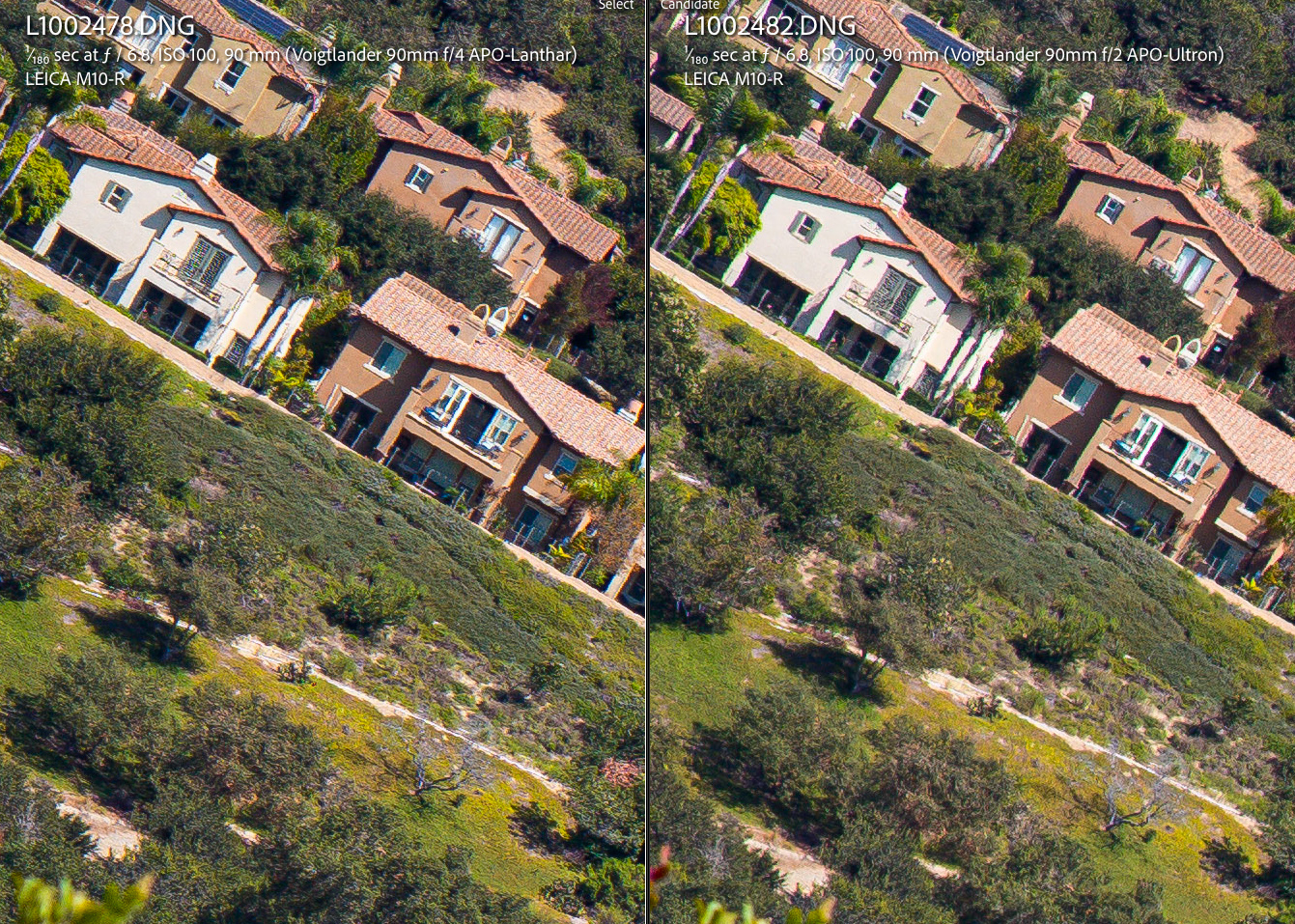
- Resolution and Contrast compared to Voigtlander 90mm f/2 APO-Ultron
- Infinity Resolution and Contrast adapted to Sony A7R II (42MP)
- Field Curvature
- Distortion
- Minimum Focus Distance: 0.7m, 0.5m, and with a Close-up Lens
- Sunstar rendering, Flare resistance and Vignetting
- Rendering compared to Voigtlander 90mm f/2 APO-Ultron @f/4
- Chromatic aberration control: Purple Fringing, Axial and Lateral CA
- Final Thoughts
- Samples 1: A few portraits
- Samples 2: Cars and Coffee
- Samples 3: Cars and Coffee 2
- Samples 4: Cars and Coffee 3
- Samples 5: Harsh lighting
Voigtlander 90mm f/4 APO-Lanthar "Close-Focus" - Intro:
Is the Voigtlander 90mm f/4 APO-Lanthar Close Focus the most compact, high-performing 90mm telephoto with macro capability ever made?
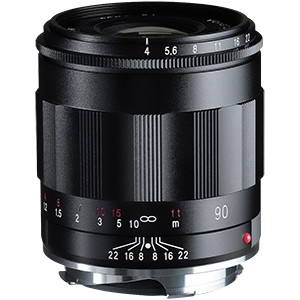
Cosina officially announced the Voigtlander 90mm f/4 APO-Lanthar Close Focus lens on July 15, 2026, following its early showing at CP+ 2026 back in February, and on paper it's a bit of a standout. At 54.8mm long, it's the shortest 90mm lens ever made for the Leica M system, and one of the lightest, yet it brings an apochromatic design aimed at reducing axial chromatic aberration to near-zero, plus close-focus capability down to 0.5m without needing a separate adapter. That combination alone raises expectations.
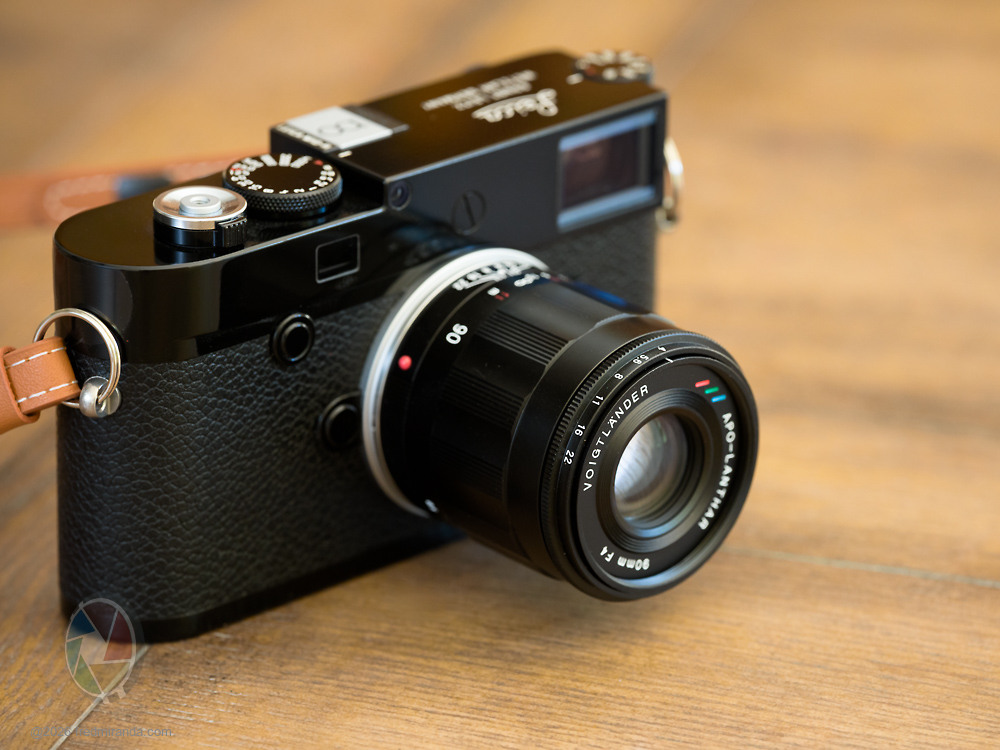
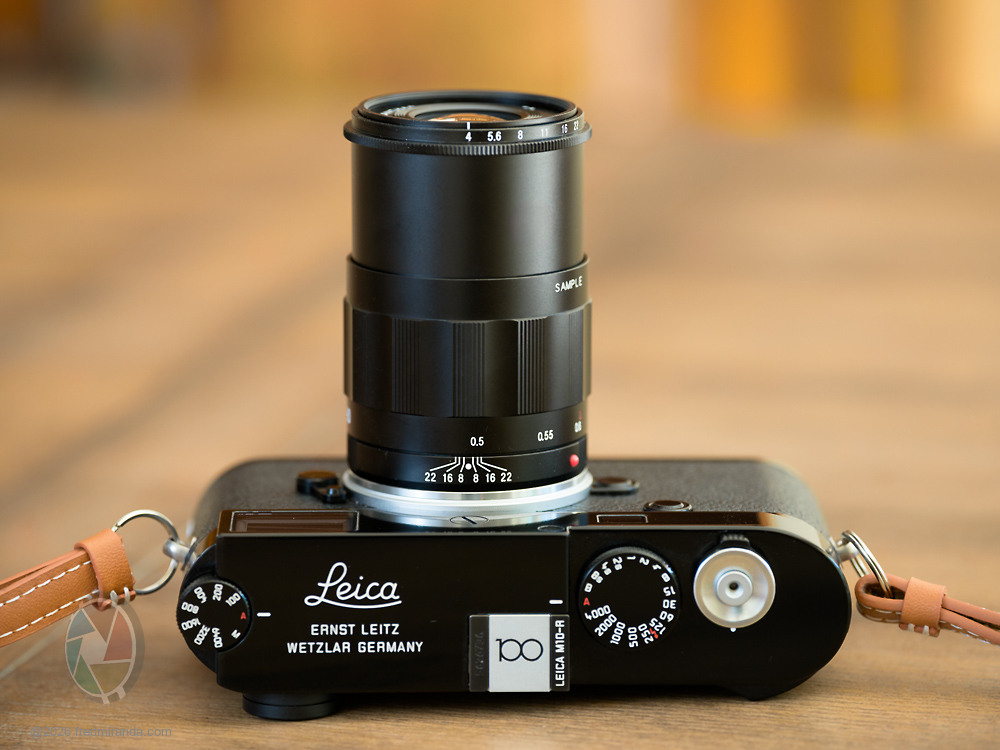
Voigtlander 90mm f/4 APO-Lanthar mounted on a black paint Leica M10-R
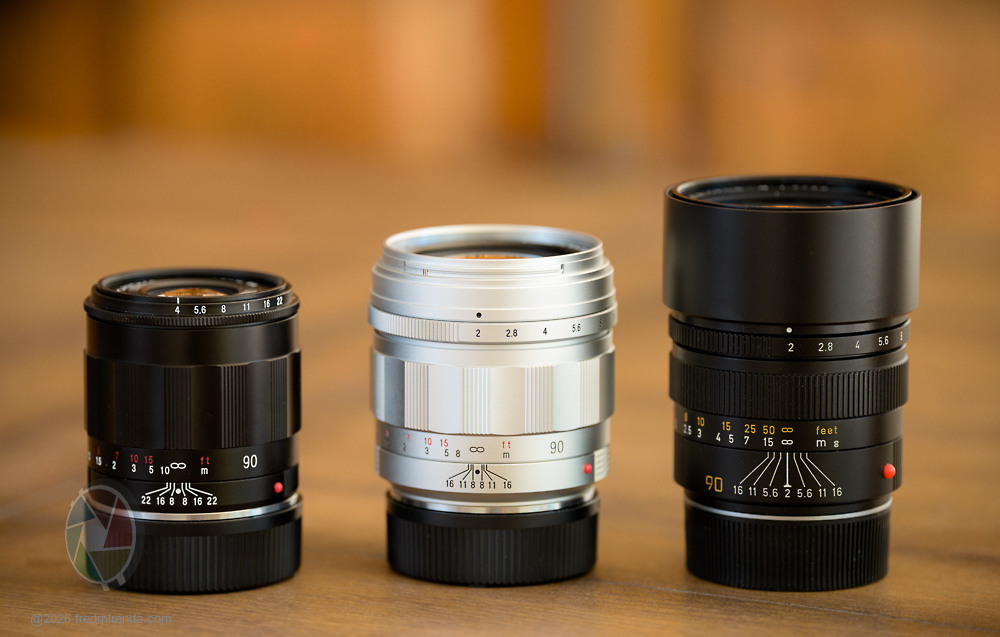
What makes this lens particularly interesting is how clearly it was designed around the rangefinder experience. By choosing a slower f/4 aperture, Cosina was able to keep the barrel short enough that it doesn't intrude into the 90mm framelines, even with the included low-profile hood and even at its rangefinder-coupled minimum focus distance. In use, it handles more like a compact 50mm than a typical telephoto, something you can't say about most 90mm lenses.
Voigtlander 90mm f/4 APO-Lanthar optical design and MTF performance
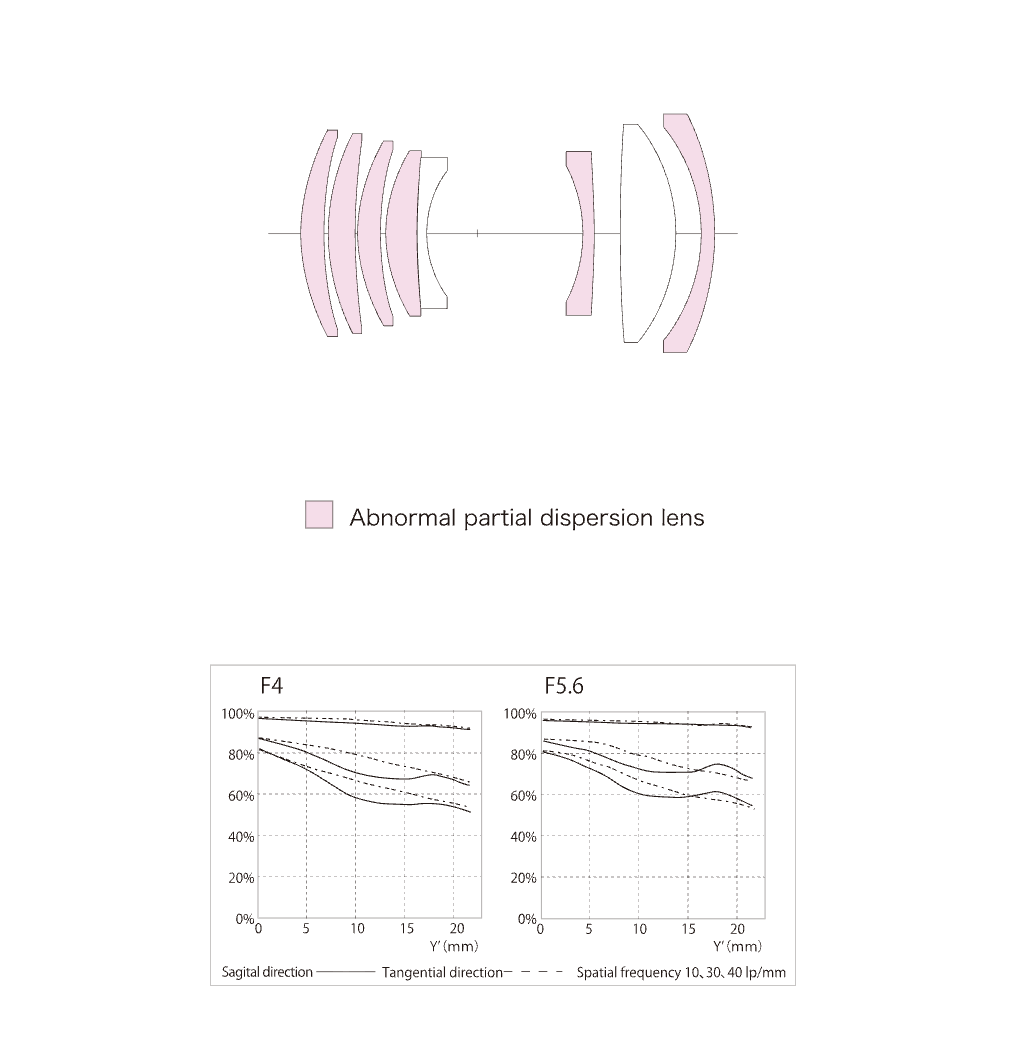
The optical formula is straightforward, 8 elements in 7 groups, with six elements built from anomalous partial dispersion glass to keep color fringing in check. Just as notable, Cosina skipped aspherical elements entirely, likely because they matter less in a short telephoto design, and to keep the rendering smooth without the onion-ring pattern in specular highlights aspherics can sometimes introduce. The overall approach leans classic and symmetrical, favoring consistent rendering over optical shortcuts.
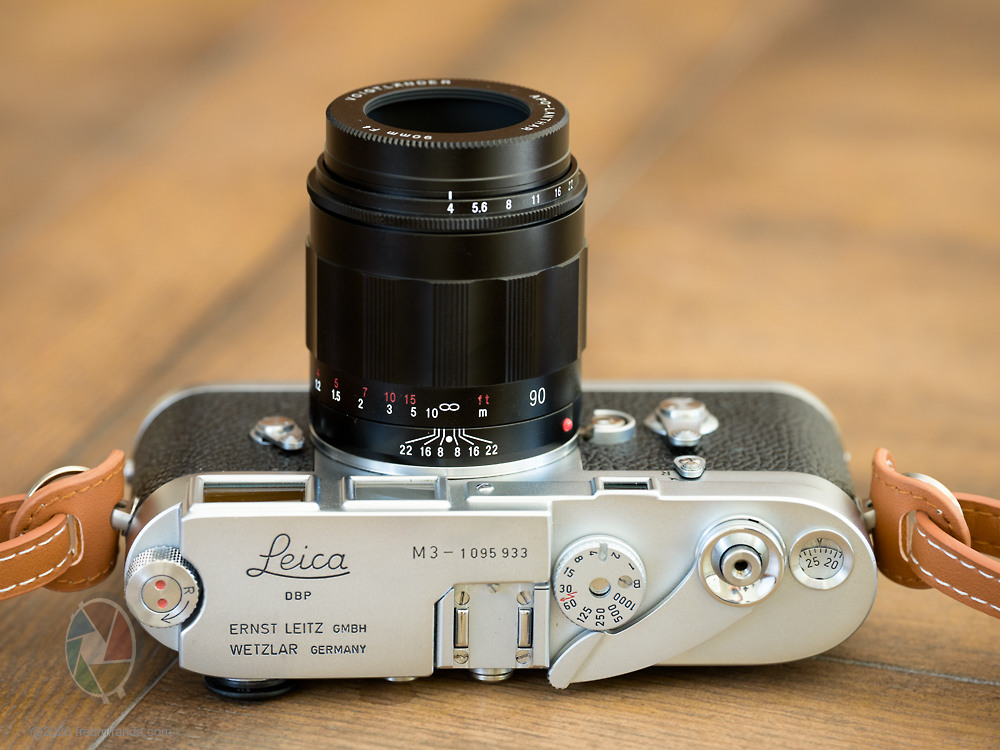
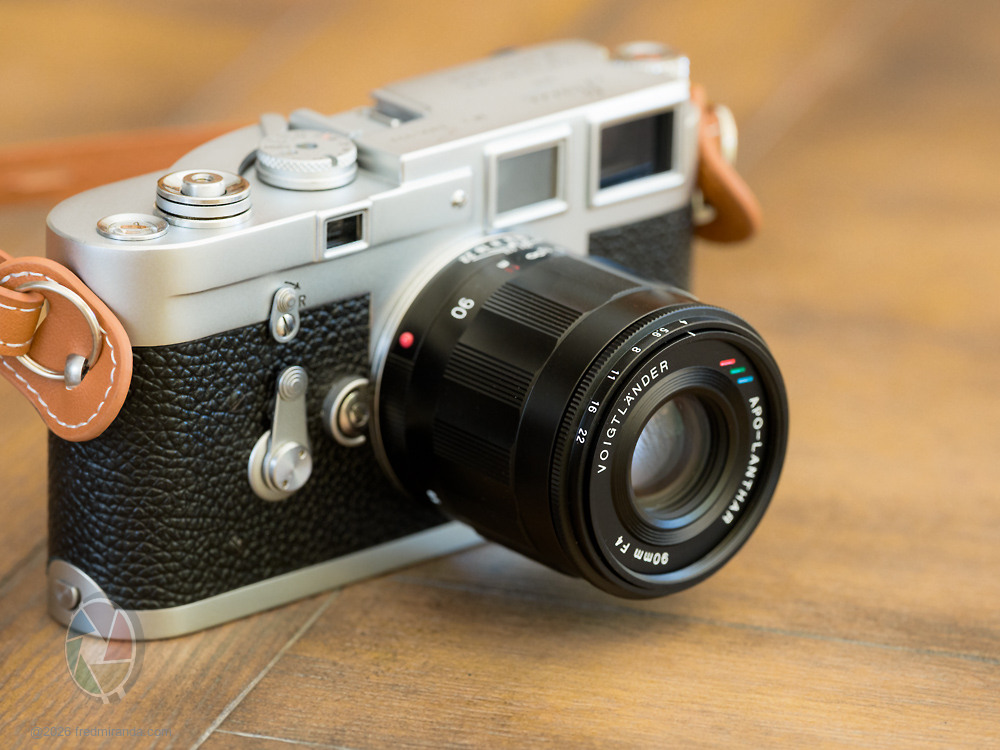
Voigtlander 90mm f/4 APO-Lanthar mounted on a Leica M3
Aside from the slower f/4 aperture, that level of compactness doesn't come at the cost of close-focus performance. In fact, the lens focuses down to 0.5m, which is very rare for a 90mm lens, offering a magnification ratio of 0.28x, exceeding 1/4-macro capabilities. It includes a focus click at 0.7m, a tactile signal that the rangefinder can no longer couple beyond that point. So the design pushes closer, into quasi-macro territory, once you switch to live view focusing past that click.
Leica M10-R Black Paint with Voigtlander 90mm f/4 APO-Lanthar extended to its 0.5 MFD
Like previous Cosina lenses, the Voigtlander 90mm f/4 APO-Lanthar Close Focus features all-metal construction and a robust helicoid. The focus ring is smooth and well damped, allowing precise adjustments with a simple twist. Focus throw is 135 degrees from infinity to 0.7m, and 220 degrees from infinity to 0.5m. At 0.5m the lens extends quite a bit, nearly doubling in length.
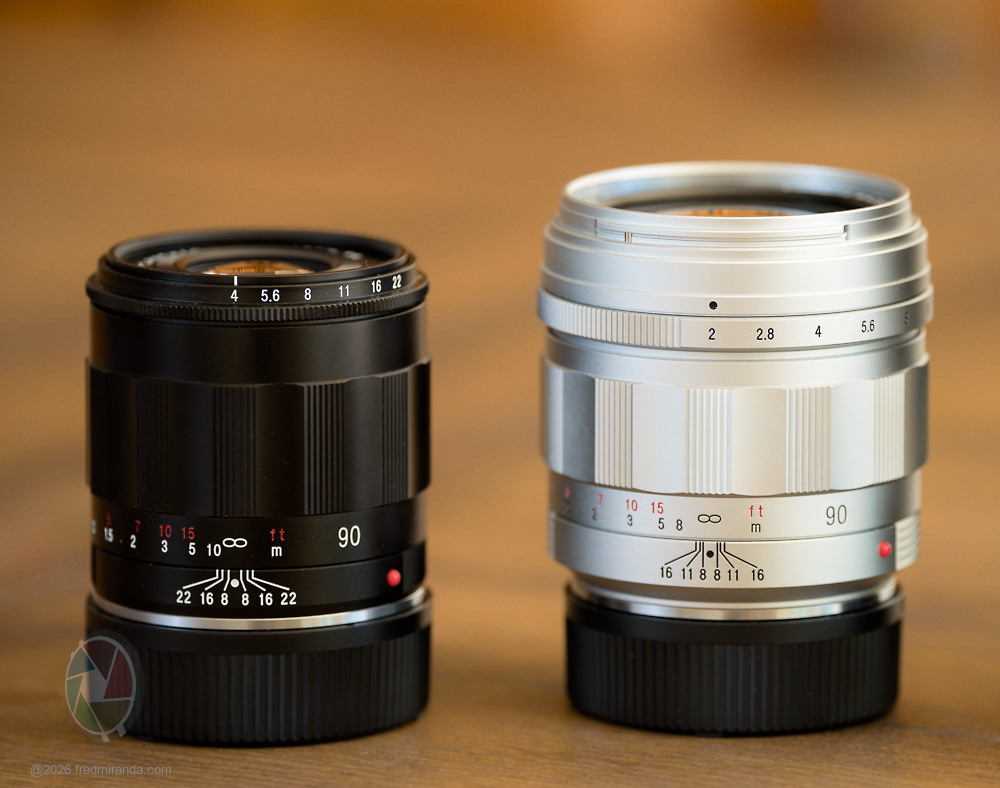
Voigtlander 90mm f/4 APO-Lanthar vs Voigtlander 90mm f/2 APO-Ultron and Leica 90mm f/2 Summicron-APO ASPH.
Cosina's build quality continues to impress me. After years of testing Voigtlander lenses, I've never encountered a loose aperture ring, sticky focus, or any mechanical play. Tolerances are consistently high for a third-party manufacturer, and now come very close to Leica standards. Just as important, every recent sample I've tested has been perfectly aligned with the rangefinder, which gives real peace of mind for rangefinder shooters.
Voigtlander 90mm f/4 APO-Lanthar with included metal hood
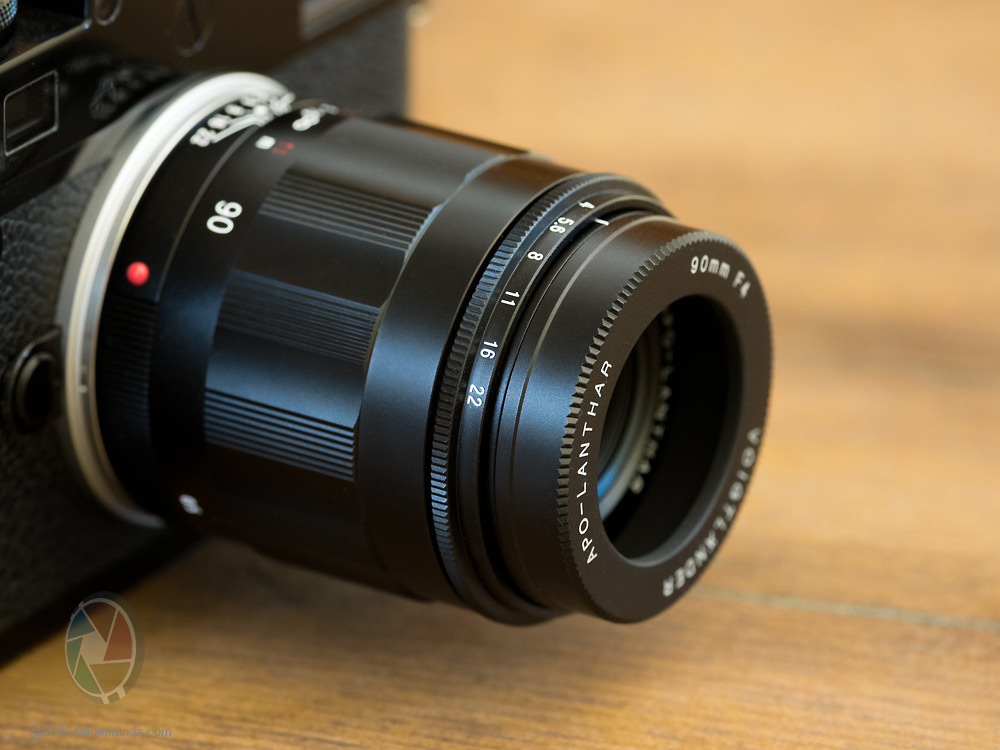
The aperture ring rotates in half-stop clicks from f/4 to f/22, with a firm, precise feel.
It pairs naturally with Leica M bodies and hardly feels like a telephoto in use. It handles more like a 50mm lens, which is rare for this focal length.
The 10-blade aperture produces well-defined, 10-point sunstars.
Voigtlander 90mm f/4 APO-Lanthar mounted on a Leica M3
This review copy is perfectly centered and aligned with my rangefinder.
Voigtlander 90mm f/4 APO-Lanthar vs Voigtlander 90mm f/2 APO-Ultron
Voigtlander 90mm f/4 APO-Lanthar Specifications:
- Focal Length: 90mm
- Maximum Aperture: f/4
- Minimum Aperture: f/22
- Angle of View: 27.5°
- Minimum Focus Distance: 0.5m (With focusing click at 0.7m)
- Optical Design: 7 groups 8 elements
- Special Glass: 6 elements of anomalous partial dispersion glass (low dispersion)
- Filter Size: 43mm
- Aperture blades: 10 (straight)
- Dimensions (ø x L): φ53.0 x 54.8mm
- Weight: 232 grams (measured)
- Hood: Compact hood Included
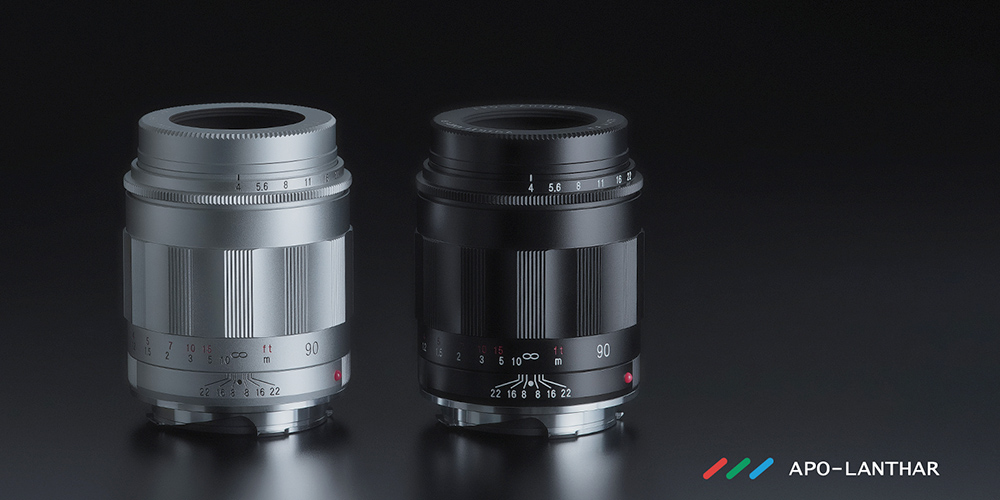
Silver and Black finishes available
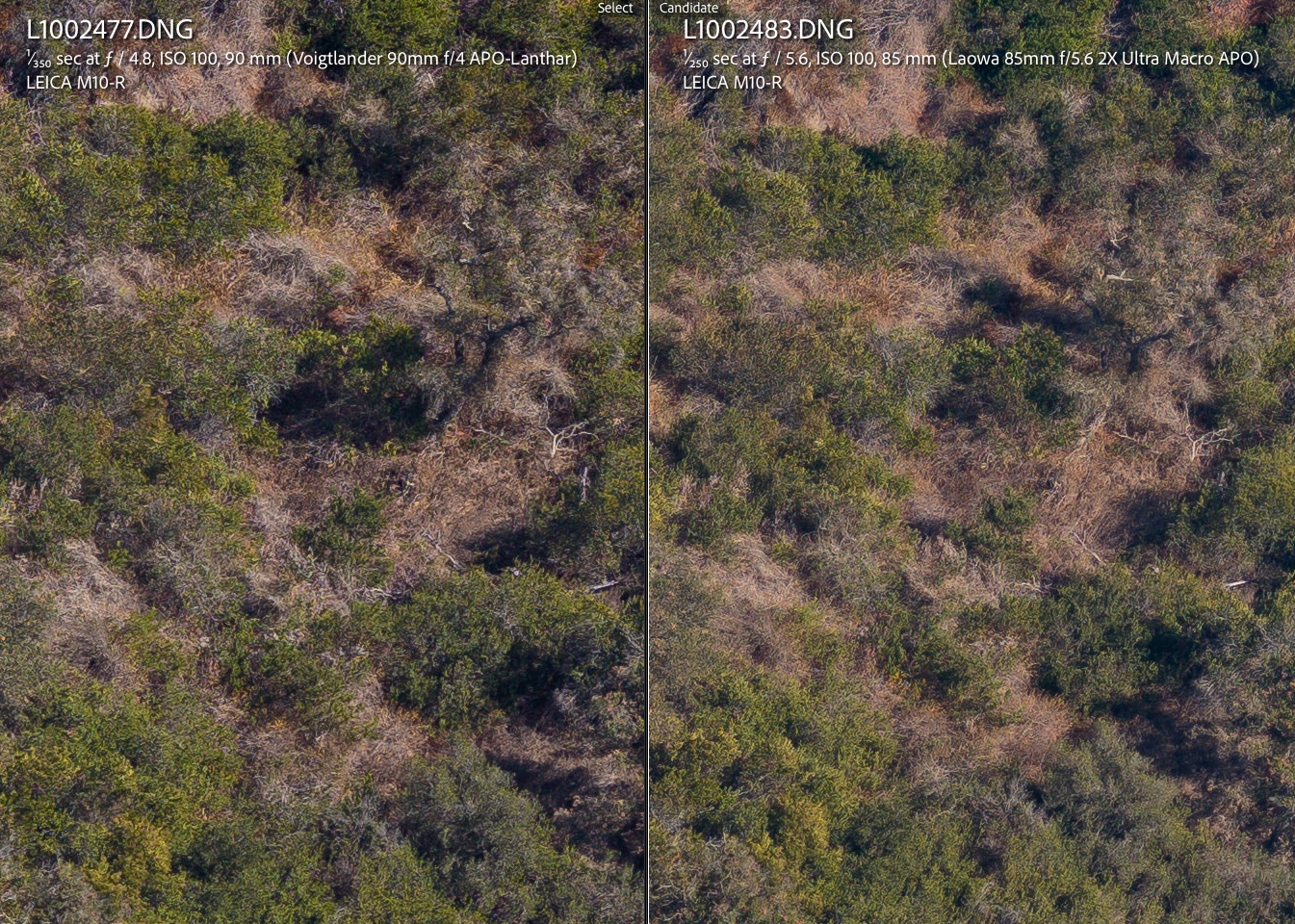
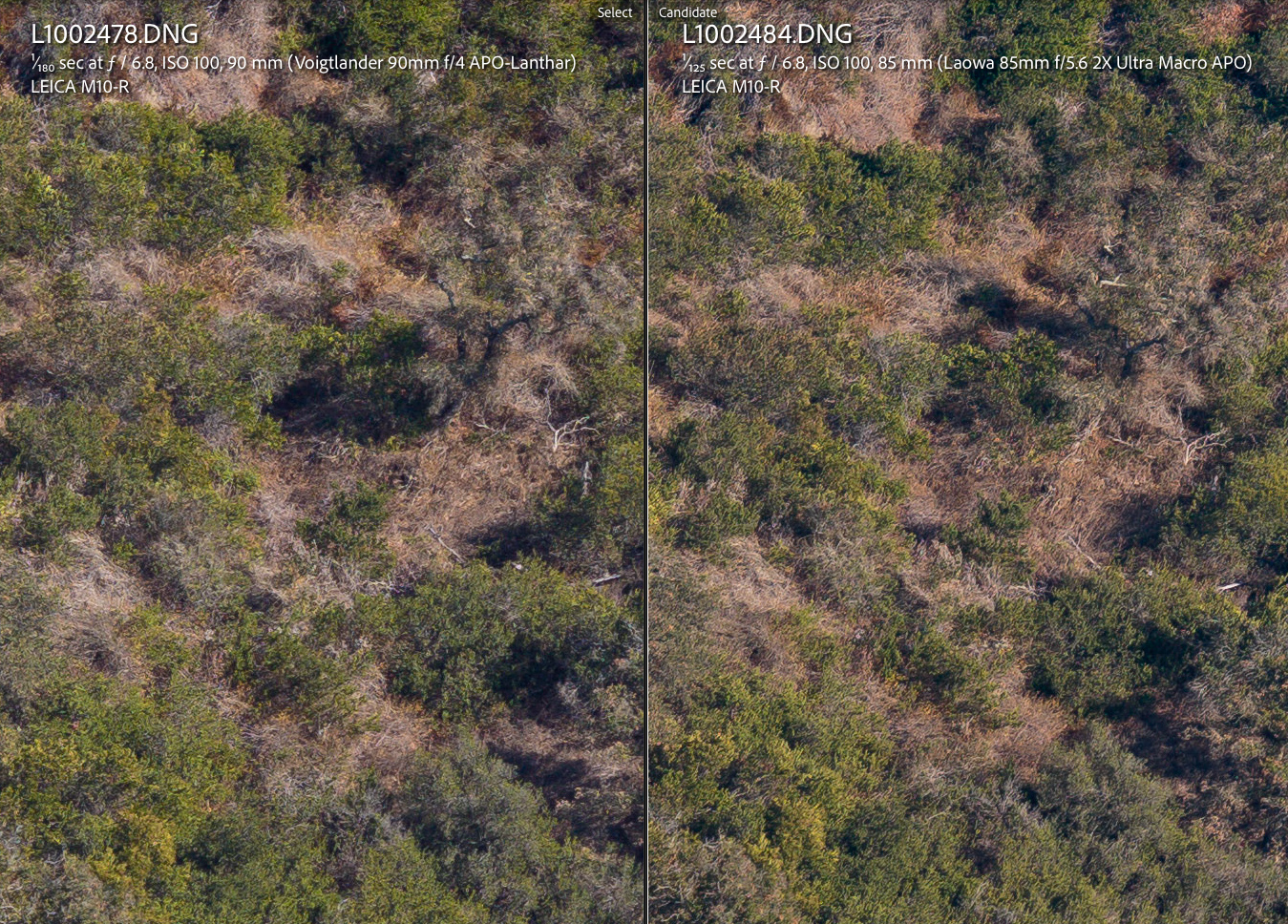
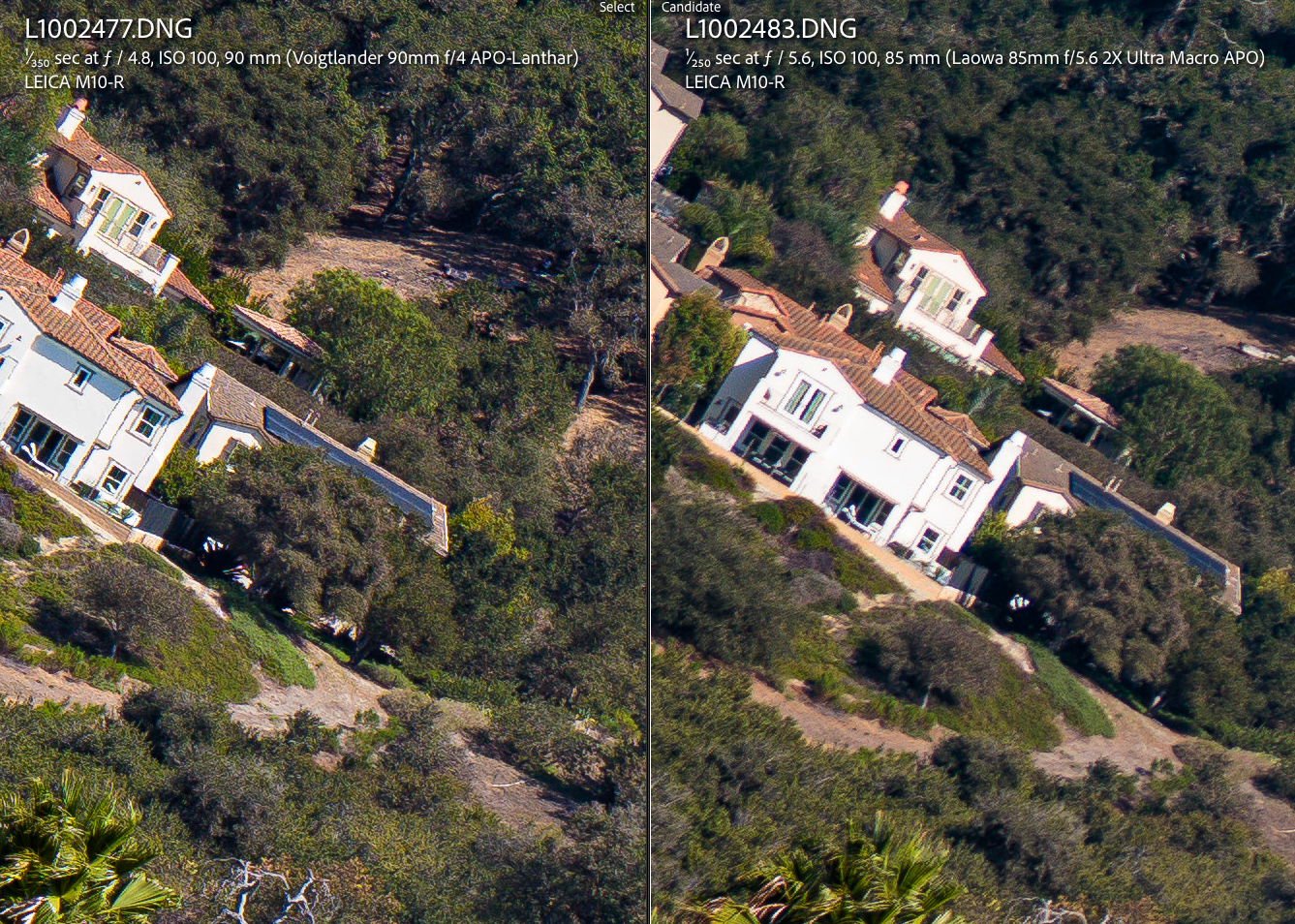
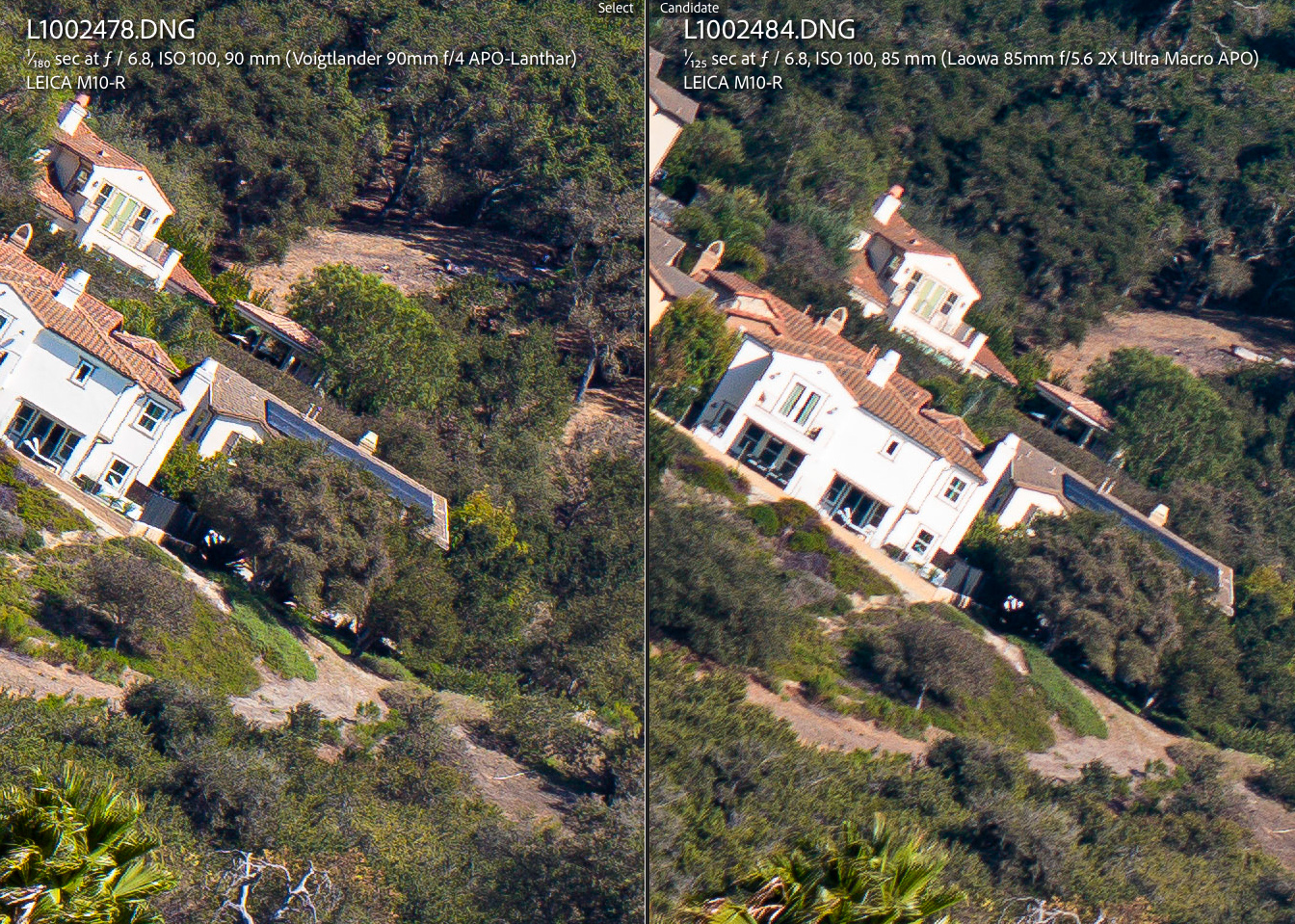
In this review, I'll take a close look at how the Voigtlander 90mm f/4 APO-Lanthar Close Focus performs in real-world use, covering resolution, contrast, aberration control, and overall rendering. I'll also compare it directly against the faster 90mm f/2 APO-Ultron stopped down to f/4, focusing specifically on how their rendering differs once aperture and performance converge.
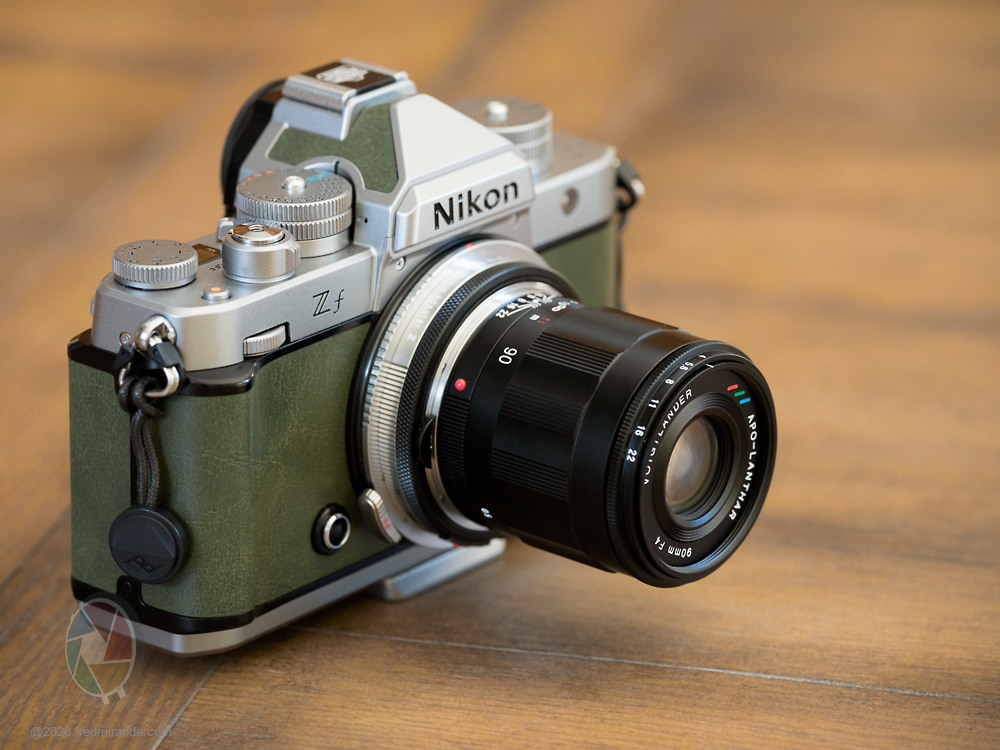
Voigtlander 90mm f/4 APO-Lanthar adapted to Nikon ZF
I'll also test the Voigtlander 90mm f/4 APO-Lanthar Close Focus adapted to the Sony A7R II and Nikon Zf mirrorless cameras, to see whether their thicker sensor stacks introduce any performance penalty compared to Leica M bodies.
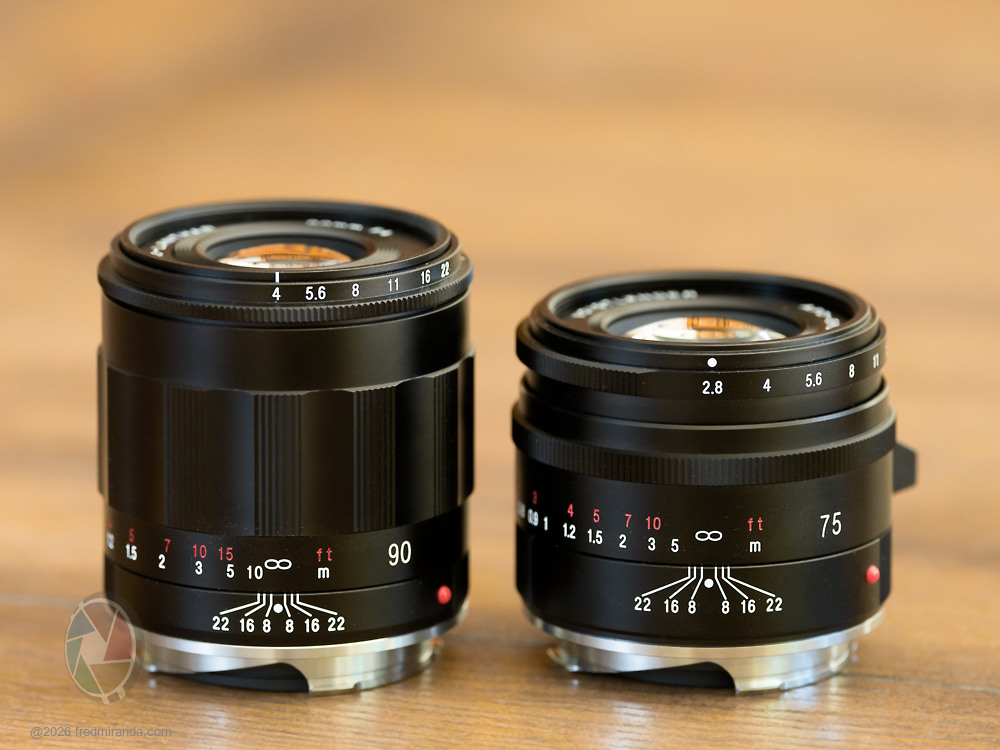
Voigtlander 90mm f/4 APO-Lanthar vs Voigtlander 75mm f/2.8 APO-Skopar
|