I honestly think it's more likely we will be seeing the FF market in 5 years even more split between Sony, Canon, Nikon, and L mount.
Nikon has some strong momentum going, and seems to be cooking up something special between its second gen S lenses, Silky Swift Voice Coil Motors for AF, and Red video Technology.
Panasonic's latest L mount cameras are much improved, and If Sigma pulls off Foveon, L mount might have the best studio / landscape FF camera.
shadow9d9 wrote:
Olympus sold out of the camera business years ago...to a liquidator that is throwing out what was left in the pipeline. So, no, Olympus is not still alive.
Olympus / OM is in a strange position. When Olympus sold to JIP I thought it would be over for them within a few years. But OM seems to be doing well enough that JIP is no longer its primary owner:
@DWOfPaul the market is not big enough for all of them now, look at the CIPA numbers. Dedicated camera sales are 30% of their 2012 peak. Talking to young people I notice that they're already treat a large dedicated camera as an attribute of an old weird creep, unless he is a hired pro. Is anyone here on FM younger than 40?
The logos you listed are not great businesses. Look up their numbers, they are public. They'll get only worse when the Chinese inevitably show up. As usual, they will be state-funded and margin-insensitive. I see extinction and consolidation, not expansion, in the future. I question the Nikon's long-term survival as a photographic brand. Only the futures of Sony and Canon seem secure, due to their size and vertical integration. Panasonic and Nikon are likely seeing video as greener pastures even today. The odd duck here is Fuji. They have the resources to be like Canon and Sony. Historically they've been very business-savvy, look at their margins! But something tells me they will bail out of imaging when the margins collapse. They've done it with film, full-frame digital, and will happily do it again because they have so many other sectors to redirect investment.
DWOfPaul wrote:
Olympus / OM is in a strange position. When Olympus sold to JIP I thought it would be over for them within a few years. But OM seems to be doing well enough that JIP is no longer its primary owner:
The photography industry is interesting, no doubt. I'm fascinated by how cooperative an industry it's forced to be from a manufacturing perspective.
That said, who designed what and put what brand on it doesn't matter when the lens is on the camera. Then it's all about how well that lens works for you.
old-gregg wrote:
@DWOfPaul@ the market is not big enough for all of them now, look at the CIPA numbers. Dedicated camera sales are 30% of their 2012 peak. Talking to young people I notice that they're already treat a large dedicated camera as an attribute of an old weird creep, unless he is a hired pro. Is anyone here on FM younger than 40?
I am still under 40 but getting close. What this means for the market as a whole, it's hard to say, but I know people, not from online, who are in there 30's that are into photography, and I know more who would like to get more into photography if it was not so expensive. There also seems to be quite a few people in their 20s and 30s who are into photography on platforms like IG, and Threads. Traditional photograph forms and sites like Flickr do seem to have mostly an older user group, though.
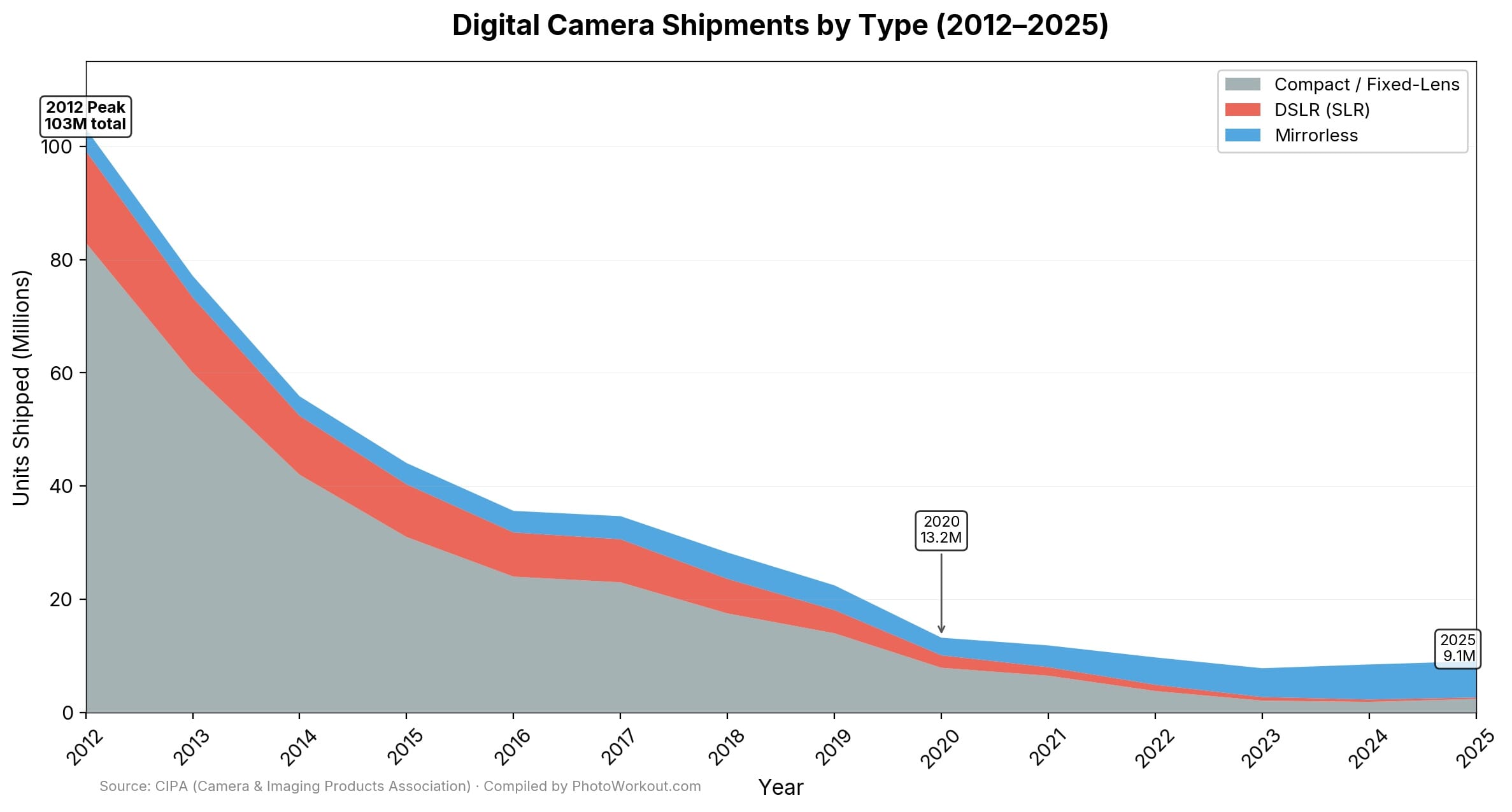
IDK if the CIPA numbers are really that bad. Let's take a look at a chart by year:
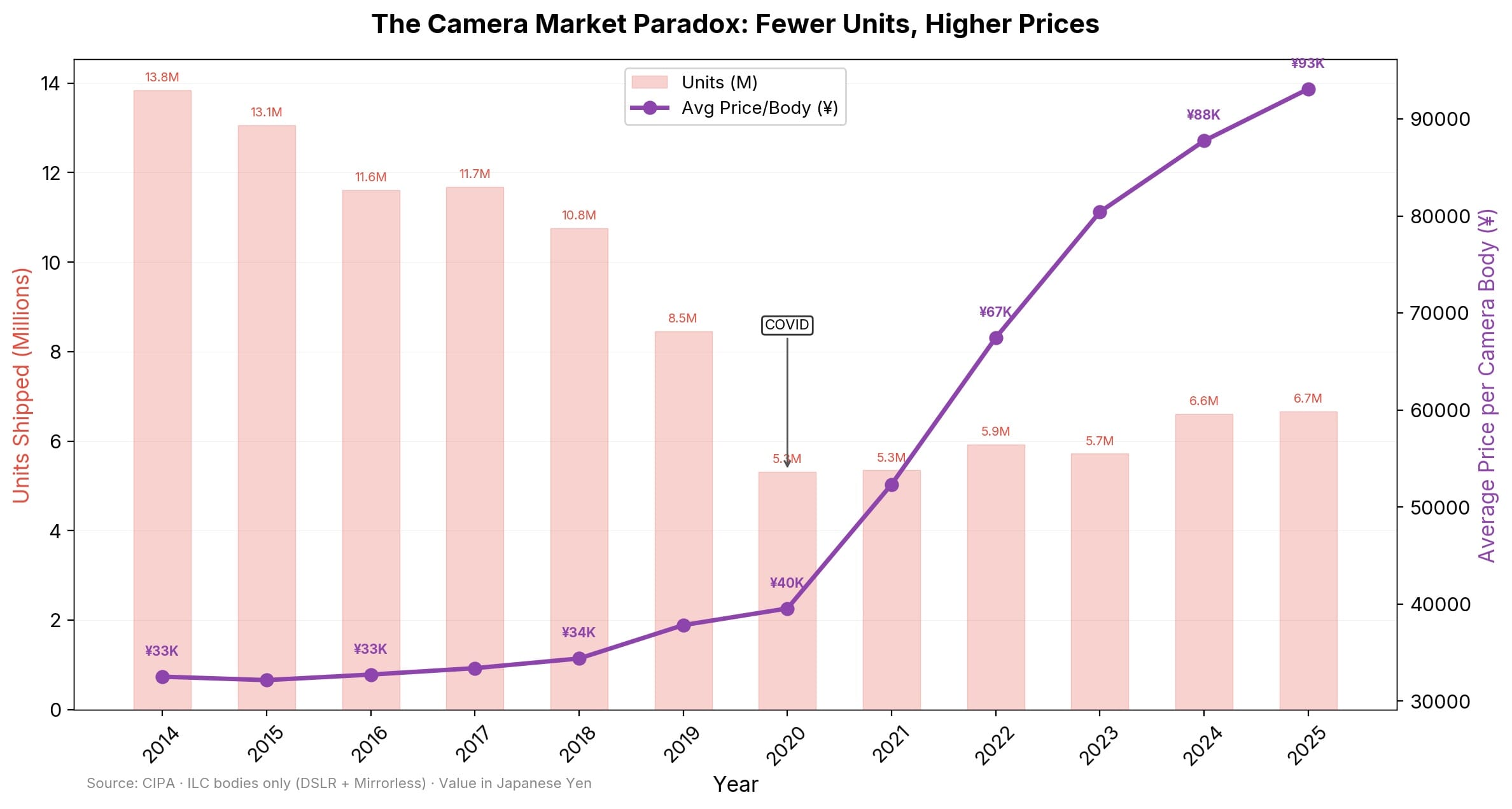
The majority of the dedicated cameras were fixed lens. This growth was definitely killed by smart phones, but historically this section wasn't there in the film days, and fixed lens digital cameras are actually starting to come back. Sure DSLR + Mirorless was bigger at the time too, but my guess is a lot of the dedicated cameras sold in 2012 were entry level cameras like the D3000 series that people were picking up at places like Best Buy and Costco. It would be interesting to know how many people who bought an entry level DSLR moved up to FF eventually, but I have met very few. Mirrorless + DSLR sales have bassically been stedy now since around 2019.
Also, while the total number of units has gone down, the value of each unit has gone up: