DtEW wrote:
Does anybody have experience using the Kipon Shift EF-SE to bridge EF-mount lenses (specifically Samyangs) to an FE Sony?
I am assuming that the Samyangs' image circle won't be large enough to cover the FE Sony sensor when shifted, so a lot of cropping will be necessary.
You are correct. Applying any movements to a typical EF-mount lens will require cropping. Purpose built lenses like the Canon TS-E have a larger image circle to allow for movements. Shifting and cropping an ordinary lens gets you to about the same place as just shooting an ultra wide native E-mount lens and cropping the output. For wide angle work, tilt isn't really a factor. So simply shooting a native Sony 12 or 14mm lens and heavily cropping the image often gives you better results with much less effort compared to adapting older SLR lenses.
JohnJ wrote:
I use a Canon TSE17 on a Sigma MC11 adapter on Sony bodies and love it. It might be too wide however, and filter use is problematic (to say the least).
Haida made a simple twist on holder, which I still use but cannot find on their website. I find f11 works best with my TS-E17L and 5DSR.
gdanmitchell wrote:
It is actually amazing how much perspective correction one can do in post and still retain excellent image quality.
Example of critical keystone correction applied manually:
Nikon D4, 28E, handheld. The modest 16MP is sufficient for my purpose even when the bottom 1/3 of the image (grass) is pitched. And, yes, the angles on that building are real—architects are crazy that way.
DtEW wrote:
Does anybody have experience using the Kipon Shift EF-SE to bridge EF-mount lenses (specifically Samyangs) to an FE Sony?
I am assuming that the Samyangs' image circle won't be large enough to cover the FE Sony sensor when shifted, so a lot of cropping will be necessary.
I had the Kipon t/s adapter Hasselblad V to Sony E lens mount adapter. It was a solid piece and well built and certainly capable of holding the Hasselblad heavy legacy lenses. I ended up selling the adapter and the H lenses. H lenses while still being expensive, were not providing me with superior image quality I thought I would get. Moreover, I wasn't using this t/s system professionally so didn't want to carry the weight and bulk with me. I preferred a more light weight and compact alternative hence the Laowa shift lens.
I currently own a Fotodiox t/s EF to E lens mount adapter. It is also very well built, also very well built (planning to sell this one too):
Nikon D4, 28E, handheld. The modest 16MP is sufficient for my purpose even when the bottom 1/3 of the image (grass) is pitched. And, yes, the angles on that building are real—architects are crazy that way.
If 16MP is sufficient, would it not be easier to forget about shift, instead shoot use an even wider lens horizontally (to avoid falling angles) and crop?
Daran wrote:
If 16MP is sufficient, would it not be easier to forget about shift, instead shoot use an even wider lens horizontally (to avoid falling angles) and crop?
Usually, you cannot get high enough to shoot level with a wider lens, so the tradeoff is to shoot as loose and as close to level as practical while framing to allow an appropriate crop after the correction in post.
The recent however—but is ACR just added a “generative fill” feature. I’ve used after a mild geometric change that causes the rectangular frame to expand beyond image boundaries and it’s pretty remarkable. Not perfect, but you can give it a few iterations and get excellent “fill” results. Theoretically this will allow us to shoot pointed up with tighter framing, and rely on this fill feature to generate the missing image sections.
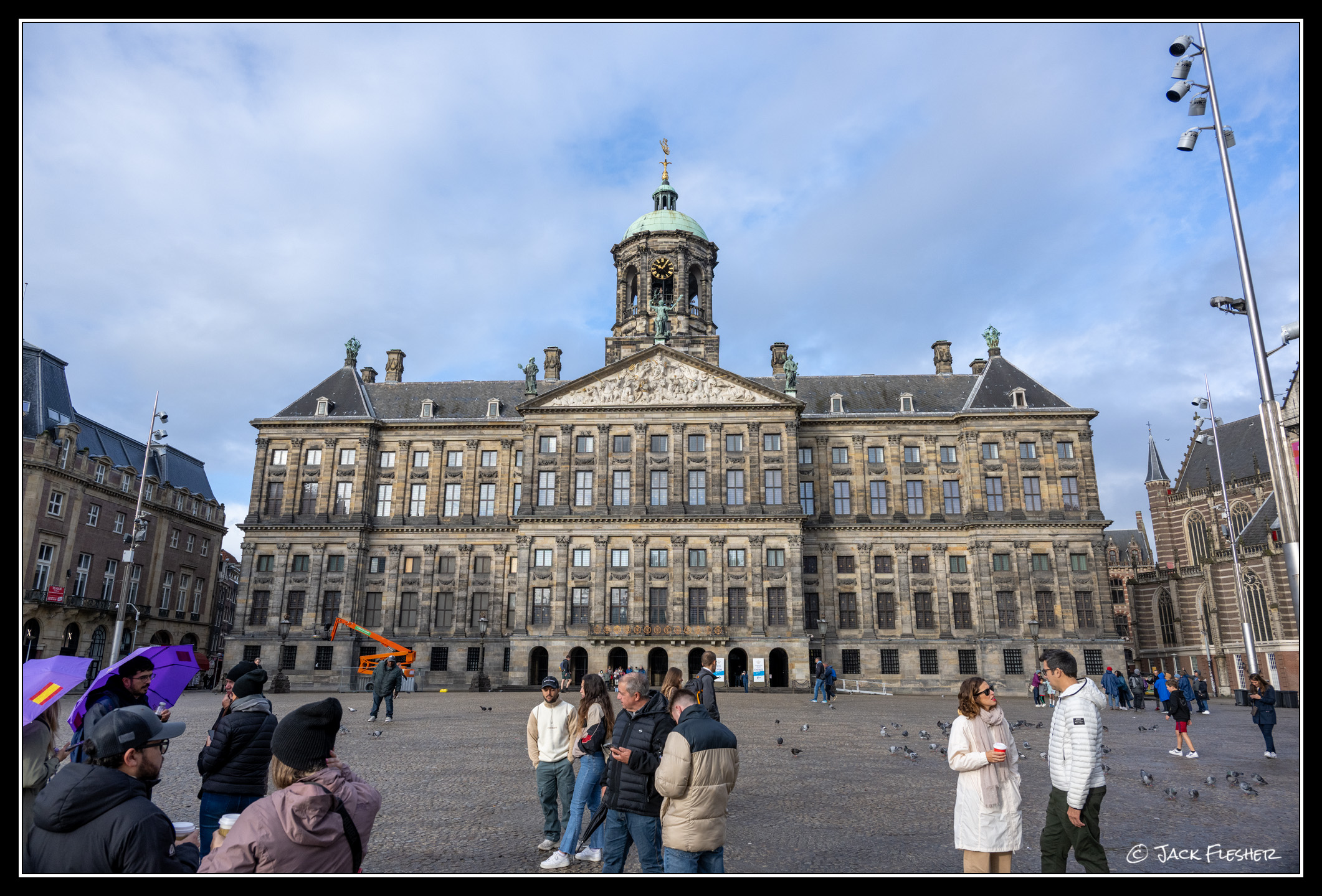
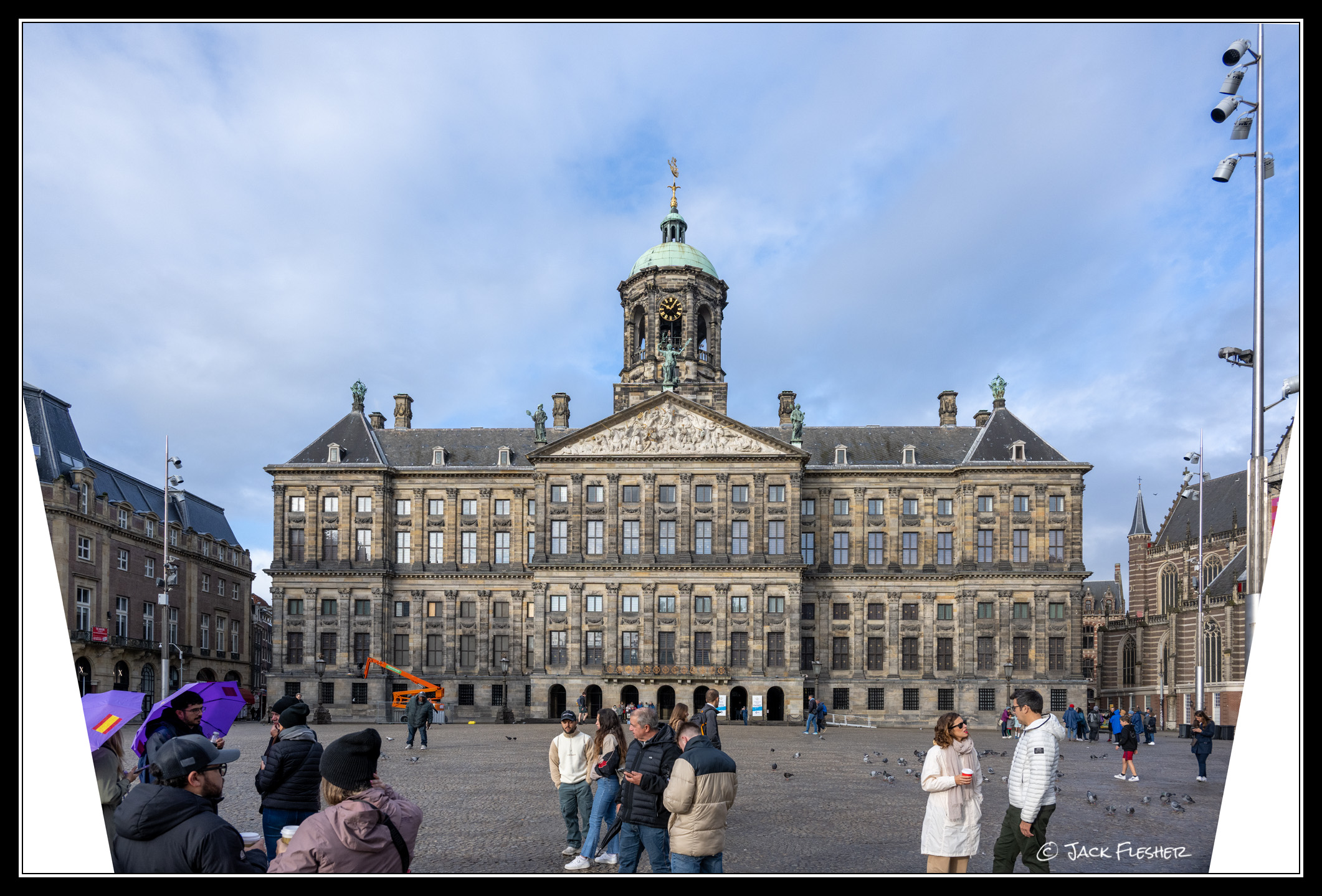
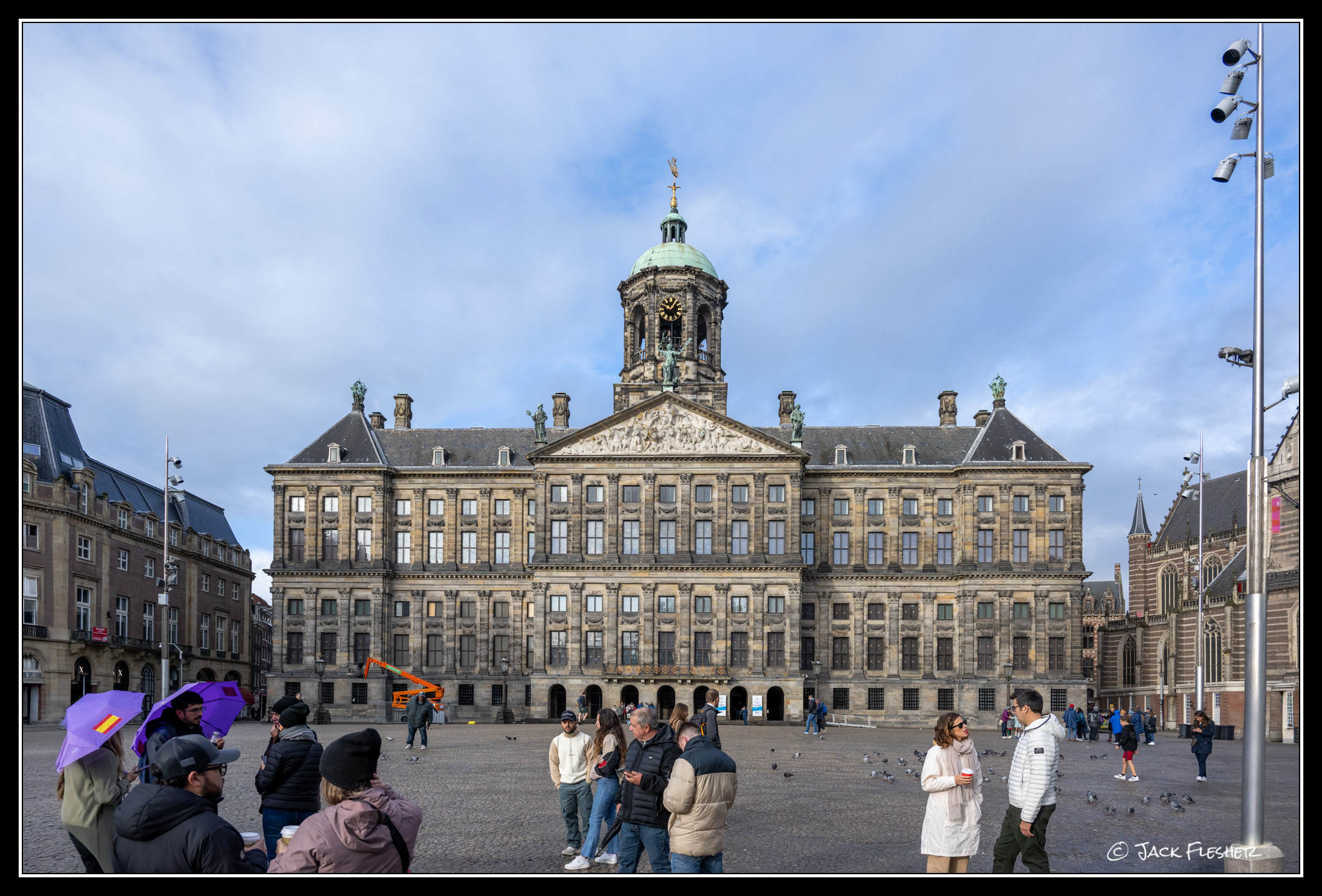
Here's a quick and simple example. After fill, you can see the lady's umbrella lower left is wonky but it did a remarkable job with the building, even carrying on the actual angle it had to the side being filled. I suspect I could have brushed over the umbrella a few times for different iterations and find one better. And I don't know if the lamp stand on the right had a base like that, but it's incredibly believable IMO this is a pretty remarkable tool.
Original capture
Full frame after perspective correction in ACR
ACR's first attempt at generative fill for the blank areas. Note how well it did with virtually zero image data there.


 IMO this is a pretty remarkable tool.