Mark Metternich
Offline
• • • • • •
Upload & Sell: On
|
Malka_1 wrote:
Thank you for taking the time to share your technique! If you don't mind me asking - does it allow you to reproduce the view as close as possible to how you experienced it, or to create a more artistic/abstract interpretation?
It is certainly my pleasure! Wow, that is a great question!
And the answer to that question would certainly vary from image to image. Usually, I’m employing every technique I can to better translate to the viewer the full experience of seeing what I saw, and being as authentic as possible in doing that (with creativity) But I would never want to pigeonhole myself into one type of approach because that then limits creativity and limits what you can and can’t do. And I find limiting myself boring, and doesn’t breed longevity and unrestrained passion for me. So it’s a little bit of a difficult question on this one. But I’ll give it a try. I have other images of this sea stack that would be easy to answer a simple yes.
So on this one it’s, kind of, a yes and a no. I’m sorry to answer paradoxically, but there are some aspects that are yes, and some aspects that are no. If that’s all you want me to say then that would be a lot easier, but I know some people really enjoy learning on this forum. So for those who potentially might read this, I’ll try to describe a little.
Even though I’ve been off this forum a lot over the last four or five years, due to “life happens” family members passing away, caretaking, and other tough challenges that happen to the best of us, especially as we get older… I have never stopped photographing, pedal to the floor, in growing/development of both the capture and the post-processing (and the art of seeing). I never imagined having the skill sets I am blessed to have today. It blows my mind. I kind of showed up here, surprised. But it makes sense because I just can’t stop learning. I love to learn and I love to grow.
In this case, I’m using a pretty crazy wide lens and I’m getting much more down toward the water, and I am pushing away my impulse to shoot the scene vertically because it’s such a tall subject matter and I’m wanting to isolate it away from anything on the left and right. I’ve literally climbed down a cliff so there’s nothing obstructive above it either. So it certainly lends itself to a vertical. But the amount of area that it consumes is massive!
When I got to the position, I tried every approach I could think of. And what I settled on, especially because I had a limitation of time (clients were done and they were going to take a little break) but not willing to take advantage of that time, so needed to grab this as fast as I could, but do it well, in case I don’t get the opportunity to do it next year, or ever again… Side note: at the end of this workshop, I had an extra day to go anywhere I wanted, and I really wanted to go back and just sit right here all day long, but the weather in this area wasn’t right.
Anyway, after some attempts, and various test shots, I settled on a horizontal, ultra wide camera angle, but multi-shot vertical stitch.
I think I initially had a radical breakthrough in my mind about how things can be photographed when years back I took the iPhone and put my body into some unique places (in the SW) and used the 12 mm, panorama/stitching mode. Just obsessed with new creative approaches, I did some crazy wide angle panorama stitches just for fun/experimentation to see how the unique perspectives would turn out. And whether or not they could at least be played with for fun and re-cropped, and maybe perspective shifted in camera raw and so forth… these experiments, yielded a handful of wildly new approaches in my mind. But because the quality obviously lacked, the next question was, how could I do this with a good camera and a good lens… or what would it be like to stitch at 11 mm or even 9 mm! I do know that Marc Adamus loves to do this type of thing as well. And I think I did derive some inspiration from some of his work years ago. Where he was able to get perspectives that no one would be able to see with their eyes, even if they were there.
But once my brain started understanding how things might end up looking (by taking all sorts of crazy test shots, including those Ultra Wide panorama stitches…) I started getting excited about pretty radical new possibilities.
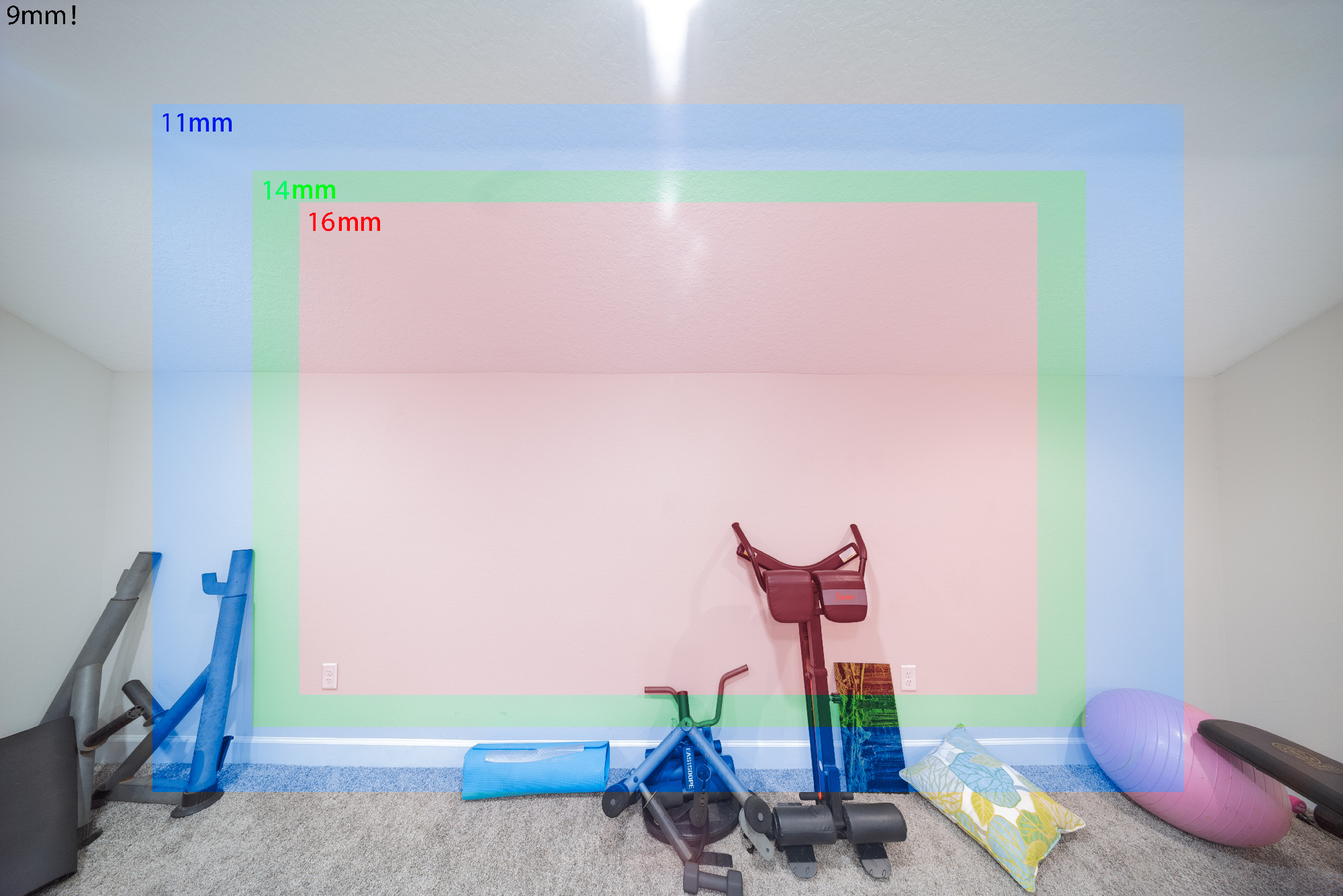
More recently (last year and a half) I’ve been using the Laowa 9 mm, which is dumbfounding wider than 12 mm!!!
I will attach my test when I first got my 9 mm to this comment. And stitching crazy approaches to just about anything I can think of. I will also attach a photo that is one of those initial SW panorama stitches that blew my mind because even standing right there, your eyes could never see it.
Anyway, all of that to say YES, I want the viewer to feel far more of what it reels looks and feels like to be down lower, and powerfully intimidated by the massiveness and height of this sea stack, and the mighty surf below. And in that sense, it still falls short.
But on the “no” side, is that I like more surreal, sublime long exposures. I gravitate towards, and always have, a little bit more surreal imagery.
So, I did the multi shot blending, and exposure averaging, so that the water was not hard (conveying more of a sense of motion). So, certainly not a documentary journalism approach in that sense.
The second aspect that would also be a “no” is that I wanted this stack completely isolated away from anything around it. That is why I climbed down to that position. It does wonderfully isolate the stack, and it helps a lot to relay better how massive it is…. But this photo still falls very short, in my opinion, in terms of relaying how insanely massive what you’re looking at is and how close it is/feels. And how intimidating!
Lastly, there were some intrusions on the left that I cloned out that would have been distracting elements on the edge of the frame. There is a stack to the left of this, but in this position, I was able to isolate it out of the scene.
I’m a huge believer and advocate for eliminating as many distracting elements as possible, for a better, more straightforward dynamic viewing experience. Many of my favorite photos I have seen over the years, and a couple of my favorite Photographers uniquely know the power of minimizing distracting elements, either by very careful framing or combining that with post-processing (cloning, eliminating distracting elements) so that the visual experience can be both powerful yet simplified (often contradictory concepts ). Over the years, and hand full of Alex Noriega’s images have had a big impact on me.
So it’s a yes, and a “no” on this one. I wanted it to have a slightly surreal, artistic feel, which comes especially out of the longer exposure approach to the water, and some of the processing decisions, but at the same time it is a “yes” that I was wanting to far better relay the look, POV and feeling of seeing this huge natural wonder, from down low, with movement and time.
Sorry if that TMI, and I’m sorry if it doesn’t fully explain…
GeofFX wrote:
This is one of the best and most beautiful landscapes I’ve ever seen. Maybe it is the best. Or is it a seascape? That’s about all I can think of to specifically comment on, the rest of what we might be talking about is all pretty much perfect.
Wow. That’s an incredible compliment and thank you very much. I would definitely call a Seascape.
Mark,
That was a great and detailed explanation. I was aware that combining multiple exposures reduces the noise levels. The technique of layering denoised image with non-denoised one to reduce noise only in the darks of the image is a very creative. Thank you for sharing that in great detail. I am not a PS user (I use Affinity Photo), but understood the concept an itching to try it the next time.
Sreedhar
I would love to hear about your results once you try this. Because I’m in the business of pushing the quality of enlargements, this is massive! I’m going to make a video tutorial on it, that I’ll put on my website, but being able to get the best stuff only into the areas that we really need it and to keep as much as possible, as natural as possible, is opening up a foundation of possibilities for enlargement print quality never obtained before.
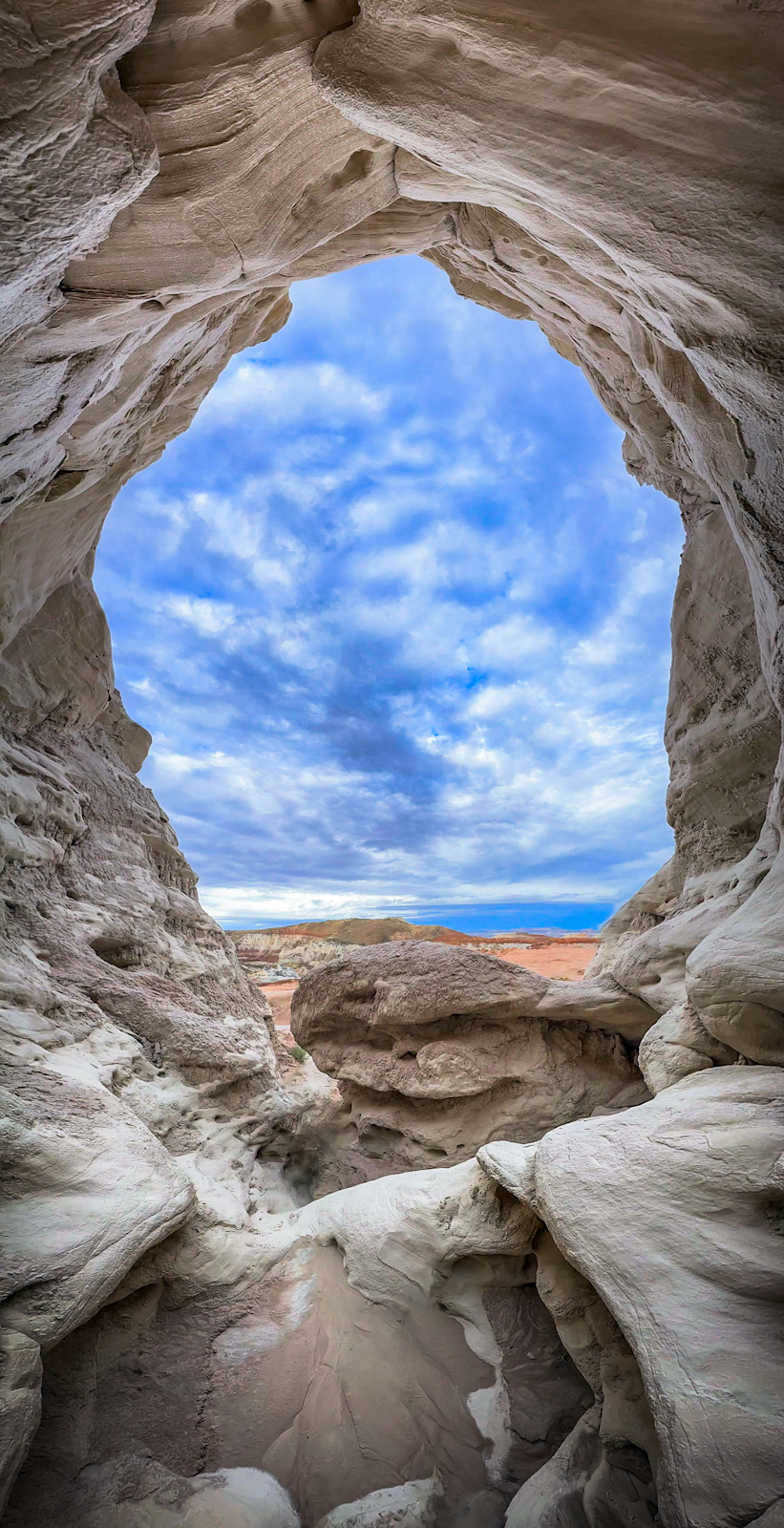
One of my first successful tests, 12 mm horizontal camera angle, iPhone, vertical panorama stitches (using the panorama mode) from my feet, to even beyond straight up and slightly back behind me… which radically opened new possibilities of perspectives
|


