fredmiranda.com
Login

Moderated by: Fred Miranda
  New fredmiranda.com Mobile Site
  New Feature: SMS Notification alert
  New Feature: Buy & Sell Watchlist
  

FM Forums | Sony Forum | Join Upload & Sell

1       2       3              5              end
  

Utility of dynamic range beyond a certain point


ilkka_nissila
Offline
• • • •
Upload & Sell: Off
p.6 #1 · Utility of dynamic range beyond a certain point


gdanmitchell wrote:
In reality, no sensor provides the Perfect Holy Grail Of Color, and when we include variations in lighting color (directly, reflections, and light coming through things like leaves) color is highly variable. I suppose that if you are working under color temperature controlled lighting all of the time you can minimize these issues, but otherwise…

Given all of those variables, in my experience you can get pretty much any sensor to look the way you want it too if you are proficient at post.

YMMV.


It may well be possible to make two images captured by two different cameras (with substantially different CFAs) look similar enough by adjusting one of the image by eyeballing each image and making corresponding adjustments to one of the images until a subjective match is satisfactory. This I do not deny. But you cannot make a machine or an algorithm which would automatically do this for an arbitrary scene without having the reference image of the same scene from both cameras available, across all conditions, because the images contain different weightings of the information in the spectrum of light of the original scene and this is simply mathematically impossible to have an automatic method which would do this for all images. I would argue that also a human, no matter how qualified and skillful, cannot take an image from one camera and adjust it to match the image produced by another camera without actually seeing the images from both cameras to base the adjustments on, in the general case.

I might make an image with my DJI drone and then ask you to reproduce how that image would have looked with your Canon, or my Nikon, and then we can compare the adjusted image to my Nikon Z8, for example. I could do this for different scenes (some in bright sunlight, others in blue skylight, and yet some in artificial light, say, fluorescent, LED, tungsten) do you really believe you can predict and make a fixed set of adjustments that will in all cases convert images from the DJI drone to look like the Nikon (or your Canon) using a preset that is identical for all scenes, and implement this preset without seeing the image made by the target camera in each scene? This is simply not even theoretically possible, let alone practical.

Now, why does this matter? If the philosophy of the photographer is to make art that subjectively looks like they want, they can perhaps take any camera and produce images that they like, by adjusting the results to their liking. That's fine, if the photographer has the time to do that. However, if the purpose is to reproduce colors of the natural world, without a subjective component, then different cameras produce different results, and your subjective view is irrelevant since different people will make different adjustments to produce something that they like or how they saw the scene, rather than how the scene objectively looked. If you are prepared to work the images to look the way you like, each image in turn, all is fine. However, I would argue that it would be better for documentary purposes to make cameras that objectively reproduce the spectrum of light in the scene without requiring editing but this is technically too difficult, and compromises have to be made to make the camera practical. I think the main issue with making this is that different people see things differently. Another problem is that resolution and signal-to-noise would be compromised. I recall reading that in the early color film days, there were implementations of color film with dozens of different spectral sensitivity dyes and while it worked, it was not practical for commercialization, so we ended up with just three dyes for image capture, though photographic inkjet printers can these days have a dozen dyes or so.


Jun 17, 2026 at 06:41 AM
ilkka_nissila
Offline
• • • •
Upload & Sell: Off
p.6 #2 · Utility of dynamic range beyond a certain point


ruthenium wrote:
There seems to be something contradictory in "You can choose to give the subject less exposure and by doing this ... you increase noise in the darker parts of the image due to increased photon shot noise."
Statistically, the shot noise increases as the square root of the signal. E.g., for a signal of 100 electrons, the shot noise is 10, and for a signal of 10000, the shot noise is 100.
The absolute value of the shot noise is not important (except in the highlights), because the (engineering or photographic) signal-to-noise ratio increases with more light despite the concomitant increase in
...Show more

If manufacturers were able to increase the full well capacity so dramatically that the highlights would be possible to give four times the exposure they can be with today's cameras at base ISO of 100, they would simply call ISO 25 the base ISO in that case, and the headroom in the highlights would be kept the same. This is likely how they define the ISO value of digital cameras internally for each manufacturer: how much light is needed to record a gray object so that the image has X stops between mid gray and saturation. This area hasn't seen improvements since Nikon made the D810 and D850 with base ISO of 64 (they seem to be of the opinion now that only the D850 really achieved true ISO 64) and Hasselblad and Fujifilm also now have ISO 64 sensors, if I recall correctly.

What the dual-gain-output technology does, as far as I know, is it records the sensor data with two different ADC circuitries with different gains and merges the data from those. It will reduce shadow noise, basically. If they were to have an increased FWC per area sensors, this would be seen as reduced base ISO in the specs. Otherwise the base ISO spec would be rather meaningless.


Jun 17, 2026 at 06:53 AM
Daran
Offline
• • •
Upload & Sell: Off
p.6 #3 · Utility of dynamic range beyond a certain point


ruthenium wrote:
Daran, while I believe you (that the differences are not practically relevant), I am confused by the Cobalt Image "Camera Sensor Color Accuracy Benchmarks" where Nikon D3 is the top scorer (93 in "Overall Hardware" and 89.70 in "Sensor Separation"). The topmost-ranked Sony is A1II (75 in "Overall Hardware" and 72.5 in "Sensor Separation").
Are these differences negated by "use appropriate color profiles" as you suggested? That is, the "the sensor’s potential for accurate profiling" (using the wording from Cobalt) is of no practical concern?

The following is a quote from Cobalt on the meaning of their measurements:
"These measurements describe the colour
...Show more
This is not about measuring absolute overall color precision, but similar to PDR this is about how precise (aka not noisy) a fairly small sensor spot is in terms of color. This can be different from what you learn from normal PDR for various reasons. E.g. on Bayer you only get one in four pixels sensitive to blue and most sensors are way less sensitive to blue (or red) than they are to green to begin with. Hence the color precision is more dependent on the blue channel and having a better sensitivity in that channel may matter for color noise, especially if you crop your images and are not particularly fond of digital NR.


Jun 17, 2026 at 07:17 AM
Daran
Offline
• • •
Upload & Sell: Off
p.6 #4 · Utility of dynamic range beyond a certain point


ilkka_nissila wrote:
It may well be possible to make two images captured by two different cameras (with substantially different CFAs) look similar enough by adjusting one of the image by eyeballing each image and making corresponding adjustments to one of the images until a subjective match is satisfactory. This I do not deny. But you cannot make a machine or an algorithm which would automatically do this for an arbitrary scene without having the reference image of the same scene from both cameras available, across all conditions, because the images contain different weightings of the information in the spectrum of light
...Show more
You are completely off the mark about this. The "machine or an algorithm which would automatically do this" is called color profiling. And it does work for arbitrary scenes, no manual action required at all.


Jun 17, 2026 at 07:31 AM
Daran
Offline
• • •
Upload & Sell: Off
p.6 #5 · Utility of dynamic range beyond a certain point


aCuria wrote:
We are still a long way off from what black and white film was capable of, which is about 15 stops

I don't think that is true. You generally need to be careful when comparing DR numbers, as there are multiple incompatible definitions. E.g. photographic DR is relative to a small image sample area spot, which has no universally accepted size. Or the digital engineering DR, which has a universal definition but tends to be much better for low resolution sensors and isn't applicable to film at all.


Jun 17, 2026 at 07:50 AM
ruthenium
Offline
• • • •
Upload & Sell: On
p.6 #6 · Utility of dynamic range beyond a certain point


ilkka_nissila wrote:
If manufacturers were able to increase the full well capacity so dramatically that the highlights would be possible to give four times the exposure they can be with today's cameras at base ISO of 100, they would simply call ISO 25 the base ISO in that case, and the headroom in the highlights would be kept the same. This is likely how they define the ISO value of digital cameras internally for each manufacturer: how much light is needed to record a gray object so that the image has X stops between mid gray and saturation. This area hasn't seen
...Show more

I agree with your reasoning. There are CIPA recommendation for ISO that are probably respected by the major Japanese camera companies.
Re: "Fujifilm also now have ISO 64 sensors, if I recall correctly" - if you mean the GFX100, then the base ISO is 80.
This is equivalent to full-frame ISO 50; that is, theoretically the GFX sensor can capture an extra stop of light vs that of a full-frame sensor at ISO 100. This assumes that the ISO is defined similarly.
The PDR for the GFX100 II is 12.55 at ISO 80 and that of the GFX100S II is 12.48 - the difference is likely not significant, as the two have the same sensor. The PDR for Sony A7RV is 11.69 at ISO 100. All these cameras use Sony sensors with the same pixel pitch. The difference in PDR is 0.86 - 0.79; this is close the the expected 1 stop.


Jun 17, 2026 at 07:55 AM
Jack Flesher
Online
• • • •
Upload & Sell: On
p.6 #7 · Utility of dynamic range beyond a certain point


I’d appreciate seeing a real world example of where properly-exposed images from a camera with 13 stops of DR makes a notably better image than one with only 12. Seriously, when cameras passed 10 stops of DR was when I started editing black back into most of images. Today for me, that’s a de-rigueur adjustment.


Jun 17, 2026 at 09:40 AM
snapsy
Online
• • • • • •
Upload & Sell: On
p.6 #8 · Utility of dynamic range beyond a certain point


Jack Flesher wrote:
I’d appreciate seeing a real world example of where properly-exposed images from a camera with 13 stops of DR makes a notably better image than one with only 12. Seriously, when cameras passed 10 stops of DR was when I started editing black back into most of images. Today for me, that’s a de-rigueur adjustment.


What's your definition of "properly-exposed"?


Jun 17, 2026 at 09:51 AM


Search in Used Dept. 

Jack Flesher
Online
• • • •
Upload & Sell: On
p.6 #9 · Utility of dynamic range beyond a certain point


snapsy wrote:
What's your definition of "properly-exposed"?


Fair question. Non-specular highlights not blown. And I consider the Sun or any other direct light source in the frame essentially a specular highlight.


Jun 17, 2026 at 09:54 AM
snapsy
Online
• • • • • •
Upload & Sell: On
p.6 #10 · Utility of dynamic range beyond a certain point


Jack Flesher wrote:
Fair question. Non-specular highlights not blown. And I consider the Sun or any other direct light source in the frame essentially a specular highlight.


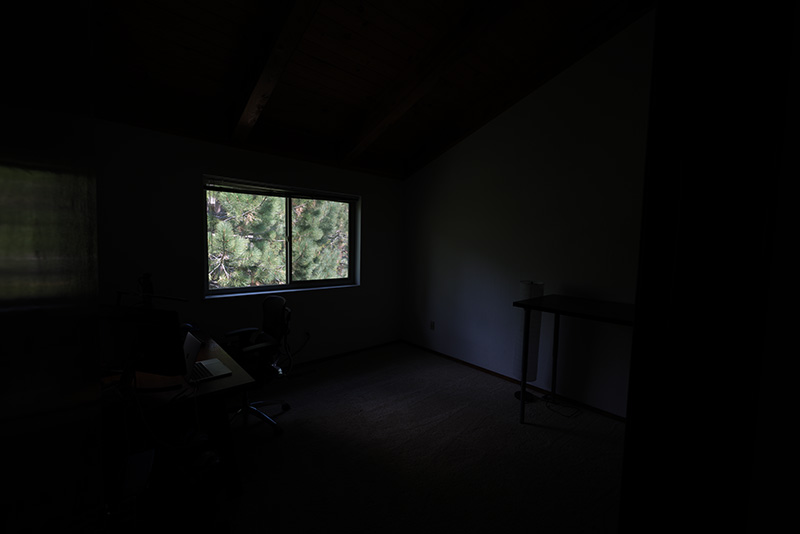
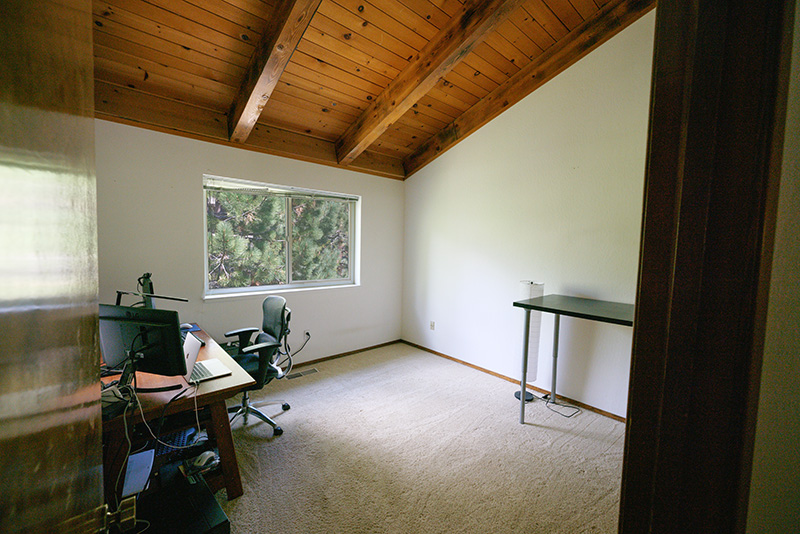
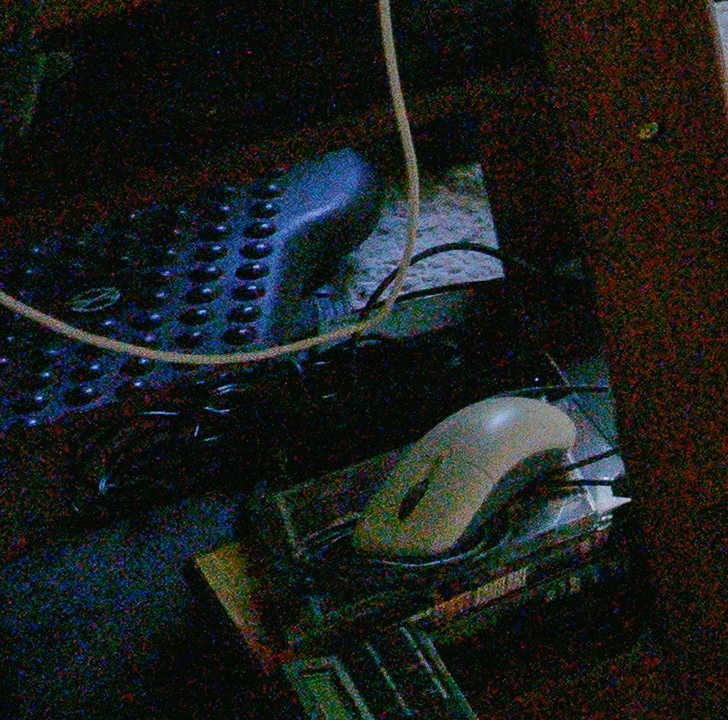
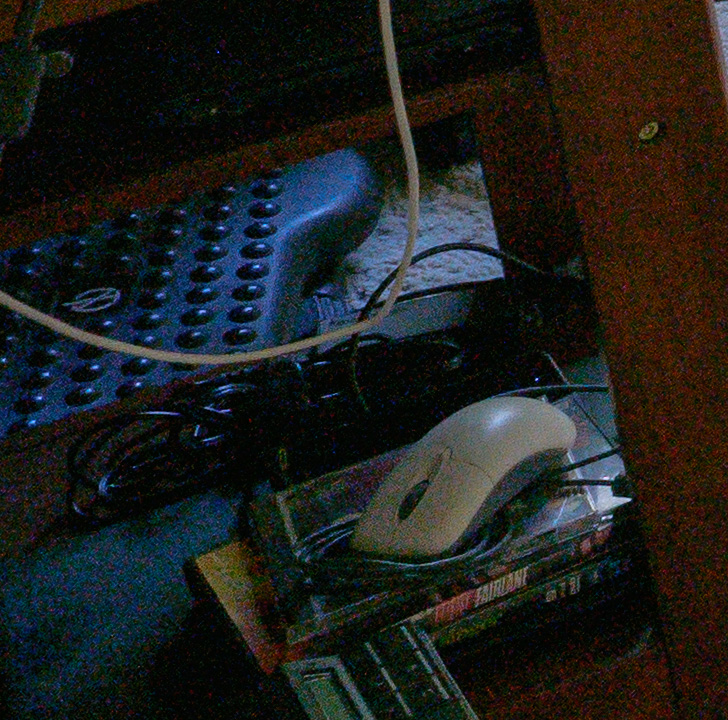


Here's an image from my S1R. The highlights in the window are metered just at raw clipping (ISO 100 f/8 1/20). I have a second exposure that's 1EV brighter (ISO 100 f/8 1/10). These are without noise reduction.

Here are four images in the demonstration:

Image #1 - Full scene (downsampled) unprocessed, using 1/20 exposure

Image #2 - Full scene (downsampled), processed, using 1/20 exposure

Image #3 - 100% crop of processed shadows, using 1/20 exposure

Image #4 - 100% crop of processed shadows using 1/10 exposure, simulating a camera with +1EV greater DR


Full Scene (unprocessed)


Full Scene (processed)


100% crop processed shadows (base exposure)


100% crop processed shadows (base exposure +1EV)


100% crop processed shadows (animation)


Jun 17, 2026 at 11:18 AM
Steve Spencer
Offline
• • • • • • •
Upload & Sell: On
p.6 #11 · Utility of dynamic range beyond a certain point


snapsy wrote:
Here's an image from my S1R. The highlights in the window are metered just at raw clipping (ISO 100 f/8 1/20). I have a second exposure that's 1EV brighter (ISO 100 f/8 1/10). These are without noise reduction.

Here are four images in the demonstration:

Image #1 - Full scene (downsampled) unprocessed, using 1/20 exposure

Image #2 - Full scene (downsampled), processed, using 1/20 exposure

Image #3 - 100% crop of processed shadows, using 1/20 exposure

Image #4 - 100% crop of processed shadows using 1/10 exposure, simulating a camera with +1EV greater DR


Thanks for the example. It is helpful, but as an example it demonstrates, to me anyway, just how rarely I would need that extra stop of DR. This is a pretty extreme case and although I like the lower noise at 1/10, I am pretty sure I would be happy blowing out the window a bit with that slower shutter speed. I find the perfectly exposed window with the shadows raised that much to look unnatural like a framed picture rather than a window. Personally, I would rather see the window with at least some blown highlights. So, if I was taking this shot I would would have bracketed exposure and I could have gotten the low shadow noise of your 1/10 of second exposure and I could have gotten a window I think I would prefer and done all of that with one stop less DR and that is even in this extreme example.

I am not saying that an extra stop of DR wouldn't be useful in at least some situations, but this examples suggests to me that it would almost never matter for my shooting.


Jun 17, 2026 at 11:46 AM
Jack Flesher
Online
• • • •
Upload & Sell: On
p.6 #12 · Utility of dynamic range beyond a certain point


Steve Spencer wrote:
Thanks for the example. It is helpful, but as an example it demonstrates, to me anyway, just how rarely I would need that extra stop of DR. This is a pretty extreme case and although I like the lower noise at 1/10, I am pretty sure I would be happy blowing out the window a bit with that slower shutter speed. I find the perfectly exposed window with the shadows raised that much to look unnatural like a framed picture rather than a window. Personally, I would rather see the window with at least some blown highlights. So, if
...Show more

I agree with everything Steve said. This particular extreme example sort of proves my point that an extra stop of DR doesn't really make much difference in a real world image. I too would choose bump the window a stop for believability and I'd be more than happy with the final result in that for the most part, totally irrelevant shadow.


Jun 17, 2026 at 12:19 PM
snapsy
Online
• • • • • •
Upload & Sell: On
p.6 #13 · Utility of dynamic range beyond a certain point


Steve Spencer wrote:
Thanks for the example. It is helpful, but as an example it demonstrates, to me anyway, just how rarely I would need that extra stop of DR. This is a pretty extreme case and although I like the lower noise at 1/10, I am pretty sure I would be happy blowing out the window a bit with that slower shutter speed. I find the perfectly exposed window with the shadows raised that much to look unnatural like a framed picture rather than a window. Personally, I would rather see the window with at least some blown highlights. So, if
...Show more

Thanks Steve. Certainly everyone has their own creative preferences when rendering reality in images - mine is to avoid blowing out the window, since that matches my human perception of the actual scene. I do disagree about the shadows being over-raised - they're actually quite dark under the desk even after processing. As for other elements looking natural or unnatural - all those are a function of how I processed the image, not a function of capturing this image as a single exposure vs bracket. The only difference the bracketed exposure would offer is better noise performance - both the single-exposure and bracketed exposure can be matched for rendered tones, provided enough time and effort (which I don't have at this very moment).

I actually did bracket that scene, and did have the time to at least demonstrate the obvious noise advantage for the shadow area of the treatment (below animation). Talk of bracketing is often introduced in these types of "do we really need x DR" discussions - it's always a valid point, but so are the instances where bracketing might not be available for a given shooting situation.


100% crop processed shadows (animation, with bracketing)


Jun 17, 2026 at 12:44 PM
snapsy
Online
• • • • • •
Upload & Sell: On
p.6 #14 · Utility of dynamic range beyond a certain point


chiron wrote:
---------------------------------------------

---------------------------------------------

Nice examples and demonstration and interesting comments.

The problem I have with the "Full Scene Processed" image is that there is not enough difference between the apparent light outside the room and the apparent light inside the room--there should be more of a difference between the apparent light levels.

I am not sure that blown highlights are really evidence of what is natural--they be more what we are used to seeing in photographs. They are rarely what we actually see with our eyes. But our eyes do sensitively perceive differences in light levels.

I do think the Full Scene image needs to suggest
...Show more

Can you expand on what you mean by "not enough difference between the apparent light outside the room and the apparent light inside the room"?


Jun 17, 2026 at 12:47 PM
chiron
Online
• • • • •
Upload & Sell: On
p.6 #15 · Utility of dynamic range beyond a certain point


snapsy wrote:
Here's an image from my S1R. The highlights in the window are metered just at raw clipping (ISO 100 f/8 1/20). I have a second exposure that's 1EV brighter (ISO 100 f/8 1/10). These are without noise reduction.

Here are four images in the demonstration:

Image #1 - Full scene (downsampled) unprocessed, using 1/20 exposure

Image #2 - Full scene (downsampled), processed, using 1/20 exposure

Image #3 - 100% crop of processed shadows, using 1/20 exposure

Image #4 - 100% crop of processed shadows using 1/10 exposure, simulating a camera with +1EV greater DR


---------------------------------------------

Steve Spencer wrote:
Thanks for the example. It is helpful, but as an example it demonstrates, to me anyway, just how rarely I would need that extra stop of DR. This is a pretty extreme case and although I like the lower noise at 1/10, I am pretty sure I would be happy blowing out the window a bit with that slower shutter speed. I find the perfectly exposed window with the shadows raised that much to look unnatural like a framed picture rather than a window. Personally, I would rather see the window with at least some blown highlights. So, if
...Show more

---------------------------------------------

Jack Flesher wrote:
I agree with everything Steve said. This particular extreme example sort of proves my point that an extra stop of DR doesn't really make much difference in a real world image. I too would choose bump the window a stop for believability and I'd be more than happy with the final result in that for the most part, totally irrelevant shadow.


---------------------------------------------

snapsy wrote:
Thanks Steve. Certainly everyone has their own creative preferences when rendering reality in images - mine is to avoid blowing out the window, since that matches my human perception of the actual scene. I do disagree about the shadows being over-raised - they're actually quite dark under the desk even after processing. As for other elements looking natural or unnatural - all those are a function of how I processed the image, not a function of capturing this image as a single exposure vs bracket. The only difference the bracketed exposure would offer is better noise performance - both the
...Show more


Nice examples and demonstration and interesting comments.

The problem I have with the "Full Scene Processed" image is that there is not enough difference between the apparent light outside the room and the apparent light inside the room--there should be more of a difference between the apparent light levels.

I am not sure that blown highlights are really evidence of what is natural--they be more what we are used to seeing in photographs. They are rarely what we actually see with our eyes. But our eyes do sensitively perceive differences in light levels.

I do think the Full Scene image needs to suggest a greater difference between the light inside and outside the room, but without going all the way to blown highlights.


Jun 17, 2026 at 12:47 PM
chiron
Online
• • • • •
Upload & Sell: On
p.6 #16 · Utility of dynamic range beyond a certain point


snapsy wrote:
Can you expand on what you mean by "not enough difference between the apparent light outside the room and the apparent light inside the room"?


When I look at the image, it does not appear that it is brighter outside than inside. If I am in a room on a sunny day and I look toward a window, my eyes register brightness greater than what is in the room. In the Full Scene Processed image, it appears as though the exposure value for the interior of the room and for outside the room would be the same, which of course is not the case. My preferred way of handiling this would be to have the view through the window look maybe a stop or two overexposed so that it reads as brighter to a viewer. Or have the room be a stop or two underexposed, if the view through the window and and the relative dimness of the room is of interest.


Jun 17, 2026 at 12:54 PM
1       2       3              5              end


FM Forums | Sony Forum | Join Upload & Sell

1       2       3              5              end


Welcome back
Log in to your account