p.11 #1 · Utility of dynamic range beyond a certain point
Jack Flesher wrote:
Snapsy: "Good" images are a matter of opinion. The increase in DR in the example provided is a demonstrated fact.
On this we disagree. To my eyes in this example, the “increase” shown was irrelevant.
So you do agree with Snapsy. As you apparently agree that the example demonstrates the fact. You also think the increase is irrelevant, but snapsy did not offer an opinion on whether it is relevant for the image, only that it is real.
p.11 #2 · Utility of dynamic range beyond a certain point
Daran wrote:
So you do agree with Snapsy. As you apparently agree that the example demonstrates the fact. You also think the increase is irrelevant, but snapsy did not offer an opinion on whether it is relevant for the image, only that it is real.
Let me be clearer. In the example you posted, I felt the added detail in the lowest shadow was all but useless. Visible yes, useful to that image, no. Did your image prove your point? Yes -- but at the same time it proved mine too
I never said that more DR was a bad thing. What I said was that for most photographers and most scenes, we already have more DR than needed to process out to a usable image in the last 2 or 3 generations of cameras; and especially so when that output is an 8-bit sRGB file for web use. And I still stand by that comment.
Moreover, if one does need to capture several extra stops as per an HDR blend, then gaining 1 more in a new camera isn't likely to solve that problem anyway. When we have sensors that can capture 20 stops, perhaps that will satisfy those of you wanting every stop of DR they can glean.
p.11 #3 · Utility of dynamic range beyond a certain point
chiron wrote:
Can you link to some examples of HDR images that you think have been well done?
Look at images taken within churches, in which the photographer wants well exposed glas windows as well as noise free structures and artefacts within the church. I can use every bit of dynamic range I can get when shooting within gothic churches on trips around Europe.
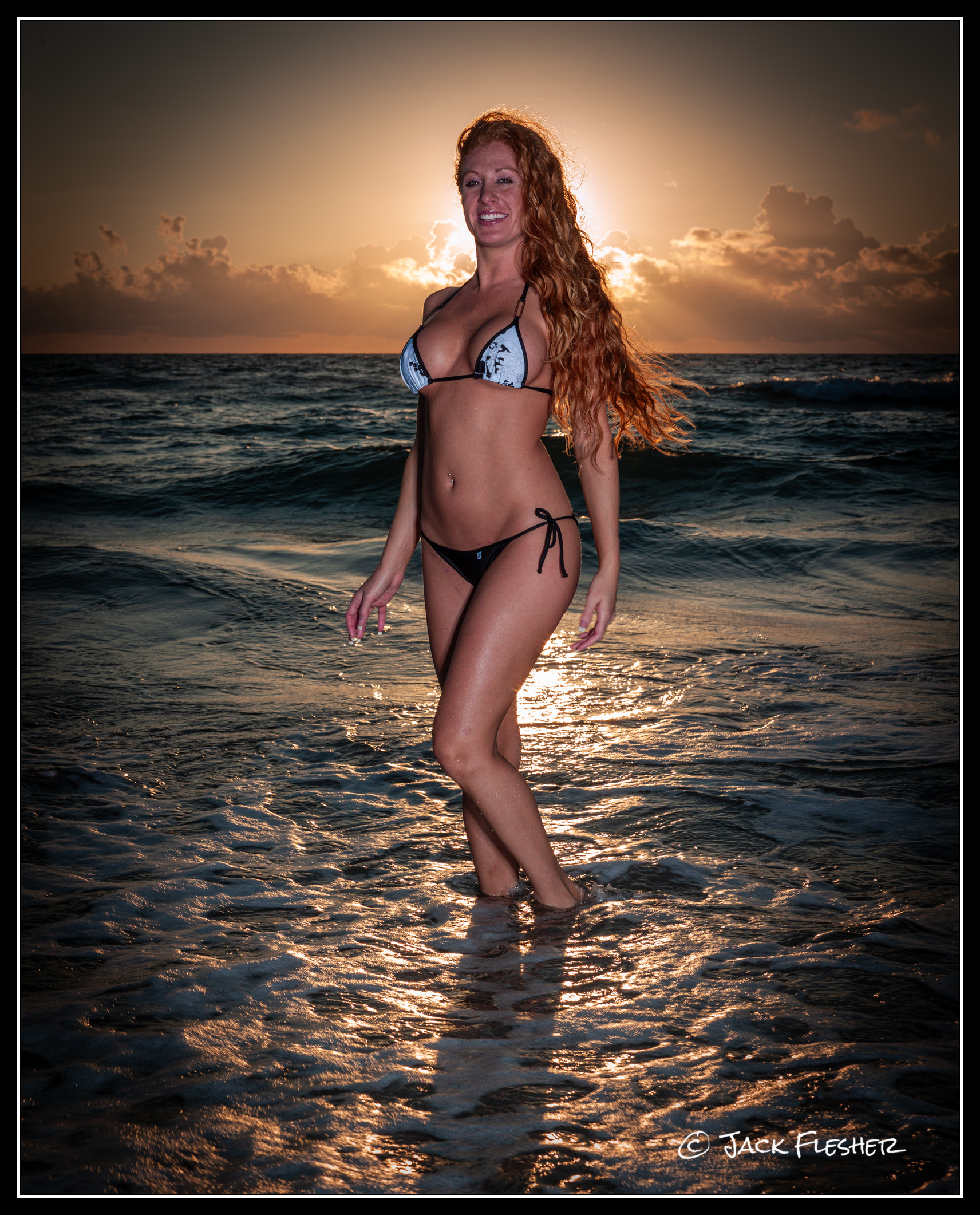
I think he was refering to an actuall well composed interesting subject photo not look at my mouse under the desk, but didnt want to blow out the window 🤨how about a sun backlit head shot of a pretty model. 😊
p.11 #5 · Utility of dynamic range beyond a certain point
A74me wrote:
🤨how about a sun backlit head shot of a pretty model. 😊
Not quite what you asked for, and not really an answer to this thread but...
This was taken in 2008 with a PhaseOne P45+ back. At the time it was considered state of the art for DR and IIRC it just fell short of 12 stops. And FTR nothing in this image is fully blown or clipped.
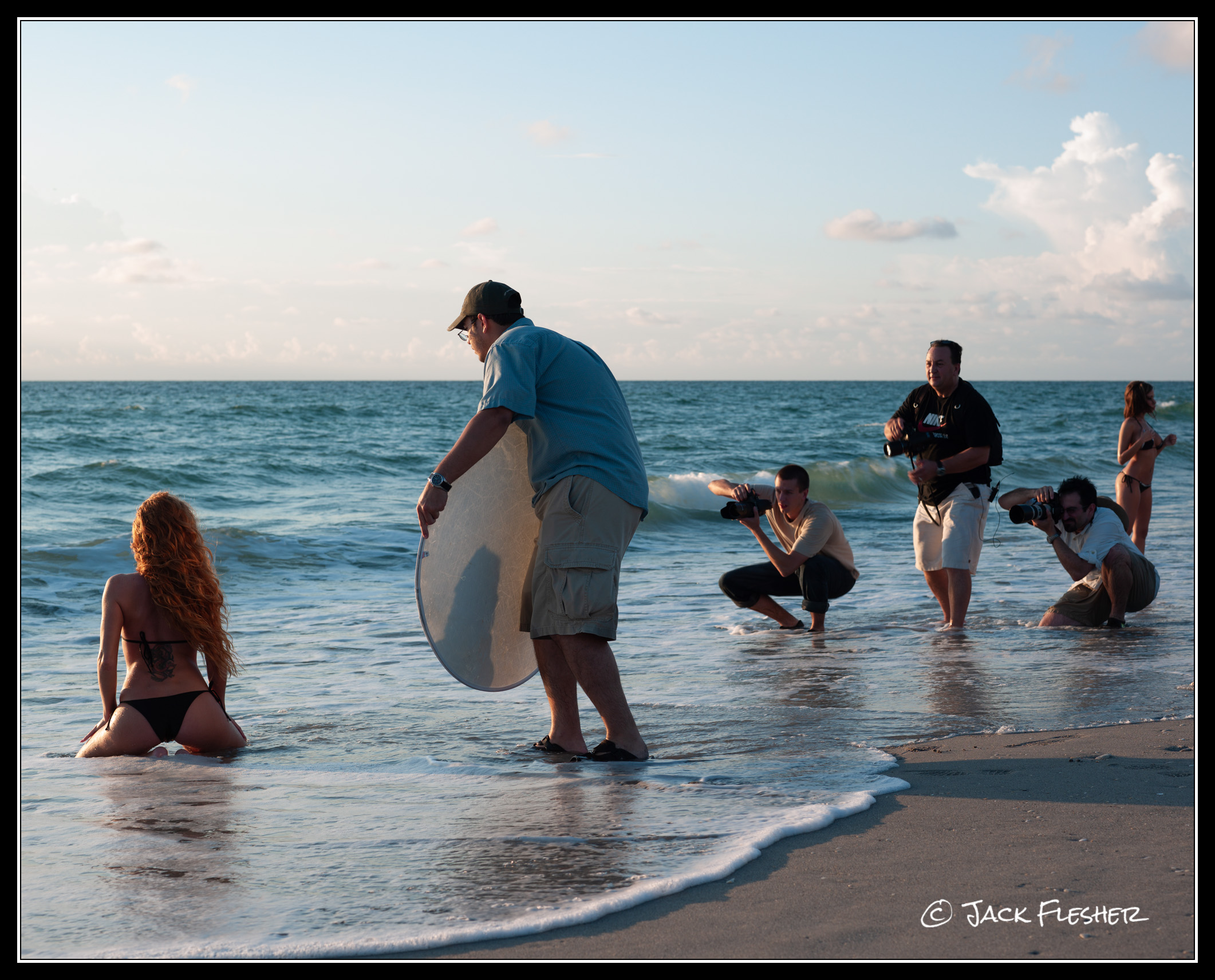
The second pic shows how we did it in a single capture back then And 3 more stops of DR wouldn’t have made enough of a difference to abandon the reflector. 5 or 6 might have though.
PS: That's Guy Mancuso in the white shorts. A few of you from this forum may have known him as he was a Sony guy. (RIP buddy!)
p.11 #6 · Utility of dynamic range beyond a certain point
Jack Flesher wrote:
This was taken in 2008 with a PhaseOne P45+ back. At the time it was considered state of the art for DR and IIRC it just fell short of 12 stops.
The 12 stops claim was just the usual marketing blurb. Only the newer CMOS medium format sensors achieved 12+ stops
Photonstophotos has test results for the Hasselblad H4D-50, which had a slightly updated version of the Kodak medium format CCD that was used in the P45+ and it comes out at 9.7 stops of PDR at ISO 50. The P45+ should have slightly less, around 9.2 to 9.5 stops probably. About 2/3 of a stop more DR than contemporary CMOS DSLRs like the D700 or 5D II.
Most current FF cameras have about 2 stops more DR at base ISO, the A7R VI about 3 Stops.
p.11 #7 · Utility of dynamic range beyond a certain point
Unless one limits himself to shooting in cloudy days or similar close to monotone lighting situations, better dynamic range can always benefit him. In fact, very often I come across situations where a higher dynamic range hugely benefits me. 1 stop extra dynamic range in A7r vi is a limited improvement. I need 4-6 stops improvement so that I don't have to do exposure bracketing in many situations that I currently have to do. Unfortunately, bracketing has its problems and limitations and most often cannot be used.
p.11 #8 · Utility of dynamic range beyond a certain point
raminolta wrote:
Unless one limits himself to shooting in cloudy days or similar close to monotone lighting situations, better dynamic range can always benefit…
But…
… virtually any current high quality camera has plenty of DR to go well beyond shooting only on “ cloudy days or similar close to monotone lighting situations.”
The increasing DR capability of modern cameras is welcomed and useful. But that’s not the issue. Here it is the marginal differences among cameras and how they play out in real world photography. that are the question.
If some camera offers me an extra half-stop of DR and it is time to buy a new camera, then why not? But if my current camera is, say, a highDR camera from a few years back and a new camera offers an additional half-stop of DR… the difference is too small (against the backdrop of already excellent DR) to make an upgrade worthwhile, and it would virtually never make a meaningful difference to photographs.