I had the Valoi copy stand setup and sold it because it just didn't fit my workflow enough. I thought I would buy a dedicated scanner, but the market for those is trash, so I'm going to give the Easy 120 Universal Kit setup a try. I'm hoping I can make this work since I'll be shooting a ton more film.
I've been looking into getting something for film scanning since I've just recently jumped into film. I'd like something that works for 35 and 120 film (645, 6x6, 6x9). I've also been looking at the Blackscale Lab Halo/Carrier.
I'm curious if anyone has tried the Blackscale and or have any thoughts on it compared to the Easy120 Universal.
mr.mbp wrote:
Does this get the 120 film flat enough? I know that was a big critique that people had for the Valoi Easy 120.
Wondering if anyone can share their experience scanning medium format with one of these versus an Epson.
I have HoloAdvance for 135 and 120 formats. Do not recommend it. The whole thing is very cheaply made and not sturdy. 135 module was not adjusted at all, I just can’t push film through the slot, needed to adjust myself. The principle of adjustable slot for holding film flat is recipe for scratches. And worst part, for 120 format it scratches film even with relaxed slot height that doesn’t hold film flat. I also have CoolScan 8000 with 3-rd party magnetic holder and the results are far superior from coolscan than from Holo. But scanning with CS8000 takes more time than with Holo. At the end I used custom holder from coolscan 8000 with Holo, so film would perfectly flat and scratch-free. But that means that I need to dismantle whole thing for each frame and then assemble it again and find focus every time. And then if I breathe during the shot, it would blur it, so I need to be extra careful and wait several seconds for the whole setup to stabilize and pray not to move the remote during capture. Coolscan is much slower, but much more relaxed experience and I generally prefer results from CS.
I'm using Plustek film holders in various sizes on a Cinestill CS-LITE light. It's a very cheap but good system. The feed systems only really work efficiently with uncut roll film from what I can see and unless you're shooting your own and then scanning, it's not all that common to have uncut film in the wide world out there. Geared head on a copy stand because getting everything level is really really important. Add 60 megapixels and an excellent macro and the results are really impressive. Stitching larger film sizes like 4X5 can be quite a viewing experience!
Currently using Negative Lab Pro but next film project I get into the studio I'm going to try the new Capture One tools and run a comparison.
As an old darkroom rat, I will note negative and positive enlarger carriers work just fine for camera scanning film. Skip the ones for 35mm specific enlargers, and look for carriers for medium format enlargers, or better yet, carriers for 4x. The weight of the enlarger head typically holds these closed, but a piece of scotch tape does the trick for scanning purposes.
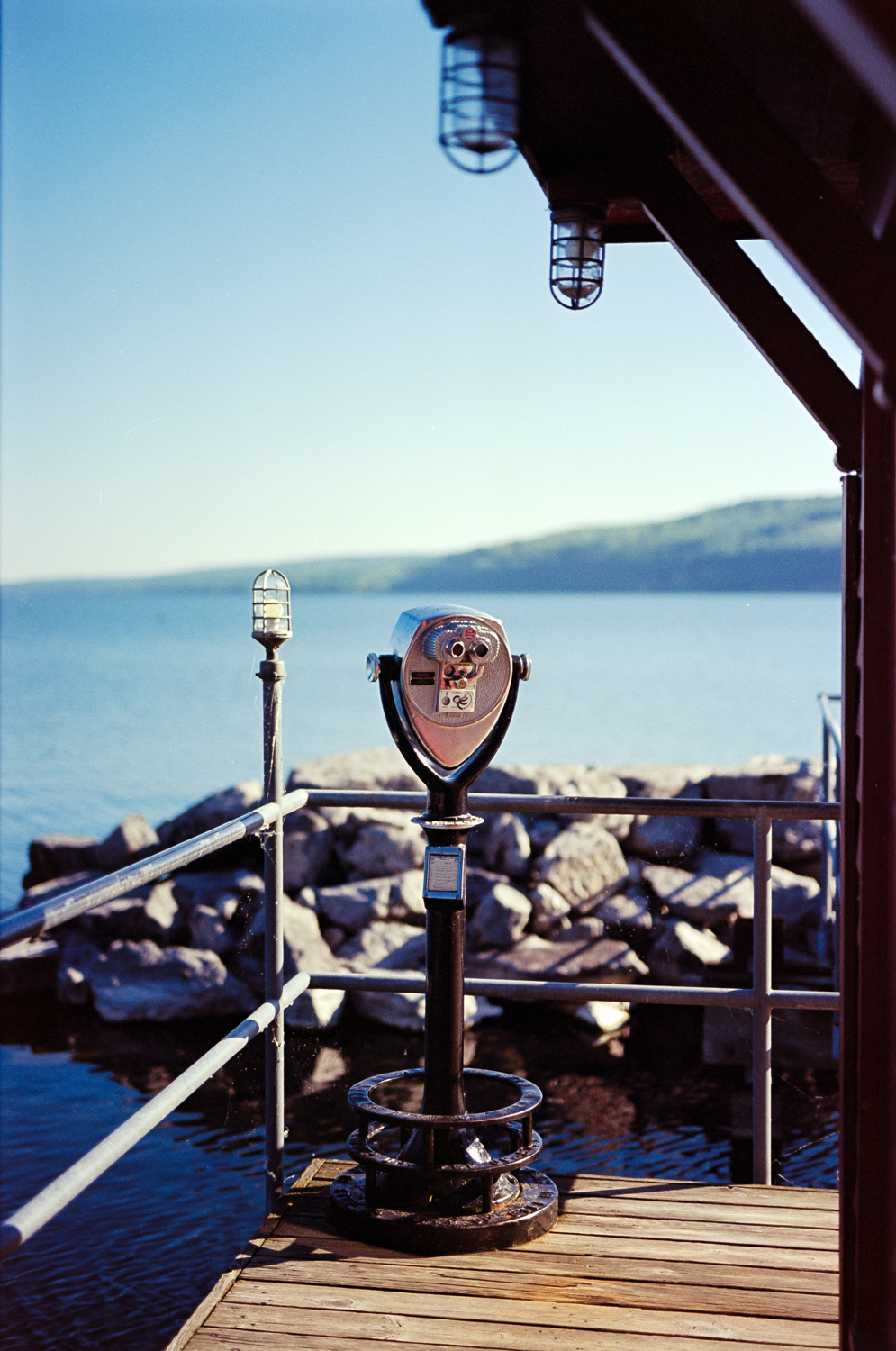
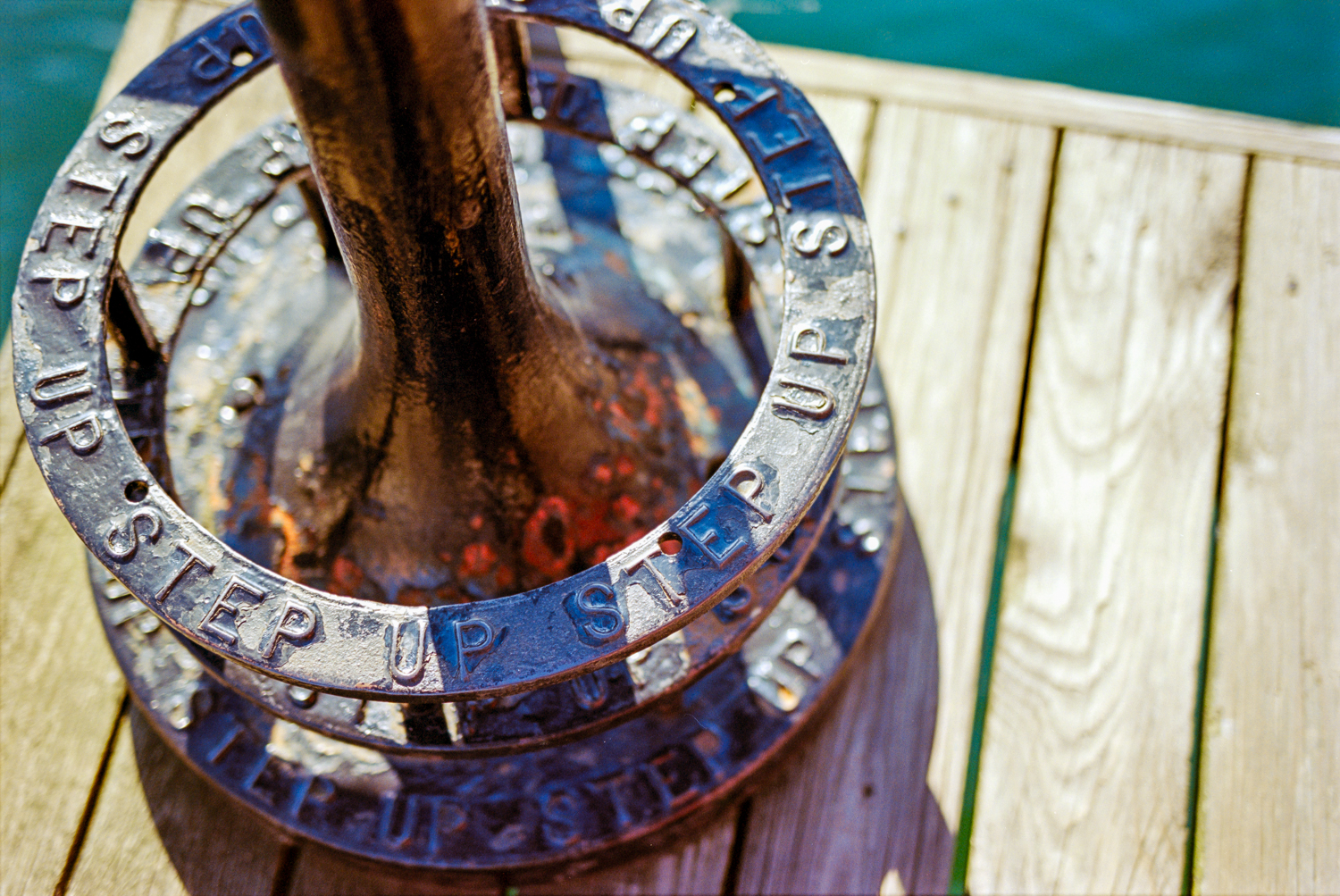
These were scanned using the Easy35 V2. I've discovered that the recommendation for giving +2/3 stop of exposure during scanning is not the best choice with the new version. Or at least the one I have. The new light is brighter than the first version and that causes some wrap around over exposure along the edge of the frames. That defeats the main reason for buying the new version - more even illumination. I may even lower the exp. comp a 1/3 stop next roll and see if that is better. Shot at Seneca Lake, NY.
F6, Sigma 50m f/1.4 Art, Ektar (expired) rated at 80, Bellini C-41 chems via easy35 V2 using Nikon Z7 II at ISO 64 and Nikkor 105mm 2.8G at f/11
I’ve been using the easy35 for a while and recently got the easy120 too as my previous home-built setup (basically the same idea with a bunch of stacked 86mm tubes) was vignetting on 6x7.
Very happy with both so far. I don’t experience any issues with film flatness but I also get almost perfectly flat negatives from my lab, which makes things easier.
I’m always surprised how many are using copy stands yet worry about film flatness in the carrier. The main source of error in those setups is the alignment of the camera - even if that’s like 0.3° off will have a bigger impact than the carrier - and that’s what setups like the easy35/120 solve.
Also no stray light on the negative, which can be an issue with copy stand setups depending on ambient light level.
I have the Blackscale Labs 135. Has anyone also tried that one and how did it compare with this Valoi 35? I waffled, considered buy the Valoi. No complaints with the BL135, but I don't know what I'm doing... So I wouldn't know if I made a mistake. Use a Z8 with the Z 105 MC macro.
Thank you.
@1bwana1 please don't take it the wrong way, but the scan you shared is pretty bad. Even at the web/postmark size one can tell that the grain structure was lost and the corners are gone. I suspect the issue is the lens. You need a true 1:1 macro with a flat focus field.
Below is a copule of a 5000px wide scans from a 60mp camera with the Sigma 105mm f/2.8 macro art, for reference.
1. Ilford HP5+ 400
2. Gold 200
The FM software hijacks the links to show downsampled previews, but you can right-click and download the full-sized images for further inspection. Pay attention to grain structure, how crisp it can be.
old-gregg wrote:
@1bwana1@ please don't take it the wrong way, but the scan you shared is pretty bad. Even at the web/postmark size one can tell that the grain structure was lost and the corners are gone. I suspect the issue is the lens. You need a true 1:1 macro with a flat focus field.
Below is a copule of a 5000px wide scans from a 60mp camera with the Sigma 105mm f/2.8 macro art, for reference.
1. Ilford HP5+ 400
2. Gold 200
The FM software hijacks the links to show downsampled previews, but you can right-click and download the full-sized images for further inspection. Pay attention to grain structure, how crisp it can be.
Thank you for taking the time to comment. I have already switched to using the exact Sigma 105mm macro lens you recommended. Much improved. I will upload a sample as soon as internet is restored at my house. It has been down for a week. Italy can be so third World at times. Frustrating to live here.
I am still not fully happy with my film workflow. I think I am getting too much grain in many of my images. Not sure if this is the result of poor digital processing, or happening in the film development stage. Does the chemistry used have an important impact on grain. I have been using a two part MonoBath Chemistry produced locally by ARS-Amago who made made Lab-Box, on Ilford HP5+-400.
Chemistry can have a significant effect on grain. Monobath I think would tend to show more grain, might also not give as much detail in shadows and highlights as a consequence of ease of use, I use xtol replenished and grain is quite fine pretty much as best as it can be with whatever film you’re using. Try a good traditional development process see if you can tell a difference.
1bwana1 wrote:
I am still not fully happy with my film workflow. I think I am getting too much grain in many of my images. Not sure if this is the result of poor digital processing, or happening in the film development stage. Does the chemistry used have an important impact on grain. I have been using a two part MonoBath Chemistry produced locally by ARS-Amago who made made Lab-Box, on Ilford HP5+-400.
Never mucked with monobath with traditional B+W. Even with the traditional 3-step process--Develop-Stop-Fix--only two chemicals are required, developer and non-hardening fixer. Water is fine for the stop.
If you want to go back to basic, tried and true, then start with either D-76 (Kodak) or ID-11 (Ilford). I'm a fan of Xtol for full speed, and finest grain. However, while an excellent emulsion, HP5+ is not noted for its fine grain.
1bwana1 wrote:
I am still not fully happy with my film workflow. I think I am getting too much grain in many of my images. Not sure if this is the result of poor digital processing, or happening in the film development stage. Does the chemistry used have an important impact on grain. I have been using a two part MonoBath Chemistry produced locally by ARS-Amago who made made Lab-Box, on Ilford HP5+-400.
Grain becomes more apparent with under exposure too. Even if your scan looks bright enough. So you might try downrating your film or just giving the shadows an extra stop of light in mixed lighting scenes.
But yes, developer and heat/time (the process itself) can also bring out grain. With color negative film (C41) through a lab you might try another lab.
With home processed black and white you can try out fine grain developers. With monobath you lose a bit of control on what your development time actually is since the fixer is interacting with it too. So just separating out D76 and fixer into two distinct stages might help get your true film speed back and reduce grain. I like the Xtol type developers when I want maximum film speed and smallest grain. It's also the cheapest and environmentally cleanest developer if you shoot a lot.
Something I've been pondering about the Easy35 film scanning system, which I own and really enjoy, is that we can't expect the highest level of sensor-to-film parallelism. In macro photography, especially at 1:1 magnification and beyond, the depth of field becomes so shallow that even a very slight tilt introduced by the Easy35 can be detected.
This is one of the main reasons I usually stop my lens down to f/11. It's not so much to maximize corner sharpness, but rather to provide a little extra depth of field to compensate for the tiny amount of tilt that's difficult to avoid with a system like this, particularly at its price point.