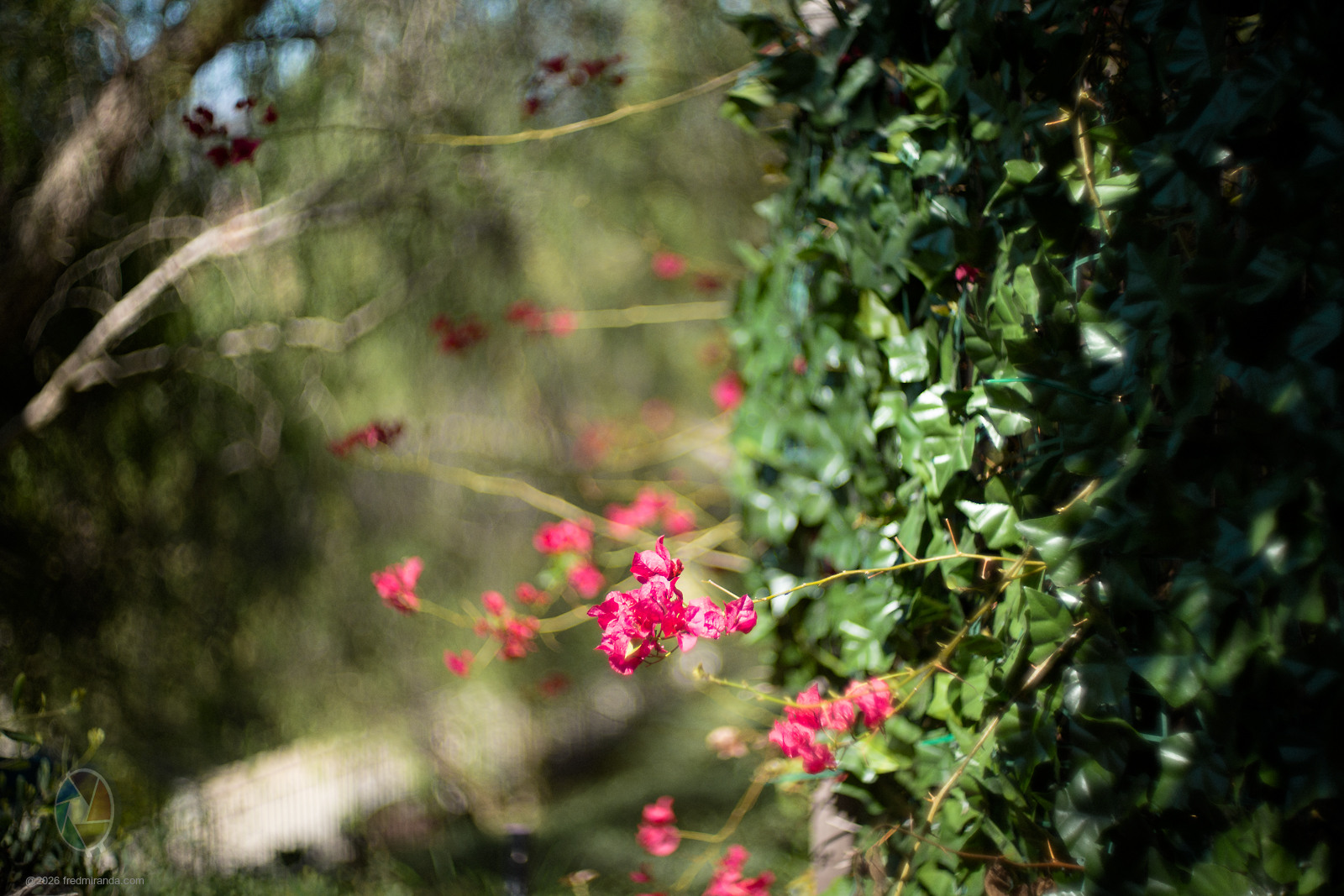
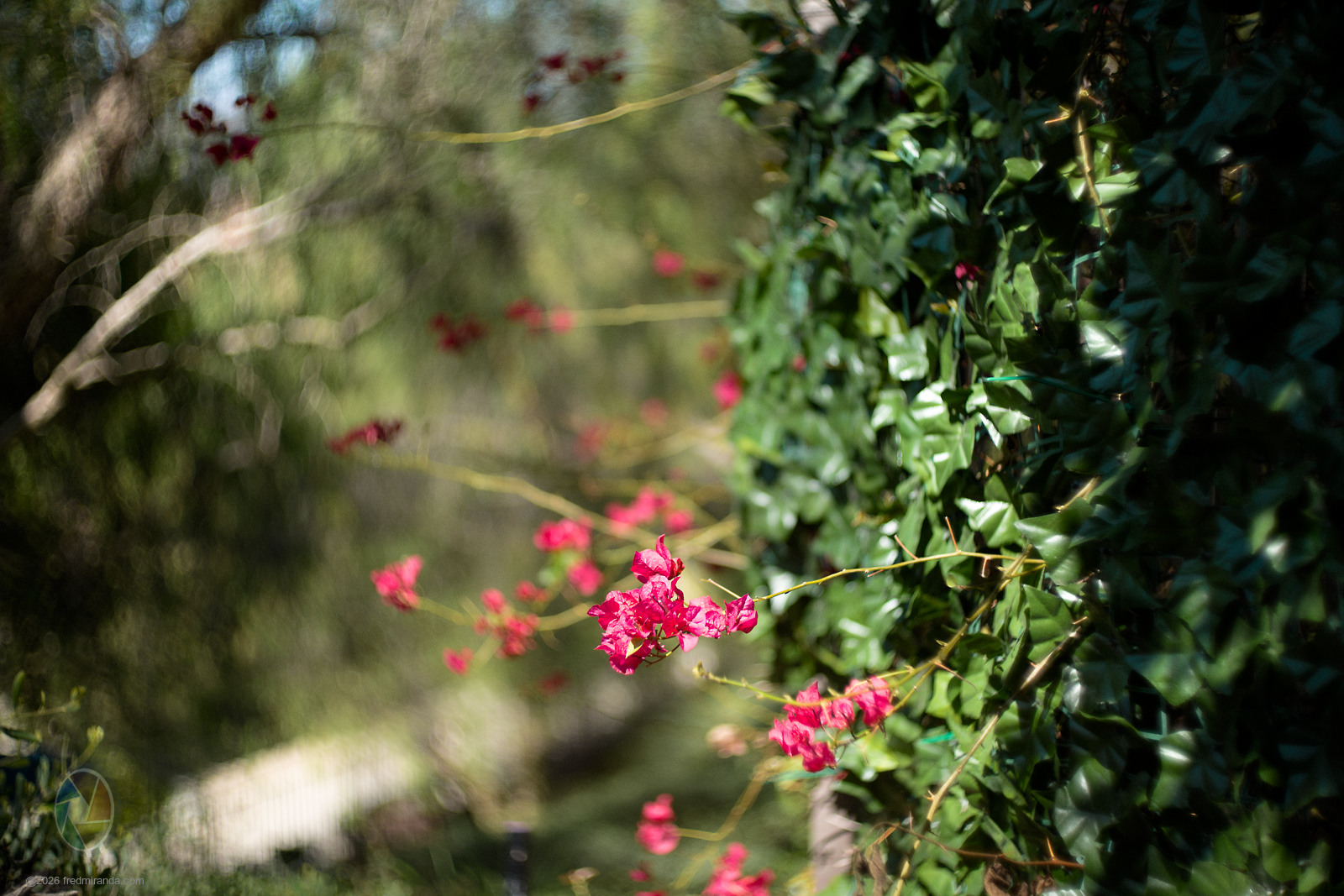
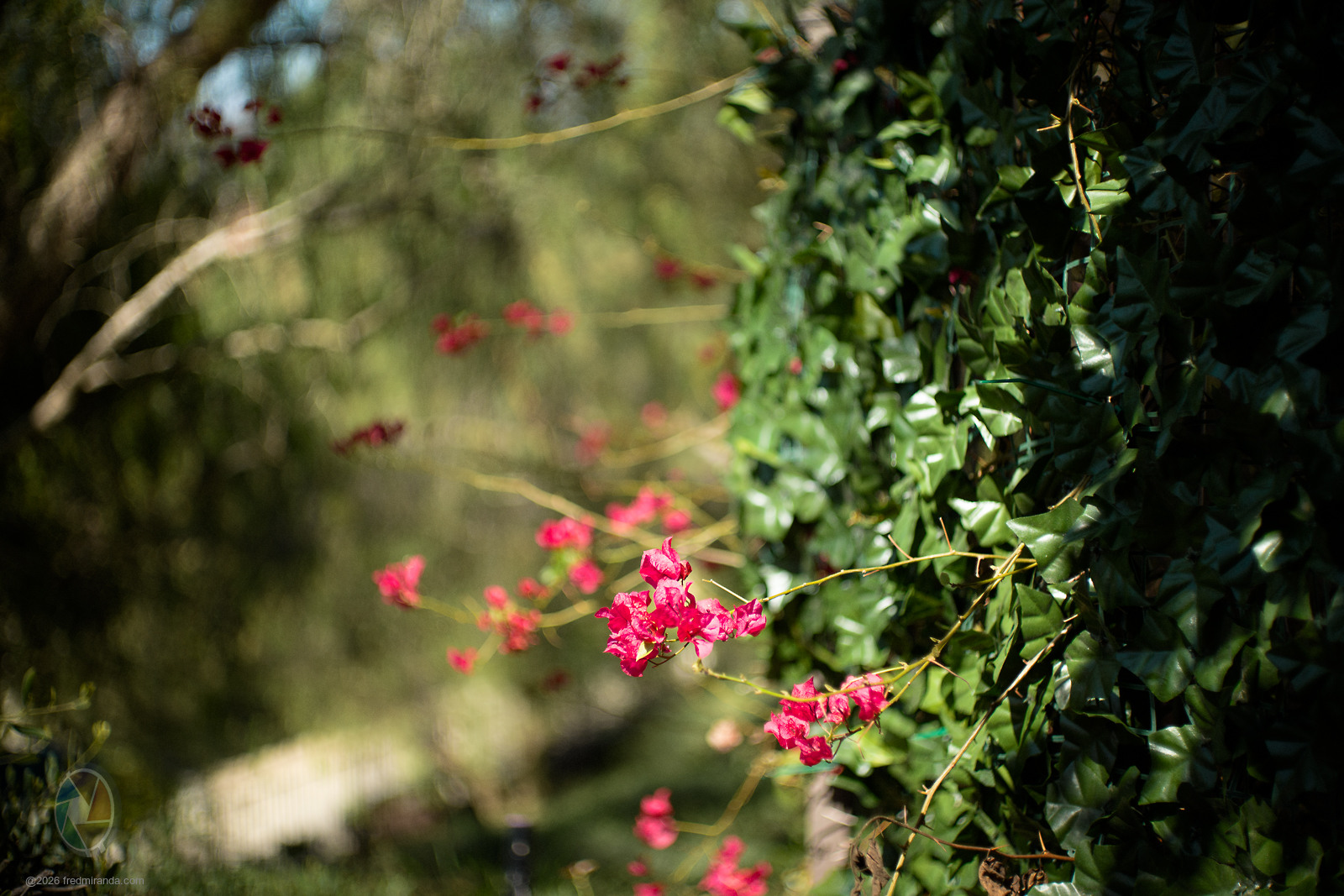
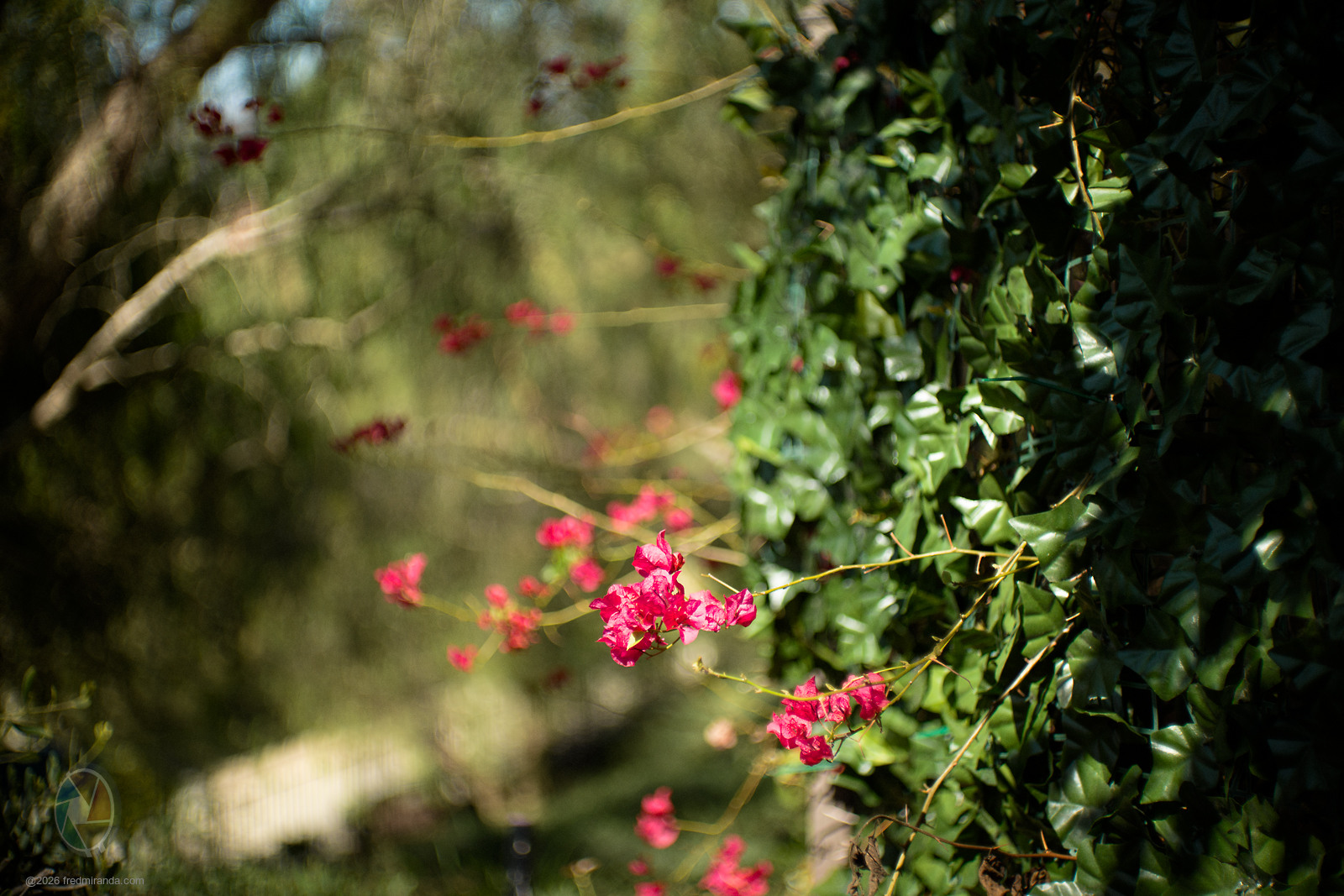
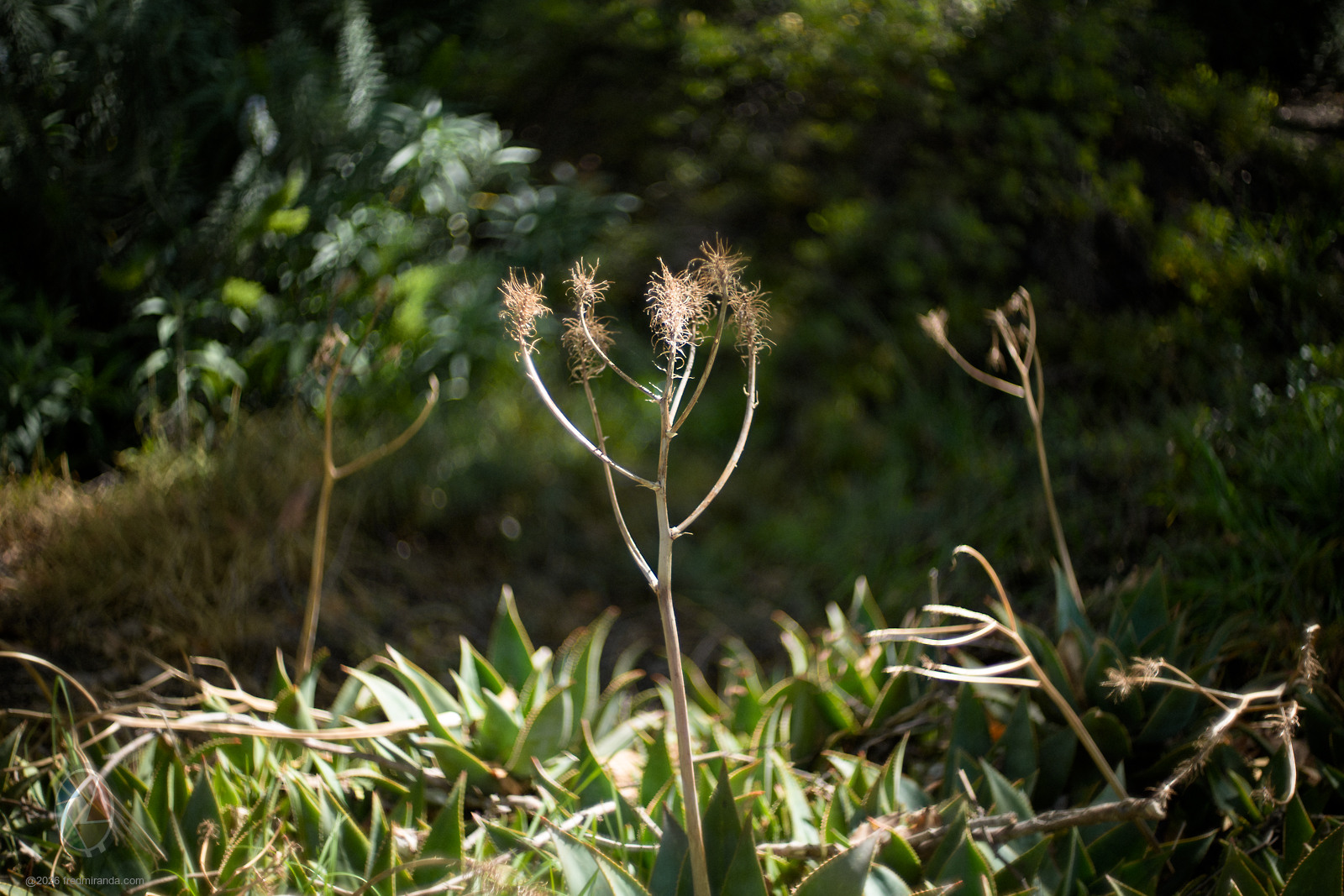
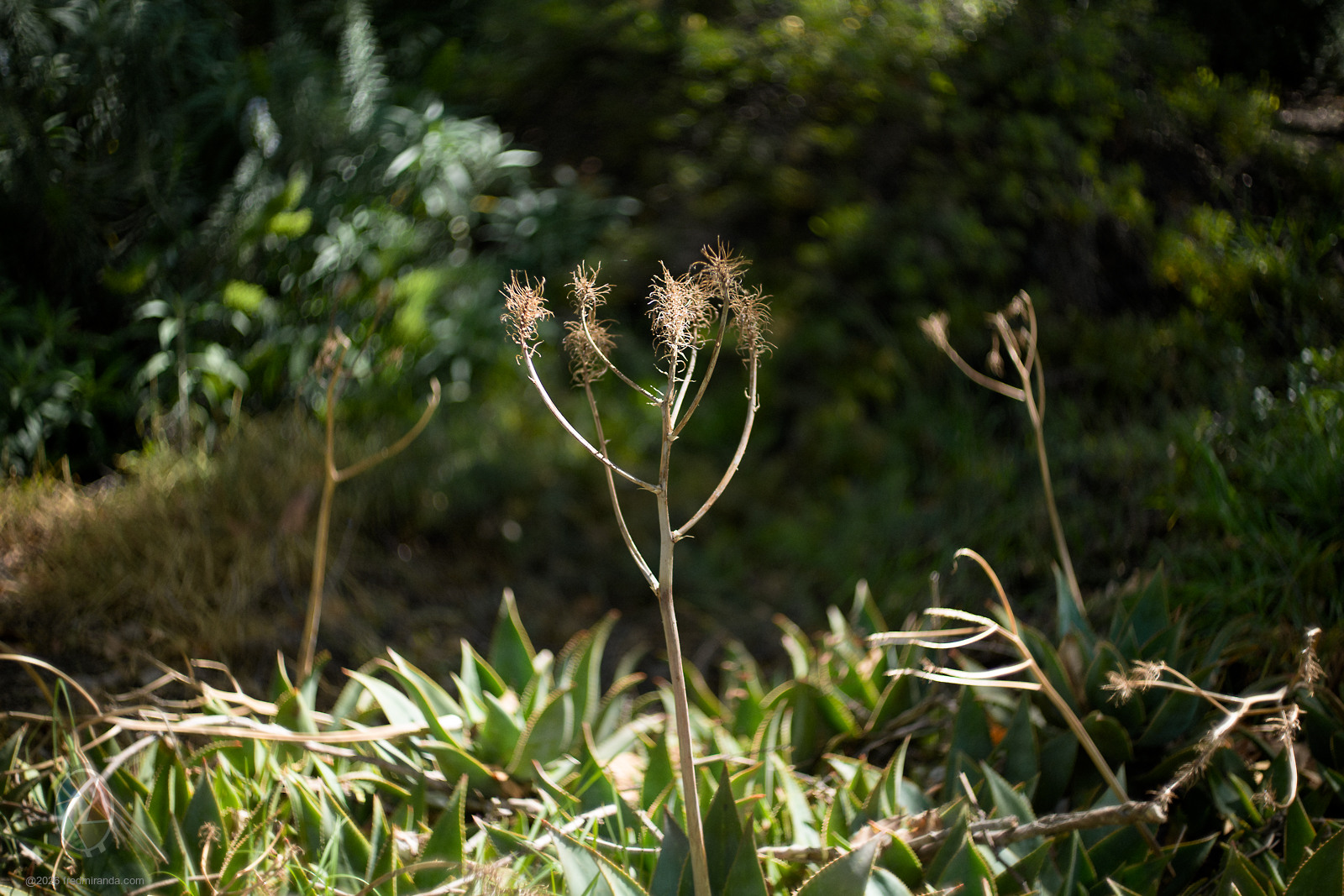
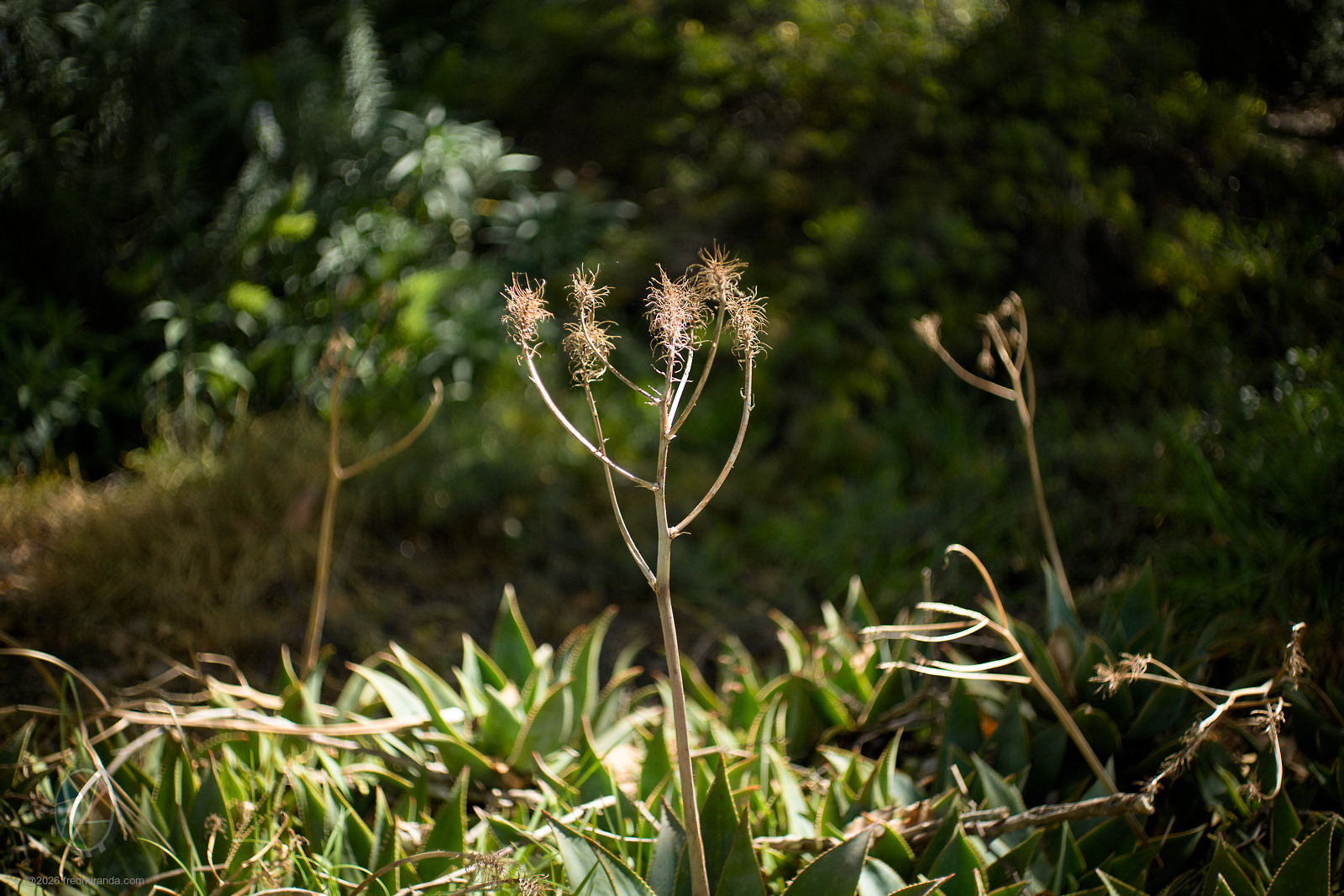
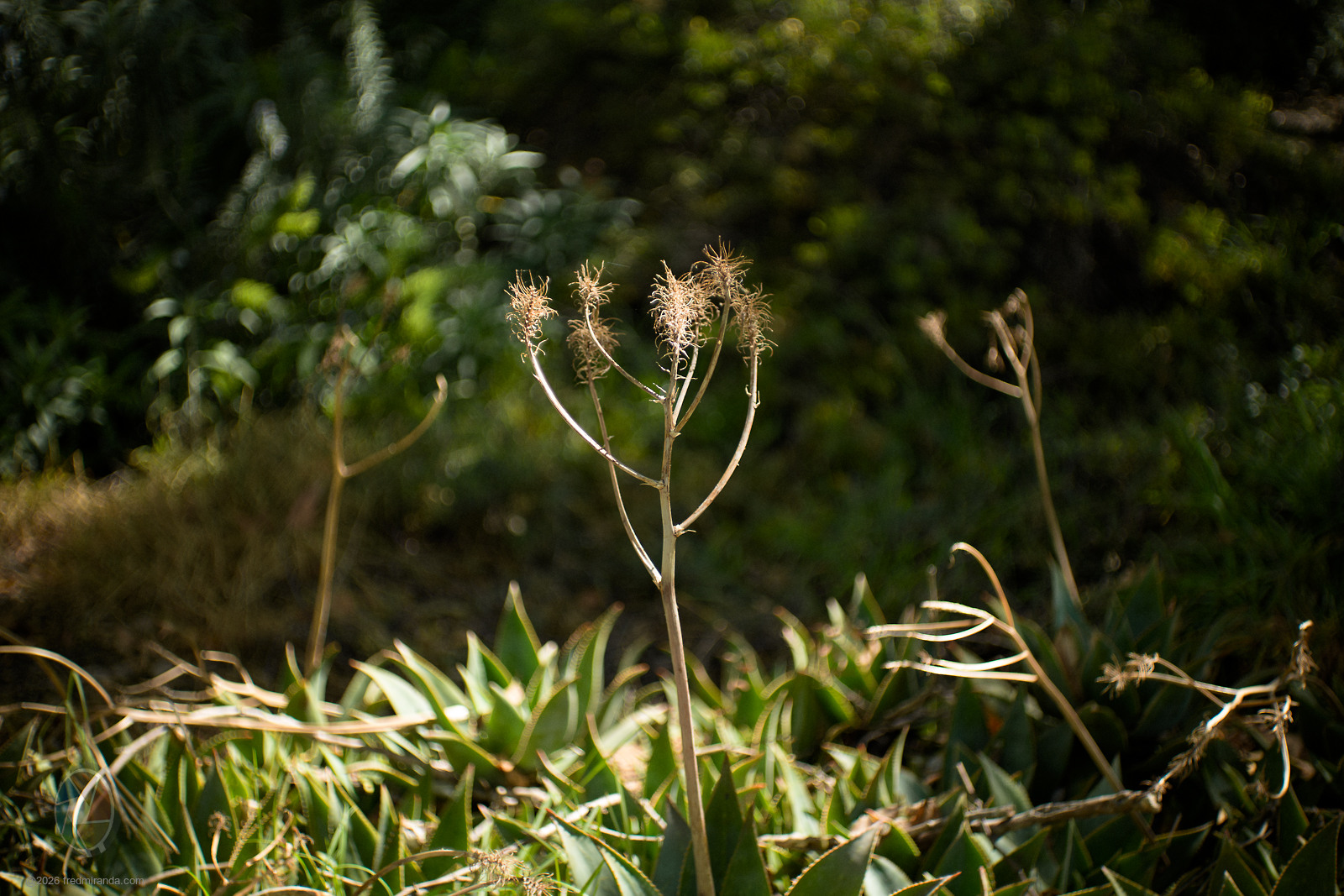
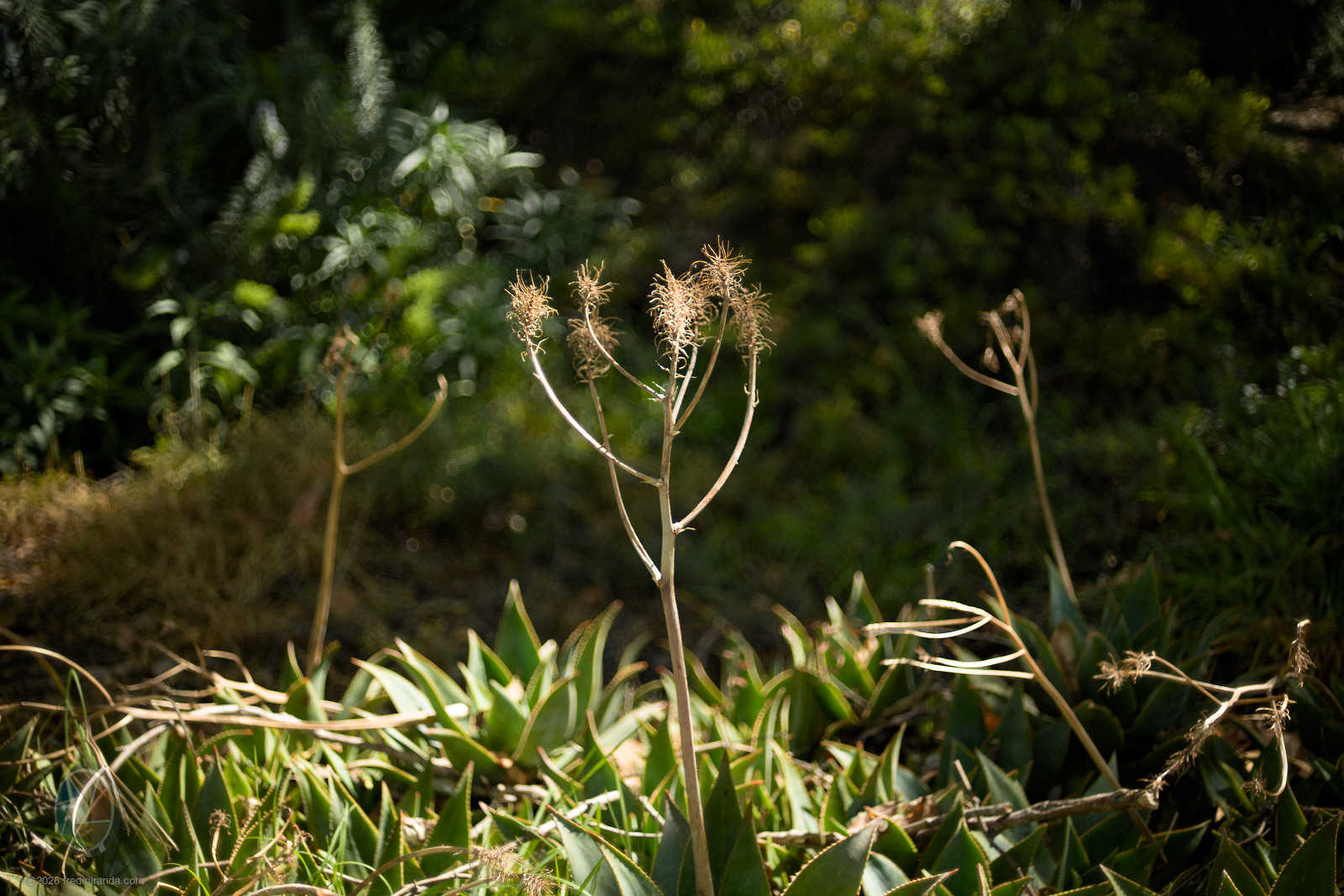
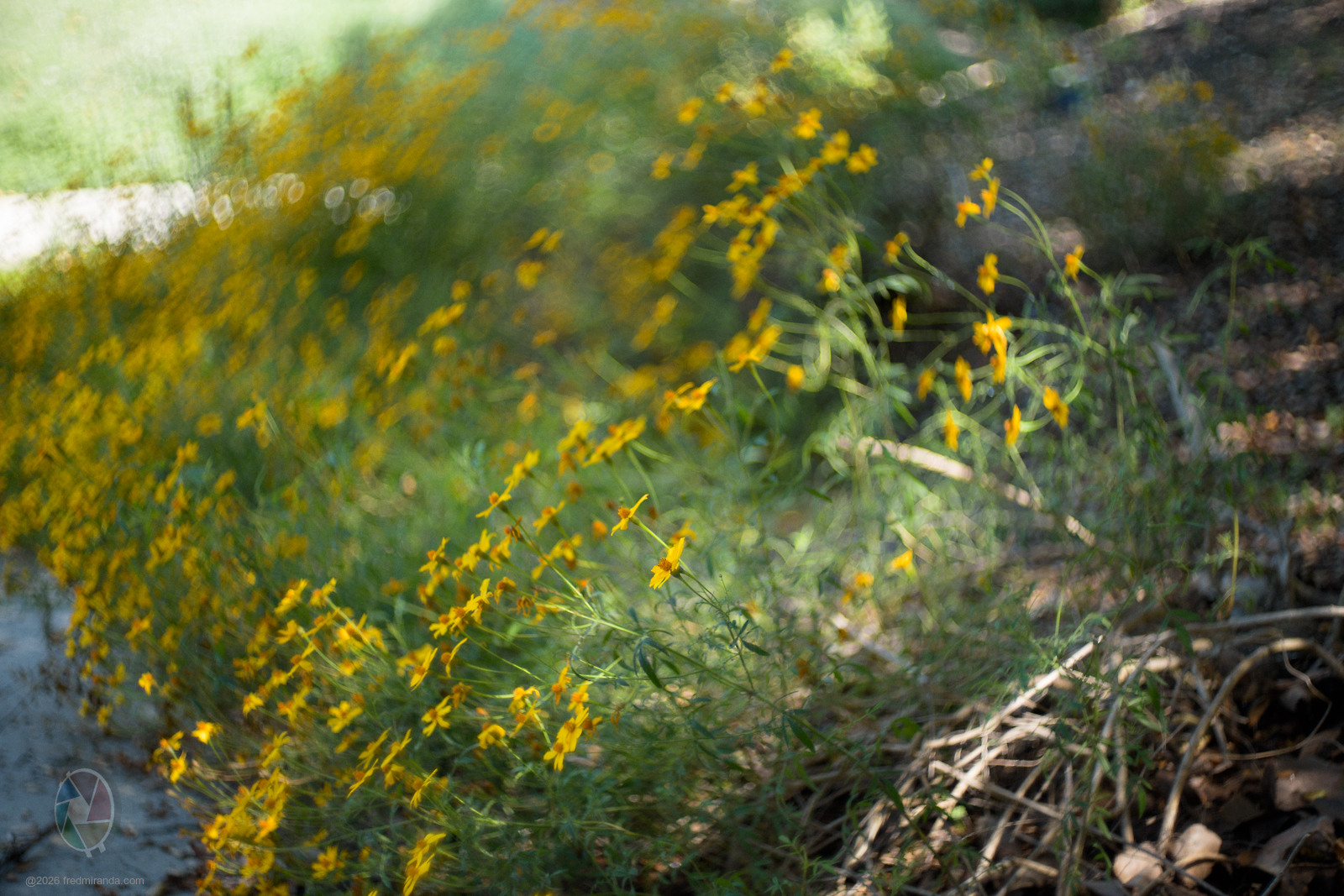
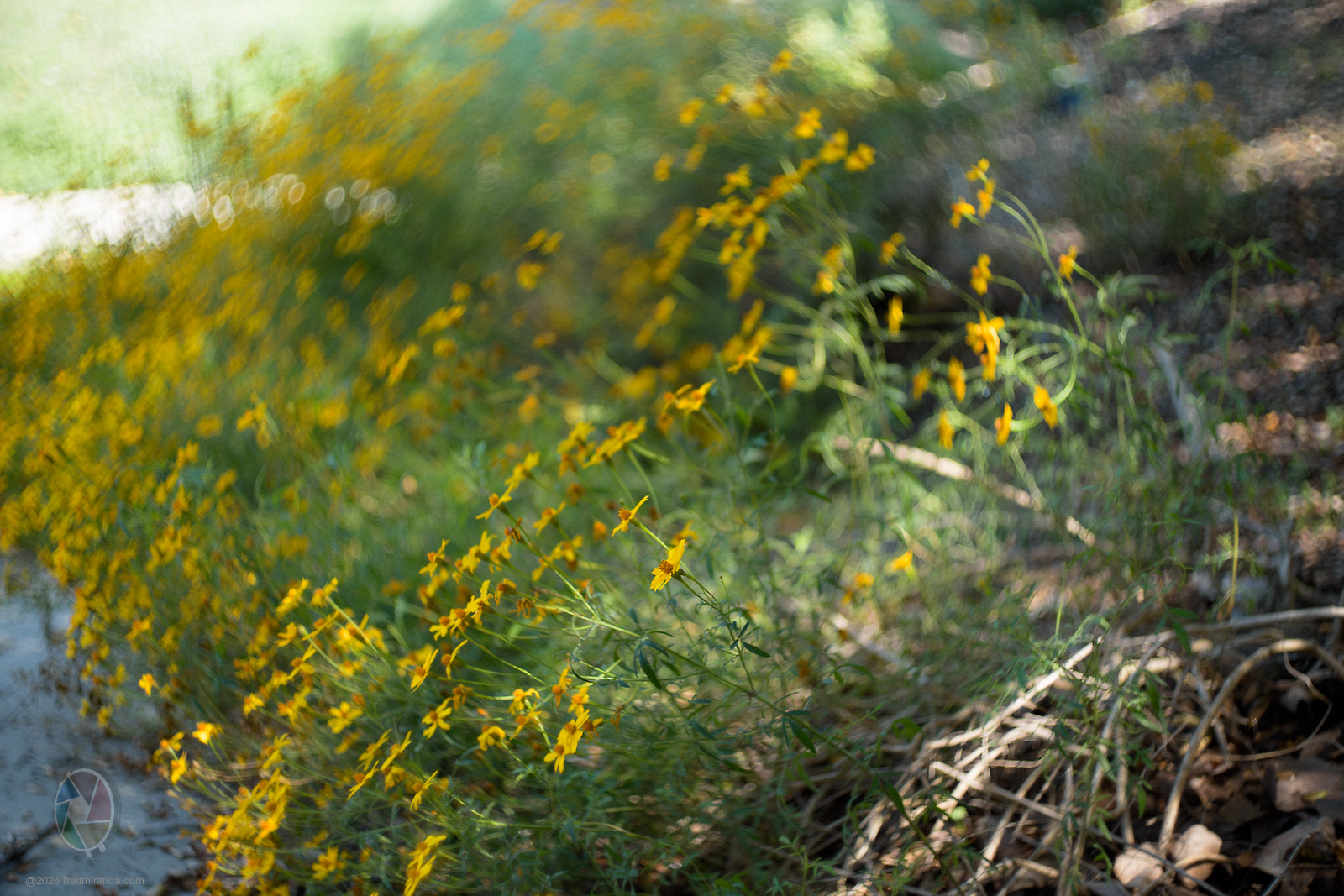
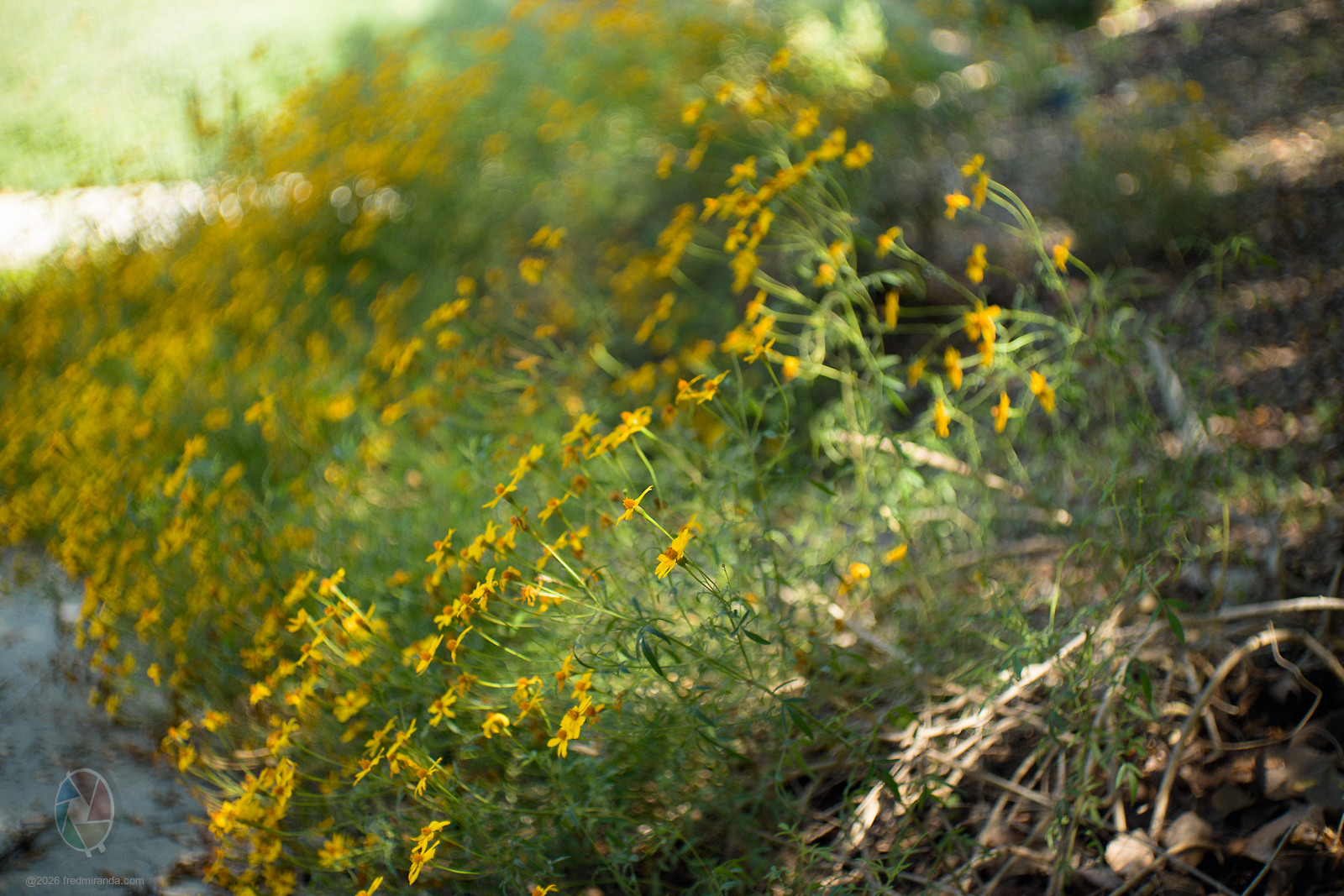
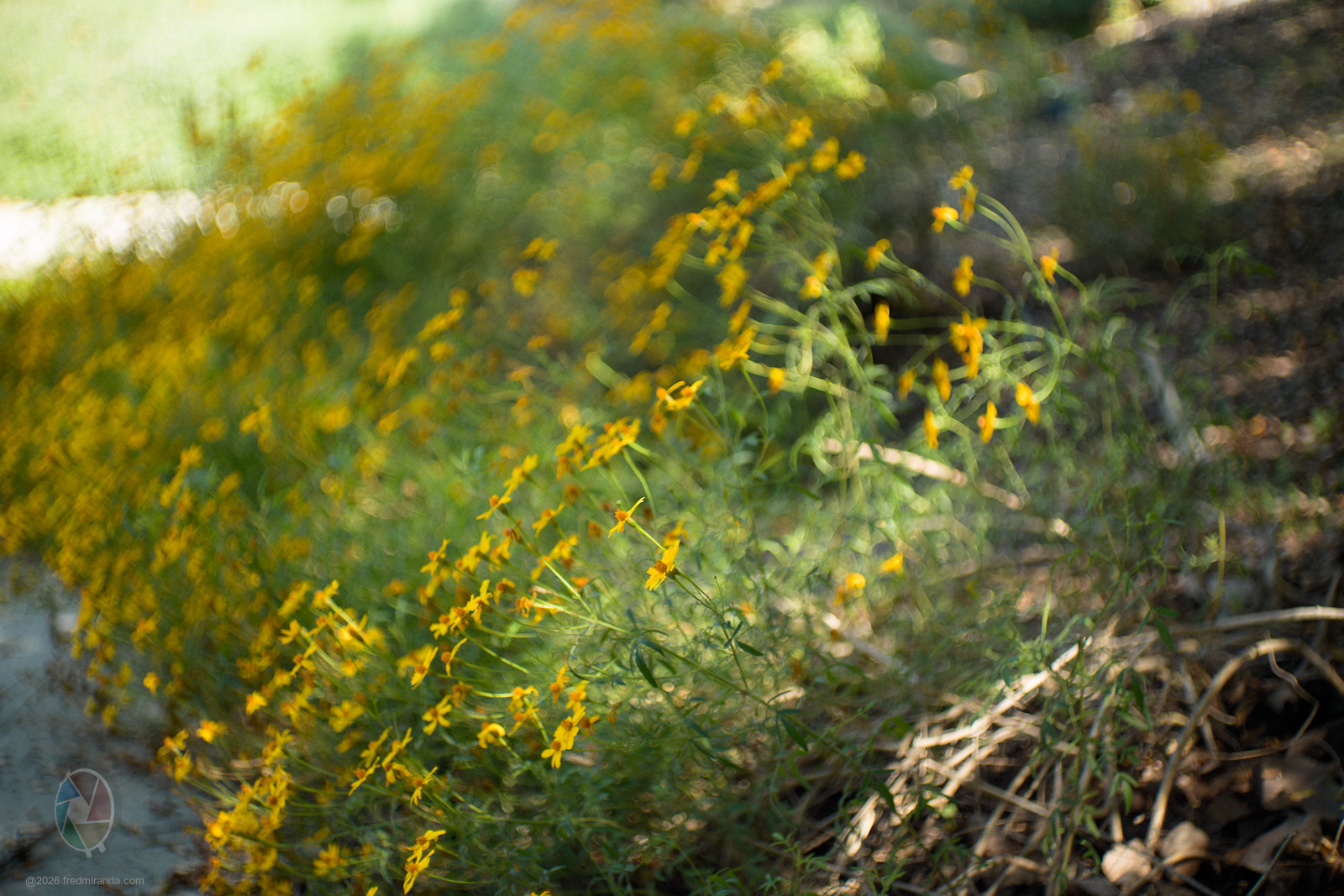
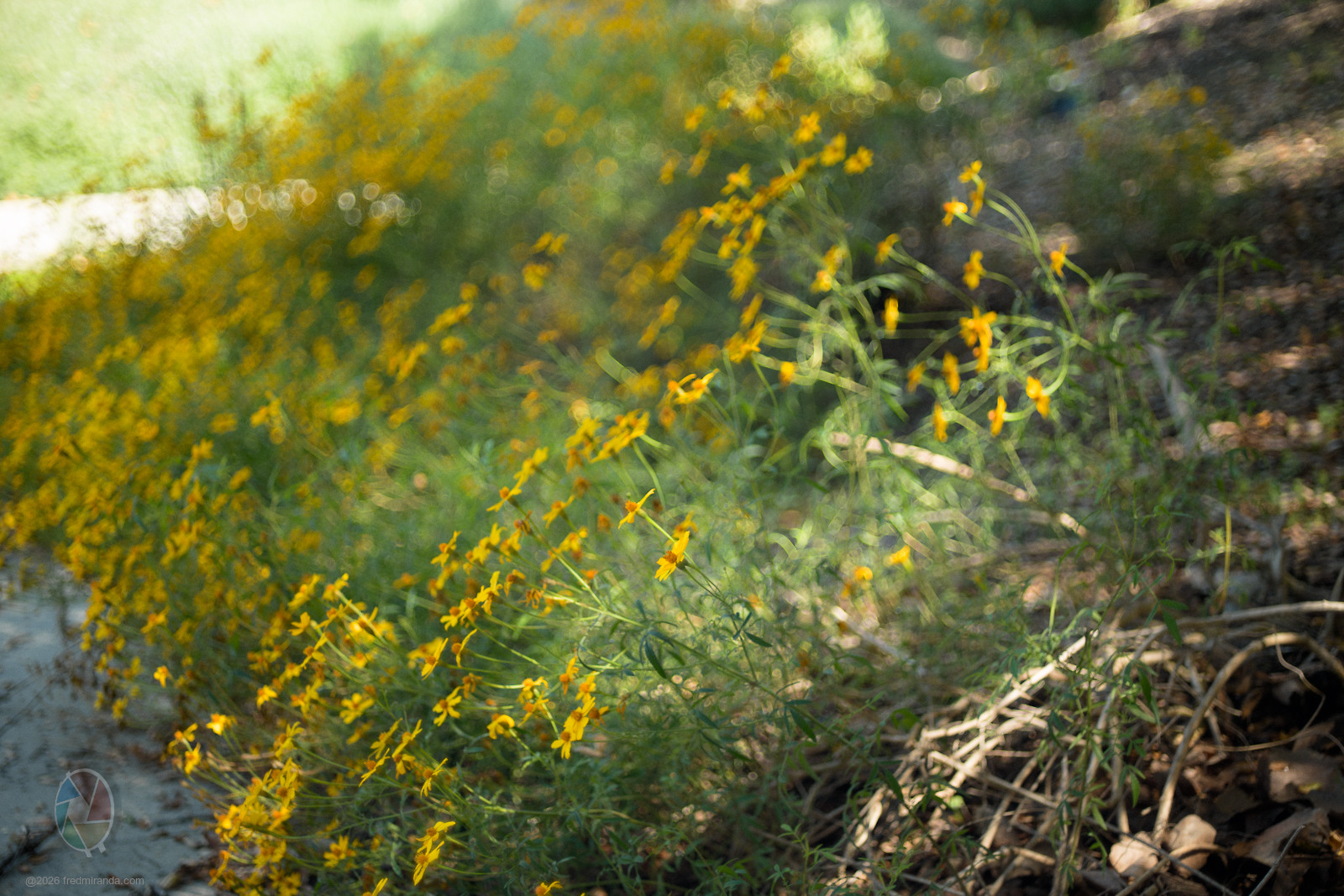
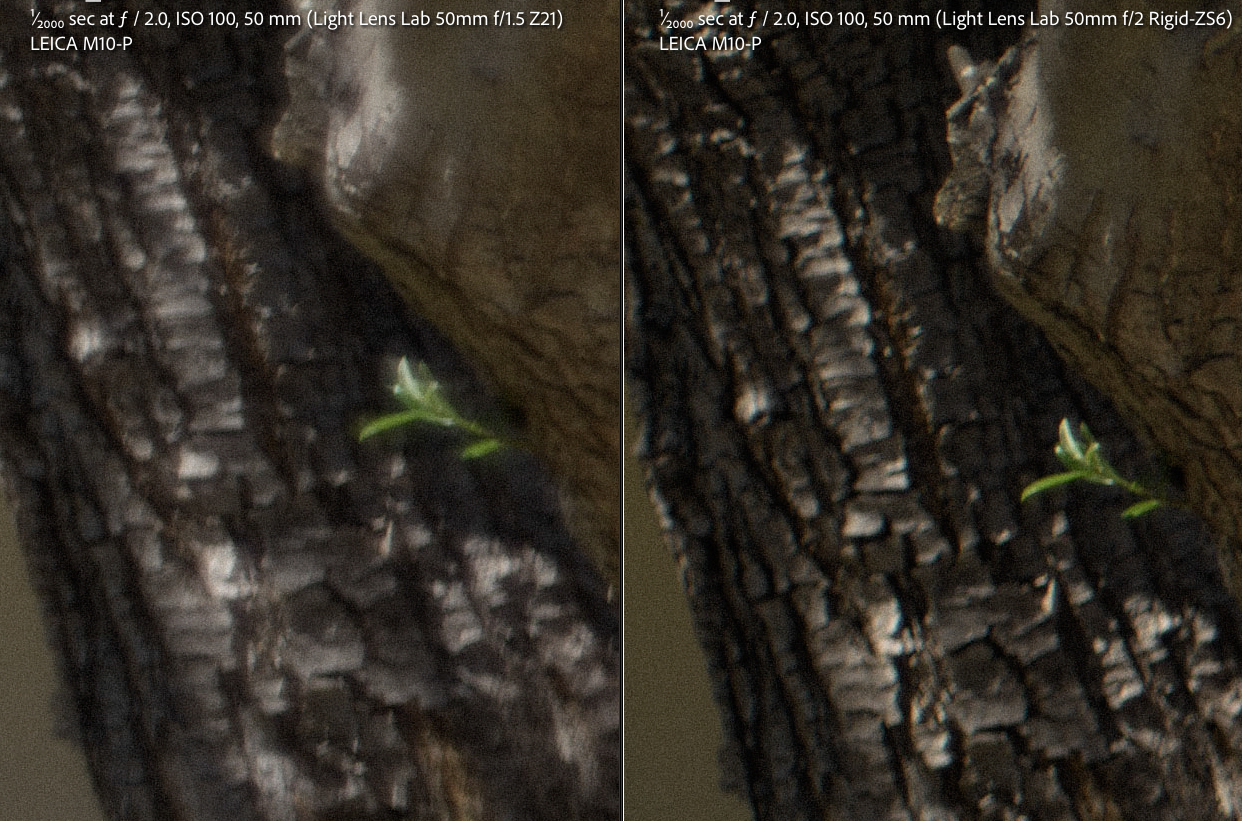
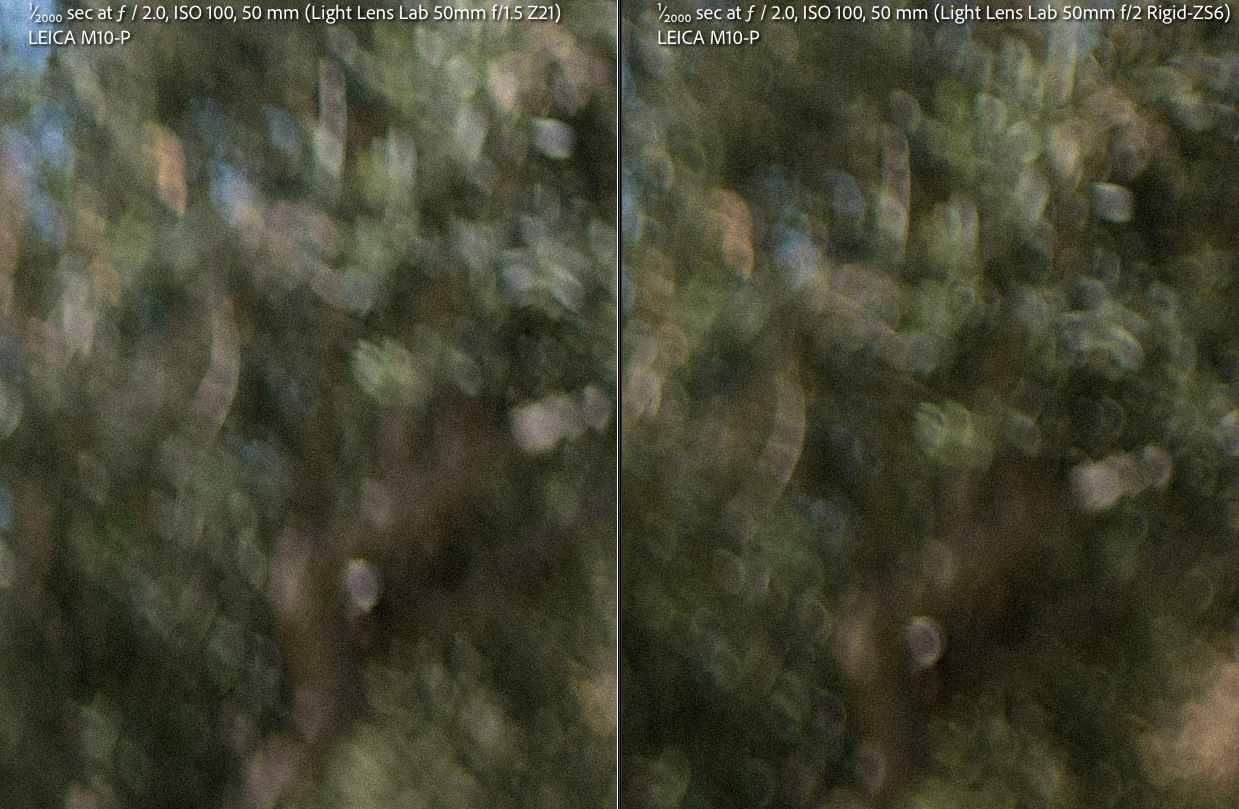
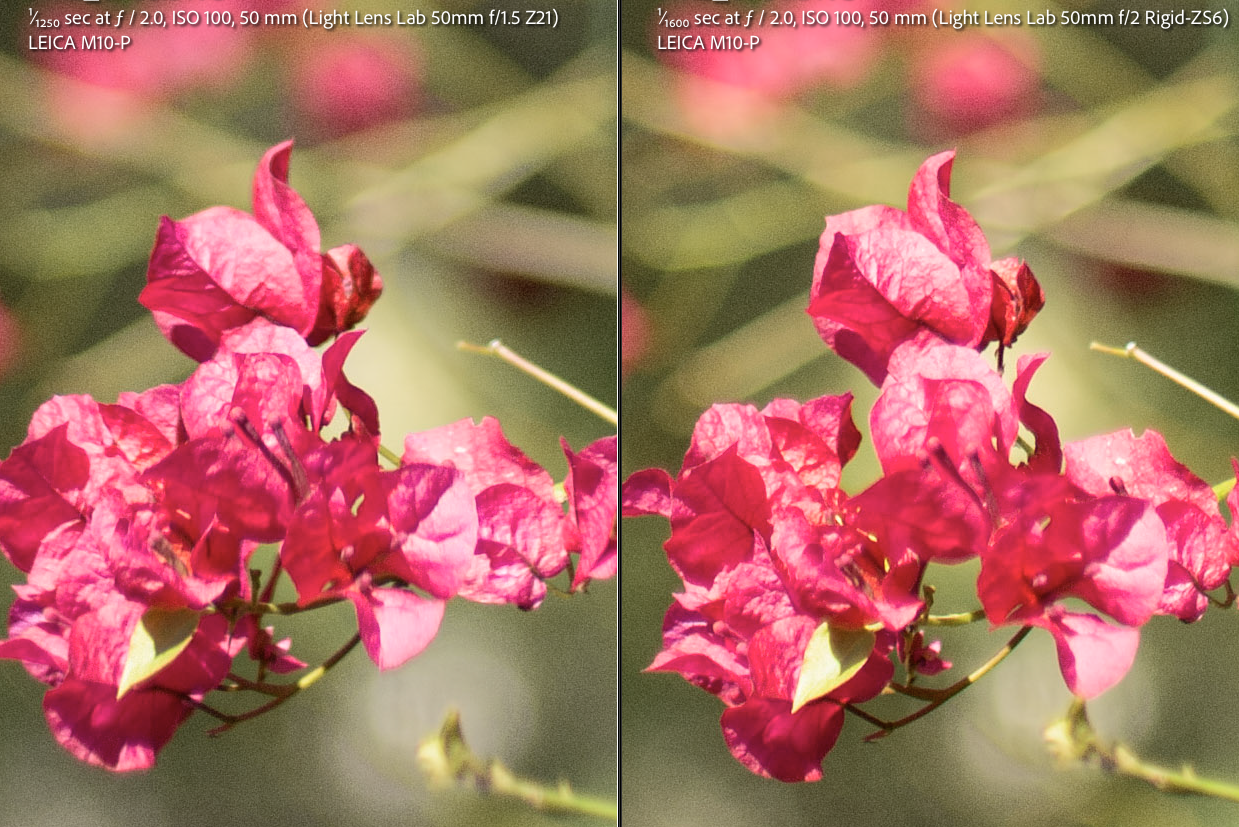
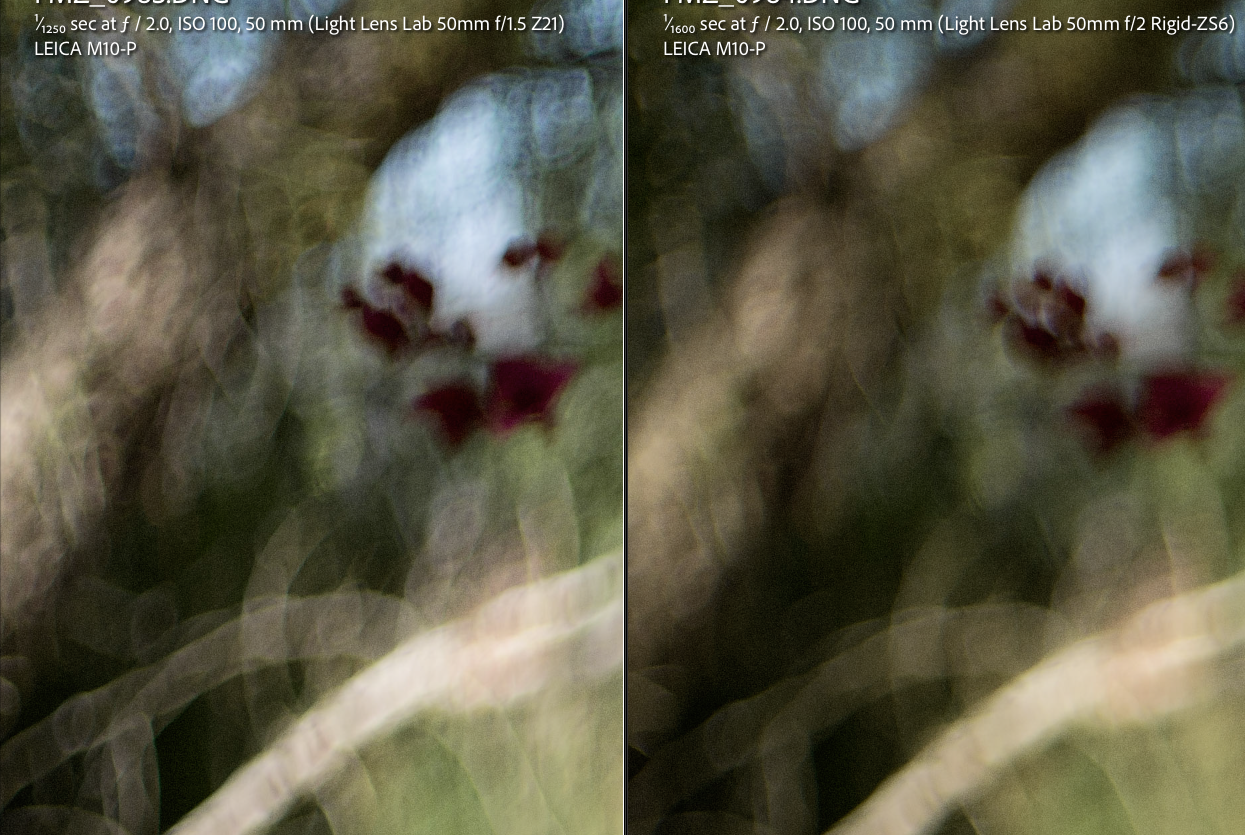
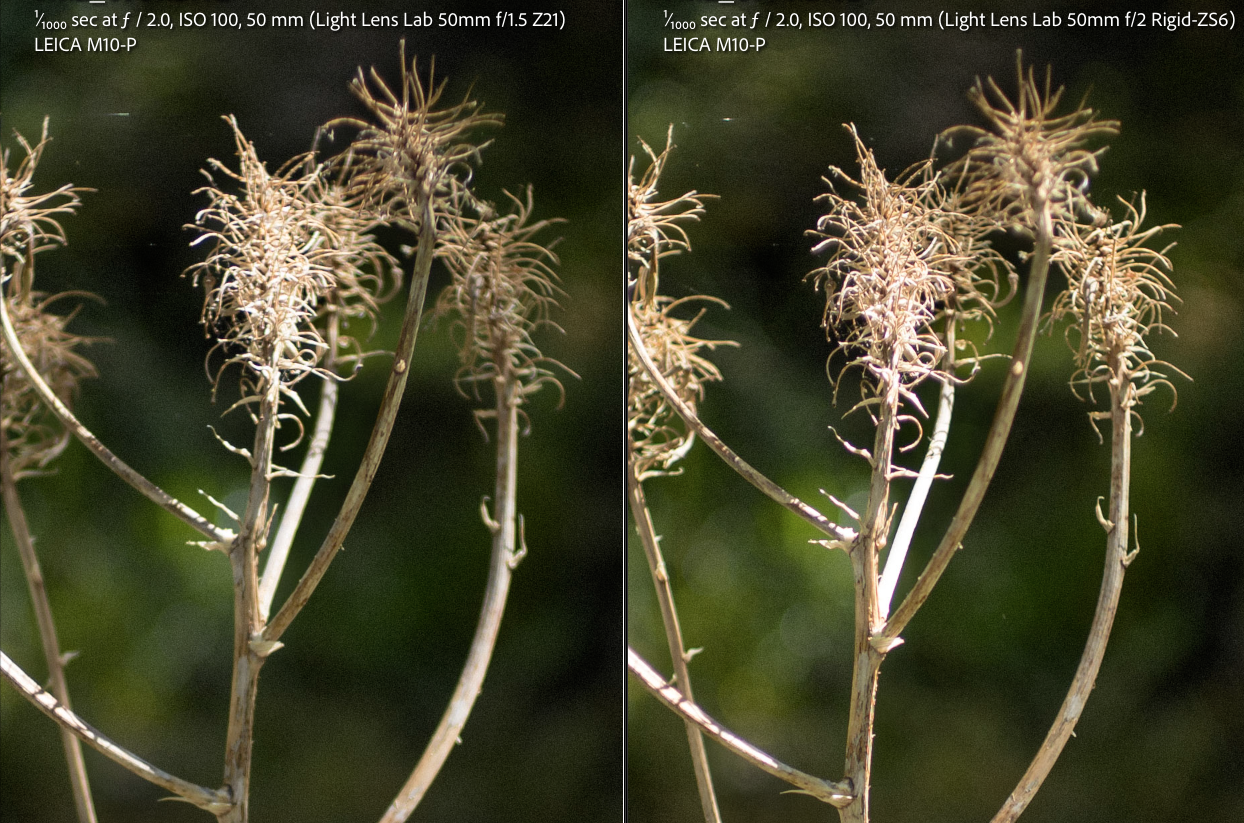
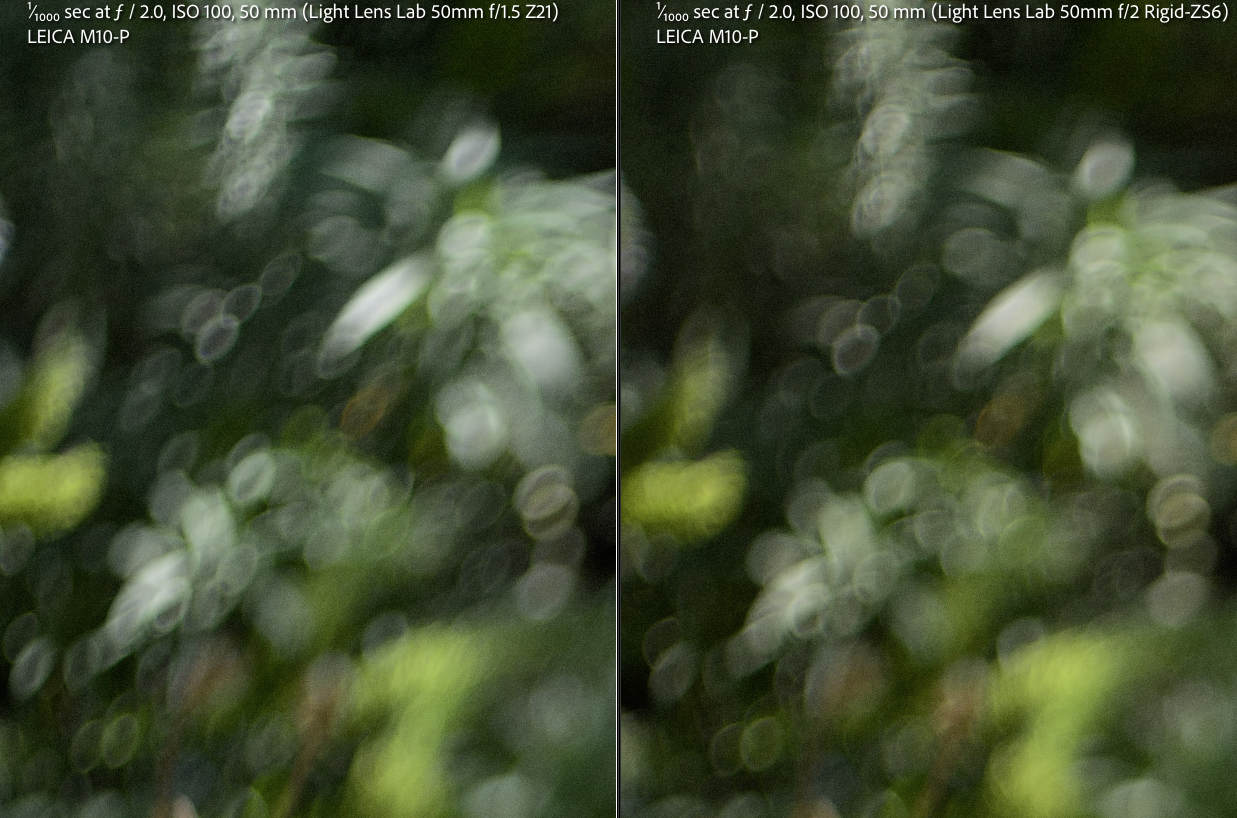
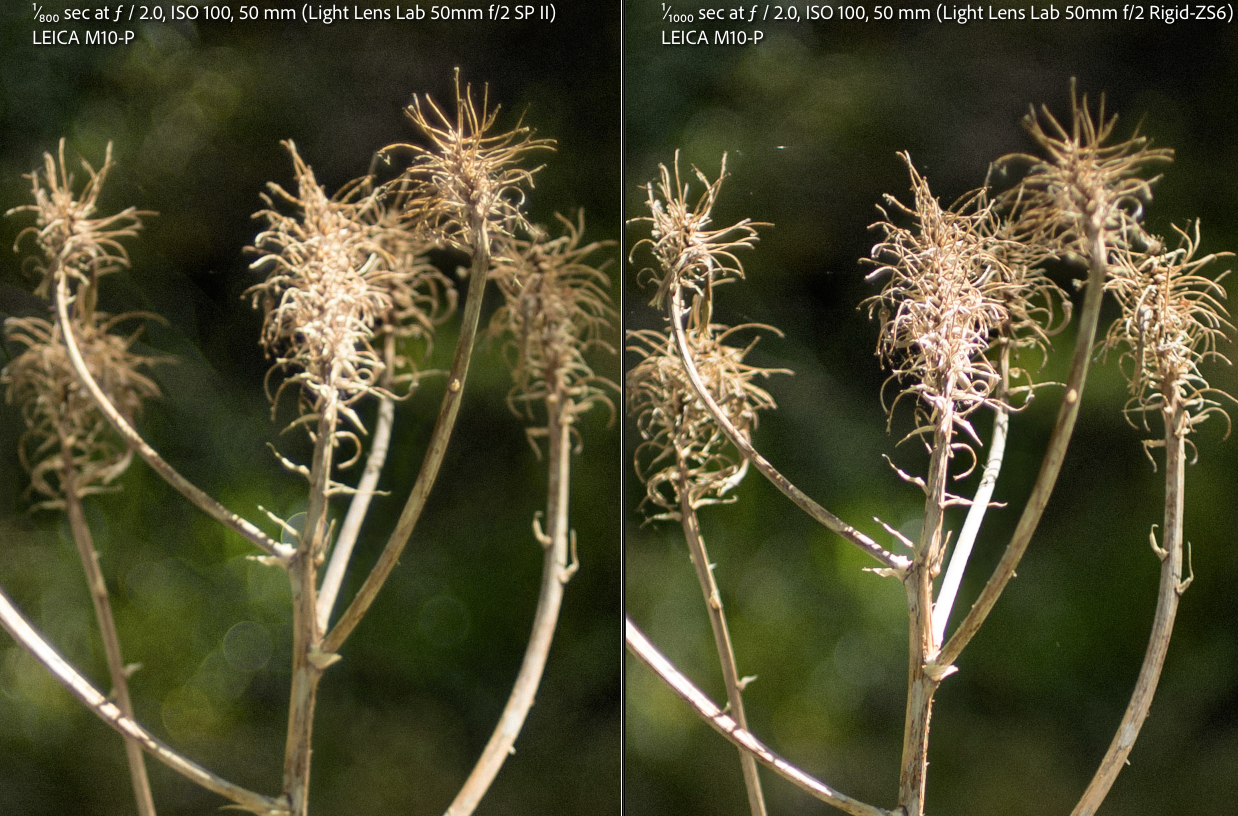
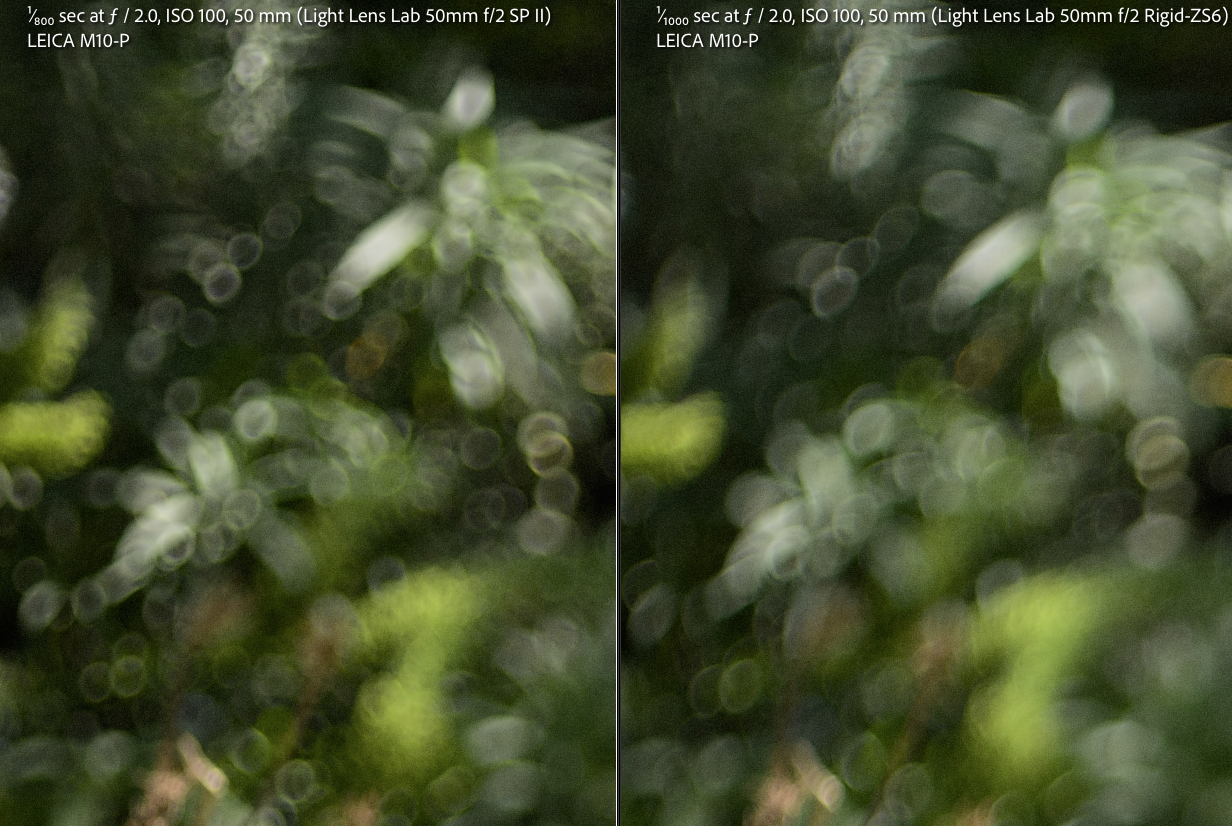
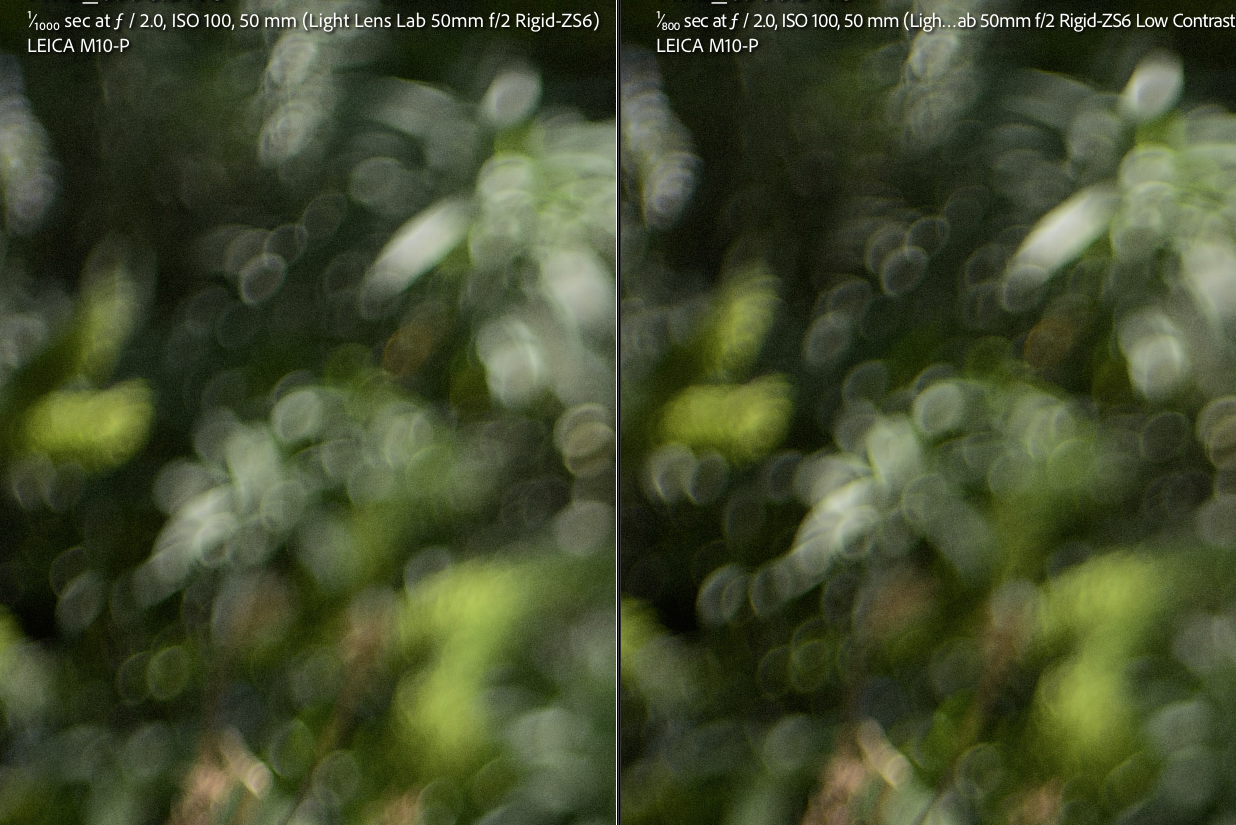
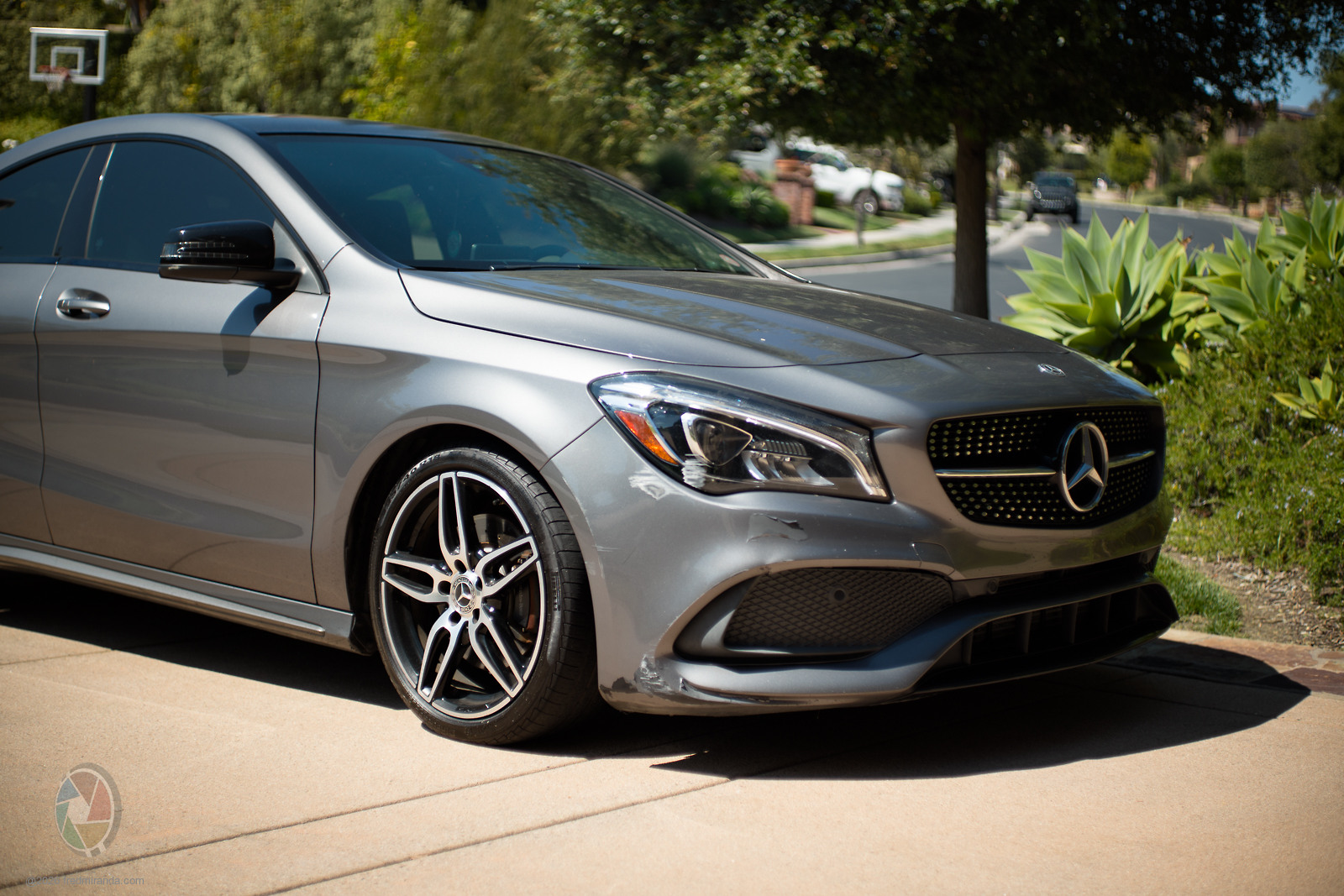
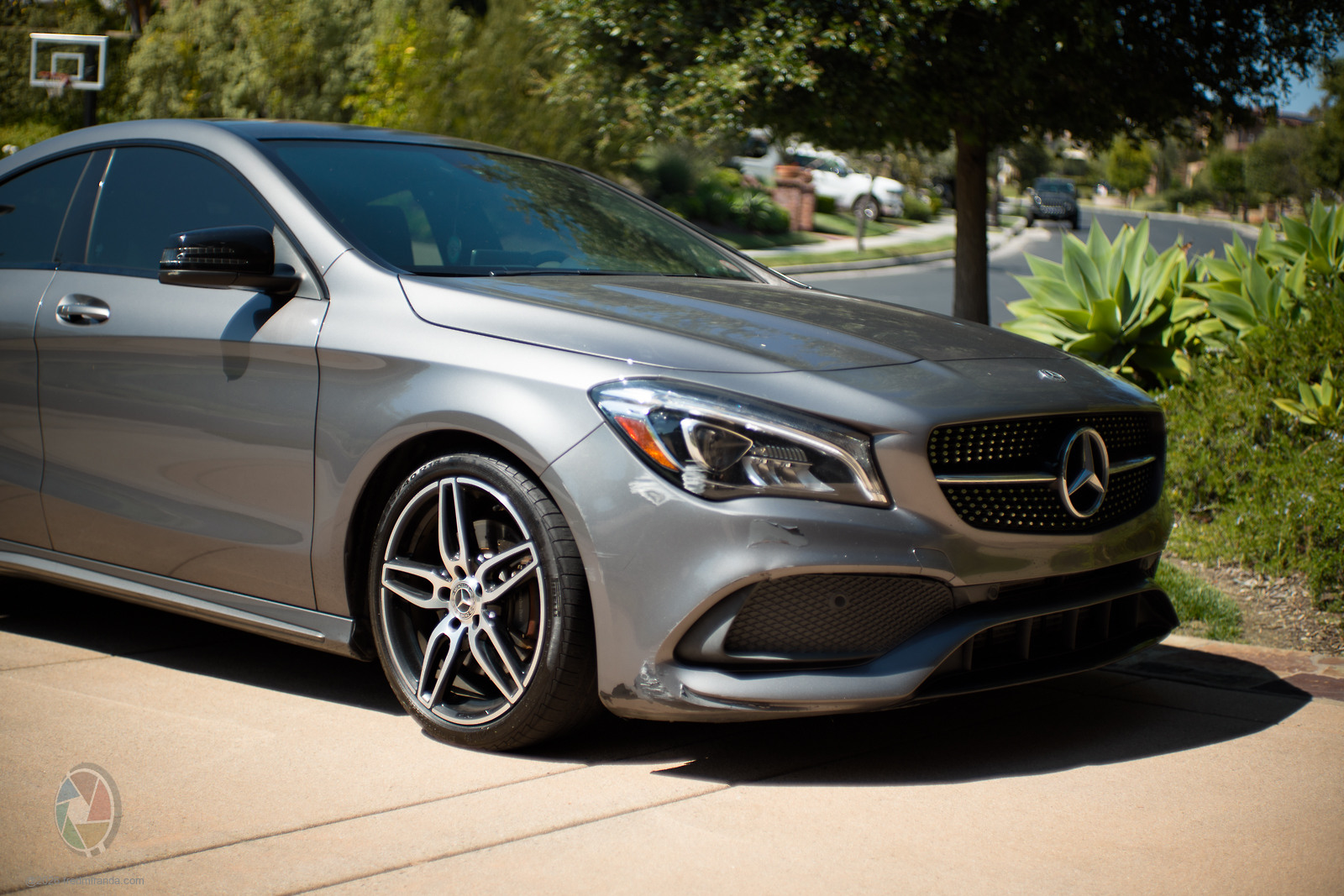
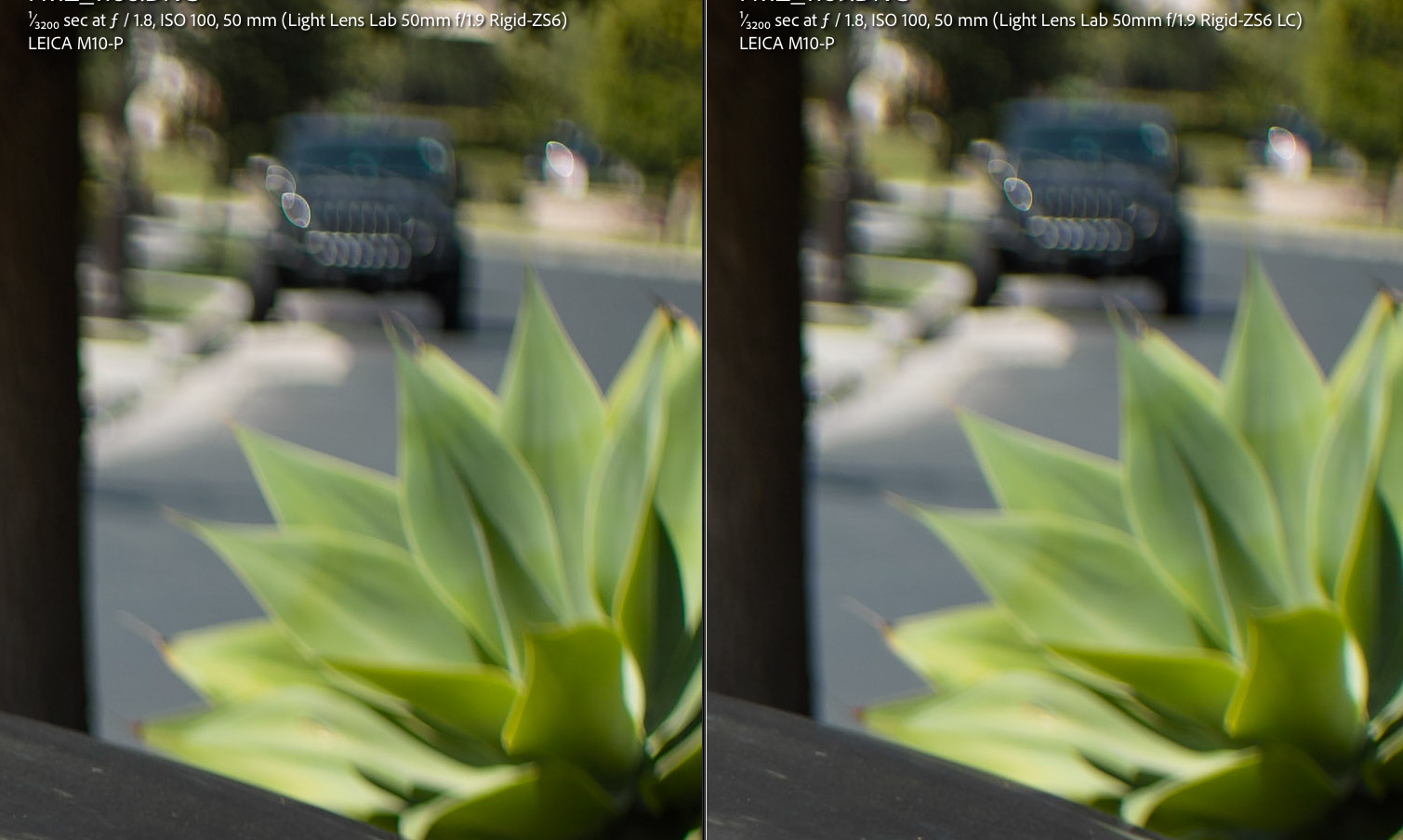
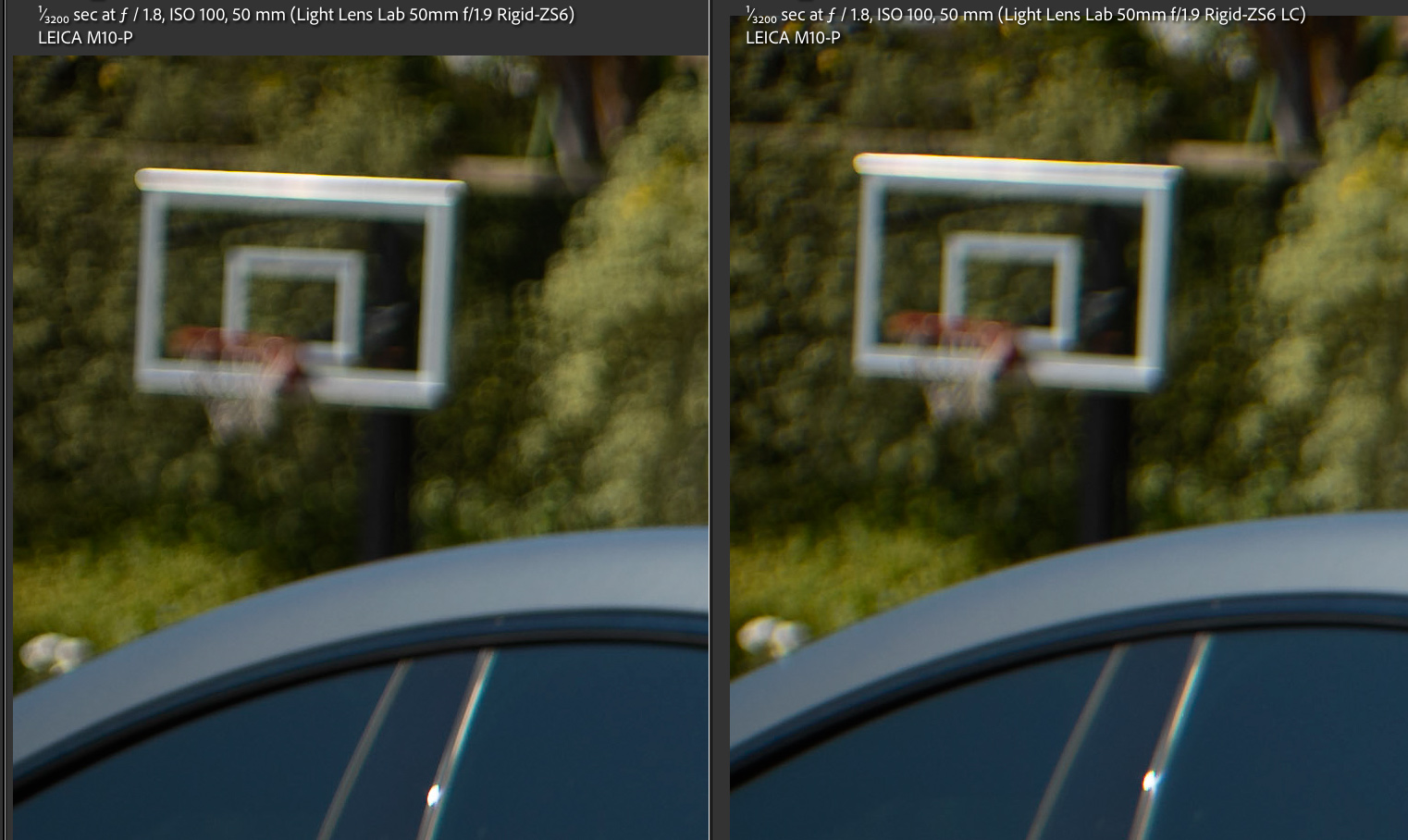
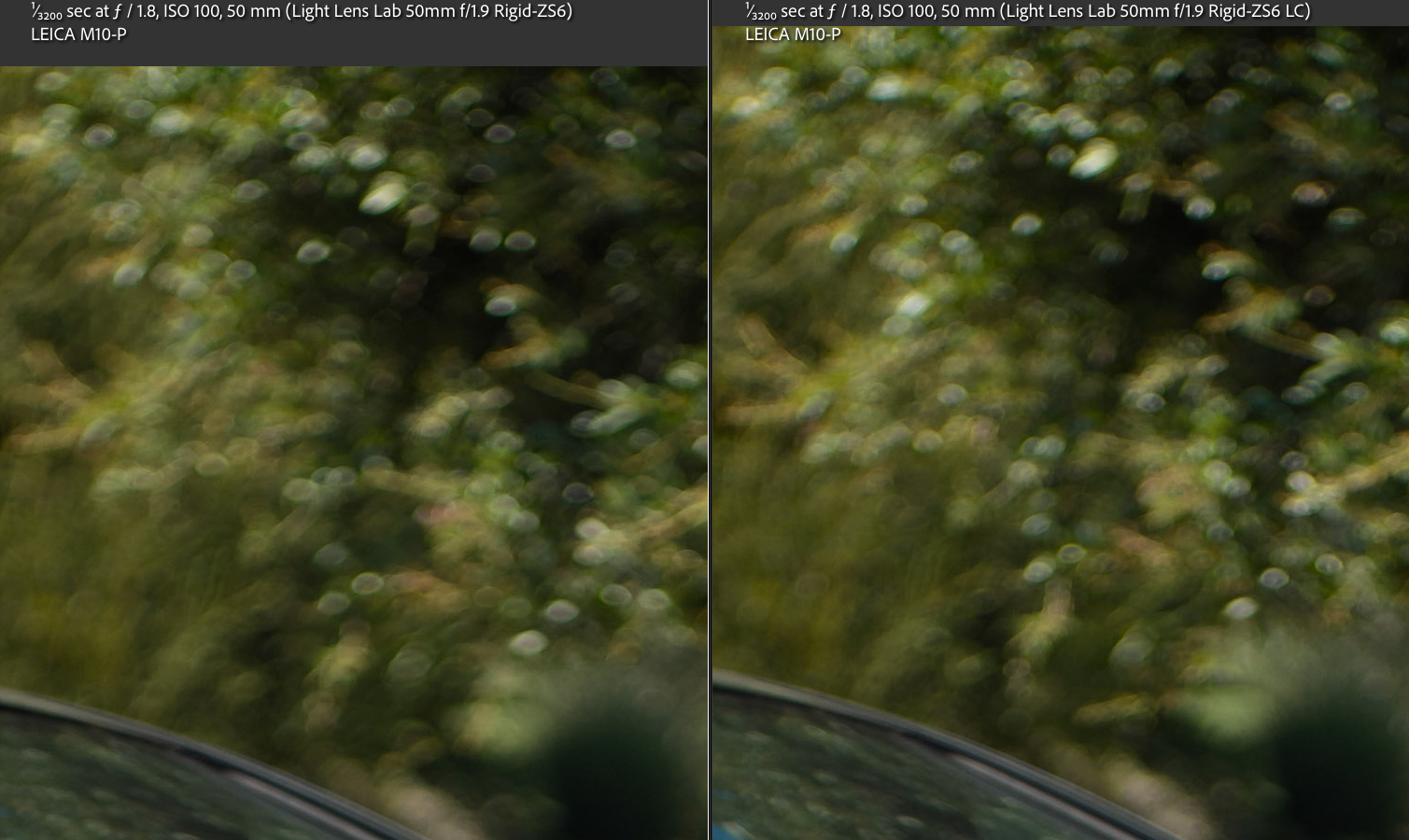
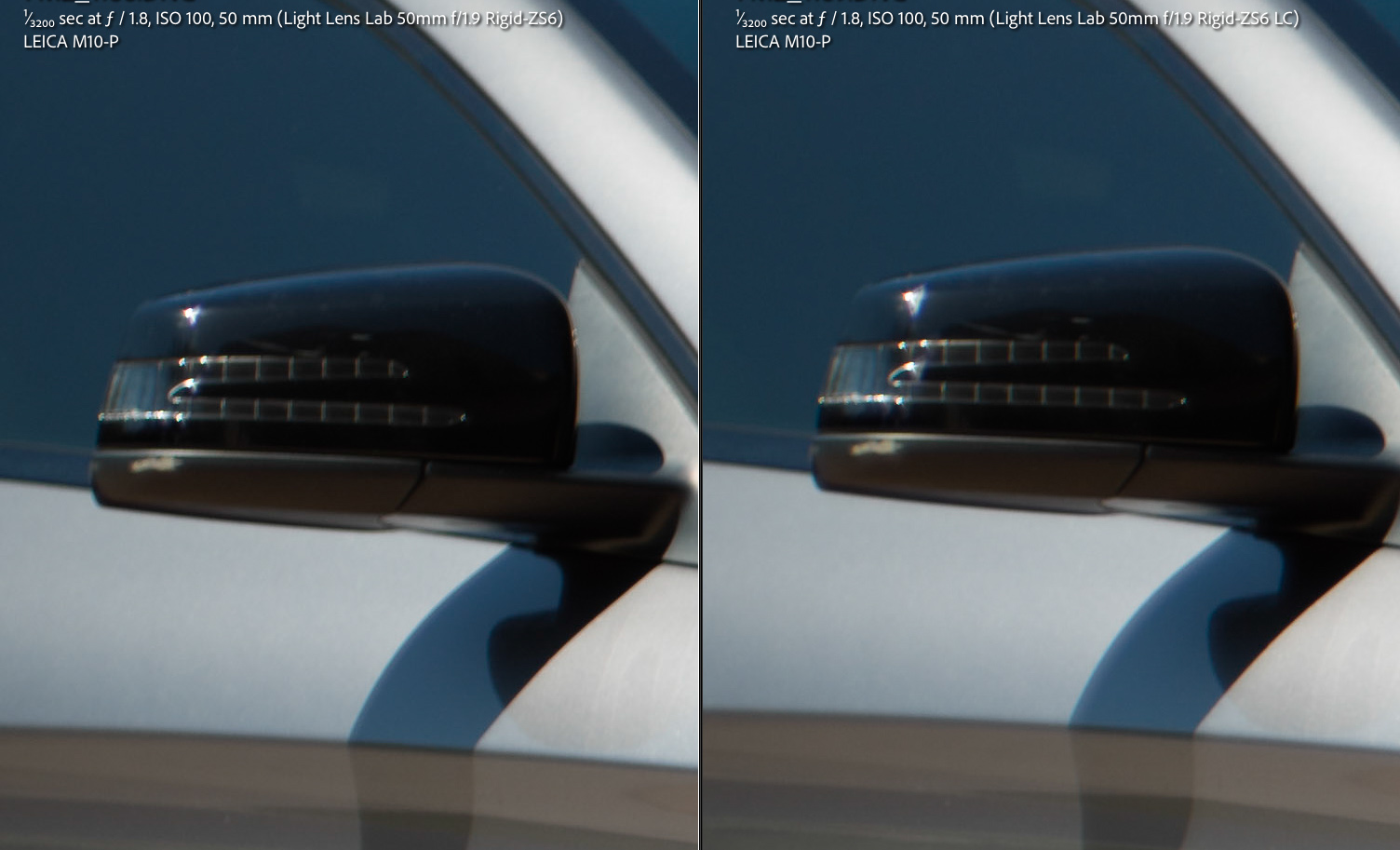
Here are 100% crops from the comparisons above, highlighting my personal observations.
The Light Lens Lab 50mm f/1.9 Rigid-ZS6 feels very close to the Light Lens Lab 50mm f/1.5 Z21 at f/2 in overall rendering, though it renders slightly warmer. It also shows less optical vignetting than the Z21 at f/2.
Field curvature is more controlled, and across the frame it resolves a way more detail off-axis, which gives a more even look from center to edge.
Below are crops showing both focus and out-of-focus areas between these two lenses at f/2.
Focus area (this may appear slightly soft, but this is the point of best focus for this lens in this part of the frame).
Same scene crops as the previous post, now including the Light Lens Lab 50mm f/2 SP II for comparison.
The SP II consistently shows lower contrast and slightly lower resolution, but with more pronounced outlining in the rendering and reduced optical vignetting, resulting in rounder highlights. It also holds a more consistent look across the frame, though at the center it is not quite as sharp as the ZS6.
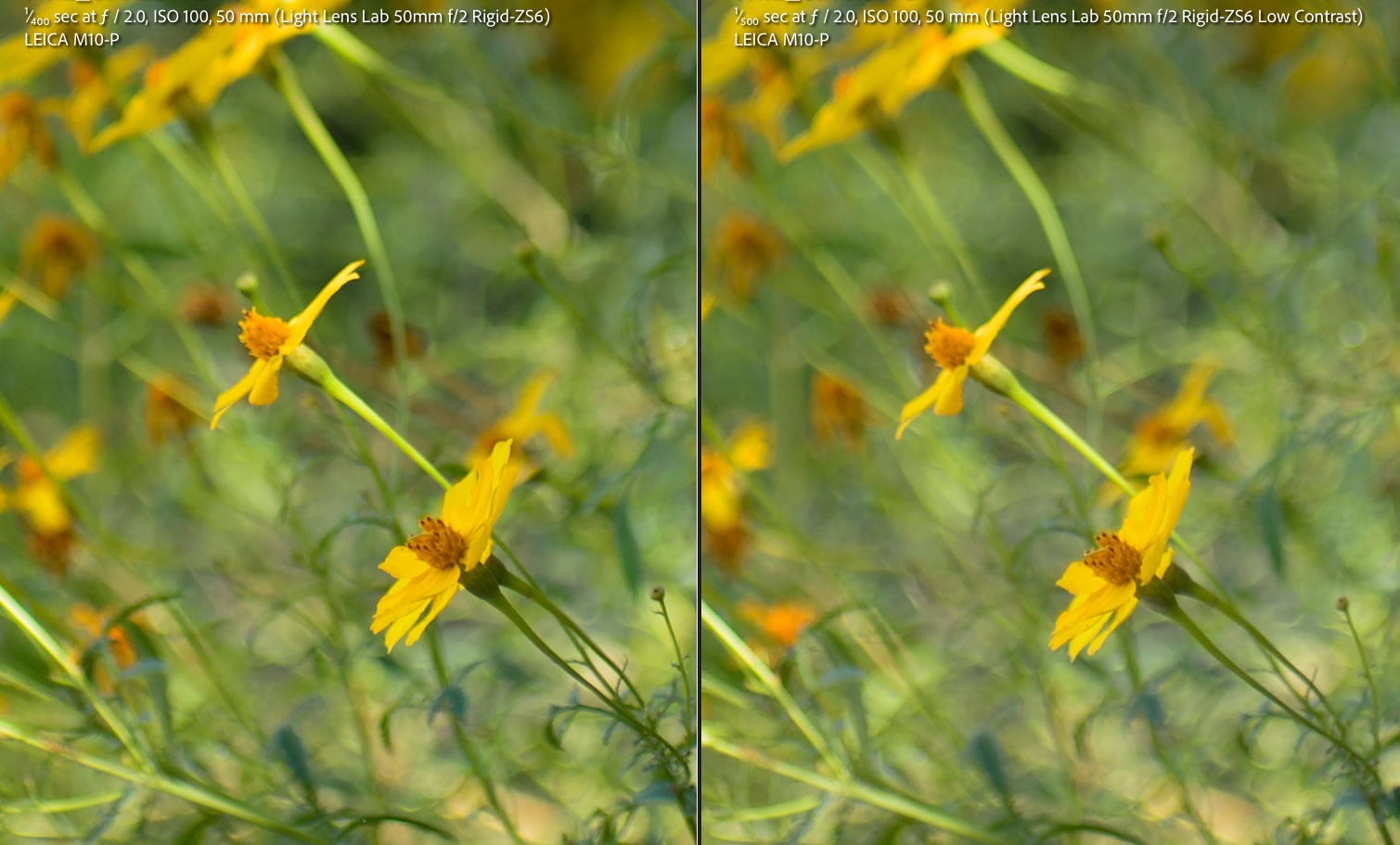
Finally, a comparison between the Light Lens Lab 50mm f/1.9 Rigid-ZS6 Standard and Low Contrast versions.
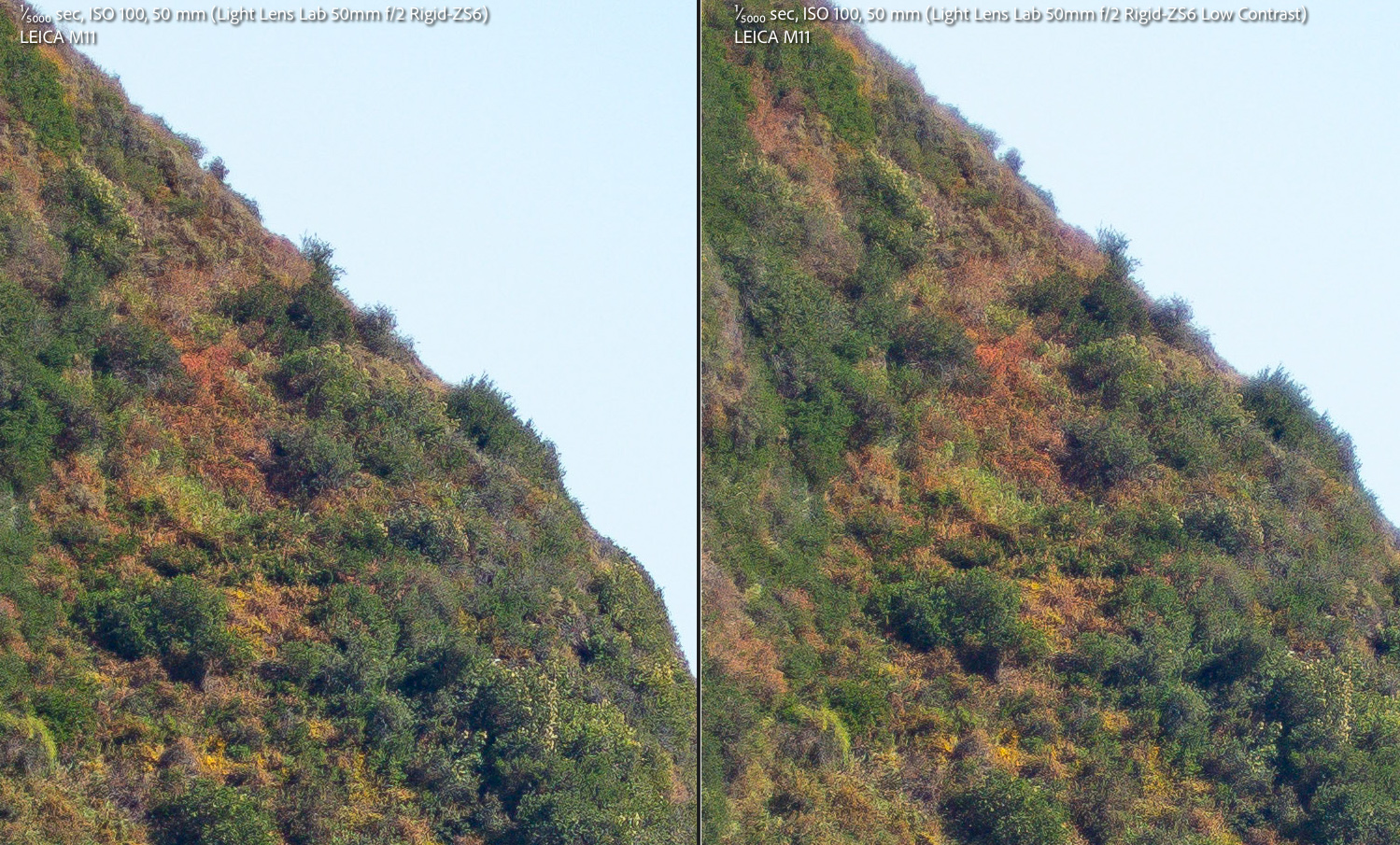
As seen here, the Low Contrast version reduces micro-contrast slightly, giving the image a more subdued, organic rendering. The difference is subtle overall, but it becomes more noticeable in fine texture and local contrast.
Low Contrast version lives up to its name -- just a subtle dip in contrast, nothing more.
I got the "standard" version as I wasn't seeking too much character this time (I have other lenses for that). Was somewhat of an impulsive purchase based on its looks as I have enough lenses already in this focal length. But then, can one ever have enough 50's? :-)
Feels nice in the hands, little "industrial" feel if I may say so (by which I vaguely mean slightly "less" polished, less shiny feel of the metal surface?). Matches well with Safari (as Fred's pictures have shown) and also with the Gray body I think:
Mine is perfectly calibrated right out of the box, which is always a relief no matter the brand. Focus throw is not long (snaps focus quickly and decisively when you're in the vicinity), which some will like, and some who prefer longer, "gradual" focus throws for longer focal length lenses may not.
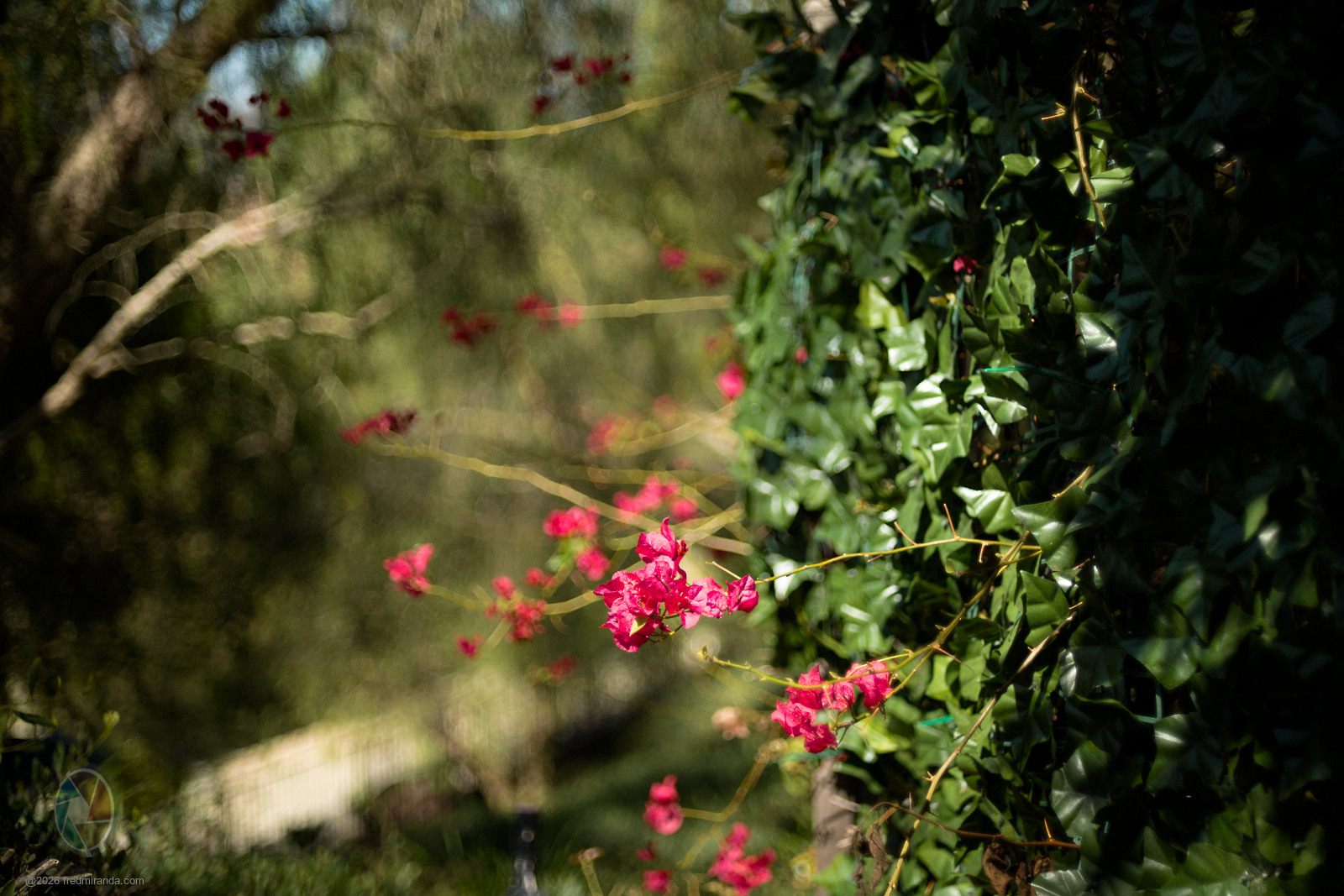
In my quick initial observations, the rendering of this "standard" coating of the lens seems akin to Leica's pre-FLE 50mm, i.e., not steel rim re-issue level of character but enough of a character to be an enjoyable daily carry if you're into 50mm focal length. Being f1.9 wide open, you nail focus more often than Summiluxes or wider 50mm lenses. Somehow reds seem to preserve definition very well with this lens, which could be a combination of sensor plus lens coating. I have struggled in past with "mushy" looking reds at times. This matters to me because I often shoot flowers.
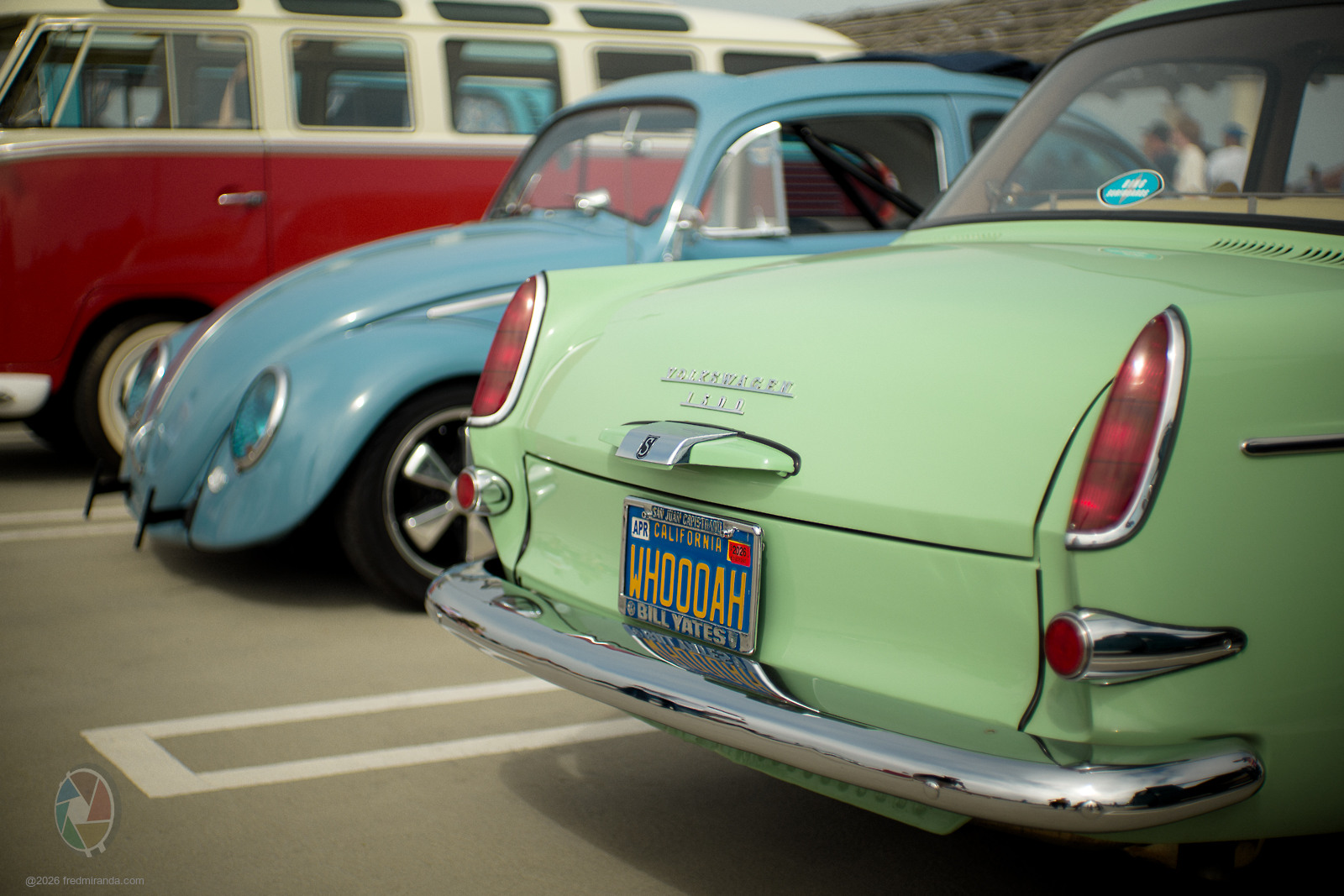
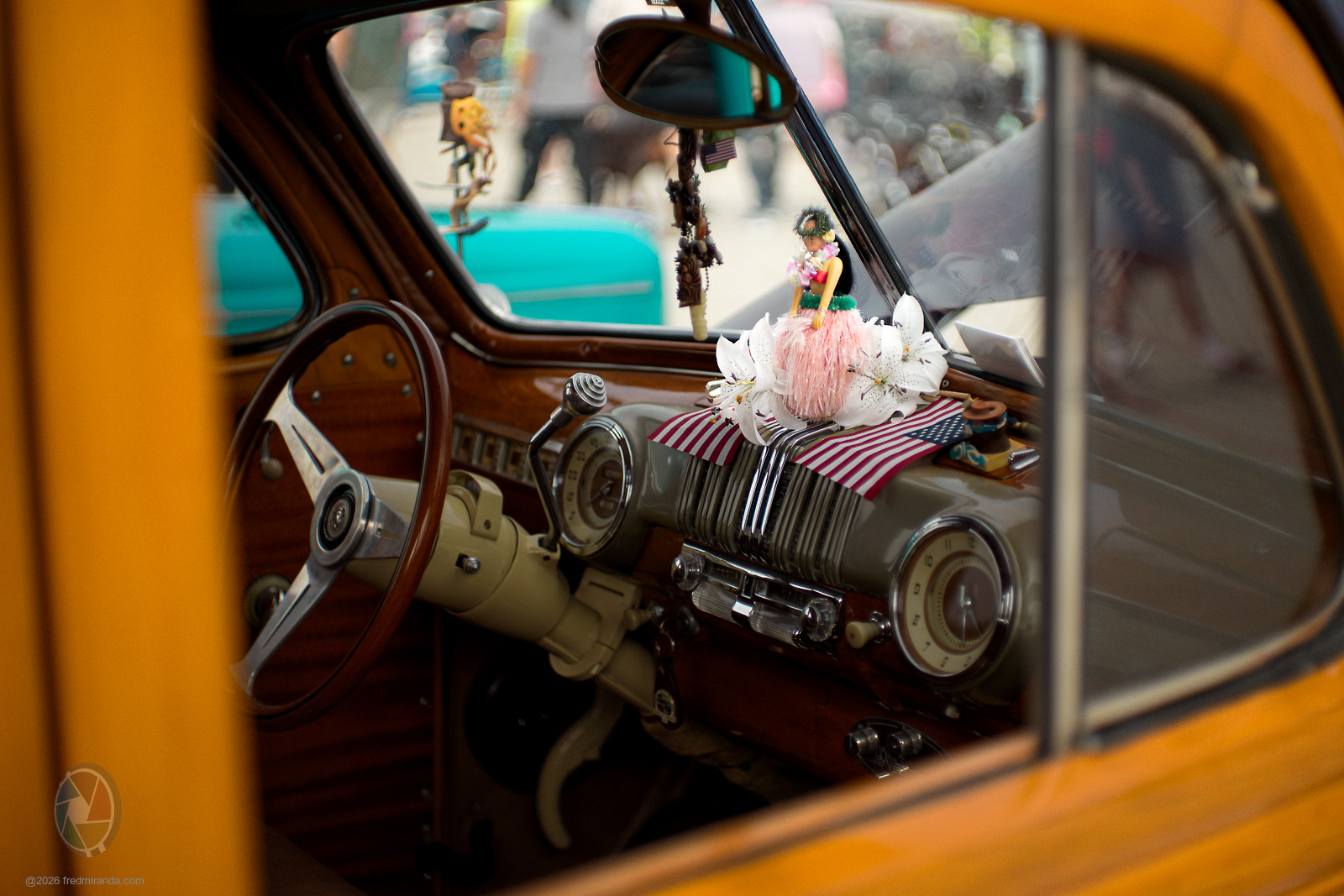
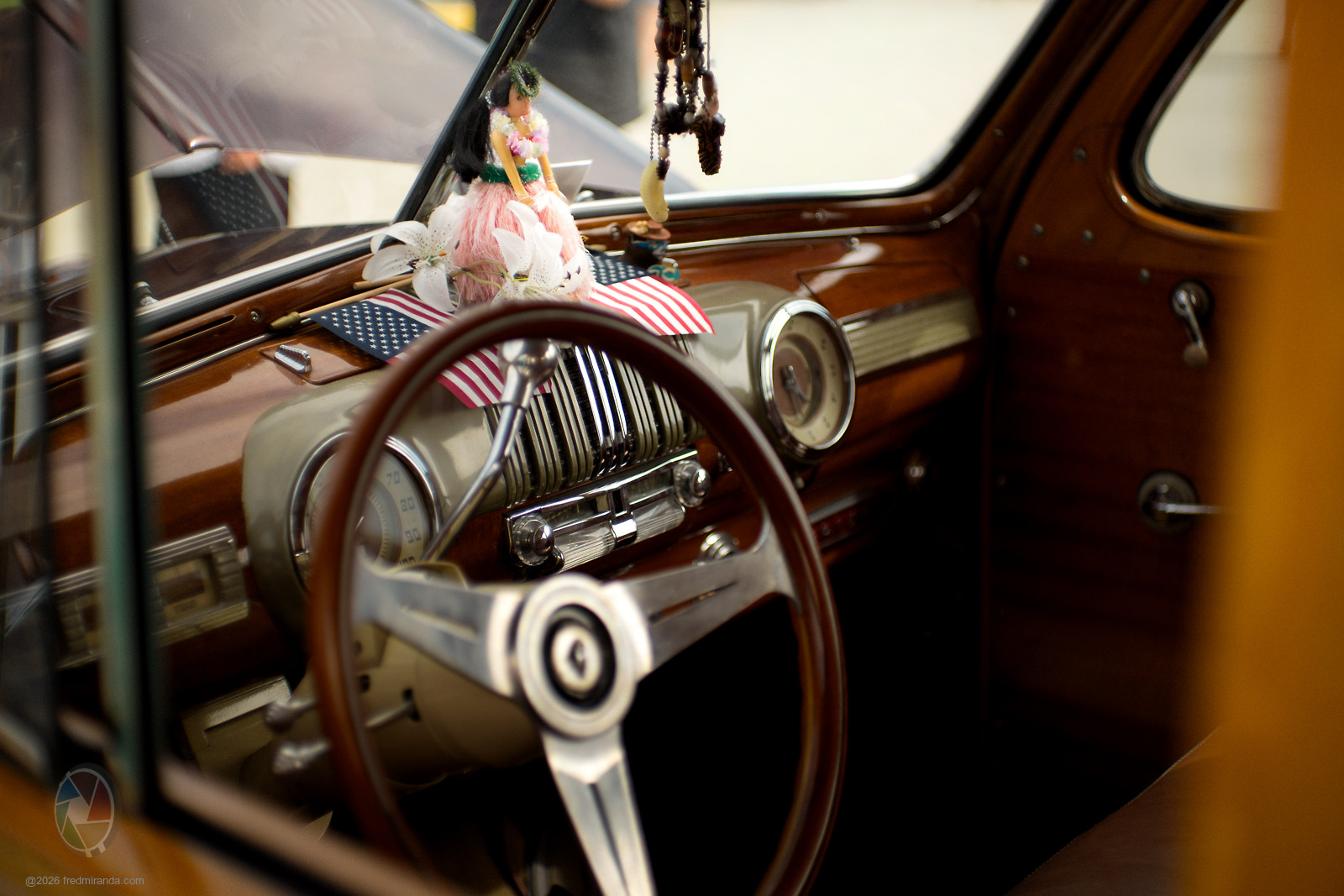
Fred, as usual, has been very thorough and precise in articulating and illustrating lens character in this thread. So I'll just add few pictures - all at f1.9 (except one with roses) on an M11-P, slightly edited - if helpful. Sorry, it's mostly flowers and around the house AGAIN :-( until I get to go out and do something else for a change :-)
Also, the infinity lock, which I thought would hate as much as I did on earlier Thypoch versions, didn't as much. It's easier to unlock with fingers though would prefer to see it gone. Focus at infinity (lock) is sharp based on few dull shots I took, to be seen what happens when the air is too hot and refraction starts playing tricks with the sight (since you can't go beyond infinity).
If you ever use a Techart AF adapter with M lenses on say a Nikon Z5II the infinity lock is perfect since it needs one to put the lens on infinity to focus correctly.
I got the "standard" version as I wasn't seeking too much character this time (I have other lenses for that). Was somewhat of an impulsive purchase based on its looks as I have enough lenses already in this focal length. But then, can one ever have enough 50's? :-)
Feels nice in the hands, little "industrial" feel if I may say so (by which I vaguely mean slightly "less" polished, less shiny feel of the metal surface?). Matches well with Safari (as Fred's pictures have shown) and also with the Gray body I think:
Mine is perfectly calibrated right out of the box, which is always a relief no matter the brand. Focus throw is not long (snaps focus quickly and decisively when you're in the vicinity), which some will like, and some who prefer longer, "gradual" focus throws for longer focal length lenses may not.
In my quick initial observations, the rendering of this "standard" coating of the lens seems akin to Leica's pre-FLE 50mm, i.e., not steel rim re-issue level of character but enough of a character to be an enjoyable daily carry if you're into 50mm focal length. Being f1.9 wide open, you nail focus more often than Summiluxes or wider 50mm lenses. Somehow reds seem to preserve definition very well with this lens, which could be a combination of sensor plus lens coating. I have struggled in past with "mushy" looking reds at times. This matters to me because I often shoot flowers.
Fred, as usual, has been very thorough and precise in articulating and illustrating lens character in this thread. So I'll just add few pictures - all at f1.9 (except one with roses) on an M11-P, slightly edited - if helpful. Sorry, it's mostly flowers and around the house AGAIN :-( until I get to go out and do something else for a change :-)
Thanks for the samples. I really like how it looks on the new M11-P Gray...it's a great match.
Like you, I have quite a few 50mm lenses, including those compared against the ZS6 here, but the 50mm f/1.9 ZS6 strikes an appealing balance. It delivers excellent performance wide open without excessive SA or glow, while still offering a unique and expressive rendering. It's quickly becoming one of my favorite "f/2-class" 50mm lenses.
I tend to prefer the "low contrast" version, simply because it brings the contrast down slightly, but both perform similarly in my view. It's not about different coatings...I suspect Light Lens Lab tweaked element spacing ever so slightly between the versions.
Wouldn’t changing element spacing affect resolution? Seems like resolution is comparable between the standard and low contrast versions. Also from the website the low contrast version is supposed to preserve detail in highlight and shadow better, which sounds a little too good to be true
spendychucky wrote:
Wouldn’t changing element spacing affect resolution? Seems like resolution is comparable between the standard and low contrast versions. Also from the website the low contrast version is supposed to preserve detail in highlight and shadow better, which sounds a little too good to be true
It truly does have lower contrast, and I think the resolution takes a very slight hit as well. What I meant is that some manufacturers offer both single-coated and multi-coated versions of the same lens, where the primary difference is usually contrast and flare resistance when shooting into strong light sources. In the case of the ZS6 Low Contrast version, however, not only is contrast reduced, but there also appears to be a slight reduction in fine high-frequency detail.
That said, the effect is quite subtle and unlikely to matter in real-world photography unless you're examining images at high magnification or making direct side-by-side comparisons.
Most of the images were captured wide open at f/2 in late afternoon light, with subjects positioned at a variety of distances.
Post processing was intentionally kept to a minimum, consisting only of minor sharpening (40, 0.8, 20, 50) and small exposure adjustments. I used the Adobe Color and Monochrome profiles throughout to allow the lens’s natural color rendition and tonal character to shine through.
Fred Miranda wrote:
Finally, a comparison between the Light Lens Lab 50mm f/1.9 Rigid-ZS6 Standard and Low Contrast versions.
As seen here, the Low Contrast version reduces micro-contrast slightly, giving the image a more subdued, organic rendering. The difference is subtle overall, but it becomes more noticeable in fine texture and local contrast.
Two observations:
1: is there a lightbtransmission difference between the two versions? Seems like low contrast was shot at 1/800 vs standard at 1/1000 yet appears slightly dimmer.
2. The low contrast lens appear to have less purple fringing in this instance, could this be the case in general in high contrast scenes?
1: is there a lightbtransmission difference between the two versions? Seems like low contrast was shot at 1/800 vs standard at 1/1000 yet appears slightly dimmer.
2. The low contrast lens appear to have less purple fringing in this instance, could this be the case in general in high contrast scenes?
Comparison: Light Lens Lab 50mm f/1.9 Ridid-ZS6 Standard vs Low Contrast
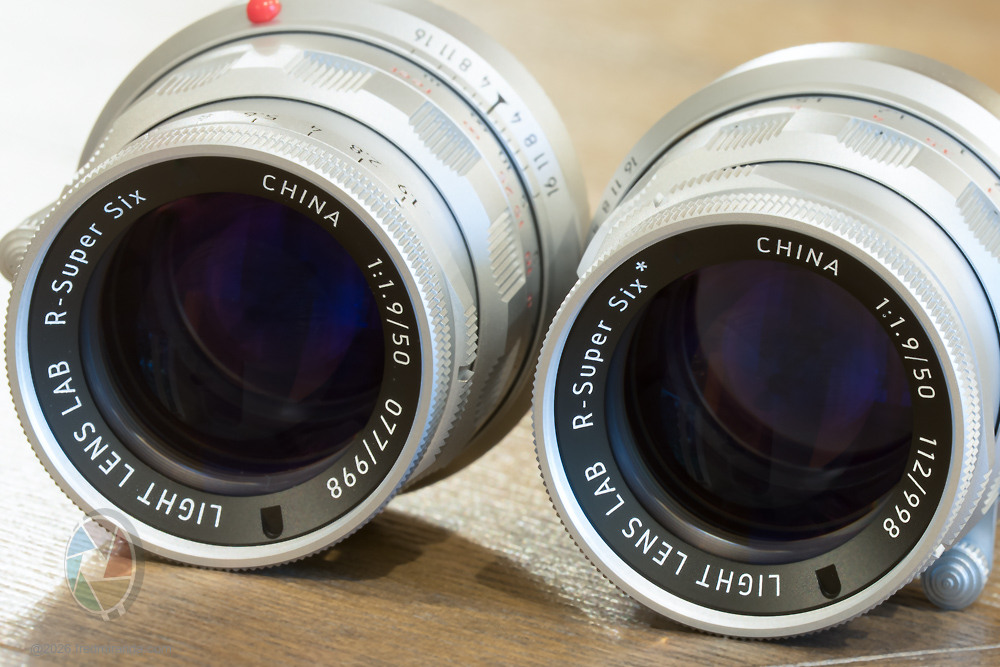
This comparison looks at rendering differences in performance, contrast, spherical aberration, coma, and overall character between the Rigid-ZS6 in both Standard and Low Contrast versions.
Light Lens Lab 50mm f/1.9 ZS6 Standard vs Low Contrast (R-Super Six*)
@spendychucky, Great questions -- here's what I've found:
1. Both lenses have the same light transmission. In some side-by-side comparisons, especially when using Auto Exposure so I don't have to adjust settings for every scene, small exposure differences can occasionally appear. Since these tests are done outdoors, even the few seconds required to swap lenses can result in slight variations, particularly when the light is changing rapidly.
As shown below, I also performed a more controlled test under very stable lighting conditions, and in those comparisons the exposure remained identical between the two lenses.
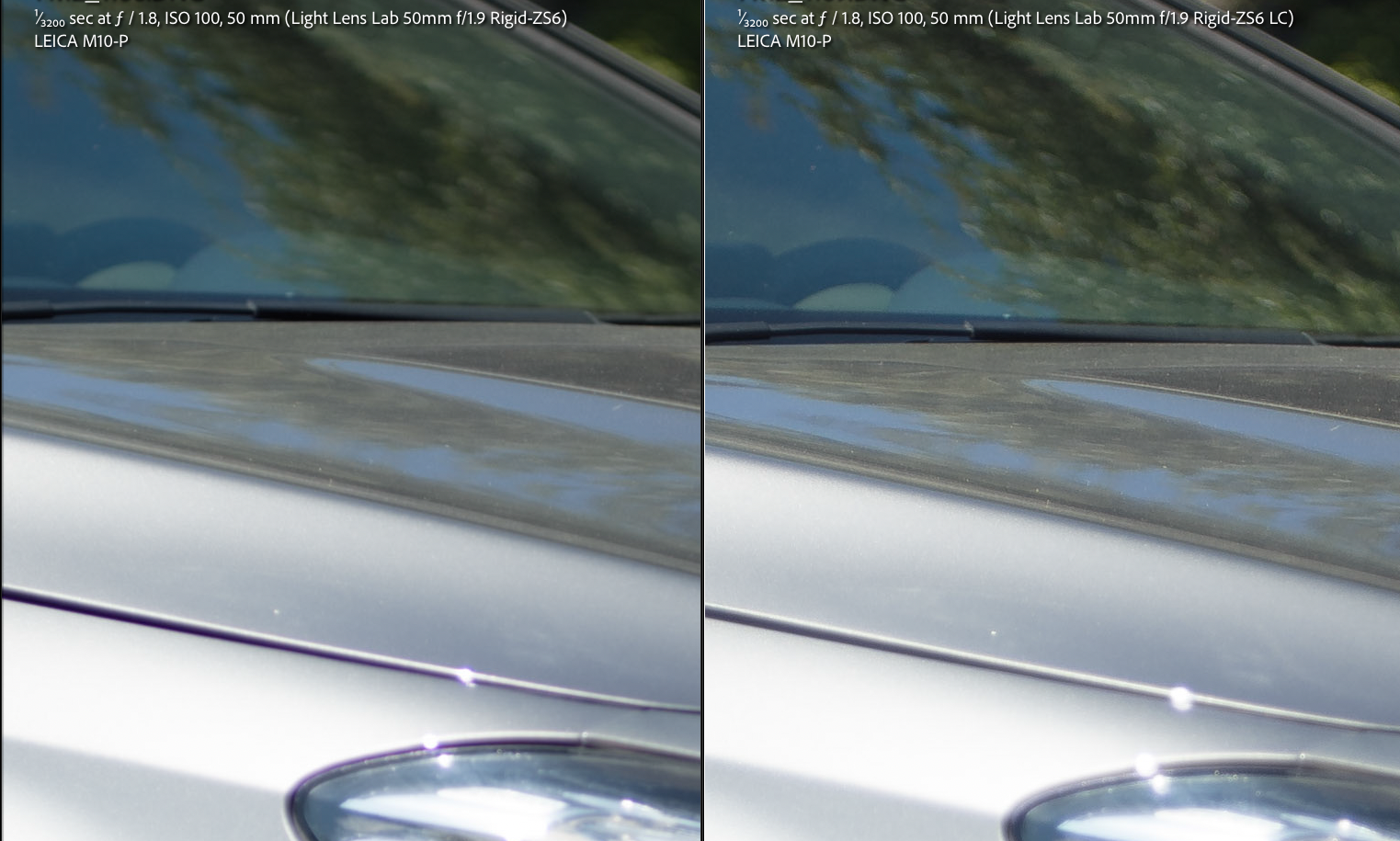
2. Yes, I've noticed that as well. The Low Contrast version appears to be less corrected for spherical aberration, which typically results in reduced purple fringing around the plane of focus. At the same time, I also noticed stronger coma with the Low Contrast version.
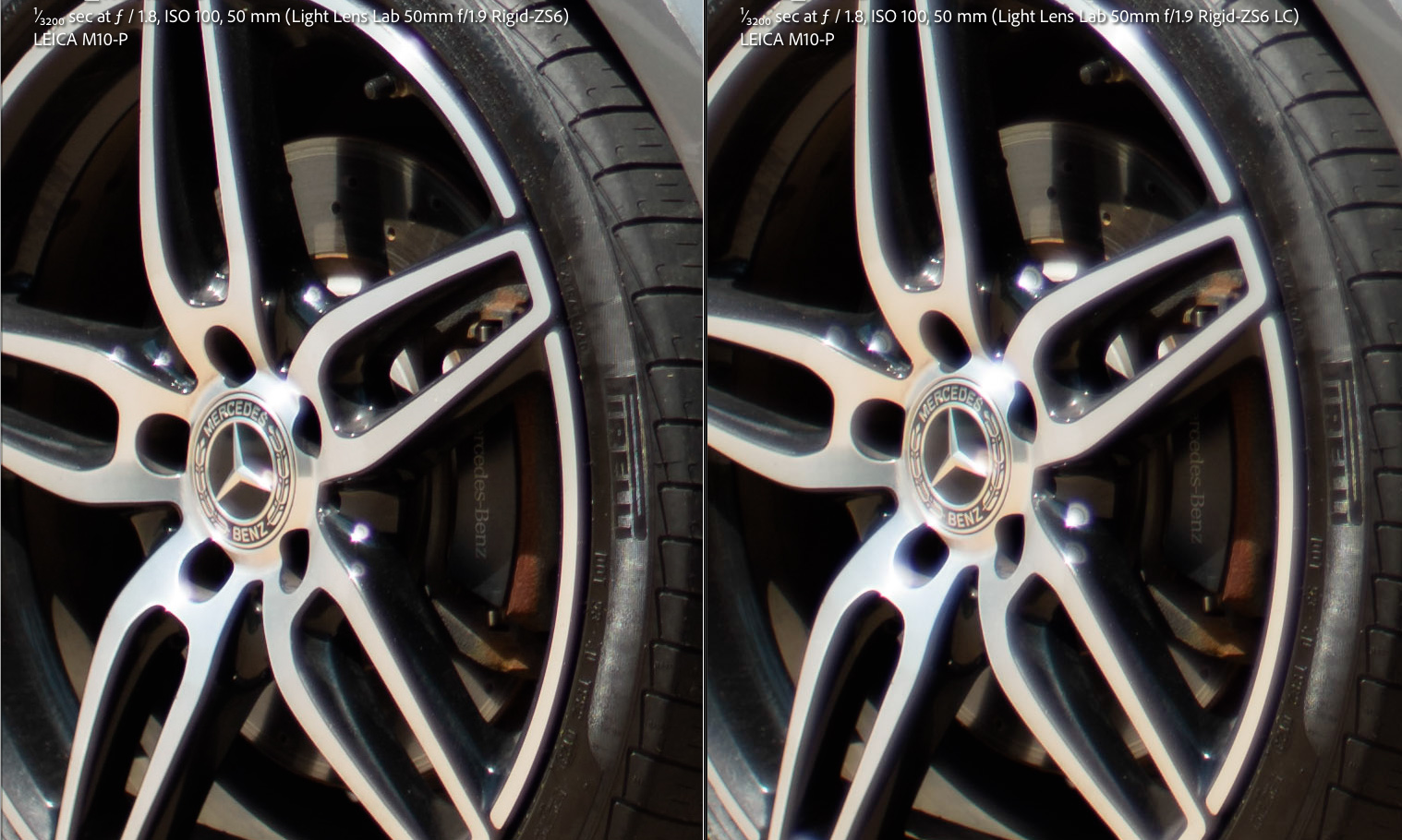
As I mentioned in the review, the optical formula was tweaked for the Low Contrast version, so the differences go beyond simply using a different coating. In the example below, you can clearly see the increased spherical aberration and coma in the Low Contrast version (marked "LC").
Standard version
LEICA M10-PLight Lens Lab 50mm f/1.9 Rigid-ZS6 lens50mmf/1.81/3200s100 ISO-0.3 EV
Here are some 100% pixel-level crops illustrating the differences described above. The Low Contrast version (marked "LC") shows increased spherical aberration and stronger coma, while also exhibiting slightly reduced purple fringing around the plane of focus.
Exposure is identical between the two versions. Repeated tests under stable mid-day lighting consistently show no exposure difference.
Focus area: the LC version shows lower contrast due to higher spherical aberration
Background rendering is very similar between the two versions
Background rendering is very similar between the two versions
Highlights are similar overall, but the LC version shows a more noticeable dot in the specular highlights compared to the Standard version
Strong coma for the Low Contrast version
Higher axial chromatic aberration is visible in the Standard version, while the Low Contrast version (LC) shows reduced off-axis contrast and lower resolving performance off-axis
Here is a comparison between the ZS6 Standard and Low Contrast versions at infinity near the center of the frame. The differences are subtle, but the Standard version shows higher micro-contrast and better correction of spherical aberration, which may or may not be desirable depending on the intended use.
Thanks for the samples and review. I was considering getting this but there is just something about the bokeh that is not to my taste and I find hurts my brain. It's like a doubling effect. I rarely shoot wide open in daylight though because I only shoot film so probably wouldn't be an issue. I think my LLL 50mm f2 "rigid" is probably enough.