fredmiranda.com
Login

Moderated by: Fred Miranda
  New fredmiranda.com Mobile Site
  New Feature: SMS Notification alert
  New Feature: Buy & Sell Watchlist
  

FM Forums | Leica & Alternative Gear | Join Upload & Sell

1       2       3              24              end
  

New Leica SL3-P Rumors


old-gregg
Offline
• • •
Upload & Sell: Off
p.25 #1 · New Leica SL3-P Rumors


Lege Artis wrote:
I have compared the SL2 and SL3 extensively, including DNG files in Lightroom and Capture One, and my impression is that the SL3 has a different colour signature


Cameras have nothing to do with color, or to be more technically correct, digital color is 100% software construct. SL2 and SL3 do not have any "color signatures". You were comparing contrast curves and LUTs made by Adobe and CaptureOne. Just like in the film days, your Leica wasn't responsible for colors, Kodak was.


Jul 30, 2026 at 11:55 PM
pmeheut
Offline
• • •
Upload & Sell: On
p.25 #2 · New Leica SL3-P Rumors


old-gregg wrote:
Cameras have nothing to do with color, or to be more technically correct, digital color is 100% software construct. SL2 and SL3 do not have any "color signatures"


AFAIK, bayer matrix filters and spectral sensitivity of the sensor have some influence...


Jul 31, 2026 at 01:07 AM
flash
Offline
• • • • •
Upload & Sell: On
p.25 #3 · New Leica SL3-P Rumors


old-gregg wrote:
Cameras have nothing to do with color, or to be more technically correct, digital color is 100% software construct. SL2 and SL3 do not have any "color signatures". You were comparing contrast curves and LUTs made by Adobe and CaptureOne. Just like in the film days, your Leica wasn't responsible for colors, Kodak was.


There are definitely hardware differences between sensors. Different CFA arrays.. Some sensors are more sensitive to IR than others etc. The filter stack or lack thereof makes a hardware limitation on what colours the wafer gets. The most extreme are full spectrum or IR modified cameras but even regular sensors with the same base silicon can have subtle differences because a different CFA can filter out slightly different parts of the spectrum. The base silicon should be the same but it only *sees* the colours the filter stack lets through.

As someone who’s been down the colour management rabbit hole I spent a lot of time making custom profiles for different cameras. I started with simple dual illumination profiles and later moved to targeted multi temperature profiles with up to 32 illumination samples. I could get very close for one lighting only to have a noticeable difference in another. In the end I found it impossible to match every sensor in every lighting condition to another sensor. It’s the reason the SL3, SL3-S and SL3-P all hav eye slightly different colour signatures. Even Hasselblad with individually calibrated sensors and the HNCS workflow didn’t get the X2D to look exactly like the X1D.

I would agree the differences between most mirrorless sensors are relatively small but it’s not entirely software.

Gordon


Jul 31, 2026 at 02:07 AM
jigesh
Online
• • •
Upload & Sell: On
p.25 #4 · New Leica SL3-P Rumors


RustyBug wrote:


Which models has this been susceptible to so far ... SL3, SL3-S ... both, SL2, SL2-S, etc. I've only got my SL2-S right now, so wanting to better understand what others are experiencing.


Indeed, SL2, SL2-S did not have this issue as per the reports. The issue is image in the EVF getting blurry if you try to zoom-in for more accurate manual focus, the image in the SL3 and SL3-S EVF gets blurry making it hard to critically focus in those cases. If you don't zoom-in, the image remains sharp, and you still can manually focus of course.

It would be curious to know if SL3-P has managed to resolve it or if they behave like SL3/Sl3-S. EVF is the same in SL2, SL2-S, SL3, SL3-S, SL3-P; so it shouldn't be an EVF issue per se; but likely something to do with higher resolution and processor cache. This of course is my speculation. Some say firmware could fix it, I don't know if that's true.


Jul 31, 2026 at 04:48 AM
Lege Artis
Offline

Upload & Sell: Off
p.25 #5 · New Leica SL3-P Rumors


old-gregg wrote:
Cameras have nothing to do with color, or to be more technically correct, digital color is 100% software construct. SL2 and SL3 do not have any "color signatures". You were comparing contrast curves and LUTs made by Adobe and CaptureOne. Just like in the film days, your Leica wasn't responsible for colors, Kodak was.


From my own experience, I would not describe digital colour as being purely a software construct, but I also would not say that colour is determined by the sensor alone.

The final image is always the result of several interacting stages: the sensor data itself, the camera manufacturer’s calibration, the RAW converter and the complete colour management workflow. Lightroom, Capture One and other converters can interpret the same RAW file differently, even when using camera-specific profiles.

At the same time, the sensor itself is not irrelevant. A sensor does not record colour directly; it records light through a specific spectral response determined by factors such as the CFA (colour filter array), filter stack, microlenses and the characteristics of the sensor itself. These physical differences influence the information that reaches the RAW file. Software can compensate for many differences, but it cannot completely eliminate them under every lighting condition.

For this reason, I tend to agree with Flash’s explanation here. In my opinion, the term “colour signature” is useful when it describes the combined result of sensor characteristics, manufacturer calibration and RAW processing. It does not mean that a camera has a fixed colour independent of software, but rather that the complete imaging system can produce a recognisable rendering.

My own observations come from comparing Leica SL2, SL3 and SL3-P DNG files in both Lightroom and Capture One. Under controlled conditions, for example with a ColorChecker, differences can appear relatively small. However, in real-world situations with complex colours and mixed lighting, I see more noticeable differences – especially in foliage, forest scenes, olive tones, browns and certain red/magenta colours.

Interestingly, I have observed a similar behaviour with Hasselblad. I compared the X2D 100C and the X2D II. Both cameras follow Hasselblad’s HNCS approach, yet I still perceive differences in colour rendering. For my personal preference, the older X2D 100C renders browns and earth tones in a way that appears more natural and realistic to me.

This does not mean that the newer camera is objectively less accurate. It simply shows that even with a very consistent colour philosophy, different sensor generations and different colour pipelines can lead to a different overall rendering.

So I would not frame the discussion as “hardware versus software”. In practice, colour is created by the interaction of both, together with the decisions made by the manufacturer and the RAW processing software.

That interaction is exactly what makes comparisons between different camera generations so interesting.

L.A.


Jul 31, 2026 at 04:59 AM


Search in Used Dept. 

RustyBug
Offline
• • • • • • •
Upload & Sell: On
p.25 #6 · New Leica SL3-P Rumors


pmeheut wrote:
AFAIK, bayer matrix filters and spectral sensitivity of the sensor have some influence...


+1

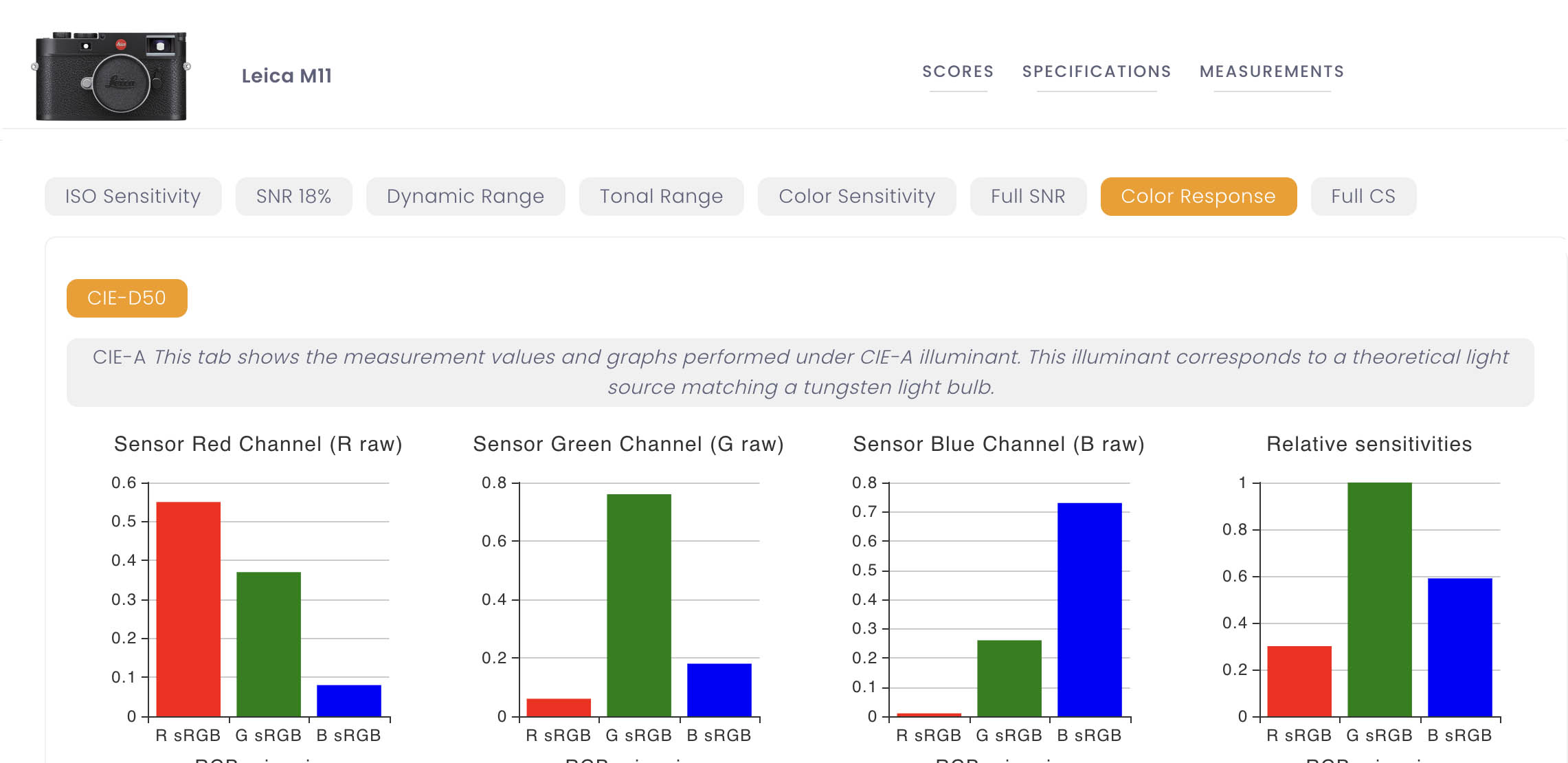
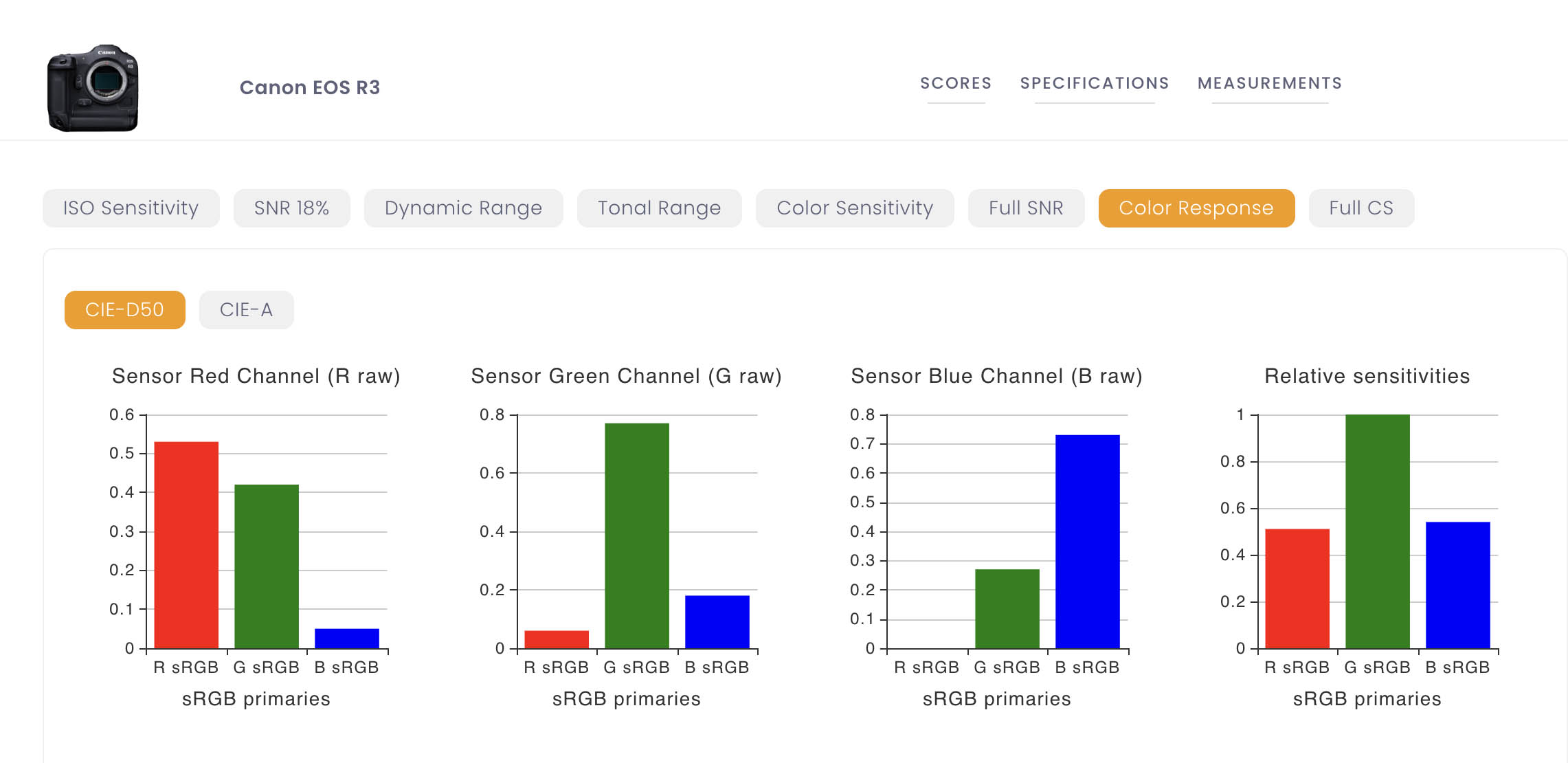
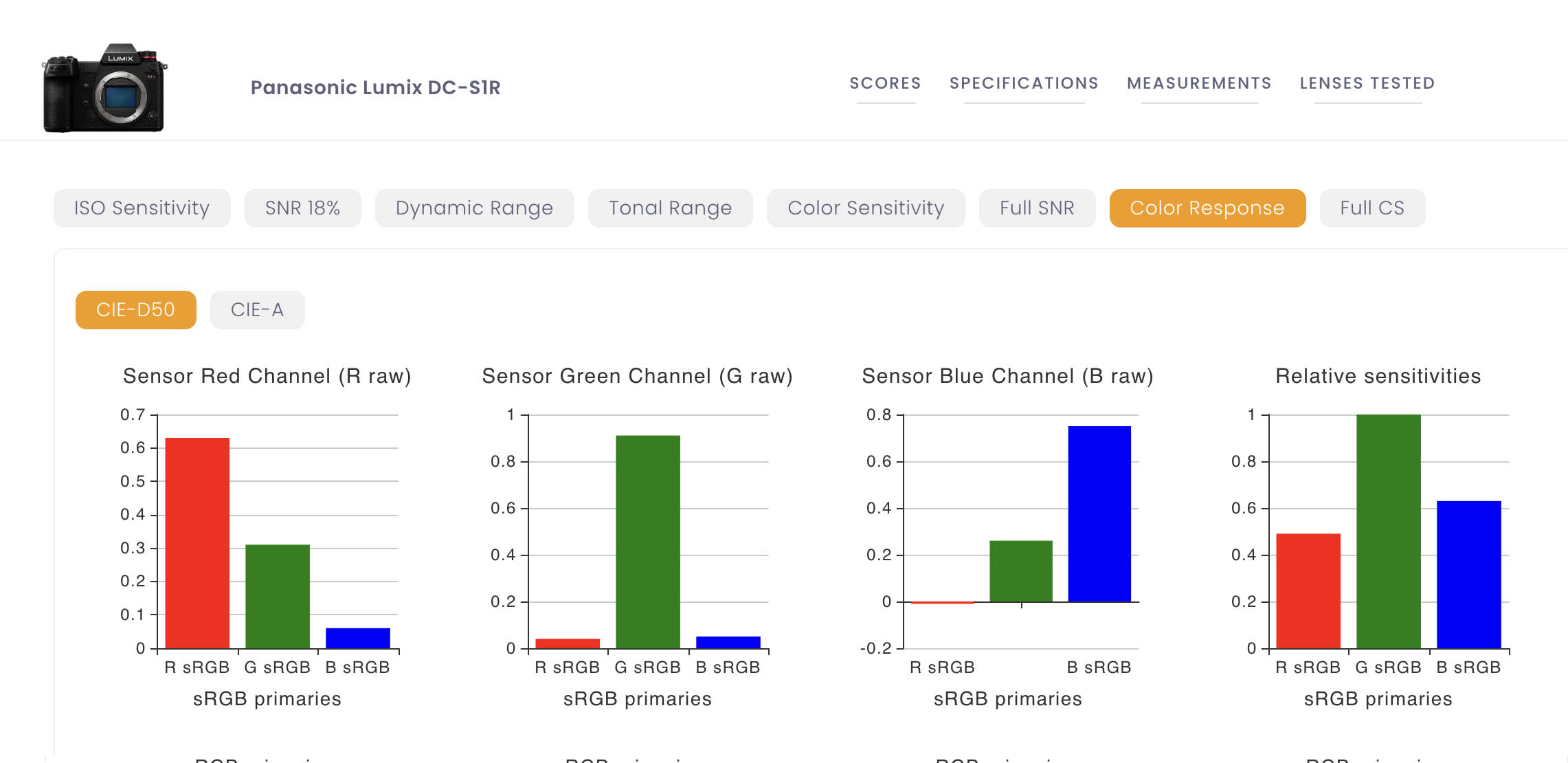
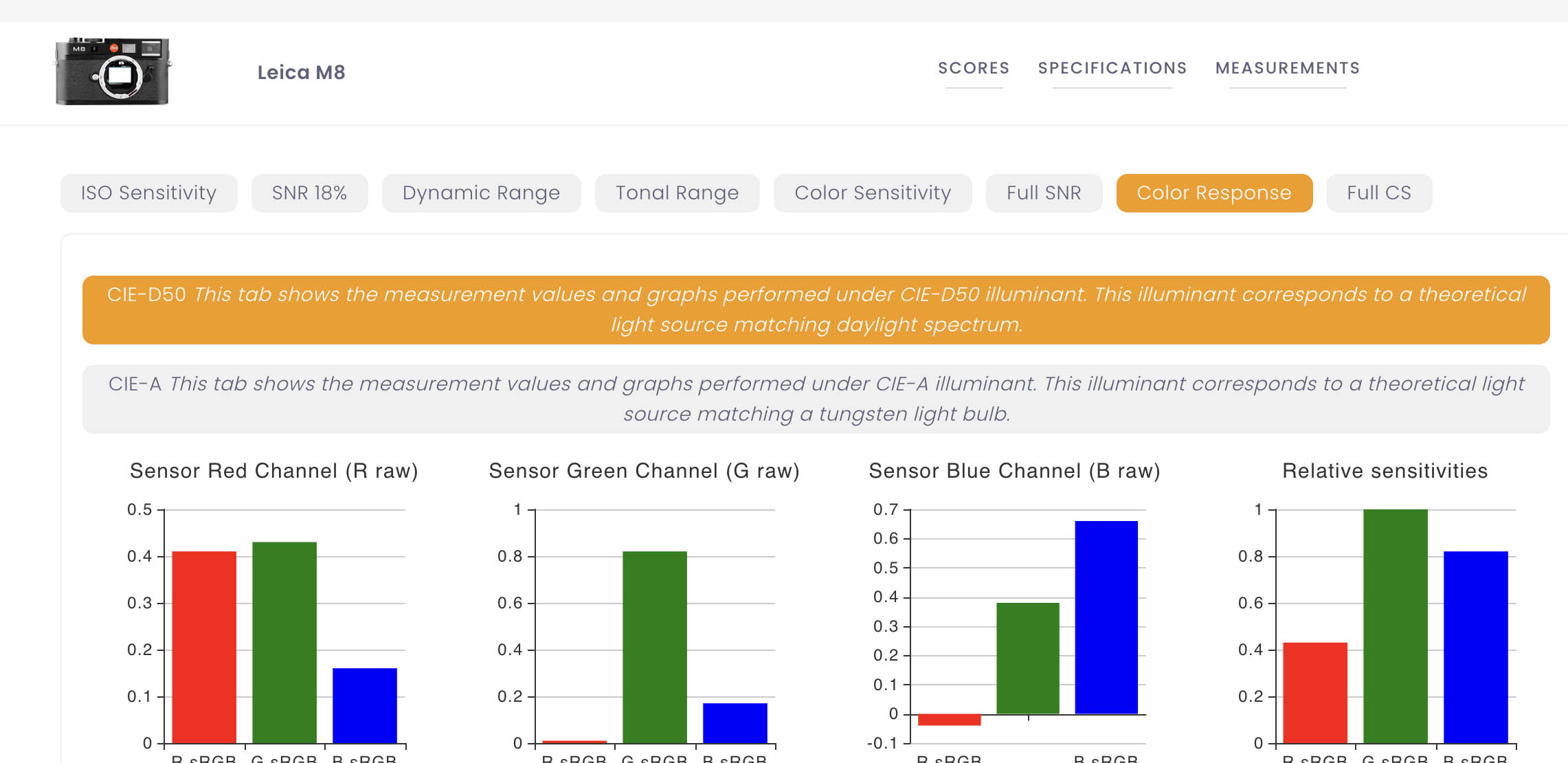
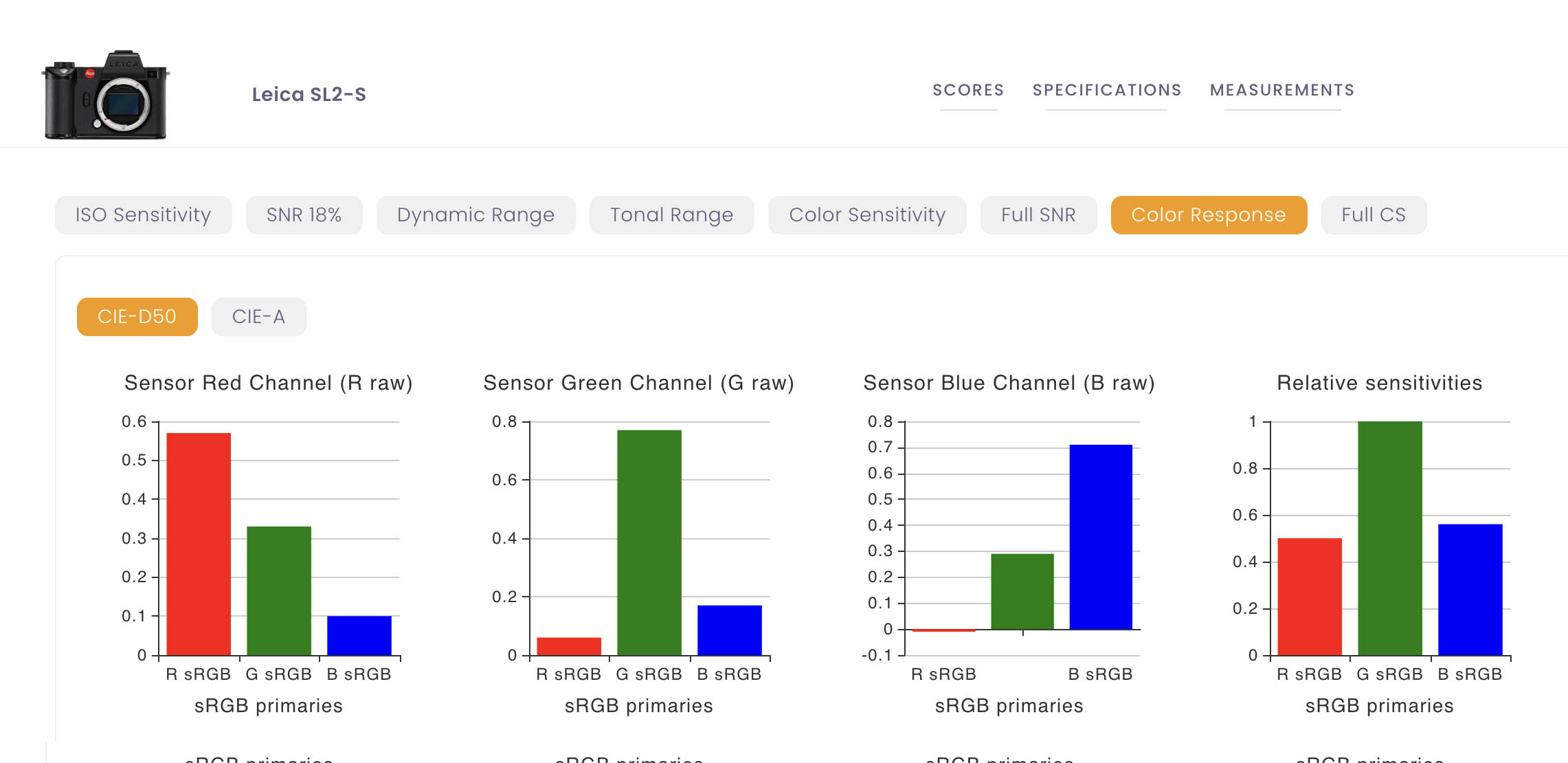
Yes, this can be seen in the DXOMark data on different camera sensors. They present the contribution of the individual R-G-B filter weighting.

https://www.dxomark.com/Cameras/Leica/M11---Measurements

Also, the density of the filters can vary among mfr's / models, which (iiuc) influences things like DR and ISO response (vs. gain, etc.).


IF it were solely a software matter alone, then everyone could just select a given profile ... no matter which camera they were using, and everything would be an exact match. However, that isn't the case. Case in point, can you just click on a a file from a Sony and apply a Hasselblad profile to get HNCS colors? or a Canon to get Fuji, etc. The physical filters dictate the light signal alterations, en route to the sensor. That base information is the starting point for the software calcs for a given profile.

OEM mfr's know where that starting point is for their models. Thus, the profiles they build in the software pick up from there. Non-OEM profiles, have to reverse engineer that information starting point to build theirs. That, or just apply general / universal profiles. This is where Hassy has "raised the bar" with their HNCS, in the calibration to land things as they do.

I tend to think of each camera as being a given film stock, and the standard processing provides for a given look. However, if I send a roll of film to the lab, I can ask them to process it in a non-standard way ... Hey, give it a longer bath to boost the contrast, etc. Leave it in the developer more / less, I may have exposed incorrectly. Then, from there, the printing processing (again, standard vs. custom), etc.

For us in digital realm, our camera's present the film stock. After that, we present as the lab. Standard processing = X, non-Standard processing = the entire alphabet of choices.

For ease of comparison ... take note of the scale on the far right. Notice how one camera uses a relative equal balance of red vs. blue. While another camera uses an asymmetric balance of red vs. blue. Two different amounts of energy (info) being transmitted to the sensor from the same light source. The range of how diff mfr's / models vary this relationship presents differences that can be detected.

I'd be curious to compare two diff models with vastly different weighting of the blue filter ... relative to how skies generate noise differently. So, it would seem that the choices for the BFA could be weighted toward skin tones R/G or skies B sensitivities by a given model / mfr ... or striving to achieve an overall balance of R/B relative to G for more general use purposes.

In the case of the M11 vs. M8, the R/B ratios are ballpark 1:2, but the density is different relative to G (0.3 / 0.6 vs. 0.4 / 0.8). Meanwhile the SL2-S is more like 1:1 for R/B at 0.5 / 0.5. So, it would seem that the noise levels of skies could differ for an M8 vs. an SL2-S by nearly a stop (0.8 vs. 0.5 is almost 2X), etc. More to it, but you get the gist.


With film, the spectral response was baked into the film stock (Fujichrome vs. Ektachrome vs. Kodachrome). With digital, the spectral response is baked into the BFA. With film, the post-capture of the spectral response went to the lab for development (E-6 vs. K). So, the combination of spectral response + post spectral response capture = final. With digital, the spectral response capture is then post-capture processed by the mfr's Standard profile. To the degree that we choose to employ standard processing vs. custom processing profiles ... infinitely variable (it's what we dreamed about in the pre-digital era).

Making Ektachrome look like Fujichrome or Kodachrome wasn't something readily achieved. Making an M11 look more like an M8, yeah, that's more doable, of sorts. But, starting out with a bias of sensitivity toward R vs. B vs. balanced, just presents the starting point. Where / how you land it ... how you get it there ... your choice.

So, yeah ... it's a bit more than just software (i.e. BFA + software) ... and, diff models do have different colors. It's baked in to the BFA DNA from the start, available to be changed to your hearts desire.



Jul 31, 2026 at 06:14 AM
old-gregg
Offline
• • •
Upload & Sell: Off
p.25 #7 · New Leica SL3-P Rumors


Lege Artis wrote:
From my own experience, I would not describe digital colour as being purely a software construct


Respectfully, I am not referring to experiences, I am just explaining how this works. It's my day job. I am not arguing with what you're seeing either, I believe you. But the differences in color you and other photographers are experiencing are the byproducts of skill/tool/process issues (gamut clipping, colorspace handling, sampling/precision issues, etc).

Yes, it's tempting to point a finger at sensor's spectral response, or to everyone's favorite suspects: the CFA array and the IR stack, to explain what you're seeing. But fundamentally, it's all done in software.

If you're technically inclined and curious, ask your favorite AI to explain how 3D LUTs work, and I can also recommend reading Adobe's documentation for the DNG format. For example, it embeds the sensor's native colorimetry, which means you can account for differences in color filtration stacks. There's even a separate color map to account for sample variations between sensors manufactured in different batches. The entire imaging pipeline was designed with the hardware abstraction in mind. Meaning, if Leica or any other manufacturer wanted to, they could swap the sensor vendor and you wouldn't even notice. The only caveat to add here, would be for common light sources because accounting for all theoretically possible illuminants is just impractical. But those are edge cases, and there are always edge cases with everything.


Jul 31, 2026 at 11:29 AM
highdesertmesa
Offline
• • • • •
Upload & Sell: On
p.25 #8 · New Leica SL3-P Rumors


jigesh wrote:
Indeed, SL2, SL2-S did not have this issue as per the reports. The issue is image in the EVF getting blurry if you try to zoom-in for more accurate manual focus, the image in the SL3 and SL3-S EVF gets blurry making it hard to critically focus in those cases. If you don't zoom-in, the image remains sharp, and you still can manually focus of course.

It would be curious to know if SL3-P has managed to resolve it or if they behave like SL3/Sl3-S. EVF is the same in SL2, SL2-S, SL3, SL3-S, SL3-P; so it shouldn't be an EVF
...Show more

This has been largely resolved by firmware updates (undocumented by Leica). I had the SL3 at launch, and back then, magnification while manually focusing an M lens was not great. I now have an SL3 Reporter, and magnification is much better. I don’t know when the improvements occurred, just that they did. It’s not SL2/SL2-S good, but it’s close enough. My theory is that Leica had to improve the firmware code over time to more efficiently handle PDAF data processing.

From Google:

Processing Demands of On-Sensor PDAF (new to Leica on the SL3 series)

Pixel Interpolation: Masked or split PDAF pixels receive light from only half of the lens, meaning the processor must fill in or interpolate the missing image data using values from surrounding normal pixels.

Phase Difference Calculations: The processor must actively compare the phase shift or distance data between pairs of left- and right-looking sub-pixels to determine focus direction and magnitude rather than just reading a standard frame.

Artifact Correction: Specialized algorithms are required to detect and fix potential image defects like "PDAF banding" or grid patterns that can appear in specific high-contrast or low-light shooting conditions


Jul 31, 2026 at 01:28 PM
RustyBug
Offline
• • • • • • •
Upload & Sell: On
p.25 #9 · New Leica SL3-P Rumors


old-gregg wrote:
Respectfully, I am not referring to experiences, I am just explaining how this works. It's my day job. I am not arguing with what you're seeing either, I believe you. But the differences in color you and other photographers are experiencing are the byproducts of skill/tool/process issues (gamut clipping, colorspace handling, sampling/precision issues, etc).

Yes, it's tempting to point a finger at sensor's spectral response, or to everyone's favorite suspects: the CFA array and the IR stack, to explain what you're seeing. But fundamentally, it's all done in software.

If you're technically inclined and curious, ask your favorite AI to explain
...Show more

Not quite sure how / why you think the CFA is to be dismissed as (not) altering the spectral response, en route to the sensor ... software taking over after that. Light is energy, and that energy is converted to the electrical signal, with the interpretation of that signal predicated on the color / density of the BFA in front of it ... the 1's and 0's take over from that point forward (iiuc).


Jul 31, 2026 at 02:54 PM
old-gregg
Offline
• • •
Upload & Sell: Off
p.25 #10 · New Leica SL3-P Rumors


RustyBug wrote:
Not quite sure how / why you think the CFA is to be dismissed as (not) altering the spectral response, en route to the sensor ... software taking over after that. Light is energy, and that energy is converted to the electrical signal, with the interpretation of that signal predicated on the color / density of the BFA in front of it ... the 1's and 0's take over from that point forward (iiuc).


For three reasons:

1. The differences between CFAs are small. For the same reason why all commercial jets look roughly the same: the industry has found the optimal combination of light separation vs loss.

2. The spectral response of the stack is encoded in the RAW data, which means the differences between sensors are accessible to software.

3. And finally, the captured information vastly exceeds the needs of a user. This means that all sensors, regardless of filters, are capturing wider gamut that monitors or printers can reproduce. This is why color engines in RAW converters do not use common colorspaces like P3 or AdobeRGB for internal processing, they are too limiting. The result is squeezed into the output colorspace at the last stage during export. Essentially the entire imaging pipeline is all about "chopping off" the excess data at each stage: it starts with CFAs and ends with a pixel glowing on your monitior. The entire process is software-controlled.

This is why the assumed belief that a camera A can "see colors differently" than a camera B is, strictly speaking, not incorrect. But it's irrelevant, because they both "see" far more than you can. That's why I keep repeating that the camera choice is irrelevant when it comes to color. Your tools and skills are.

And speaking of tools & skills, this business is messy. It requires attention to detail. For high-precision profiling, color targets must be stored in temperature-controlled environments and periodically discarded. How many people who tinker with profiles actually do that? Even Adobe periodically ships borked profiles.


Jul 31, 2026 at 03:25 PM
1       2       3              24              end


FM Forums | Leica & Alternative Gear | Join Upload & Sell

1       2       3              24              end


Welcome back
Log in to your account