Thypoch Ksana 35mm f/2 ASPH. Review
p.1 #1Thypoch Ksana 35mm f/2 ASPH. Review
 |
Purchase the Thypoch Ksana 35mm f/2 ASPH. lens:
Thypoch Store (Use promo code: FREDMIRANDA for a 5% discount at checkout) | B&H Photo
Voigtlander 35mm f/2 Ultron Aspherical at CameraQuest | B&H Photo
_______________
Review Quick Links:
- About the lens
- Infinity Resolution and Contrast compared to Voigtlander 35mm f/2 Ultron
- Infinity Resolution and Contrast adapted to Sony A7R II (42MP)
- Sunstar rendering, Flare resistance and Vignetting
- Field Curvature
- Distortion
- Minimal Focus Distance: Resolution and Contrast
- Rendering compared to Voigtlander 35mm f/2 Ultron
- Flare Resistance
- Chromatic aberration control
- Final Thoughts
- Samples 1: A Few Portraits
- Samples 2: Daylight Shots Across Various Angles and Distances
- Samples 3: Cars and Coffee
- Samples 4: Cars and Coffee II
Thypoch Ksana 35mm f/2 ASPH - Intro:
 |
||
 |
||
|
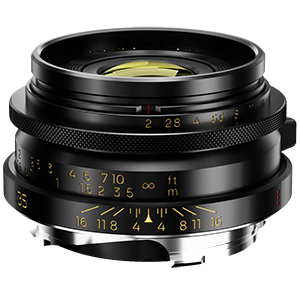
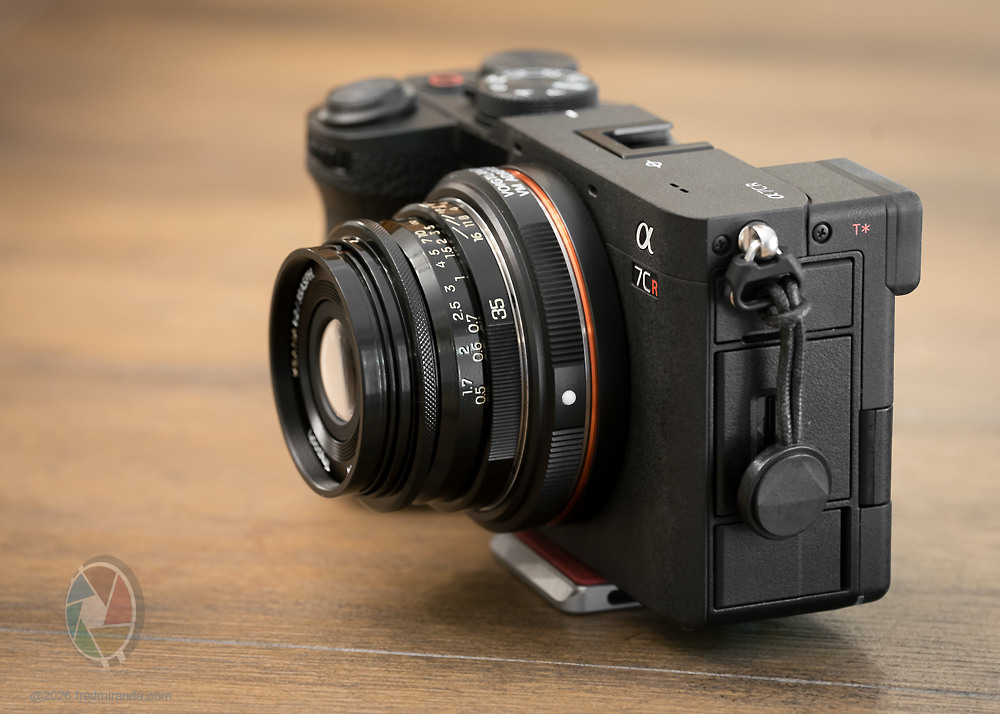
The Thypoch Ksana 35mm f/2 ASPH for Leica M sits in a pretty interesting space. The optical design uses 8 elements in 5 groups, including one ED, two HRI, and one aspherical element. It clearly leans modern in its correction and overall rendering, but aesthetically it feels like rangefinder use was a core priority from the start. The short barrel does not intrude into the 35mm framelines, the focusing tab has a nicely judged resistance, and the glossy black paint over brass gives it a very rich presence, especially on black paint M bodies.
 |
||
 |
||
|
Physically, this is exactly what you want from a compact M lens. At around 196g (measured) and just 27mm long, it stays completely out of the way once mounted. The balance is excellent, with no front heaviness, and it simply disappears in use. Its compact size is impressive, and it looks gorgeous on my Leica M10-R Black Paint. Even small details feel intentional, like the aperture ring's diamond cross texture, which visually echoes the shutter speed dial side pattern on the camera. It also uses a 39mm filter thread, which keeps it consistent with the compact M lens ecosystem.
|
||
 |
||
|
From my initial tests, I can already say the Thypoch Ksana 35mm f/2 ASPH is not a "vintage character" lens. Sharpness and contrast are there, consistency is there, and it holds together very well across the frame. The rendering is very much modern 35mm, with smooth transitions and minimal harsh highlight outlining. The result is predictable in a good way, but it doesn't slip into anything sterile or overly clinical.
|
||
 |
||
|
The interesting twist is the coating. The Epoch Coating 84 is Thypoch's proprietary multi layer coating on the Ksana 35mm f/2 ASPH, inspired by 1980s Olympus Zuiko lenses. It allows a controlled amount of light interaction when you push into strong light sources, instead of aggressively suppressing everything. You get a slight warmth and a gentle glow in certain situations, especially when shooting against the light, with hints of golden purple flare behavior depending on angle and intensity. At the same time, it maintains solid contrast and good transmission for modern sharpness and usability. It adds just enough character to keep it from feeling overly technical, landing in that useful middle ground between high image quality and a bit of atmospheric veiling when conditions demand it.
|
||
 |
||
|
Close focus at 0.5m is more useful than it looks on paper. On a 35mm M lens, that extra reach makes a real difference for close up compositions via Live View. The best part is the behavior after 0.7m, where the rangefinder coupling disengages. It gives a subtle tactile cue that you are out of RF range and need to switch to live view. It's a useful feature, although easy to miss if you are not actively paying attention to it.
|
||
 |
||
|
Build quality is excellent: tight tolerances on my copy, with zero play in either the aperture or focus rings. The brass construction adds a reassuring density without tipping into heavy. Legibility is the one weak point: the engraved numbers run small, and the amber paint filling them in gets hard to read once the light drops.
The aperture ring's click stops are also a bit mushy, so there isn't much tactile feedback between stops. The focus ring makes up for it: smooth, precise, and able to rack all the way down to 0.5m, an impressive minimum focus distance for a lens this size. None of that changes the overall impression: this is a well-made lens with a few minor quirks.
|
||
 |
||
|
The lens uses a 10 blade aperture which produces defined sunstars. I'll need more real world shooting to judge how symmetrical those rays are in practice, and how highlights behave when stopped down.
I will also test the Thypoch Ksana 35mm f/2 ASPH adapted to the Sony and Nikon mirrorless cameras to see if thicker sensor stacks introduce any performance penalty compared to Leica M bodies.
|
||
 |
||
|
|
||
 |
||
|
Thypoch Ksana 35mm f/2 ASPH Main Specifications:
⦿ Colour: Black / Silver (brass)
⦿ Focal Length: 35mm
⦿ Mount: M
⦿ Aperture: f/2 – f/16
⦿ Image Circle: 43.2mm (Full Frame)
⦿ Construction of Optics: 8 elements in 5 groups
⦿ Angle of View (diagonal / horizontal / vertical): 63° / 54° / 38°
⦿ Front Diameter: Ø42mm
⦿ Close Focus (from sensor plane): 0.5m
⦿ Iris Blades: 10
⦿ Filter Size: E39
⦿ Weight: 196g (measured)
⦿ Length: 27mm
⦿ Accessories: Lens Front Cap, Lens Back Cap (hood optional)
|
||
 |
||
|
Overall, first impression is promising. This is a very practical 35mm that delivers strong image quality in a compact package, with just enough optical personality to keep it interesting. It's also a very good looking lens, available in both black paint and silver chrome versions, both built in brass.
May 17, 2026 at 05:56 PM
p.1 #2Thypoch Ksana 35mm f/2 ASPH. Review
Very nice looking little lens, Fred. 👍.
It’s probably not possible, but I’d be interested how this performs on the Sony compared to the Thypoch 35/1.4 Simera.
It’s probably not possible, but I’d be interested how this performs on the Sony compared to the Thypoch 35/1.4 Simera.
May 17, 2026 at 06:27 PM
p.1 #3Thypoch Ksana 35mm f/2 ASPH. Review
I would love if this played at least kind of nicely on a Sony--the CV 35/2 is great on a Leica M and pretty impacted on a Sony.
May 17, 2026 at 08:56 PM
p.1 #4Thypoch Ksana 35mm f/2 ASPH. Review
I really like the 21 3.5-
If this gives a similar look and similar flaring, I will buy it. Looking forward to your thoughts here Fred-
If this gives a similar look and similar flaring, I will buy it. Looking forward to your thoughts here Fred-
May 18, 2026 at 09:38 AM
p.1 #5Thypoch Ksana 35mm f/2 ASPH. Review
RustyRus wrote:
I really like the 21 3.5-
If this gives a similar look and similar flaring, I will buy it. Looking forward to your thoughts here Fred-
I’ll be starting the Ksana 21/3.5 soon. It seems to use different coatings compared to the Ksana 35/2. Here's a side-by-side size comparison with the Voigtlander 21mm f/3.5 Color-Skopar.
 |
||
 |
||
|
May 18, 2026 at 10:43 AM
p.1 #6Thypoch Ksana 35mm f/2 ASPH. Review
$600. Same as a Cv 35 1.4 II.
Of course different rendering but still.
Of course different rendering but still.
May 18, 2026 at 11:09 AM
p.1 #7Thypoch Ksana 35mm f/2 ASPH. Review
Fred Miranda wrote:
I’ll be starting the Ksana 21/3.5 soon. It seems to use different coatings compared to the Ksana 35/2. Here's a side-by-side size comparison with the Voigtlander 21mm f/3.5 Color-Skopar.
I look forward to that. I haven't had a lot of time with the 21 yet, but so far I'm enjoying it. My first Thypoch.
May 18, 2026 at 11:24 AM
p.1 #8Thypoch Ksana 35mm f/2 ASPH. Review
Cool lens block diagram! Looks to be a quasi-symmetrical wide angle in the modern Biogon family (lots of similarities between it and the Zeiss 35mm f/2 ZM and Zeiss 35mm f/2.8 ZM/Voigtlaner 35mm f/2.5 VM).
Should hopefully be (nearly) free of geometric distortion.
I am not the biggest fan of the industrial design, but I have few doubts that the lens will be a good performer.
Should hopefully be (nearly) free of geometric distortion.
I am not the biggest fan of the industrial design, but I have few doubts that the lens will be a good performer.
May 18, 2026 at 11:49 AM
p.1 #9Thypoch Ksana 35mm f/2 ASPH. Review
asking for a friend....how many 35s does one need?
May 18, 2026 at 01:48 PM
p.1 #10Thypoch Ksana 35mm f/2 ASPH. Review
rsolti13 wrote:
asking for a friend....how many 35s does one need?
If I am selling, at least one more.
asking for a friend....how many 35s does one need?
If I am selling, at least one more.
May 18, 2026 at 08:07 PM
|
p.1 #11Thypoch Ksana 35mm f/2 ASPH. Review
rsolti13 wrote:
asking for a friend....how many 35s does one need?
Four. It's four, right? Unless we're including equivalent lenses for other formats, then it's six. Did I get it right?
asking for a friend....how many 35s does one need?
Four. It's four, right? Unless we're including equivalent lenses for other formats, then it's six. Did I get it right?
May 18, 2026 at 08:40 PM
p.1 #12Thypoch Ksana 35mm f/2 ASPH. Review
rsolti13 wrote:
asking for a friend....how many 35s does one need?
In theory, one 35mm lens is enough. In practice, every 35mm lens insists it's the must-have one!
asking for a friend....how many 35s does one need?
In theory, one 35mm lens is enough. In practice, every 35mm lens insists it's the must-have one!
May 18, 2026 at 08:54 PM
p.1 #13Thypoch Ksana 35mm f/2 ASPH. Review
Really like the idea of modern performance with vintage flare / ghosting. Looking forward to the review!
Here's my benchmark for pretty flare from a 35mm lens (single-coated, 8-element Nikkor-O 35mm f2). If it can match that, I'm very interested..
 Nymphenburg x Portra 400 by Felix, auf Flickr
Here's my benchmark for pretty flare from a 35mm lens (single-coated, 8-element Nikkor-O 35mm f2). If it can match that, I'm very interested..
Nymphenburg x Portra 400 by Felix, auf FlickrMay 18, 2026 at 10:53 PM
p.1 #14Thypoch Ksana 35mm f/2 ASPH. Review
freaklikeme wrote:
Four. It's four, right? Unless we're including equivalent lenses for other formats, then it's six. Did I get it right?
It's four if you're just starting out. :-)
More seriously, four is enough if you have enough 28s and 40s. With six or seven 28s and a few 40s you can get by with four 35s. So yes, in that context you got it right. :-)
rsolti13 wrote
asking for a friend....how many 35s does one need?It's four if you're just starting out. :-)
More seriously, four is enough if you have enough 28s and 40s. With six or seven 28s and a few 40s you can get by with four 35s. So yes, in that context you got it right. :-)
May 18, 2026 at 11:08 PM
p.1 #15Thypoch Ksana 35mm f/2 ASPH. Review
fjablo wrote:
Really like the idea of modern performance with vintage flare / ghosting. Looking forward to the review!
Here's my benchmark for pretty flare from a 35mm lens (single-coated, 8-element Nikkor-O 35mm f2). If it can match that, I'm very interested..
https://live.staticflickr.com/65535/55274943736_6f62c495c5_b.jpgNymphenburg x Portra 400 by Felix, auf Flickr
I'm also interested in this review. There are a lot of semi-fast 35s out there but for me, so far no 'goldilocks' 35. I'd be happy if this lens renders like the VM 35/1.7 (fairly clean/modern) while in an ergonomically more attractive package than the odd VM, which IMO was too long for a rangefinder 35mm design, and annoying due to the serrated focusing ring design.
As for interesting flare, I think there is something about many 35mm lens designs from the late 50s through 60s that kind of flare similarly. The above Nikkor-O image reminds me somewhat of the LTM Canon 35/2.
Meanwhile, the LLL 35/2 replica can be provoked quite severely:
May 19, 2026 at 01:27 AM
p.1 #16Thypoch Ksana 35mm f/2 ASPH. Review
dan98 wrote:
Four. It's four, right? Unless we're including equivalent lenses for other formats, then it's six. Did I get it right?It's four if you're just starting out. :-)
More seriously, four is enough if you have enough 28s and 40s. With six or seven 28s and a few 40s you can get by with four 35s. So yes, in that context you got it right. :-)
Hmm, I can't say I'm new. Does it count if I've owned fifty-nine of them to get to the ones I have? Also, getting it down to one per camera felt like an accomplishment. There should be bonus points for that.
I also appreciate the fact that this lens has a chunky focus tab. That puts my interest at zero, and I can appreciate Fred's review as a passive observer with no vested interest. Hopefully.
freaklikeme wrote
rsolti13 wrote
asking for a friend....how many 35s does one need?More seriously, four is enough if you have enough 28s and 40s. With six or seven 28s and a few 40s you can get by with four 35s. So yes, in that context you got it right. :-)
Hmm, I can't say I'm new. Does it count if I've owned fifty-nine of them to get to the ones I have? Also, getting it down to one per camera felt like an accomplishment. There should be bonus points for that.
I also appreciate the fact that this lens has a chunky focus tab. That puts my interest at zero, and I can appreciate Fred's review as a passive observer with no vested interest. Hopefully.
May 19, 2026 at 02:29 AM
p.1 #17Thypoch Ksana 35mm f/2 ASPH. Review
Back to Quick Links
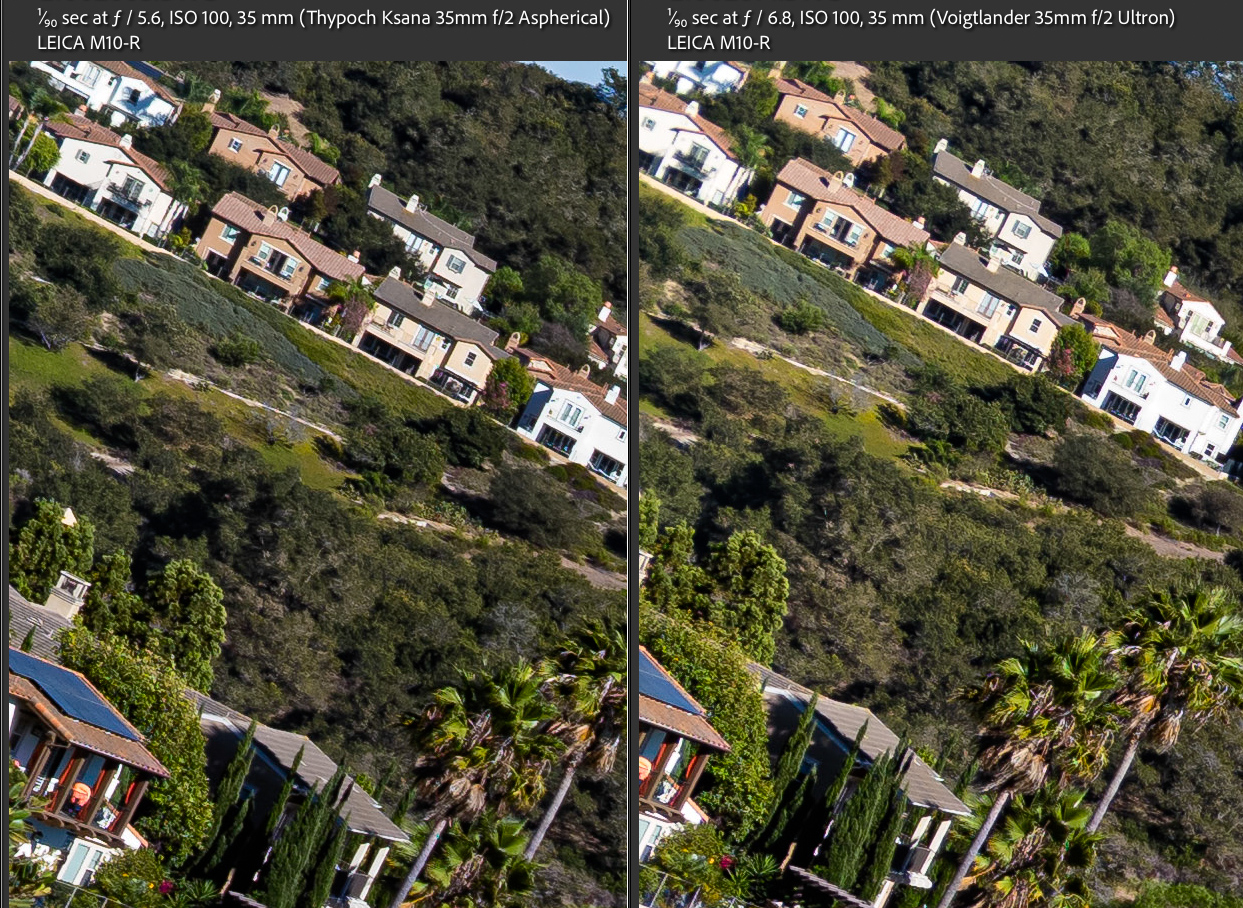
Resolution and Contrast compared to Voigtlander 35mm f/2 Ultron
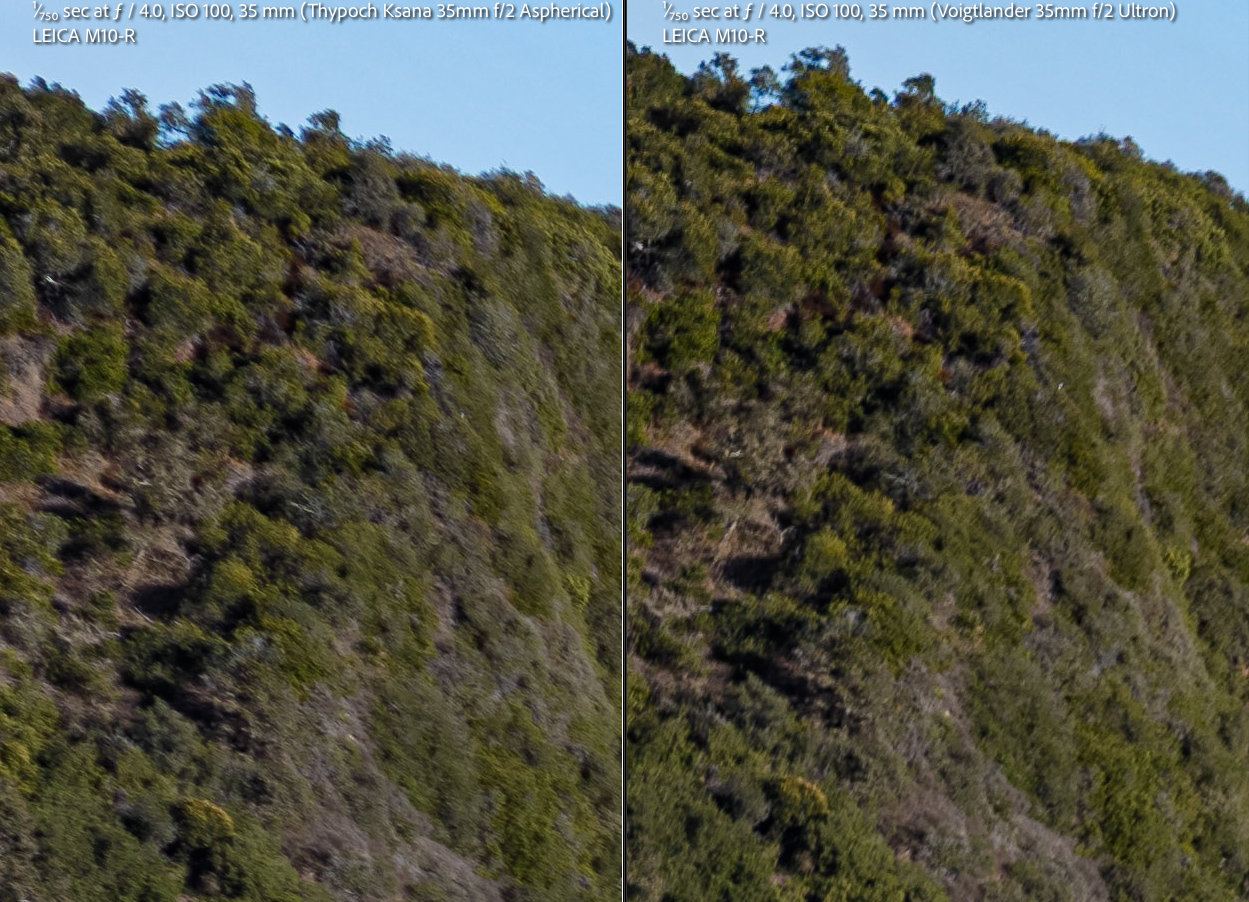
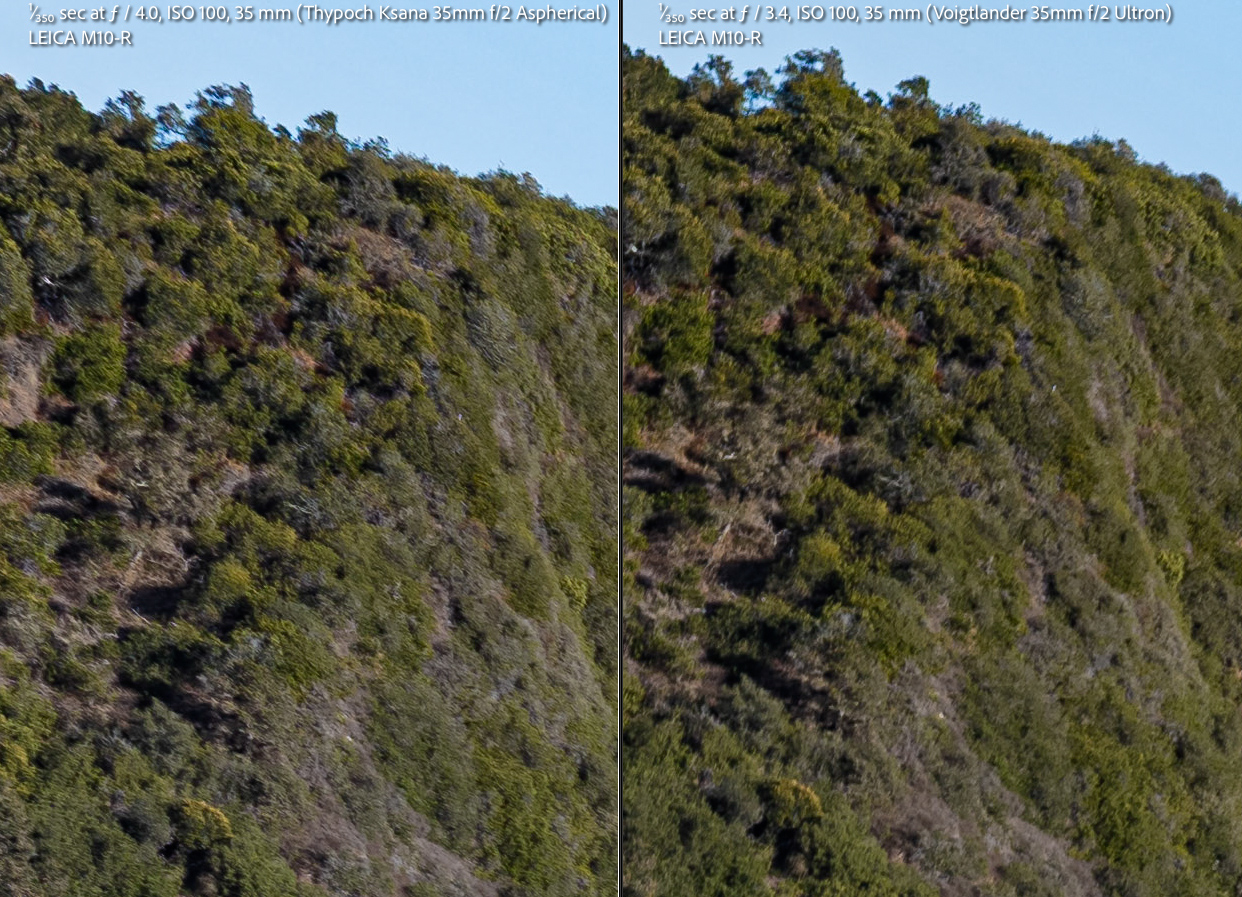
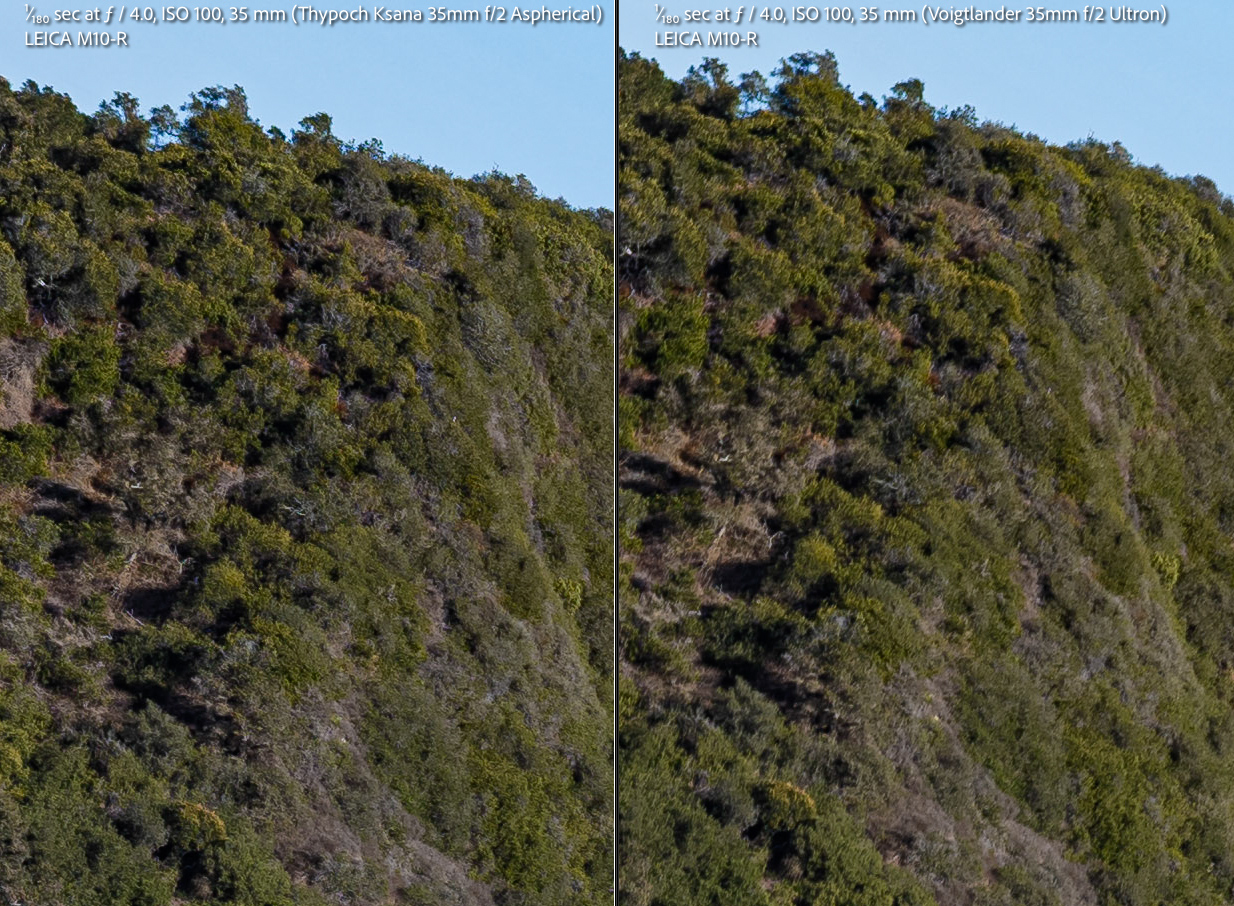
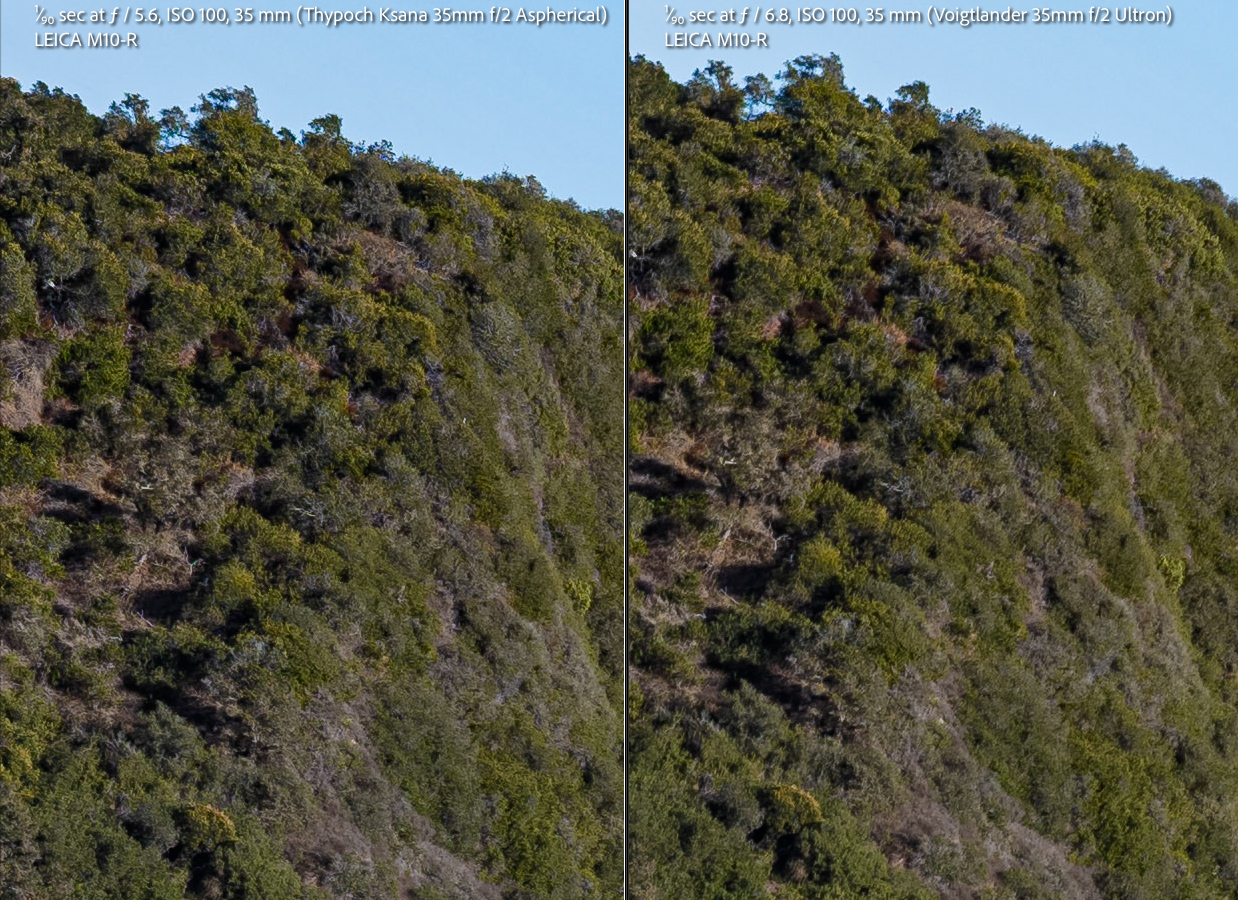
I wanted to see how the new Thypoch Ksana 35mm f/2 Aspherical stacks up against a known strong performer, after a few initial test shots showed impressively sharp centers. The obvious reference point, in size, price, and overall performance, is the Voigtlander 35mm f/2 Ultron.
The center results confirmed what those early shots hinted at: both lenses perform at a very similar level in resolution and contrast, though the Voigtlander still holds a slight edge in higher-frequency detail once stopped down.
At mid-field, the two are essentially equal wide open, and I'd give the edge to the Ksana once stopped down. In the extreme corners, the Ksana pulls ahead at wide apertures with more visible high-frequency detail, while both lenses perform excellently from f/5.6 on down.
Worth noting: the Ksana appears very slightly wider than the Ultron, so I had to adjust my tripod framing partway through testing to keep composition consistent between the two. My first copy was decentered and this one is centered.
The Ksana also shows more vignetting than the Ultron, especially wide open. That gap narrows considerably once both are stopped down.
Overall, this is a great showing for the Ksana, especially given its size. I hold the Voigtlander in very high regard for its resolution and contrast across the frame, and the two lenses perform remarkably similarly outside of the differences noted above.
|
||
|
||
|
|
||
 |
||
|
- Distance: Infinity
- Focus: Center - Best of three shots at maximum magnification
- White Balance: Daylight
- Software used: Lightroom with FM Default Landscape Sharpening; all other settings are at default.
PS: Vignetting, Chromatic Aberration (CA), and distortion were not corrected either in post-processing or in-camera.
Center Resolution and Contrast
Resolution and Contrast compared to Voigtlander 35mm f/2 Ultron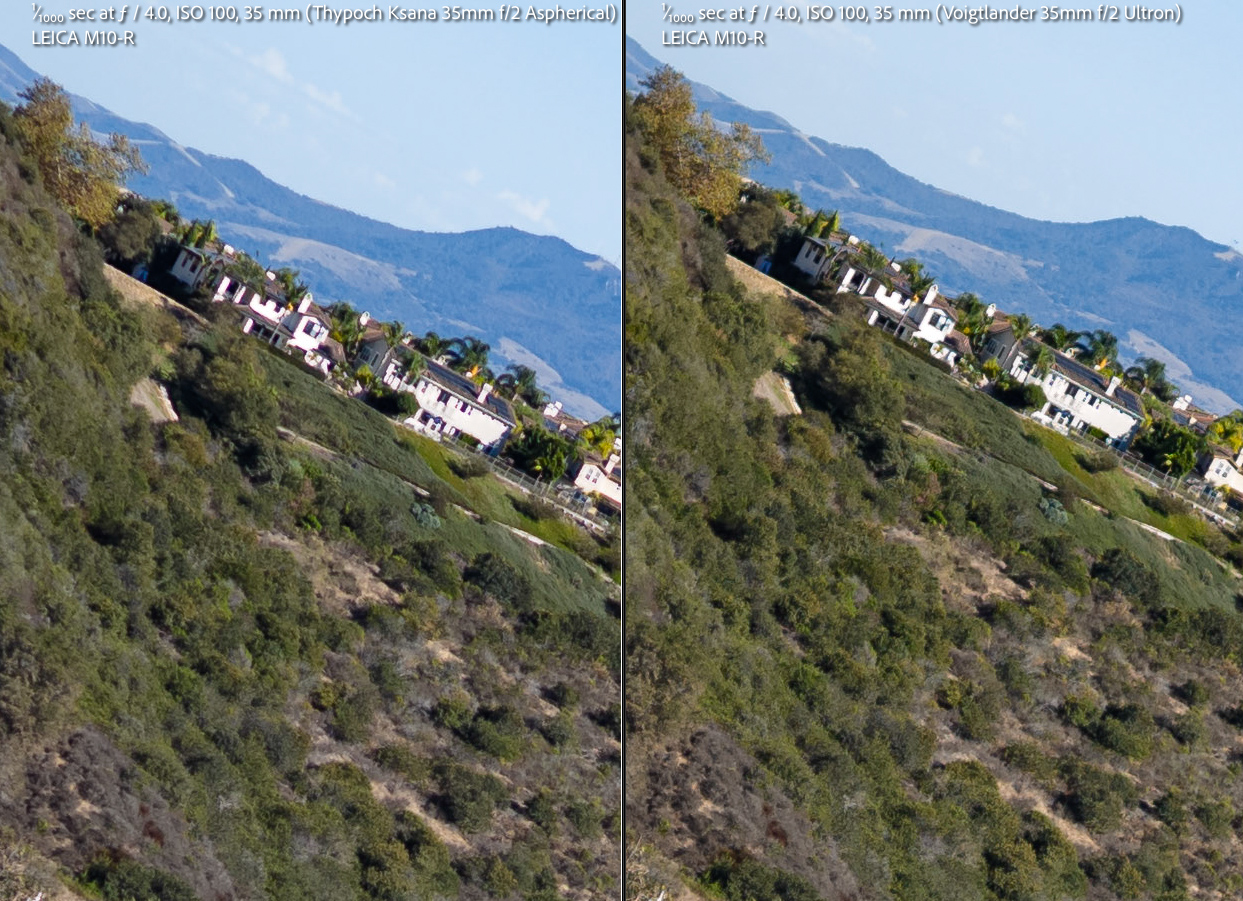
f/2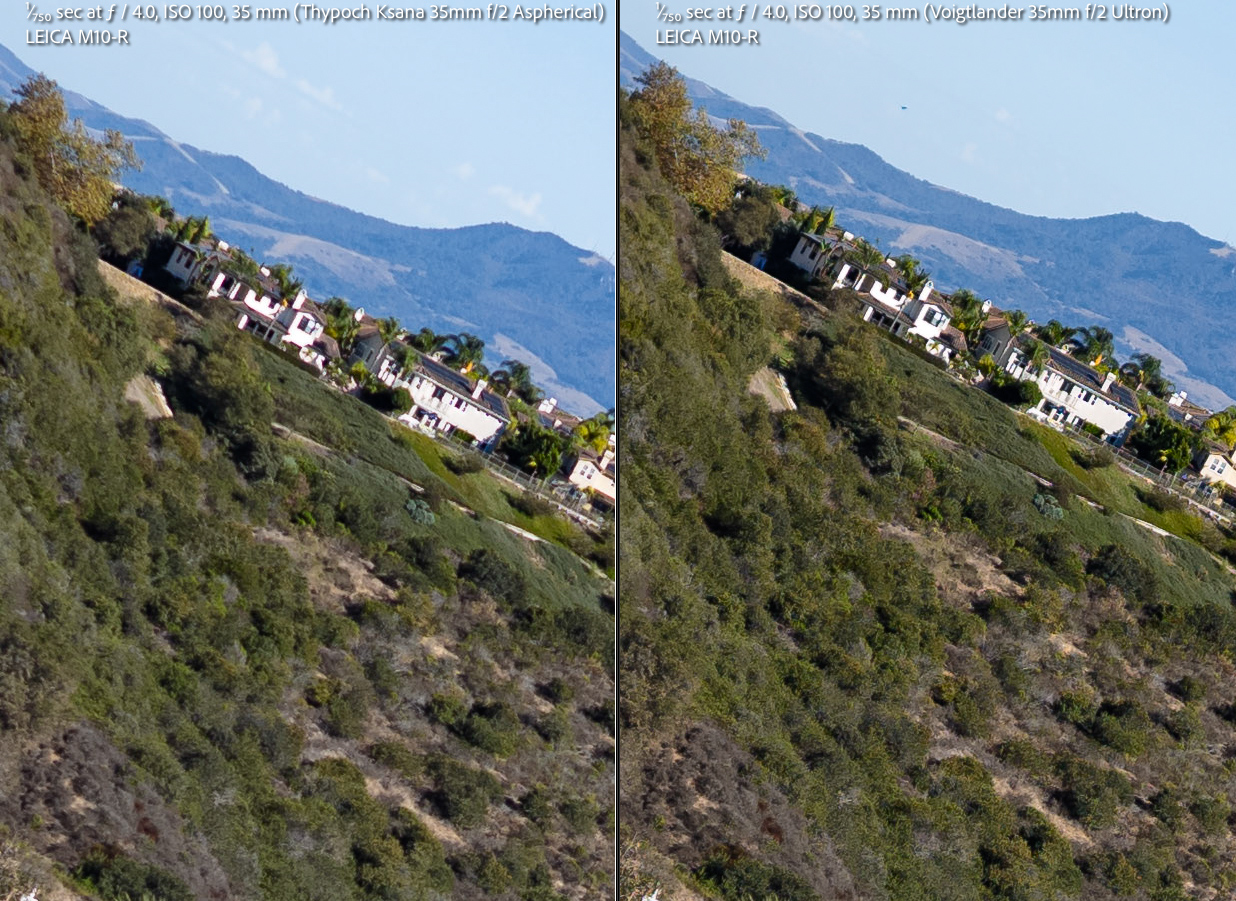
f/2.8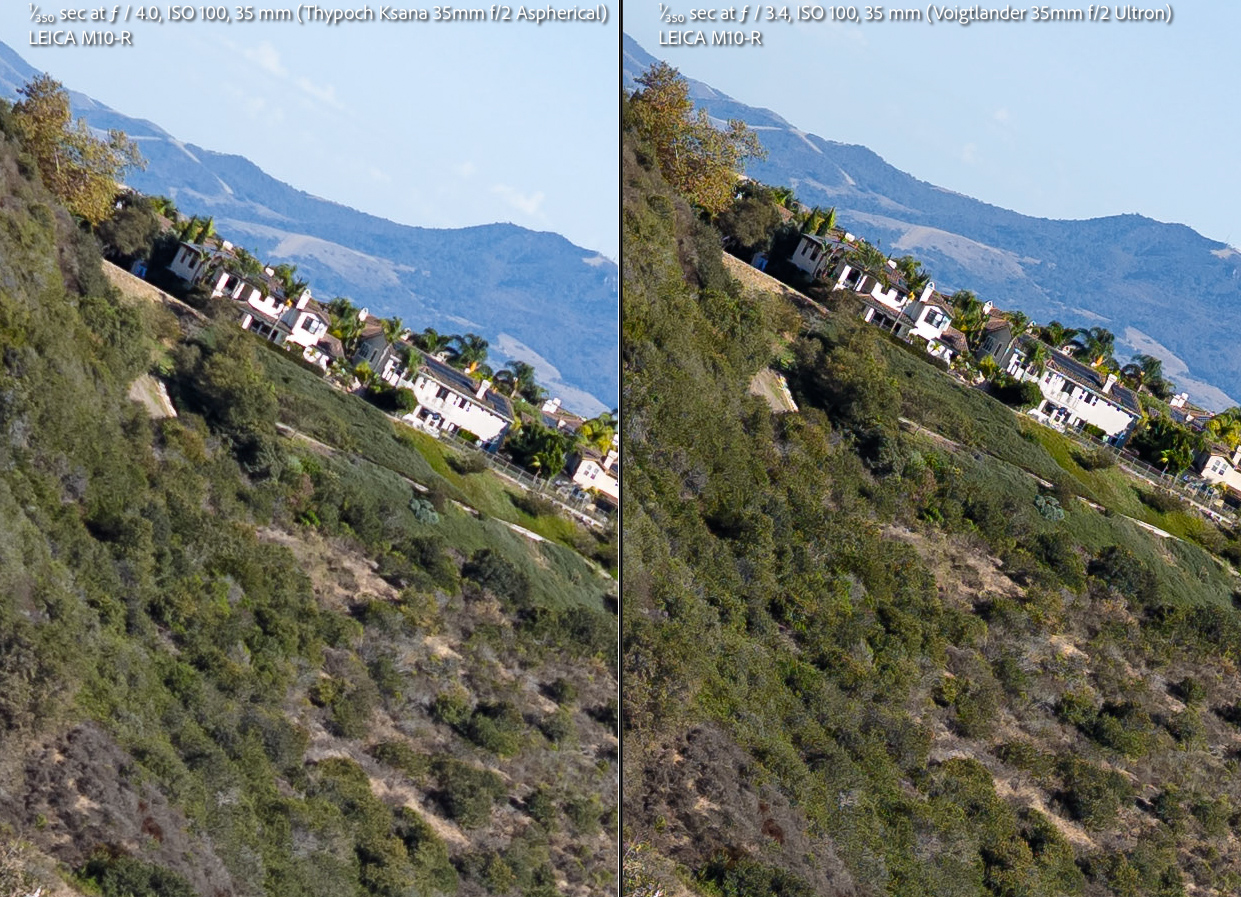
f/4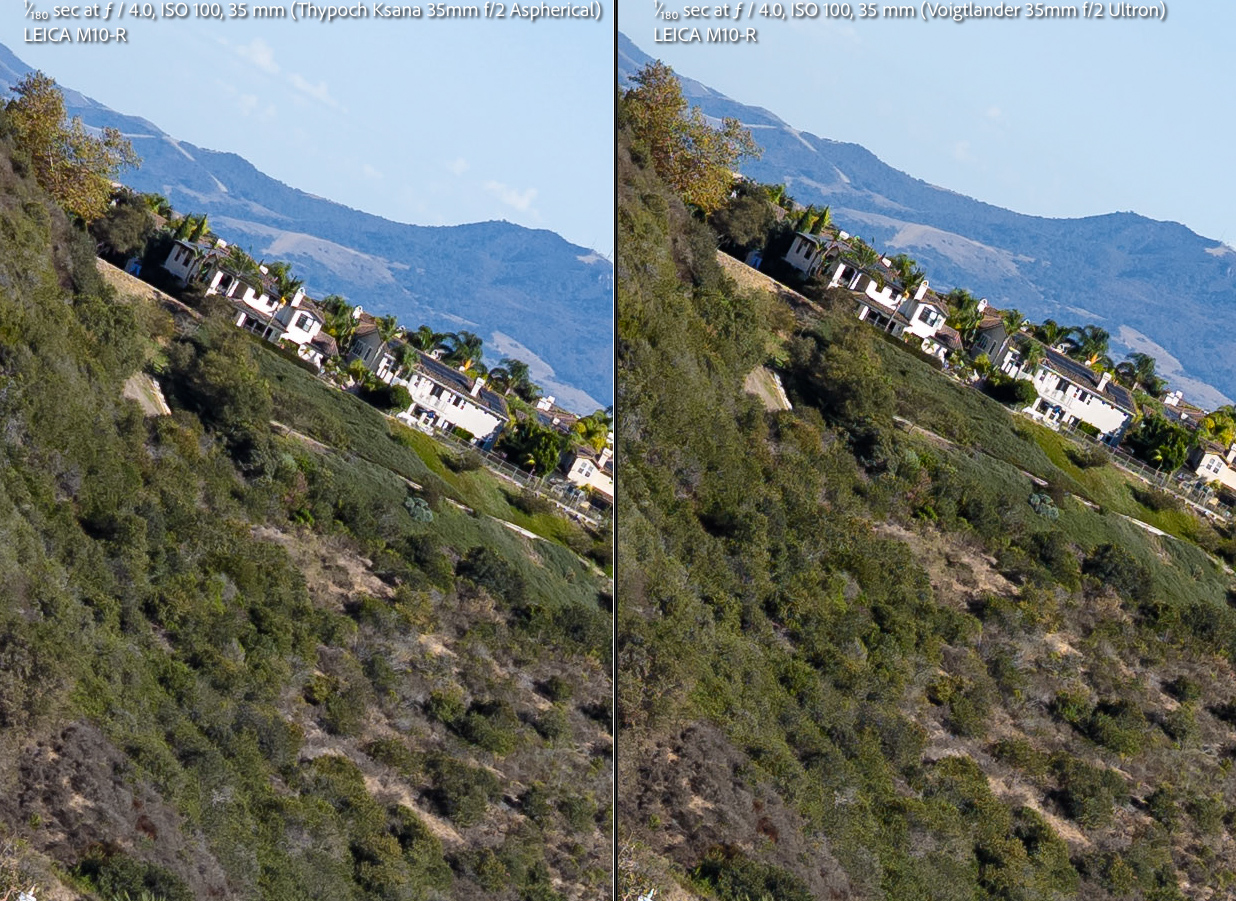
f/5.6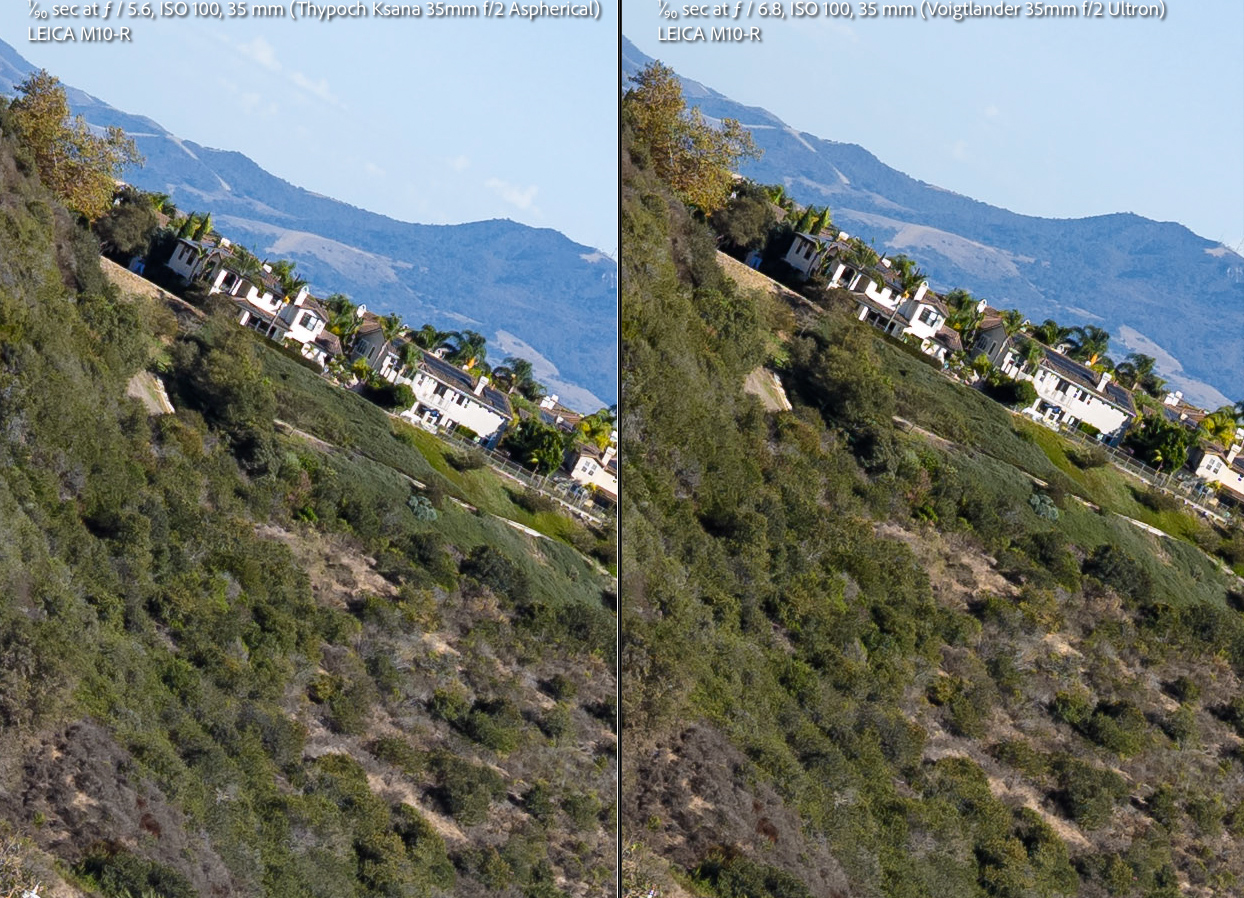
f/8
May 19, 2026 at 06:30 PM
p.1 #18Thypoch Ksana 35mm f/2 ASPH. Review
Mid-field Resolution and Contrast
Resolution and Contrast compared to Voigtlander 35mm f/2 Ultron
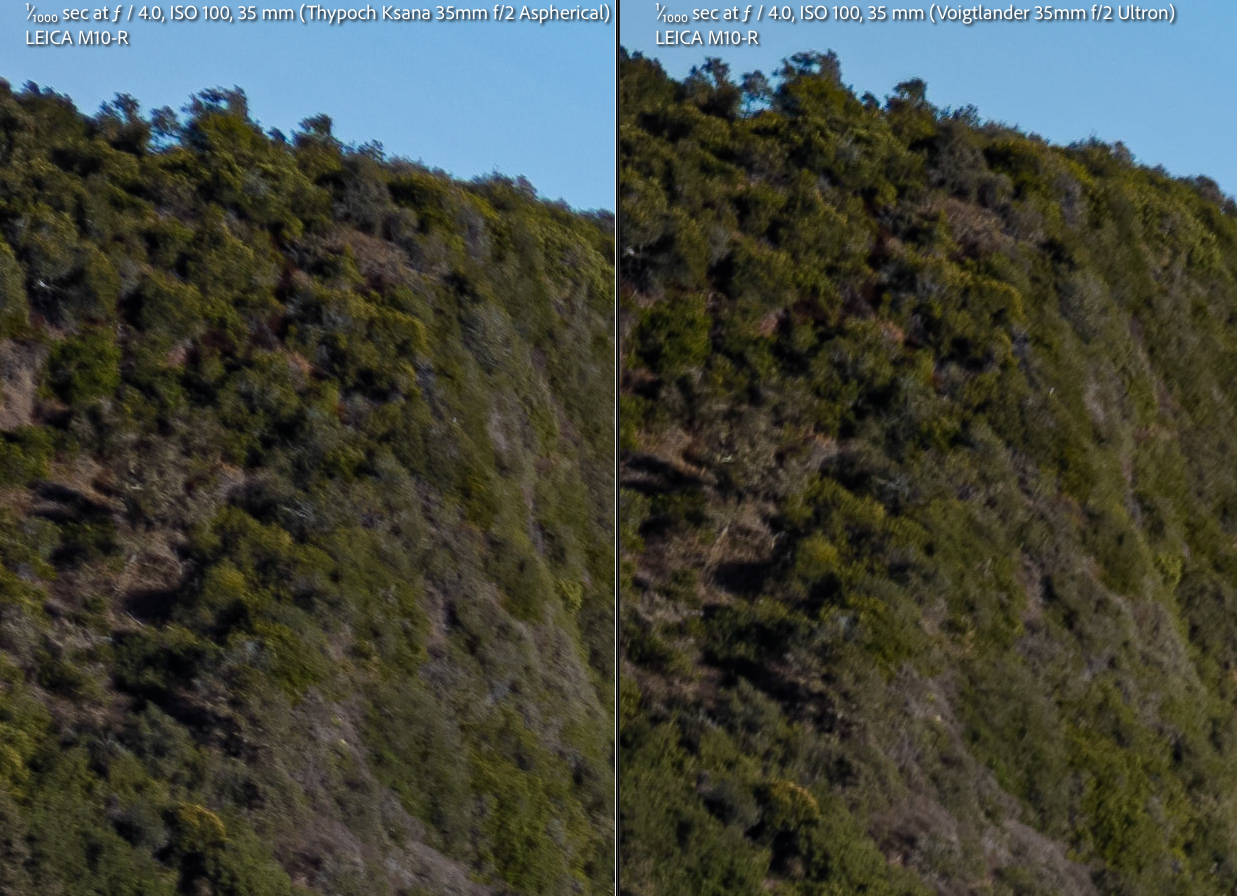
f/2
f/2.8
f/4
f/5.6
f/8
Resolution and Contrast compared to Voigtlander 35mm f/2 Ultron
f/2
f/2.8
f/4
f/5.6
f/8
May 19, 2026 at 06:31 PM
p.1 #19Thypoch Ksana 35mm f/2 ASPH. Review
Extreme Corner Resolution and Contrast
Resolution and Contrast compared to Voigtlander 35mm f/2 Ultron
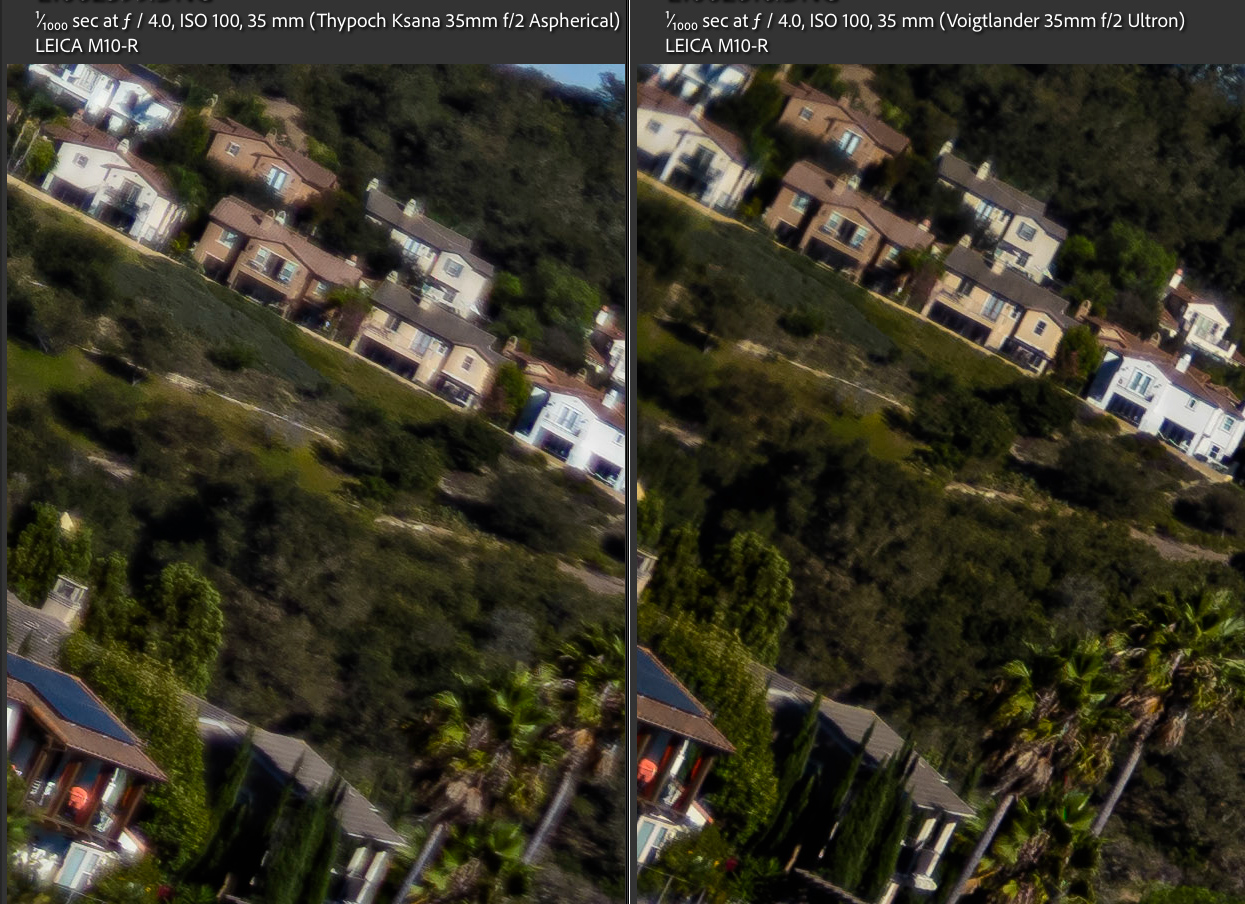
f/2
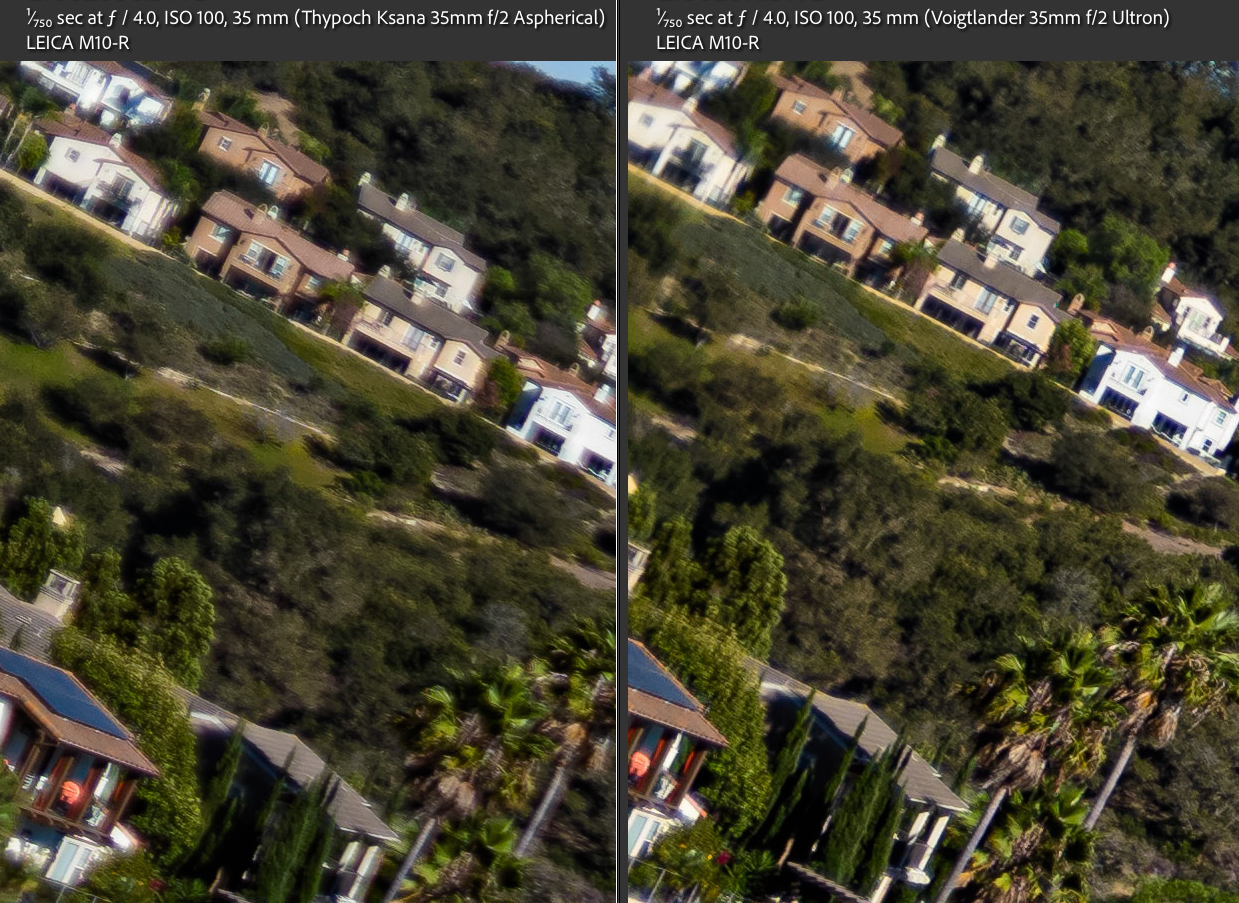
f/2.8
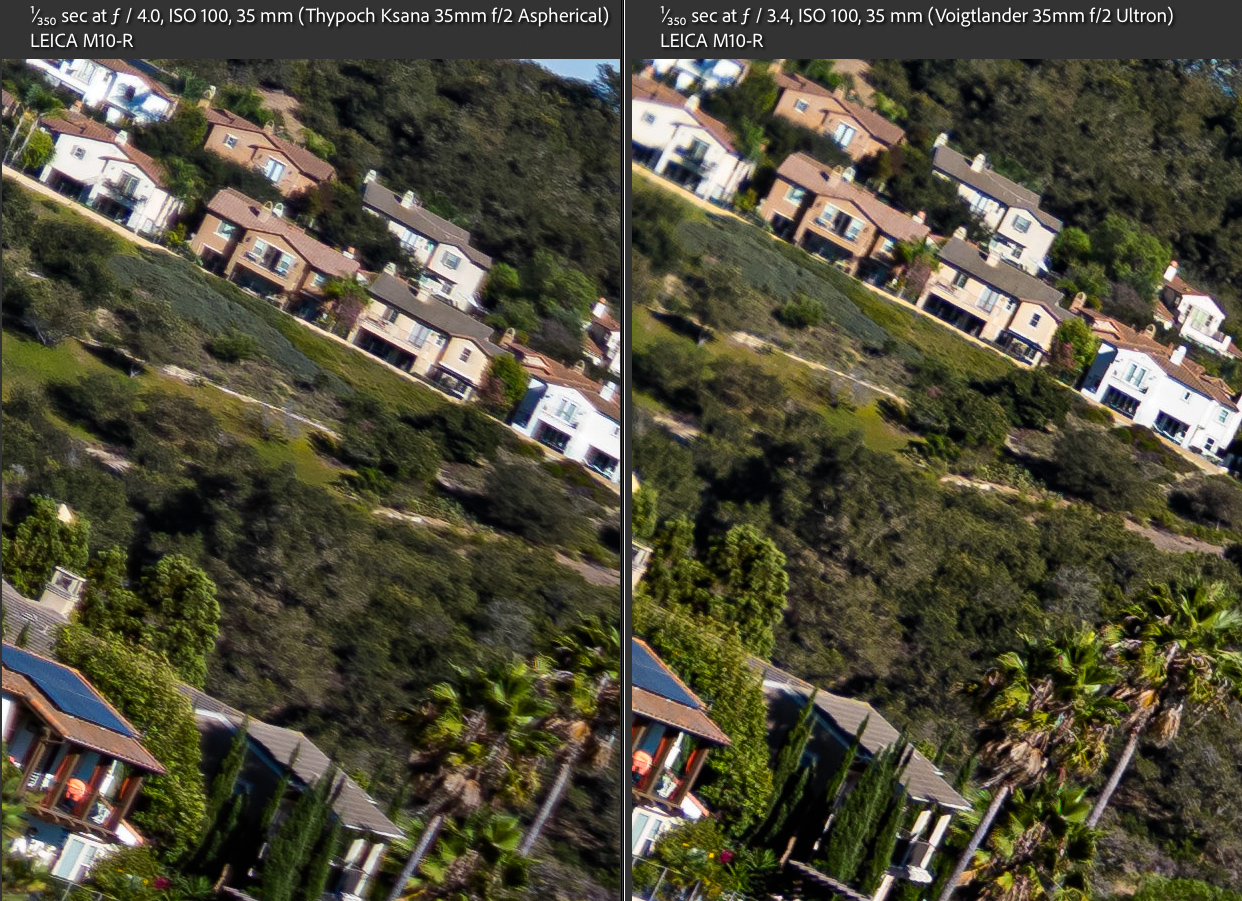
f/4
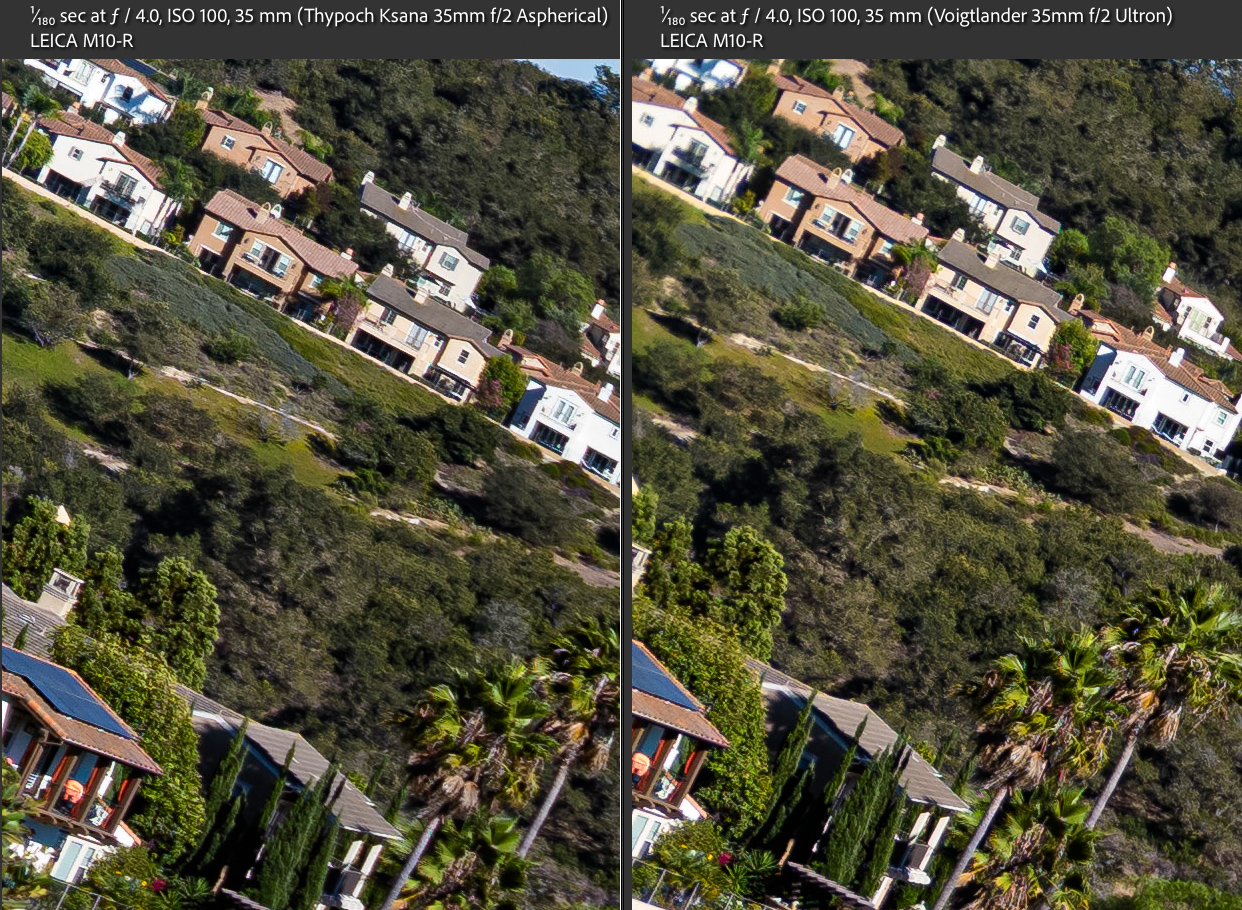
f/5.6
f/8
Resolution and Contrast compared to Voigtlander 35mm f/2 Ultron
f/2
f/2.8
f/4
f/5.6
f/8
May 19, 2026 at 06:33 PM
p.1 #20Thypoch Ksana 35mm f/2 ASPH. Review
Fred Miranda wrote:
Extreme Corner Resolution and Contrast
Resolution and Contrast compared to Voigtlander 35mm f/2 Ultron
Is your copy ok? I know the Ultron is a very sharp lens but surprised at F8 the Thypoch is that mushy? For example, that is not what we are seeing the 21 3.5 Kasana-
Extreme Corner Resolution and Contrast
Resolution and Contrast compared to Voigtlander 35mm f/2 Ultron
Is your copy ok? I know the Ultron is a very sharp lens but surprised at F8 the Thypoch is that mushy? For example, that is not what we are seeing the 21 3.5 Kasana-
May 19, 2026 at 07:30 PM