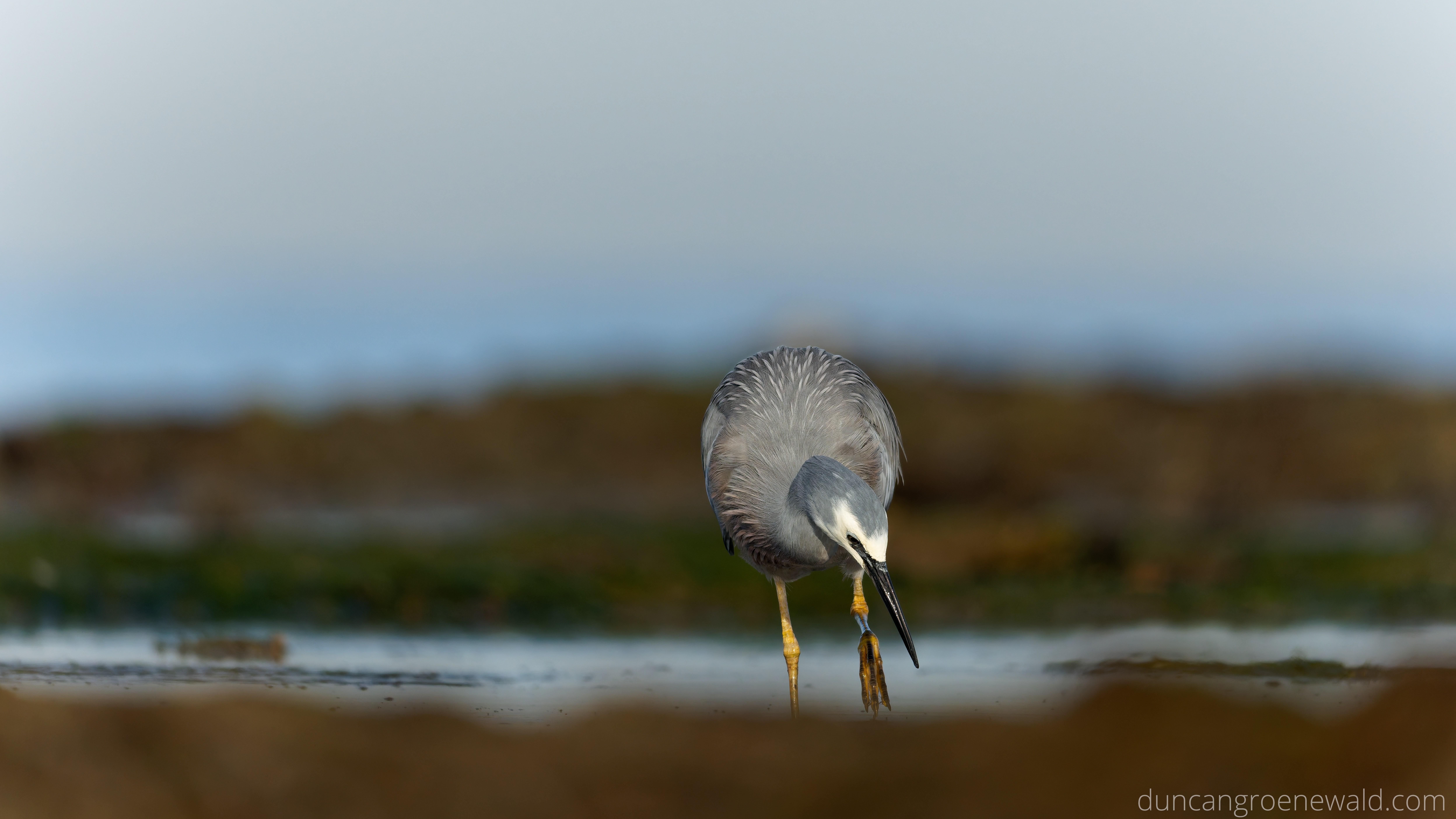
As others have noted, there are a lot of variables that affect the outcome in terms of sharpness here.
When shooting from a car as a blind, I minimize the impact of air temperature variations by turning the whole ventilation system OFF and opening windows on both sides of the car so that the outside air flows through the car. If the temperature of the lens is very different from the temperature of the (outside) air, use of a lens hood can create a warm air pocket inside the hood (the lens warms the air and hood prevents it from escaping) which also can create problems. So, I would turn off active ventilation and air conditioning, open all windows in the car, and take off the hood (and certainly take off any in front of the lens, unless you're shooting in a sandy / dusty environment which could be harmful for the front element. The lens might be big enough to take advantage of a car window mount, which could help with stability especially if you have to wait for the subject.
Stopping down can improve sharpness because it reduces lens aberrations and this can also help with the focusing system if it will focus at the aperture selected for taking the picture. A zoom lens can vary in sharpness across the frame and across focal length in a way that depends on the lens sample but whether this is something a tech can fix is uncertain. It may be a result of variability in the material parameters as much as positioning although obviously manufacturers will try to minimize this. When photographing a subject like yours where the eye is a small part of the body separated by the neck and the focusing system may be dancing around the eye, face, and the body which would result in quite different results. Thus this is a challenging problem from the focusing point of view and some inconsistency can result. Increasing the depth of field can obviously increase the odds of a sharp image. And yes, shutter speed, aperture, air quality, distance, temperature variations, stability of the lens, possible confounding background features etc. all can affect the result so it is probably best to think of parameters that increase your probability of success and work to optimize those, and for sanity it's best to accept that sometimes the result is not perfect when the conditions were not favorable, and/or luck was not with you. Sometimes it can also be good to take a step back and forget about the pixels, and look at the picture as a whole and as a part of a set of pictures illustrating something about the subject, does that evoke emotions and/or communicate information? Those things can happen without the image being pixel-sharp when viewed at high magnification, and in that case it may be the best on focus on the big picture rather than the details, in my opinion.
duncangr wrote:
Can you drop the RAW files in that folder ? The f9 seems to be better exposed than the f8 version - or the light changed outside - but there is no metadata to see what the settings are.
I concede the car does add another variable, but I did have all 4 windows down and it's a hybrid in EV mode. I wouldn't have expected that to cause many issues. That being said I will continue to test., but I'm having the same issues when on foot as well.
One thing I've learned after using a lot of different lenses of 800mm (or equivalent) focal length is that 95% of sharpness issues are due to atmospheric distortion, even for close-range shots. The rest are usually due to the shutter speed used.
They are both a little ordinary aren't they. I wouldn't be happy with either but I would want to eliminate atmospheric distortion by doing some other tests as they both have that smeared/painted look typical of atmospheric distortion.
So I have a test lens in to try. Unfortunately by the time I got the aftermarket foot swapped to the new lens the sun had gone down behind the trees so the tripod results aren't really worth sharing. I will do some test shots tomorrow. The handheld ones I did real quick look sharper when zoomed in. Interestingly, when I compare the focus distance, my lens is repeatedly focusing 0.5m further than the test copy. So I'm beginning to think that I might be correct that it's a focus problem, not necessarily an IQ problem.
Hopefully weather and time permitting I'll get some tripod tests done manually focused and with autofocus to try and put this to rest. I dropped a crop of the side by side comparison in the folder with the other shots. The caveat being that of course it is handheld so not a smoking gun. Was shot at 1/2000 800mm f/8 braced against a railing.
For anyone who cares. Got them both on a tripod and tried as best I could in the limited time a dad with twins has. I no longer think my lens is necessarily back focusing, it's just the 2 lenses repeatedly show a .5m difference. No idea why. Now to image quality, they're both disappointing at 800 f8 on the tripod. Both sharpen up nicely at f9. Manual focusing them didn't seem to alter the results much at all. So I guess I'll just shoot this at f9 in the meantime. Images added to the link shared above.
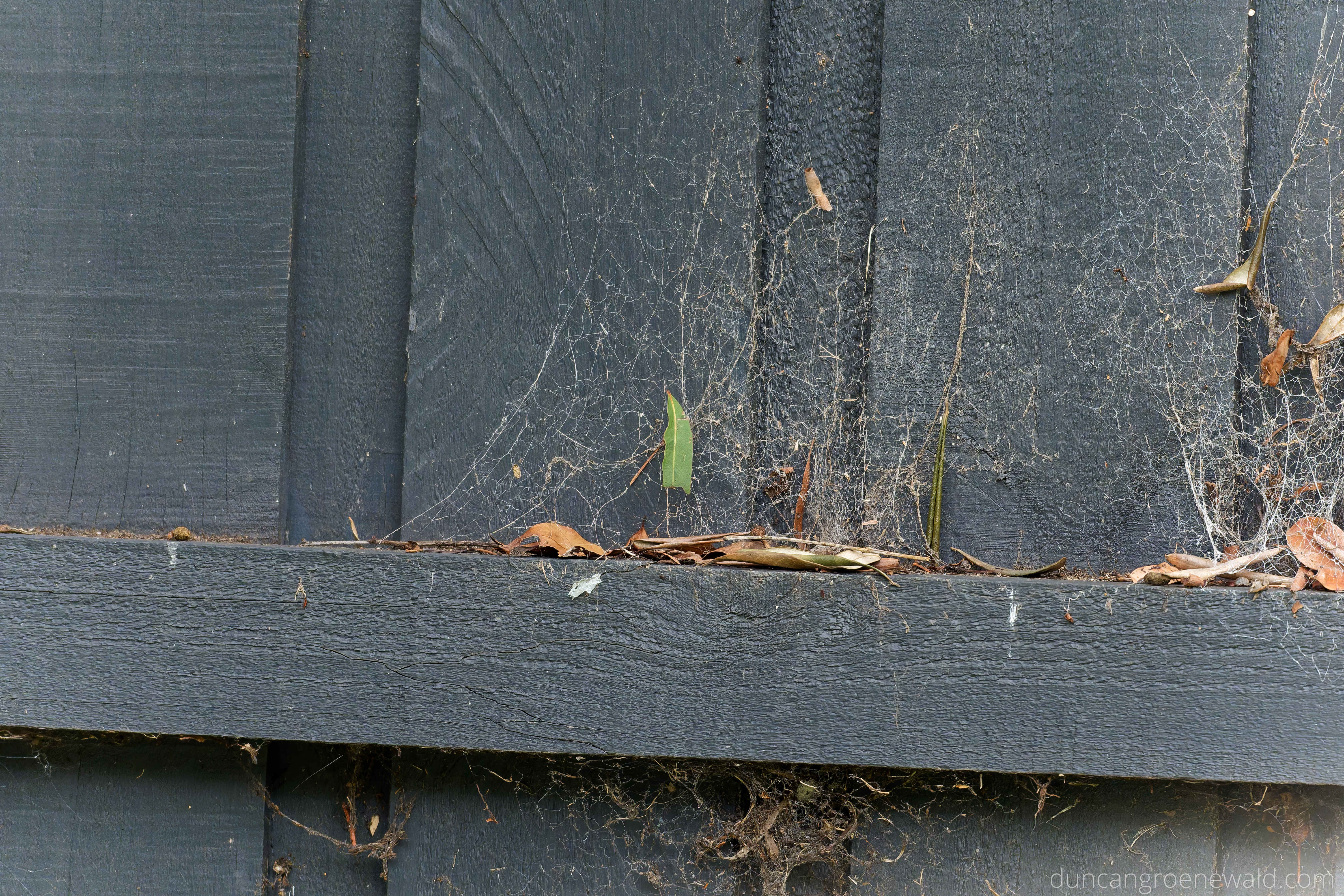

I looked at your images (fence shots), I see what you mean but this isn't the best way to test focus, you may want to shoot something like a ruler at a 45 degree angle (or you can buy an AF test kit like this https://www.bhphotovideo.com/c/product/1439588-REG/vello_lens_2020_af_lens_calibration_tool.html online) to verify if the lens is really consistently front or back focus. This would be very unusual in a mirrorless camera, it was a thing back in the day when with DSLR's that did not have any contrast detect AF. Also the shutter speed seems to be slow, it's best to use a fast shutter speed to rule out any slight motion induced blur even when using a tripod.
I have not noticed any systematic focus inconsistency with my 400-800, but the lens is definitely not tack sharp as I would like at 800mm and not comparable to Nikon PF lenses in that regard.
p.2 #10 · Sony 400-800 Poor AF accuracy at 800 f/8
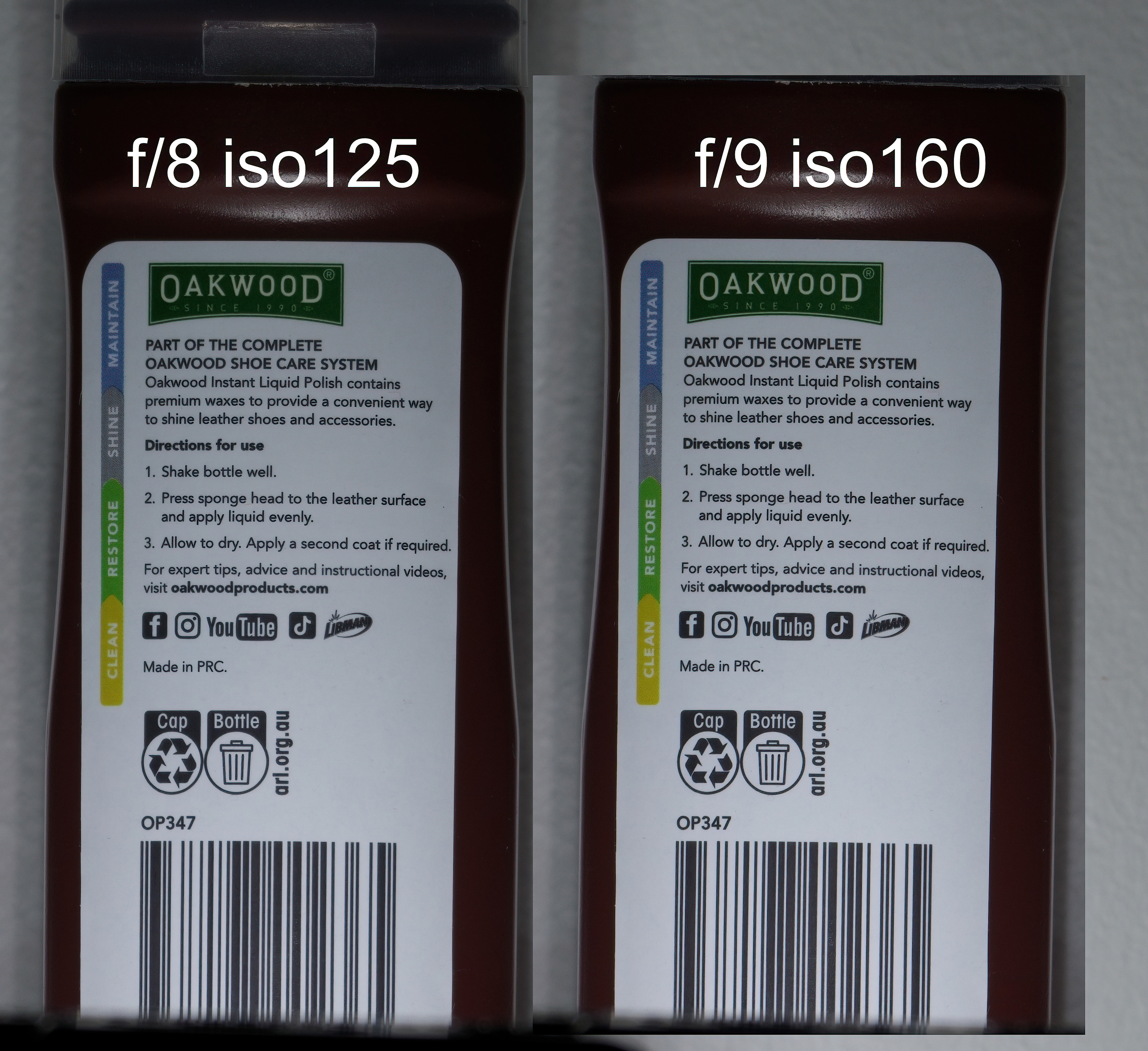
Well that's all pretty strange - I ended up putting the lens on the A1ii and fiddling around with different focus modes, manual focus, different shutter speeds etc. - when all of a sudden I started getting sharp images at 800mm f/8.
Then I put the lens back on the A7r6 and hey presto - it's hard to tell which is which. Before NR the f/8 is perhaps a tiny bit less contrasty/softer.
It's possible that a slight bump in shutter speed from 1/60 to 1/250 has made the difference - why would 1/60s work fine at f/9 but not at f/8 ?
Will have to see how it goes out in the wild now.
That's taken at around 9 meters and the label is 3.5cm wide.
p.2 #11 · Sony 400-800 Poor AF accuracy at 800 f/8
These images look like what might be typically expected from a long telezoom, not at all surprising that a third-stop stopping down improves sharpness at the maximum focal length, especially since this is not a five-figure $ lens.
I think keeping distance to subject to a minimum and choosing good conditions in terms of atmospherics would do a lot to benefit images captured with this lens. Since I'm a Nikon user, I would be happy to see a zoom that goes to 800 mm for the Nikon Z mount in the future, along the lines that Canon and Sony have produced. I used to think that f/8 or f/9 lenses would be useless, due to lighting conditions typical of my country, but given the improvements afforded by combined image stabilization in lens and body, and the beneficial effects of electronic shutter, such lenses have turned out to have uses after all, although they are obviously not good for indoor action and might be limited by the light inside pine forests and the period around sunset and sunrise. I think especially for wildlife video, long zooms with moderate maximum apertures are a good option, as stopping down improves the depth of field and a lot of the time this is needed to make dealing with manual focus easier. E.g. I have been trying to do some video of deer in a meadow between trees, in the distance, a beautiful landscape and scene, but very tricky to focus at a wide aperture and long focal length. I came to the conclusion that stopping down to f/11 and periodically adjusting the manual focus worked best in this scenario. Since the BBC uses Canon 50-1000 mm (+1.5X Extender) which is T8.9 at 1000 mm and T13.4 (?) at 1500 mm, I think for amateur applications, f/8 or even f/9 would be just fine for wildlife video.
p.2 #13 · Sony 400-800 Poor AF accuracy at 800 f/8
So more weird stuff.
It seems that at 1/80s 800mm f/8 the lens doesn't behave very well when hand held or on a tripod but when placed on a pillow it works perfectly - it is as sharp as at f/9. And yet at f/9 and f/10 it seems to be fine on the tripod and hand held at that shutter speed. A little strange that the aperture makes any difference.
When handheld 1/250s seems to deliver sharp images at 800 f/8 with the A9iii.
I routinely shoot my 200-600 + 1.4TC at 1/40s in low light and get plenty of sharp images.
For reference - around 20 meters in dark overcast conditions.
A9iii
A7R6 - looks a bit ordinary in the browser but if you zoom in it has much more detail
So the lens seems pretty sharp wide open after all but one needs to take a bit of care with slower shutter speeds as stabilisation doesn't seem to be as good as the 200-600..
p.2 #14 · Sony 400-800 Poor AF accuracy at 800 f/8
I just had a (actually two) bad experience with the lens. Got an open box one and it was not sharp. Second one was supposed to be brand new and it was defective IMO. I'm not sure about the expected sharpness of the lens. I'm a Z8 user and in the process of moving to A1II. Already have 300/2.8 and it's one of the sharpest TELE I've ever used.
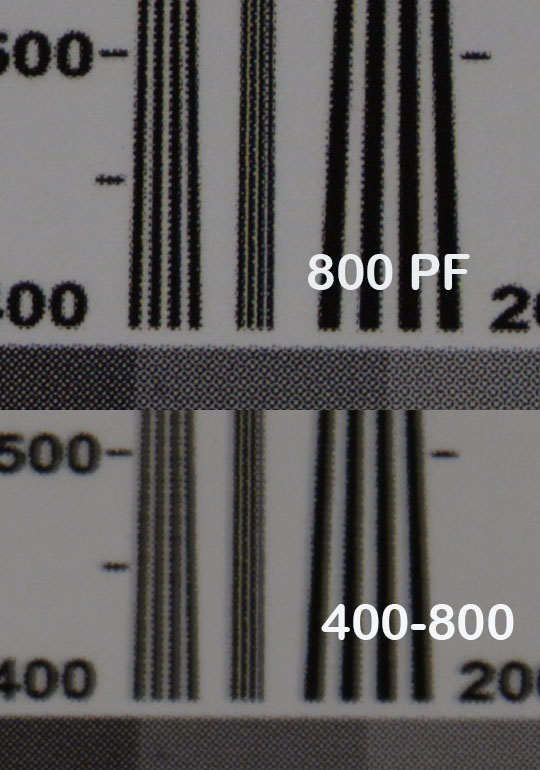
I was thinking of replacing 800 PF with 400-800. I didn't expect the 400-800 to match the prime. But 800 PF is not the sharpest lens either. 600 PF is sharper and Nikon super teles are even better.
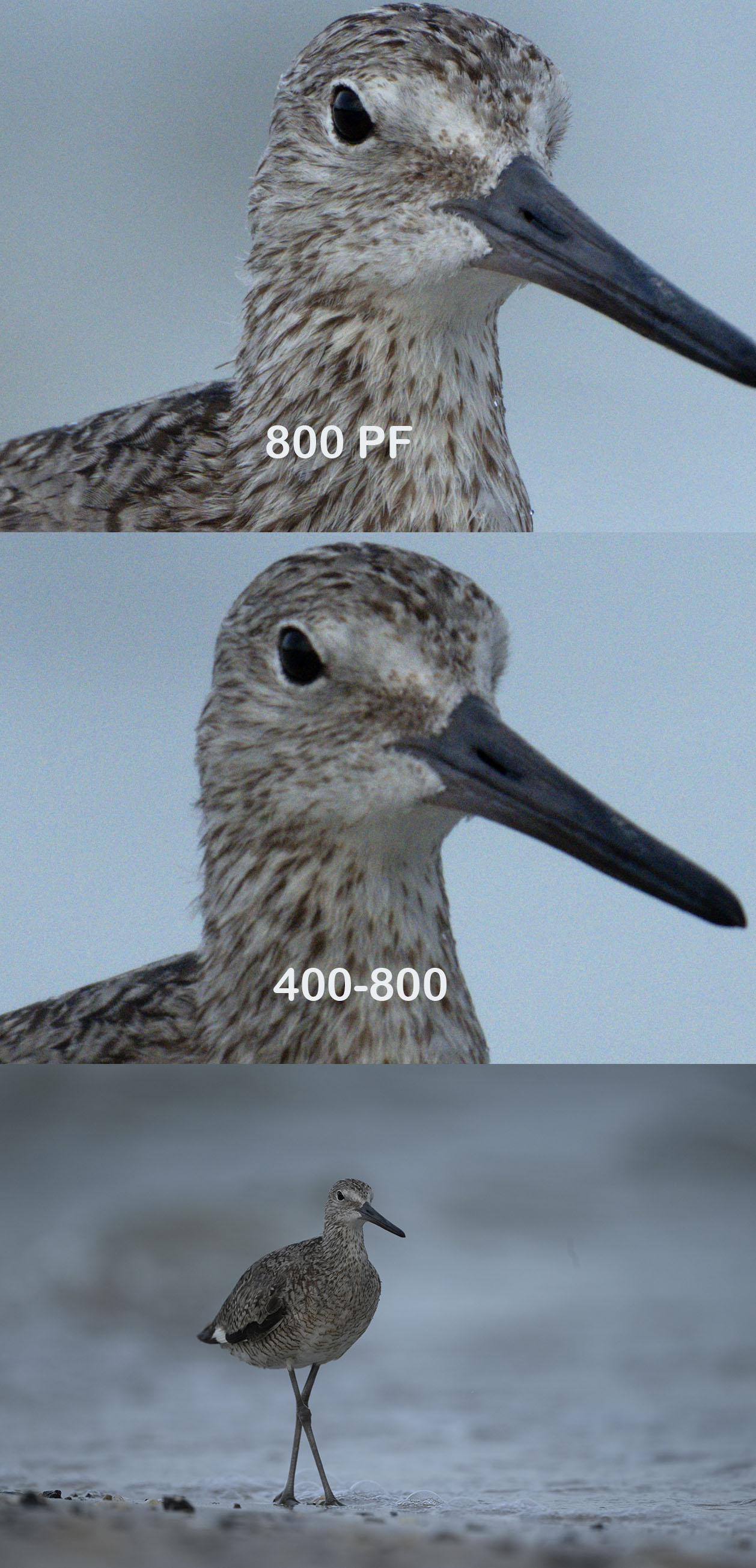
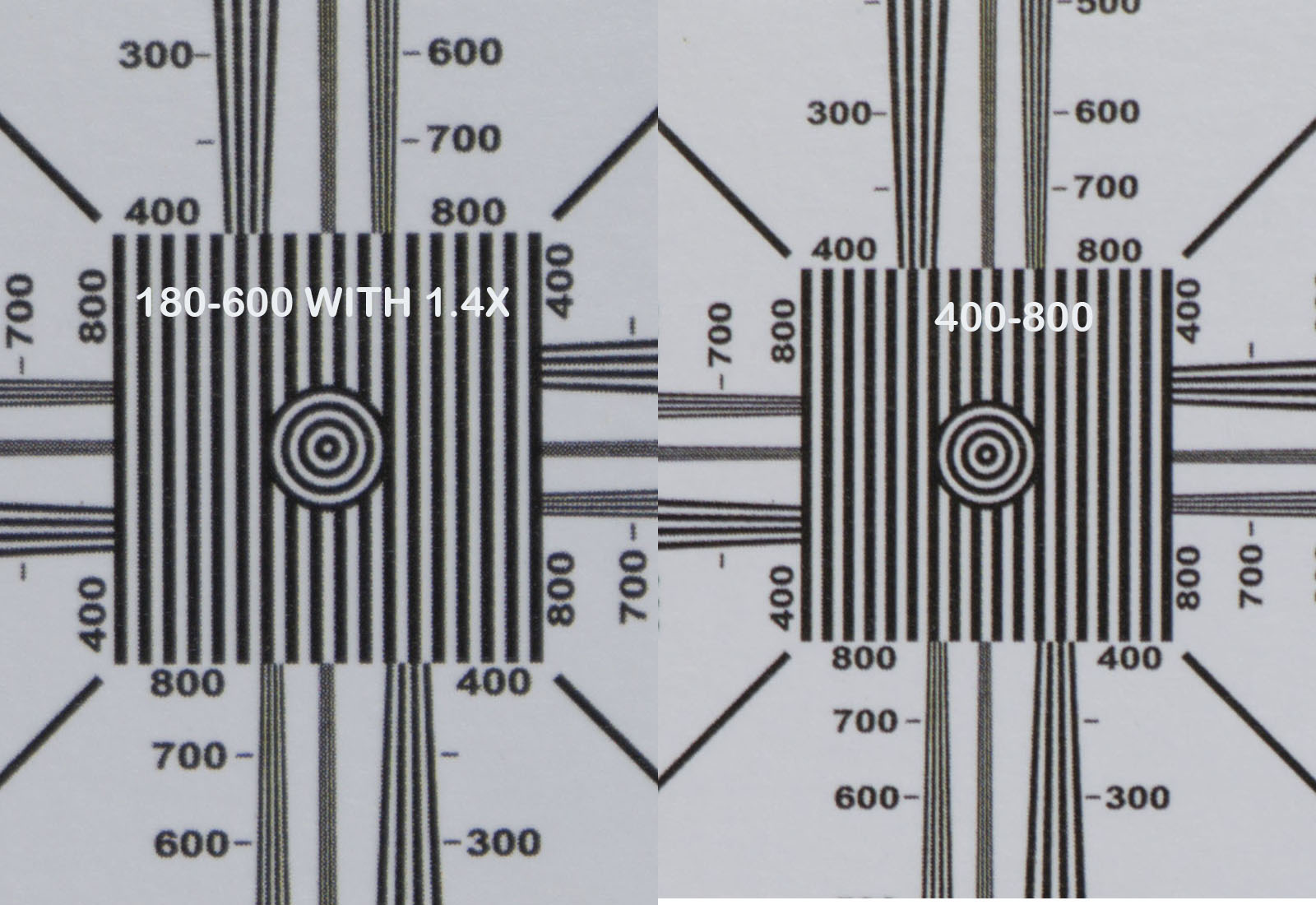
First two images are using first copy. Third and fifth are using second copy. Fourth image the screen grab for Sony Edit. Last image shows how the first lens compared to 180-600 with 1.4x. I think 180-600 is pretty similar to Sony 200-600 in sharpness
Second copy was even worse. While the second one rarely produced sharp images on tripod with 10 seconds timer, it had issue even on tripod. I almost never got a sharp image using second one hand held even at 1/1250 sec
All images are either OOC or RAW files just opened in PS without any modification.
I think both lenses were defective. I never had this kind of experience in 25+ years of photography. May be I got unlucky. Luckily the shop took them back with a restocking fee. Now I don't have the confidence to buy this lens again.
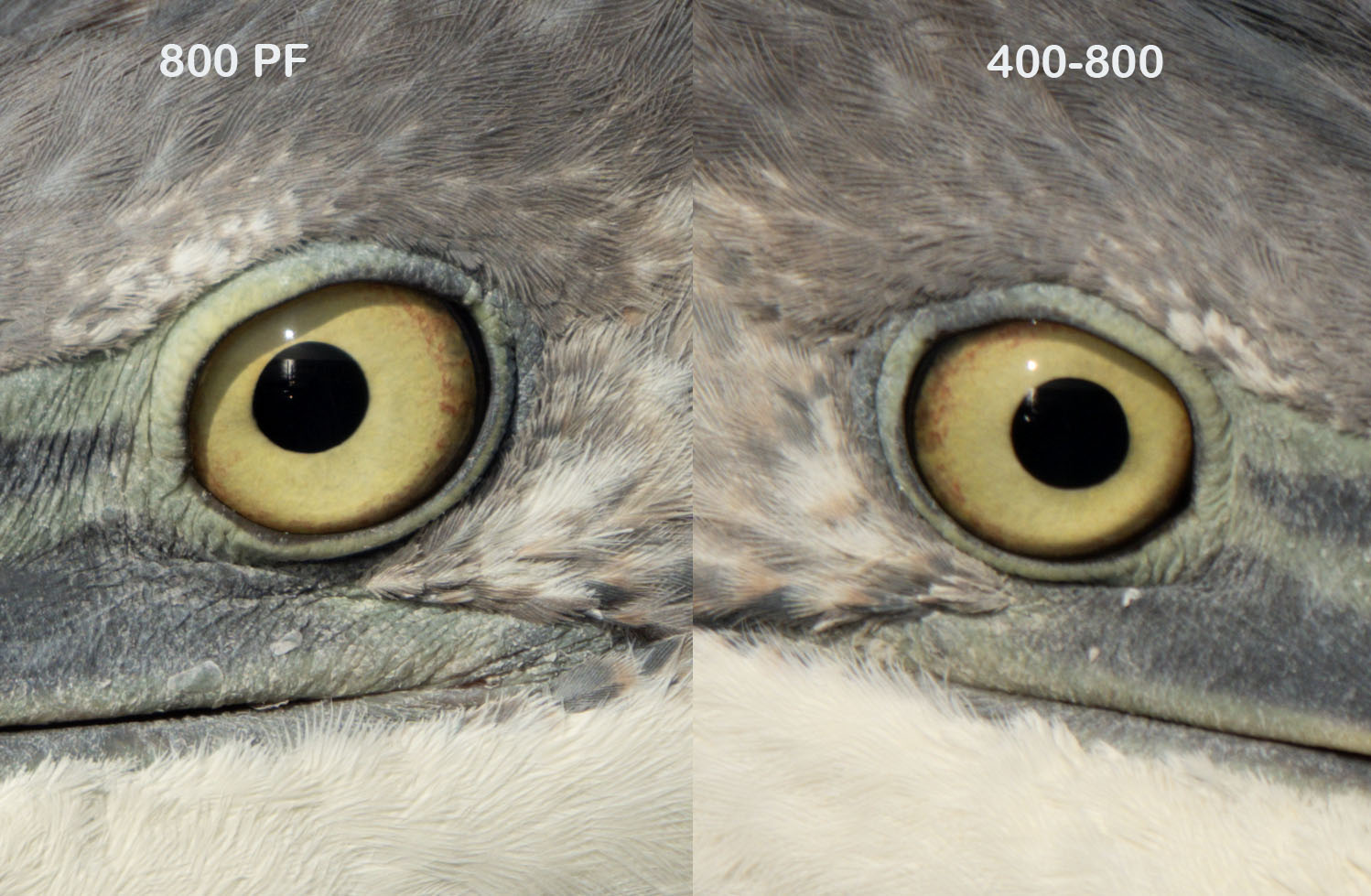
First lens - 800 PF vs 400-800. Raw opened in PS and cropped (100%). Distance 35'
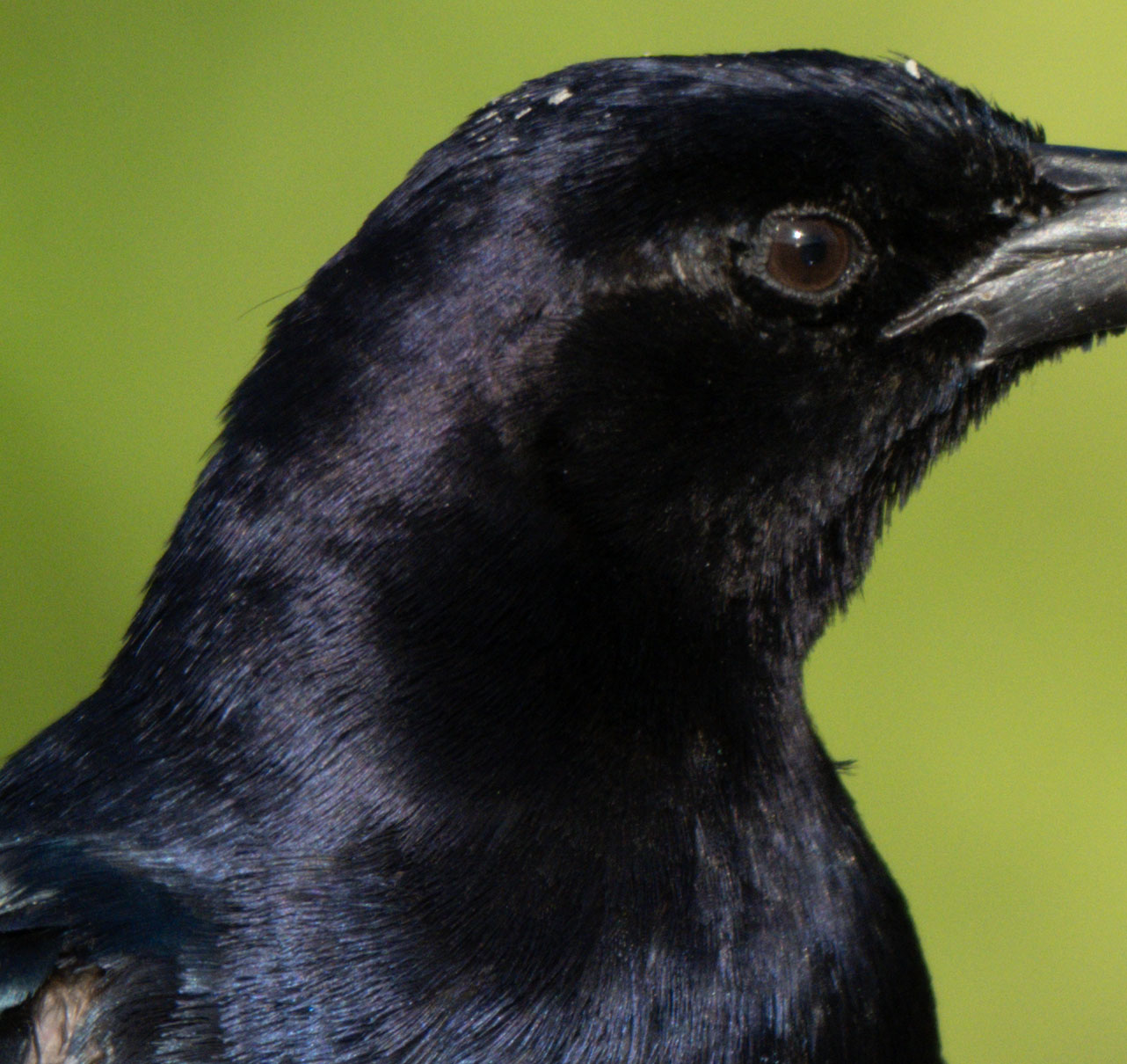
First lens. One of the sharper image. OOC jpg 100%. Distance = 39'
Second lens. Hand held 1/1250 sec. Distance=46'
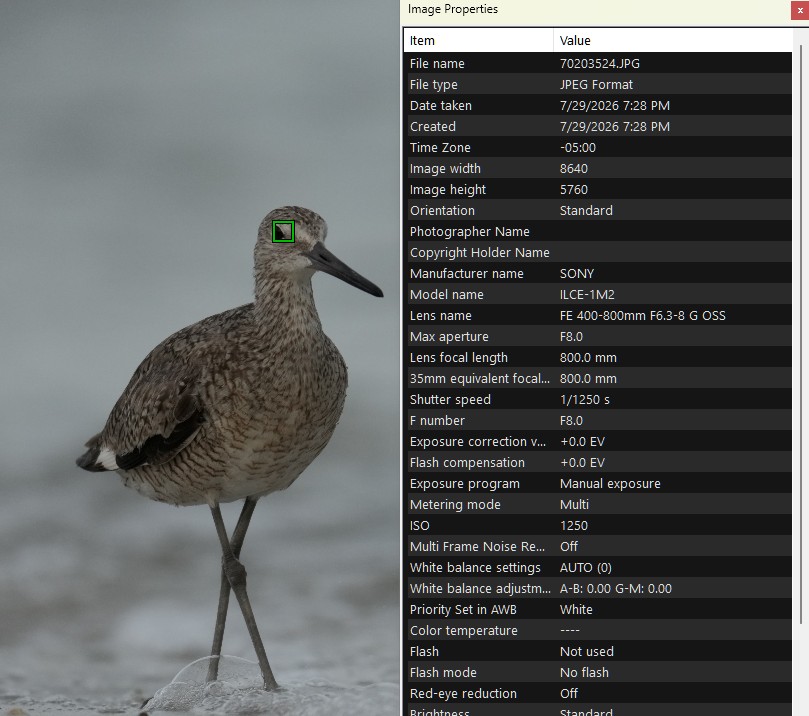
Exif of above 400-800 image
Second lens test chart on tripod with 10 sec timer
First lens 180-600 with 1.4x vs 400-800 on tripod with timer
p.2 #15 · Sony 400-800 Poor AF accuracy at 800 f/8
Jemini wrote:
I just had a (actually two) bad experience with the lens. Got an open box one and it was not sharp. Second one was supposed to be brand new and it was defective IMO. I'm not sure about the expected sharpness of the lens. I'm a Z8 user and in the process of moving to A1II. Already have 300/2.8 and it's one of the sharpest TELE I've ever used.
I was thinking of replacing 800 PF with 400-800. I didn't expect the 400-800 to match the prime. But 800 PF is not the sharpest lens either. 600 PF is sharper and Nikon super teles are even better.
First two images are using first copy. Third and fifth are using second copy. Fourth image the screen grab for Sony Edit. Last image shows how the first lens compared to 180-600 with 1.4x. I think 180-600 is pretty similar to Sony 200-600 in sharpness
Second copy was even worse. While the second one rarely produced sharp images on tripod with 10 seconds timer, it had issue even on tripod. I almost never got a sharp image using second one hand held even at 1/1250 sec
All images are either OOC or RAW files just opened in PS without any modification.
I think both lenses were defective. I never had this kind of experience in 25+ years of photography. May be I got unlucky. Luckily the shop took them back with a restocking fee. Now I don't have the confidence to buy this lens again. ...Show more →
Boy, looking at your images and what you have gone through, I am counting my blessings with my first and only copy of the G 400-800mm lens...
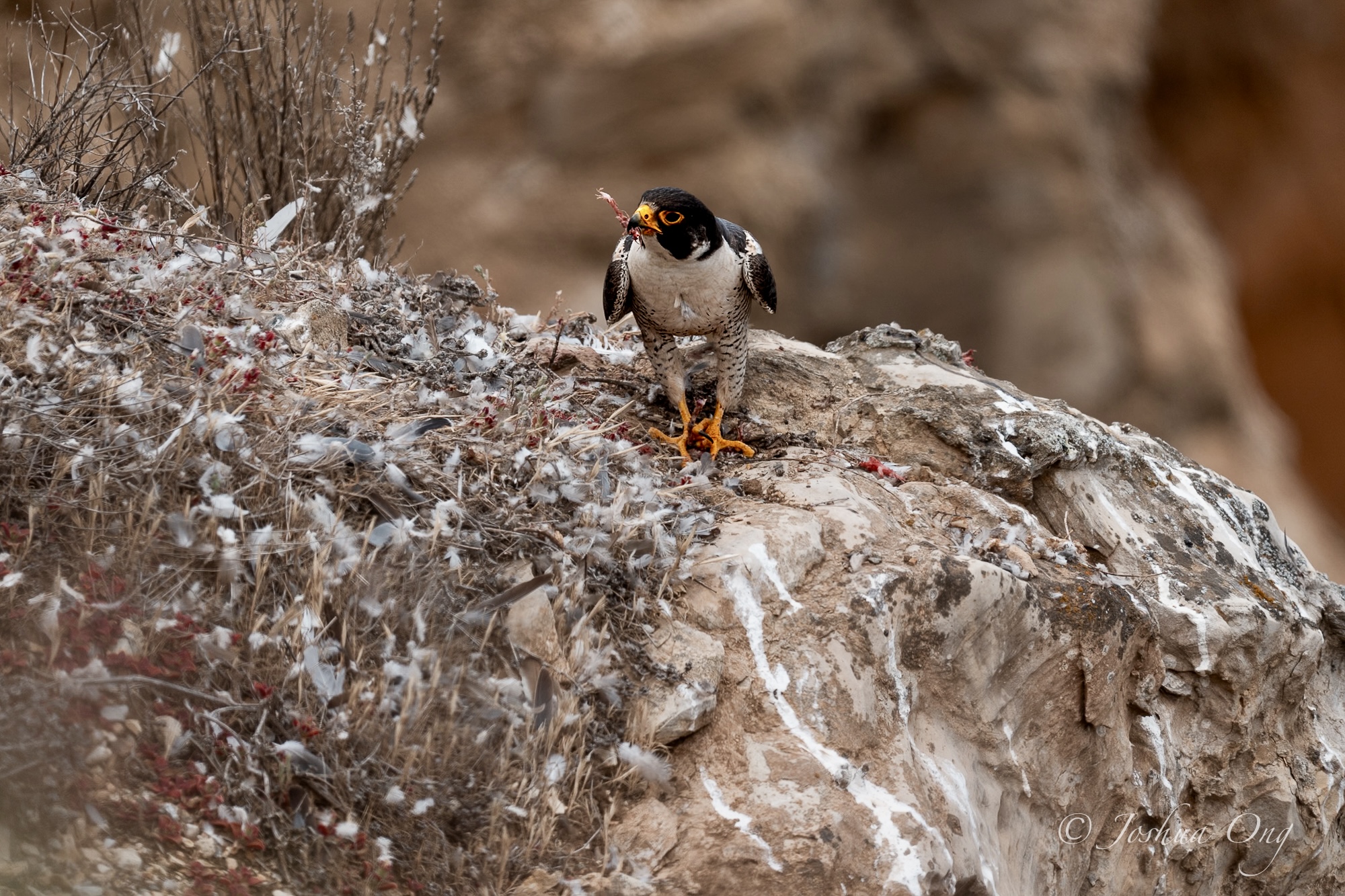
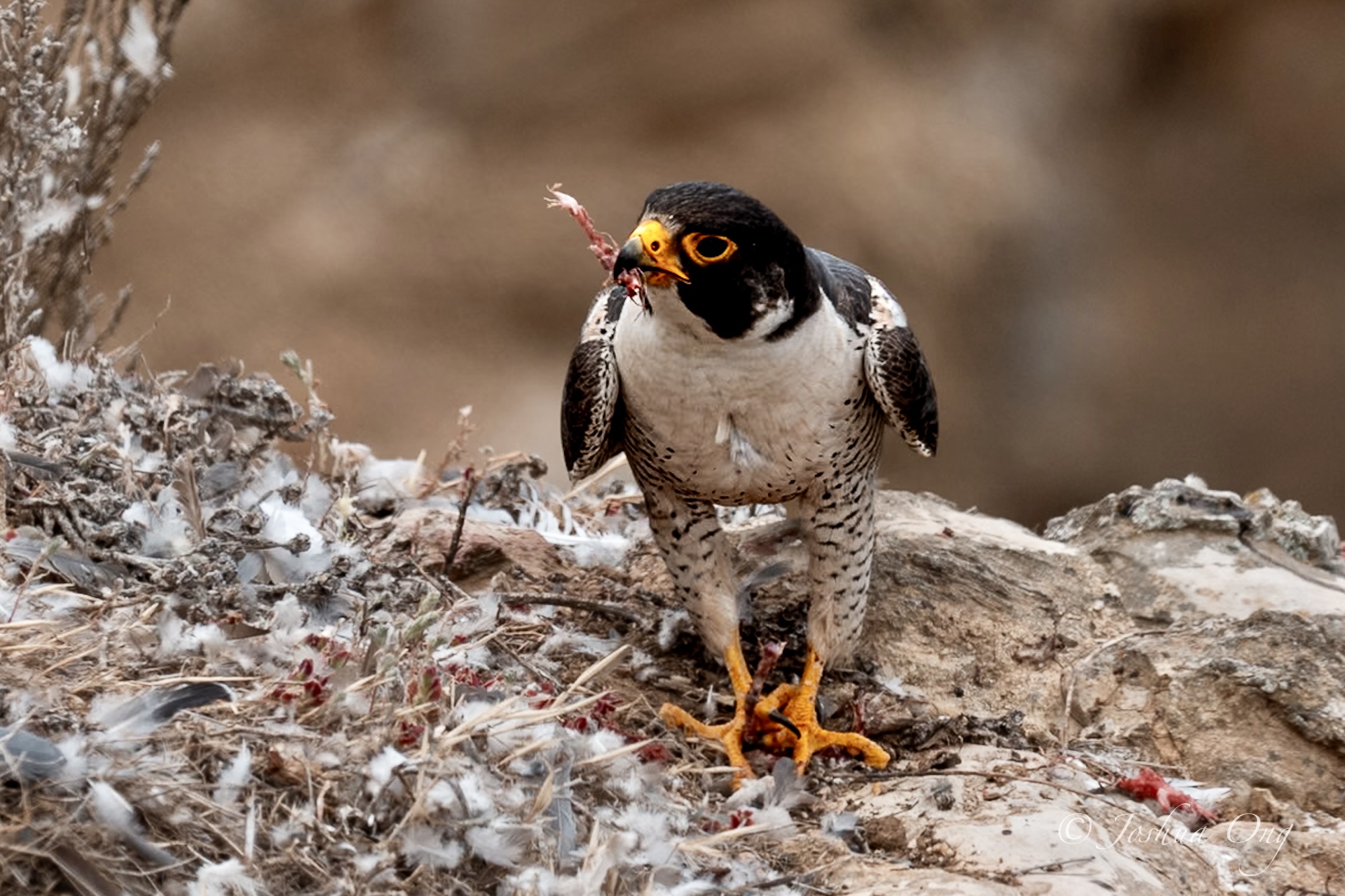
These are uncropped followed by cropped images of real life images... The second image was previously posted elsewhere in the wildlife image thread.
p.2 #16 · Sony 400-800 Poor AF accuracy at 800 f/8
As if life with long tele's wasn't frustrating enough, here is a fun one to contemplate...
Atmospheric disturbance inside the hood! Who'da thunk it?
I haven't done any formal testing on mine. So far I haven't noticed any back focus anomalies like you have, but I wasn't looking for them either.
I've been shooting on a monopod with a mono-gimbal out in the Florida heat, but I do tend to let my lens acclimate when I leave the house by setting the bag on my passenger heated seat and turn it on low heat for the drive and don't run my car's A/C I crack some windows... otherwise the lens front element will fog over when I get out and would have to wait for it to clear, plus I'd worry about creating opportunities for fungus down the road, so I have been letting lenses acclimate in one way or another for years, even with my 200-600mm, or back in my 150-450mm Pentax days, and it seems to be working for me. As for atmospheric haze inside the hood, well, that's another thing to worry about, and the next time I get any weirdness, I may just pull the hood just to see what I get.
p.2 #17 · Sony 400-800 Poor AF accuracy at 800 f/8
I'm coming to this thread late. From what @icantbebigwill is describing, this sounds like a focus rather than IQ issue.
The fact it only occurs at a specific focal length and aperture is interesting. I see two possibilities here:
1. Design issue with the on-sensor phase detect AF (PDAF) pixels for that specific lens geometry
2. Copy-specific decentering that yields an incorrect phase differential to the PDAF pixels
On-sensor PDAF are sensitive to different exit pupil distances (loosely relates to focal length). To account for this, many MILC sensors vary the geometry of the PDAF pixel masks to handle a variety of expected focal lengths. It's possible this extreme end of the focal range isn't accounted for properly, or with enough PDAF pixels. Before exploring this theory further though it would be helpful to see some manual focus tests @ f/8 to make sure this is an AF issue and not an IQ issue.
p.2 #18 · Sony 400-800 Poor AF accuracy at 800 f/8
If this has been mentioned, forgive me and ignore... if not... might help?
I found having the full time DMF switched on, all the time, caused me to miss more shots than I'd like to remember. The AF is so smooth (at least on my copy) that I was bumping it while shooting and the OOF shots stacked up. I turned it off, added a lens coat and dampened down the AF ring, no more issues. It's been a great lens ever since. I don't know if this is what is impacting your shots, but maybe consider giving it a try if you haven't already.
p.2 #19 · Sony 400-800 Poor AF accuracy at 800 f/8
hatch1921 wrote:
If this has been mentioned, forgive me and ignore... if not... might help?
I found having the full time DMF switched on, all the time, caused me to miss more shots than I'd like to remember. The AF is so smooth (at least on my copy) that I was bumping it while shooting and the OOF shots stacked up. I turned it off, added a lens coat and dampened down the AF ring, no more issues. It's been a great lens ever since. I don't know if this is what is impacting your shots, but maybe consider giving it a try if you haven't already.
That reminds me of another problem from my dslr days... dust on the part that does AF... a couple shots in the sensor box with the giotto blower and AF consistency came back.
EDIT: OK, so this had me curious enough to have a conversation with one of my AI...take with a grain of AI induced salt, but seems plausible - Oddly enough, it seemed well aware of the issue, and said the reason it's better for the original poster at F9 is the narrow DOF fools the PDAF... and it said the fix that seems to work is reducing tracking sensitivity, which is the opposite of what most of us do when setting up for BIF... so it's like you need to use one of your modes for BIF set to high sensitivity in good light etc and another mode for other more static subject situations where you are more worried about nailing focus and lower light having it not back focus.
Makes me wonder if a FW update might be forthcoming someday to tweak on this.
p.2 #20 · Sony 400-800 Poor AF accuracy at 800 f/8
Erictator wrote:
As if life with long tele's wasn't frustrating enough, here is a fun one to contemplate...
Atmospheric disturbance inside the hood! Who'da thunk it?
I haven't done any formal testing on mine. So far I haven't noticed any back focus anomalies like you have, but I wasn't looking for them either.
I've been shooting on a monopod with a mono-gimbal out in the Florida heat, but I do tend to let my lens acclimate when I leave the house by setting the bag on my passenger heated seat and turn it on low heat for the drive and don't run my car's A/C I crack some windows... otherwise the lens front element will fog over when I get out and would have to wait for it to clear, plus I'd worry about creating opportunities for fungus down the road, so I have been letting lenses acclimate in one way or another for years, even with my 200-600mm, or back in my 150-450mm Pentax days, and it seems to be working for me. As for atmospheric haze inside the hood, well, that's another thing to worry about, and the next time I get any weirdness, I may just pull the hood just to see what I get.
I confident that I eliminated all these possibilities. I'm not a newbie in long tele area. I shot multiple days inside and outside. Almost most images were blurry.