I posted a note like this in the Nikon/MFNG thread because I'm using vintage manual-focus lenses. I'm posting it here too because it's really about film, not lenses.
I got back from the lab the first roll (Kodacolor 200) I shot with the new-to-me 1972 F Photomic. The camera seems to have done better than its operator but I was pushing it intentionally. The good news is that the meter worked great. I had used alkaline batteries with a form factor like the original mercury 625, and adjusted the film speed until it gave me the same exposures as a phone app and my Nikkormat. All the exposures came out as I expected. The shutter seems to have worked just fine too.
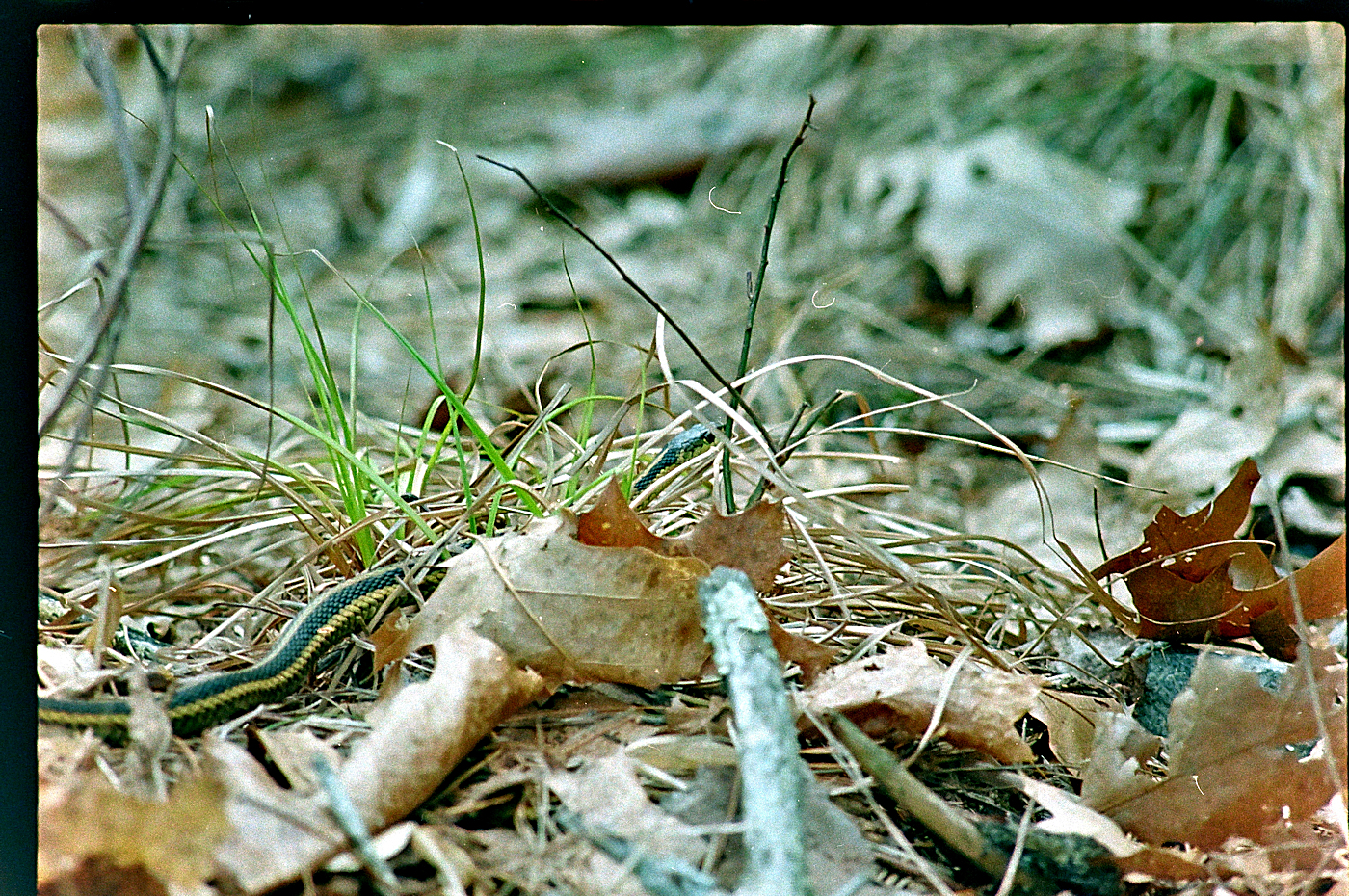
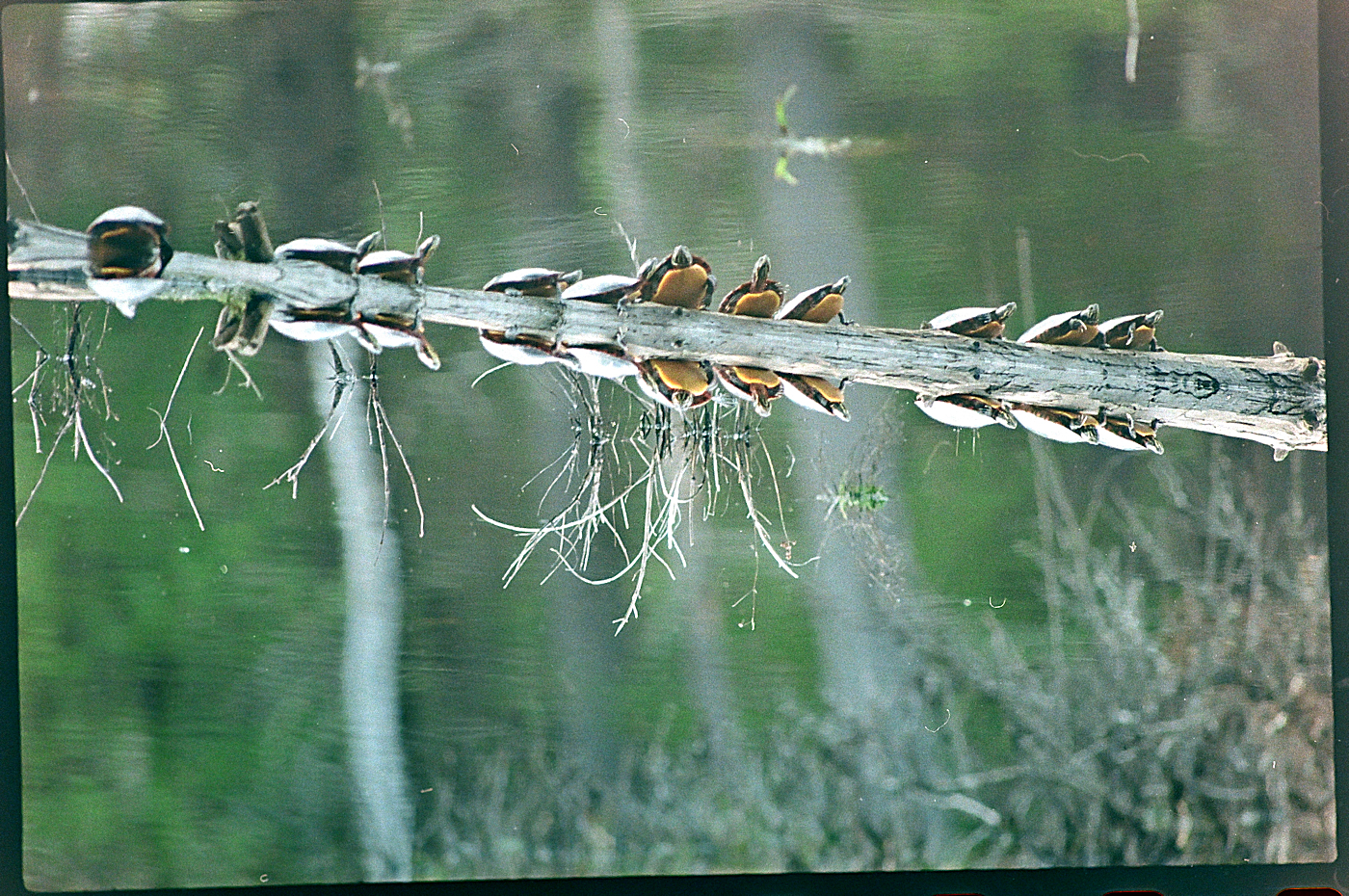
First, some selected shots from our usual woods haunt.
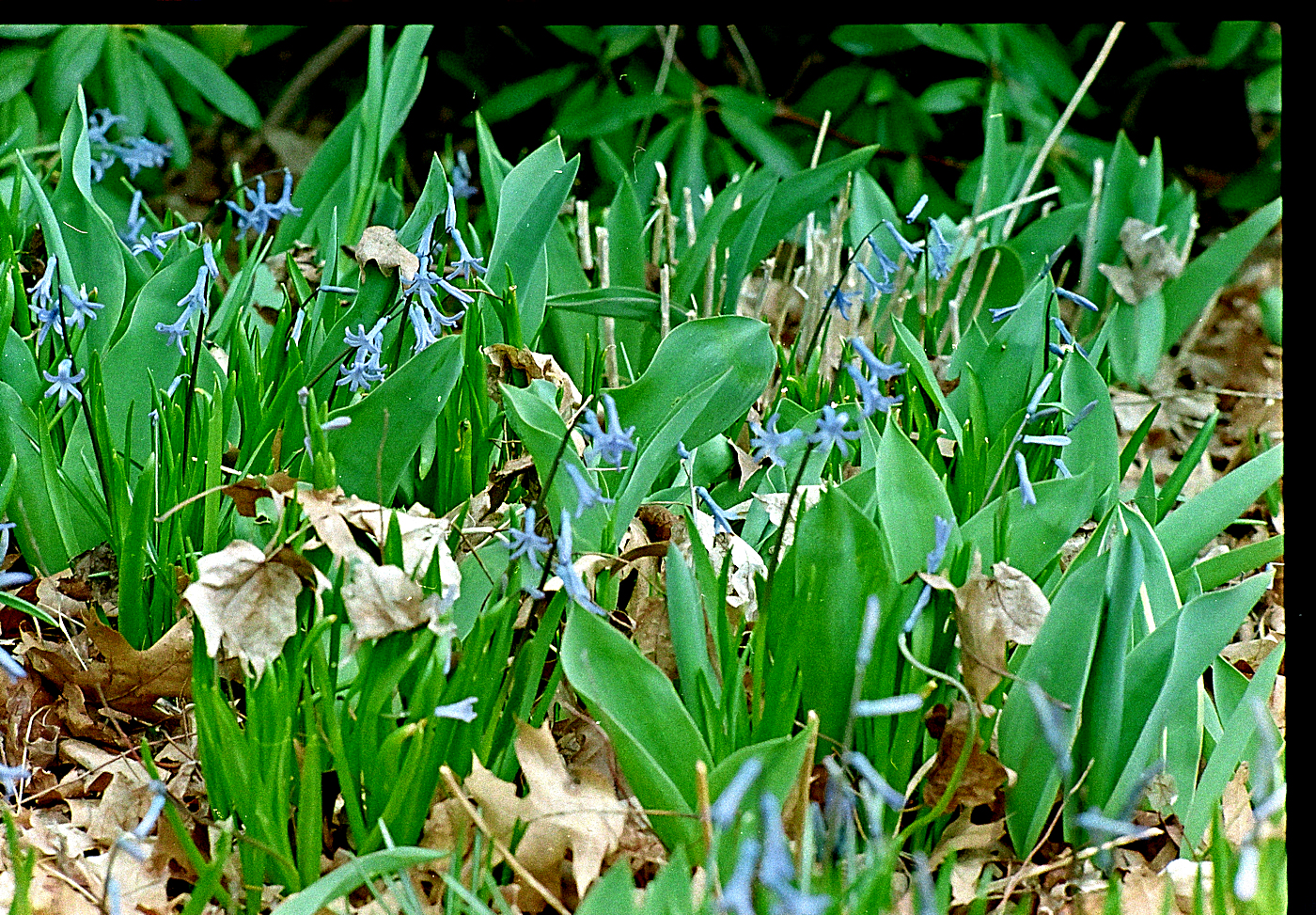
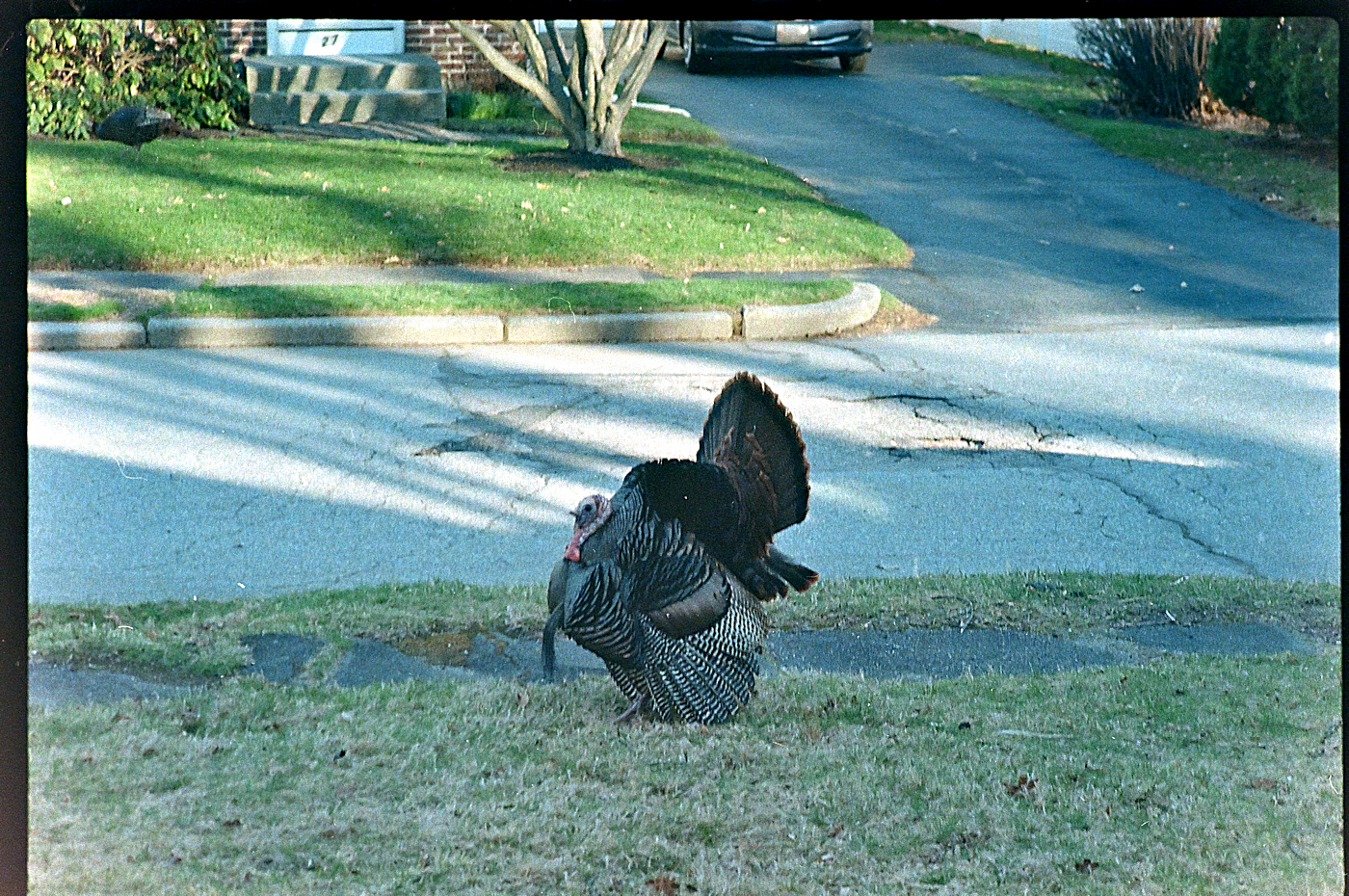
Next, some from home. The turkey picture was taken through the glass of the front storm door.
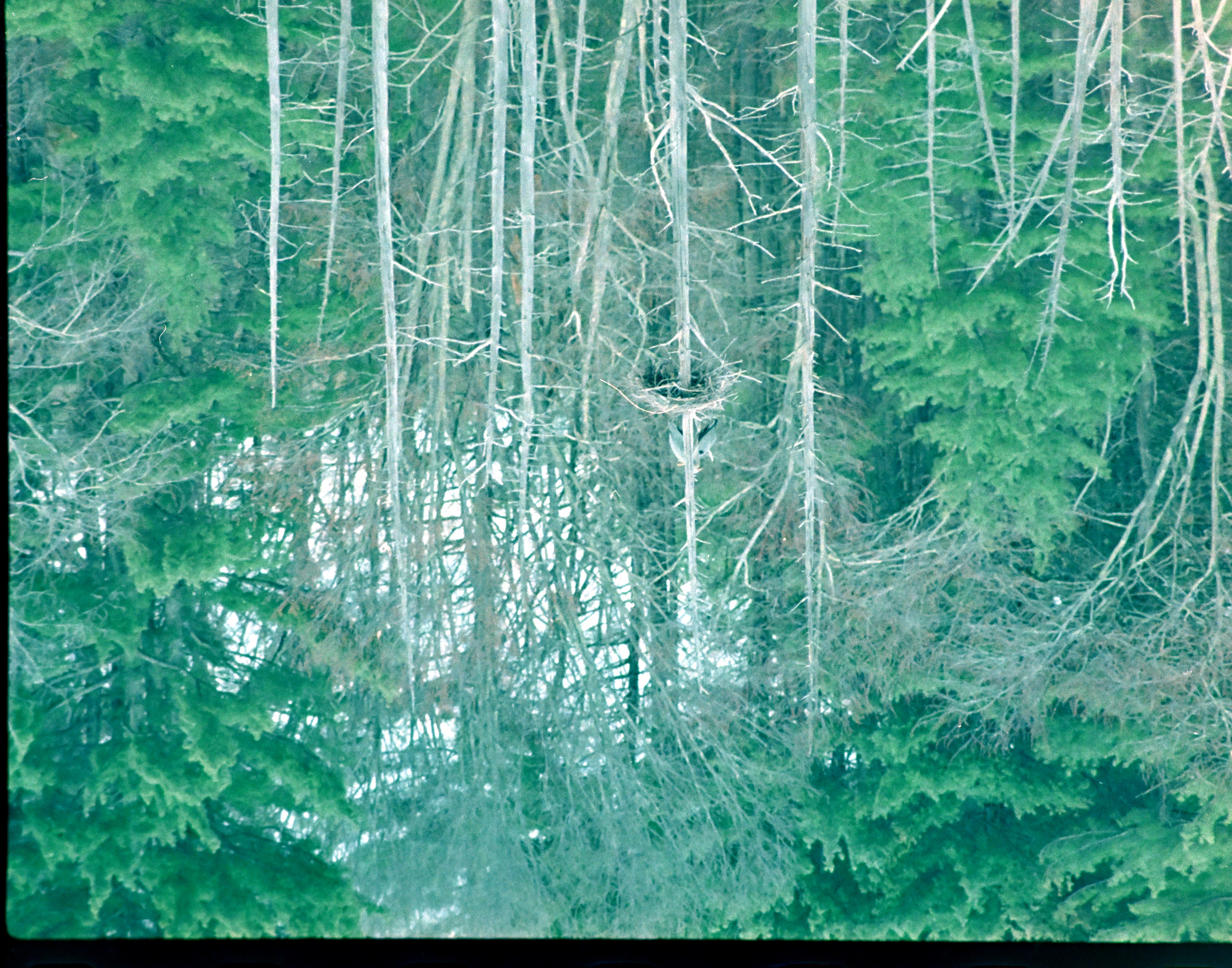
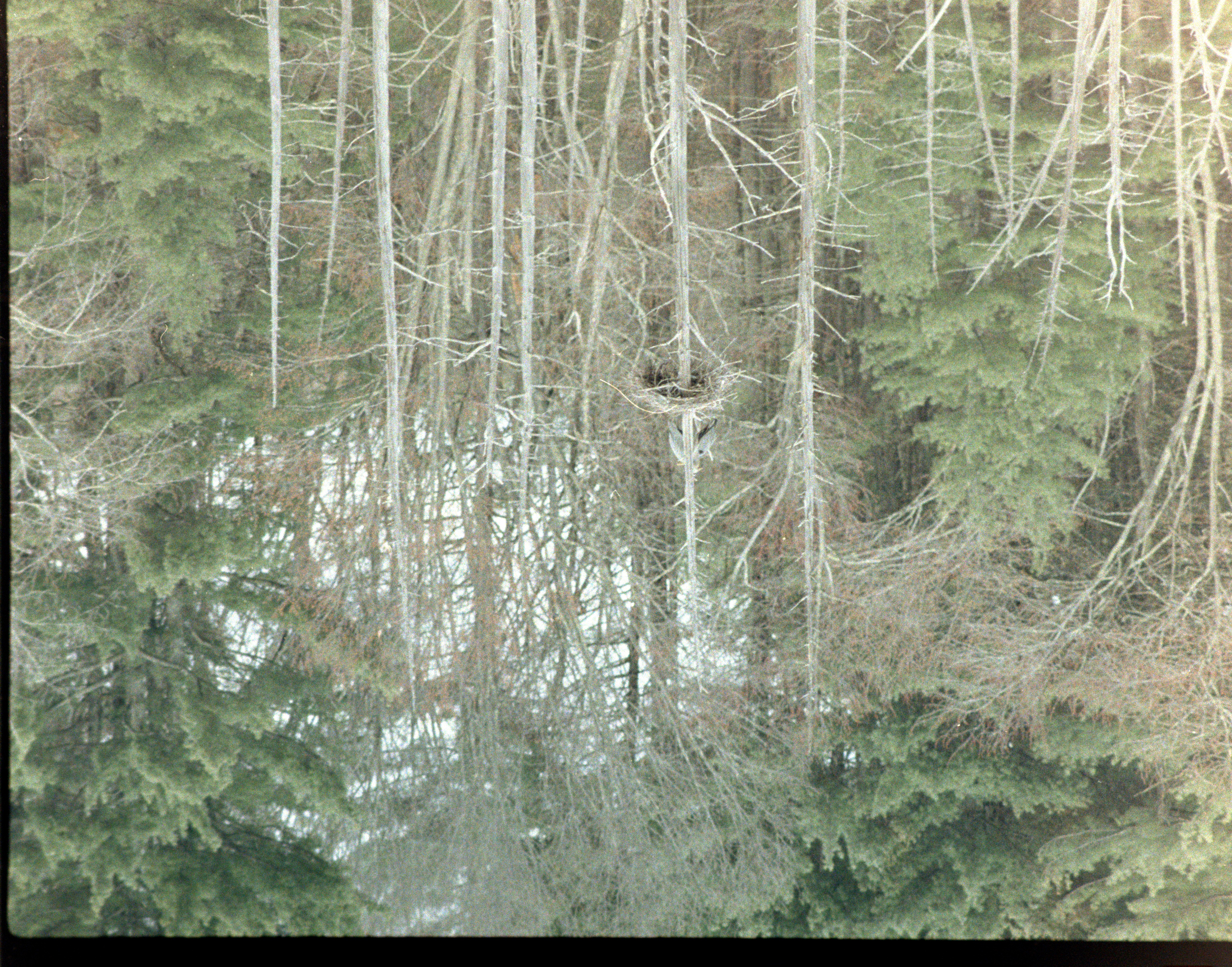
Only about a third of the shots were acceptable IMHO. A common feature was grain, way more than I expected, more than the UltraMax 400 I used in the Nikkormat last month. I tried some pics of nesting herons using the 300mm f/4.5. (No, the herons weren't using it, I was.) The grain obscured the interesting detail. The camera was on a monopod (just a single stick, no stabilizing feet) and propped against a tree trunk. For those shots I would have been using 1/250 or 1/500 sec, probably with fully open aperture, don't recall exactly. Even the more reasonable pics with a different lens, such as the flowers and turkey at home, have some grain though not so as to ruin the picture.
So I'm wondering two things. Is that graininess a likely difference between the Kodacolor and UltraMax? And would grain be increased with wider aperture, i.e. brighter light, but less time, as compared to dimmer light and more time? Not a reciprocity failure per se but a detail (a.k.a. "character") that varies with where the exposure falls on the curve. It's something I never had to think about before.
A few reviews I read mentioned "smooth grain". I don't know what to make of that. Reviews also said it was tolerant of exposure errors. I can't disagree but it makes judging the meter's (and my) accuracy harder. I think the grain was less with dimmer light. Whether it depended on total exposure from slower shutter I couldn't say.
I learned a few more lessons about scanning, but that's a different discussion.
First off - congrats on the camera and that it is working! Please take the alkaline batteries out of the camera when you are not using it. Even if it seems like it may only be a week or so until the next use.
From my experience current day alkakine batteries are garbage and leak very very quickly. I have had some recent ones swell and rupture while being stored! Duracell, etc, brand name didn't make a difference.
Back in the day, never had issues.
Re. grain, try Fuji 400 which is a Kodak rebrand. I've never had grain issues - yes it is larger than 200 films but not remotely objectionable. The key is to not underexpose. That makes things muddy and enhances the grain. You may also want to try a different lab to develop your film, because sloppy lab work and/or expiring chemistry will effect the result.
OffTrail wrote:
Can you share samples of the ones you find unacceptable due to grain?
These are unedited shots from one of the better shots. They aren't bad other than the fact that the subject was so far away, maybe 150 to 200 yards. Taken with 300mm. The color saturation for the jpg must have been done by the camera.
The first converted from the jpg.
The second converted from the raw (NEF) file.
I'll grant that in the old days I probably couldn't have done any better with my 200mm. As I said above, I was pushing it pretty hard testing the limitations. Still, I see the grain in both. My Z5ii would have gotten a better pic. But maybe it's telling me that film will always be like this.
I agree with Huss. It looks like the lab was using chemicals that were to the point of exhaustion. If you’re scanning the negatives, a lot of adjustments can be made but working with a crummy negative makes it harder. The lab I use normally does a good job but a different tech processed a roll in old chemistry and I had results similar to yours.
Try a different lab.
madNbad wrote:
I agree with Huss. It looks like the lab was using chemicals that were to the point of exhaustion. If you’re scanning the negatives, a lot of adjustments can be made but working with a crummy negative makes it harder. The lab I use normally does a good job but a different tech processed a roll in old chemistry and I had results similar to yours.
Try a different lab.
I suppose, but you could always end up submitting film just before or just after they start using fresh chemicals. Some would be good if you timed it right regardless of how cavalier they are about it. Anyway I take your point.
If you zoom in on those pics above you can see the grain. I guess you aren't supposed to look at a film pic that closely.
jimmuller wrote:
I suppose, but you could always end up submitting film just before or just after they start using fresh chemicals. Some would be good if you timed it right regardless of how cavalier they are about it. Anyway I take your point.
If you zoom in on those pics above you can see the grain. I guess you aren't supposed to look at a film pic that closely.
Well, it is film. You're gonna see grain when you zoom
I think the image looks nice and would print better than you might expect. Have you printed any of your digital scans yet? Might highlight just how much graininess you can actually work with. Grain is a bit like digital sharpening... you can get away with more in a print than you can on screen. I would also recommend paying for your lab's best scans at some point just to give yourself a reference point that you can judge your own scans against.
As far as film stocks, I don't really see a big difference between ColorPlus 200, Fuji 200, Gold 200, UltraMAX 400, Fuji 400, etc. All very usable and generally similar. Portra will generally look a little cleaner at 160 or 400 than the similar consumer films, and Ektar is very smooth. ProImage 100 also looks pretty clean.
Grain can be reduced by noise reduction software (I use Neat Image) if so desired. I tend to only do this with really visible grain (e.g. Delta 3200, etc.), and only enough to take the 'edge' off instead of trying to remove it completely.
Things like sharpening and micro contrast in post processing can also have an effect on how visible/objectionable grain is in your final output.
I’m always amused when someone who has never used film before freaks about grain in film. You can’t have an image in film without grain. When deciding what film to use grain is to be considered, but will always be there. You simply work with what works best for you. So just deal with it but understand it will always be there with film.
OffTrail wrote:
Well, it is film. You're gonna see grain when you zoom
I think the image looks nice and would print better than you might expect. Have you printed any of your digital scans yet?
Thanks. No, I haven't printed any, don't intend to. I do have some digital scans done by the lab of a roll my sweetie shot and then sat for over 20 years. They were not as good as these new pics.
I finally came to see (literally) that if you zoom enough you will always see grain. Film pics were never meant to be cropped and then zoomed to the grain level, let alone the pixel level. They were mean to be viewed full-frame. Hence I can shoot those herons at that distance with the 300mm but they will never match a good digital pic with the same lens. Don't know why it took me so much asking to see that. Duh...
---------------------------------------------
Norm Shapiro wrote:
I’m always amused when someone who has never used film before freaks about grain in film.
Oh, I've done lots of color, started over half a century ago in a galaxy far, far away. In fact, never did b&w. When projecting Ektachrome slides onto a screen the grain was never an issue. However reviving my old film camera for fun and then scanning the pics to digital is a new game for me. I'm still learnin' the techniques and limits. If that amuses you, well then be amused.
Try a few rolls of Fujicolor 400. It's a rebranded Kodak film and is very affordable. It has good latitude, plenty of saturation and fairly fine grain for a 400 speed film.
Taken with a really cheap Vivitar Ultra Wide and Slim
Lab processed, scanned with a Sony A7CII. FE90 Macro, converted with Negative Lab Pro
madNbad wrote:
Try a few rolls of Fujicolor 400. It's a rebranded Kodak film and is very affordable. It has good latitude, plenty of saturation and fairly fine grain for a 400 speed film.
Taken with a really cheap Vivitar Ultra Wide and Slim
Lab processed, scanned with a Sony A7CII. FE90 Macro, converted with Negative Lab Pro
jimmuller wroteStill, I see the grain in both. My Z5ii would have gotten a better pic. But maybe it's telling me that film will always be like this.
This pic of a storm wall were taken with a Nikonos V w 35mm lens using Fuji 400.
The second pic is a 100% crop showing grain and sharpness when pixel peeping. I don't find either an issue given this is a 400 ISO 35mm film:
Desmolicious wrote:
This pic of a storm wall were taken with a Nikonos V w 35mm lens using Fuji 400.
The second pic is a 100% crop showing grain and sharpness when pixel peeping. I don't find either an issue given this is a 400 ISO 35mm film:
Those are lovely! They actually have a texture that isn't so different from mine, but prettier. Thanks.
I am continuing my film journey. The pen may be mightier than the sword, but the grain is bigger than the pixel no matter how you shoot it.
jimmuller wrote:
Those are lovely! They actually have a texture that isn't so different from mine, but prettier. Thanks.
I am continuing my film journey. The pen may be mightier than the sword, but the grain is bigger than the pixel no matter how you shoot it.
Well, as in the old days, if you want to see less grain at a given display size, you're simply going to need a bigger negative. There are some very inexpensive ways to get into 120 with a normal lens. 645 offers a noticeable improvement in grain, and certainly the 6x6/7/8/9 formats do. Can I talk you into a Holga?
There's also a discussion in the scanning world about how sharp grain needs to be. Some people like scanners that don't render grain as razor sharp, some want it as sharp as they can get. You might prefer a scan that knocks the edge off of the grain.
jimmuller wrote:
Film pics were never meant to be cropped and then zoomed to the grain level, let alone the pixel level. They were mean to be viewed full-frame.
corposant wrote:
They were really meant to be printed!
I hear you and I believe you. But I really don't want to generate more "stuff", even if the stuff is pieces of paper with pretty pictures. Or to put it another way, what would I do with prints?