A question for those with the A1 II, can you display in the viewfinder both the level and histogram at the same time? I know you can do it with the A7R VI since I was able to try this in a store but no store around me has an A1 II. I can't find any documentation online or setup video that shows this (boy the Sony documentation is bad). I'm trying to decide between the A1 II and the A7R VI and this is something that I use (all the recent Z cameras and Canons allow this).
bcaslis wrote:
A question for those with the A1 II, can you display in the viewfinder both the level and histogram at the same time? I can't find any documentation online or setup video that shows this (boy the Sony documentation is bad).
DWOfPaul wrote:
@ajamils@ As someone with a Z8 and a a7rIV, most of the major considerations have already been mentioned. On the editing side, I have found my Z8 raw files easier to edit in LR. There is nothing wrong with the Sony files, but they do seem to take more work to get them to where I would like. As you noted, WB and color science seem to have been improved since the a7rIV, but I don't have any firsthand experience to back this up.
The biggest thing I would add is on the size/weight side. If you're going with smaller lenses like the 20-70mm f4 and 70-200mm f4, the smaller combined size and weight of the camera and lenses will be more noticeable. If you're sticking with larger lenses like a 24-70mm f2.8 and 70-200mm f2.8, I personally don't think the small weight/size difference is that noticeable....Show more →
My plan is to go to smaller lenses and that's why I am considering Sony. I already have Tamron 70-180 G2 so plan to add 20-70 F4. Hopefully, that would give me significant weight and size saving.
Don't think I can add much to the discussion but recently swapped from a Z8 to an A7rvi
My own experience, as a casual user is that there isn't much difference
The extra resolution and dynamic range are nice, but not immediately noticeable, the slower readout speed hasnt really been a problem
Ergonomics are a factor, I liked the Z8 and can only use the A7Rvi for long periods with a grip
A lot more customisation options on the A7Rvi which may appeal to power users but havent radically improved anything for me
Initial focus and the 'stickiness' of focus tracking are better on the sony but then I was using e mount lenses on my Z8 so not ideal there
That said, I dont regret the switch (unlike the Zf to A7CR change) the A7Rvi feels like it has more potential somehow
Edit - should add, software support for the A7Rvi isnt great yet if you dont use lightroom, I used to use DXO and Luminar but neither fully support the A7Rvi yet
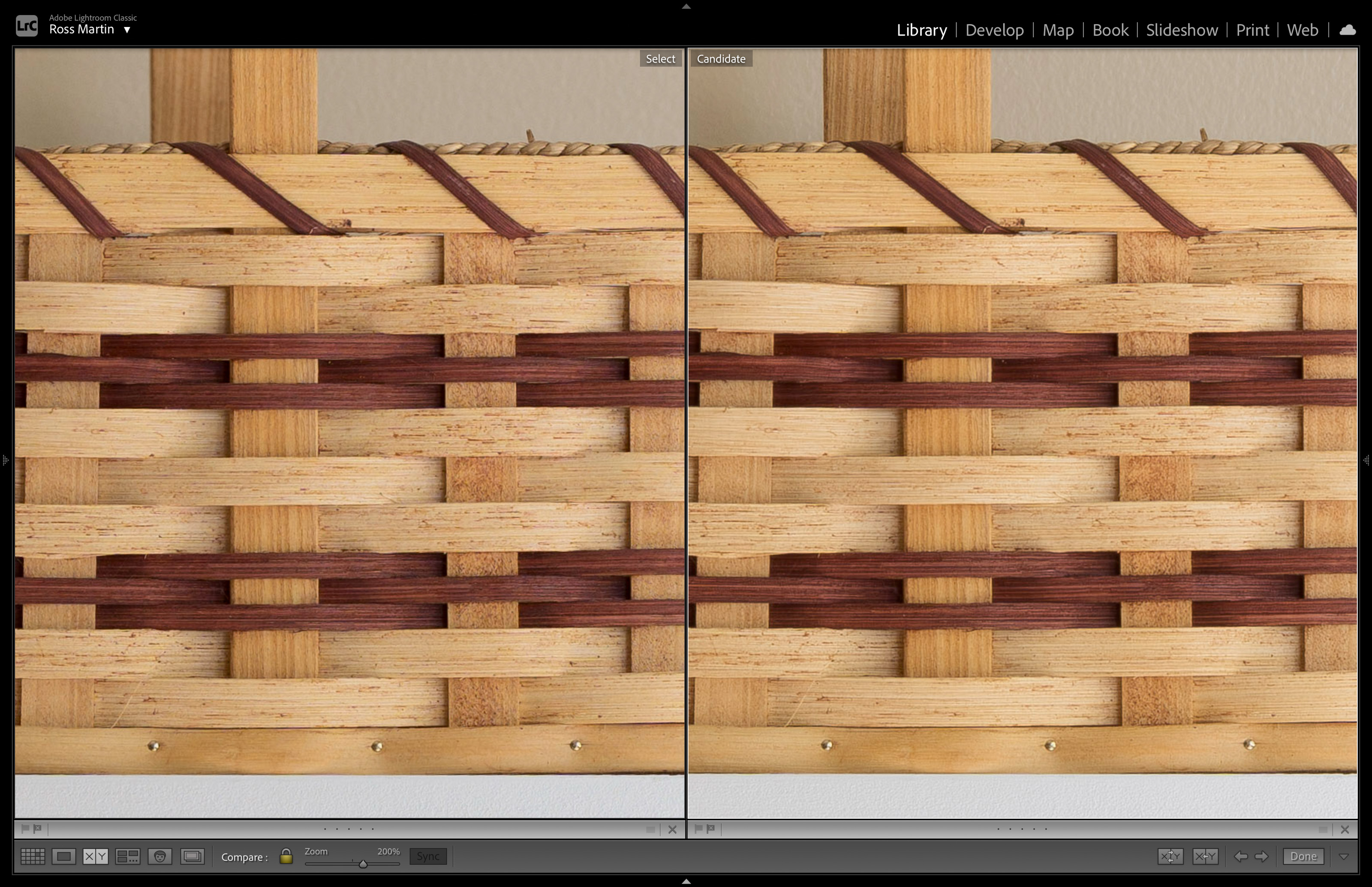
Anyone wanting to try additional color profiles might consider Color Fidelity (https://www.colorfidelity.com), I have bought them for every camera dating back to my Nikon DLSR days. For $25 you will get for the A7R6 five profiles - Linear, Natural, Standard, Portrait, High. Another set of tools if you like to have a choice besides Adobe for color and contrast rendering differences. Below is a comparison of Adobe Standard on left and Color Fidelity Natural on right. WB setting was identical on both in order to preserve subtle hue differences in the profiles.
Ross Martin wrote:
Anyone wanting to try additional color profiles might consider Color Fidelity (https://www.colorfidelity.com), I have bought them for every camera dating back to my Nikon DLSR days. For $25 you will get for the A7R6 five profiles - Linear, Natural, Standard, Portrait, High. Another set of tools if you like to have a choice besides Adobe for color and contrast rendering differences. Below is a comparison of Adobe Standard on left and Color Fidelity Natural on right.
I would second this. I have not tried them for the A7R VI but I have used them for other cameras in the past and they are excellent.
Don't think I can add much to the discussion but recently swapped from a Z8 to an A7rvi
My own experience, as a casual user is that there isn't much difference
The extra resolution and dynamic range are nice, but not immediately noticeable, the slower readout speed hasnt really been a problem
Ergonomics are a factor, I liked the Z8 and can only use the A7Rvi for long periods with a grip
A lot more customisation options on the A7Rvi which may appeal to power users but havent radically improved anything for me
Initial focus and the 'stickiness' of focus tracking are better on the sony but then I was using e mount lenses on my Z8 so not ideal there
That said, I dont regret the switch (unlike the Zf to A7CR change) the A7Rvi feels like it has more potential somehow
Edit - should add, software support for the A7Rvi isnt great yet if you dont use lightroom, I used to use DXO and Luminar but neither fully support the A7Rvi yet ...Show more →
Thanks for the details. Z8 is the first camera that I have owned this long so definitely not something that I hate using or want to get rid of it. It is more about GAS. Having owned most Sony bodies before Z8 came out, A7rVI is first Sony release that really enticed me to look at Sony again.
Ergonomics wise I do like the button placement on Z8 as everything is within reach without going into menu but Sony is more customizable so I never really had any issue with it in the past. One thing that I absolutely hate on Z8 is implementation of User Settings. They just do not make sense.
I didn't have anything against the Z8, last proper camera I used was a D810 and gave up photography for a long while
It was initially a Zf that got me back into it amd then a Z8, really liked a lot of the things that other dont like about it - the size, not as customisable as other options etc
On paper, some of the specs made it look a little dated, in reality I never pushed it hard enough to bump up against those limits and im unlikely to do so on the A7r either
The biggest tangible benefits Ive felt are around how the different metering options work, Ive found it much easier to avoid clipping highlights on the Sony (gannets in particular) and the Sony pre capture options
Both of those have made a difference for me and justify the upgrade (albeit clipping highlights on the Z8 was more than likely user error!)
Andyuk109 wrote:
clipping highlights on the Z8 was more than likely user error!
If you managed to still clip highlights in Highlight metering, I'm impressed! I've actually tweaked my highlight metering to be -0.7 EV instead of -1.0 because it's so heavy-handed out of the box.
Andyuk109 wrote:
For me, the zebra display on the Sony is a really handy tool to help avoid those sort of schoolboy errors
Agree about clipping indicators. And even people way past the “schoolboy” level occasionally blow out a few exposures on white birds in sunlight, especially if the background is not also bright.
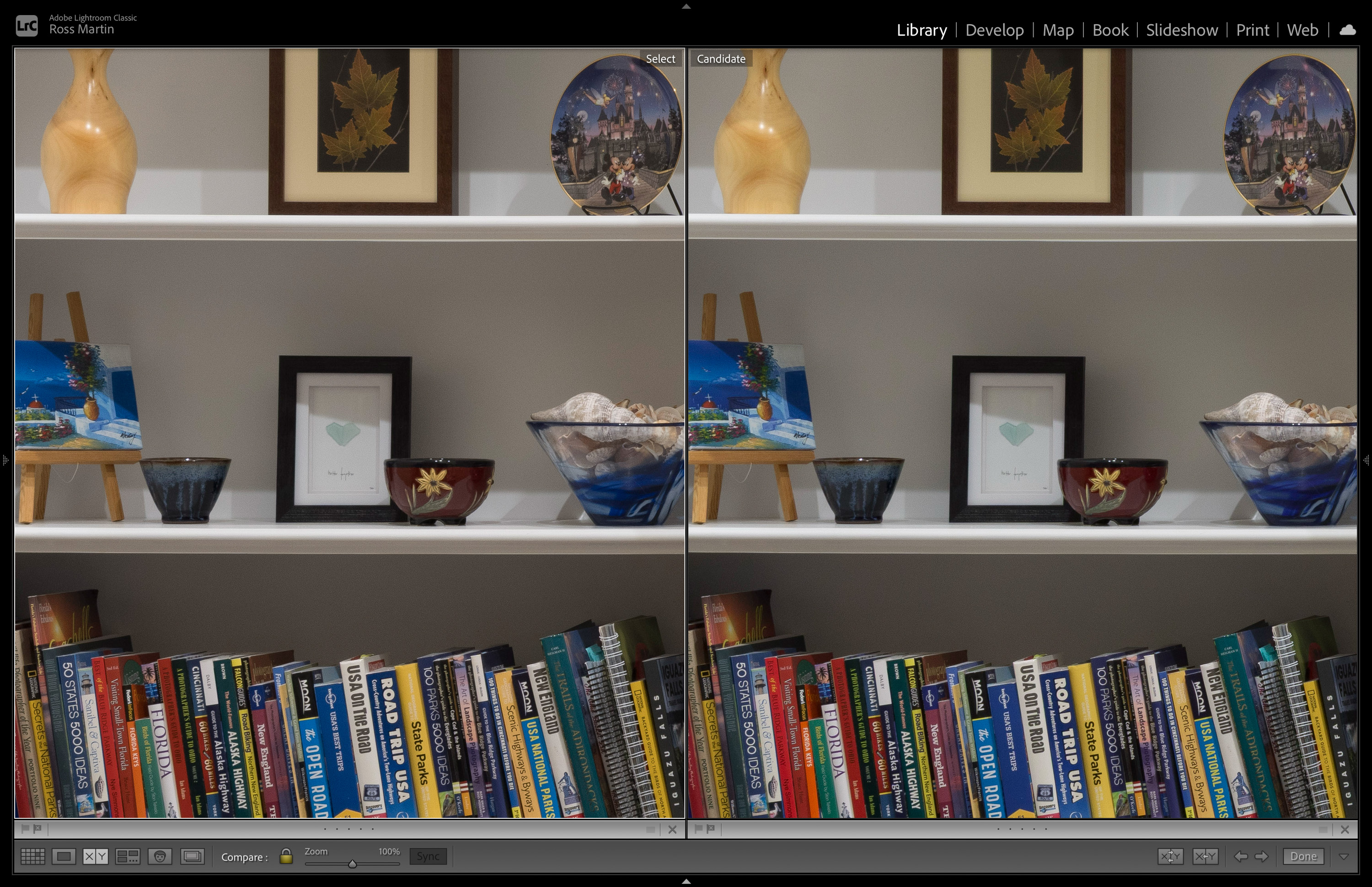
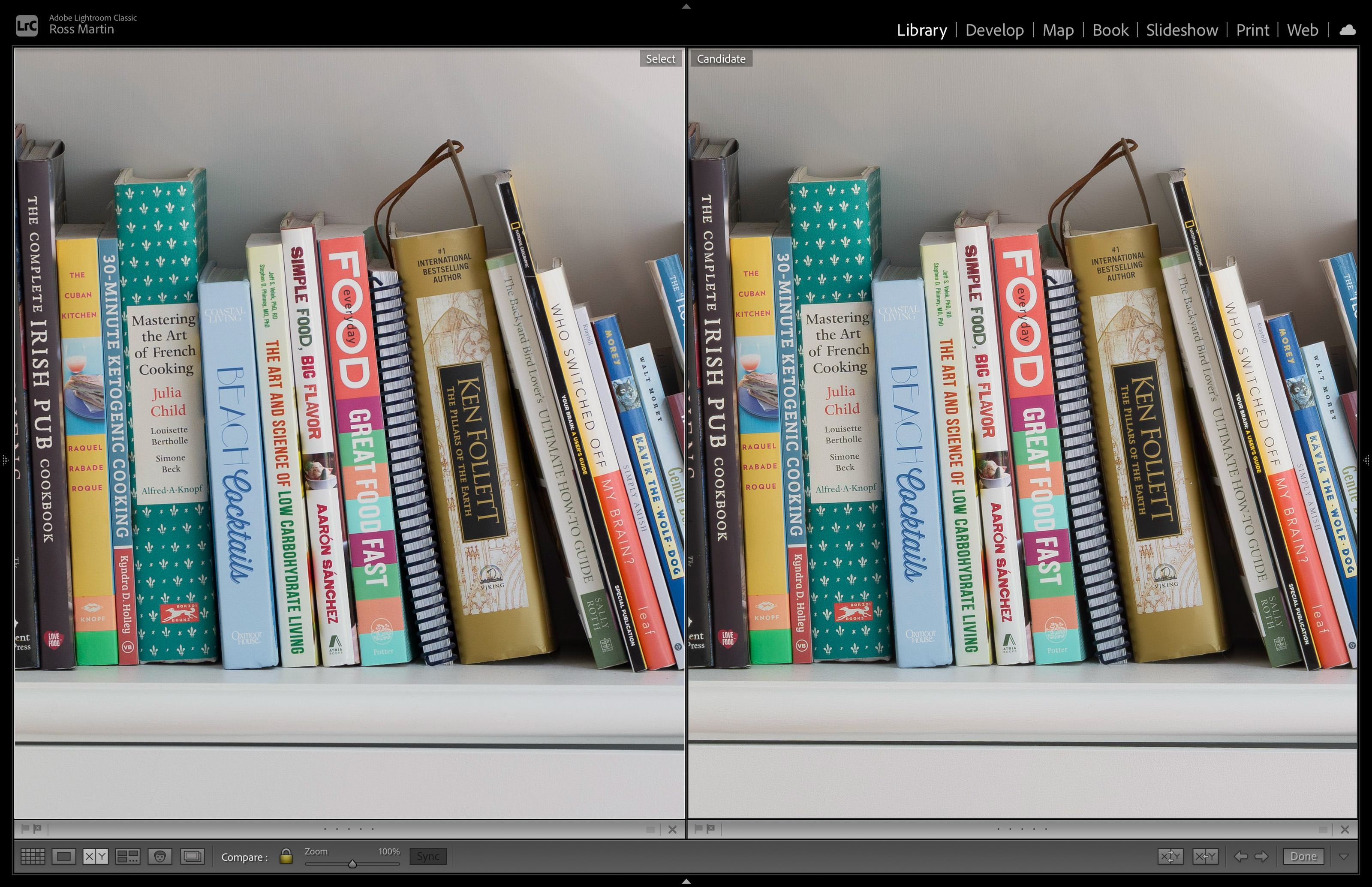
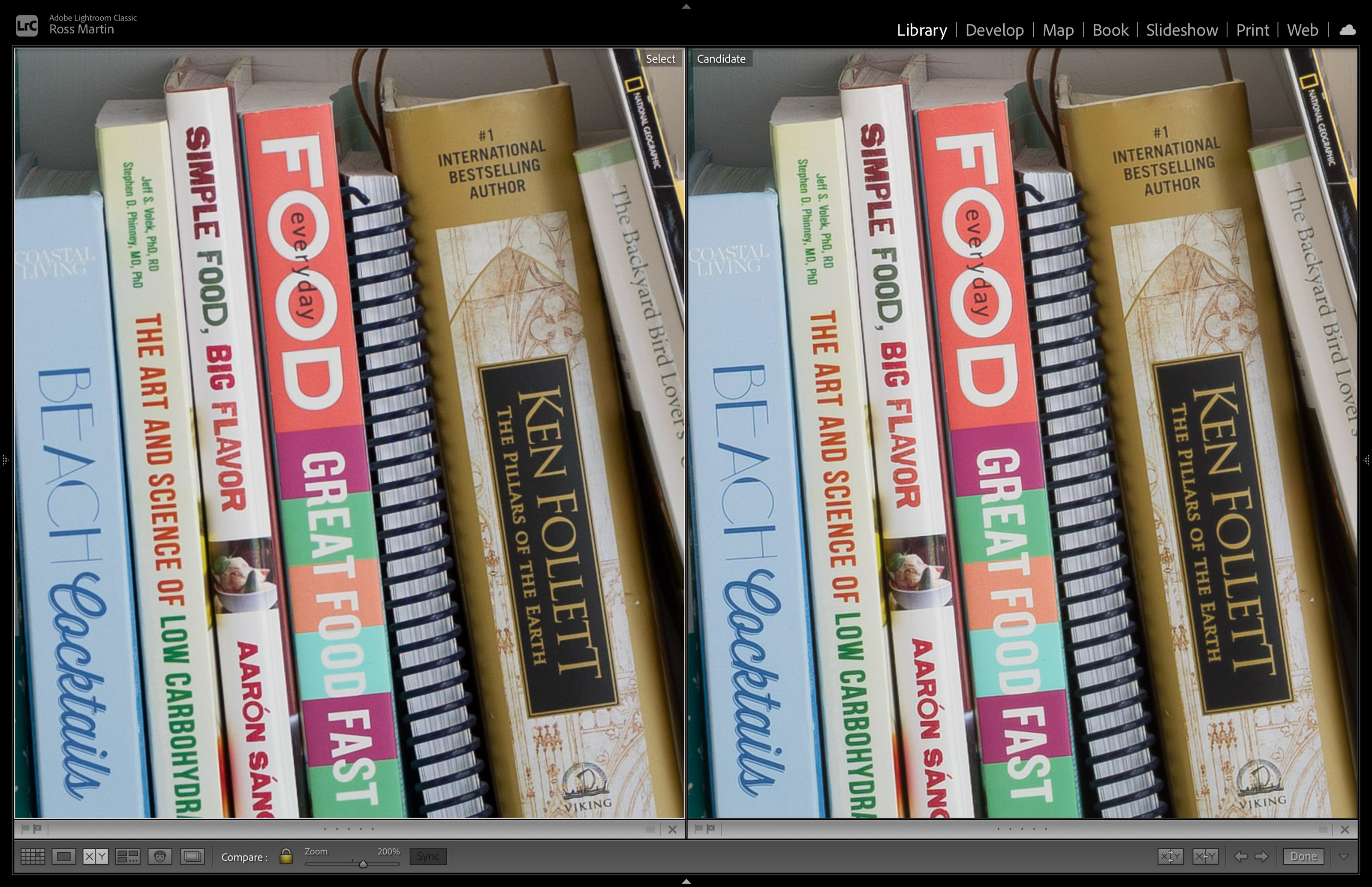
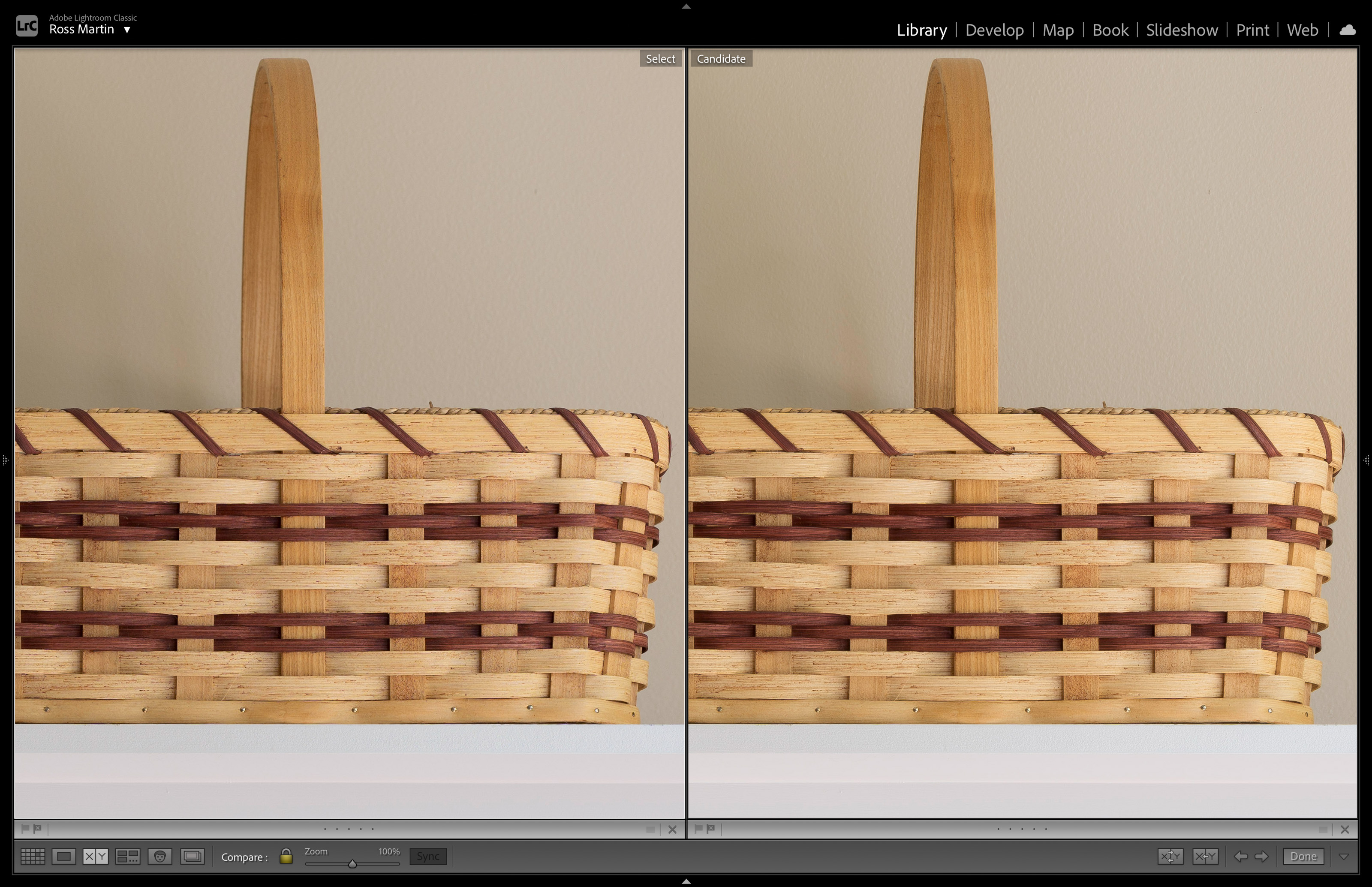
Some forum folks have mentioned worries about diffraction robbing their images of detail and sharpness on the higher resolution sensors and I wanted to give a perspective on this using my A7R6. Landscape photographers have been shooting deep into the diffraction apertures for many decades as they often prioritize front-to-back depth of field, and if you have followed some of those professionals you’ll see they won’t hesitate to routinely shoot at f/11 or f/16 if their composition requires it [focus stacking is not always possible or wanted depending on the circumstances and one's workflow preferences in the field]. What’s nice about our digital workflows is we can easily and quickly compensate in development and maintain a quite amazing amount of fine detail and sharpness that is capable of producing gorgeous gallery-quality prints even upon very close examination.
I am not a master at this like our member Mark Metternich [who has posted beautiful images in our Landscape forum shot at f/32!], and I’m sure many of you like Dan already have your own great technique for solving this. But with a simple, quick workflow I maintain very satisfying and rich detail while shooting well into the diffraction range. Below are examples: first image on the left is shot at a prime aperture of f/3.5 which is not in the diffraction range, using the very sharp Viltrox 135mm f/1.8 lens, and to the right is an exposure at f/11 which is firmly in diffraction territory. The f/3.5 frame has default sharpening in Lightroom, whereas the f/11 frame has 100% deconvolution sharpening applied which I find works so well to remove diffraction effects, along with a mere 5 points of clarity and contrast added to restore the small contrast loss that happens when stopping down [I also used Denoise on the f/11 frames so I could maximize seeing fine detail and not noise on the 200% crops]. The first set of each scene is at 100% view where it’s virtually impossible to tell a difference between the two apertures to my eyes, followed by a 200% pixel view for further scrutinization. The 200% view on my monitor is like putting your nose right up to a 75” wide print!
I hope these screenshots hold up to web compression enough for you to see why diffraction does not negatively affect an image for me when using a proper development workflow. Sharpening levels could be taken way beyond what I have done here, but I like to keep things on the conservative side to maintain a natural, organic look.
tanks for taking the time to make those examples, Ross.
Over the decades I have at times accepted various kinds of advice about aperture selection that turned out to be wrong, or at last not always exactly right.
A LONG time ago, when I was a young guy shooting film, I accepted the idea that f/16 was "the sharpest" aperture — obviously confusing "sharpness" with "depth of field."
Later I was enlighten about diffraction blur and accepted the idea that f/8 was sharpest and that stopped down beyond that was not a great idea. (In many case, if you don't need larger or smaller apertures, that can still be a decent bet, though today it might be larger aperture than f/8 in many situations.)
Then one day (with my first full frame digital camera) I went out with a few of my favorite lenses and a tripod and just made a Buch of exposures at different apertures, which I then compared in post, and discovered...
... that you can make very sharp photographs at f/11 and even f/16 on FF.
A bit later I distinctly recall seeing a very large image shot on a FF system at f/22 that looked very sharp. (I'm not talking about some kind of test bench optimal measurement — I'm talking about the actual appearance of the print.) Since that time I've been willing to sometimes use f/22 if DOF is more important that absolute maximum theoretical image sharpness, and it can work pretty darned well.
Part of this might come down to subject matter, some of it to the other factors that influence the subjective sense of sharpness in an image, and some of it to skillful post-processing, including sharping techniques.
One other really important thing — that some of you already know, but others seem to not yet understand: The amount of diffraction blur, which increases as ou stop down beyond the diffraction-limited aperture, is {b}unaffected by the sensor resolution. It is an optical phenomenon, not a sensor phenomenon.
If you could take two otherwise identical cameras with the same lens and aperture, where one has a 16Mp sensor and the other has a 60MP sensor, and make two otherwise identical photographs of the same subject... the size of the diffraction blur in both images will be exactly the same. If you made, say, 30" x 40" prints from both images and checked for diffraction blur, there would be precisely the same amount in both of them.
The difference is only that the higher MP sensor system more accurately captures the diffraction blur, while the lower MP system captures that identical diffraction with less detail, if that makes sense. IN other words, the higher MP system version is a more accurate "capture" of the light projected by the lens.
Even better, since the diffraction limited aperture is larger on the high MP system, if you are using an excellent lens and you open up a bit more past the diffraction-limited aperture on the low MP system, the resolution will continue to improve a bit more on the high MP system.
There is no "diffraction disadvantage" to using higher resolution sensors. The only possible difference always favor the higher MP system.