Richard Butler mentions that prints in DPReview test scene are fading so do not make conclusions from face colors. I have noticed that colors (mostly reds) in faces were more faded in A7RVI compared to A7RV. But I did not expect that it would be due to prints fading. So there is now explanation for that.
Also there was a link to Sony's page on 14 vs 12 bit raws. https://www.sony.com/electronics/support/articles/00229990
It does not contain A7RVI, but it shows that drop to 12 bit is more nuanced than just shooting compressed raw in continuous drive mode.
As I am deciding to upgrade my A7RV I have got stuck on one thing.
I appreciate better EVF (but monitor really needs update too to be brighter) and battery life. I appreciate all the improvements to focus ability and framerate on A7RVI. They would be great if I would want to get more into birding (so far I tried it few times with A7RV and 400-800). But so far my main (90+%) use case where I care about image quality is landscapes and astrolandscapes.
I appreciate increased dynamic range when DGO (mechanical shutter) is used on A7RVI.
On the other hand electronic shutter has reduced image quality compared to electronic shutter on A7RV: a bit in ISO range 100-250 (I would ignore the difference here), but by a stop in range 320-500 (significant). A7RVI gets a tiny bit better at ISO 640+. At least according to PDR chart at photonstophotos but also confirmed in raws files downloadable from DPReview (for ISO-invariance test at ISO 400 +4EV).
On A7RV the bump in DR at second base ISO was at such great spot for landscapes, the ISO 320. So using photonstophotos DR numbers, 11.69 at ISO 100 and 10.56 at ISO 320. So if shutter was too slow at ISO 100 I would set it to 320 and still get good enough DR and 3.2x faster shutter which often was enough for landscapes. On A7RVI with electronic shutter it is 11.4 at ISO 100, but there is no bump until second base ISO 640 where it is at 9.63 which great for ISO 640 but no longer in range I would want to use for high contrast landscapes. At ISO 320 it is just 9.84.
In my LrC catalog metadata filtering shows since May 2025, pictures rated 1 (a picture I want to retain, it might be part of sequence for processing) or more: 35% pictures are at ISO 100, 55% pictures are at ISO 320.
I don't mind occasional shutter sound for single landscape picture but I also take timelapses in photo mode where I often push shadows in captured raws so DR is important. I also pick some of the images from the timelapse as still photos so DR is important there as well.
With long lenses a shake from mechanical shutter could impact image and more so in repeated shutter actions during timelapse.
Example where A7RV would be better than A7RVI:
Moonrise timelapse: 974 photos used for timelapse (internal intervalometer with 1s gap), each ISO 320 f/8 1/6s 674mm (Sony 400-800).
I wanted to capture the full timelapse with Moon and TV tower with single exposure settings so I would not have to touch camera during timelapse causing gaps (I also do not want to rely on automatic exposure here, it was in M mode). I have some experience with this and also my own Moon alignment planning app with exposure Moon/ground model so I knew what exposure range would be needed. During sequence the Moon gets brighter as it ascends and its light goes through less atmosphere while groud and sky becomes darker as sun is getting further below horizon on the back side. So a situation with normal scene DR at start but high DR at end of capture. I could try also bracketed exposures, but then I would not be able to use internal intervalometer (does not support bracketing) and external would be slower to cover each bracket shot so I would get only less frames for timelapse. The pictures at the end of sequence use LrC settings exposure +2 highlights -30. Merging bracketed shots would be tricky because at this focal length the Moon moves enough each second to have problems with HDR process at Moon edges.
Selected photos: https://jtra.cz/foto/20260501-mesic-s-zizkovskou-vezi/
Timelapse can be seen in my youtube video or shorter version in IG reel: https://www.instagram.com/jtraphoto/reel/DYFzZEsg9di/
With A7RVI at ISO 320 electronic shutter I would get more noise by 1 stop in dark parts of the image (the noise is visible at pixel level in A7RV shots but it is just about the amount that I find ok).
Or I could use ISO 160 (or ISO 200) electronic shutter to have similar noise but slower shutter speed (1/3s) where Moon motion would be a bit more blurred (at 800mm motion blur is not visible in 60MP at 1/13s or faster, but that is only for ideal conditions so 1/6s was good settings for the occasion).
Or I could use mechanical shutter (and even increase ISO to 400 for comparable DR) but risk shaking the lens. There are no do-overs in Moon alignment photography.
jtra wrote:
On the other hand electronic shutter has reduced image quality compared to electronic shutter on A7RV: a bit in ISO range 100-250 (I would ignore the difference here), but by a stop in range 320-500 (significant). A7RVI gets a tiny bit better at ISO 640+. At least according to PDR chart at photonstophotos but also confirmed in raws files downloadable from DPReview (for ISO-invariance test at ISO 400 +4EV).
Where do you see the DR for electronic shutter on the a7R V?
James Burden wrote:
I guess that will depend on size and speed of the interfering object and whether you are using subject detection or not. Let's say you're across the street and want to make a photo of a man looking in the window of a shop...if you're using human subject detection then the focus should remain/jump back to the man when the obstruction (car/truck) etc. passes. If it doesn't then you will need to change the AF crossing level to a more sticky setting since the object is larger and moving slower probably. It's been hotter than 40 hells here recently but someone close to a streetscape should test it....
Based on my experience with such a feature on other brands… there’s no free lunch here! :-)
It is great that we can customize a parameter to alter how “sticky” the AF is and prioritize either staying with that acquired subject (at one end of the spectrum) and quickly jumping to a new one (at the other end).
However, if you pick one the pluses are accompanied by some potential downsides. On one hand, if you allow the system to jump quickly to new subjects (useful sometimes!) you are more likely to lose focus on a subject you are tracking. On the other hand, when you choose to make the AF stickier you might hope to acquire a new subject and find that AF won’t let go of the previous one.
gdanmitchell wrote:
Based on my experience with such a feature on a different brand… there’s no free lunch here! :-)
It is great that we can customize a parameter to alter how “sticky” the AF is and prioritize either staying with that acquired subject (at one end of the spectrum) and quickly jumping to a new one (at the other end).
However, if you pick one the pluses are accompanied by some potential downsides. On one hand, if you allow the system to jump quickly to new subjects (useful sometimes!) you are more likely to lose focus on a subject you are tracking. On the other hand, when you choose to make the AF stickier you might hope to acquire a new subject and find that AF won’t let go of the previous one.
Until cameras actually read our minds… ;-)...Show more →
If you use one of the tracking zones then you simply release the focus button momentarily put the zone over the subject you want and press the AF button or simply put the zone over the new subject and momentarily release and press the focus button again. The camera should lock on to the selected subject. Stickier only sticks when the AF button is down.
duncangr wrote:
If you use one of the tracking zones then you simply release the focus button momentarily put the zone over the subject you want and press the AF button or simply put the zone over the new subject and momentarily release and press the focus button again. The camera should lock on to the selected subject. Stickier only sticks when the AF button is down.
Makes sense, and some operator intervention is always necessary with features like this.
Jun 18, 2026 at 05:21 AM
Steve Spencer Online • • • • • • • Upload & Sell: On
A74me wrote:
its the same as MS on all sony cameras except the new Rvi and Mv
Not true. All the way back to the A7r II there was a pretty big difference between DR in the ES mode and the MS mode. Here is a link to that comparison at photons to photos (you may have to copy the link to your browser):
The difference at base ISO (ISO 100) was almost as big for that cameras as it is for the A7r VI. Interestingly there was no difference in DR between ES and MS in the A7r III. Most other differences in Sony cameras that have been tested have been small or not there at all when the two modes have been compared, but it is not true that the differences has only emerged with the latest cameras and the introduction of DGO. That has led to a difference in the current A7r VI and A7 V, but differences existed for at least one widely used camera in the past.
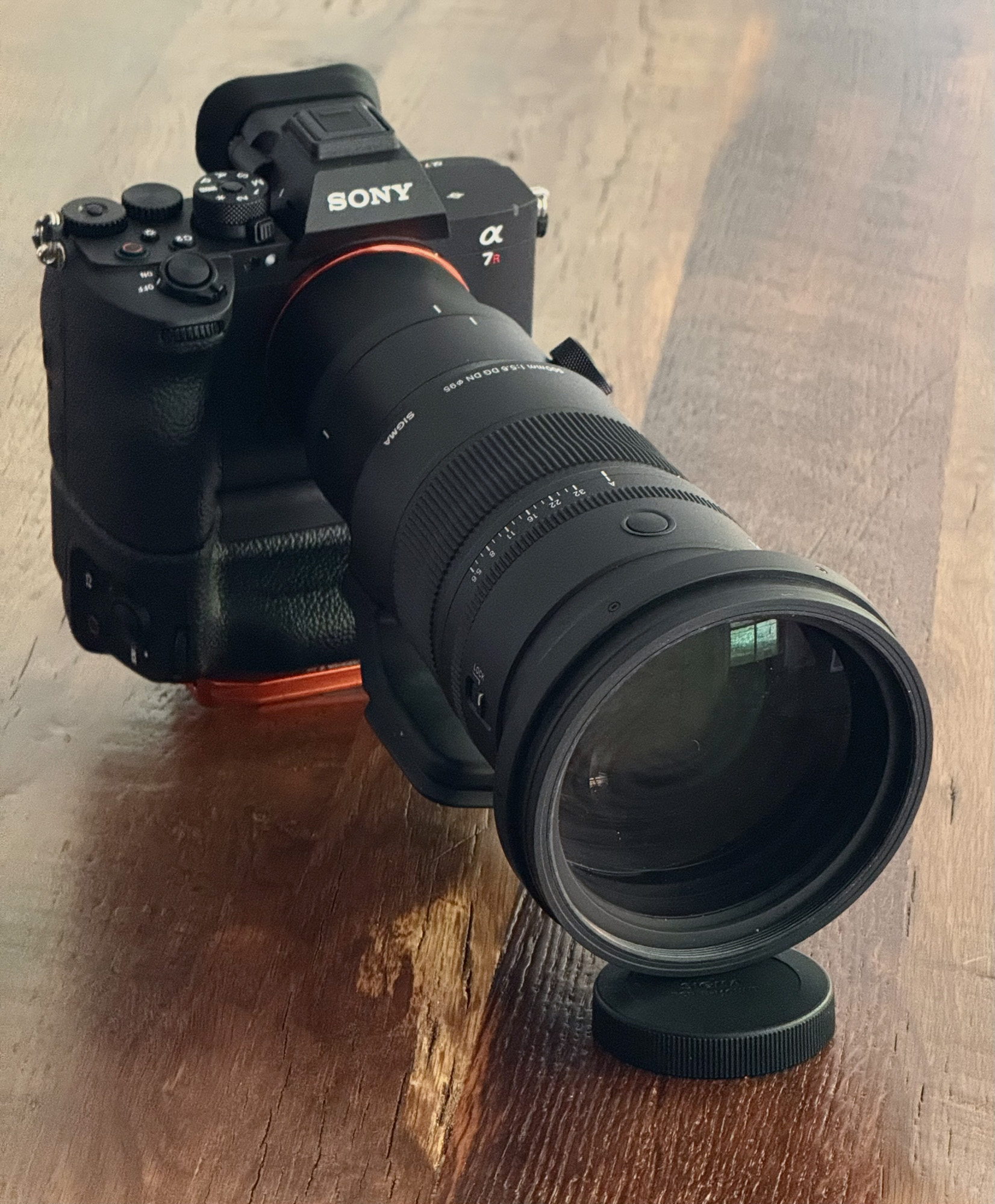
I’ve been trying out the VG-C6 on the A7R6 and it has solved my dangling pinky issue. Attached to bottom is a Three Legged Thing Base85 arca plate (in matching Sony orange ). The grip fits nice and snug against the body. I like having dual batteries on board and based on yesterday’s shooting/chimping using 14% it looks like I’ll get a full week of shooting in between charges.
I’ve become a big fan of the Sigma 500/5.6 for its small size and light weight combined with great sharpness, and the 15fps limitation does not hold it back for my uses (I’m usually set slower than that).
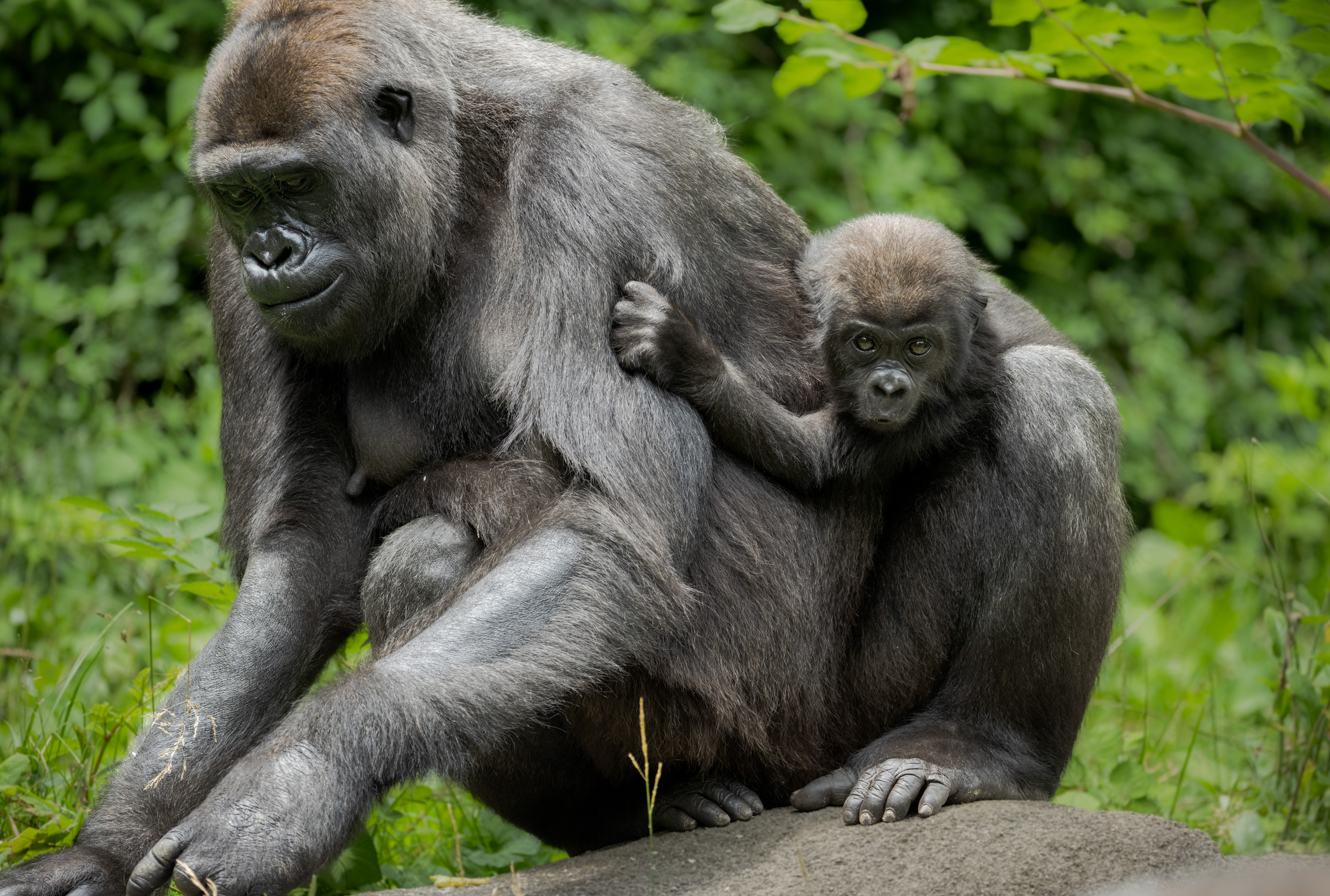
This is baby gorilla Mboka Jo at the Cincinnati Zoo yesterday, cuddled up with first-time mother Gladys.
ILCE-7RM6500mm F5.6 DG DN OS | Sports 024 lens500mmf/5.61/500s800 ISO-0.7 EV
That’s probably because the A7r II dropped to 12 bit in ES and the R III had full 14 bit in ES.
Steve Spencer wrote:
Not true. All the way back to the A7r II there was a pretty big difference between DR in the ES mode and the MS mode. Here is a link to that comparison at photons to photos (you may have to copy the link to your browser):
The difference at base ISO (ISO 100) was almost as big for that cameras as it is for the A7r VI. Interestingly there was no difference in DR between ES and MS in the A7r III. Most other differences in Sony cameras that have been tested have been small or not there at all when the two modes have been compared, but it is not true that the differences has only emerged with the latest cameras and the introduction of DGO. That has led to a difference in the current A7r VI and A7 V, but differences existed for at least one widely used camera in the past....Show more →
jtra wrote:
Example where A7RV would be better than A7RVI:
Moonrise timelapse: 974 photos used for timelapse (internal intervalometer with 1s gap), each ISO 320 f/8 1/6s 674mm (Sony 400-800).
I wanted to capture the full timelapse with Moon and TV tower with single exposure settings so I would not have to touch camera during timelapse causing gaps (I also do not want to rely on automatic exposure here, it was in M mode). I have some experience with this and also my own Moon alignment planning app with exposure Moon/ground model so I knew what exposure range would be needed. During sequence the Moon gets brighter as it ascends and its light goes through less atmosphere while groud and sky becomes darker as sun is getting further below horizon on the back side. So a situation with normal scene DR at start but high DR at end of capture. I could try also bracketed exposures, but then I would not be able to use internal intervalometer (does not support bracketing) and external would be slower to cover each bracket shot so I would get only less frames for timelapse. The pictures at the end of sequence use LrC settings exposure +2 highlights -30. Merging bracketed shots would be tricky because at this focal length the Moon moves enough each second to have problems with HDR process at Moon edges.
Selected photos: https://jtra.cz/foto/20260501-mesic-s-zizkovskou-vezi/
Timelapse can be seen in my youtube video or shorter version in IG reel: https://www.instagram.com/jtraphoto/reel/DYFzZEsg9di/
With A7RVI at ISO 320 electronic shutter I would get more noise by 1 stop in dark parts of the image (the noise is visible at pixel level in A7RV shots but it is just about the amount that I find ok).
Or I could use ISO 160 (or ISO 200) electronic shutter to have similar noise but slower shutter speed (1/3s) where Moon motion would be a bit more blurred (at 800mm motion blur is not visible in 60MP at 1/13s or faster, but that is only for ideal conditions so 1/6s was good settings for the occasion).
Or I could use mechanical shutter (and even increase ISO to 400 for comparable DR) but risk shaking the lens. There are no do-overs in Moon alignment photography.
As you note, it's really only 3 ISO settings (320, 400, 500) where the A7R5 is significantly better than the R6 in ES. Granted that might be the sweet spot.
Regarding shutter speed for sharp moon, I typically shoot in the range 200-400mm and for that I try to stay a bit under 500 / focal length to keep the moon sharp. I have done 400mm at 1s before and had acceptably sharp images. Often there is atmospheric haze and other factors like DOF preventing a pin sharp moon anyway even if the shutter speed was not a problem. And would it only be a problem in a single shot printed, not a timelapse.
For single shots, I'm debating whether to use the manual shutter for increased dynamic range but having to wait between shots for shutter shake to dissipate. I have definitely had pictures ruined as I got excited and didn't leave enough time. Normally on an R4, I just use the electronic shutter and mash the button so I can be sure to get the moon centered versus the foreground subject.
Maybe the solution is just to setup two cameras and have both running. Use the R6 and try to time the shot with the mechanical shutter for the exact alignment -- use this for the print. Use the R5 for the timelapse.
Ross Martin wrote:
I’ve been trying out the VG-C6 on the A7R6 and it has solved my dangling pinky issue. Attached to bottom is a Three Legged Thing Base85 arca plate (in matching Sony orange ). The grip fits nice and snug against the body. I like having dual batteries on board and based on yesterday’s shooting/chimping using 14% it looks like I’ll get a full week of shooting in between charges.
I’ve become a big fan of the Sigma 500/5.6 for its small size and light weight combined with great sharpness, and the 15fps limitation does not hold it back for my uses (I’m usually set slower than that).
This is baby gorilla Mboka Jo at the Cincinnati Zoo yesterday, cuddled up with first-time mother Gladys....Show more →
@ Ross and et. al We had messaged a while back and you had outlined how you felt the A7RVI has a list of tangible updates that you felt when taken all together felt like it was a worthwhile upgrade for you. Now that you've been using it how would you characterize it? I'm leaning toward getting it, just waiting for BBY to give me some 24 month no interest financing I'm hoping comes someone in the next few weeks.
I'm reading a lot of handwringing over readout speeds and dynamic range in ES, both of which probably won't affect me (although fan blade photography genre looks appealing). Would love to hear more user reviews of those that have the camera and been using it in anger.
Ross Martin wrote:
I’ve been trying out the VG-C6 on the A7R6 and it has solved my dangling pinky issue. Attached to bottom is a Three Legged Thing Base85 arca plate (in matching Sony orange ). The grip fits nice and snug against the body. I like having dual batteries on board and based on yesterday’s shooting/chimping using 14% it looks like I’ll get a full week of shooting in between charges.
I’ve become a big fan of the Sigma 500/5.6 for its small size and light weight combined with great sharpness, and the 15fps limitation does not hold it back for my uses (I’m usually set slower than that).
This is baby gorilla Mboka Jo at the Cincinnati Zoo yesterday, cuddled up with first-time mother Gladys....Show more →
That 500 looks a lot more compact than I expected. Great results too.
How do you feel about the new slightly larger grip design on the A7rVI? How is the comfort level compared to previous model or other Sony cameras you may have used ?
The change to the grip is very subtle. I do think it is very slightly more comfortable compared to the A7R5, but I bet most people won’t even notice the difference. For me I still think Sony bodies need at least an accessory base plate added to make room for the pinky. But I feel the same about all Nikon bodies (except for the Z8/Z9). Once you get all your custom buttons set up with the functionality you prefer, and using the four different dials, the camera is excellent to operate quickly and efficiently in the field.


 ). The grip fits nice and snug against the body. I like having dual batteries on board and based on yesterday’s shooting/chimping using 14% it looks like I’ll get a full week of shooting in between charges.