p.3 #2 · New Cobalt Kodachrome 25 and 64 film profiles
Geoff D F wrote:
These profiles look quite nice, but I don't think they look that much like Kodachrome - at least not based on a book of William Eggleston's work that I own. The saturation and contrast look too high and digital just lacks a certain softness that film has.
I think the special Eggleston look is also influenced by the special print process he uses. Check out "The Last Dyes" exhibition/book.
p.3 #3 · New Cobalt Kodachrome 25 and 64 film profiles
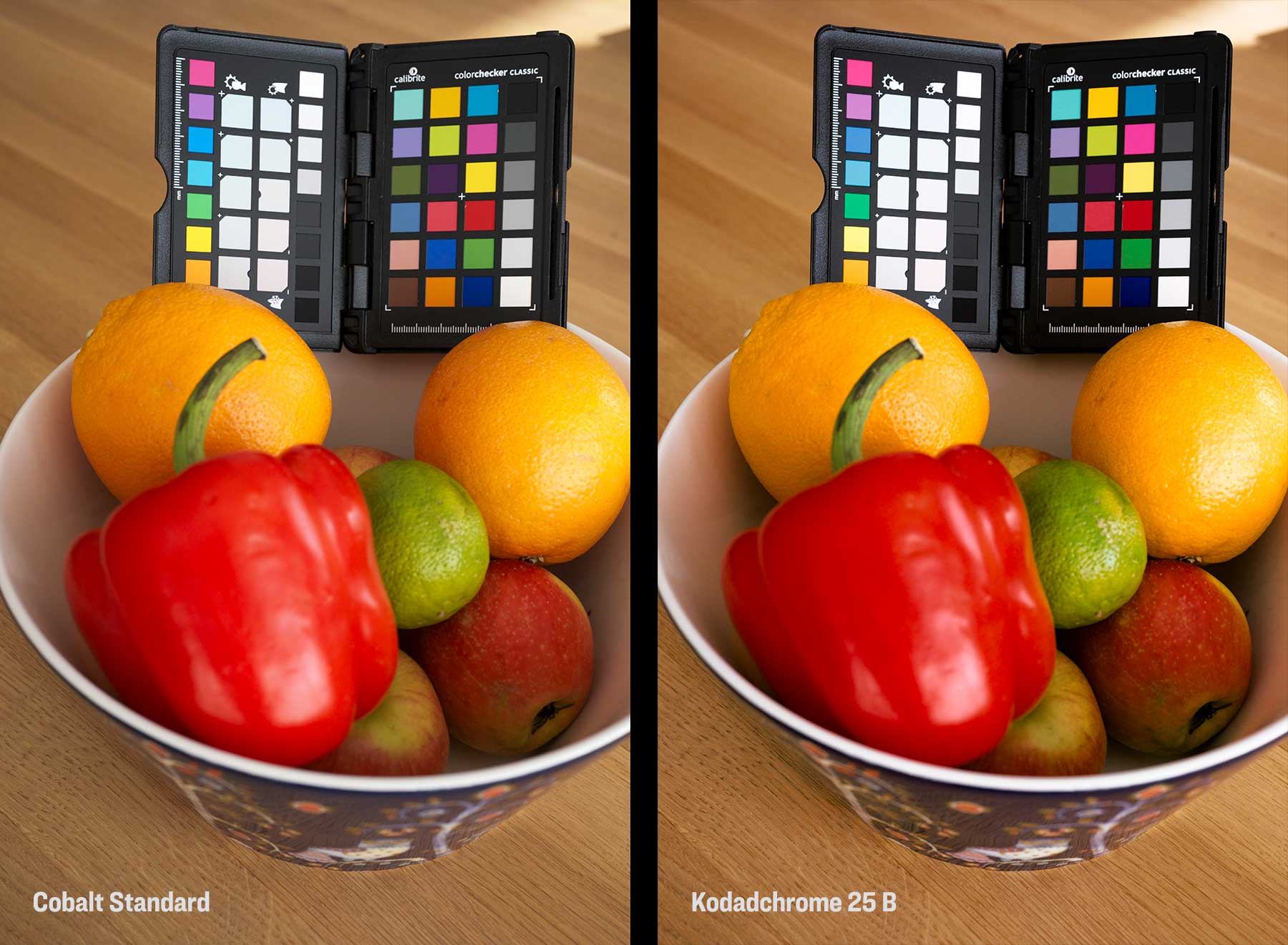
Here are a few more examples, compared to Cobalt's standard profile, which, to my eye, gives more natural-looking colours than the Adobe standard treatment.
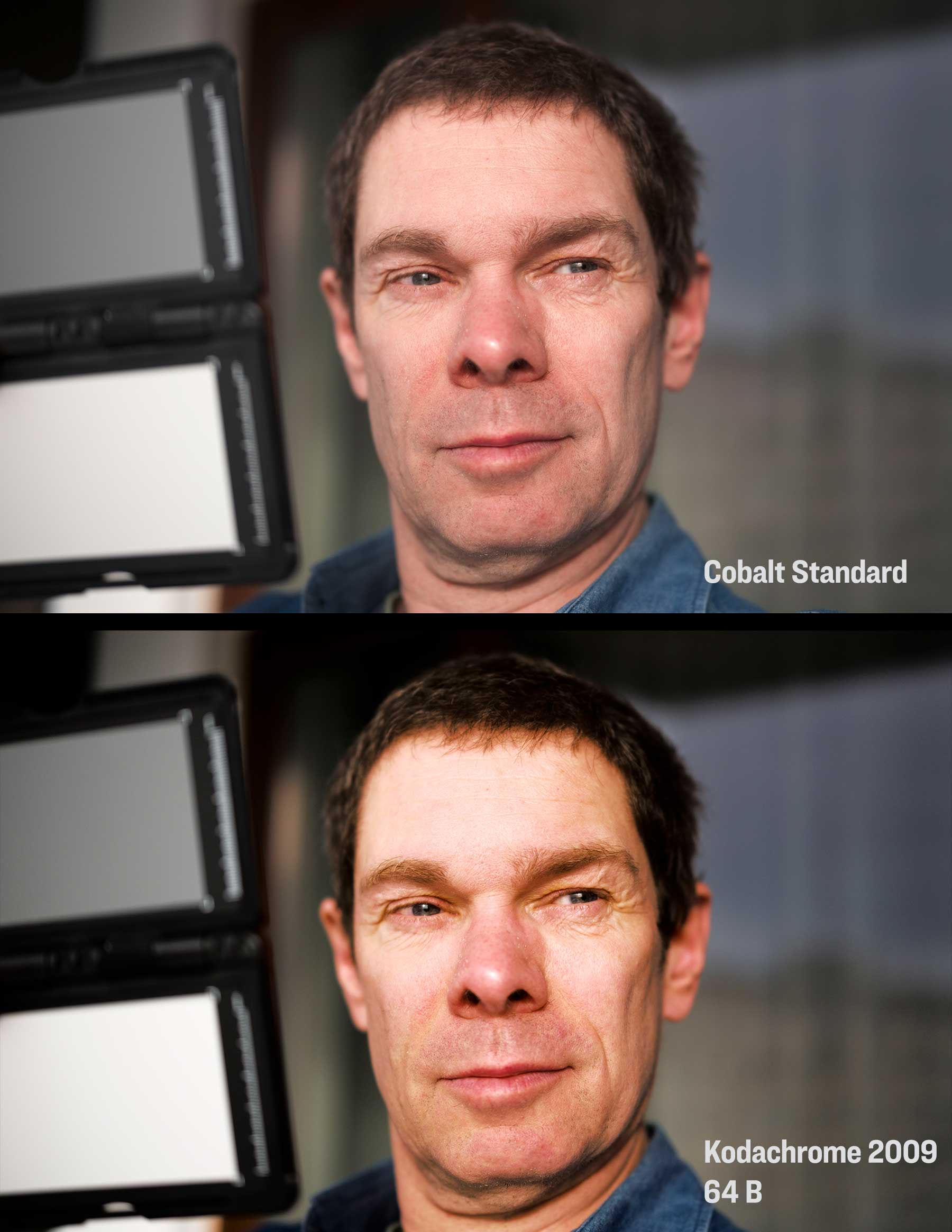
The Kodachrome profiles can definitely be used for some images, but they don't fit every image. Especially with skin tones, they need a lot of tweaking before they give a good result. Below is one example, developed in Lightroom with the same settings for Cobalt and Kodachrome, and then one example, tweaked to my satisfaction. Please excuse the squint, this was the first sunny day for a long time.
Image 4: if you want your reds to be really saturated, the Kodachrome profiles are your friend.
p.3 #5 · New Cobalt Kodachrome 25 and 64 film profiles
RustyRus wrote:
From what I understand, the development process of it was also quite unique. You had to add in color with pollinator kits so there is probably a ton of room for manipulation and style for the people that could do it right-
It’s probably why the looks always vary so much in old pictures-
Kodachrome could be processed at home but only as B&W. I shot a ton of Kodachrome in the 70s, 80s and 90s. Kodachrome 25 professional was my favorite transparency film. Back in the day Kodachrome and dye transfer were the only color processes considered archival. K-14 was the process in later years that Kodak and or Kodak licensed labs used. The dyes were added during the processing (special machines). That made the dyes more stable and less likely to deteriorate over time. Other color negative and transparency films had/have the dyes in the film.
p.3 #6 · New Cobalt Kodachrome 25 and 64 film profiles
Kodachrome was discontinued not just because digital photography took over in the early 2000s, but because the film and its processing simply became unsustainable as an ongoing product. Kodachrome's color process (K-14) was uniquely complex: unlike most color films that have the dye couplers built into the film, Kodachrome had no dyes in the emulsion at all. The colors were actually formed in the lab during processing in more than a dozen highly controlled chemical steps. This required specialized machines, trained technicians and chemicals that few labs could handle, and over time that infrastructure disappeared as demand for the film declined.
By the early 2000s, sales had dropped dramatically due to competition from other films and the rise of digital, and most labs closed. When Kodak stopped producing the necessary K-14 chemistry in 2009, the last remaining Kodachrome processor (Dwayne's Photo in Kansas) ceased color processing by the end of 2010 because the chemicals were gone, ending the ability to develop Kodachrome slides in color at all.
p.3 #7 · New Cobalt Kodachrome 25 and 64 film profiles
Fred Miranda wrote:
Kodachrome was discontinued not just because digital photography took over in the early 2000s, but because the film and its processing simply became unsustainable as an ongoing product. Kodachrome's color process (K-14) was uniquely complex: unlike most color films that have the dye couplers built into the film, Kodachrome had no dyes in the emulsion at all. The colors were actually formed in the lab during processing in more than a dozen highly controlled chemical steps. This required specialized machines, trained technicians and chemicals that few labs could handle, and over time that infrastructure disappeared as demand for the film declined.
By the early 2000s, sales had dropped dramatically due to competition from other films and the rise of digital, and most labs closed. When Kodak stopped producing the necessary K-14 chemistry in 2009, the last remaining Kodachrome processor (Dwayne's Photo in Kansas) ceased color processing by the end of 2010 because the chemicals were gone, ending the ability to develop Kodachrome slides in color at all.
That’s an interesting bit of history that I had forgotten about. (I shot Kodachrome for many years in the pre-digital era and loved it. Kodachrome 25 was usually my go-to choice. And now I’m thinking of how much scanning i really need to get to work on…)
p.3 #11 · New Cobalt Kodachrome 25 and 64 film profiles
Had cabinets stuffed full of Kodachrome in hanging files. 64 was my film of choice, never really got along with the others. At the time Kodachrome was simply de rigueur.
p.3 #12 · New Cobalt Kodachrome 25 and 64 film profiles
Fred Miranda wrote:
Kodachrome was discontinued not just because digital photography took over in the early 2000s, but because the film and its processing simply became unsustainable as an ongoing product. Kodachrome's color process (K-14) was uniquely complex: unlike most color films that have the dye couplers built into the film, Kodachrome had no dyes in the emulsion at all. The colors were actually formed in the lab during processing in more than a dozen highly controlled chemical steps. This required specialized machines, trained technicians and chemicals that few labs could handle, and over time that infrastructure disappeared as demand for the film declined.
By the early 2000s, sales had dropped dramatically due to competition from other films and the rise of digital, and most labs closed. When Kodak stopped producing the necessary K-14 chemistry in 2009, the last remaining Kodachrome processor (Dwayne's Photo in Kansas) ceased color processing by the end of 2010 because the chemicals were gone, ending the ability to develop Kodachrome slides in color at all.
During the early 1980's I was shooting a lot commercially and Kodachrome albeit had a facility in the same region, processing was not same day. So for that reason alone I switched to Fujifilm RDP in 35mm, 120, and large format which could be processed at a lab close to my studio in 2 hours. Sadly, Koadchrome's passing was not on my horizon as the medium was just not of use to my workflow. Miss it now but have lots of hanging sheets of it in my filing cabinet.
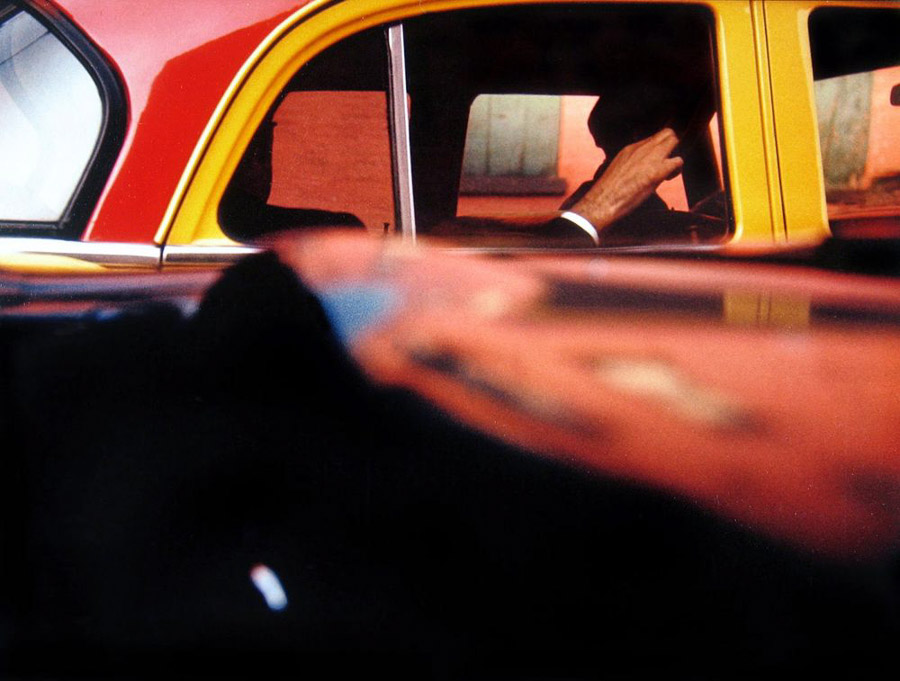
Perfect examples of "late" Kodachrome... Check how the reds, especially, are balanced and "harmonize" with the rest of the palatte against the previous poolside bathing suit shots. 120 really showed its beauty but they only made it for a few years.
WRT to Eggleston, I just saw an exhibit (still running) of his "Last Dyes". I'm not sure which of those images were C-41, E-6 or K-14, but the dye transfer process was aaamaaazing and probably should get the credit. It would be easy to assume that all these beautifully processed images were shot on the "best" color art film of the time, but they likely weren't all Kodachrome. https://www.davidzwirner.com/exhibitions/2026/william-eggleston-the-last-dyes
p.3 #15 · New Cobalt Kodachrome 25 and 64 film profiles
KLaban wrote:
Best examples I've seen here of how Kodachrome should look.
Yes nothing quite like Kodachrome. It was my favorite color transparency film period. I always went about 1/3 stop under. But I gotta say some of these presets I've seen look pretty good.
p.3 #16 · New Cobalt Kodachrome 25 and 64 film profiles
KLaban wrote:
Best examples I've seen here of how Kodachrome should look.
What's funny is I agree, although you can clearly see here that the whites aren't creamy at all, as was suggested as being "real" Kodachrome earlier in the thread, as well as how the Cobalt sims look. These whites are stark white, just like other classic Kodachrome examples from the mid 50s through the 90s.
p.3 #17 · New Cobalt Kodachrome 25 and 64 film profiles
When I was in college I did color tests of a fair amount of transparency films and Kodachrome 25 professional had the most accurate color renditions of all the films I tested. I always say if the whites are white then the rest of the colors usually fall into place.