fredmiranda.com
Login

Moderated by: Fred Miranda
  New fredmiranda.com Mobile Site
  New Feature: SMS Notification alert
  New Feature: Buy & Sell Watchlist
  

FM Forums | Post-processing & Printing | Join Upload & Sell

1       2       3              5       end
  

from a photograph to an image


ruthenium
Offline
• • • •
Upload & Sell: On
p.4 #1 · from a photograph to an image


My point was, to quote "The development of photography and high-quality printing had no adverse effect on the painted art. Paintings are arguably more popular today than before, and the value of paintings by true masters has been increasing."

The consideration of how painting has been affected by photography, and vice versa, is a valid subject of research for an art historian. However my comment wasn't about these influences.

My point is that people are increasingly drawn today to view and connect with the painted art (even if it might have seemed that photography should have rendered producing pictures by hand an unnecessary and wasteful exercise that could never achieve the same image quality as photography). "Our" (meaning all who have developed a reasonable cultural level of art appreciation) interest in the works of the pre-modern painters has not been in the least diminished by Impressionism and the more modern forms or painted art. For example, are the works of Caravaggio less interesting today than 50 or 100 years ago? - Way more interesting and argueably more impressive today, I can claim.

Obviously, the ultimate claim that I made in the original post was that the development of AI-created images should increase interest in the authentic works of visual art produced by photographers - those "unadulterated" by AI content replacement.


Jan 11, 2026 at 12:10 PM
gdanmitchell
Offline
• • • • • • •
Upload & Sell: Off
p.4 #2 · from a photograph to an image


ruthenium wrote:
The consideration of how painting has been affected by photography, and vice versa, is a valid subject of research for an art historian…


… or a painter or a photographer. ;-)

I also believe strongly that a whole lot of photoraphers could learn a ton about their medium by learning more about painting, but I digress. FWIW, my own photography is at least as influenced by specific painters and movements in painting as it is by other photographers.

Three examples:


(OK, the artist I was thinking of in the first one is a photographer widely known and respected in the art world but barely acknowledge in the photography world, oddly enough.)


Jan 11, 2026 at 01:39 PM
RustyBug
Offline
• • • • • • •
Upload & Sell: On
p.4 #3 · from a photograph to an image


ruthenium wrote:
Re @RustyBug@@, quote "I recall in my early days with photography, asking about the valuation difference between photographs vs. paintings, and there was often some form of "it's easier" (inferring, no fine discipline of effort, training, etc.) to push a button than paint with a brush."

Without any intent to say something contradictory, my immediate thought on this is that pushing this button generates trivial and unremarkable photos 999999 times out of a million pushes, on average. Maybe even a greater percentage. If I could obtain a remarkable photo every time I press the shutter, I would've been a Leonardo da
...Show more

Yeah, just to be. clear ... I'm not saying that the "ease" is the basis of value ... but, some (other) folks provided that answer.

As we already know, the ease is NOT the sole defining aspect of the value, but the perceptions that some folks attribute to this can be part and parcel for some.

My point being that ... IF ... the ease of AI is perceived as a "devaluation" in the requisite art / skill involved vs. photographic pursuits (i.e. climbing a mountain, hiking to a waterfall, rising before sunrise, waiting for the "defining moment", etc.), it then reciprocally presents value (for some who value the underlying effort involved) to the photographic processes in a "left handed" way, of sorts.

Again ... time will tell. Check back in a decade or so.


Jan 11, 2026 at 09:23 PM
dmcphoto
Offline
• • •
Upload & Sell: Off
p.4 #4 · from a photograph to an image


No conclusions here, but food for thought:

It's possible to put lots of effort into a lousy photograph that has no value. I've done it many times.

If photographs are images created by recording light on a light-sensitive surface, AI generated images are by definition not photographs. In spite of that, AI generated images that look like photographs are almost universally called photographs. Photorealistic art, which can be done in a number of different media types, is a more accurate categorization. Almost no one uses it, especially photographers.

The definition of a photograph has, at least historically, has made it the most reliably accurate representation of physical reality. I think that's why alterations, whether done in a darkroom or with a computer, have always been controversial.

It seems that veracity should play some role in the value of anything called a photograph. OTOH, some very abstract images can be created by recording light on a light-sensitive surface. One way is moving the camera in various patterns during an exposure. The result looks nothing like physical reality but, unlike an AI generated image, the result is a photograph. Unless we change the working definition of a photograph established at the beginning of this thread, the same is true of composite "photographs".


Jan 12, 2026 at 02:50 PM
gdanmitchell
Offline
• • • • • • •
Upload & Sell: Off
p.4 #5 · from a photograph to an image


dmcphoto wrote:
No conclusions here, but food for thought:

It's possible to put lots of effort into a lousy photograph that has no value. I've done it many times.

If photographs are images created by recording light on a light-sensitive surface, AI generated images are by definition not photographs. In spite of that, AI generated images that look like photographs are almost universally called photographs. Photorealistic art, which can be done in a number of different media types, is a more accurate categorization. Almost no one uses it, especially photographers.

The definition of a photograph has, at least historically, has made it the most
...Show more

A digital camera does not "record light ON a light-sensitive surface." I detects the amplitude of light on a bank of a digital sensors (photo sites), converts that to digital data, and records those data in a format from which an image can be reconstructed using software.

Nothing about all of this is as simple and straightforward as some might imagine. :-)

Edited on Jan 12, 2026 at 11:23 PM · View previous versions


Jan 12, 2026 at 03:07 PM
grandmas
Offline
• • • •
Upload & Sell: Off
p.4 #6 · from a photograph to an image


gdanmitchell wrote:
Nothing about all of this is as simple and straightforward as some might imagine. :-)


Does this mean that at some point there will need to be categories to sort this all out?


Jan 12, 2026 at 06:53 PM
ruthenium
Offline
• • • •
Upload & Sell: On
p.4 #7 · from a photograph to an image


dmcphoto wrote:
No conclusions here, but food for thought:

It's possible to put lots of effort into a lousy photograph that has no value. I've done it many times.

If photographs are images created by recording light on a light-sensitive surface, AI generated images are by definition not photographs. In spite of that, AI generated images that look like photographs are almost universally called photographs. Photorealistic art, which can be done in a number of different media types, is a more accurate categorization. Almost no one uses it, especially photographers.

The definition of a photograph has, at least historically, has made it the most
...Show more

Regarding the definition of a photograph as "the most reliably accurate representation of physical reality" - what color is the famous dress?
https://share.google/SYBl4ru6vb5a7Mqbp

A photographic image is an illusion of reality (similar to painted art). What we see in a photo can be significantly the product of our imagination, or a play of light.

I believe that those who mastered the art of digital photography are capable of enhancing some of the illusionary aspects of photographic images through post-processing, to create impressive visual results without resorting to content replacement.


Jan 12, 2026 at 11:01 PM
gdanmitchell
Offline
• • • • • • •
Upload & Sell: Off
p.4 #8 · from a photograph to an image


ruthenium wrote:
Regarding the definition of a photograph as "the most reliably accurate representation of physical reality" - what color is the famous dress?
https://share.google/SYBl4ru6vb5a7Mqbp

A photographic image is an illusion of reality (similar to painted art). What we see in a photo can be significantly the product of our imagination, or a play of light.

I believe that those who mastered the art of digital photography are capable of enhancing some of the illusionary aspects of photographic images through post-processing, to create impressive visual results without resorting to content replacement.


Generally I agree with your post. I do think, though, that “without resorting to content replacement” is overstating things a bit. Photographers, including some generally regarded as masters of the medium, have long engaged in content replacement. I shared an example or two from Ansel Adams earlier in this thread. Those who are unfamiliar with Jerry Uelsmann’s film/print work need to confront that before excluding “replacement” from the realm of photography.

Again, this isn’t quite as simple as some would imagine, and it isn’t susceptible to a simple set of rules.


Jan 12, 2026 at 11:26 PM
Imagemaster
Online
• • • • • • •
Upload & Sell: On
p.4 #9 · from a photograph to an image


Since the first photograph was made 200 years ago, the definition of 'photograph' today certainly differs when referring how the image is captured.

?si=YKLLuqacBQSw-OtO


Jan 12, 2026 at 11:37 PM
RustyBug
Offline
• • • • • • •
Upload & Sell: On
p.4 #10 · from a photograph to an image


gdanmitchell wrote:
Generally I agree with your post. I do think, though, that “without resorting to content replacement” is overstating things a bit. Photographers, including some generally regarded as masters of the medium, have long engaged in content replacement. I shared an example or two from Ansel Adams earlier in this thread. Those who are unfamiliar with Jerry Uelsmann’s film/print work need to confront that before excluding “replacement” from the realm of photography.

Again, this isn’t quite as simple as some would imagine, and it isn’t susceptible to a simple set of rules.


The Pictorial Artistry of Adolf Fassbender is on my coffee table ...

The matter of content inclusion / removal ... has been part of photography for a while. Back in film only era, there was the ability to NOT advance the frame, so you could shoot double (or triple, etc.) exposure in camera. Of course, the ability to create multiple exposures and composites in the darkroom existed too.

In that regard ... the crafting of an image, from more than a single photograph has been in play for a very long time. Generally speaking, though, that composite is comprised of "real things" (light is a real thing, btw) that were captured on film / media because light reflected off of (or directed from the light source) as the basis of the process. Inferring that there was an actual object in existence.

The matter of AI ... (again, imo) is that it is not a photographic (drawn with light) process. AI does NOT require light to reflect off a real object. In fact, the namesake of AI ... artificial ... conveys the truth, that it was a fabrication of something that did NOT exist as an actual object. Imo, that's the rub of AI vs. Photograph ... non- existence vs. actual existence.

NOTE: While we can discuss the representative aspect of photographic process still being in play, the existence vs. non-existence is where I think the real matter of Photo vs. AI resides.

I mean, could you use a photograph as evidence of existence in a court of law? Could you use an AI generated image as evidence of existence in a court of law? You could, but you have to disclose that the latter is a fabrication, designed to convey, moreover than a capture of what was present at that moment in time. Photograph's can be time stamped ... AI, not so much.


That's not to say you couldn't / wouldn't / shouldn't use it ... imo, it remains as a different media that warrants mixed media consideration. I can hand color a monochrome print from the darkroom ... mixed media. I can use AI with a photograph ... mixed media.

Image making has unlimited latitude ... photographic process are rooted in a physical light source. AI is rooted in an algorithm. Two different things. They can share space in image creation, but they (imo) should never be considered equivalent (in terms of a process, to justify use, etc.). The two are vastly different methods, imo.


Their namesake tells us so.

One is light (real things), the other is artificial (not real things).


Jan 13, 2026 at 08:39 AM


Search in Used Dept. 

gdanmitchell
Offline
• • • • • • •
Upload & Sell: Off
p.4 #11 · from a photograph to an image


To argue that because “photography” was done (supposedly) one way 200 years ago and thus doing it any other way 200 years later makes a process “not photography” attempts to turn “photography” into a museum piece and ignores the fact that virtually all artistic media evolve to include new, sometimes radical methods.

Let’s take music. Music, for almost as long as the concept existed, was made either the voice or by constructing physical objects that vibrated in particular ways. To produce a sound you would hit, blow into, bow, pluck (and on and on) a physical object that responded by producing a particular sound. ALL musical performances required that live person act on those physical objects in your presence.

Listened to any music on your smart phone recently? Or, as a composer (my academic field), generated a composition by programming a computer?

Again, these attempts to constrain “photography” to some (supposedly) 200-year old concept and classify things strictly as “photography” and “not photography” both miss the point and are doomed to failure.


Jan 13, 2026 at 10:25 AM
RustyBug
Offline
• • • • • • •
Upload & Sell: On
p.4 #12 · from a photograph to an image


gdanmitchell wrote:
To argue that because “photography” was done (supposedly) one way 200 years ago and thus doing it any other way 200 years later makes a process “not photography” attempts to turn “photography” into a museum piece and ignores the fact that virtually all artistic media evolve to include new, sometimes radical methods.

Let’s take music. Music, for almost as long as the concept existed, was made either the voice or by constructing physical objects that vibrated in particular ways. To produce a sound you would hit, blow into, bow, pluck (and on and on) a physical object that responded by producing
...Show more

It's basic English (or Latin) ... Photo = Light. If the origination wasn't derived from collecting light, it isn't drawn by light, therefore it isn't a Photo + Graph.

That's not to say we are restricted to "only one" way of doing things. Just if you're gonna do it by a different process than the namesake defines ... then it is something different than the namesake. The term photograph (denotatively) is specific to the origins of the process beginning with light. Folks that aspire to extend the term connotatively to mean the generic broad context of an "image" convolute the matter by interchanging a defined process to a final product. The final product may be an image or a print ... and those can be created by any manner of process, singularly or in combination(s).

But, a Photo + Graph ... begins with Light.

Folks want to make up their own definitions, have a party, but Photo = Light.


Jan 13, 2026 at 10:45 AM
Imagemaster
Online
• • • • • • •
Upload & Sell: On
p.4 #13 · from a photograph to an image


There are thousands of photos on this site, and billions of photos on all other sites and media that are called photographs regardless of the amount of manipulation done to many of them.

Most of the people that have viewed those photos don't give a damn what manipulations were or were not done to them. They also don't give a damn if they are called photographs, pictures, or images.

Debate it all day long, it is each individual viewer that will call it whatever they want.


Jan 13, 2026 at 12:35 PM
gdanmitchell
Offline
• • • • • • •
Upload & Sell: Off
p.4 #14 · from a photograph to an image


RustyBug wrote:
It's basic English (or Latin) ... Photo = Light.


I know the root meanings of the components of the word "photograph" as well as everyone else on this board, andI know that they were used historically to produce a label for the medium. But while they described how photographic images were made early on, the term was not coined as a means to circumscribe what the medium could do or be in the future, but simply to describe how it was done early on.

Even a cursory look at language evolution — the etymology of words — demonstrates how words evolve way beyond and outside of their original meanings.

Look up "sonata de camera" for a slightly relevant example. And before you point out that film cameras included a "chamber," consider that going there would imply that those things inside smart phones are not "cameras." For another fun example, trace the meaning of "violin." And check out the etymology of the word "music..."

Etymologists might also find the following statement ironic: "That is a covered Wagon, not a car!"

Or, You'd don't 'ship' packages, you transport them!"And you logically cannot "sail" a steamship," right?

Dude? Cool? Far out! 6 7. is that a "drive" in your computer? ;-)

I love language and I love understanding how it evolved. But trying to limit a contemporary medium by claiming that the word invented to describe a very different version of it a couple of centuries ago is a lost cause and, honestly, pretty irrelevant.


Edited on Jan 13, 2026 at 05:02 PM · View previous versions


Jan 13, 2026 at 01:55 PM
Shasoc
Offline
• • • • • • •
Upload & Sell: On
p.4 #15 · from a photograph to an image


The etymology of the word Photography actually comes from the Greek;

"phōs", φῶς , meaning "light" and "graphē" ,γραφή, meaning "writing,"

The light is your brush and the sensor is your canvas.

Socrate


Jan 13, 2026 at 02:36 PM
Imagemaster
Online
• • • • • • •
Upload & Sell: On
p.4 #16 · from a photograph to an image


Pretty funny seeing all the huffing and puffing about the definition of a word. All sorts of words have become archaic and changed in meaning over time. The great English language has weird spellings, variations in pronunciation, and some have a different meaning even in countries with the same language. I bet lot of English teachers from just 50 years ago roll their eyes when they hear and see all the 'misuse' of words from their times, all the slang used today, and all the words they did not know even existed today.

The definition of a photograph is such an important issue today.

Call this whatever you want. Who the hell cares? I just refer to it as an image that started with a photograph.


Jan 13, 2026 at 03:21 PM
grandmas
Offline
• • • •
Upload & Sell: Off
p.4 #17 · from a photograph to an image


I agree that it doesn't matter what we call a photograph or image, but those putting a c for copyright on their images might care when the copyright no longer means anything. I think this is the future and something to think about, but no one here seems to care,...is interesting.


Jan 13, 2026 at 03:36 PM
ruthenium
Offline
• • • •
Upload & Sell: On
p.4 #18 · from a photograph to an image


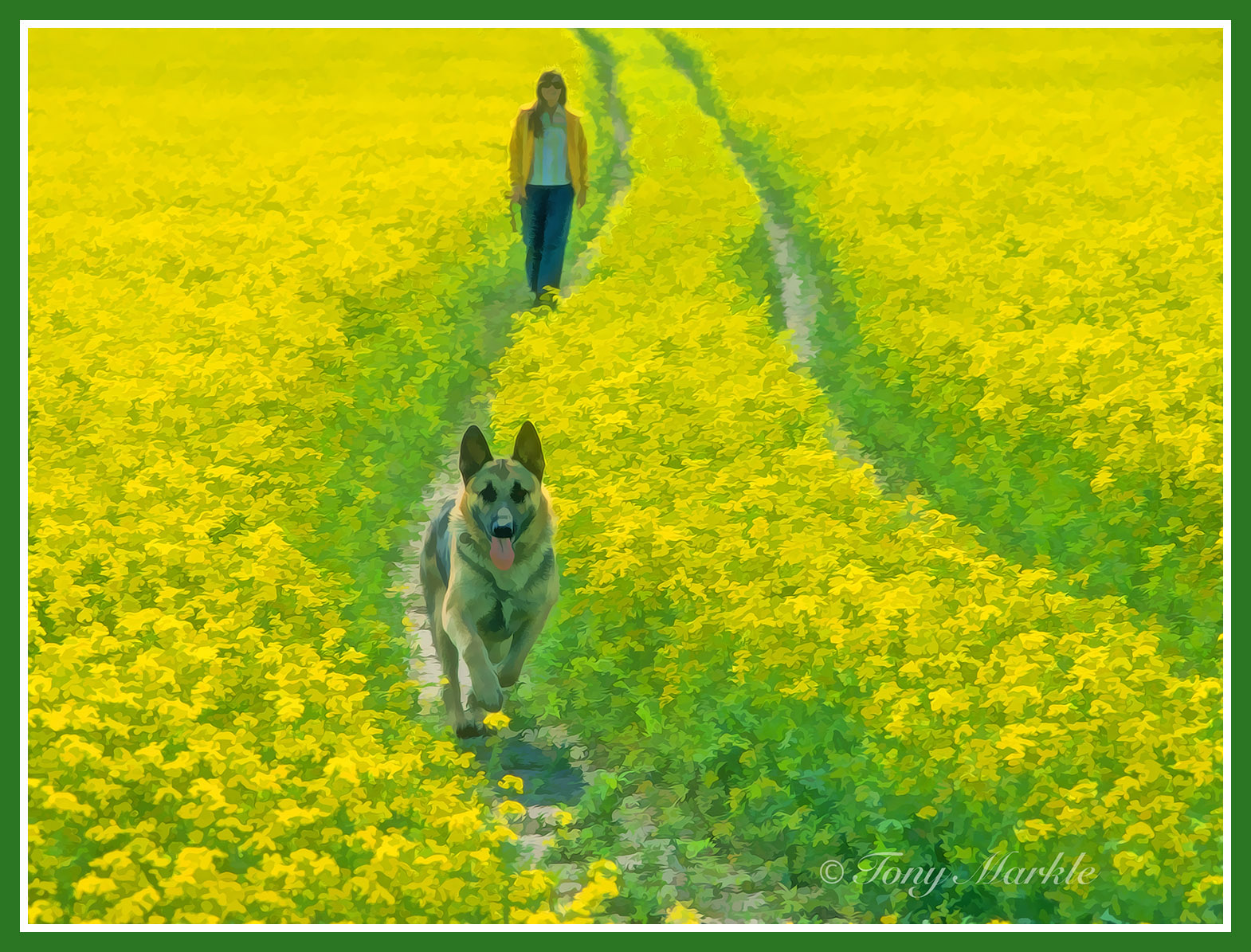
Tony, you copyrighted this image as your creation - © Tony Markle.
Does this image have significant content not created by you?
If yes, don't you have the feeling that copyrighting creative work that isn't yours might be inappropriate.
Again, just in case this image has significant content that you obtained from elsewhere, don't you think that acknowledging such content as extraneous is a norm in publishing/presenting that should be honored?

I see no problem with cosmetic minor changes limited to removal and replacement of something "foreign" to a photographed scene, e.g. dust spot removal.
I am worried whether this is moral to "borrow" an image from elsewhere to add to your work and present as yours?
If the "borrowed" image originated from another human being, that would be called theft.
When the "borrowed" image comes from a machine, how this becomes morally acceptable to present as work produced by you?

Please, don't interpret my questions as a personal attack - I am genuingly interested in whether there is some moral ambiguity here.


Jan 13, 2026 at 03:55 PM
ruthenium
Offline
• • • •
Upload & Sell: On
p.4 #19 · from a photograph to an image


I see @grandmas asked the question first!


Jan 13, 2026 at 03:56 PM
ruthenium
Offline
• • • •
Upload & Sell: On
p.4 #20 · from a photograph to an image


gdanmitchell wrote:
I know the root meanings of the components of the word "photograph" as well as everyone else on this board, andI know that they were used historically to produce a label for the medium. But while they described how photographic images were made early on, the term was not coined as a means to circumscribe what the medium could do or be in the future, but simply to describe how it was done early on.

Even a cursory look at language evolution — the etymology of words — demonstrates how words evolve way beyond and outside of their original meanings.
...Show more

Dan, I fail to understand your argument.
Some words have changed meaning - this is correct.
Have ALL words changed their meaning - no.
If some words changed meaning, shall we expect that other words must be expected to change their meaning - not necessarily.

Are you arguing that the meaning of the word "photograph" has ALREADY changed its original meaning?
Are you arguing that the meaning of the word "photograph" is changing PRESENTLY?
Or maybe you propose that we should consider redefining the meaning of the word "photography" for future use (that I should disagree with)?

Basically, the fact (of changed meaning of some words) that you correctly acknowledged has no bearing on whether the meaning of the word "photograph" should be understood differently from the original meaning.


Jan 13, 2026 at 04:10 PM
1       2       3              5       end


FM Forums | Post-processing & Printing | Join Upload & Sell

1       2       3              5       end


Welcome back
Log in to your account