Fred Miranda
Offline
Admin
Upload & Sell: On
|
 p.3 #12 · SG-image 35mm f/2.2 AF pancake lens for E/L/Z mounts p.3 #12 · SG-image 35mm f/2.2 AF pancake lens for E/L/Z mounts | |
hiepphotog wrote:
https://news.qq.com/rain/a/20260212A04RRY00
The above review is quite telling. Here is a full transaltion and how it compares to other lenses including the new 7Artisan 40/2.5 and TTA 40/2:
⸻
What’s the Price of Compactness?
Hands-on with the SG-Image 35mm f/2.2 and 7Artisans 40mm f/2.5
Compact walk-around lenses have always had a strong market. If a lens is small enough to qualify as a pancake or near-pancake, weighs under 200 grams, and offers at least respectable image quality with a decent aperture, it’s almost guaranteed to attract attention.
Recently we received two domestic lightweight wide-angle primes: the SG-Image 35mm f/2.2 and the 7Artisans 40mm f/2.5. Both are tiny, light, and affordable. Naturally, the question comes up: what’s the trade-off?
After spending some time with them, I think I have a clear answer.
⸻
SG-Image 35mm f/2.2
This lens looks very similar to SG-Image’s earlier APS-C 25mm f/1.8. It has a short but relatively thick profile. Optically, it uses full-group focusing, but SG-Image added protective glass elements at both the front and rear, effectively turning it into an internal focusing design.
Unlike the 25mm, this 35mm includes one aspherical element. That helps correct aberrations in what is otherwise a short double Gauss structure.
The Trade-Off: Field Curvature
To keep the lens extremely short, SG-Image sacrificed a significant amount of field curvature control. Instead of a flat focus plane, you get a curved one. Only the focused area is truly sharp, while other areas fall off in sharpness.
For portraits or street photography, this isn’t a major issue. Modern autofocus systems can keep your subject sharp. But for landscapes, you’ll need to stop down to at least f/5.6 for consistent edge performance.
Interestingly, if you focus on the edges at wide open aperture, they can be sharp. It’s not a simple case of poor resolution. It’s extreme field curvature.
In theory, if we had a curved sensor matching the lens curvature, the SG-Image 35mm f/2.2 could be both compact and optically excellent. But in reality, that doesn’t exist.
Flare Resistance
Like the 25mm f/1.8, the added protective glass weakens flare resistance. The lens produces more ghosting and a noticeable veiling effect in strong light. In the compact lens category, flare control ranks slightly below average, though not the worst.
The Good News
Aside from those two core drawbacks, performance is impressive:
• Very sharp at close distances with minimal degradation
• Good chromatic aberration control, little visible purple or green fringing in focus
• Extremely light vignetting wide open, among the best in this class without a profile
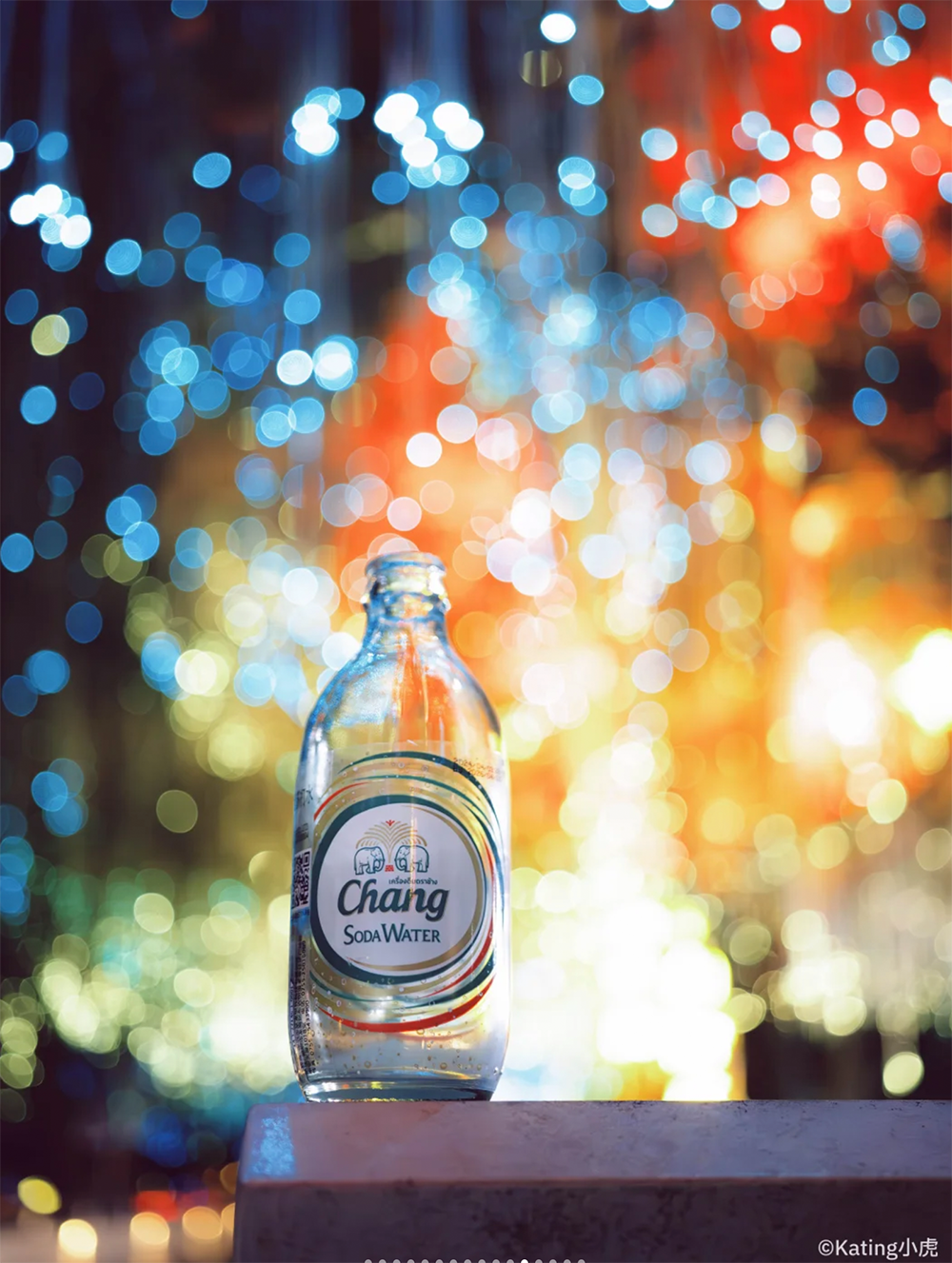
• Pleasant bokeh, relatively round highlights near the edges thanks to coma characteristics
• Attractive sunstars from f/5.6 onward
So this isn’t a bad lens optically. It simply comes with very pronounced field curvature.
⸻
7Artisans 40mm f/2.5
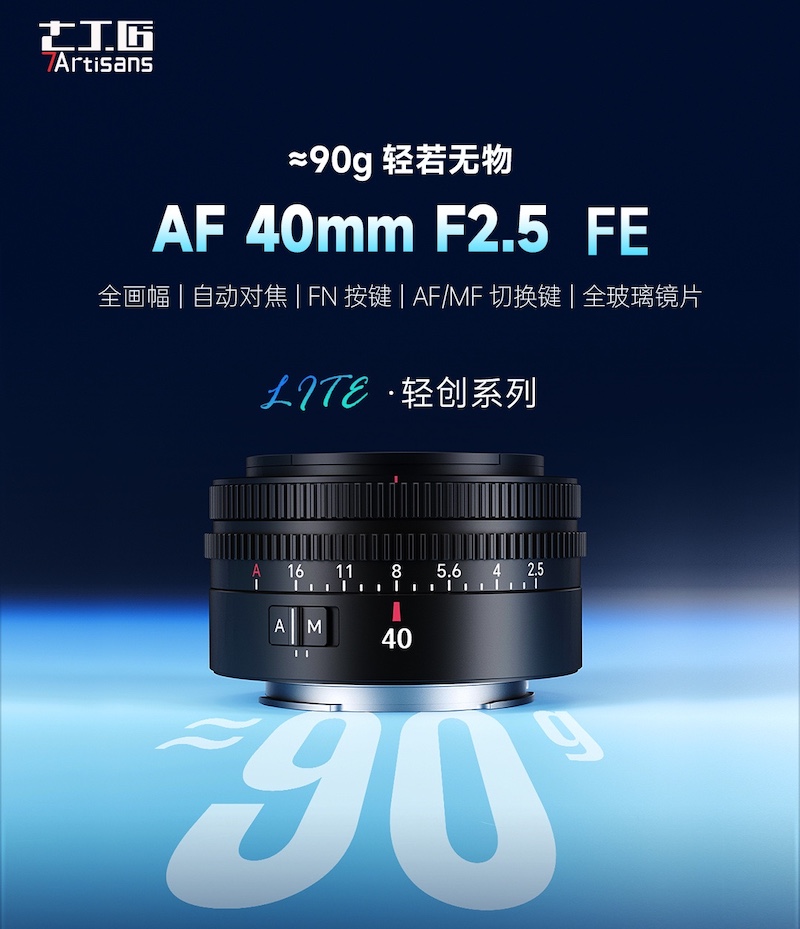
This lens is roughly the same length as the SG-Image 35mm and lenses like the Samyang 35mm f/2.8. At just 90 grams, it’s one of only four full-frame autofocus lenses under 100 grams, alongside the Samyang 24mm and 35mm f/2.8, and the Viltrox 28mm f/4.5.
Despite its light weight, it includes:
• An aperture ring
• AF/MF switch
• A customizable button
The rear group is fixed, while the front group moves during focusing. Adding a UV filter effectively turns it into a pseudo-internal focusing design.
The reason it’s so light is simple: it’s the only sub-100g full-frame AF lens among these that uses a plastic body. The optics themselves are all glass.
The Trade-Off: Build Quality
The biggest sacrifice is the build feel. Compared to the metal-bodied TTArtisan 40mm f/2 or the Viltrox 40mm f/2.5 Air, which at least feels purposefully designed, the 7Artisans feels undeniably cheap. It has a toy-like quality.
That said, optically it performs quite well. Image quality sits between the TTArtisan 40mm and the Viltrox 40mm. It does not suffer from extreme field curvature like the SG-Image 35mm. It delivers solid, predictable performance. Stopped down, edge sharpness improves enough to satisfy 61MP high-resolution sensors.
Coma is slightly better controlled than the TTArtisan and Viltrox 40mm. Bokeh is smoother and highlight shapes are more harmonious.
In terms of pure optics, 7Artisans did not compromise too heavily.
Autofocus and Flare
However, it has two real weaknesses:
1. Autofocus
It’s one of the few lenses in this category with noticeable focusing noise. AF speed is below average.
2. Flare resistance
Internal light suppression is not well executed. It produces rope-like streaking flare under direct highlights. This cannot be fully mitigated with a hood.
This flare can either become a stylistic tool or completely ruin an image, depending on how you use it.
⸻
Final Thoughts
Both lenses made clear sacrifices to achieve low price and low weight.
• SG-Image sacrificed field curvature control and flare resistance to achieve compactness, while maintaining decent build and durability. That’s why it still weighs 163 grams.
• 7Artisans sacrificed build quality and flare resistance to achieve full functionality at an ultra-light 90 grams.
After testing these alongside six other lightweight primes under 1000 RMB on the used market, one thing is clear: no lightweight, low-cost lens truly delivers everything. You can’t have it all.
The real question is what you value most.
|




 (Anyone remember the Canon EF 50/1.8 II??)