CharleyL
Offline
• • •
Upload & Sell: Off
|
 p.1 #10 · Can Flash Add Another Dimension to Your Street and Travel Photography? p.1 #10 · Can Flash Add Another Dimension to Your Street and Travel Photography? | |
Some great pictures here, thanks.
Depending on high ISO will not get you the best results. ISO is a kind-of sensitivity control. Meaning that increasing the ISO will let you see more in the darker shadows of the photos taken, or be able to to use your camera on dark nights with only a minimum of light, but it is not a fix for the absence of light in shadowed photos. The added light, be it flash or reflected constant light, will get you more detail from otherwise well lit photos that have been posted here. No dark faces in any of these shots, because added flash filled in the darker faces and areas of already well lit photos. Getting the flash or reflected light, as well as the ISO setting correct for the shot will get you the best photos.
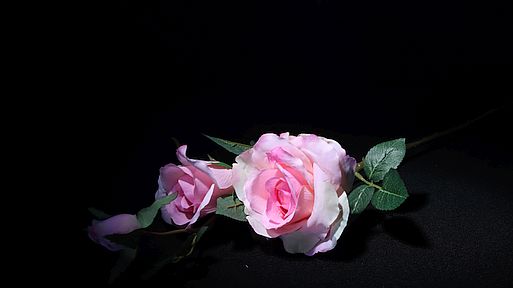
There is another kind of photo that requires just the right amount of light that's in just the right place for the shot. The Inverse Square law of light (not the math, but the understanding of how it works) combined with careful control of the light will let you take photos similar to the one that I've attached. In easy to understand amounts, for every foot of distance between the light and the subject being photographed, the available light level diminishes by about 50% (1/2). So at 2 ft distance the light is 1/2 of 1/2, or 1/4 of the light level reaching the subject. For each additional foot of distance, the light level diminishes by about 1/2 of the level that it was at the previous foot distance. As the light spreads, the quantity of light reaching any point reduces at this same rate. Adding grids or other modifiers to the light will also reduce the amount of light available to reach the subject.
This photo attached was taken in my studio, but it could have been anywhere. Even a card table in a small room will let you do this, but you need careful control of the light shape and amount of light used. There was no backdrop used in this shot, but nothing can be seen back there, because the Inverse Square law of light reduced it's level to below the setting of the F-Stop. The Inverse Square law of light let the light seen by the camera, basically end just beyond the flowers. Careful setting of the F-Stop let me take this photo in a studio that had the overhead "Work" light still ON during this shoot, so I could easily see my way around if I needed to move. Yes, the F-Stop setting changes the depth of focus, but the low end of the F-Stop settings allow you to set a minimum light cut-off point that the camera sees. This allowed me to leave the "Work" light on during this shoot, without it's light affecting the shot.
If I remember right, I used an F-8 setting for this shot, but I always check with "Test Shots" with no flash, to see if the ceiling or environment lights will affect the shot. If it's set high enough, the environment lights will not affect the shot and this test shot will be black, or nearly so. But it's also necessary to use the correct F-Stop for the depth of focus necessary for the desired shot, so the F-Stop setting may need to change to accomplish this too. For some shots, the desired F-Stop setting for a really sharp depth of focus will interfere with my desire to block the environment light from the shot, so I have to work in the dark with no environment lighting. For these, I have modified my studio lighting circuit so that I can remotely and wirelessly turn off and back on these lights using a remote control that I have attached to each camera stand (studio version of tripod). I also have one of these remote controls located on my wheeled tool box that I keep close to where I'm shooting, and another located at my computer, plus the ability to still turn the lights on and off at the studio door.
Experimenting with your photography lights and camera settings will give you a "feel" for what works and what doesn't. I suggest that you take "Test Shots" with each of your flashes at different settings while pointing it at a blank wall or backdrop. Do this at different distances and power levels for each light source that you have (once you have taken the test shots and set the F-Stop to eliminate the environment light). With this kind of test, you will learn what shape the light from the flash is and how bright it is at different distance and power settings. You will learn a lot about flash lighting this way and know the limits of each of your flashes.
Speedlites tend to average about 72 watt/seconds maximum, so usually good out to about 10 or so feet, but best at 3-4 feet distance. Larger flashes, like the Godox AD200 versions and 200 watt/second capability, allow about 1.5-2 times the working distance of a speedlite. With larger lights, like studio strobes there is far more light power to work with, so they can be farther from the subject. My largest is a 1,000 watt/second and it has a focusing lens attached to let me project patterns and images on the backdrops and even add color to these patterns and images. A lot of light gets lost in this focusing lens, so this massive amount of light is needed for this, as both the losses through the lens and pattern, plus the distance of the light to the backdrop (for my studio setup, about 22 ft) requires this much power, but I use smaller 300 and 400 watt second studio strobes for most of my studio and portrait photography, and 3 Godox AD200 lights for my field kit, but sometimes use them in my studio as well.
Charley
.
|