fredmiranda.com
Login

Moderated by: Fred Miranda
  New fredmiranda.com Mobile Site
  New Feature: SMS Notification alert
  New Feature: Buy & Sell Watchlist
  

FM Forums | General Gear-talk | Join Upload & Sell

1              end
  

Goodbye Fiddly Ball Heads – Why the Leofoto LH-40GR Rocks


Stefan Official
Offline
• •
Upload & Sell: Off
p.2 #1 · Goodbye Fiddly Ball Heads – Why the Leofoto LH-40GR Rocks


I can only speak from experience with the Leofoto LH-40GR, G2, and G20 heads; ultimately, the basic design is the same for all of them. The G4 is a completely different product, even though the name sounds similar. Personally, it would be too large and heavy for me, and it’s not as quick as a ball head when needed. Perhaps the advantage of the three heads I mentioned is that they are copies of the Arca-Leveler and therefore work very well.

In German forums, these setups are used without problems with 400 mm prime lenses, but also with large-format cameras weighing around 5 kg – in some cases even up to 10 kg. The owners are very satisfied; there are no complaints. I can report again in six months or a year from my own experience, but I don’t expect this to change.

How it is in other countries, I don’t know. Here in Germany, all products purchased online can be tested for 14 days; some retailers even offer 30 days. Just try it out and see for yourself how it works for you, if similar rules exist in your country. In Germany, all products come with a two-year warranty. But as I said, I only know the legal regulations in Germany.


Dec 08, 2025 at 03:12 PM
JBPhotog
Offline
• • •
Upload & Sell: Off
p.2 #2 · Goodbye Fiddly Ball Heads – Why the Leofoto LH-40GR Rocks


The G4 is just like a ball head, the lock levers release the gearing for fast adjustments and it isn't that big, in fact I was surprised how small it was when mine arrived. However, my previous observations makes it not a good fit for full size cameras and lenses.

See this for reference:


Stefan Official wrote:
I can only speak from experience with the Leofoto LH-40GR, G2, and G20 heads; ultimately, the basic design is the same for all of them. The G4 is a completely different product, even though the name sounds similar. Personally, it would be too large and heavy for me, and it’s not as quick as a ball head when needed. Perhaps the advantage of the three heads I mentioned is that they are copies of the Arca-Leveler and therefore work very well.

In German forums, these setups are used without problems with 400 mm prime lenses, but also with large-format cameras weighing
...Show more


Dec 08, 2025 at 03:18 PM
amv8
Online
• • •
Upload & Sell: On
p.2 #3 · Goodbye Fiddly Ball Heads – Why the Leofoto LH-40GR Rocks


JBPhotog wrote:
I too tried out the G4 and although the specs state a 20KG capacity, that must ONLY be if it is in a vertical load when the head is horizontally level. It would drift with the slightest pressure even when locked down tightly and loaded with a 5-7 kg load. The gearing had some slack in it and back and forth gear turning resulted in a shift in alignment. I too returned it. Therefore, I would not take Leofoto's spec loads as fact rather than possible in specific circumstances.

I ended up with a large Amazon credit from another vendor and
...Show more

On the Leofoto USA website, it states that the G4 and G4 Pro have a max load of 2.27kg, which is only about 5 lbs. The international website states a 20kg load limit...go figure.


Dec 09, 2025 at 09:39 PM
JBPhotog
Offline
• • •
Upload & Sell: Off
p.2 #4 · Goodbye Fiddly Ball Heads – Why the Leofoto LH-40GR Rocks


At least they got the GW-01 capacity the same on both sites. 8kg.

Brings into question their accuracy or testing methods for capacity, BBW!

amv8 wrote:
On the Leofoto USA website, it states that the G4 and G4 Pro have a max load of 2.27kg, which is only about 5 lbs. The international website states a 20kg load limit...go figure.


Dec 10, 2025 at 02:27 PM
bmike-vt
Offline
• • • •
Upload & Sell: Off
p.2 #5 · Goodbye Fiddly Ball Heads – Why the Leofoto LH-40GR Rocks


amv8 wrote:
On the Leofoto USA website, it states that the G4 and G4 Pro have a max load of 2.27kg, which is only about 5 lbs. The international website states a 20kg load limit...go figure.


American kg are clearly heavier than international kg.


Dec 11, 2025 at 08:15 AM
jeffbuzz
Offline
• • • •
Upload & Sell: On
p.2 #6 · Goodbye Fiddly Ball Heads – Why the Leofoto LH-40GR Rocks


bmike-vt wrote:
American kg are clearly heavier than international kg.


Gosh darn right! Everything is bigger in 'Merica!


Dec 11, 2025 at 01:51 PM
danski0224
Offline
• • •
Upload & Sell: Off
p.2 #7 · Goodbye Fiddly Ball Heads – Why the Leofoto LH-40GR Rocks


I received the Arca Swiss G4, and it is way better.


Dec 13, 2025 at 07:14 AM


Search in Used Dept. 

danski0224
Offline
• • •
Upload & Sell: Off
p.2 #8 · Goodbye Fiddly Ball Heads – Why the Leofoto LH-40GR Rocks


Stefan Official wrote:
Here are a few examples. I place great importance on very well-coordinated cutouts.
It also works with a ball head, but it's annoying because you have to fiddle around a lot.


Awesome photos.

Care to share any details?

I assume that you either have enough pull to clear the people out while you compose the shot, or some sort of neutral density filter is used.


Dec 13, 2025 at 07:16 AM
Stefan Official
Offline
• •
Upload & Sell: Off
p.2 #9 · Goodbye Fiddly Ball Heads – Why the Leofoto LH-40GR Rocks


danski0224 wrote:
Awesome photos.

Care to share any details?

I assume that you either have enough pull to clear the people out while you compose the shot, or some sort of neutral density filter is used.


For some photographs, I spend around three hours. The reason is that, for example, two trains only arrive at the same time by pure coincidence roughly every 50 minutes. Often there are still people in the station, which extends the waiting time even further.

This is why I deliberately photograph scenes like this at night, between 11 pm and 4 am. At other times there is simply too much activity. Neutral density filters would not work here. The best train light trails are created with exposure times of roughly one to three seconds. Longer exposures would turn the trains too much into ghost trains and would no longer fit the composition visually.

When there are only a few people in the subway, I often start conversations with them. I show them my work on my smartphone, let them look through the camera, and involve them in what I am doing. You would not believe how many conversations happen during nights like this. Some people even let their train go just to keep talking a little longer.

When there are only about five to eight people left in the station, I kindly ask them to position themselves behind the columns so they disappear from my viewpoint. I sometimes also ask people coming down the escalator behind me to wait for another two minutes. This works surprisingly well. I have never experienced any problems or unfriendly reactions. When you approach people in an open, warm, and respectful way, explain what you are doing, and let them be part of the process, everyone is understanding. What starts as a few minutes of conversation often turns into ten or even twenty minutes.

Since I often wait up to three hours anyway, I have plenty of time for this. As soon as I notice a rush of air in the station, I know that the train will arrive within the next one or two minutes. That is when I run back to the camera, get ready, or activate the Bluetooth remote shutter.

In the end, it is always this rush of air that reminds me that the train is about to arrive. It pushes through the entire station, all the way up to the entrance. That is the clear signal for me.

Personally, waiting does not bother me at all. When I have an idea in my head that I want to bring into the camera, it can take as long as it takes. I am completely relaxed and lose all sense of time. It is probably similar to anglers waiting for a fish to bite, using that time to quietly recover from everyday life.

I have many more photographs, but I only publish my four or five strongest favorites. I prefer to show a carefully curated selection rather than too much of the same.


Dec 13, 2025 at 07:32 AM
jtra
Offline
• • •
Upload & Sell: Off
p.2 #10 · Goodbye Fiddly Ball Heads – Why the Leofoto LH-40GR Rocks


Interesting. I could have a use for ball head and precision adjustments for astrophotography.
For some reason I avoided getting proper wedge that most astrophotographers use as that would be terrible when I go out in a trip for both non-astro and astro photography. Also the better wedges weight a lot. But a ballhead alone is terrible for astro too.

I have converged on this contraption (tripod is Gitzo GK100T with bundled head GH1382TQD) and three screw leveling base LP-64 (sold under various brands, I got Koolehaoda, weights just 200g).


(now I use it with much better tracker, Vixen Polarie U, read about my path to astrophotography here: https://jtra.cz/stuff/essays/star-tracking/)

It is much better than a ballhead alone. Especially than the GH1382TQD which does not have tension control (GH1382TQD's advantage is that it is small and fits between reversed legs of folded tripod, it can hold weight well despite the size and weight). But movements using three screws are not intuitive.

I see in Leofoto pictures that the screws for geared movements have quite steep angle of grooves. I wonder if it would hold the set position well when used at steep ball head angle for Polaris alignment and with unbalanced load above it (I balance the camera and lens on the tracker using a plate, but not the tracker itself).

I have also got Sony 400-800 recently that I want to use for Moon alignments where framing precision at 800mm could be important.

Looking at the offered heads, I see the small ones do not have geared panning movement. Otherwise something like G2 with that would be nice for astro.

Stefan, is Fotokoch good company to order from? I am in the Czech Republic. I am aware of the shop, but I have not ordered from them yet. I did order from Astroshop which based in Germany too (they have a lot of Leofoto products available, wider selection and cheaper than local Leofoto distributor).


Dec 15, 2025 at 03:03 AM
Stefan Official
Offline
• •
Upload & Sell: Off
p.2 #11 · Goodbye Fiddly Ball Heads – Why the Leofoto LH-40GR Rocks


Hi jtra,

interesting – I honestly hadn’t seen this in a long time and therefore didn’t really have it on my radar anymore. Your solution is fundamentally not bad. However, without knowing it for sure, I suspect that there is no clearly defined tilt axis. When you adjust one screw, you inevitably influence at least two axes at the same time. That makes the setup more labor-intensive and less intuitive overall. Maybe you could briefly comment on that – with the Leofoto solutions this is not the case.

A geared panning movement is available neither on the LH-40GR nor on the G2 (which does not have a ball head anyway). Personally, I don’t see this as a disadvantage. You can set the base so that it has very pleasant friction, allowing for smooth and well-damped rotation. Alternatively, you can fully loosen it to do a 360-degree panorama without having to turn a geared mechanism.

If you absolutely want panning to be geared as well, the G20 head would be an option – but it weighs roughly twice as much. In the end, it comes down to priorities. Everyone has different requirements and use cases.

Over the last few days I’ve been shooting with about 3 kg of load on the LH-40GR and had zero issues with accuracy, flex, or stability. Absolutely precise. The adjustment via the small control wheels works very well – not too stiff, not too loose, just right.

Regarding astrophotography: I use a Benro astro tracker that can be calibrated using any star from its internal database. I usually choose a star in the Milky Way, as in my experience this allows for more precise calibration than a classic polar alignment. The Benro does not require Polaris and is one of the few mobile astro trackers that works without a classical Polaris alignment.

Calibration is done purely electronically. There is no need to mechanically adjust the tripod once it is set up. You simply center the selected star precisely, and all remaining inaccuracies are compensated internally. As a result, I don’t have the extreme tilt angles that are typically required for a classical polar alignment.
My LH-40GR head only needs to be properly leveled. The more accurate the leveling, the longer the possible exposure times. The Benro tracker itself also only needs to be leveled precisely – perfectly horizontal. Everything else is compensated in software.

In practice, I achieve around 8 minutes of exposure time when working carefully, before stars start to drift into neighboring pixels on the sensor. That is more than sufficient for me, as I rarely expose longer than about 6 minutes per single frame. At f/1.8 it often becomes too bright anyway at around ISO 400. When I’m traveling light, this is never deep-sky work, but ultra-wide-angle up to maybe 50 mm at most.

The main reason I chose this solution is the following: I am often at locations – for example at lakes – with 30–40 meter tall trees or steep rock faces behind me. In such situations there is no view of Polaris (lake facing south, trees or rock walls to the north). Many astro trackers simply cannot be used there because they strictly rely on polar alignment. With my setup, I can shoot anywhere as long as a few stars are visible in the sky, regardless of direction. Ideally, I choose a star located roughly in the same direction as the subject I intend to photograph later.

Regarding shops:
fotokoch.de, fotoprofi.de, foto-erhardt.de, calumet.de, astroshop.de, teleskop-express.de, and enjoyyourcamera.com have all been around for many years and are absolutely reputable. I have ordered from all of them multiple times.

I also looked at your website – very interesting, thank you for that. However, when it comes to mobile astro trackers, our setups are quite different. For that reason, I can’t say with complete certainty whether my solution would be ideal for you.

At home, I additionally use a large mount, but I would never take that on a hike. In that case, a guide scope is also used to compensate for tracking inaccuracies over many hours.
In guiding, the star is not treated as a single pixel, but as a brightness profile spread over many pixels. This allows position changes on the order of fractions of a pixel to be detected – long before a star would visibly move or elongate on the main imaging sensor. Any tiny deviation is detected and corrected immediately, long before the main camera would register any visible star movement.

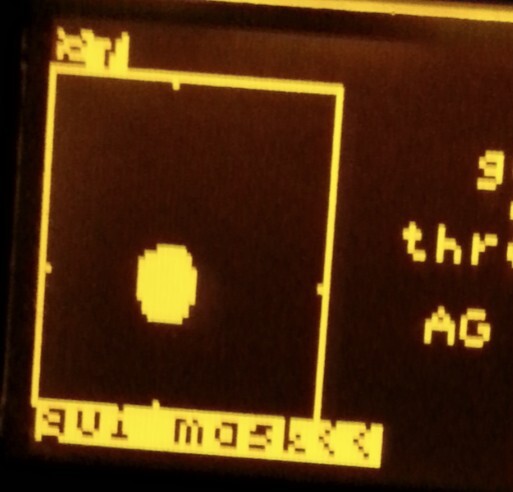
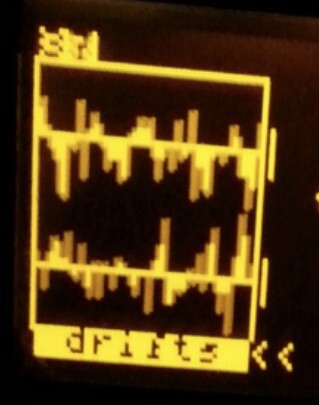
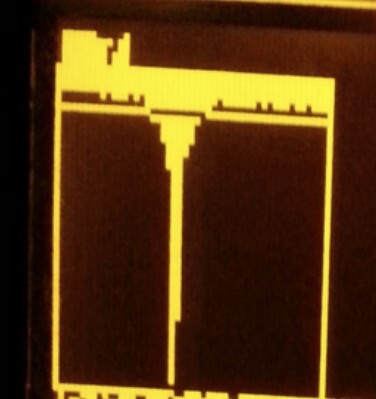
I’ll add a few screenshots to make the guide-scope concept clearer:
– The first screenshot shows the resolution of a guide star. This is significantly finer than in the main camera, where in extreme cases a star may occupy only a single pixel.
– The second screenshot shows the stepper-motor corrections that keep the guide star perfectly centered – long before the main camera could detect any deviation.
– The final screenshot shows focus quality. The narrower and cleaner the peak, the more precisely the focus is set.


Dec 15, 2025 at 01:04 PM
jtra
Offline
• • •
Upload & Sell: Off
p.2 #12 · Goodbye Fiddly Ball Heads – Why the Leofoto LH-40GR Rocks


Stefan Official wrote:
However, without knowing it for sure, I suspect that there is no clearly defined tilt axis. When you adjust one screw, you inevitably influence at least two axes at the same time. That makes the setup more labor-intensive and less intuitive overall. Maybe you could briefly comment on that – with the Leofoto solutions this is not the case.


Yes, that is what I meant by writing "But movements using three screws are not intuitive."
It is the reason I consider changing my setup with geared head (which could be useful also for other types of photography).
But in the end it is not preventing me to align. It is just three axes that have 60° angle between them instead of two axes with 90° angle.


A geared panning movement is available neither on the LH-40GR nor on the G2 (which does not have a ball head anyway). Personally, I don’t see this as a disadvantage.


I thought about it more and it is not a problem. When the G2 would be rotated on ballhead towards Polaris, then the two geared axes are enough for Polar adjustment.


Over the last few days I’ve been shooting with about 3 kg of load on the LH-40GR and had zero issues with accuracy, flex, or stability. Absolutely precise. The adjustment via the small control wheels works very well – not too stiff, not too loose, just right.


Great!


Regarding astrophotography: I use a Benro astro tracker that can be calibrated using any star from its internal database. I usually choose a star in the Milky Way, as in my experience this allows for more precise calibration than a classic polar alignment. The Benro does not require Polaris and is one of the few mobile astro trackers that works without a classical Polaris alignment.


I know about this Benro tracker. I have considered it, but I went for classic rotator.


The main reason I chose this solution is the following: I am often at locations – for example at lakes – with 30–40 meter tall trees or steep rock faces behind me. In such situations there is no view of Polaris (lake facing south, trees or rock walls to the north). Many astro trackers simply cannot be used there because they strictly rely on polar alignment. With my setup, I can shoot anywhere as long as a few stars are visible in the sky, regardless of direction. Ideally, I choose a star located roughly in the same direction as the subject
...Show more

When I am in this situation, I align using mobile phone's magnetometer and accelerometer. It is not accurate, but for this situation I would be most likely using wide lens anyway and for that it would be sufficient with stacking. I can also iterate to reduce alignment error by seeing direction of star movement in the frame. This is harder in general case, but with assumption that accelerometer is quite accurate and magnetometer is not, the correction is in one axis and that is not that hard. I did it when I forgot to take Polar viewfinder and I was able to shoot with 135mm 30s exposures on A7RV.


In guiding, the star is not treated as a single pixel, but as a brightness profile spread over many pixels. This allows position changes on the order of fractions of a pixel to be detected – long before a star would visibly move or elongate on the main imaging sensor. Any tiny deviation is detected and corrected immediately, long before the main camera would register any visible star movement.


I am aware how guiding works including subpixel guiding. With my Vixen Polarie U I can get up to a minute at 135mm (the longest I use) on A7RV and much longer for my 50 and 20 primes. Polarie U supports guiding in RA axis, but I have never used it (I feel like it is not worth the hassle for guiding in single axis).

I have some videos how I shoot both landscapes and astro-landscapes. For astro-landscapes I show how I process. I have some original processing techniques that I disclose in videos. The older videos are in Czech language and with corrected English subtitles. The newest one is with dual audio track Czech + English (my own voice, no AI) that I plan to use forward now that I have this feature enabled on my account.

https://www.youtube.com/@fotovylety/videos


Dec 15, 2025 at 05:45 PM
Stefan Official
Offline
• •
Upload & Sell: Off
p.2 #13 · Goodbye Fiddly Ball Heads – Why the Leofoto LH-40GR Rocks


Good morning Jakub, @jtra
I really enjoyed your videos. I watched two of them this morning during breakfast, and the calm, slightly soothing music fit your night tours perfectly. I immediately had the feeling of being out on a night photo walk myself. You can really feel the cold, the excitement, and the genuine interest in what you’re doing. I liked that a lot.

It’s refreshing to see these rare kinds of videos again — not typical influencer content, not overloaded, not aiming for primitive entertainment. Unfortunately, these are exactly the videos that usually only get watched by people who truly care, and therefore have little chance of reaching a large audience on YouTube. I find that extremely sad, but that’s how the world works. So from me, a double thank you — I appreciate this kind of work even more. Please keep your style and continue exactly like this.

Kalvárie also really caught my attention as a location. I can easily imagine spending a few nights there myself. The fog in the valley was the perfect finishing touch for the photos. At the same time, I can see on lightpollutionmap.info that light pollution is unfortunately increasing in your area as well. Prague already has a strong impact there, just like many other cities in Europe.

I’ll watch your other videos over the next few days too. I briefly noticed the part about GIMP, but I’d like to take my time with that.

Regarding the aurora, I’d like to share something with you that I think is relatively unknown but extremely useful. This site shows auroras live. I can cover almost everything with it without having to rely on classical forecasts. You can see how the Earth rotates, how the auroras are aligned toward the Sun within Earth’s magnetic field, and how everything moves across the map. With just a single look, it often gives me a very good feeling many hours in advance of how strong the activity will be and how far it will spread.

I generally find most aurora forecasts difficult, as they often don’t turn out to be very accurate. The only reliable information is what appears roughly one hour before the actual event — that’s the only forecast I still pay attention to. Everything else I do via this map. Because it’s interactive and can be rotated precisely to match your own location, it’s incredibly intuitive to read. Just open it every few hours and take a look. You can clearly see how the activity moves from Norway toward Alaska and many hours later circles back toward Norway again.
https://earth.nullschool.net/#current/space/primary/waves/anim=off/overlay=aurora/orthographic=-336.66,55.35,471/loc=13.674,68.115


Dec 16, 2025 at 12:08 AM
jtra
Offline
• • •
Upload & Sell: Off
p.2 #14 · Goodbye Fiddly Ball Heads – Why the Leofoto LH-40GR Rocks


Stefan Official wrote:
Good morning Jakub, @jtra@
I really enjoyed your videos. I watched two of them this morning during breakfast, and the calm, slightly soothing music fit your night tours perfectly. I immediately had the feeling of being out on a night photo walk myself. You can really feel the cold, the excitement, and the genuine interest in what you’re doing. I liked that a lot.

It’s refreshing to see these rare kinds of videos again — not typical influencer content, not overloaded, not aiming for primitive entertainment. Unfortunately, these are exactly the videos that usually only get watched by people who truly
...Show more

Thanks. I think the difference compared to many popular channels is that I don't have to sell you anything. It just my hobby where I want to share my experience. I am producing videos that I would like to watch. It is not a source of income and I don't want it to become a source of income in future (at least until I retire from my programming job). No sponsored content, no workshop promotions and no clickbaits. But then I can only produce a single video once a month or two which limits reach within youtube platform. Also the reach is limited by my choice to use my native language instead of English which might change with dual audio option that I just started using with the latest video.


Kalvárie also really caught my attention as a location. I can easily imagine spending a few nights there myself. The fog in the valley was the perfect finishing touch for the photos. At the same time, I can see on lightpollutionmap.info that light pollution is unfortunately increasing in your area as well. Prague already has a strong impact there, just like many other cities in Europe.


Kalvárie in Ostré/Úštěk is not that far from German border so depending where you live, it might be accessible.

Light pollution makes it harder, but it could be worse. At home in the Prague I don't do astro (maybe with some narrowband it would be ok, but I am not in to it, I know people who do and they have nice results, but I prefer astro landscapes over pure astro). So I have to travel, but I can get to Bortle 4 in 30 to 60 minutes by car depending on direction.


I’ll watch your other videos over the next few days too. I briefly noticed the part about GIMP, but I’d like to take my time with that.


The thing with GIMP is that I started using it in around 1998 for computer graphics (I was not doing digital photography until 2004). I started using Lightroom in 2014 and but I did not have Photoshop for a long time until I switched from non-subscription Lightroom 5.7 to subscription LrC in 2023. I thought at the time I would switch to Photoshop easily because it is similar in some ways, more powerful in some ways and it is an industry standard. The GIMP is not known for intuitive user interface either. But it turned out for me that there are a lot things that are easy in GIMP and not so easy in Ps. In GIMP I use G'MIC plugin that adds so many features that I miss in Ps. So I use both and I prefer GIMP unless there is some Ps-only feature that GIMP lacks. But I would not recommend someone who is long time Ps user to use GIMP.


Regarding the aurora, I’d like to share something with you that I think is relatively unknown but extremely useful. This site shows auroras live. I can cover almost everything with it without having to rely on classical forecasts. You can see how the Earth rotates, how the auroras are aligned toward the Sun within Earth’s magnetic field, and how everything moves across the map. With just a single look, it often gives me a very good feeling many hours in advance of how strong the activity will be and how far it will spread.

I generally find most aurora forecasts difficult, as
...Show more

I feel like the video about aurora photography planning is kind of weak one because I learned more about it since then. I generally watch closely solarham.com and during flare impact the Hp30 index (https://kp.gfz.de/en/hp30-hp60 the same thing as Kp index but finer grained) and data based on a satellite close to Earth that can predict the mentioned hour in advance (but if the particle speed is fast like during actual good flare, then it is just 30 minutes).
Your link looks interesting. I have bookmarked it and I will look at it during some flare activity.

I'm not so dedicated to auroras unless they have chance to be really strong and I cannot be out at night very often. Some people are much more dedicated. For example this guy from FB group about auroras in Czech/Slovak Republic captured 12 in 2024 in south Moravia region (mostly Mikulov which is 48.8N): FB image.


Dec 16, 2025 at 03:05 AM
1              end


FM Forums | General Gear-talk | Join Upload & Sell

1              end


Welcome back
Log in to your account