Knut. wrote:
Somehow I always felt that the Apo Lanthars were built to a higher optical standard than the other Voigtländer lenses. Usually they also contain considerably more ED glas. But I may be wrong.
Any weight < 450g would be really attractive!
The f2.8 Apo Skopar is nice, but I was surprised by the amount of LOCA it shows. It is clearly visible at f2.8 as well as f4 and traces can even be seen at f5.6, despite the lens having 5 abnormal partial dispersion elements.
Suprisingly, the old Pentax A 1.4/85 has lower LOCA (visible at f1.4-f2.8, but gone by f4).
Compared against a modern ‘all APD’ lens fitted with six of its eight elements made of Anomalous Partial Dispersion glass, the Leica 90/2 APO-Summicron-M puts in a performance that belies its 28 years of age, with high resolution and classier bokeh balls that Cosina’s latest APO-Ultron.
That great optic is now down to $6100. It's a five element design, two APD, two HRI and one asph (sounds very balanced, very Chinese). It turns 28 years old this year, and can still be bought new. The MTF for a portrait lens approach perfection. 500g, complete with hood. Only fly in the ointment is the MFD of 1.0m, but it's a 90mm. 180 degree focus throw.
Extra Low Dispersion (ED) and Anomalous Partial Dispersion (APD) glass formulations developed in recent years are used to address digital’s (reputedly) most pressing requirement of banishing Chromatic Aberration (CA) from our lands. Still, we see the curse of colour error all too frequently, and the ease with which it can be invoked in modern optics is frankly astonishing. As ARRI’s Art Adams freely admits, it’s impossible to remove it completely.
Manufacturers use these two terms ED and APD liberally in the modern day, but what are the differences between them? They appear to be one and the same: ‘Anomalous Partial Dispersion (or anomalous dispersion) is a property of extra-low dispersion (ED) glass that is essential for its function.’ ‘ED glass, through its anomalous dispersion (function), is able to neutralize the effect (of Chromatic Aberration) when combined with other standard optical glass.’
We see several lens makers using APD almost exclusively for correction, notably among them mid-2010s Zeiss and present day Voigtlander. It seems certain that this glass is also high in its refractive indices, because some designs have very few non-APD glass in their designs, the Otus 85mm (for DSLRs) and Voigtlander’s longer APO lenses of recent issue. This would partially explain the lack of mention of HRI glass.
Interestingly, HRI does get a mention in Leica's top M lenses - the Noctiluxes and the APO-Summicron-M 35/2 and the early longer APOs. The Chinese have no such qualms about it, they will tell the truth about all their glass types. It could be that western lens makers are wary of anything associated with lead, which is exactly what gave glass elevated refractive indexes.
You come across comments like this:
'The complex optical design uses high-refractive index glass (historically lead-based) to manage aberrations while maintaining a signature "glow" in highlights.' I think about this optical clarity of lead as I try to figure out why my Simera lenses have such luscious highlight roll-off and tonal representation in the upper registers. Is Thypoch doing an LLL?
Lanthanum (or more correctly lanthanide(s) or lanthanum oxide) is highly refractive when infused in optical glass. 'Dr Walter Mandler was working at the Leitz factory in Midland Canada and was tasked with producing a fast lens which would be easier and cheaper to manufacture than the double aspherical f1.2 . He used *highly refractive lanthanum glass* instead of aspherical elements and created a slightly larger but even faster lens, but one which was easier to produce.'
First Canon had "Fluorite" lenses, So Nikon had have a glass gimmick: ED. (Extra-low Dispersion) There may be actual facts drifting through the promo literature from the producers of lenses about different types of "special" optical glass, but unless you read or talk to an actual lens designer, it is impossible to separate the contributions of the marketing department from the contributions of the optical design department.
Got mine a couple days ago! $775 US equivalent here in Korea. Hoping to get out and do some shooting around Seoul in the next couple weeks. Pretty boring weather/atmospheric conditions in the forecast so probably gonna stick to urban stuff in the near term but hoping to do some outdoor / nature soon.
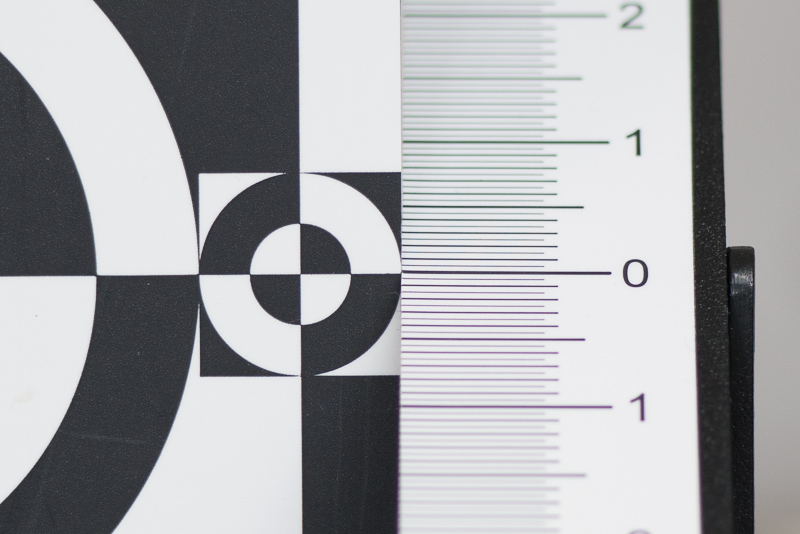
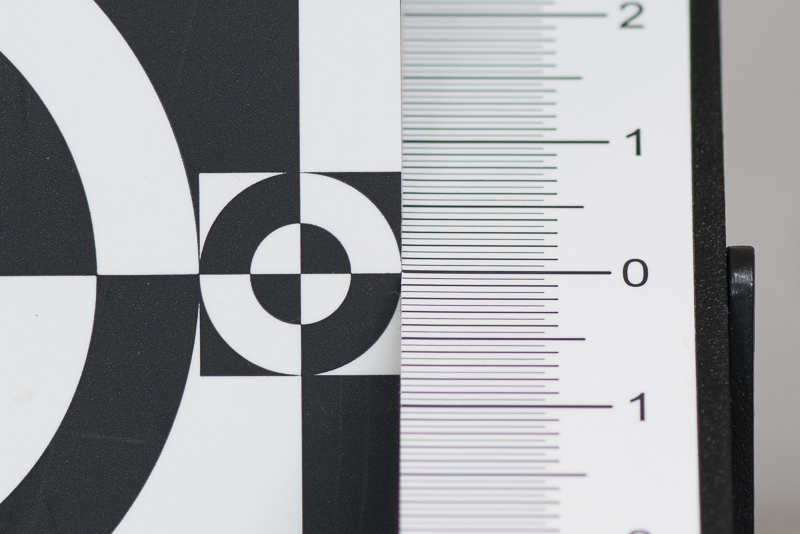
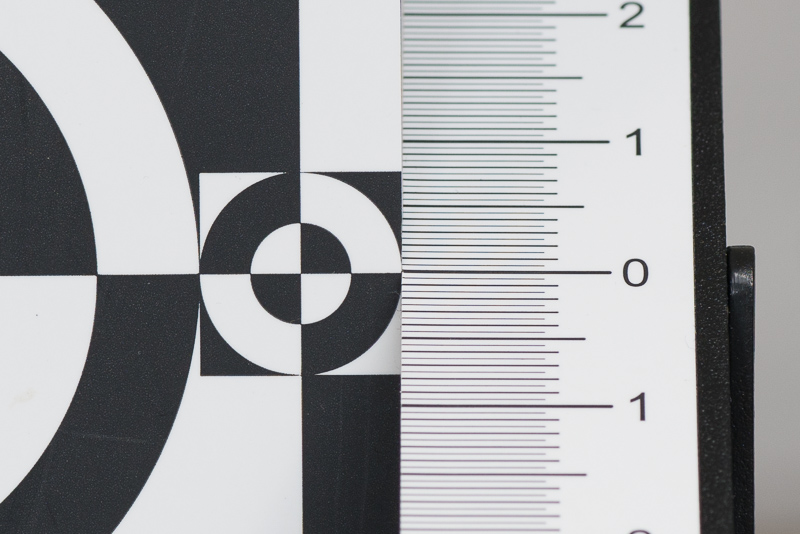
Well, the black lines in front of the zero line clearly show a purple tint, whereas the lines behind the zero line show a green tint. This is LOCA and it is definitely not gone by f5.6; other lenses show better LOCA correction (especially at f5.6 all lines should be black). Still having purple-green separation at this f-stop is not perfect LOCA correction (at least not on the level of the Apo Lanthars):
Knut. wrote:
Well, the black lines in front of the zero line clearly show a purple tint, whereas the lines behind the zero line show a green tint. This is LOCA and it is definitely not gone by f5.6; other lenses show better LOCA correction (especially at f5.6 all lines should be black). Still having purple-green separation at this f-stop is not perfect LOCA correction (at least not on the level of the Apo Lanthars):
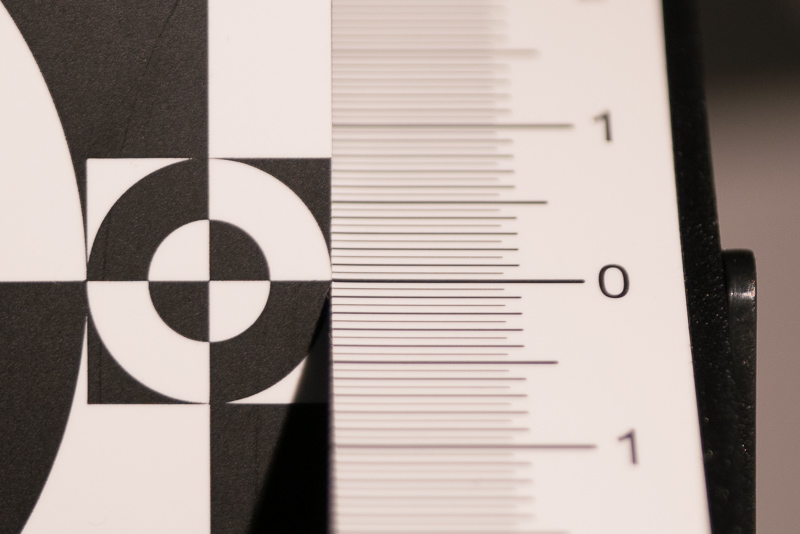
It is hard to compare this 90 f/2.8 APO test with this 35 f/2 APO test because the white balance, exposure, and contrast are different. The blacks are blacker and the whites are bluer in the 90 f/2.8 APO test. I don't think Bastian has designed the test to compare lenses in this way as focus distance, magnification, and perhaps lighting are different as well. I think the test is designed to give a rough idea of how well corrected the lens is for axial CA and to examine focus shift.
I do think the 90 f/2.8 APO tests represent the performance of that lens well, however. The lens has low axial CA at f/2.8, but there is a little bit there and it doesn't clear up that much, but it does a little as you stop down.
The 50 f/2 APO Lanthar, both the VM and E mount version, definitely control axial CA a bit better in my experience, but even that lens isn't perfect.
My impression from shots shown around here and reports of other's experience is that the Voigtlander 35 f/2 APO isn't quite as well corrected for axial CA as the 50 f/2 APO, but I have never owned the 35 f/2 APO so I have no direct experience.
I am not sure how the 90 f/2.8 APO compares to the 35 f/2 APO. IMO, it would take a lot of different comparisons with a lot of different focus lengths and a lot of different types and intensity of light to be able to draw any meaningful comparisons. I wouldn't be surprised if the 90 f/2.8 APO were better in some situations, but maybe it never is and I wouldn't be surprised if the 35 f/2 APO were better in some situations. That said I simply don't have enough information given that I have never owned the 35 f/2 APO to offer much beyond very general impressions.
Steve Spencer wrote:
I do think the 90 f/2.8 APO tests represent the performance of that lens well, however. The lens has low axial CA at f/2.8, but there is a little bit there and it doesn't clear up that much, but it does a little as you stop down.
I competely agree with this statement: It summarizes why I showed the pictures of Bastian.
The points I want to make are:
1) that the Voigtländer 90/f2.8 Apo shows some LOCA that does not completely clear up by f5.6 (I agree, it is not terrible), and
2) I personally believe that Voigtländer corrects the Apo Lanthars to a higher level than other lenses they produce and designate Apo.
My response was to Ripolini, who claimed that the Voigtländer 90/f2.8 has „negligible LoCA“ and who didn‘t understand my previous description of the 90/2.8.
As I showed with the pictures of Bastian, the 90/2.8 has some LOCA, that does not clear up even at f5.6,
and I believe that the Apo Lanthars are better corrected.
(But my experience is limited to the 28, 35, 50 and 65 Apo Lanthars, which I own).
I would be very interested in a 90mm Apo Lanthar, lighter than the macro-Apo Lanthars (65+110) with a LOCA correction similar to the Apo Lanthars I own. Personally I believe that the 90/f2.8 Apo, while being an excellent lens, does not have the same apochromatic correction as the Apo Lanthars.
Knut. wrote:
I personally believe that Voigtländer corrects the Apo Lanthars to a higher level than other lenses they produce and designate Apo.
Yep, APO-Lanthars are the highest quality Voigtländer lenses, a tradition carried on from the lenses on the Bessa II: the 105mm f3.5 APO-Lanthar was the highest tier lens for that camera, followed by the Color-Heliar and Color-Skopar.
They are also the only lenses for which they release MTF graphs.
So yes APO-Ultron and APO-Skopar are not meant to be the same class of lens as an APO-Lanthar.
But for any lens with the APO designation they promise reducing on-axis CA "as close to zero as possible".
Knut. wrote:
My response was to Ripolini, who claimed that the Voigtländer 90/f2.8 has „negligible LoCA“ and who didn‘t understand my previous description of the 90/2.8.
As I showed with the pictures of Bastian, the 90/2.8 has some LOCA, that does not clear up even at f5.6,
and I believe that the Apo Lanthars are better corrected.
(But my experience is limited to the 28, 35, 50 and 65 Apo Lanthars, which I own).
Dear Mr Knut,
I didn't claim anything. I simply recalled that a lightweight 90/2.8 Apo lens does actually exist and I gave reference to the test by Bastian who concluded that the lens has a "good" CA correction.
This is a subjective evaluation that might differ from yours.
So what?
Even my Zeiss 135/2 Apo Sonnar suffer from very little (again, subjective evaluation) LoCA. So what? It's much better corrected than my 100/2 Makro-Planar, a lens that has so many qualities that it's still in my arsenal.
According to reputable reviews I've read, I feel the 90/2.8 Apo Skopar is an excellent lens considering size+weight+price.
You are free to disagree, obviously.
Even the legendary Leica 100/2.8 Apo Macro Elmarit suffer from LoCA ...
The perfect lens doesn't exist.
Take care.
Ripolini wrote:
Dear Mr Knut,
I didn't claim anything. I simply recalled that a lightweight 90/2.8 Apo lens does actually exist and I gave reference to the test by Bastian who concluded that the lens has a "good" CA correction.
This is a subjective evaluation that might differ from yours.
So what?
Even my Zeiss 135/2 Apo Sonnar suffer from very little (again, subjective evaluation) LoCA. So what? It's much better corrected than my 100/2 Makro-Planar, a lens that has so many qualities that it's still in my arsenal.
According to reputable reviews I've read, I feel the 90/2.8 Apo Skopar is an excellent lens considering size+weight+price.
You are free to disagree, obviously.
Even the legendary Leica 100/2.8 Apo Macro Elmarit suffer from LoCA ...
The perfect lens doesn't exist.
Take care.
I never wanted to attack you. Please do not feel offended. I feel deeply sorry if that is the case.
I originally said:
„The f2.8 Apo Skopar is nice, but I was surprised by the amount of LOCA it shows. It is clearly visible at f2.8 as well as f4 and traces can even be seen at f5.6, despite the lens having 5 abnormal partial dispersion elements.“
You responded by writing:
„The test by Bastian I linked above showed negligible LoCA, so I wonder why you noted LoCA even @ f/5.6“
I explained my reasoning by pointing to the source of my observation (the article by Bastian you referenced). For me this was more than I expected for a lens designated Apo. Clearly, I might be too critical.
In addition it says nothing about the other qualities of this lens or if it is sufficient for the purpose anyone might like to use it for. It just explains why I believe that it has some LOCA (and I believe that the Apo Lanthars have less). I think this whole discussion started, when I expressed interest in a 90mm lens with apochromatic correction comparable to the other Apo Lanthars (and better than the present Voigtländer Apo lenses in the 90mm range).
So if I did offend, please accept my sincere apologies.
Feb 06, 2026 at 11:22 AM
Steve Spencer Offline • • • • • • • Upload & Sell: Off
Knut. wrote:
I competely agree with this statement: It summarizes why I showed the pictures of Bastian.
The points I want to make are:
1) that the Voigtländer 90/f2.8 Apo shows some LOCA that does not completely clear up by f5.6 (I agree, it is not terrible), and
2) I personally believe that Voigtländer corrects the Apo Lanthars to a higher level than other lenses they produce and designate Apo.
My response was to Ripolini, who claimed that the Voigtländer 90/f2.8 has „negligible LoCA“ and who didn‘t understand my previous description of the 90/2.8.
As I showed with the pictures of Bastian, the 90/2.8 has some LOCA, that does not clear up even at f5.6,
and I believe that the Apo Lanthars are better corrected.
(But my experience is limited to the 28, 35, 50 and 65 Apo Lanthars, which I own).
I would be very interested in a 90mm Apo Lanthar, lighter than the macro-Apo Lanthars (65+110) with a LOCA correction similar to the Apo Lanthars I own. Personally I believe that the 90/f2.8 Apo, while being an excellent lens, does not have the same apochromatic correction as the Apo Lanthars....Show more →
We agree on point #1, but from my experience I don't agree with point #2. I have had the following Voigtlander APO lenses:
Fuji X mount 35 f/2 APO Ultron Macro
Leica M mount 50 f/2 APO Lanthar
Sony E mount 50 f/2 APO Lanthar
Sony E mount 65 f/2 APO Lanthar Macro
Leica M mount 90 f/2.8 APO Color Skopar
Canon EF mount 90 f/3.5 APO Lanthar
Sony E mount 110 f/2.5 APO Lanthar Macro
Pentax K mount 180 f/4 APO Lanthar
Here is how I would rate these lenses based on my pretty extensive use of all of them in correction of axial CA and purple fringing:
Sony E mount 110 f/2.5 APO Lanthar Macro > Fuji X mount 35 f/2 APO Ultron Macro = Sony E mount 65 f/2 APO Lanthar Macro > Sony E mount 50 f/2 APO Lanthar = Leica M mount 50 f/2 APO Lanthar > Leica M 90 f/2.8 APO Color Skopar > Pentax K mount 180 f/4 APO Lanthar > Canon EF mount 90 f/3.5 APO Lanthar
A couple things can be said from my experience based on these ratings:
1) The macro lenses have excellent control of axial CA and to my eyes a bit better than all the non-macro lenses. The E mount ones (and even the Fuji X mount in comparison to other Fuji X mount lenses) are bigger than non-macro lenses and that may have helped Cosina design them with more control of axial CA.
2) Newer lenses are better than older lenses. With the lenses I have used the old ones are clearly the worst and there definitely is a relation between age of the design and control of axial CA. Cosina may well have improved their ability to control these aberrations over time. Two of the newest lenses (the 28 f/2 APO Lanthar and the 90 f/2 APO Ultron) seem to have quite excellent control of axial CA. I haven't gotten either of them yet, but from samples they seem to rival even the APO macros.
3) My sample of non-Lanthar lenses is small (just two), but one of them (the Fuji X mount 35 f/2 APO Ultron Macro) is among the best that I have used, and even the Leica M mount 90 f/2.8 APO Color Skopar is in my experience clearly better than the older APO Lanthars. Given the performance of these two lenses, I am not ready to say that APO Lanthars are automatically better in control of axial CA. In believe there are only two APO Ultrons and one APO Color Skopar, and it sure looks to me like the two APO Ultrons compete really well with the APO Lanthars for control of axial CA, and although the 90 f/2.8 APO Color Skopar lags a bit it is just one lens and it isn't so far off the others (and better than some older APO Lanthars) that I would expect any future APO Color Skopar to have inferior APO correction.
4) I think the simpler assumptions is that when Cosina labels a lens as APO it has to meet a certain standard. I suspect that standard has gotten higher over the years, so newer lenses actually have better correction. But at any given point some lenses just meet that standard and others exceed it by a larger margin.
5) The label of Lanthar or not, however, is marketing and getting the Lanthar label can be used to justify a higher price. Whether they label a lens as a Lanthar or an Ultron or a Color Skopar, however, may depend a little on by how much the standard is exceeded, but also includes other criteria. What is the max aperture? Does the lens have a floating element design? Does the lens have a higher blade count and or special shape at medium aperture? All these things are taken into account I believe when Cosina decides whether to name an APO lens a Lanthar or something else.
Although a bit off topic, my impression is that Cosina uses APO-Lanthar naming for their highest performance class lenses based on IQ (they have some internal quality thresholds for IQ that determine which lenses can be called APO-Lanthar) and not on aperture, size and other aspects, and with some of their APO designated lenses they prioritize other aspects like size to make a balanced product, thus not meeting their IQ thresholds for APO-Lanthar naming. I think they have probably increased their IQ criteria for APO-Lanthar over time as some of their old APO-Lanthars like 90/3.5 might not match latest generation IQ levels.
This is how Cosina has spoken about APO-Lanthars in various showroom events in Japan that I've attended.
jrscls wrote:
Is the 28mm APO thread?
I got one from Cameraquest. Guess what? It's a really good lens. The Thypoch Simera 28/1.4 will be sitting in a drawer for a while.
Steve Spencer wrote:
We agree on point #1, but from my experience I don't agree with point #2. I have had the following Voigtlander APO lenses:
Fuji X mount 35 f/2 APO Ultron Macro
Leica M mount 50 f/2 APO Lanthar
Sony E mount 50 f/2 APO Lanthar
Sony E mount 65 f/2 APO Lanthar Macro
Leica M mount 90 f/2.8 APO Color Skopar
Canon EF mount 90 f/3.5 APO Lanthar
Sony E mount 110 f/2.5 APO Lanthar Macro
Pentax K mount 180 f/4 APO Lanthar
Here is how I would rate these lenses based on my pretty extensive use of all of them in correction of axial CA and purple fringing:
Sony E mount 110 f/2.5 APO Lanthar Macro > Fuji X mount 35 f/2 APO Ultron Macro = Sony E mount 65 f/2 APO Lanthar Macro > Sony E mount 50 f/2 APO Lanthar = Leica M mount 50 f/2 APO Lanthar > Leica M 90 f/2.8 APO Color Skopar > Pentax K mount 180 f/4 APO Lanthar > Canon EF mount 90 f/3.5 APO Lanthar
A couple things can be said from my experience based on these ratings:
1) The macro lenses have excellent control of axial CA and to my eyes a bit better than all the non-macro lenses. The E mount ones (and even the Fuji X mount in comparison to other Fuji X mount lenses) are bigger than non-macro lenses and that may have helped Cosina design them with more control of axial CA.
2) Newer lenses are better than older lenses. With the lenses I have used the old ones are clearly the worst and there definitely is a relation between age of the design and control of axial CA. Cosina may well have improved their ability to control these aberrations over time. Two of the newest lenses (the 28 f/2 APO Lanthar and the 90 f/2 APO Ultron) seem to have quite excellent control of axial CA. I haven't gotten either of them yet, but from samples they seem to rival even the APO macros.
3) My sample of non-Lanthar lenses is small (just two), but one of them (the Fuji X mount 35 f/2 APO Ultron Macro) is among the best that I have used, and even the Leica M mount 90 f/2.8 APO Color Skopar is in my experience clearly better than the older APO Lanthars. Given the performance of these two lenses, I am not ready to say that APO Lanthars are automatically better in control of axial CA. In believe there are only two APO Ultrons and one APO Color Skopar, and it sure looks to me like the two APO Ultrons compete really well with the APO Lanthars for control of axial CA, and although the 90 f/2.8 APO Color Skopar lags a bit it is just one lens and it isn't so far off the others (and better than some older APO Lanthars) that I would expect any future APO Color Skopar to have inferior APO correction.
4) I think the simpler assumptions is that when Cosina labels a lens as APO it has to meet a certain standard. I suspect that standard has gotten higher over the years, so newer lenses actually have better correction. But at any given point some lenses just meet that standard and others exceed it by a larger margin.
5) The label of Lanthar or not, however, is marketing and getting the Lanthar label can be used to justify a higher price. Whether they label a lens as a Lanthar or an Ultron or a Color Skopar, however, may depend a little on by how much the standard is exceeded, but also includes other criteria. What is the max aperture? Does the lens have a floating element design? Does the lens have a higher blade count and or special shape at medium aperture? All these things are taken into account I believe when Cosina decides whether to name an APO lens a Lanthar or something else.
I found it very interesting that you found the apochromatic correction of the Voigtländer 180mm just so-so (while still very good). It was one of the first Voigtländer lenses considered truely apochromatic. Klaus Schroiff gave it a rave review in 2006/2007 and while contrast was rather low, LOCA correction was considered exceptional at that time (the review is a bit difficult to find nowadays): https://www.photozone.de/reviews/264-voigtlander-sl-180mm-f4-apo-lanthar-test-reportreview?start=1
I guess what you and Juha have pointed out is most likely true: The Apo Lanthar designation is used when Voigtländer feels that a lens is exceptional at the time of its release. Outstanding LOCA correction appears to be one of the requirements of a lens designated an Apo Lanthar.
Btw: 485g for an f4/180mm lens can also be considered exceptional, even in 2026.
Getting back to the 28mm/f2.0 Apo Lanthar and extensively testing my sample (e-mount), I noticed something I had not been aware of on my other Apo Lanthars:
LOCA is not evenly distributed over the frame. Even at f2.0 this lens has exceptional LOCA correction in the center and the central 2/3 of the frame. But in the far corners (maybe the outer 1/4) LOCA can be observed on extreme contrasts (e.g. branches in front of the sky). This rapidly cleans up with stopping down.
I‘m not an optical expert: Is it possible, that LOCA increases towards the edges? I have never observed this with my other Apo Lanthars. It could be due to the wide angle of this lens (it is the widest angle Apo Lanthar to date).
An alternative explanation could be, that it is an interaction of this lens with the thick sensor stack specific to Sony sensors (and very oblique rays on a 28mm lens). Suporting this latter idea, I did not see an increase of LOCA towards the corners in the tests Fred did with the M-version of the 28/2.0 Apo Lanthar.
Short answer is no. LoCA is a failure to focus different colours at the same distance from the lens. Because it is a shift along the optical axis, it can be seen at any point in the image, including the axis (centre). It's to be expected LoCA diminishes on stop down due to greater DOF.
LaCA is more visible in corners and (it is said) does not improve on stop down. Aberrations are worse in outer frames, including effects of under/over SA, astigmatism, curvature, etc. and these may make CA more noticeable.
The two major CA types may co-occur. Centering is vital to CA hygiene, even slight errors will damage correction.
It is not LACA. Branches closer to the camera have a slight purple hue, branches distant to the plane of focus have a green tint. This indicates residual LOCA to me. It is very faint, you have to look for it. I see it only at f2.0, and NOT in the central 2/3 of image but in the far corners. Cleans up very fast with stopping down.
It could still be an interaction of the lens with the Sony sensor on my A1 or the thick sensor stack since I cannot see it in Fred‘s images when he tested the lens on a Leica. And it is faint, something more of a curiosity, not really impairing the excellent image quality.