p.1 #1 · How do you meter with a camera with no meter?
Planing to shoot the Fujifilm GSW690. It's fully manual and lacks a meter.
What would you suggest - phone app, one of those little Chinese meters, another camera, Sekonic incident meter (I can'tafford a spot meter)? Will be outdoors shooting landscapes and architecture.
I can probably sunny 16 a film like Gold, but also thinking of shooting some Ektachrome.
p.1 #2 · How do you meter with a camera with no meter?
The only camera I own that has a meter is the Sony on the copy stand. The meter I use the most is a Sekonic 308. It’s accurate, easy to read, easy to carry and works forever on a single AA battery. The 308X will do a variety of modes, still, cine and digital video. Plus it’s a great little flash meter. I love Reveni Labs and support them but tend to grab the Sekonic more often. I’ve tried the Gossen Digisix a couple of times and sold them. I lost count of how many 398 Studio Deluxe’s owned but always go back to the 308. You’ll get a lot of responses but I’m one of the few that only uses a hand held meter and have tried a lot of them. Get a Sekonic 308.
p.1 #4 · How do you meter with a camera with no meter?
I used a Sekonic L-398M light meter with my Fuji GSW690II and GW670II, and many other cameras of small, medium and large format. In the last few years, I have come to prefer the diminutive L-208 Twinmate, but some stupid photographer dropped it, and it broke. Oh, that was me.
In the studio, I use the Sekonic L-358 Flash Master, which I prefer over the L-398M (even when not using flash - I've migrated mostly to continuous lighting), but it's relatively large.
You can do a good job with any light meter that is reasonably accurate. I used the el cheapo Sekonic L-86 Auto-Lumi meter for many years, and it worked (and works) just fine. Although, most selenium light meters (e.g. L-398M, L-86) lose sensitivity and accuracy as they age, while more modern CdS meters lose accuracy when the battery runs down.
Recently, I bought a Snakol SK-8202 for the studio (way less expensive on Ali-whatever). It's particularly useful, as it measures luminance (Lux/FC), colour temperature, CCT [°K], and colour rendering index, Ra. OTOH, it doesn't have a dome for incident light metering, and so it's less useful in some situations.
p.1 #5 · How do you meter with a camera with no meter?
I have a Sekonic l-308x-u and a TT Artisan Meter II. However, I find that my absolute best, most reliable meter is my lightweight Nikon N80 with a 50mm f1.8 AF-D. I use my N80 to get the right exposure whenever I use my old Canon FT QL or my Nikon F. I find the handheld Sekonic and the accessory shoe-mount TT Artisan too finicky for practical field use.
p.1 #6 · How do you meter with a camera with no meter?
I recommend a hand held meter in incident mode. I use a Sekonic L-408. It also has a 5 degree spot, which comes in handy for stuff like sunsets.
Actually, I use the L-408 for all my cameras, even those with meters. So nice to always have consistent metering instead of having to adjust to the quirks of different built in meters.
Phone app works in a pinch, but I stick to reflective mode with those. Incident isn't very accurate in phone apps because there's no diffuser dome.
p.1 #7 · How do you meter with a camera with no meter?
OregonSun wrote:
Phone app works in a pinch, but I stick to reflective mode with those. Incident isn't very accurate in phone apps because there's no diffuser dome.
It is -- or was -- possible to get a diffuser dome that clips onto the phone; I have one that I bought a few years back and it works pretty well but only just barely covers the phone's lens; you're supposed to use the selfie lens for incident metering and my dome just covers the lens; if I accidentally nudge it a bit I get incorrect readings.
I mainly use my phone as a backup meter for when I'm traveling and want to cut down on stuff to bring, or if it's raining and I don't want to risk damaging my meter (of course I should apply the same concern to my camera but I like shooting in the rain).
I'm another Sekonic user. I have a few shoe-mount meters and all the ones I've tried have drawbacks, plus none of them have incident metering. I rely on incident metering in winter here with snow on the ground, and it's pretty reliable for landscapes in general.
p.1 #8 · How do you meter with a camera with no meter?
Geoff D F wrote:
Planing to shoot the Fujifilm GSW690. It's fully manual and lacks a meter.
What would you suggest - phone app, one of those little Chinese meters, another camera, Sekonic incident meter (I can'tafford a spot meter)? Will be outdoors shooting landscapes and architecture.
I can probably sunny 16 a film like Gold, but also thinking of shooting some Ektachrome.
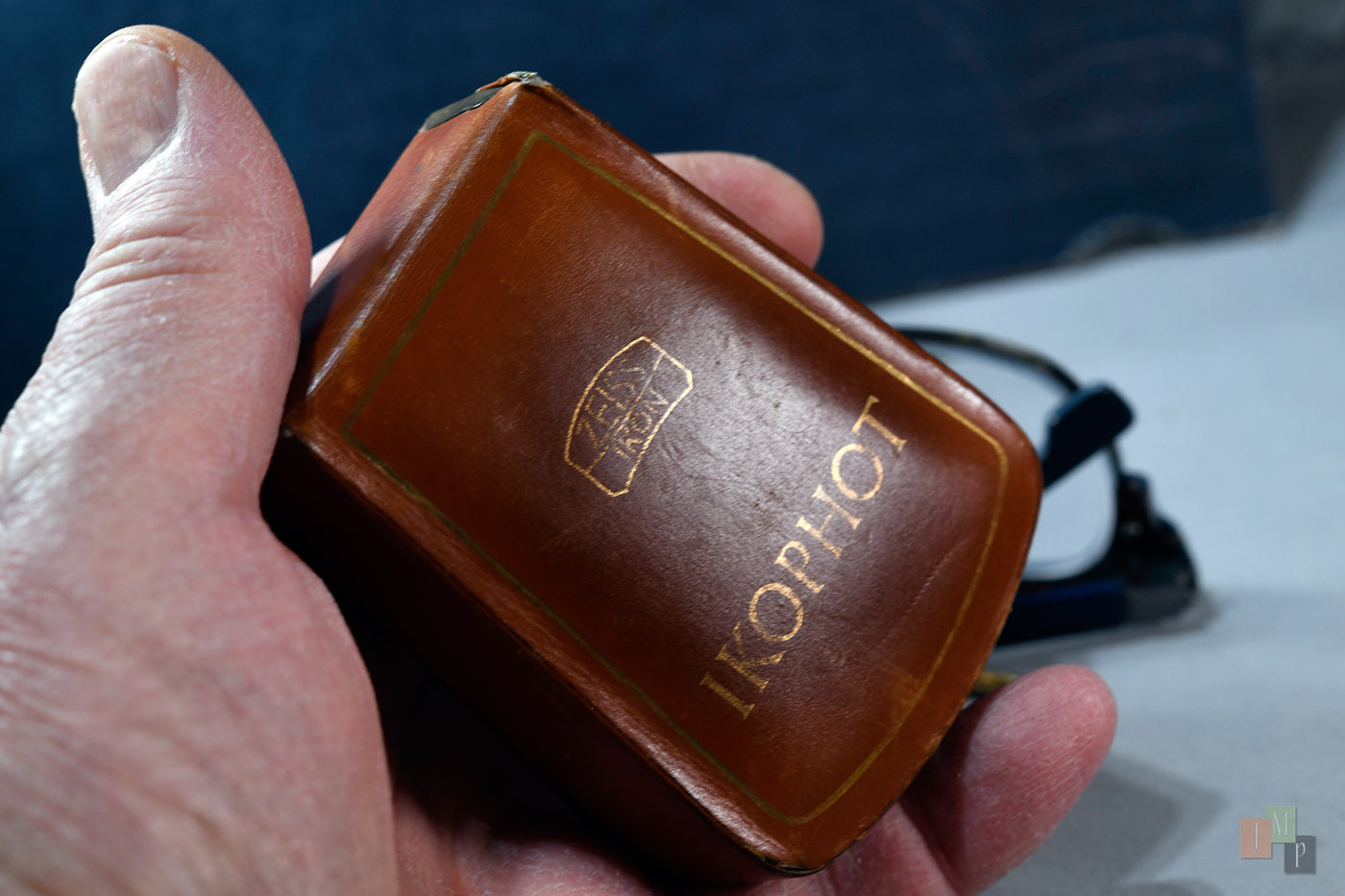
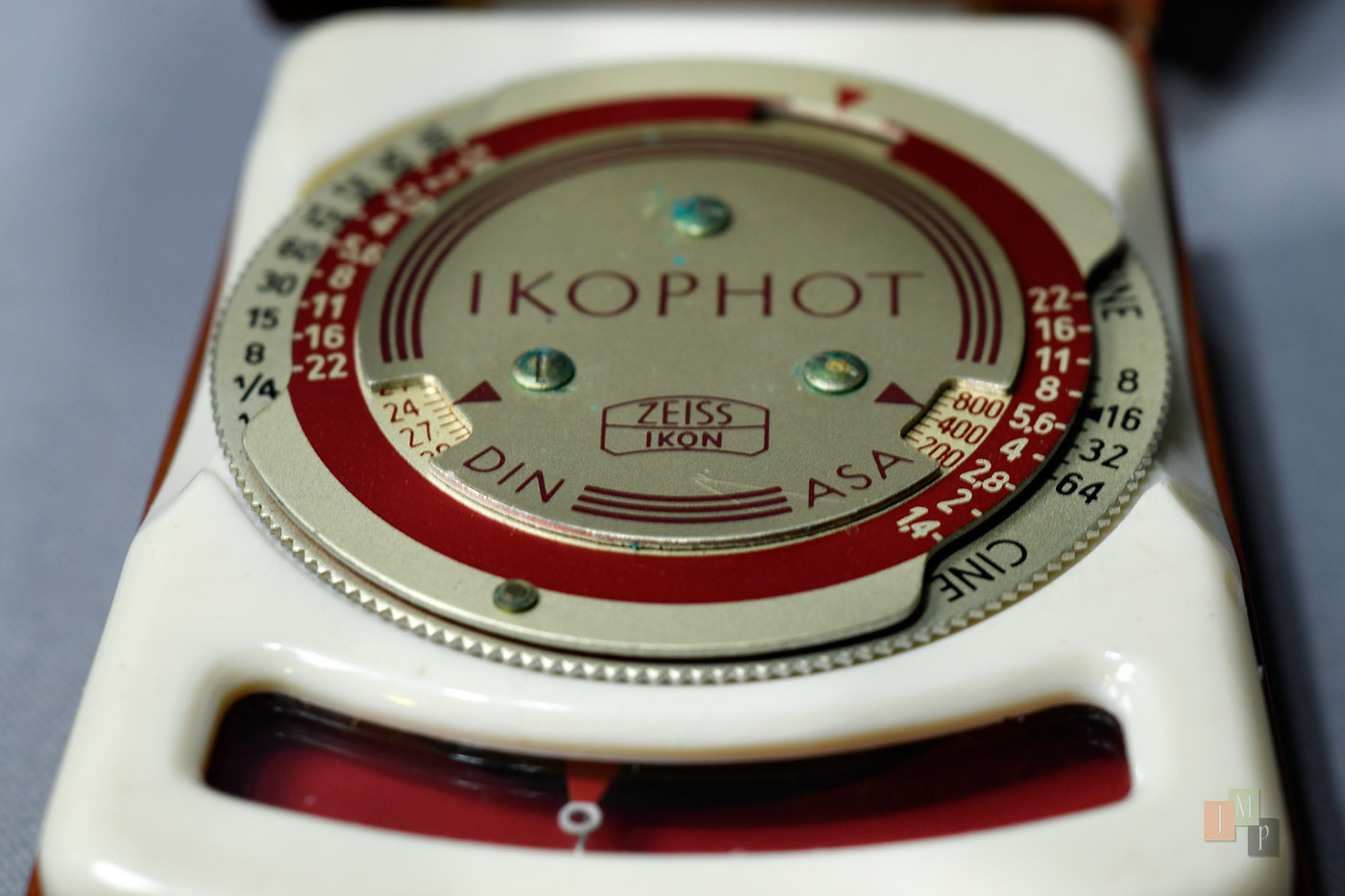
I picked up a pair of Zeiss Ikophot vintage (photos) handheld meters back a while ago, and I like them because they are simple. I also bought the scrabble tile rflx, and it too is accurate, but I don't like dual purpose buttons and tiny displays. Then I tried the free version of "Light Meter" an android app. I like center weighted zone metering, and I can match lens focal length - move the area of interest to where I want the reading taken - long story short - it is all I use now.
p.1 #9 · How do you meter with a camera with no meter?
OregonSun wrote:
I recommend a hand held meter in incident mode. I use a Sekonic L-408. It also has a 5 degree spot, which comes in handy for stuff like sunsets.
Actually, I use the L-408 for all my cameras, even those with meters. So nice to always have consistent metering instead of having to adjust to the quirks of different built in meters.
Phone app works in a pinch, but I stick to reflective mode with those. Incident isn't very accurate in phone apps because there's no diffuser dome.
I had a 408 and wished Sekonic had continued to update it. It's a 308 with a 5º spot but Sekonic decided to add more features and the next generation of spot meters were considerably larger. The one I owned had a hard life and it looked like a previous owner had cleaned the spot viewer with steel wool.
p.1 #10 · How do you meter with a camera with no meter?
Do you want to waste money by messing up your slides or do you want to spend money up front and get all future exposures right? A good spot meter is ~$500, which is like ... 5 rolls of film.
Seriously, for slide film, I very highly recommend you pony up for a proper spot meter. It not only tells you the proper exposure but also the dynamic range of a scene, which is important info for slide film.
p.1 #13 · How do you meter with a camera with no meter?
A digital camera. You will get all sorts of meting modes as well as the histogram which is indispensable and to the best of my knowledge absent in any dedicated meters.
p.1 #15 · How do you meter with a camera with no meter?
Yogifi wrote:
I haven't tried any but I think there are some pretty compact hot shoe light meters. I think some are battery powered too.
I'd be curious if anyone tried one for sure. Nice for peace of mind and a bit more freedom with camera selections.
The Voigtlander VCII shoe mount has been around the longest and has good reviews. Keks offers several models including a Reveni cube knockoff. The advantage of the newer meters is they offer both OLED displays and USB-C charging. I've owned several Reveni cubes and took the MK2 version on a trip to Paris. They work well but only offer reflective metering and there were times when an incident reading would have made for a better image.
A lot of new shoe mount meters have come to the market in the past several years. Build quality and accuracy vary between manufacturers.
p.1 #16 · How do you meter with a camera with no meter?
The two main issues I've found with shoe-mount meters is that:
1. They have a tendency to slip off. Usually they slip off in my bag, but sometimes they slip off while I'm pulling the camera out of the bag and in a couple of cases they ended up in places where I couldn't retrieve them.
2. The ones with displays on the top can be impossible to read in sunny conditions. This is my problem with the Hedeco Lime II meter, for example.
3. As madNbad noted above, they are reflective only. Although that's also true with built-in meters on SLRs etc so it's not really a dealbreaker; it's just that if I'm going to be using a meter I'd rather have ability to choose between reflected and incident.
p.1 #17 · How do you meter with a camera with no meter?
James Markus wrote:
I picked up a pair of Zeiss Ikophot vintage (photos) handheld meters back a while ago, and I like them because they are simple. I also bought the scrabble tile rflx, and it too is accurate, but I don't like dual purpose buttons and tiny displays. Then I tried the free version of "Light Meter" an android app. I like center weighted zone metering, and I can match lens focal length - move the area of interest to where I want the reading taken - long story short - it is all I use now.
+1 for the 'Light Meter' Android app. I don't use the meter, but I use it for pinhole and long exposure calculations.
p.1 #19 · How do you meter with a camera with no meter?
madNbad wrote:
I had a 408 and wished Sekonic had continued to update it. It's a 308 with a 5º spot but Sekonic decided to add more features and the next generation of spot meters were considerably larger. The one I owned had a hard life and it looked like a previous owner had cleaned the spot viewer with steel wool.
I dropped mine off a bridge 30ft into water. It was dead when I fished it out, but after I took it apart and dried everything, it resurrected, yay!
p.1 #20 · How do you meter with a camera with no meter?
OregonSun wrote:
I dropped mine off a bridge 30ft into water. It was dead when I fished it out, but after I took it apart and dried everything, it resurrected, yay!
408 gang 😎 Mine was mint with the box and vintage original National battery.
Film has latitude so just phone app is normally fine. A light meter with incident metering is a must for film flash photography tho since you can't wing it.