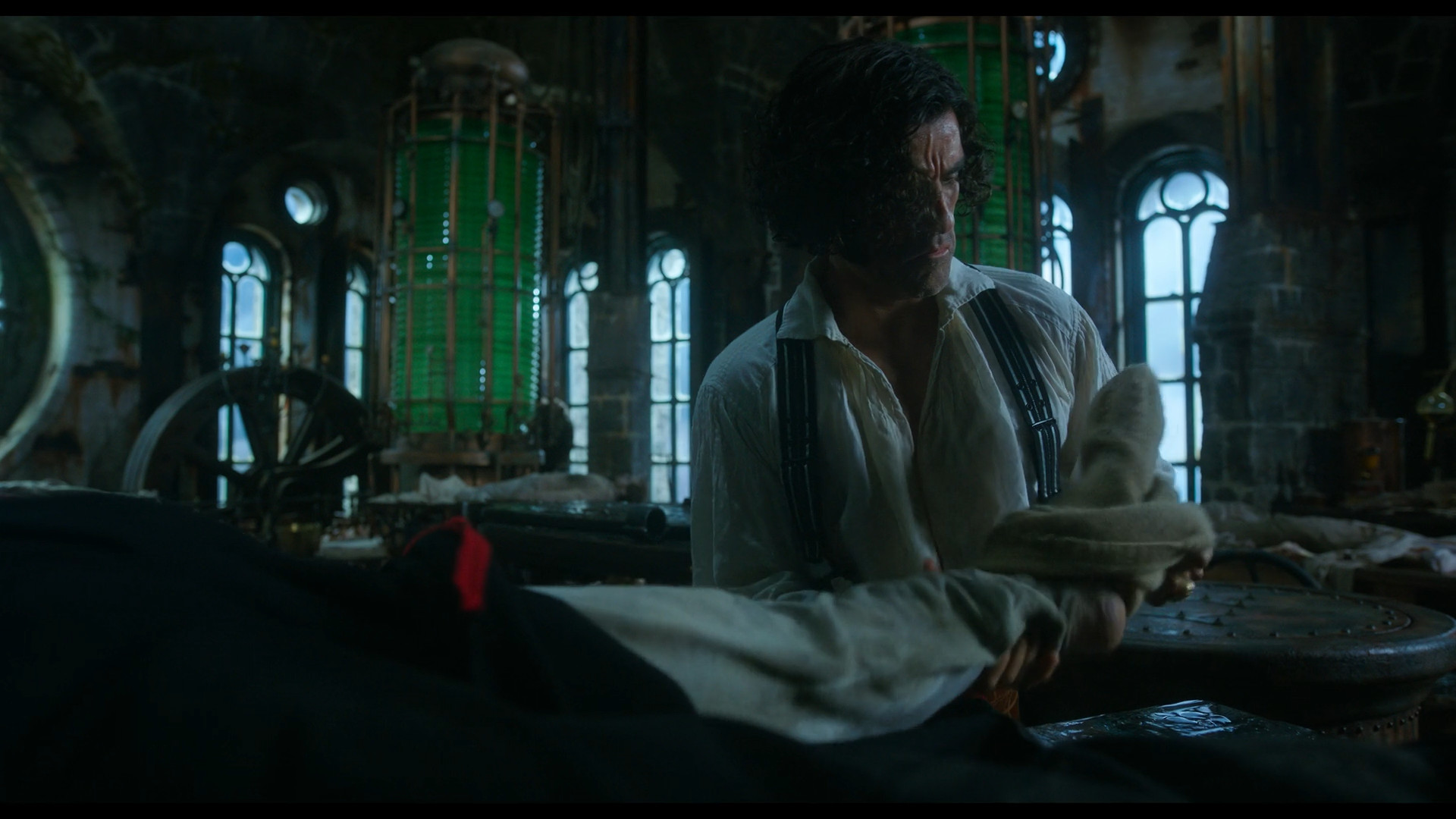
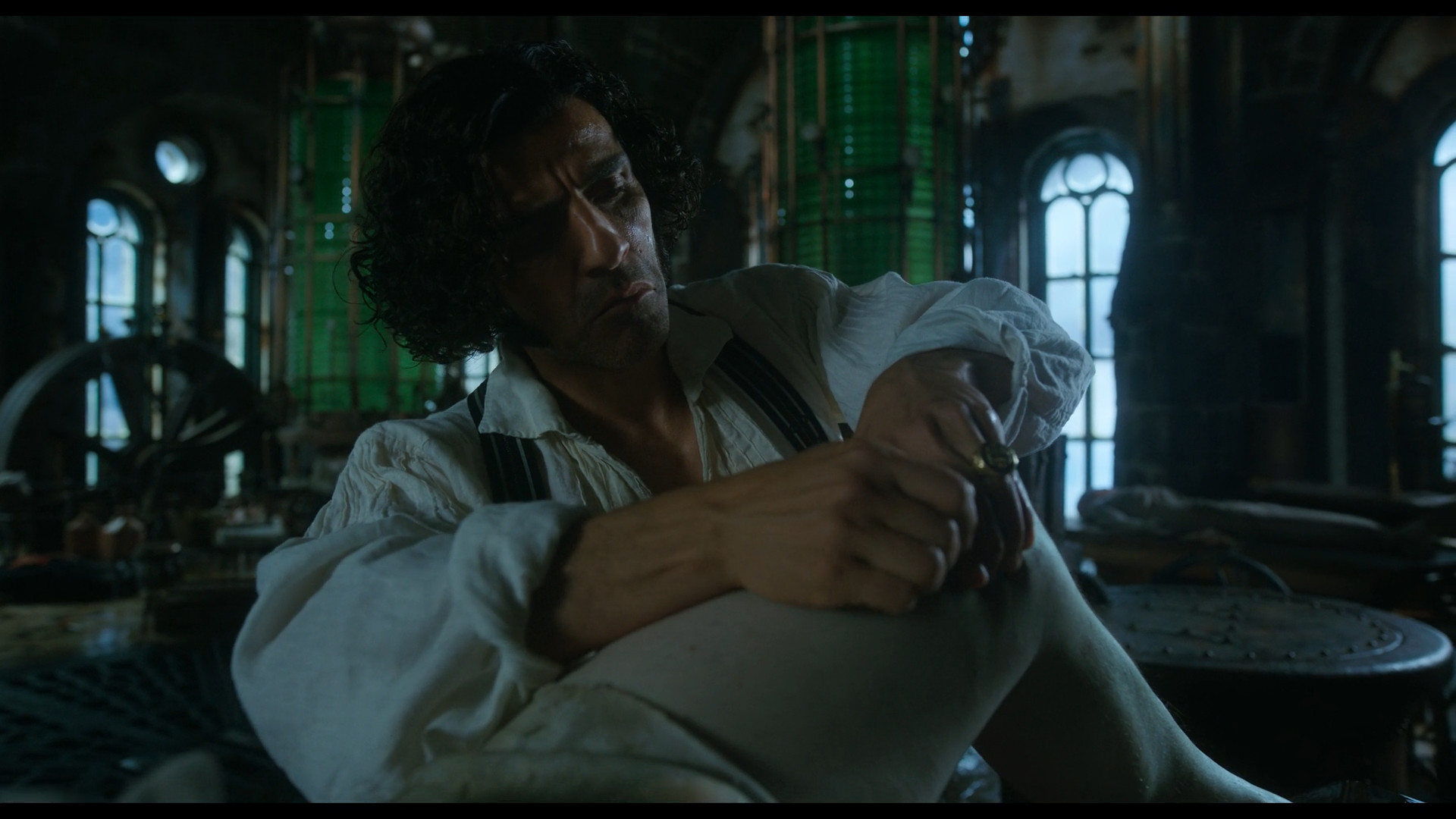
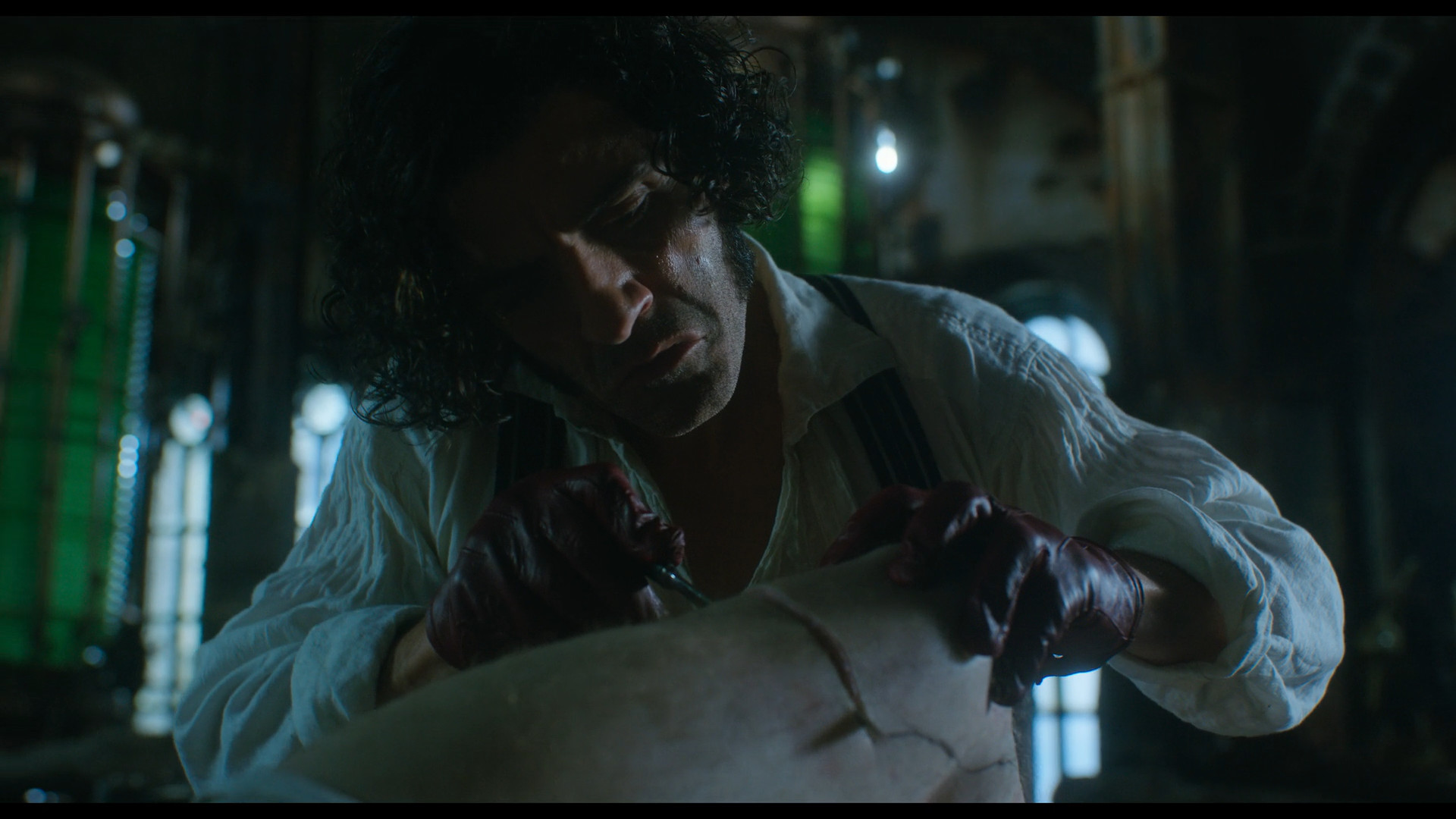
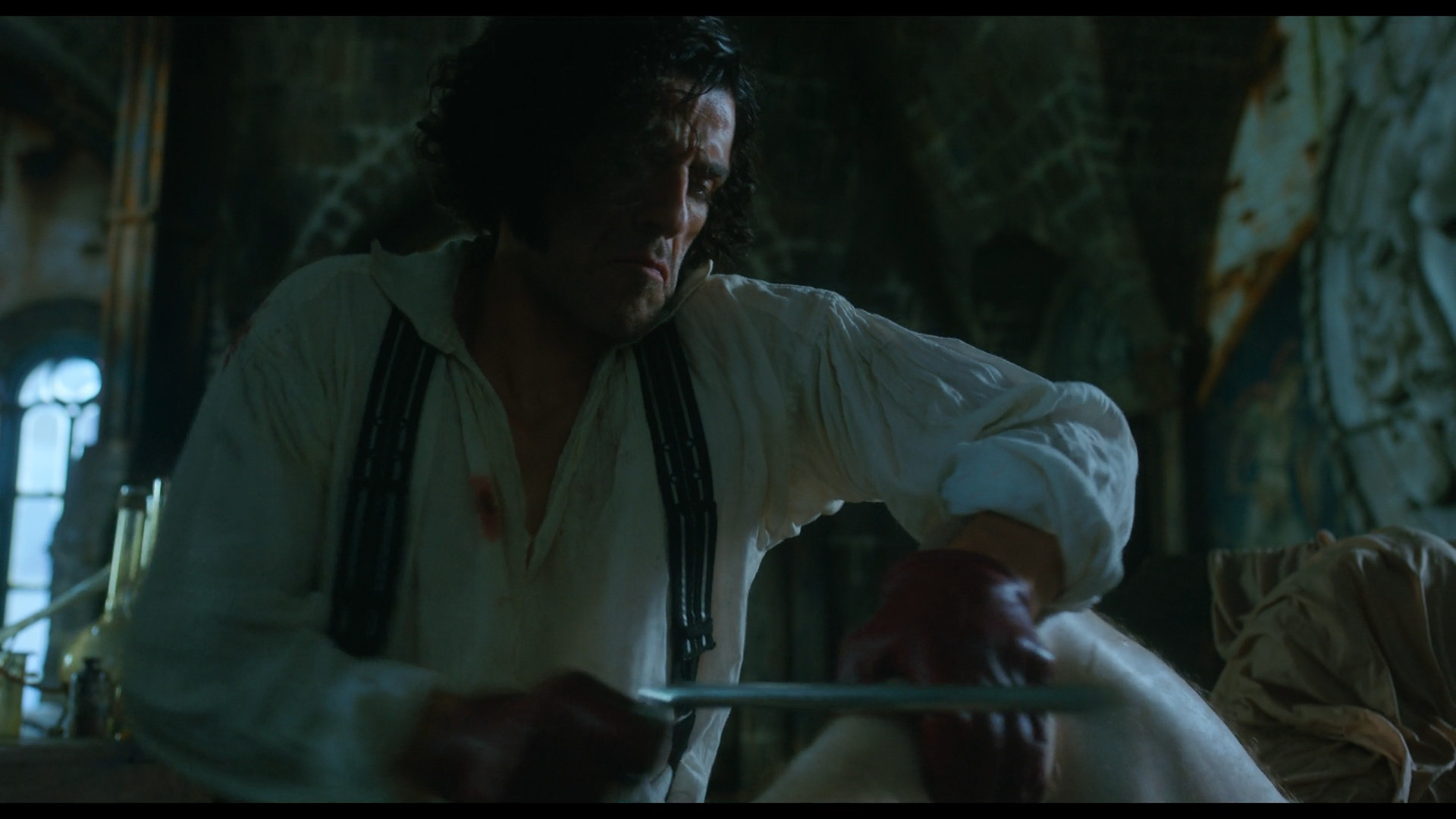
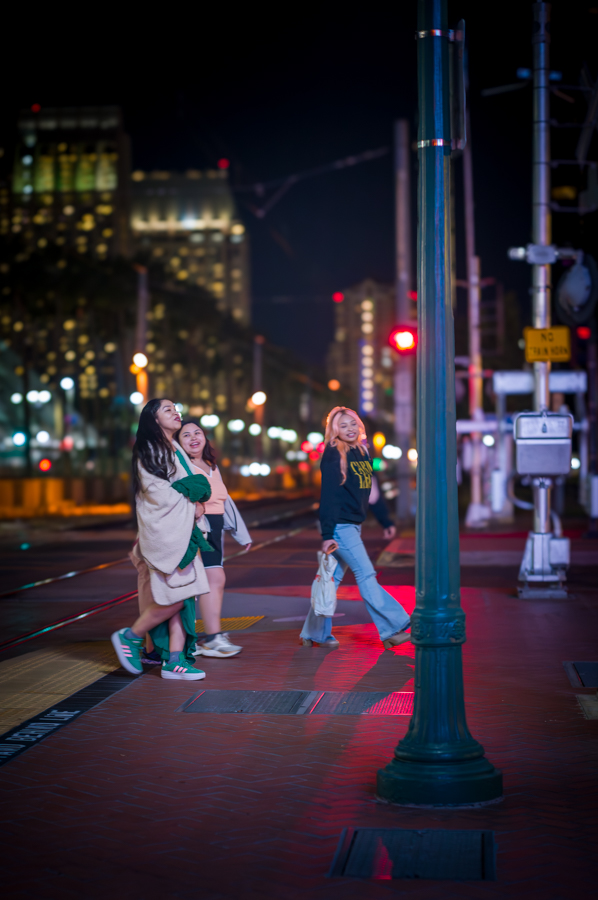
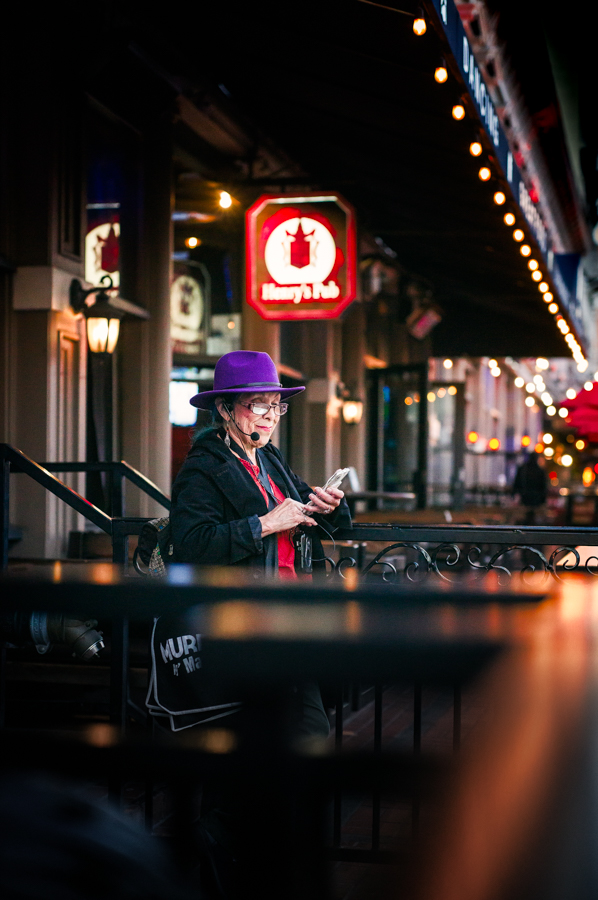
I know the chances are pretty slim that a non-cinema M lens was used here, but do any of you know a stills lens that gives a similar look or character?
I really like both the bokeh and the way sharpness and microcontrast come across — knowing, of course, that the latter can be heavily tweaked in post. Still, maybe someone knows a lens that produces a comparable out-of-camera look 🙂
Feel free to share sample shots from your suggestions too 🙌
They used the Thalia lenses, which are made for the Arri Alexa 65. I don't know of any M lens that's going to give you exactly the same look, mostly because you're going to get a lot more optical vignetting out of any of them.
To me, that image would likely have been at more like f/5.6-8, given the dof from glove on leg all the way back to his face still reasonably sharp. What makes this look like buttery bokeh is the background being far away and not overly complex.
I think this one is at least as much about the composition as it is the lens.
I agree with you there.
The large depth of field from the leg to the face suggests the lens was stopped down quite a bit. Still, it manages to produce a very pleasing bokeh. I can’t spot any distracting polygonal or ninja-star-shaped highlights either. The lack of cat’s-eye shapes or other distortions toward the frame edges might also be due to cropping — film is often captured at higher than 4K resolution and then trimmed, which could remove any noticeable edge artifacts.
Even so, the combination of that sharpness and such smooth bokeh really caught my eye. Maybe I’ll find something comparable for the M mount.
From my review of cine lenses, researching 'dimensionality':
CW Sonderoptic (Leica Affiliate) Thalia
‘they exhibit a gradual focus fall-off, creating a sense of depth and dimension, with a sharp centre and pleasing fall-off towards the edge.’
‘a combination of modern lens technology and the desirable characteristics of vintage lenses.’
’15-blade iris design maintains a circular aperture at all stops, resulting in a smooth and cinematic bokeh.’
‘they are designed to emulate the look of older lenses, offering a look that is clear but not overly sharp, with a smooth and forgiving focus.’
‘out-of-focus elements maintain their structure, which further adds to the sense of dimensionality in the image.’
Who else would do such a thing? (doesn't sound too Zeiss to me.)
Note also that CW Sonderoptics *designed and manufactured* the Thalias (thar'li-ya') before they were taken over by Leitz in the late teens decade. Their aesthetic leanings are diametrically opposed to that of Karbe-era Leica lenses - artistry vs technical perfection, essentially.
“The look is artistic, smooth, not too sharp, with a gentle focus roll-off. I like to paint in what little free time I have when not designing lenses or working. The Thalia project was like painting, to create images that are beautiful. I received some inspiration from Umberto Eco’s History of Beauty and his discussions about the form and meaning of beauty in our culture.
“I’m not a fan of super, super sharp, and the Thalia lenses embody that philosophy. In some ways, an almost perfect lens can be easier to design than a lens with character. A perfect lens has a mathematical target. With the Thalias, we actually had to work a lot harder at the optical and mechanical design to achieve the combination of imaging functions that are inherent in these lenses.'
“Images captured with the Leica Thalia lenses appear to have an added depth and dimensionality, especially on large sensor cameras, because of their gradual focus fall-off. Rather than having even, flat planes of focus across the entire frame, the Thalia lenses have a gentle transition between in and out of focus objects that is consistent with the way we see things, and yet is different from the images of most modern lenses.”
'Aurelian described the first screening of footage shot with Thalia lenses. “After we saw the first images, there was dead silence in the theater. We looked at each other. Nobody could say anything. There was a tentative, collective sigh of relief. We had done it. And then the applause and cheers began. The entire team had succeeded in an incredibly challenging task. We hope cinematographers, directors and audiences will feel the same way.”
Does beauty matter more than technical perfection?
The 75, 35 and 28 in the Vintage Nokton series render similarly toward approaching that blend of modern + vintage in proportioned amount, rather than maximum correction of ultra modern (intentionally contrasted vs the Ultron or APO Lanthar series).
Here's the link to Fred's reviews where you can find the others in the VM Vintage / Nokton series, also.
Thanks for all your input. The Thalia lenses really do seem to be something special if you’re after that vintage character combined with modern performance. Unfortunately, they’re way out of reach price-wise — and, given their intended use, completely impractical on a small M.
The question remains: which lens delivers a comparable look (especially when stopped down)?
When it comes to consistently smooth bokeh, the only ones that come to mind are the Voigtländer APO-Lanthar 35 mm and 50 mm f/2. Their aperture blades are specifically shaped to keep the bokeh circles almost perfectly round throughout the range. However, I find their overall rendering a bit too modern — and the 50 mm even too sharp. The 50 mm APO-Summicron, on the other hand, has a nicer look, but its bokeh balls quickly become polygonal once you stop down 🙄
Edit: I’m starting to think the 35 mm APO-Summicron might actually come pretty close to this look…[/I]
I don’t see anything wider than 35 mm in this scene. If it looks wider, it was most likely cropped in post.
I’ve always wanted the 24 mm Summilux, but I don’t think that’s it either — plus it’s insanely expensive and doesn’t even have a standard filter thread.
Give the Thypoch lenses a look. They offer Cine and still lenses that are artistic, have either 14 or 16 aperture blades for completely round bokeh at all apertures.
Very beautiful cinema style rendering with all of their lenses available in both E and M mounts.
1bwana1 wrote:
Give the Thypoch lenses a look. They offer Cine and still lenses that are artistic, have either 14 or 16 aperture blades for completely round bokeh at all apertures.
Very beautiful cinema style rendering with all of their lenses available in both E and M mounts.
I was reluctant to recommend the Simera, the rendering is subdued which is cinematic but seeing the example presented, Simera's micro contrast, or "cruch and bite" it's not quite up there.
jeffersoncasey wrote:
I was reluctant to recommend the Simera, the rendering is subdued which is cinematic but seeing the example presented I felt Simera's micro contrast, or "cruch and bite" I felt it's not quite up there.
But there are two other lines of Thypoch M mount lenses that true cine lenses and are more artsy and cinematic in their rendering. Take a look at the link I included in my post.
Give the Thypoch lenses a look. They offer Cine and still lenses that are artistic, have either 14 or 16 aperture blades for completely round bokeh at all apertures.
Very beautiful cinema style rendering with all of their lenses available in both E and M mounts.
No doubt, the Simera-C lines are cinematic but just viewing the samples on the site, I felt it's a different character compared to the example posted by OP - bokeh are more textured yet clean and smooth, and the micro contrast on the person especially the face is simply something else. The example just has that Leica heritage there, IMHO.
1bwana1 wrote:
But there are two other lines of Thypoch M mount lenses that true cine lenses and are more artsy and cinematic in their rendering. Take a look at the link I included in my post.
Give the Thypoch lenses a look. They offer Cine and still lenses that are artistic, have either 14 or 16 aperture blades for completely round bokeh at all apertures.
Very beautiful cinema style rendering with all of their lenses available in both E and M mounts.
I know the 35 mm Simera from personal experience, and yes — it’s a great lens. But to me, its bokeh looks a bit too modern. The bokeh balls to the left and right of Viktor Frankenstein clearly have a vintage character that the Simera just doesn’t capture (same goes for the 28 mm and 50 mm versions; I’m not sure about the 21 mm and 75 mm).
That’s also one of the reasons I’m so excited about the upcoming LLL 35 mm f/1.4. The Leica ASPH pre-FLE already comes very close to that look (though unfortunately only wide open). The new LLL, however, is said to be based on the Double Aspherical.



 (doesn't sound too Zeiss to me.)