p.1 #1 · Common loon, breeding plumage to winter drab
All Loons in these images live along the 44th N parallel (latitude), either on their inland nesting basins or wintering in the Gulf of Maine. I study and photograph loon behavior and often refer to the works of other loon researchers.
Would loons stay on their summer nesting basins if they could? Nobody knows. Well, they do not have that option anyway, because these freshwater nesting basins freeze.
It’s important to a loon to return just as early as possible in spring, to the basin they consider to be theirs for nesting. If it is a small basin the pair may need/claim the entire basin as theirs. If it is a big lake with a convoluted shoreline, loon nesting pairs may be tolerant of each pair nesting closer together.
Around here ice goes out from mid to late April. I am on the water just after "ice-out”. And the pair that will claim the basin for their nesting, is already at the basin before I am. They cannot see me because they are around a peninsula and up the lake a ways. But they always show up within minutes and this can only be because they hear me. Several years ago, when they sighted me on a first day of ice-out, they paddled up to within 15 feet of me and gave soft ‘hoots’, while moving their heads back and forth. I wish I had a video it. I will if it happens again. Loons do recognize individuals.
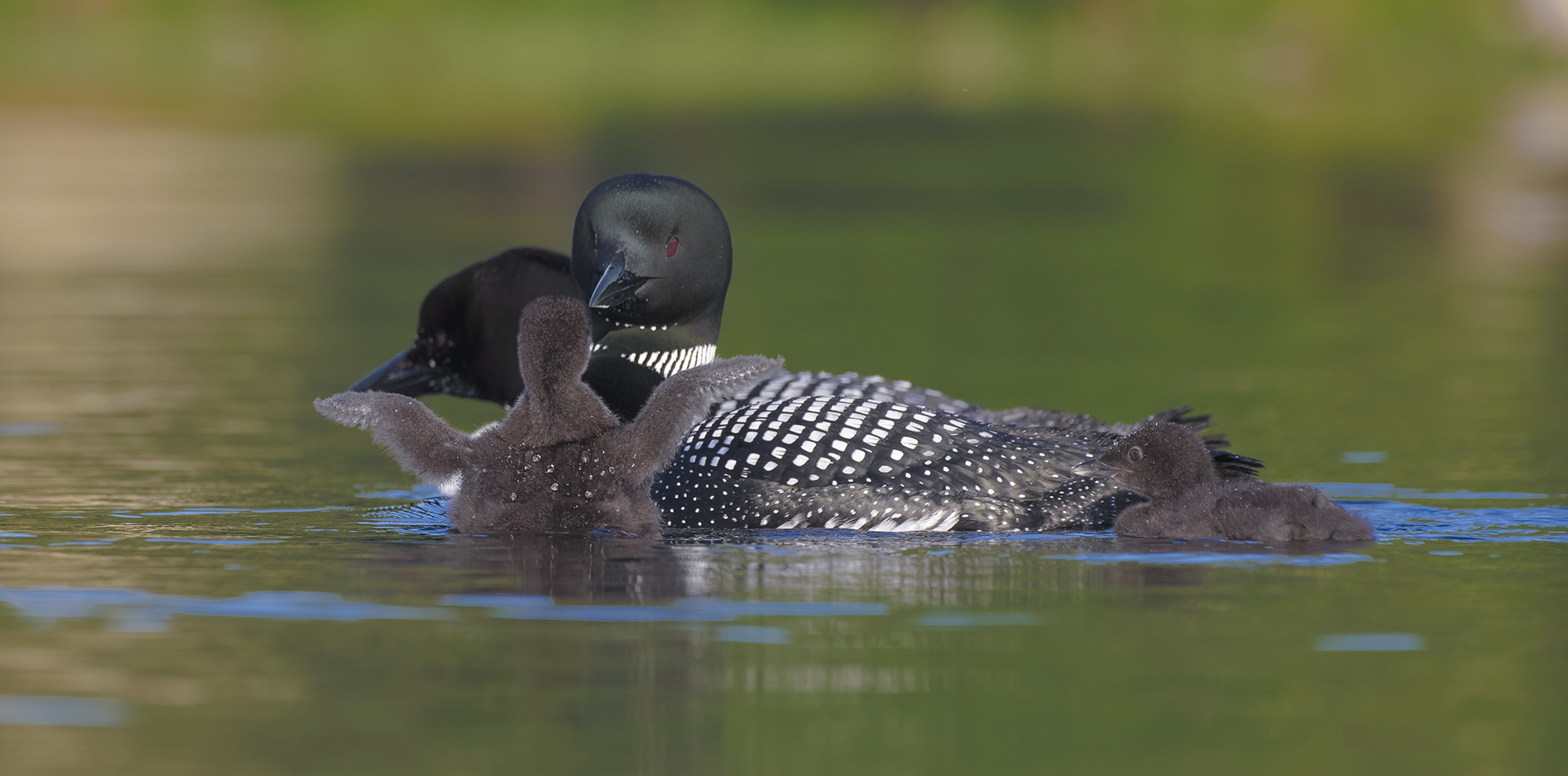
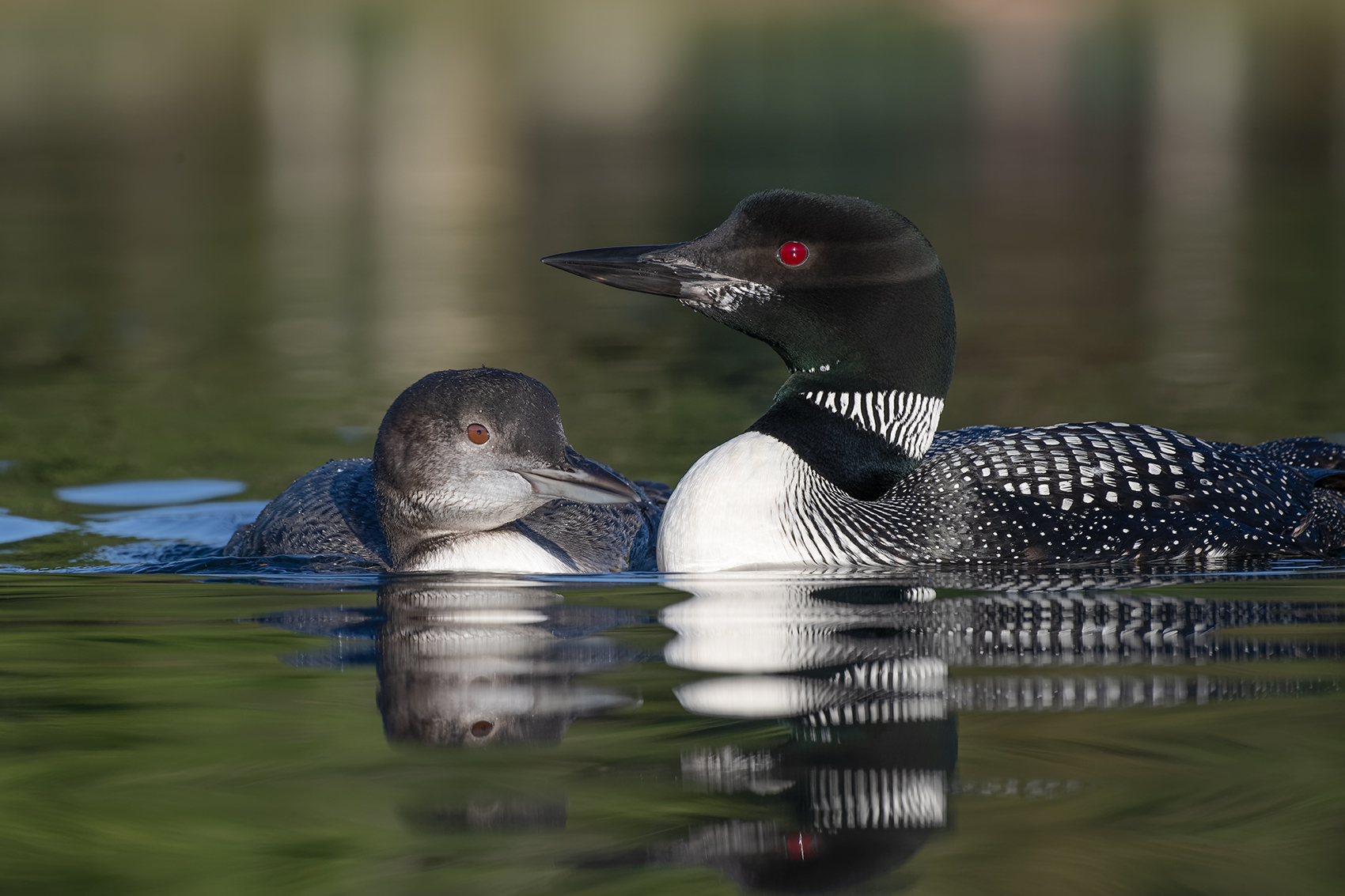
Is the parent admiring this chick?
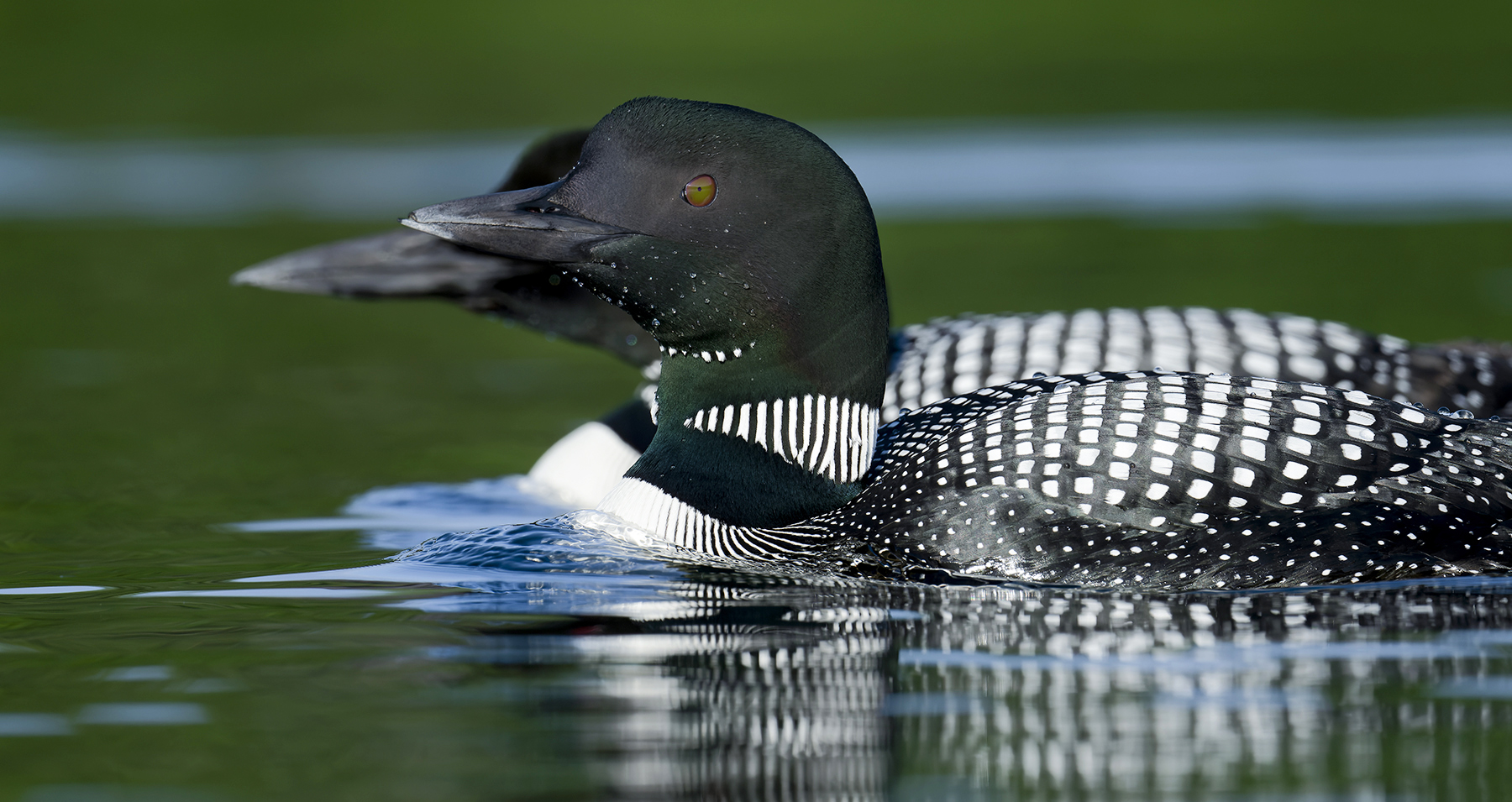
I believe this is as vibrant as the breeding plumage gets.
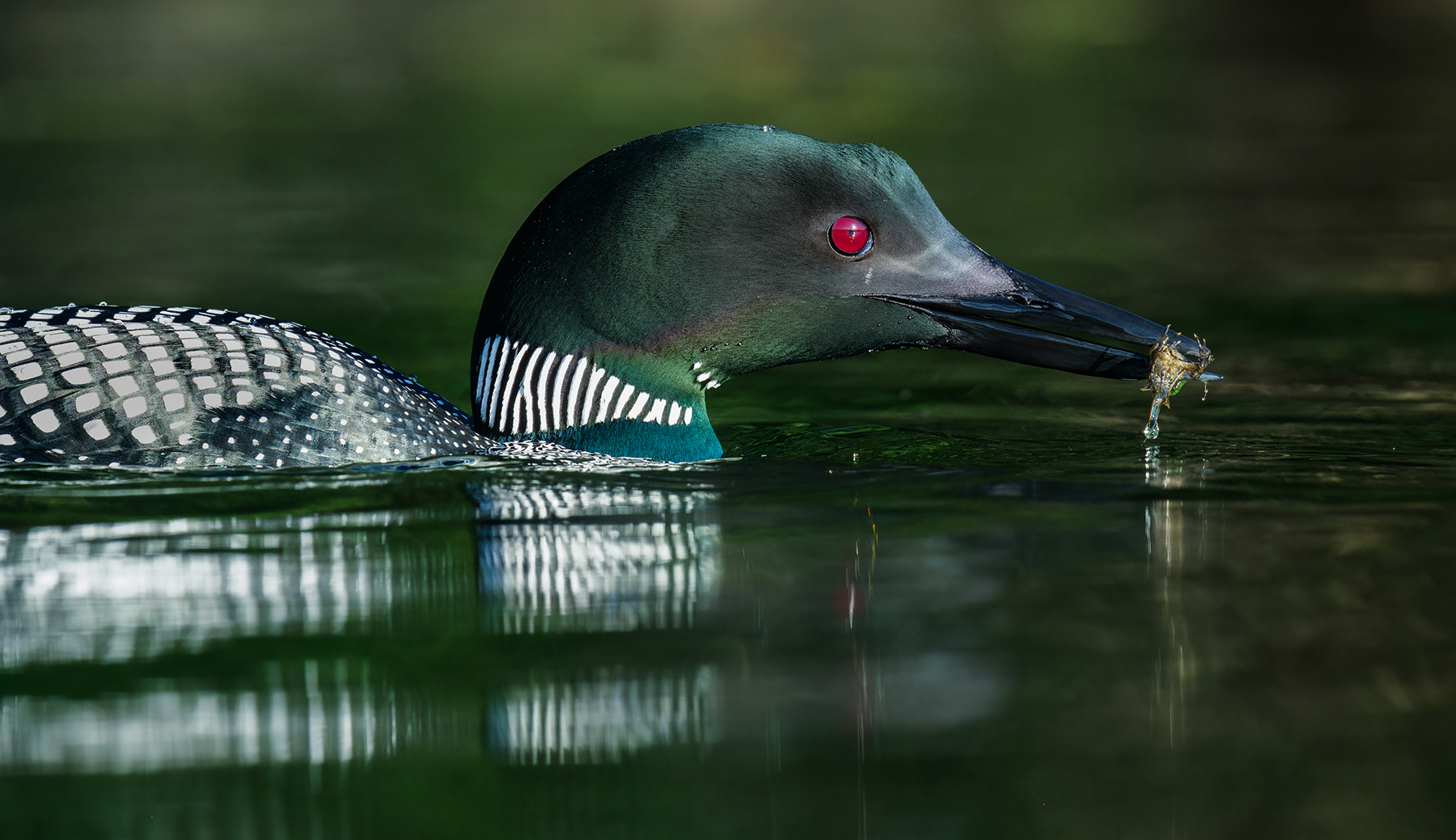
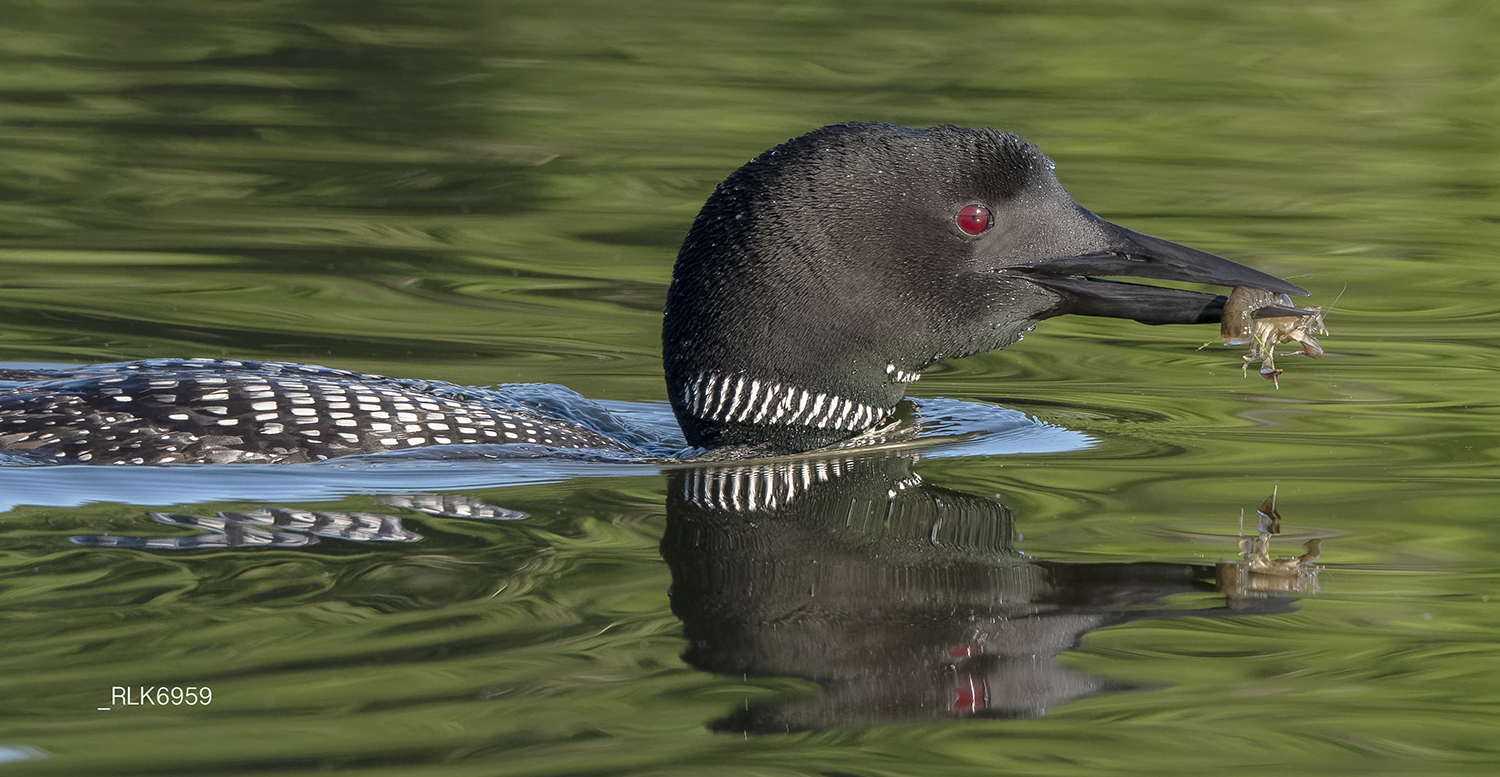
Carrying crayfish to its chick
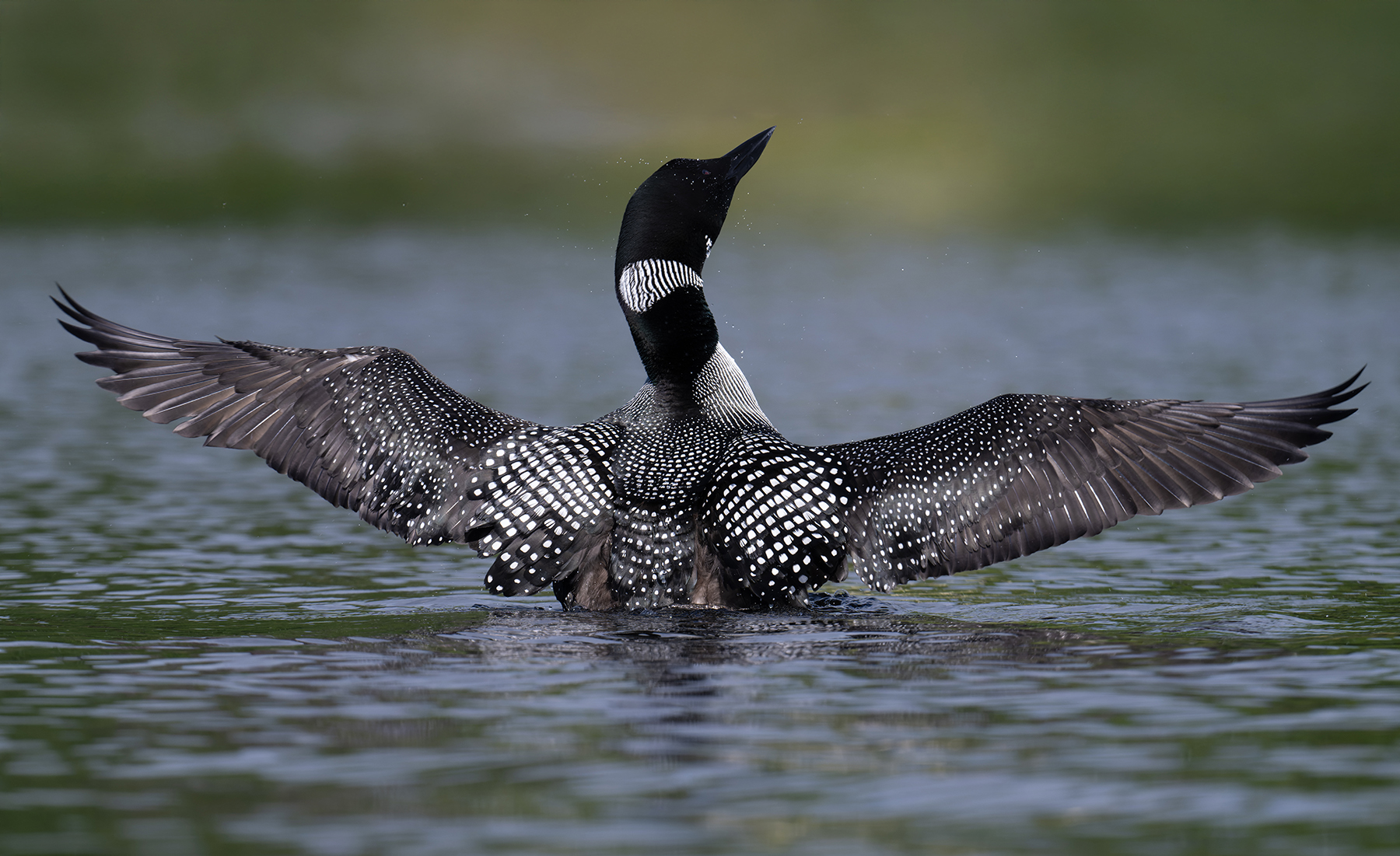
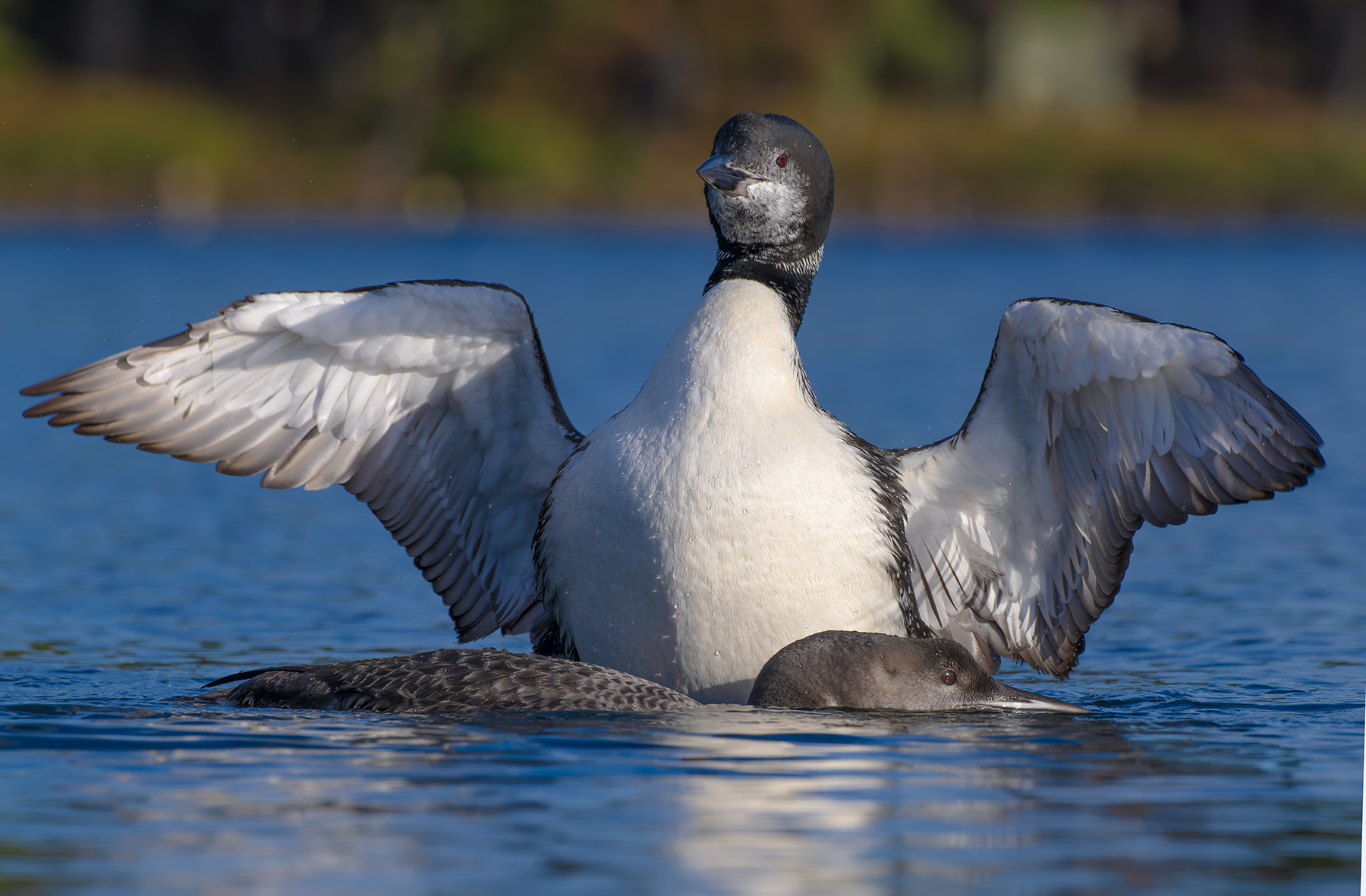
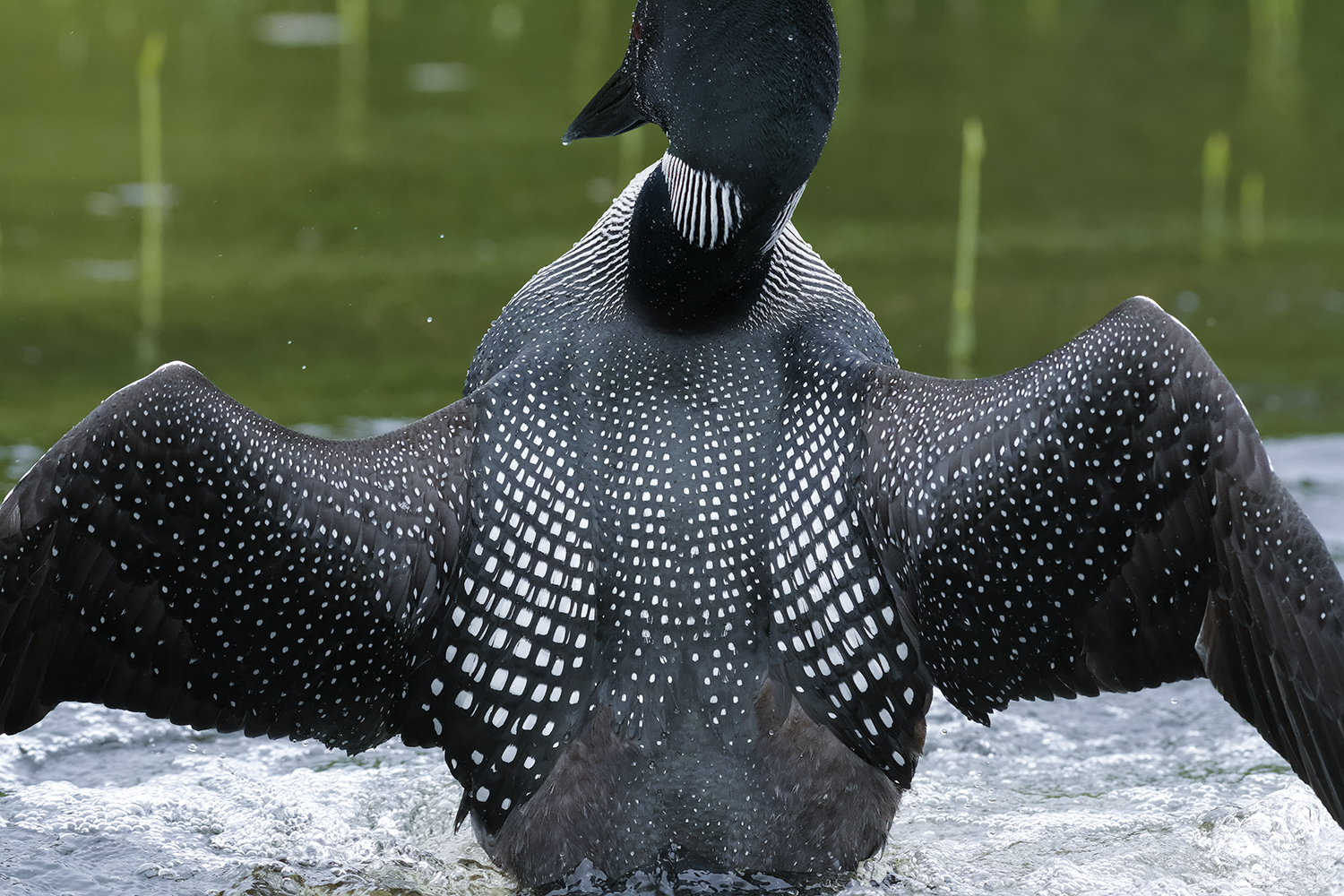
I believe they spread for two reasons (and either back or front): 1. after preening, 2. a “mild” statement that says “this is our territory”.
This is how beautiful it looks with a forest background…. no human dwelling in background
The grizzled muzzle is the beginning of the end of breeding plumage and happens here mid Sep.
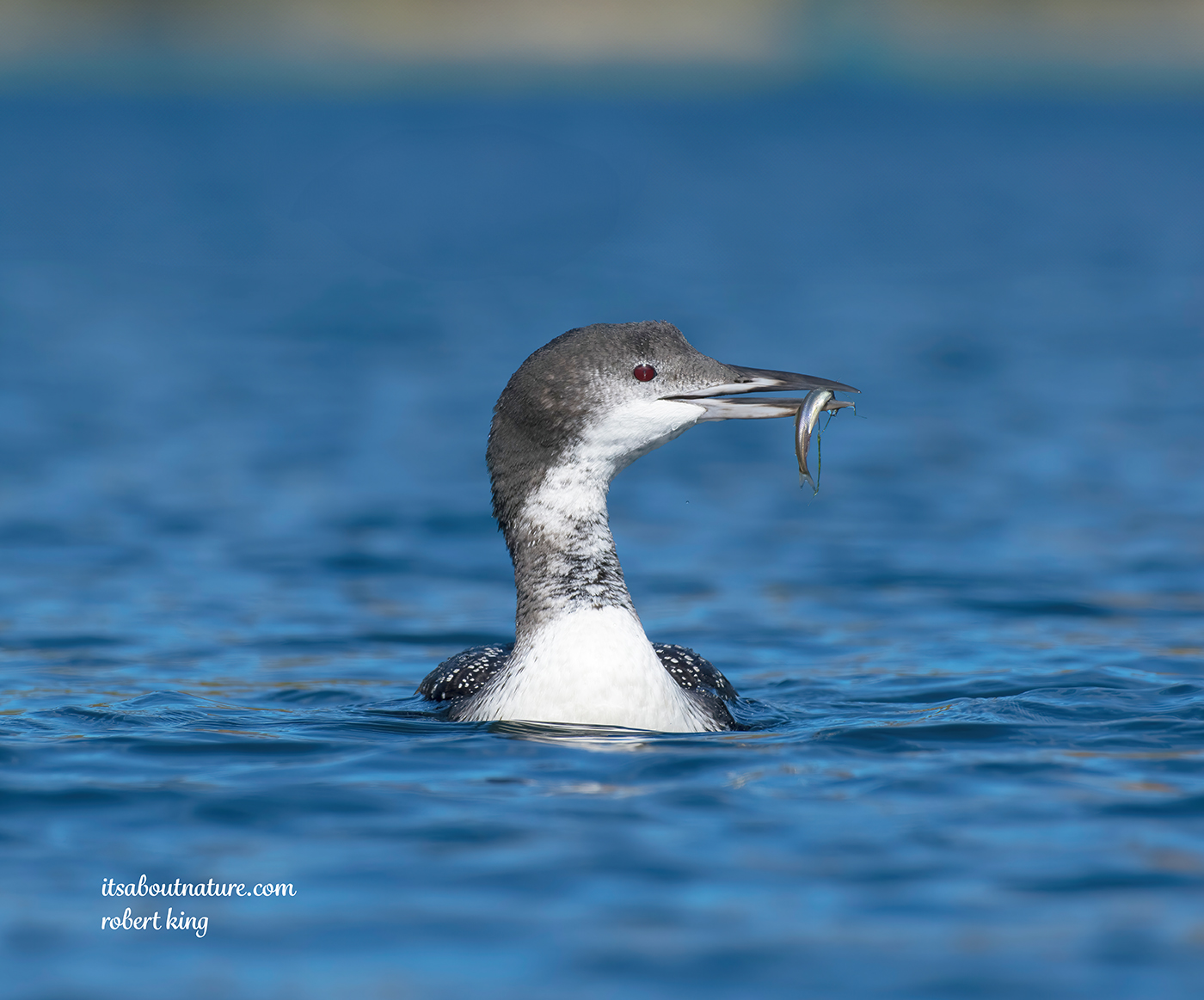
When chicks realize they can range far and wide, they will swim long stances. The mother has a smelt for her chick, but has lost contact with it
p.1 #2 · Common loon, breeding plumage to winter drab
Great info. The pattern on the back wingspread always impresses me. It must be fascinating to watch them swim underwater. It is amazing the time and distance they can spend under the water.
p.1 #6 · Common loon, breeding plumage to winter drab
Imagemaster wrote:
Great info. The pattern on the back wingspread always impresses me. It must be fascinating to watch them swim underwater. It is amazing the time and distance they can spend under the water.
Tony
Thanks for your comments Tony. I think those same thoughts on all 3 points. And they know what they have because they sometimes use that pattern to startle.
robert
The attached image is from an agitated loon. It happened when I first began closely observing loons (2014).
Down the outlet stream about 100+ feet away, the loon in this image encountered another loon that came too close to its nest. It attacked that loon, driving it off. I clearly recall what followed: This agitated loon rushed up the stream, closing the 100 feet to me and burst out of the water, flipping about, exposing its back. It was this close; there is no cropping. Lesson learned on my part.
p.1 #8 · Common loon, breeding plumage to winter drab
morris wrote:
Fabulous narration and photos Robert.
Morris
Thanks Morris. The narration was lengthy because I always tell too many side-stories. So, after spending time delving into them I finally had to omit them and just stick with the smaller theme of loon molting.
p.1 #9 · Common loon, breeding plumage to winter drab
johnohio wrote:
Im so envious Robert of your knowledge and images of this awesome subject. These are all greatly favorites are # 1,3,4,5 & 6.
John
Thanks for your comment John.
And thanks for the compliment too John. It means a lot to me. I’ve invested a lot of time on loons. I think we would all agree on this: Regardless of what we do in nature, the funnest part is watching & learning.
Robert
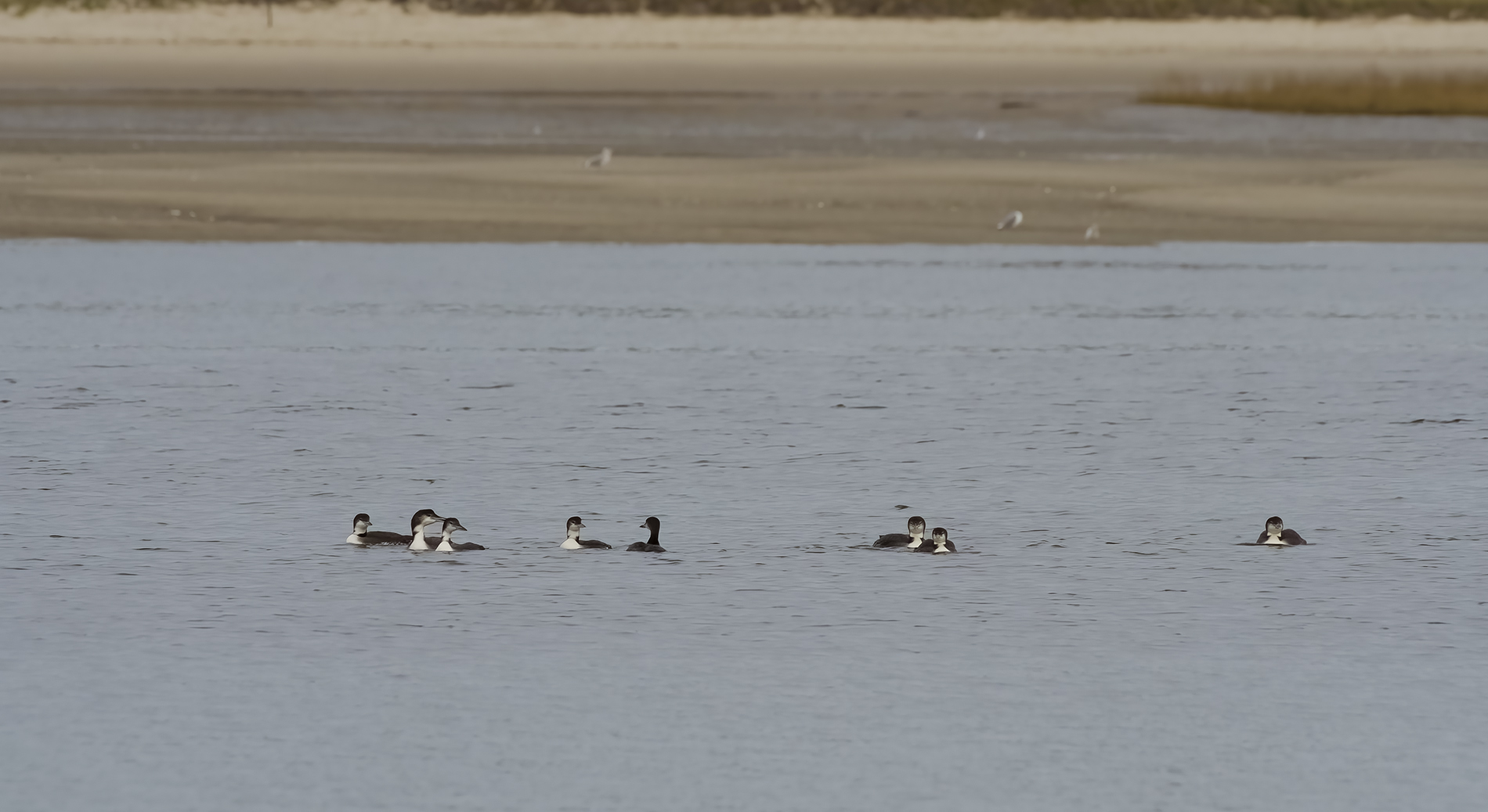
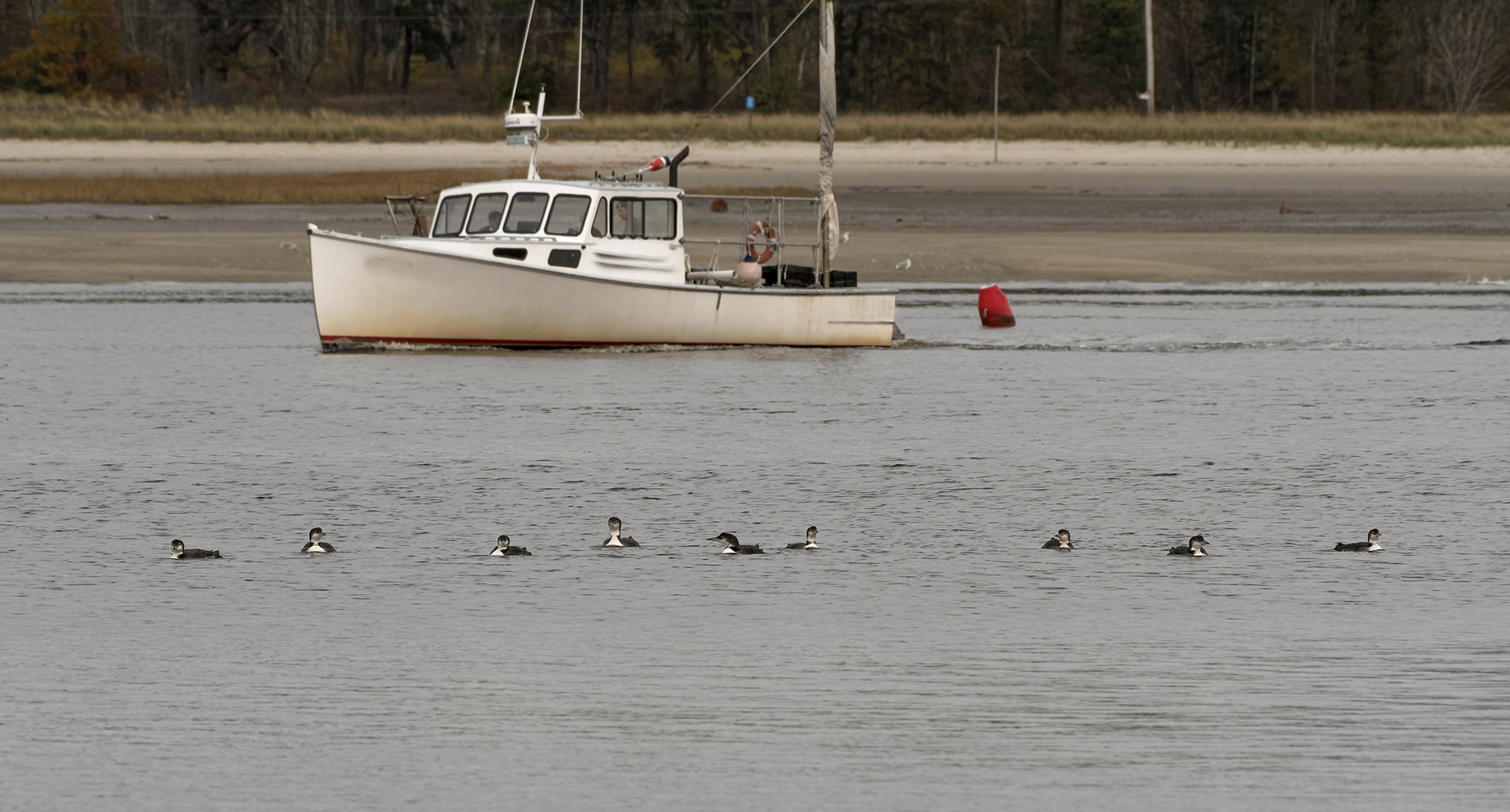
Here are two images of loons wintering along the coast here.
By the time early spring arrives, these wintering loons are fully dressed again in gorgeous breeding plumage and ready for the dance floor
p.1 #15 · Common loon, breeding plumage to winter drab
Erictator wrote:
These are great and it's always a pleasure to see the chicks. Nice low angles, good whites, and great narration.
Eric
Thanks for your comment Eric…. especially the second sentence. You mentioned whites, which gives a chance to add just a bit more of narration.
When I launch at a basin the second thing I do (after tethering the camera/lens to me or the canoe/kayak) is to set the exposure for loons. I choose something white and fairly large, such as a white camp. If no camps then maybe a cloud.
The idea is the make absolutely sure that the white parts of the loons are quite close before leaving the basin. That requires underexposing the dark parts of the loons. I bring back the details of the dark areas of the loon with “Filter”. “Camera Raw Filter”, “Light”, and then “Shadows”
Other photographers here probably have a better way because post-processing (for me) is drudgery.. I am not good at post.
So folks, I promise that your suggestions will be well received. Thank you.