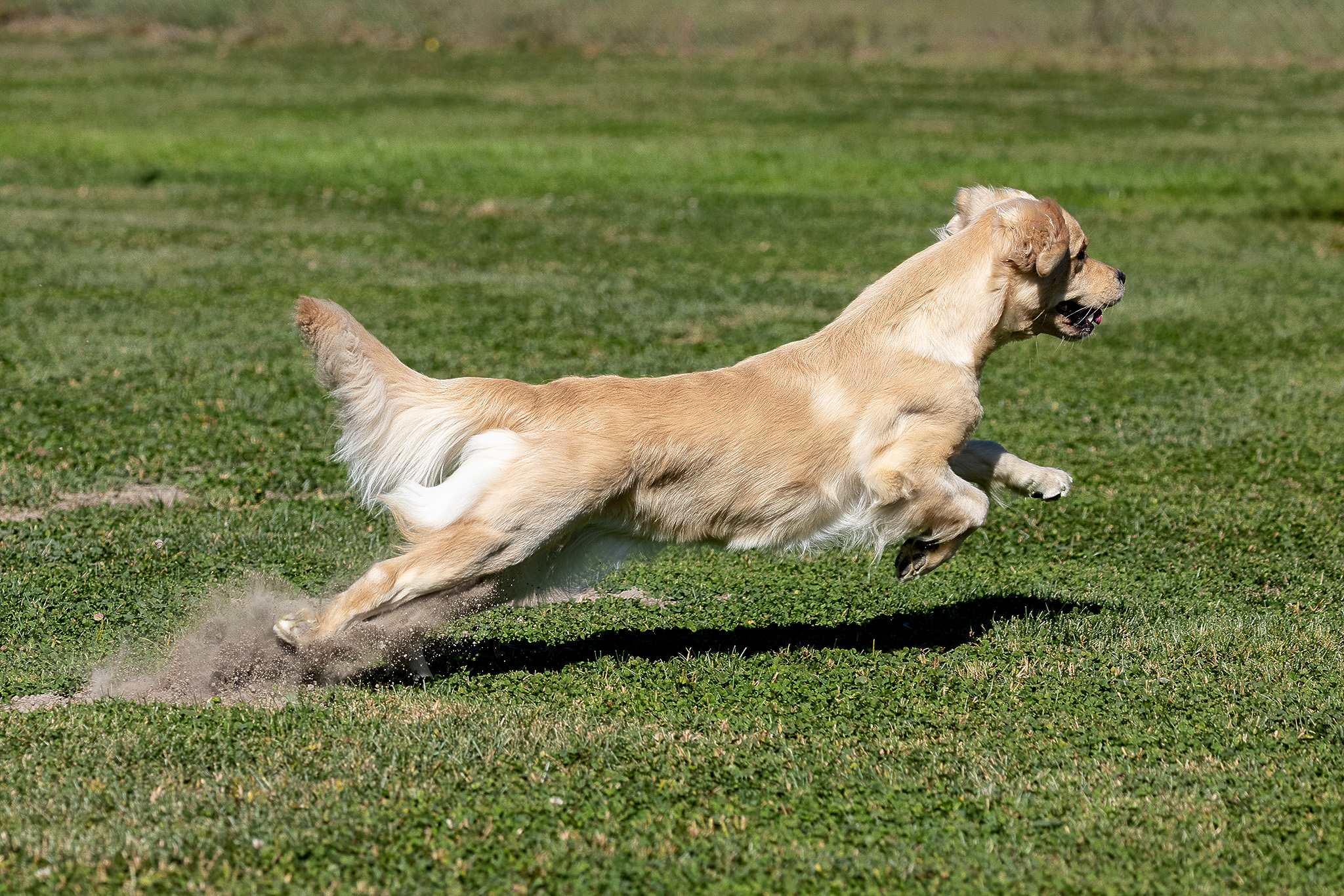
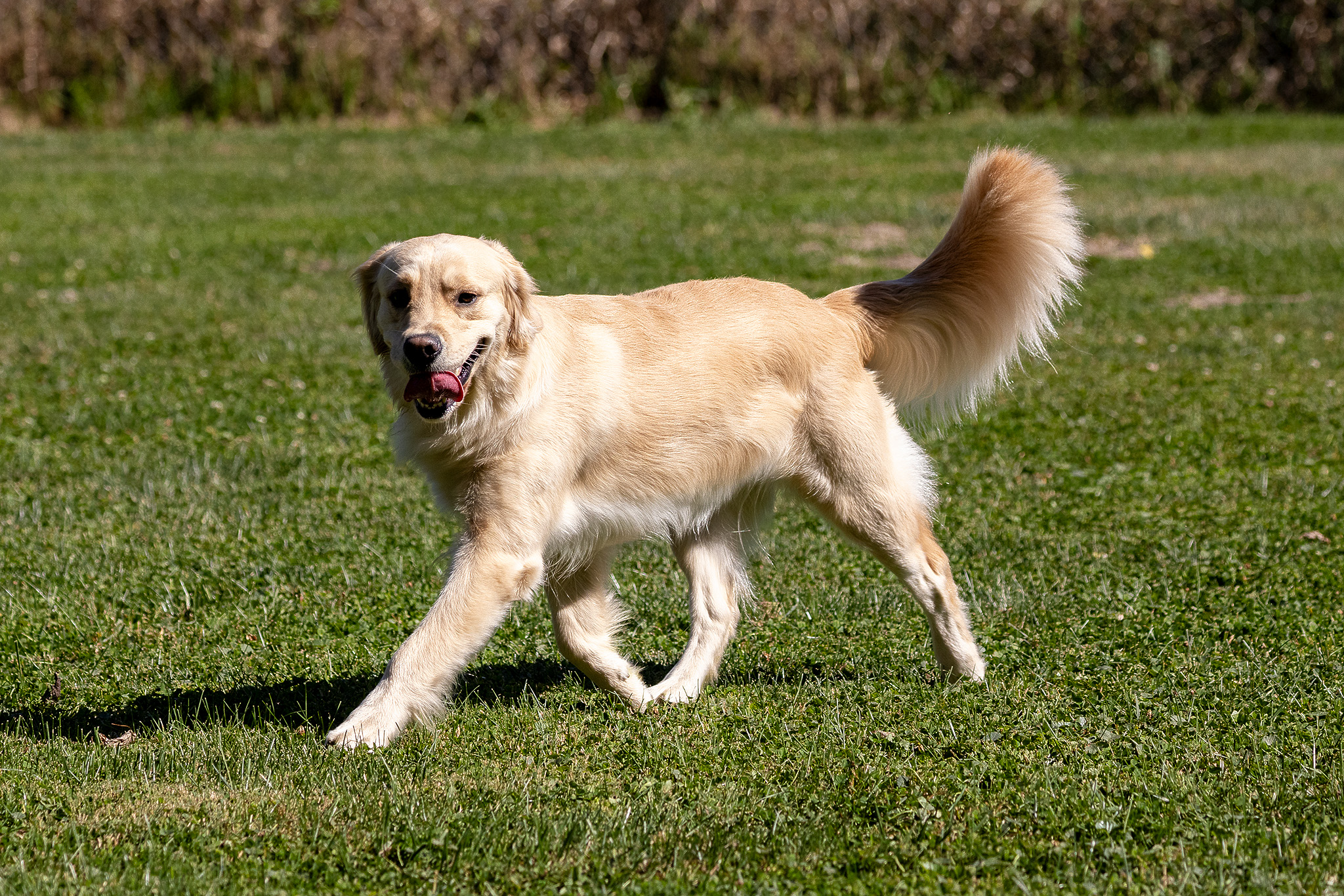
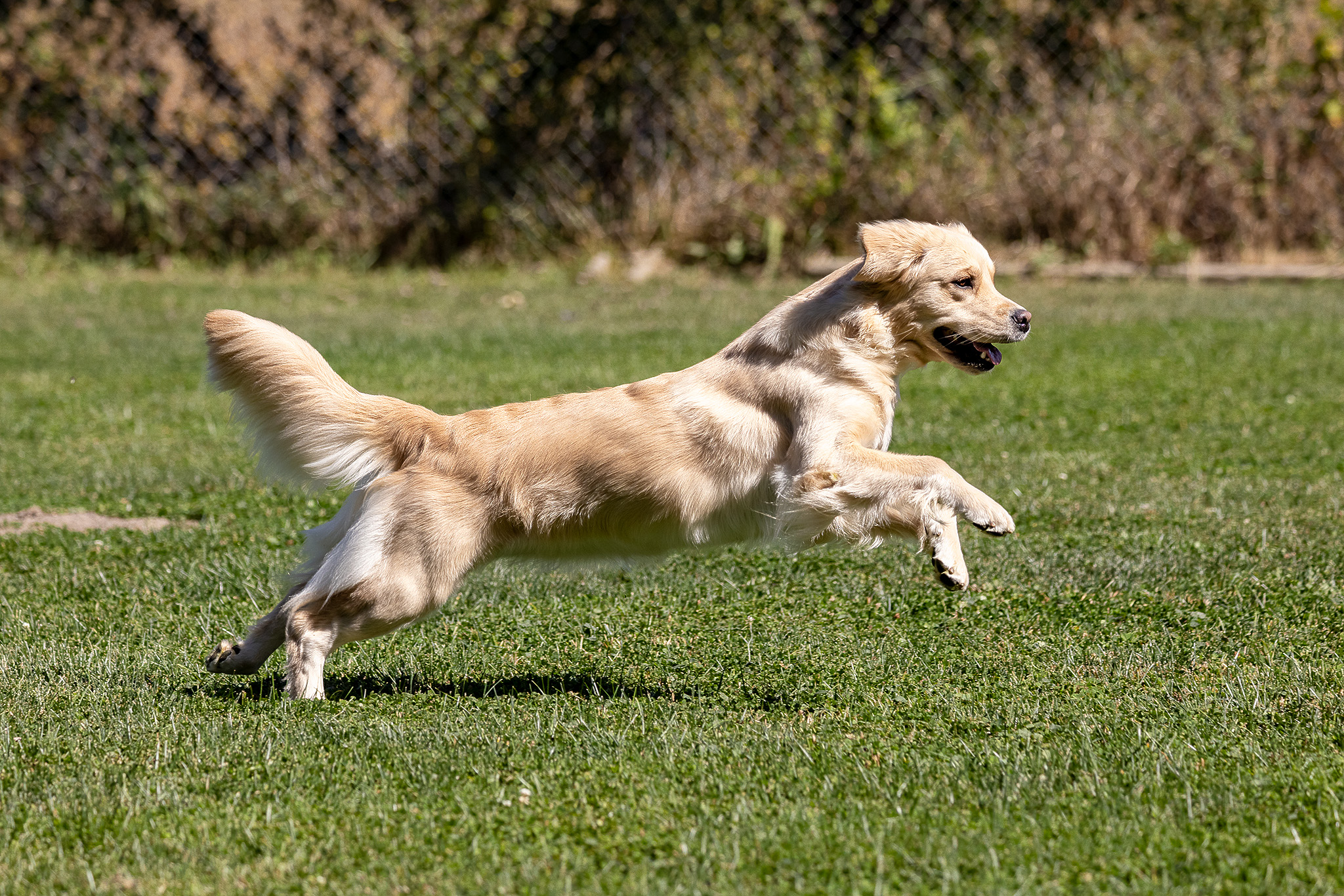
I needed to do a little testing before an event I was to photograph a couple of weekends ago. Vegas, our youngest at the moment, is always up for showing off her energy.
The testing involved the general operation of a Canon EF 100-400 f4.5-5.6 L IS ll mounted on a Canon R5. I was testing AF tracking functions (including animal eye recognition) as well as electronic vs mechanical shutter operations. I think the testing went fairly well (in the back yard). Unfortunately, the actual event was not nearly as successful. 😕
The actual event introduced some variables that were not expected and caused me a great deal of stress. One such variable was the overgrowth of field grass and weeds that were between me and the subjects (dog retrieving duck in an overgrown field). The AF refused to even work more often than not. Almost as if it just threw it's arms up and said "NOPE". That was quite the surprise! When it did decide to work, it wanted to grab the weeds instead of the dog. I use the "show focus point" on the DPP program to try and figure out what was happening and even if it shows the focus was on the eye or body, VERY often it was either focused in front or behind where it shows it's supposed to be.
For what it's worth, the weather was sunny, cloudless skies with very little wind and very comfortable temperatures on day one.
The next day, however, the weather was dark, cloudy, cold, rainy with constant 15 mph winds with up to 35mph gusts. At one point I was at ISO 16000 @ f5.6 to get a fast enough shutter speed to stop the action. It was dark! Talk about grainy... . I was seated in a chair that I had attached a golf umbrella to with bungee balls in an attempt to keep me and the equipment relatively dry. I spent a LOT of time grabbing for the the umbrella to make sure it didn't get blown off the chair. While the umbrella remained attached to the chair, it was DOA at the end of the day. As far as AF....same situation, different field. Overgrowth was killing me. On the plus side, the AF actually worked properly in that it was searching and grabbing the dog's eye. It really baffles me why the AF acted like it didn't want to work at all on the sunny day but worked like it should on the nasty day.
A few questions.....could it be that the EF lens was the issue in that it did not communicate efficiently with the R5? Would the RF 100-500 f4.5-7.1 L IS USM lens have done a better job? While I didn't mention the exact AF settings used, could improper settings there be a weak link? Perhaps use a different "case" and/or different AF point selection? What setting would you have chosen?
Here are a couple of (relatively acceptable) examples of what the field looked like on the sunny day to give you and idea what I...and the camera... was dealing with. For what it's worth, I ended up with a 25% keeper rate on the first day.....142 keepers out of 581 frames.
I hope some of the wizards around here have a good solution to your problem.
I struggled with R5, 100-500 setup for 4 years with mule deer at golden hour with what I call wire grass. The camera would consistently lock focus on the vertical grass blades in front of the deer or otherwise on the pronounced vertical bark pattern of pine trees behind the deer while showing it had achieved focus. It had - just not on what I considered to be the subject.
After 4 years of this I bought the R5 mark2 and my hit rate soared. Not perfect but TREMENDOUSLY better.
Now I am a sane person again.
Wishing you the best.
I used R5's successfully in similar scenes but I never used the animal/eye detection for the reasons you posted here. I had better success using old school DSLR focus techniques with single point or single point expanded modes. The tall grass is a recipe for disaster with MILC, especially on a sunny day with tons of contrast. The overcast day worked better because the body was less confused with high contrast vertical strips of grass to focus on.
The R5II is better at tracking/AF for these scenarios, but I still often have to revert old school methods when the auto detection isn't being reliable.
You could check if the lens has the latest firmware version installed. This could help a bit.
Looking at your examples with the gras and the duck.
The R5 with eye-detection AF field looks in the complete view to find eyes of an animal. In your examples it is very difficult for the algorithm to dect an eye. The algorithm also may not know how a dog with a duck in his mouth looks like to identify the animal. Failure rates of the AF may go up.
You can try to use an AF focus field without eye detection and smaller. It’s easier when the field to search for the object is smaller.
With the newer cameras R7, R6II, R5II i.e. It is possible to configure flexible AF Fields together With eye-detection to get a better hit rate.
I guess the Problem was the challanging szene and not the Lens
I've not photographed the dogs, but subjects like lions, cheetahs, servals, hyenas, etc. in East Africa where grass can be a problem. I use the BBF with one button for the eyeball detection and the other for spot. Sometimes spot (or fine spot) is better. You can configure the C1-C3 custom modes for differing AF options and use a button to toggle. The key is to figure out what works best in the circumstances and switch to that. I'm sure the R1 would be better in AF at the hardware level. The R5 II is better than the R5 to a degree.
BuzzDieldrin wrote:
I hope some of the wizards around here have a good solution to your problem.
I struggled with R5, 100-500 setup for 4 years with mule deer at golden hour with what I call wire grass. The camera would consistently lock focus on the vertical grass blades in front of the deer or otherwise on the pronounced vertical bark pattern of pine trees behind the deer while showing it had achieved focus. It had - just not on what I considered to be the subject.
After 4 years of this I bought the R5 mark2 and my hit rate soared. Not perfect but TREMENDOUSLY better.
Now I am a sane person again.
Wishing you the best....Show more →
Thanks for stopping in Buzz.
The last time I photographed this event was 2023. The field conditions were about the same then as they were this year. I used the same lens on a Canon 5D Mk lV and don't remember having near the difficulty nailing focus.
artsupreme wrote:
I used R5's successfully in similar scenes but I never used the animal/eye detection for the reasons you posted here. I had better success using old school DSLR focus techniques with single point or single point expanded modes. The tall grass is a recipe for disaster with MILC, especially on a sunny day with tons of contrast. The overcast day worked better because the body was less confused with high contrast vertical strips of grass to focus on.
The R5II is better at tracking/AF for these scenarios, but I still often have to revert old school methods when the auto detection isn't being reliable. ...Show more →
Thanks for chiming in Art.
I have read that eye detection can actually be an issue at times. Perhaps that was the case...along with the terrain. As far as the focus point, I was using the center spot with the 4 surrounding spots. Maybe that was too much.
LarryBeemer wrote:
Thanks for chiming in Art.
I have read that eye detection can actually be an issue at times. Perhaps that was the case...along with the terrain. As far as the focus point, I was using the center spot with the 4 surrounding spots. Maybe that was too much.
Eye detection definitely can be an issue and after it failed on a great leopard sighting in morning light I said no thanks, no more. The R5II is better, but I still wouldn't rely on it with an important shoot. Definitely setup your different modes and be ready to switch as mentioned above.
tomba8tomba wrote:
You could check if the lens has the latest firmware version installed. This could help a bit.
Looking at your examples with the gras and the duck.
The R5 with eye-detection AF field looks in the complete view to find eyes of an animal. In your examples it is very difficult for the algorithm to dect an eye. The algorithm also may not know how a dog with a duck in his mouth looks like to identify the animal. Failure rates of the AF may go up.
You can try to use an AF focus field without eye detection and smaller. It’s easier when the field to search for the object is smaller.
With the newer cameras R7, R6II, R5II i.e. It is possible to configure flexible AF Fields together With eye-detection to get a better hit rate.
I guess the Problem was the challanging szene and not the Lens
Thanks for your thoughtful input tomba8tomba.
The lens is current with it's firmware as far as I know.
Oddly enough the eye detection was worse on the sunny day and better on the day it was cloudy, dark and raining. The weeds were a problem on both days. Ducks in their mouths...same same. Perhaps I should have turned off eye detection.
EB-1 wrote:
I've not photographed the dogs, but subjects like lions, cheetahs, servals, hyenas, etc. in East Africa where grass can be a problem. I use the BBF with one button for the eyeball detection and the other for spot. Sometimes spot (or fine spot) is better. You can configure the C1-C3 custom modes for differing AF options and use a button to toggle. The key is to figure out what works best in the circumstances and switch to that. I'm sure the R1 would be better in AF at the hardware level. The R5 II is better than the R5 to a degree.
EB!!!
Thanks for your input. Sadly, my dexterity is not fine tuned enough to be able to have multiple fingers doing multiple things and then remembering what finger belongs on what button. Those days are well in my past.
As far as the custom functions....beyond my scope of understanding as well.
At any rate, I have a year to figure this out.....if I decide to even do this event again. It has not proven to be very profitable thus far.
LarryBeemer wrote:
Thanks for your thoughtful input tomba8tomba.
The lens is current with it's firmware as far as I know.
Oddly enough the eye detection was worse on the sunny day and better on the day it was cloudy, dark and raining. The weeds were a problem on both days. Ducks in their mouths...same same. Perhaps I should have turned off eye detection.
As suggested by artsupreme earlier, the difference in performance on the different days was likely due to the higher contrast of the sunny day making the vertical stalks of the grasses more visible to, and tempting for, the AF system to grab onto.
---------------------------------------------
LarryBeemer wrote:
EB!!!
Thanks for your input. Sadly, my dexterity is not fine tuned enough to be able to have multiple fingers doing multiple things and then remembering what finger belongs on what button. Those days are well in my past.
As far as the custom functions....beyond my scope of understanding as well.
At any rate, I have a year to figure this out.....if I decide to even do this event again. It has not proven to be very profitable thus far.
It's not so difficult. You just assign two side by side buttons accordingly on the back where your thumb rests. For my cameras, I have AF-ON assigned to regular AF WITHOUT subject/face/eye/animal type of detection. The "*" button beside it is set up almost identically but with subject/face/eye detection enabled.
It's a very easy shift of the thumb left or right to get the type of AF performance I want for a given situation.
Unfortunately, to get the best performance from these newer cameras, you're going to have to dive into some of the custom settings to optimize performance. If you don't, it will continue to perform this way and the suboptimal results could then be attributable to 'user error' due to unwillingness to make the necessary changes.
These cameras also aren't perfect in that they don't read our minds or understand our creative intentions. Therefore they still make mistakes, from our point of view. You did the right thing by testing before going to the event, but unfortunately your testing scenario didn't match the environmental conditions of the event, and therefore the camera's performance fluctuated relative to the test session. It's really a matter of learning through experiences like these that will enable you to better understand how the camera will behave across a wider range of scenarios and allow you to better compensate when the camera isn't performing as expected. I think we've all been there and appreciate the frustration of the situation you faced!
And trying to stay positive: at least 25% was better than 0%!
rscheffler,
Thanks for taking the time to offer your well thought out responses to my issues. I appreciate it.
It seems the "new-and-improved" features are leaving me in the dust. I will practice more if/when I get the chance though.
Like many others, I use the BB / AF ON button for "standard" AF currently selected AF Area-Method, and the * button to switch instantly to Eye Detection.
If Eye Detection isn't "latching on", I switch back to the AF ON, and sometimes back & forth.
While much of the current AI enabled automated AF is amazing in many respects, it is not yet to the point of being absolutely foolproof assuring a perfect shot with each click of the shutter as some seem to expect it to be.
In addition, there are so many adjustments, configurations, Customizations, etc.in current ML Cameras, that can affect how AF functions in differing situations, that offering advice can be futile without a full disclosure.
I am gratefully thankful to those folks like Jan Wegener and others, that have taken the time to evaluate & test all those parameters and present the results to us through videos & tutorials, as I doubt that I would have been able to conclusively educate myself to them in any degree of a timely manner.
Larry, I sort of stumbled onto your post here. I did NOT read the entire dialog as to "AF".
As a viewer and a photographer, I see no conflicts in any of your posts. I don't pixel peep and I am not implying posters here are. This "child" is tack sharp, detailed, great texture..as I said I see no OOF conflicts..
Just sayin'.
And as "Sy Sez" about "settings", I have entered the MF Fuji system and find all the hundreds of settings very intimidating!
Dan


 . I was seated in a chair that I had attached a golf umbrella to with bungee balls in an attempt to keep me and the equipment relatively dry. I spent a LOT of time grabbing for the the umbrella to make sure it didn't get blown off the chair. While the umbrella remained attached to the chair, it was DOA at the end of the day. As far as AF....same situation, different field. Overgrowth was killing me. On the plus side, the AF actually worked properly in that it was searching and grabbing the dog's eye. It really baffles me why the AF acted like it didn't want to work at all on the sunny day but worked like it should on the nasty day.


