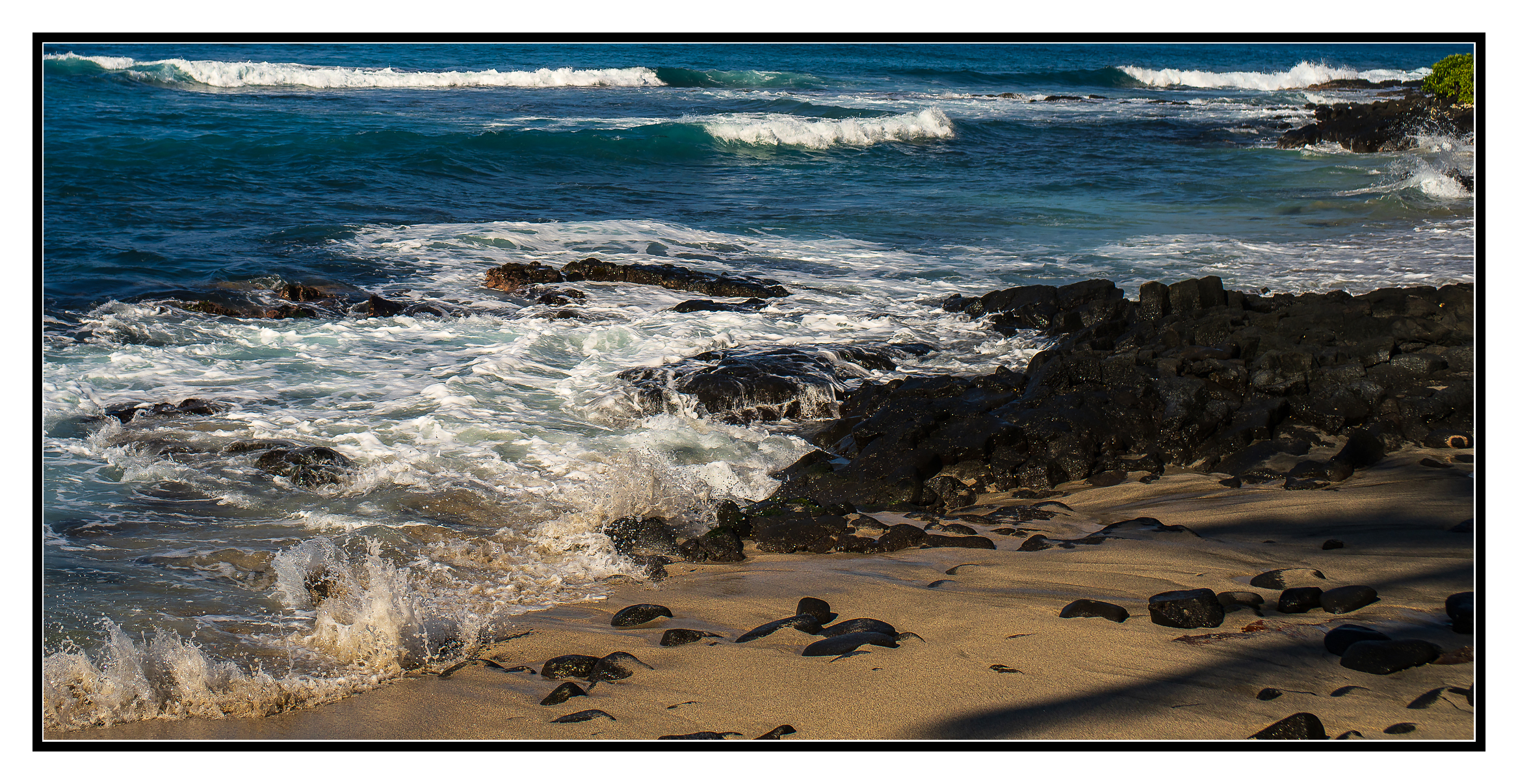
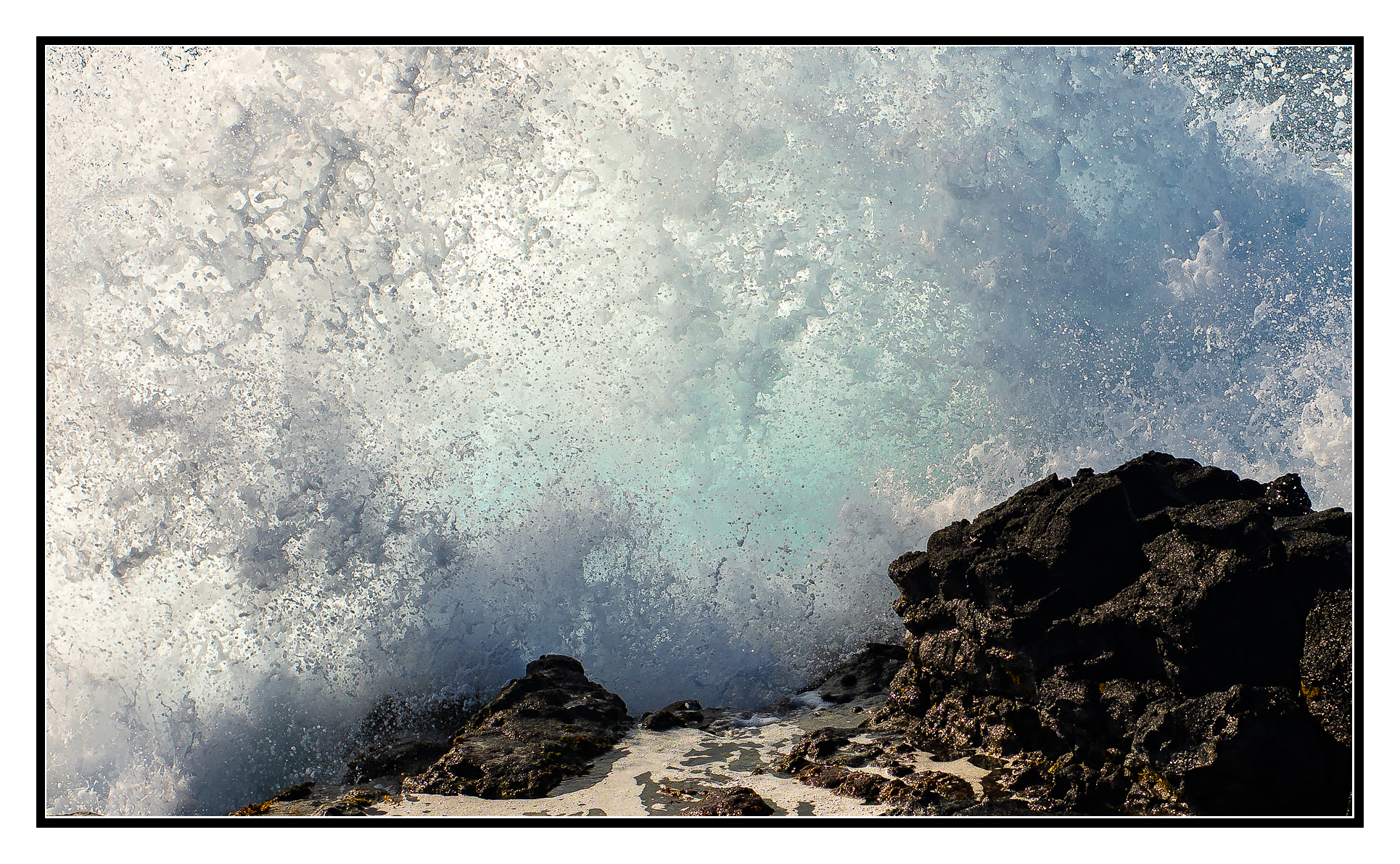
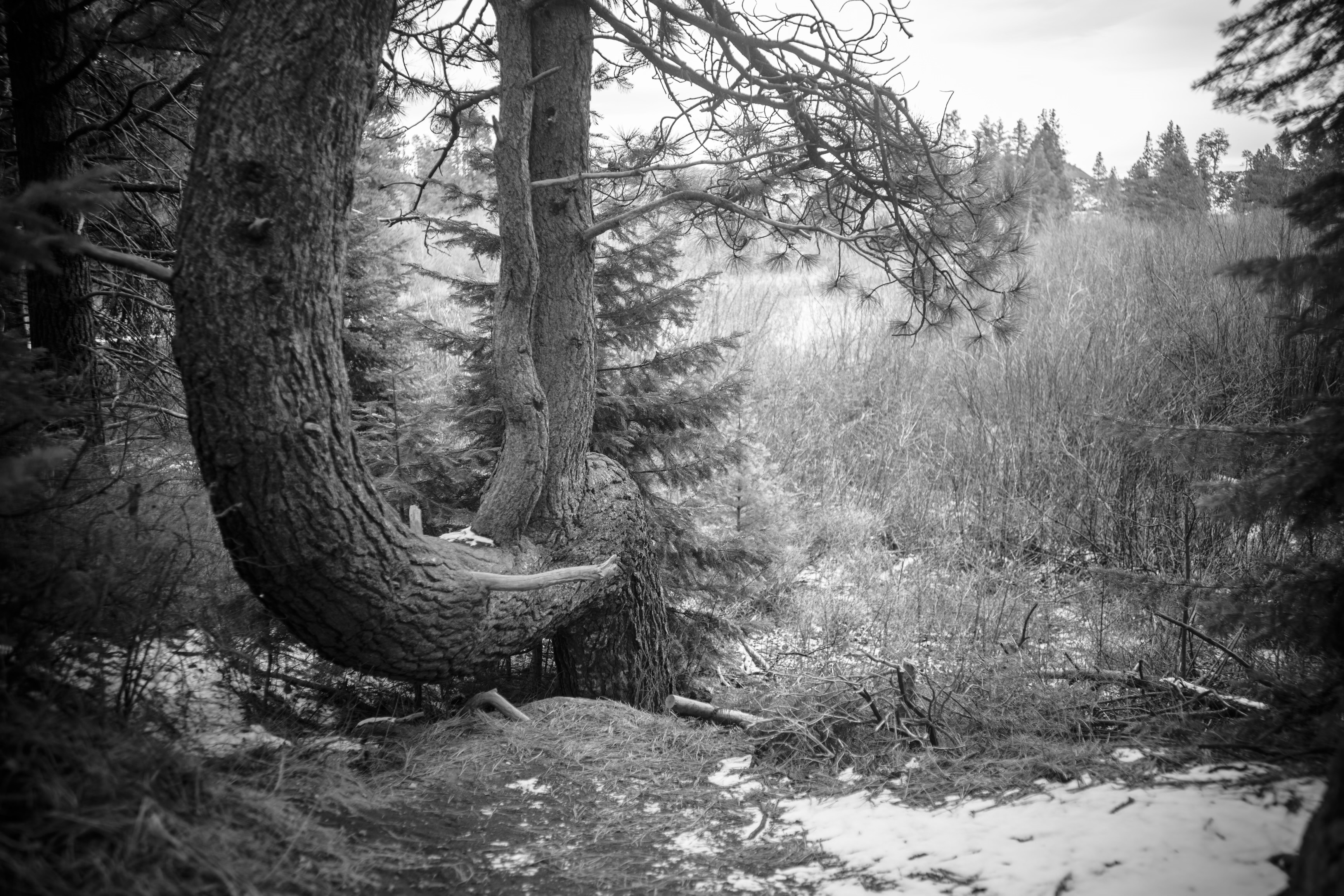
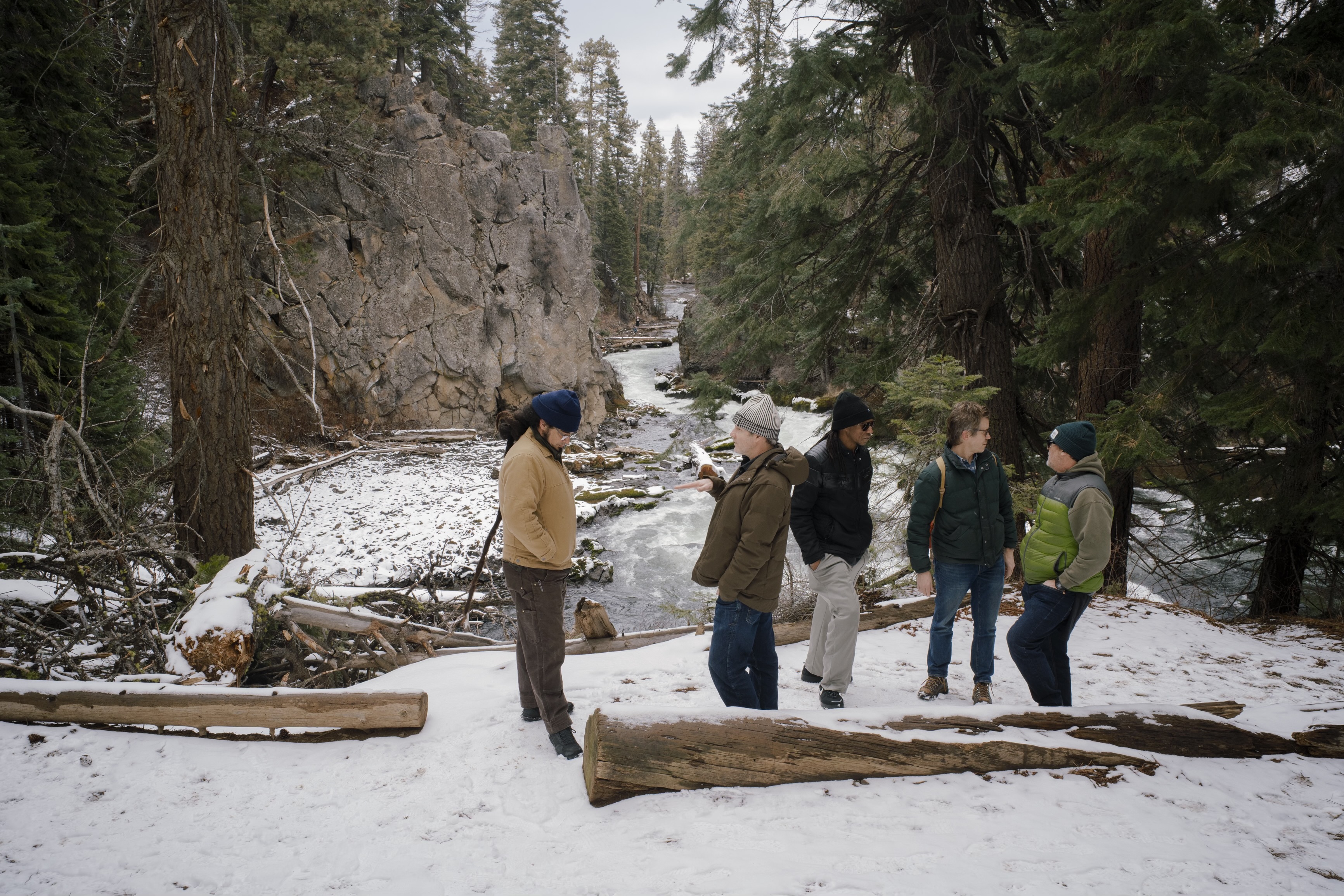
Added a few more pictures to my album for the a6700 + 28/1.4. All the B&W ones were shot at f/6.3, an easy aperture for the lens. Used zone-focusing for all of them, except the one of the Coronado Bridge.
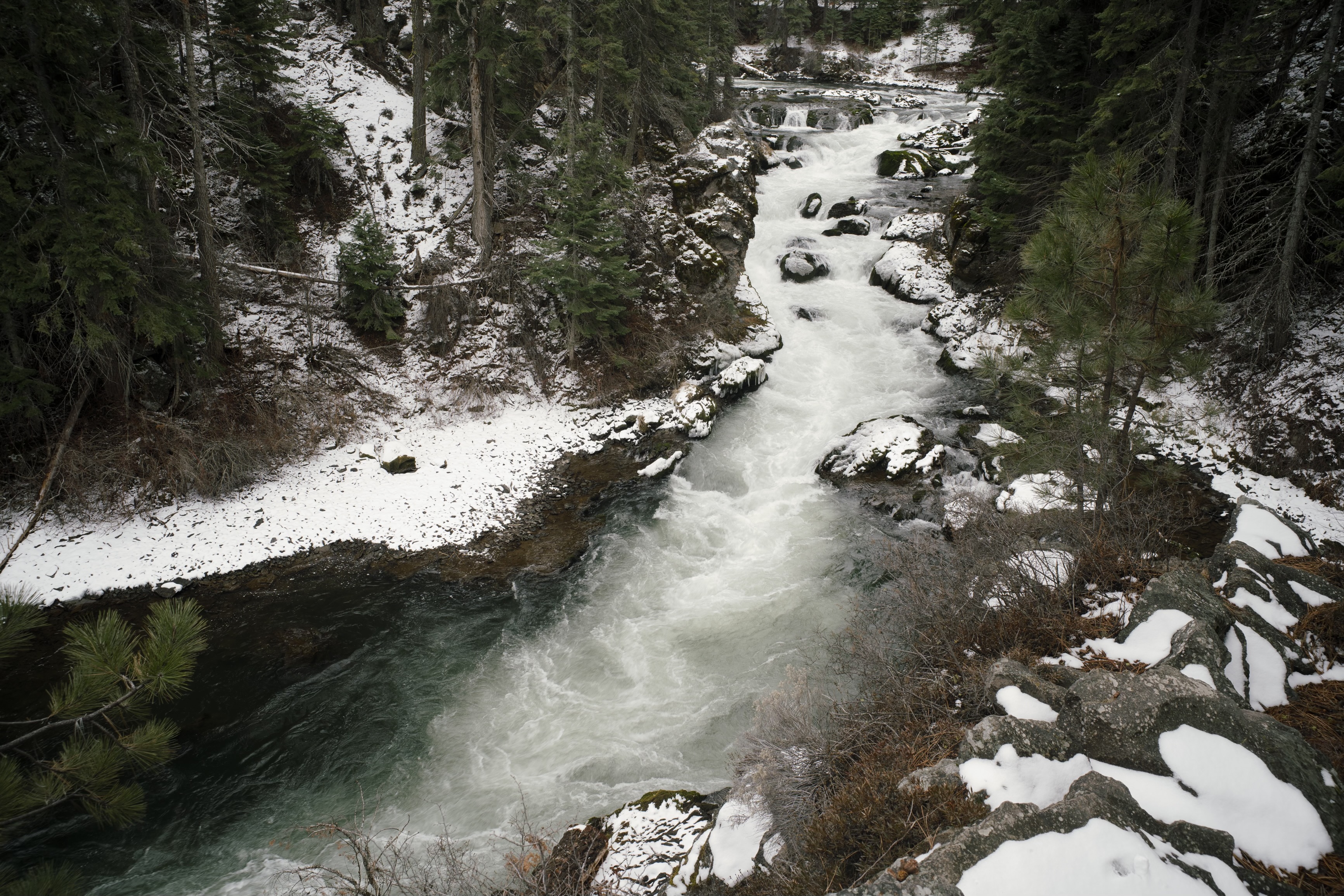
Also added two new color pics shot at f/5.6, same as the previous ones.
Two perceptive videos from Chinese reviewers, featuring the Simera 21mm f1.4. Lucas Hu's YT is subtitle-enabled, and he presents a lot of background information with plenty of footage. Booz does closeups of the lens controls, and many images showing a model, something at which the 21mm is adept with the usual caveats. Their channels have much more to interest the enthusiast.
..
Thypoch’s business model for the Simera range is to use the crème de la crème of rangefinder lens designs, to then repurpose these borrowed designs in their own style. In this case, this means the 21mm also had to be a sound fit for the pre-existing lenses in the range.
As part of DZOFILM, the Thypoch design staff had access to the optical department specialists behind the recent cine lens designs used by DZO’s Arles, Vespid and other cine ranges. A design community working in these related fields has advantages – a sharing of expertise and experience.
The 21mm Voigtlander Nokton joins the 35mm and 50mm Leica Summiluxes in being a source design for the Simera in-house development. It becomes the third borrowed design lens in the five Simera lenses.
When Thypoch announced the release of the photographic version of the 21/1.4, it was likely they were going to use the well-regarded Voigtlander Nokton as the source design. That was a sound decision, as the Nokton is a very well-specified optical instrument. The new Simera doppelganger lens shared the overall design layout, the approximate weight and size, even the filter thread size.
It was a good choice, made easier by the near-total unavailability of useable alternative high performance 21mm options with a maximum aperture of f1.4. The Nokton dates from 2019-2020, and has become entrenched as a firm favourite of many enthusiasts. The earlier (and very expensive at around $10,000) Leica 21mm f1.4 Summilux dates from late 2008 – and much had changed in optical design/development in the decade after that time.
Design Goals
From its early association with Zeiss and building on its last-decade wide angle lenses, all Voigtlanders at 21mm will inevitably see plenty of use as landscape lenses, and we see this substantiated in the 21/1.4 Nokton thread. Thypoch also sees that any high-end manual focus 21mm will be used for this genre: ‘designed for landscape, documentary, and street photography’, their blurb says.
But the photography Simera 21mm has a strong additional influence on its image qualities and style, because the 21mm is an important lens inside a small cine-oriented range of lenses, in the Simera-C sister range as much as the photography Simera range.
Many photographic projects are assisted greatly by the common look and style that comes with being part of a coherent range. The 21mm needed to maintain ‘range discipline’ in certain performance aspects, because the exact same lens design is used in the cine-formatted Simera-C equivalent of the 21/1.4.
This range context and cine orientation has translated into interesting image rendering at f1.4, with very settled and strangely appealing out-of-focus regions and the distinct house style bokeh treatment. It displays low internal busyness, moderate contrast and smooth soft shaping of image motifs.
This stylistic influence is accentuated by the now-common use of this focal length in movies and streaming platform content – (the 21mm) ‘wide-angle perspective not only adds strong spatial depth to the frame but also creates a “cognitive distancing effect” when capturing close-up portraits.’
Even with the great distance that separates 21mm from even short focal length portrait-capable lenses (generally understood as 28mm), human subjects will still need to look authentic, in how such a lens shapes faces and heads, and using near-focus along the axis.
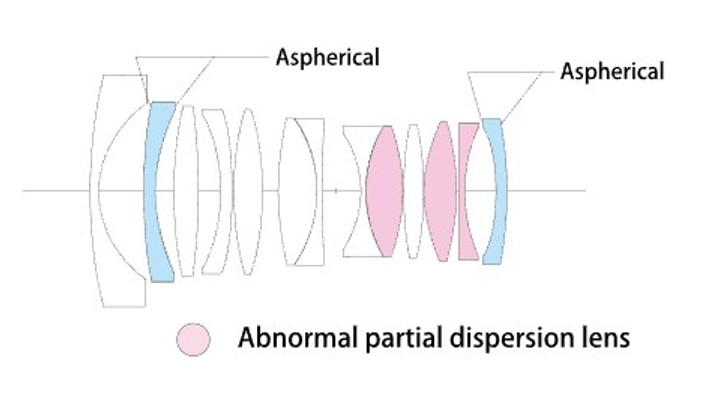
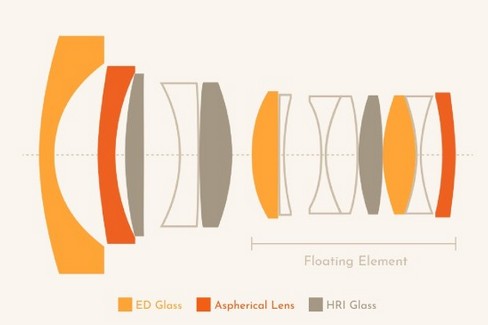
At first glance, the two block diagrams appear identical or very close to it. Both feature a large diameter front element (L1), aspherical elements at L2 and L13, and plenty of special glass formulations in between. There are many differences however, such that we could expect optically driven image signature differences even if the same glasses were selected. And the makers’ glassworks are in fact, quite distinct.
In these two 13-element lenses, those elements that appear close to identical are: L1-L2-L4-L7-L8-L9-L10-L13, eight in total. Differences between the two lenses for the other five elements range from: the use of a flat surface to replace a convex surface, through to two very large revisions at L6-L7 and L11-L12. Lens elements L1-L3 and L13 anchor the full design, in both lenses. Their anatomies are different enough to satisfy most people that the final designs are physically rather different.
Two examples of this practice:
1. In the Light Lens Lab 35mm f/1.4 Aspherical "11873" lens, the rear element is slightly extended compared to the original Leica version to improve spacing for better performance on modern digital sensors. This optical configuration balances the classic rendering of the original lens while improving performance metrics like sharpness and aberration control for contemporary photography.
The two aspheric elements are now moulded, manually controlled machine polished, and the rear element is slightly longer than on the original double aspherical. This is due to the improvements in terms of spacing between aspherical/spherical elements during assembly.
A high-refractive low-dispersion and achromatic element was introduced alongside the new aspherical elements to reduce distortion, diffraction, and chromatic aberration. At the same time, it maintains the legendary character of the lens through the use of lanthanide elements.
2. ARRI Lens Alterations: ARRI Service centers and ARRI Rental facilities offer various levels of lens customization and technical support. Customization Options: Specific modifications can include: Detuning or element adjustment to achieve specific visual characteristics or "looks". Adding/removing optical elements..to alter flare or other image attributes.
The Nokton 21mm relies on Cosina’s excellent APD glass for correction. It occupies three of the four rear elements situated before the final asph element. Cosina’s more technical lenses use more of this category of glass, and we see a strong correlation in the APD elements count to total elements ratio – the APD glass is often up around 50% of all lens elements.
These APD elements have enabled designers to precisely balance red-blue light (using ‘normal’ non-special optical glass) against the anomalous effect induced by the APD glass. (The ‘anomaly’ is the departure from the mapping of the dispersion function).
And we see the marketplace now has a near-complete APO-Lanthar series, lanthanum being more widespread in high end modern lenses than might have been expected. This rare earth apparently provides designers with the ability to produce an effective and layered correction of remaining chroma issues. Here in the VM 21/1.4, the color correction vital for high performance is done in a concentrated final effort, at L9-11-12.
As well as altering the base design in element formation and glass type, the Simera builds both the low dispersion and the HRI optical performance inside a balanced distributed model. The Simera version of this 21mm design uses the same number of ED elements as the Nokton uses APD elements – three for each.
They are spread evenly through the Simera lens, at L1-L6-L11. Color correction (via low dispersion or ‘ED’ elements) is therefore progressive as a design choice. Thypoch used specific high refractive index (HRI) glass and – as with the ED elements – these glass types are used through the design, positioned at L3-L5-L10.
A thinner lens body (resembling the Leica 21/1.4), 0.23m MFD, 52 grams lighter weight (than the VM), a metal bayonet hood cap, and a 14-blade aperture (very effective at near MFD and f1.4-f2) were added to the mix. The lens puts itself in a different weight class than the E-mount version of the Voigtlander 21/1.4, at 132 grams lighter. That Nokton E-mount version has a shorter MFD of 0.25m. In this class of lens, the 0.5m MFD of the M-mount version negates many potential compositions of interest.
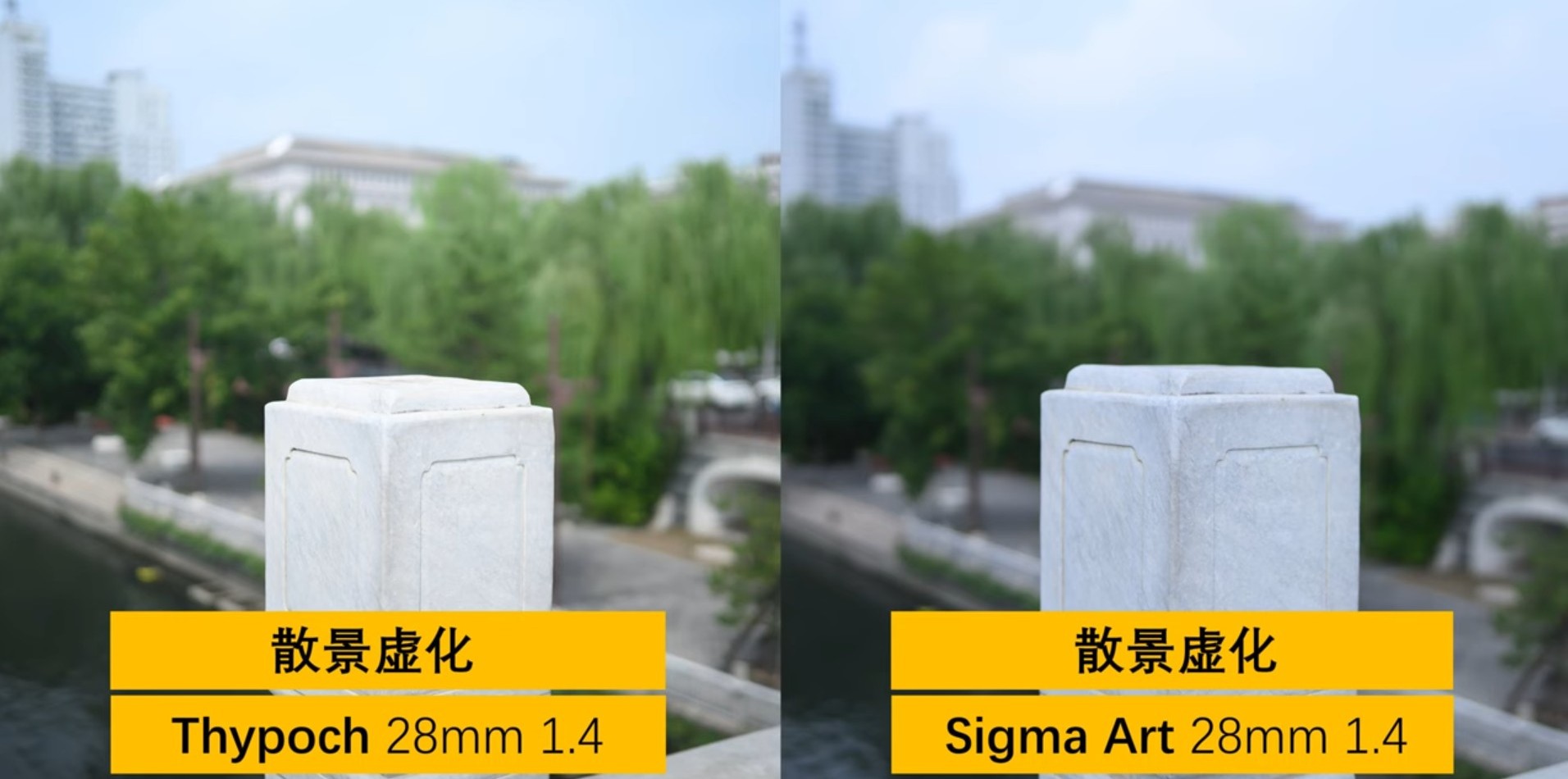
Look at the Sigma image first, and try to work out what is going on in the background. What can you tell about this background? Does it inform the image well? How long can you stare at the top left building before discomfort sets in?
Then look at the Thypoch image using these same reference points. And then compare these two. How much green tonal gradation does each have? Which one looks more real? Which one has the most lifelike rendition of the front/center pillar, its sides as they slope away? Which has the most pleasant color palette? Which one makes it easier to estimate the distance between the two large buildings?
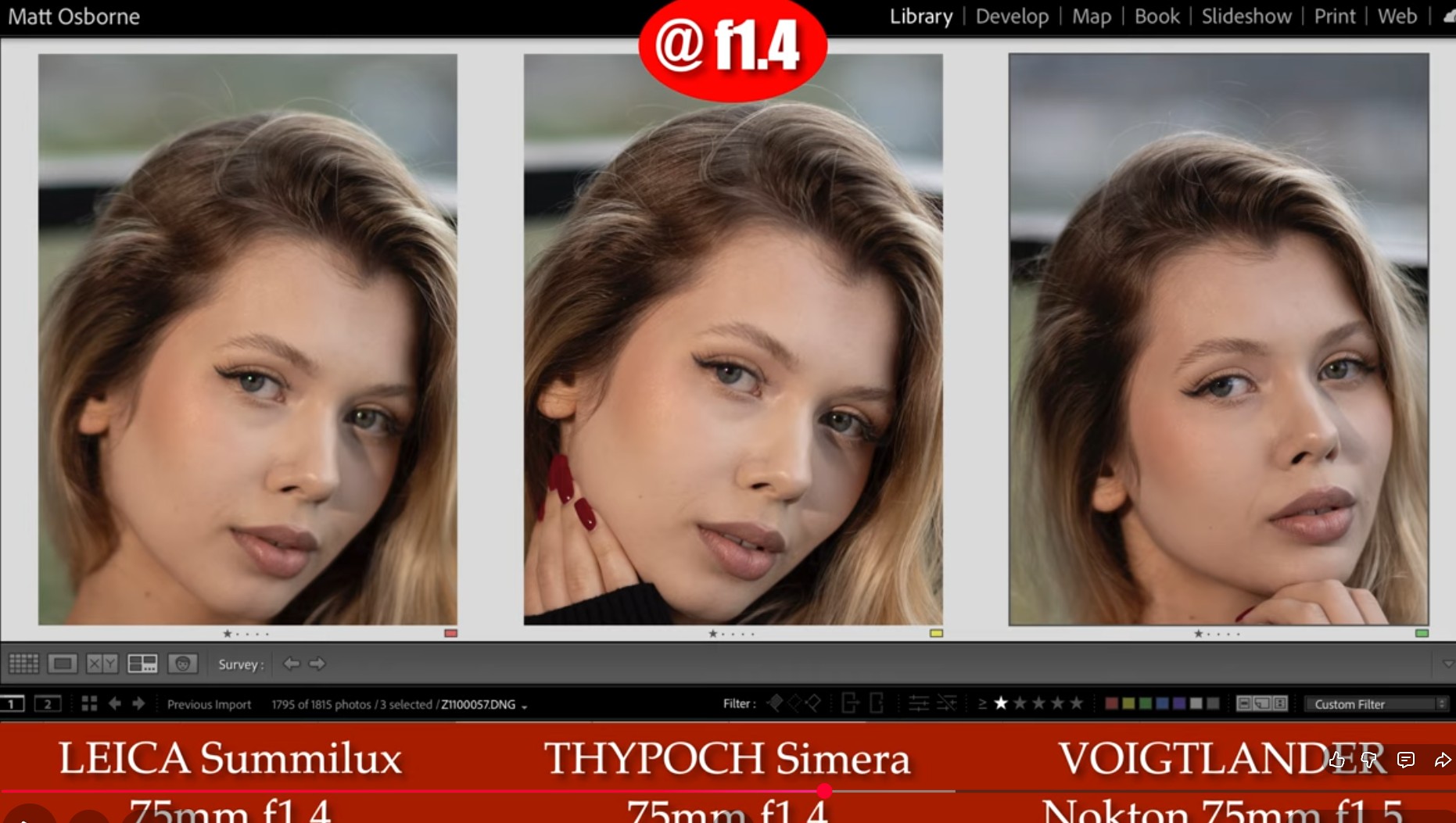
To quote portraitist Matt Osborne: ‘the background just goes into a creamy blur and its very, very pleasing’. Here is a link to his video review with specific examples noted in the timeline, to save time.
See content at: 4:27, 5:26, 8:00 and 9:10.
..
..
I never expected to see this kind of bokeh from a 21mm. And for a closer look at the bokeh from the 21mm Simera and its source Voigtlander lens, the Phillip Reeve website provides a handy comparison of bokeh in the two dedicated review articles - see if these two lenses' bokeh look different to you:
1. Bobby Tonelli discusses the use of the cinema Simeras (21mm and 75mm) on Nikon's new Zr hybrid camera, with a lot of footage showing how these optics work in this related genre. He is as impressed as I am.
..
..
..
2. Brandon Talbot uses the Simera-C (21mm and 50mm) lenses for a short video in Utah. From 12:20, a very interesting exercise is shown with his friend Ben. It's a simple test of a handful of 50mm lenses including one brand that was on my radar - Cooke Bros SP3, a cheaper and somewhat affordable range made by them for mirrorless mounts. Still $4500 is a lot, I was interested in the 32mm.
All lenses were shot at f2.4 so you get a methodologically worthwhile comparison, at least for a fair look at the feature all modern day cinema people pay great attention to - bokeh.
Now, comparisons are problematic for YT presenters because they know they will lose supporters when there are winners and losers. Nonetheless, we need many more of them, particularly today when we see a deluge of new lenses appearing each month.
The lenses include the GM 50/1.4, the Cooke lens, Thypoch's Summilux-based 50mm, Canon's FD 55, Nisi Athena, Meike Cine, Sony Alta - all shot on Sony's FX3. This series starts at 12:20.
..
..
(since no one knows how to pronounce 'Thypoch', it is Dhy-pokh, with a soft D and a soft K, hence the 'h's.) I do hope they produce a 100mm f1.4 (T1.5) as it would be very popular and would complete the range at the long end.
'Pros: Very sharp corner to corner, sharper than the Voigtlander 75mm f1.5. Very accurate colors, great saturation, excellent contrast, amazing build quality and features, like the de-click aperture ring, the haptic 0.7m click and the 2′ or 61cm minimum focus distance. Very natural-feeling vignetting, and beautifully rich bokeh.
Cons: Minor CA in extreme situations when wide open. It will catch some hard flares at certain angles, and there is some distortion; it’s a bit heavier than the other M 75mm lenses.'