p.1 #1 · New user with questions about sharpness and focus for fast moths photography
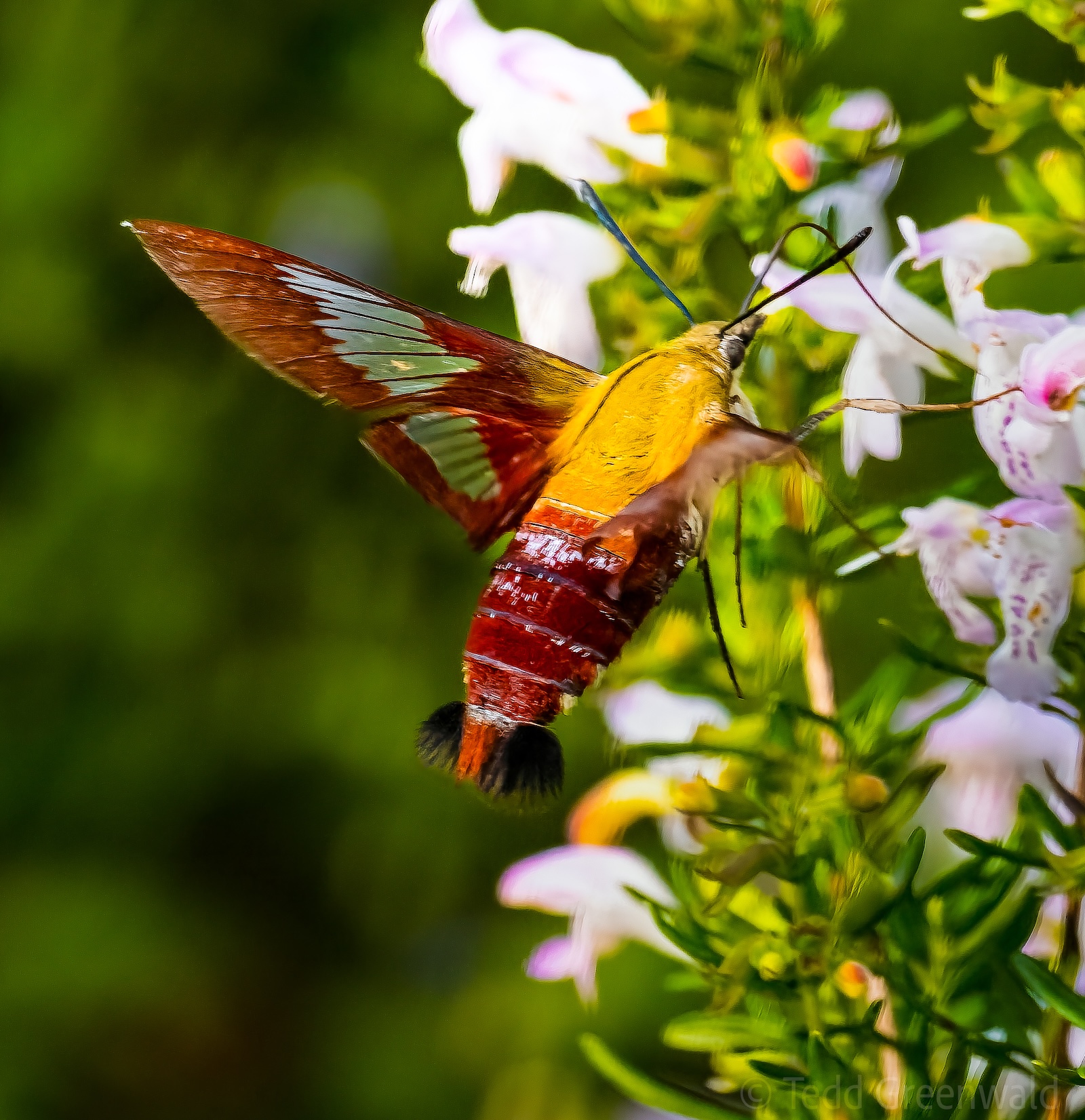
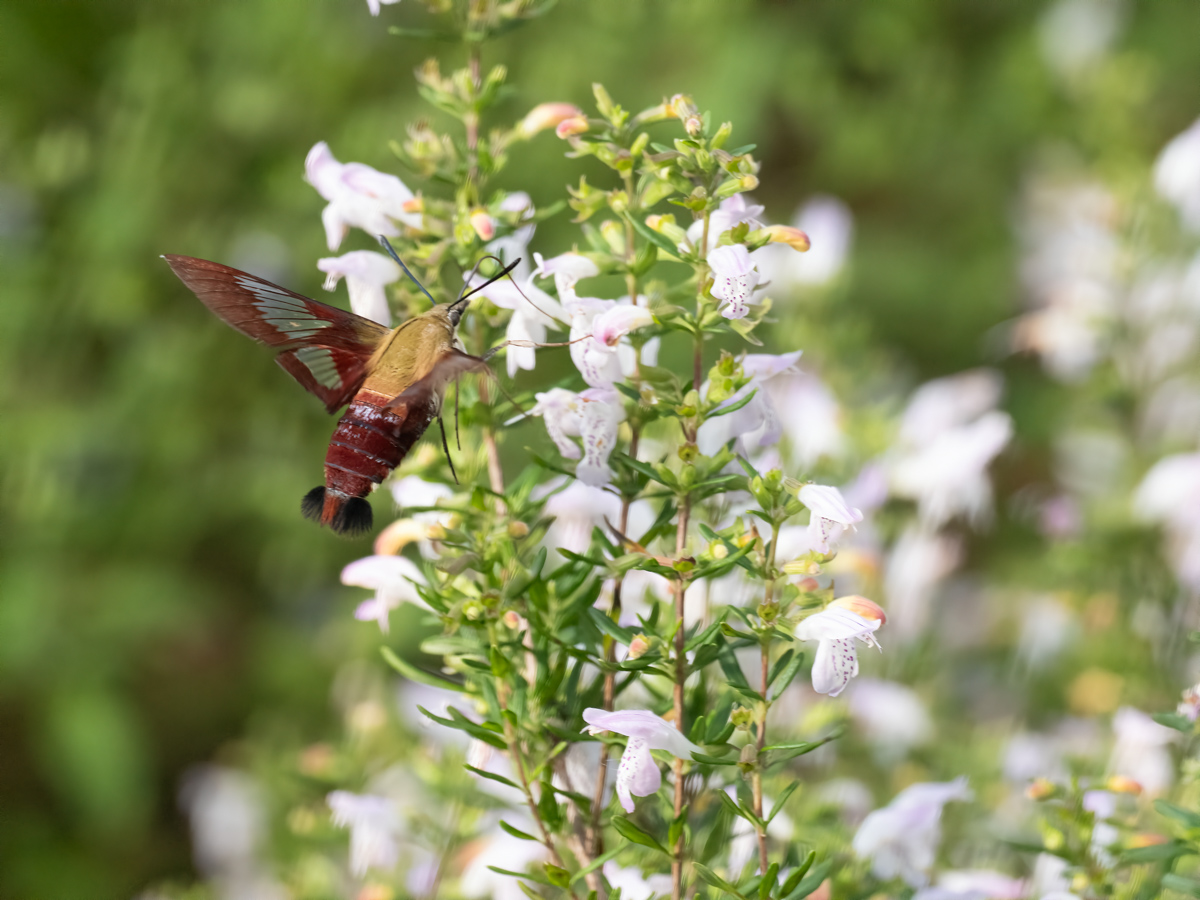
Trying to figure out how to improve this shot of a Clearwing Hawkmoth. I was using a OM1 with 300mm f4 Pro and a FL-700WR Flash set on FP and TTL settings. ISO 3200 and f/5 at 1/2000 sec. I did a crop and ran it through ON1 Noise first then into Lightroom and cropped.
Would a 90mm f/3.5 macro give more details if I could get closer? I have both 1.4 and 2x teleconverters.
How about the 50-140mm f/2.8 as an alternative to the 300 for this type of photo.
I asked on the Nature and Wildlife and they suggested I post over here.
I was on C-AF
I'l try later today to catch this moth.
OM-1OLYMPUS M.300mm F4.0 lens300mmf/5.01/2000s3200 ISO0.0 EV
p.1 #2 · New user with questions about sharpness and focus for fast moths photography
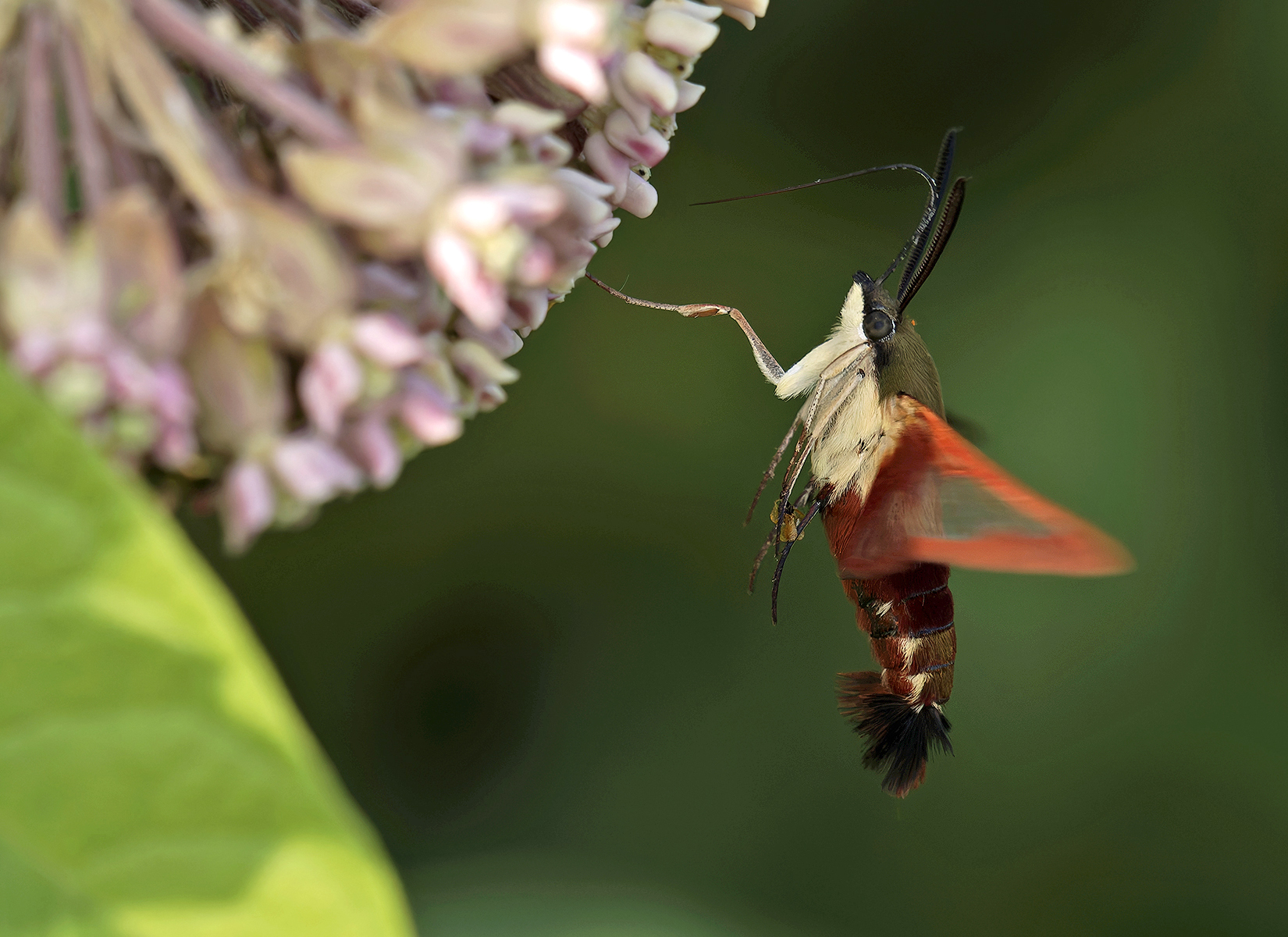
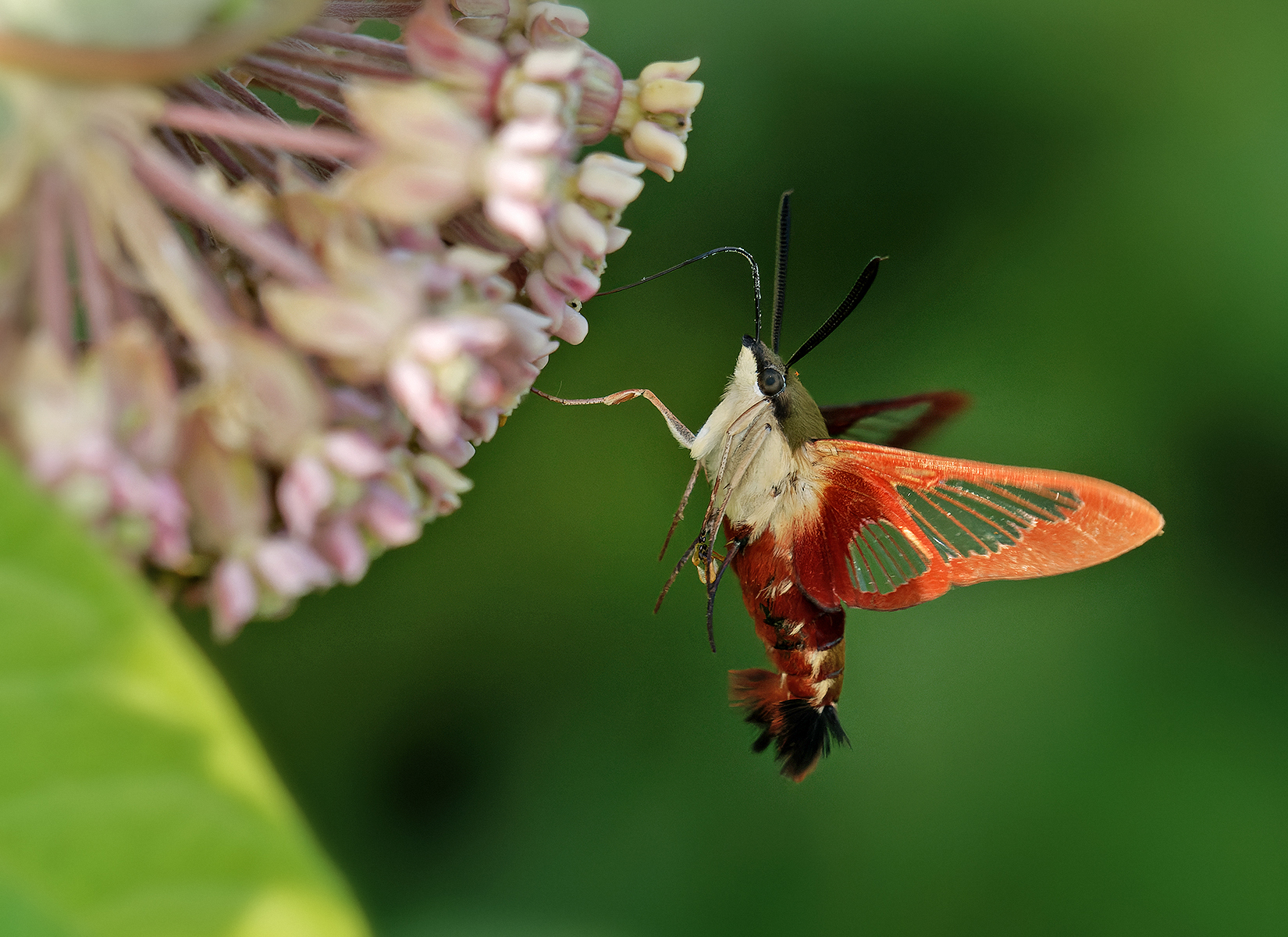
The first thing I would say right off the bat is it's not the lens. I don't have a lot of experience with the 300 F4 but from what I did see in the short time I used it is it's sharper, quicker to focus, and easier to handle than the Olympus 100-400 that I use for these types of subjects. That lens should be perfect for what you're trying to do. I also own the 90 3.5 and find it much too short for butterfly, dragonfly, or your moth here. I think your problem is the focus was a bit off and that huge crop only made the problem worse. I consider it bad form to post my pictures in someone else's thread but maybe these will help. As you know, your subject is very small and moves very rapidly. These type of subjects are very hit or miss and it's just a question of getting lucky. The two shots below are from the same burst so all the same settings. One is unusable and the other is okay. My advice; keep shooting away with the great lens you have. It doesn't look like you did anything wrong, just missed. And don't bother with the flash
Gary
OM-1 OLYMPUS M.100-400mm F5.0-6.3 lens400mmf/6.31/1600s1600 ISO0.0 EV
OM-1 OLYMPUS M.100-400mm F5.0-6.3 lens400mmf/6.31/1600s1600 ISO0.0 EV
p.1 #3 · New user with questions about sharpness and focus for fast moths photography
I fully agree with Gary.
Between the three lenses you mentioned (I have all three in my kit), the 300mm F4 has been my top choice for this particular subject, and this is the one I would recommend.
I also agree with that with fast moving subjects luck plays a role. In practice, this means that you may want to increase the chance of obtaining one successful shot by taking a series of multiple shots.
You mentioned C-AF but said nothing about your choice of the focus "target" - I would use the smallest spot in this case and try to have the spot on the head of the moth, if this isn't what you have been doing already.
The last, but potentially important is your denoising. I am not sure why you "did a crop and ran it through ON1 Noise first then into Lightroom and cropped." I am not even sure whether you actually cropped before denoising. If you did, this isn't the best method, because denoising works best on a raw file. Furthermore, I fully expect that Lightroom denoising is superior in quality to that in ON1. Therefore, you may want to stay in Lightroom, and don't use ON1.
Something Gary has mentioned elsewhere (I hope I am not mistaken) is that he uses DxO DeepPRIME denoising on raw files, then exports DNGs to continue/finish processing in Photoshop. DeepPRIME denoising is excellent. I don't mean to say that denoising in Lightroom is not good, but this is yet another excellent alternative to your current approach.
The cropped denoised image that you posted looks like a victim of very crude denoising that left multiple artifacts - "scars" on the image. At least this is my impression, and if this is correct then simply changing your denoising method can result in huge improvements in the image quality.
p.1 #4 · New user with questions about sharpness and focus for fast moths photography
Thanks Gary for posting those amazing photos. I did run the original ORF file through ON1 Noise and then cropped. I'm going to check into the "target mode" I have selected the "bird" mode. I've downloaded the manual and playing with the camera settings. I took about 30 shots and this is the best one. I had a centered group of focus points but it seems that those settings always seem to move. This is my 2nd day with the camera. Have to figure out the single spot focus. I thought I had deselected all of the rest but they seem to show up?
I will also try the Denoise with in LR. I just got a good used MacBook Pro that will run the Denoise in 8 seconds rather than 8 minutes.
Now that is the shot that you posted that I want to be able to take. So just say no to the flash?
Edit_ figured out I needed to push the joystick button and rotate front dial to get the focus point selector. D'oh. So far I'm not doing very well with sharp photos.
p.1 #5 · New user with questions about sharpness and focus for fast moths photography
The following is simply a matter of opinion. What works for me may not work for you and vice versa. I'm not sure if I'm reading you right but I'm finding "bird detect" only useful when the subject is in the clear,(sky or water) for instance. When there's any type of busy background, branches, flowers, the focus boxes start to dance around and it drives me nuts. I agree with ruthenium above. For a small subject like this I would use CAF and a small focus point to keep on the subject. I wouldn't necessarily tell you NOT to use flash if you feel you need it. I personally never use it on anything but little bugs for macro but that's me. I much prefer just having the sun at my back but I realize that's not always practical. Not sure if any of this helps. I'm not a very technical guy. I just fumble around and hope I find something that works
Appreciate your compliments !
Gary
p.1 #6 · New user with questions about sharpness and focus for fast moths photography
The confusingly named "AF Target Mode Settings" in AF 6 allows you to select only those (or just one) that you want to use. I use the Single point too often. Single point is what you need for small creatures. Use C-AF and no subject detection. Don't use C-AF+TR when, in my experience, even with the Single point, the camera actually acts as if the "target mode" is an expanded spot. The focus jumps to anything within that expanded area that happens to be the closest to the camera. E.g., this can be a wing of a butterfly.
When focussing, aim at the head of the subject.
My concern about using an on-camera flash is that this can make the camera system heavier and more challenging to operate over an extended period while hand-holding.
Although I first said that my choice between your lenses should be the 300mm F4, it might be interesting to try the 90mm f/3.5 macro as well. The practical question is what should be this lens magnification at the realistic shooting distances in your case, when compared to that of the 300mm lens. There are magnifications markings on the lens. These seem to indicate that while 1x magnification is at 0.25m, this drops to 0.25x at 0.5 m. Basically, between the two lenses, it would make sense to use one that gives you more of the subject in frame, but this depends on the distances from the subject, and can be difficult to know. You need to compare the two lenses in your hands. I still expect that the 300mm can be the better choice.