CharleyL
Offline
• • •
Upload & Sell: Off
|
 p.3 #17 · How Many Members Still Print Their Own Photography? p.3 #17 · How Many Members Still Print Their Own Photography? | |
Thanks Dan,
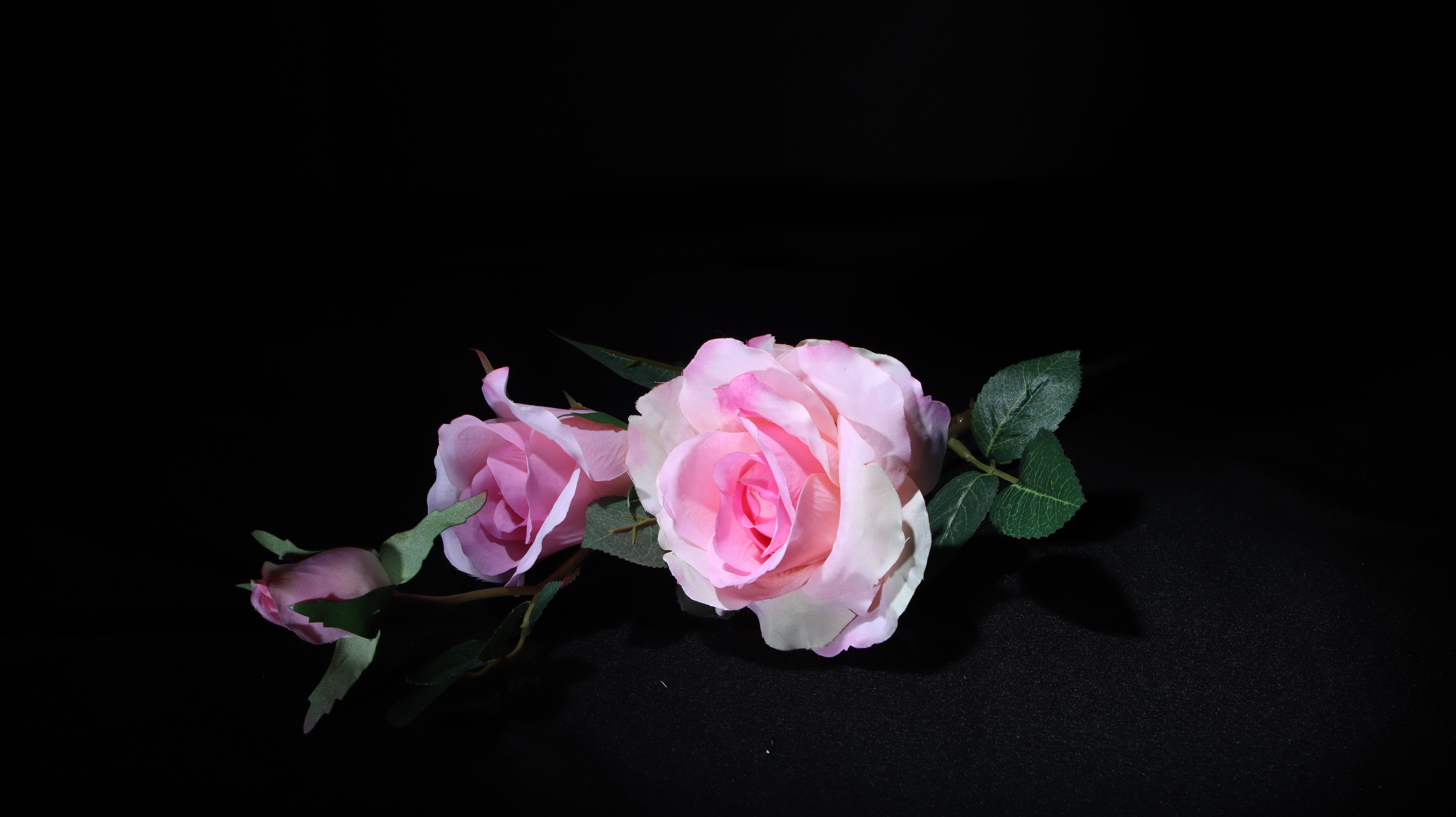
This photo was taken using just one light, a Godox SD400 II studio light with a 7" reflector holding a 10 degree grid. This light was mounted on a tripod, but the tripod was attached to the ceiling lighting grid, so hanging upside down. I usually extend the tripod legs until they touch the ceiling for stability and I can set the height of the light just like when the stand os on the floor. The studio strobes don't seem to care and work fine both right side up and upside down. The power cable for this studio light ran up to the ceiling lighting support grid and across to the Wiremold outlet strip running on the ceiling pat the end of the 10' ceiling grid. One of the Wiremold power strips runs past each side of the ceiling lighting grid from the backdrops almost to the wall behind the camera. Most of my lighting power comes from these Wiremold power strips whether the light is attached to the lighting grid, or on a light stand below. My studio is much safet without the power cables and tripod stands on the studio floor. I have wireless control modules for each light and buttons on a wireless control for them located on each of my camera stands that allows me to power each group (kind) of lights or flash, so I don't need a ladder to power them on or off. One pair of buttons turns all of the studio flash that's powered from the line (mains) power on and off. A second pair of buttons controls all of my 8 LED panel that are attached to the ceiling grid and used mostly for video work. The third and fourth button pairs each control two focusing 500 watt spot lights, also hung from the lighting grid. I use these, along with a backdrop that is pleated and looks like a theater curtain to simulate stage spot lighting. The fifth pair of remote buttons control four UV LED light panels, also on the ceiling grid. When I bought and mounted these, the plan was to shoot some Halloween photos. I have UV sensitive paint and make-up for this too, but haven't used any of it yet. Maybe this year.
For the shot attached, there is just black felt on the table top, but careful light level adjustment and the inverse square law of light, plus good knowledge of camera settings to achieve this shot keeps the viewer from seeing my gear that's stashed about 5' behind the table and in plain sight with the work light left ON. The "work light", an LED ceiling light about 14" in diameter and 1" thick is almost directly above the table on the studio ceiling, and this light was ON during this shot (this space was a second master bedroom suite before it became my studio) and the light was already there. The shooting room / former large bedroom is 19.5 X 26 X 8'. There is a full bathroom and a walk-in closet through doors just behind my usual camera location, and the large hallway at the top of the stairs holds the make-up and hair area, plus break area, where there is a small fridge for cold soda and water, a microwave, coffee, tea, and snacks. If shooting people, I try to have a plate of fresh fruit there too, but the actual break times always seem to end up in the shooting room. I have now added "wireless control" of the ceiling work light too, since sometimes it's necessary to turn it off during the shot, but then back on after in order to see the obstacles in the room. Going to the light switch at the door and back to operate this light with photo gear everywhere was just too unsafe. So now all of my lights are on wireless controls for their power, and wireless flash from the camera transmitter. My only remaining cable is my tether cable, but it runs up to the ceiling grid and drops down to my camera in my usual shooting position with enough slack that I am free to move the camera anywhere in that half of the studio. I keep a spare tether cable plus it's extension in the studio for additional need or to take with me on a shoot elsewhere.
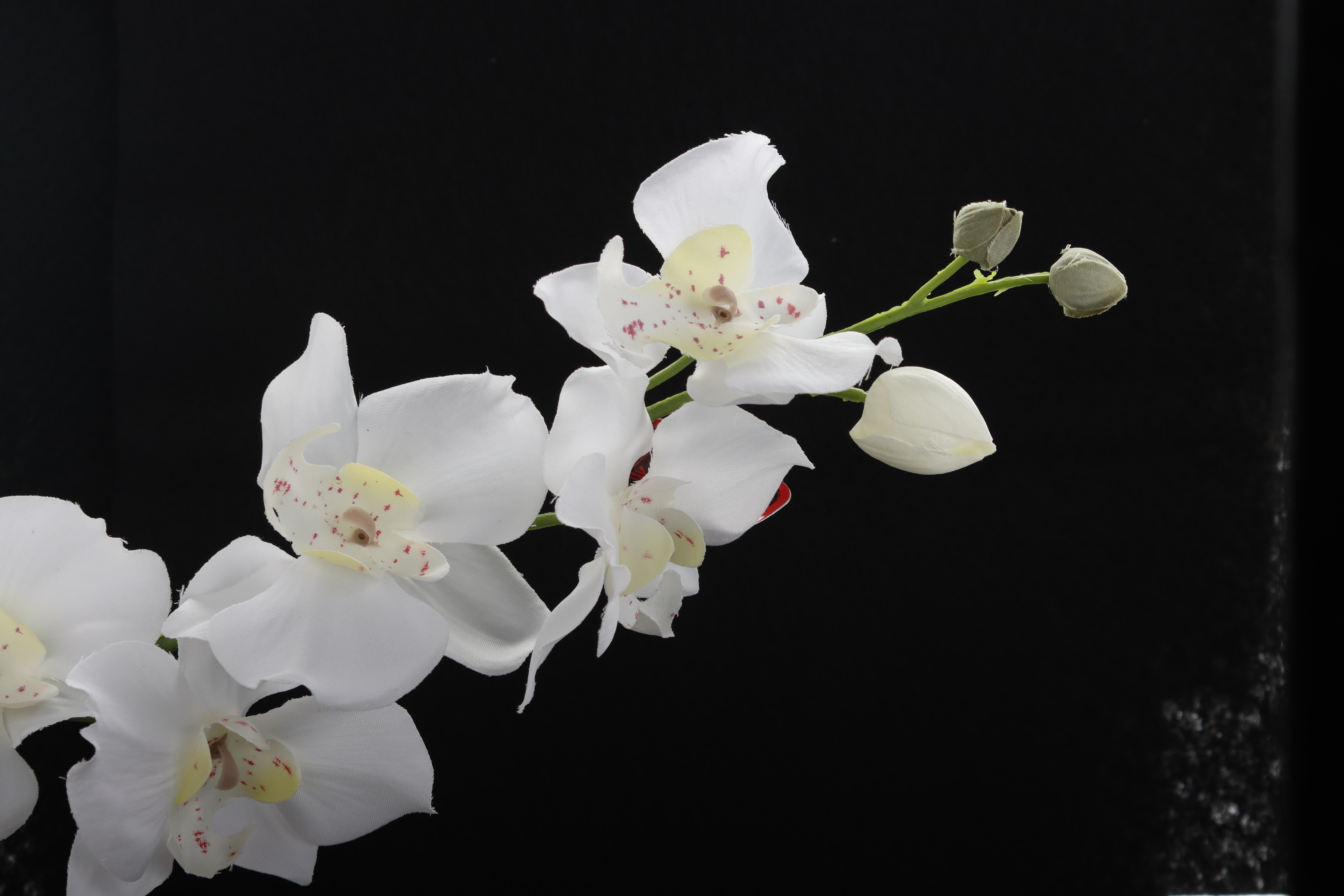
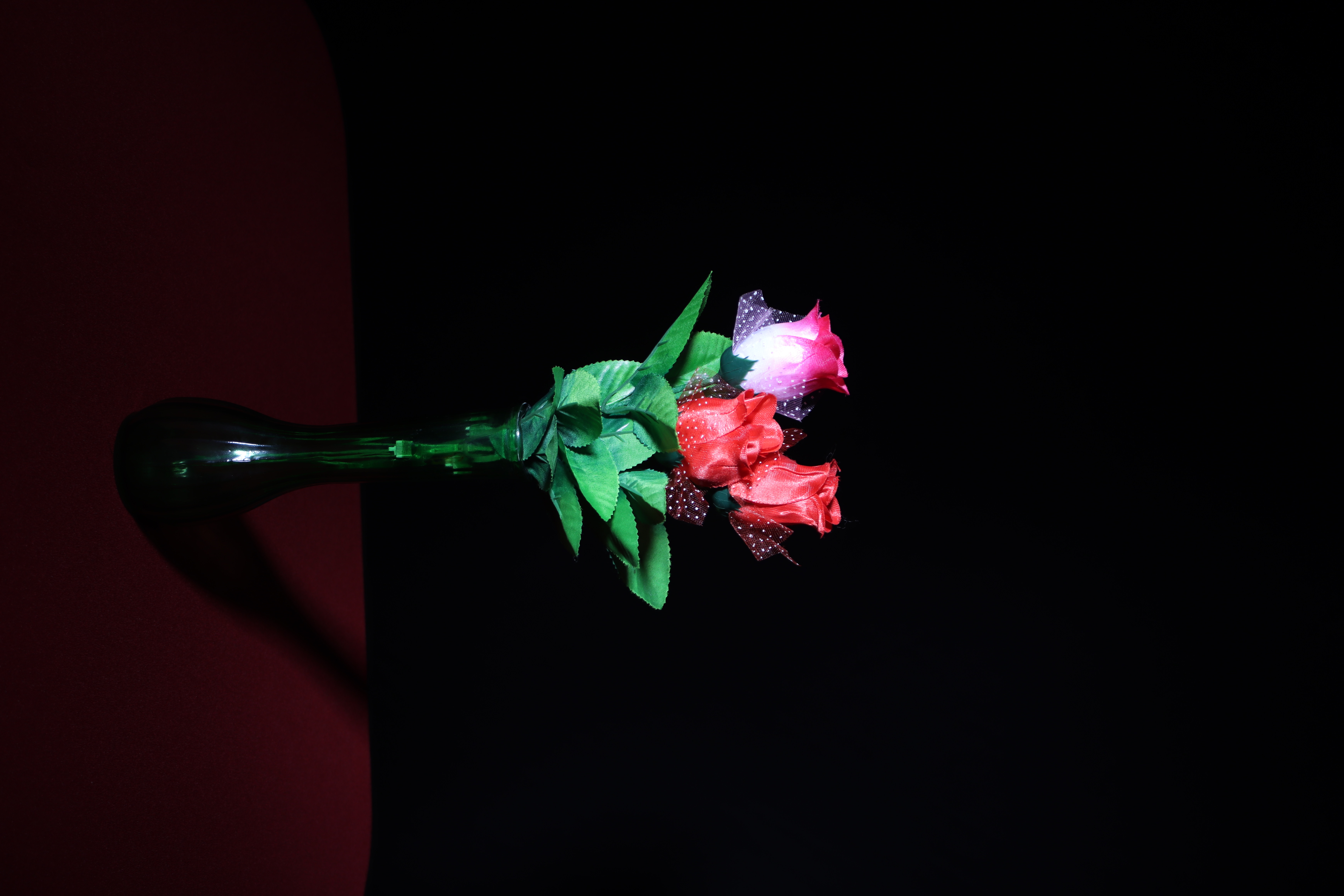
Attached are two more similar photos with the dark background. Many have seen these three photos and positively commented on them. For those that think a cell phone is a good camera, you can't do this kind of photo with a cell phone and only with real cameras with manual settings can you do this. You need good control of the flash as well. These shots, all 3, are straight from the camera - no editing, not even to remove the junk on the right of the second photo, which was easily removed in Post. Te 4 roses in the vase have a reflection on the vase that was also removed in Post.
Charley
|