For nest-concealment, most of our passerine bird species begin nesting only after the woodland edges become filled-in with foliage. And by that time systems are also beginning to produce an abundance of insects to feed their young. Over 90% of our passerine birds are insectivores and require a diet of mostly insects for their nestlings. https://www.udel.edu/faculty-staff/experts/douglas-tallamy/
The American Goldfinch (AGF) is an exception. It is a granivore, subsisting on seeds. And that is why the AGF nests late in the summer, when plants are producing seeds.
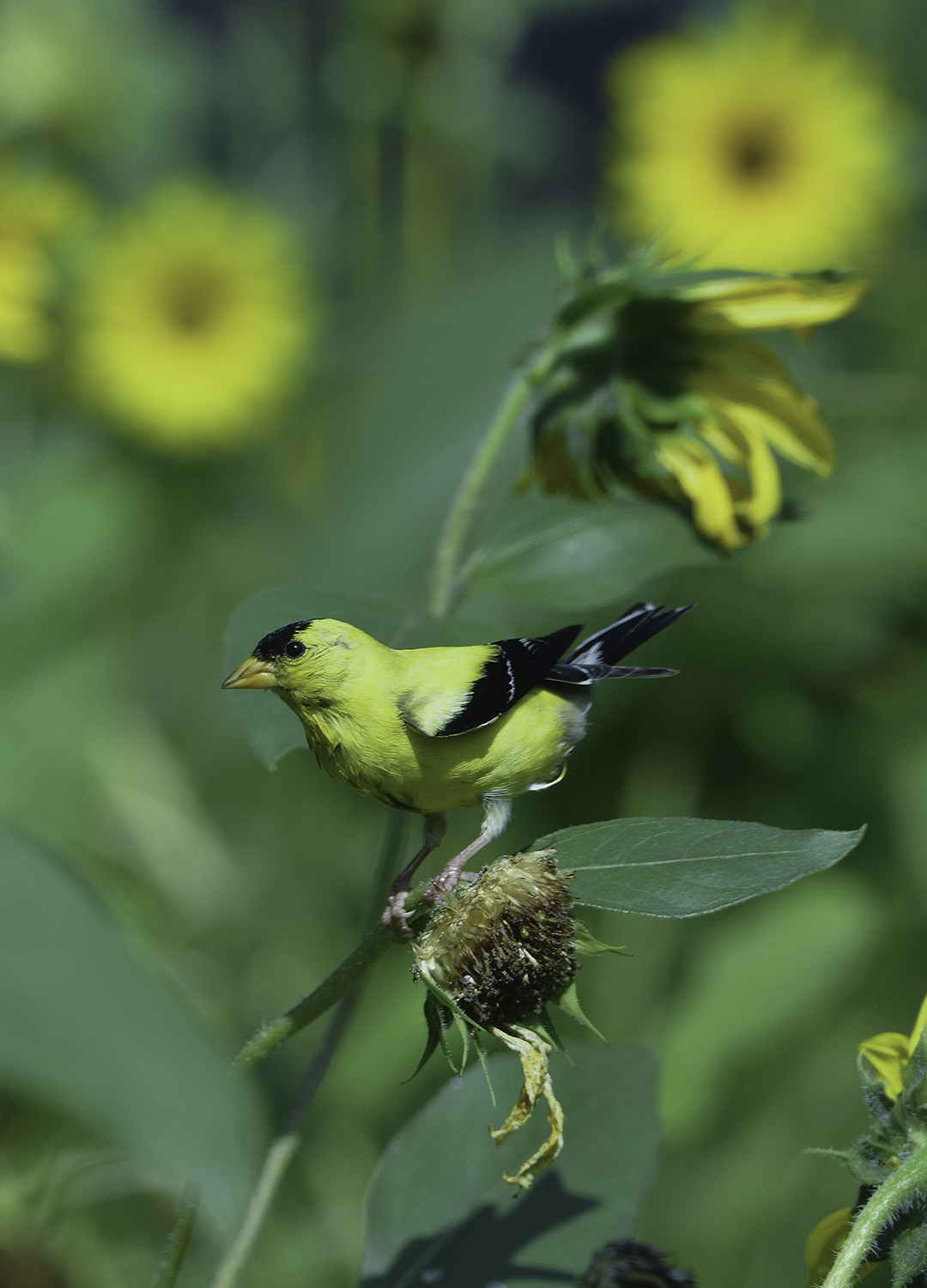
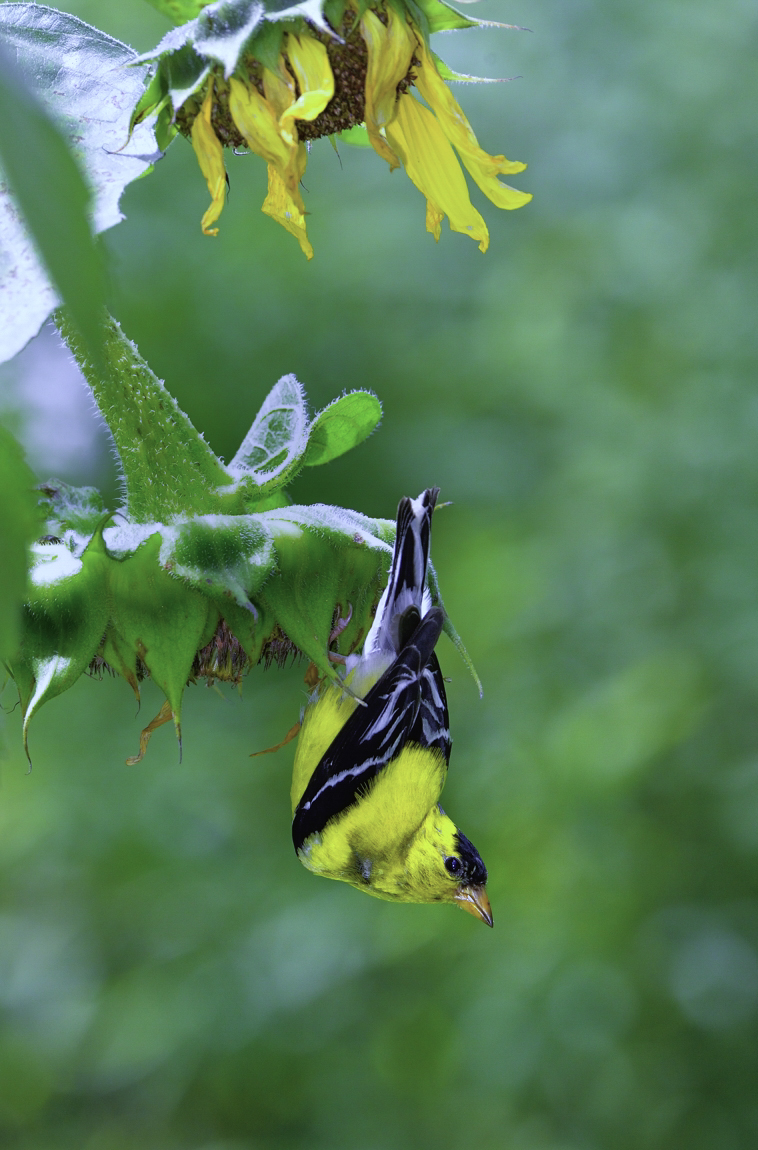
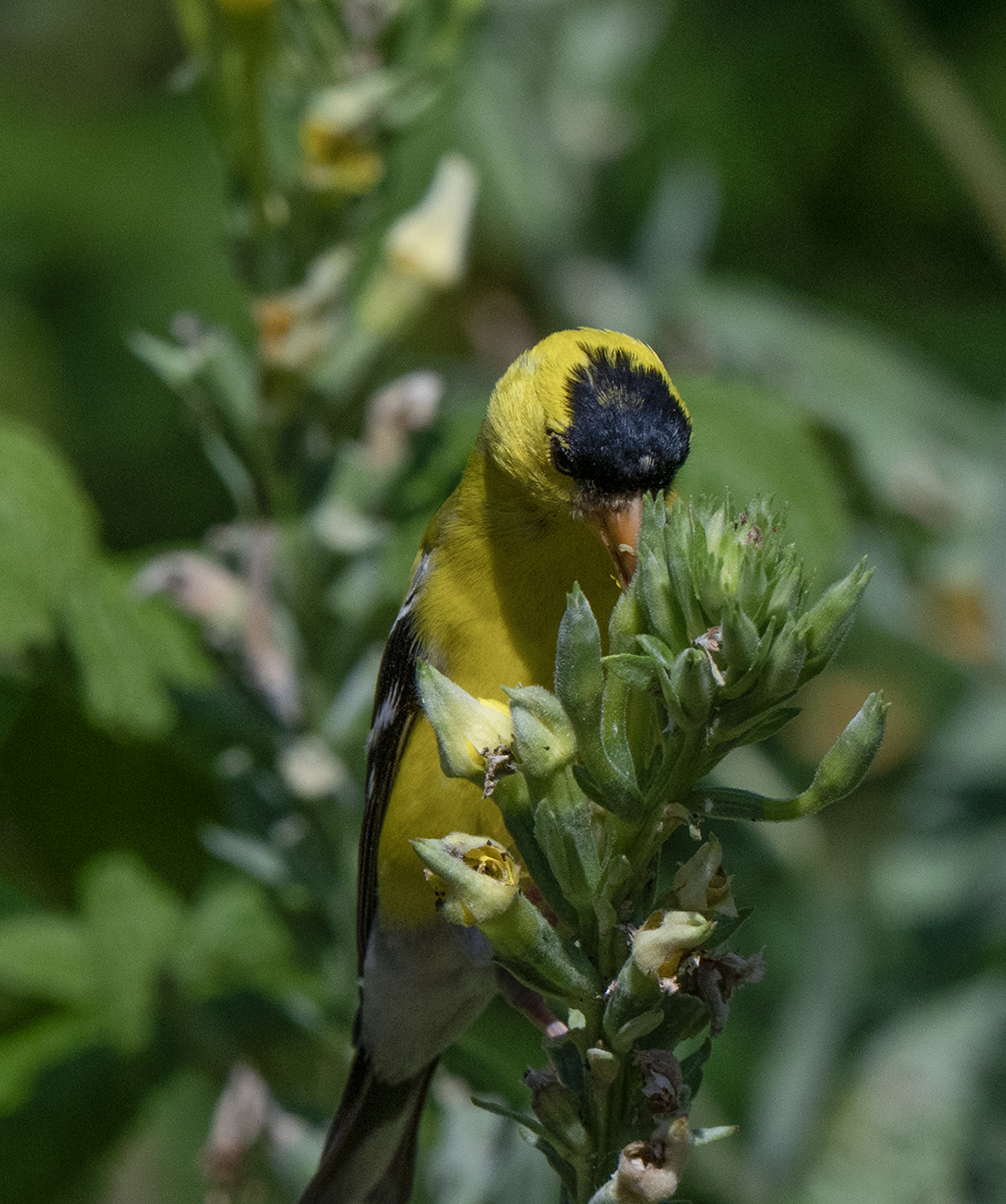
AGF’s love sunflower seeds, all species of Thistle seeds and other seed-producing wild plants, including Evening Primrose. Most people consider Evening Primrose a weed and kill it. I nurture and protect it around my home, because in the late summer, AGF’s zealously go after it for its seeds. This week, AGF males began checking Evening Primrose for seed ripeness. This, combined with only a few AGF’s at my feeders tells me that the AGF’s are nesting now. AGF’s are highly social and throughout the year, there is a group of 20+ AGF’s visiting my sunflower feeder and nyjer sock, all at once.
I know they are nesting here now (43rd north latitude) because there are only a few at the feeder and male AGF’s are beginning to check the Evening Primrose seed pods. The sunflower images here are from years past. For some reason I have difficulty getting Sunflowers to grow in recent years.
When nesting the female AGF does all the incubation. The male feeds her and their young through regurgitation.
If I am lucky, I will soon see the fledgling AGF’s begging their Father for food. Competition between siblings is sometimes comical. I once saw a fledgling AGF fly in and knock its sibling off its perch just as the sibling was about to receive food from Dad.
I read each of your compliments and want to thank you all.
I'm hoping that other folks here have them at their feeders and that in the future…….one or two of you are lucky enough to spot a youngster begging Dad to feed it.