RoamingScott wrote:
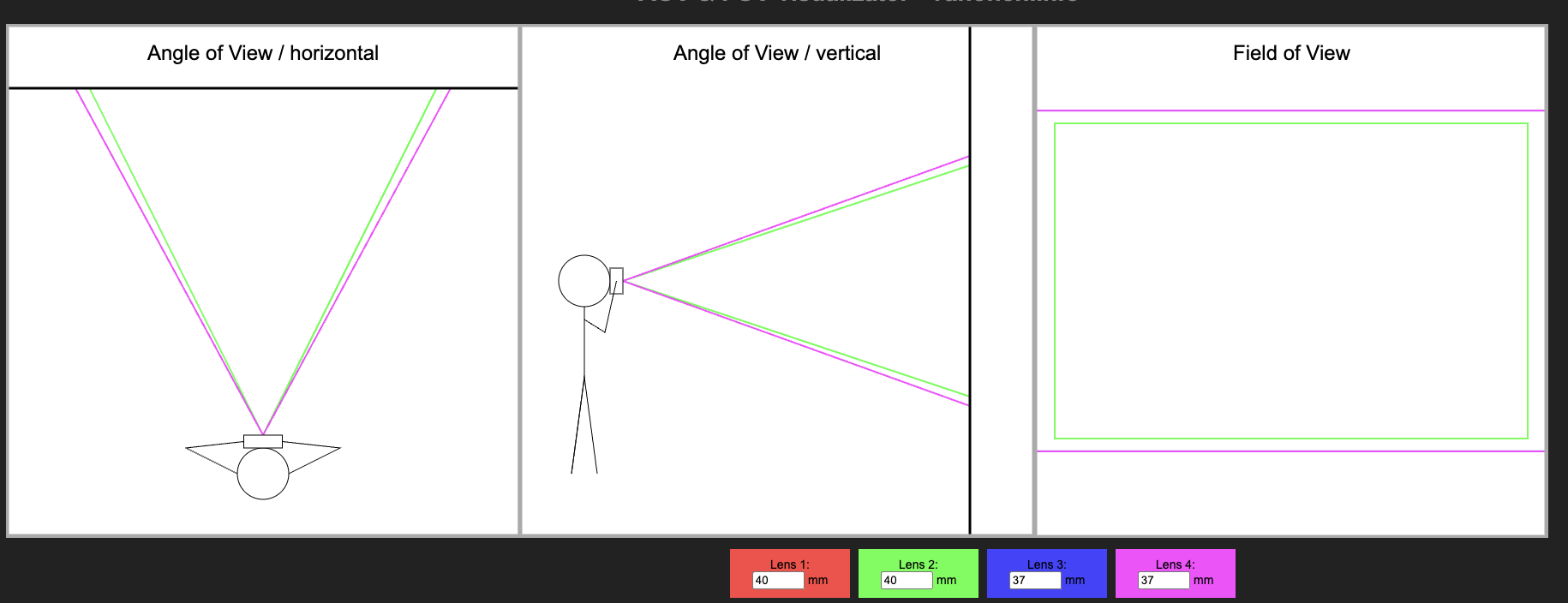
I noticed and reported the wider FOV on the Nikon side as well, markedly wider than the Z 40/2 and even moreso the CV 40/2 Ultron, the tightest of the 3. Like you, I actually find that to be a plus for the TTA.
Did you notice it manually focusing in "steps"? I've seen that reported for the Sony, similar to how some Fuji GF lenses work with markedly spaced out focus-by-wire positions.
Yes, the MF focus moves in very small motor increments, but in my opinion it's both accurate and nicely linear in rotation, so I think that's intentional for precision. I can nail focus without much effort. I just wish the E-mount version rotated the opposite way. It would be great if TTA could get some feedback on this.
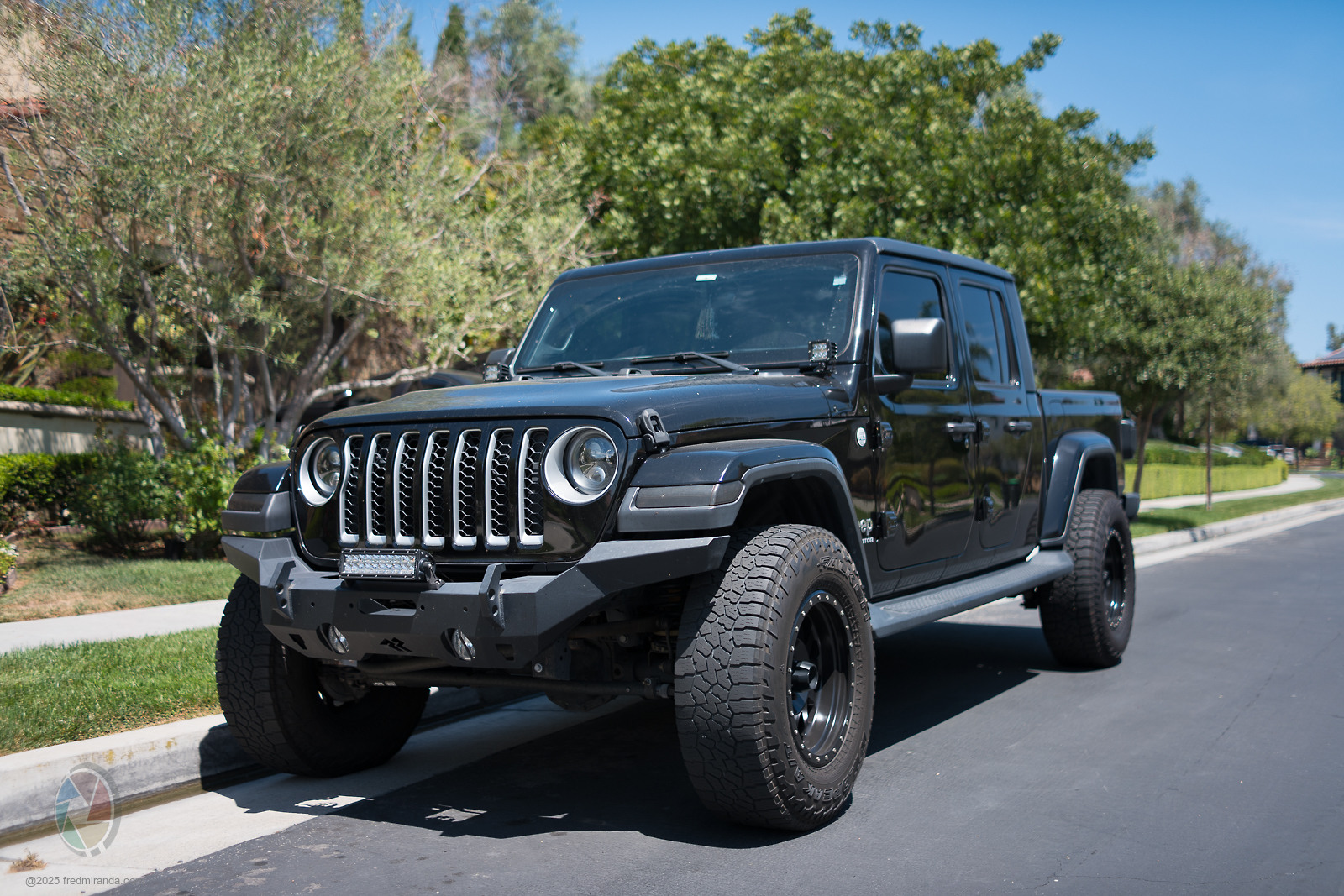
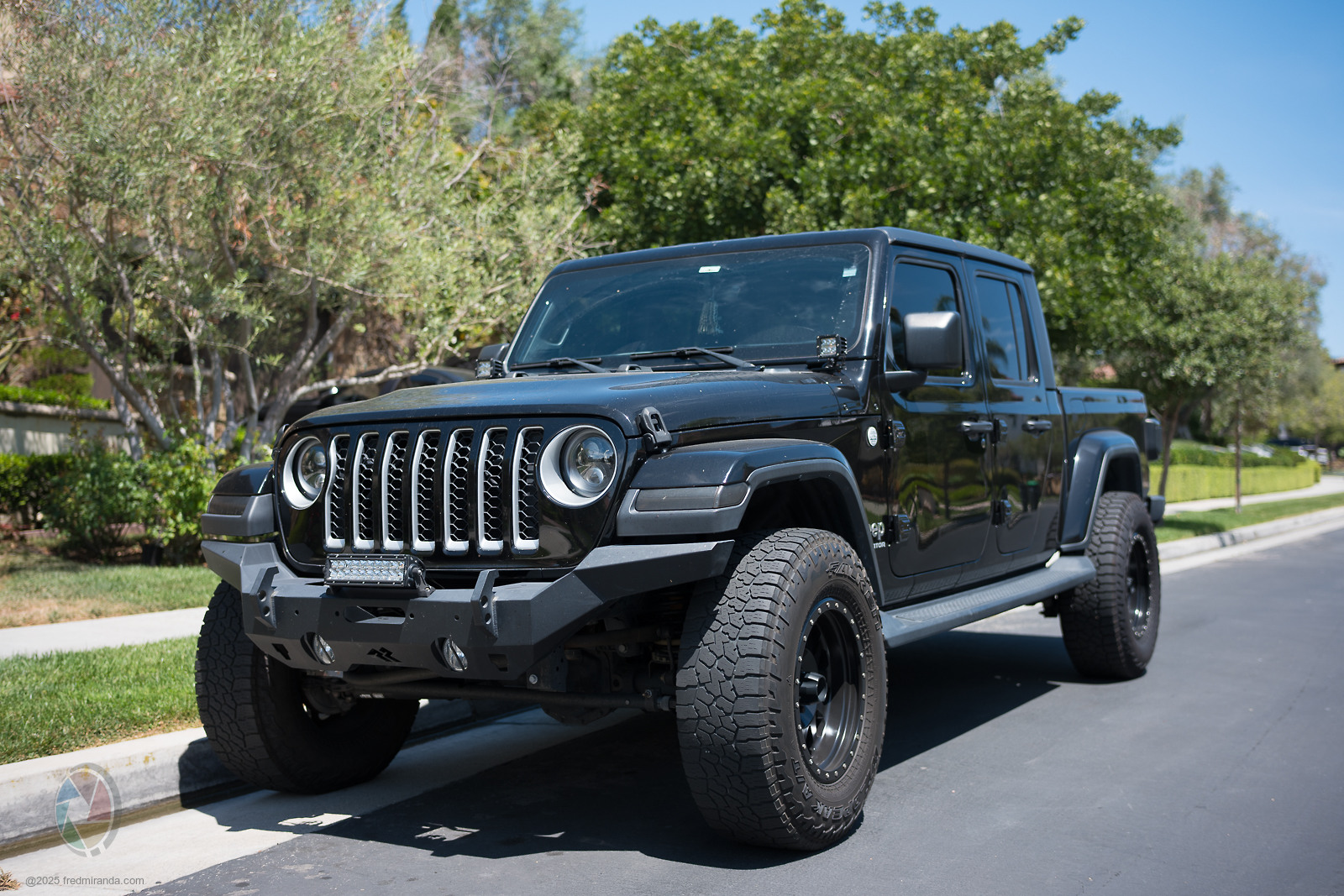
Regarding the FOV, it's clearly wider than the Sony 40/2.5, which makes their background blur look about the same when shot from the same distance. But once I move the TTA closer to match the framing, the faster aperture obviously gives more blur.
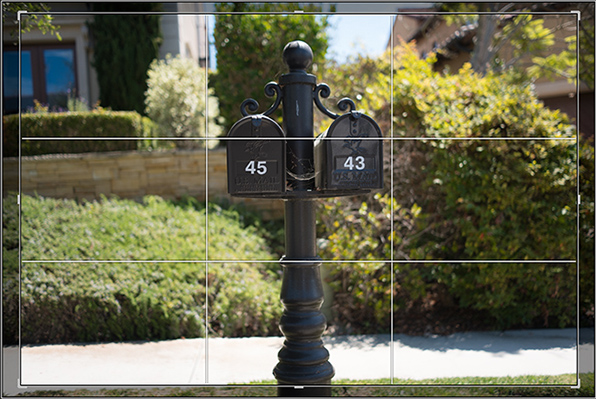
Example at same distance on tripod:
ILCE-7CRTTARTISAN 40mm F2.0 lens40mmf/2.01/1600s100 ISO0.0 EV
ILCE-7CRFE 40mm F2.5 G lens40mmf/2.51/1000s100 ISO0.0 EV
Fred Miranda wrote:
Yes, the MF focus moves in very small motor increments, but in my opinion it's both accurate and nicely linear in rotation, so I think that's intentional for precision. I can nail focus without much effort. I just wish the E-mount version rotated the opposite way. It would be great if TTA could get some feedback on this.
Regarding the FOV, it's clearly wider than the Sony 40/2.5, which makes their background blur look about the same when shot from the same distance. But once I move the TTA closer to match the framing, the faster aperture obviously gives more blur.
Interesting about the blur. I found that at the same distance, the TTA produces more blur at the same apertures than the Nikon 40, despite the TTA being the wider lens. I'm calling it a 37.5/f1.86
I will send your MF ring feedback along to TTA, I'd think that's a firmware thing.
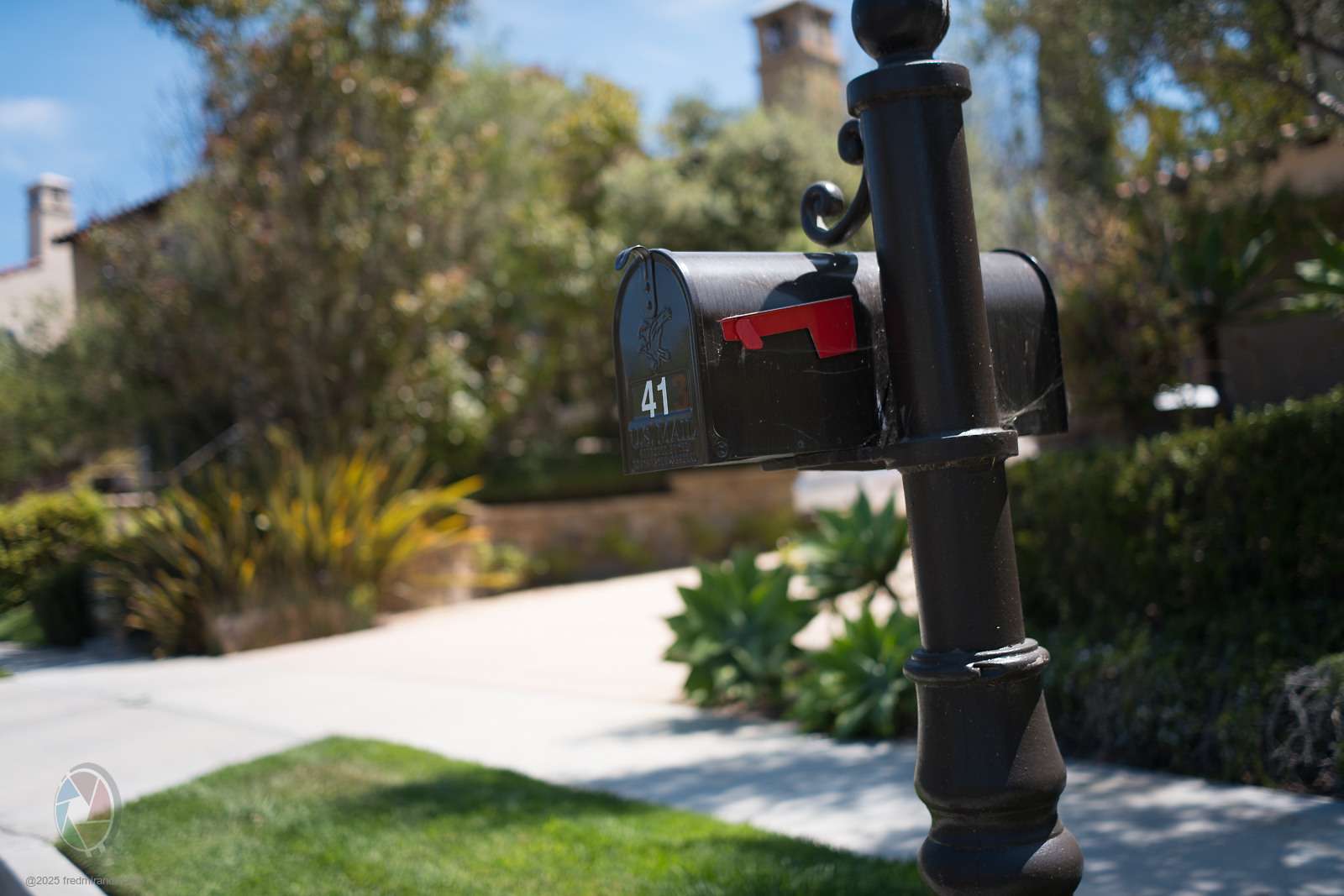
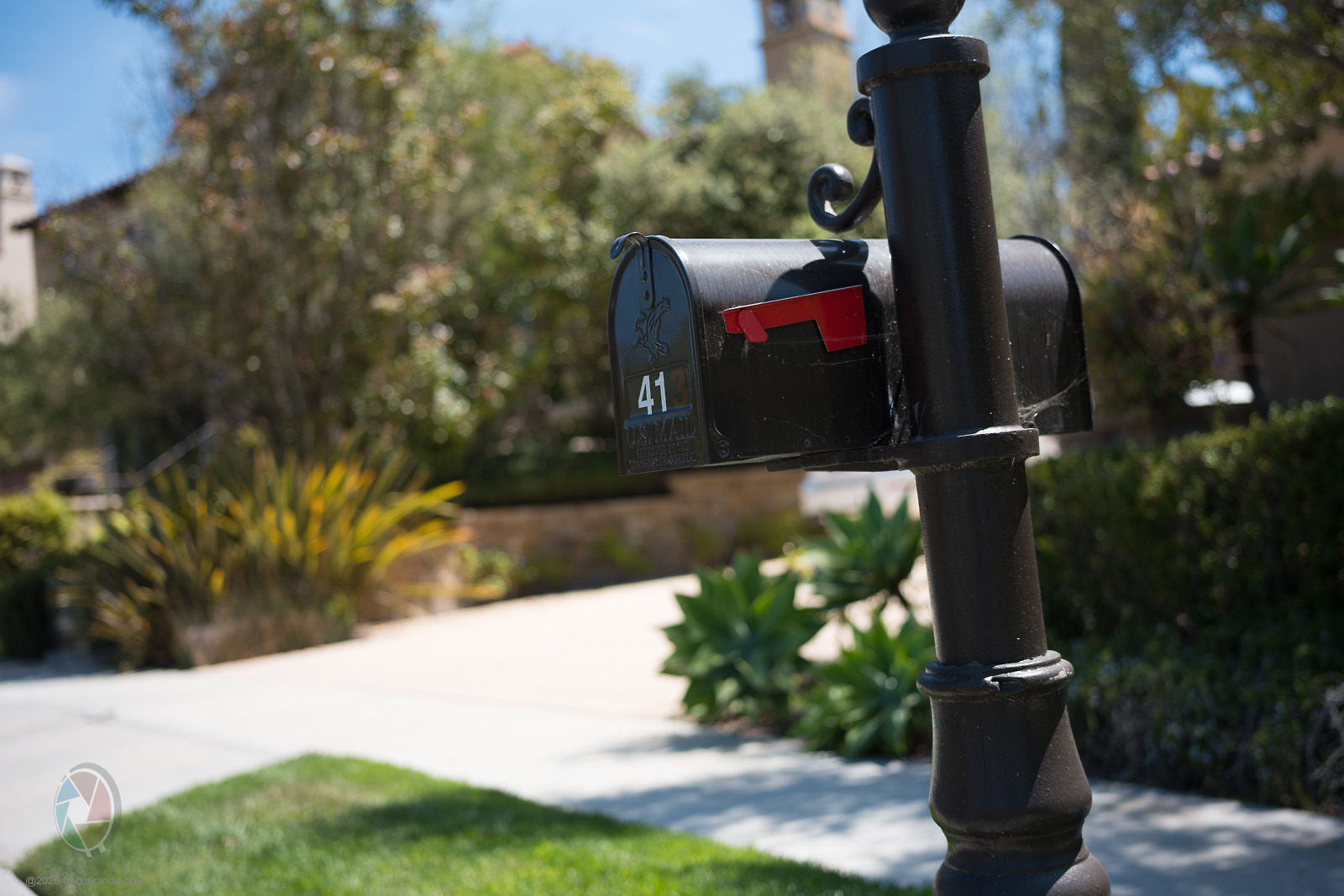
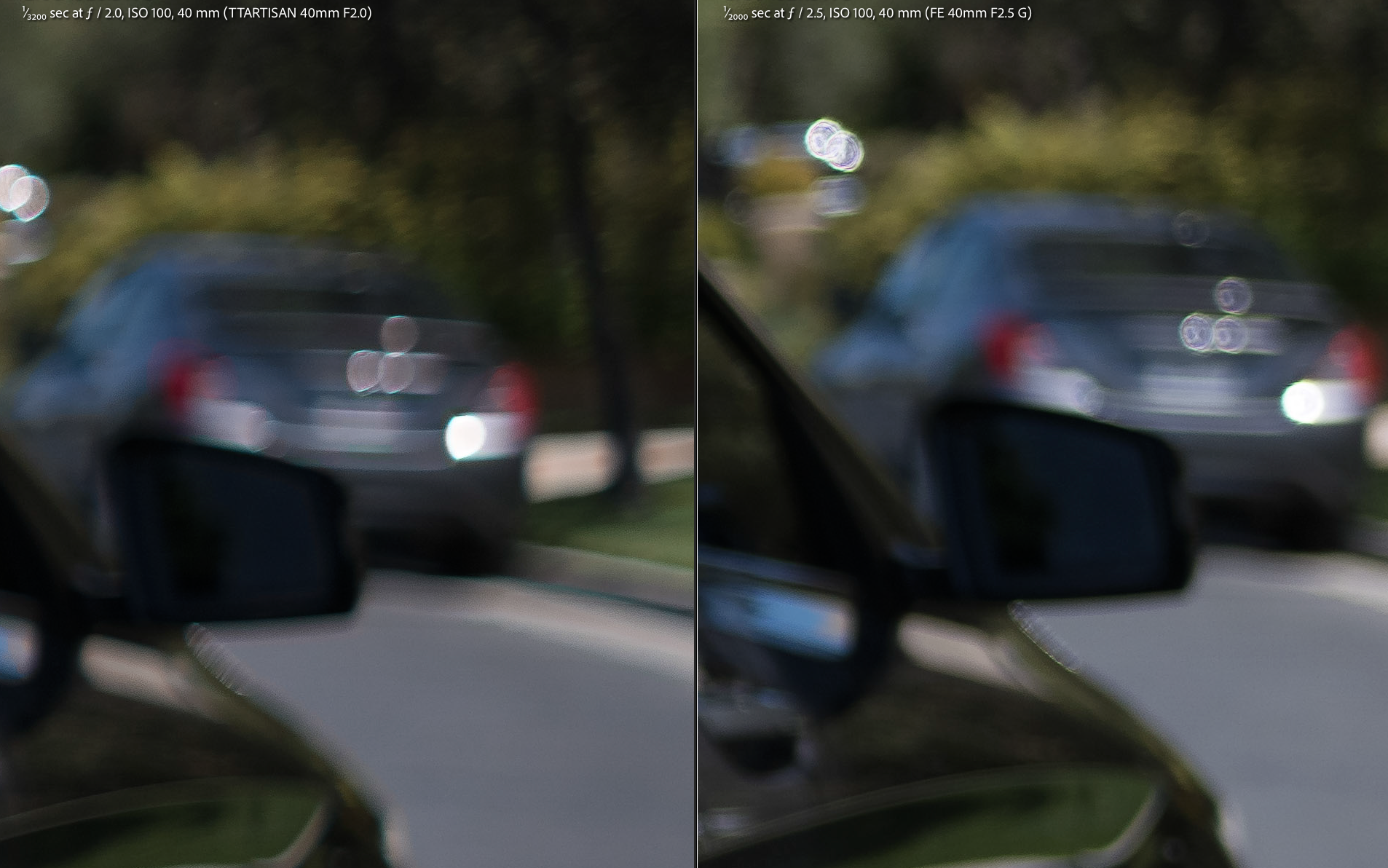
Another comparison showing the FOV and blur difference at the same distance. It also shows that the overall rendering is quite similar, except the TTA produces cleaner inner highlight structure.
ILCE-7CRTTARTISAN 40mm F2.0 lens40mmf/2.01/1600s100 ISO0.0 EV
ILCE-7CRFE 40mm F2.5 G lens40mmf/2.51/1000s100 ISO0.0 EV
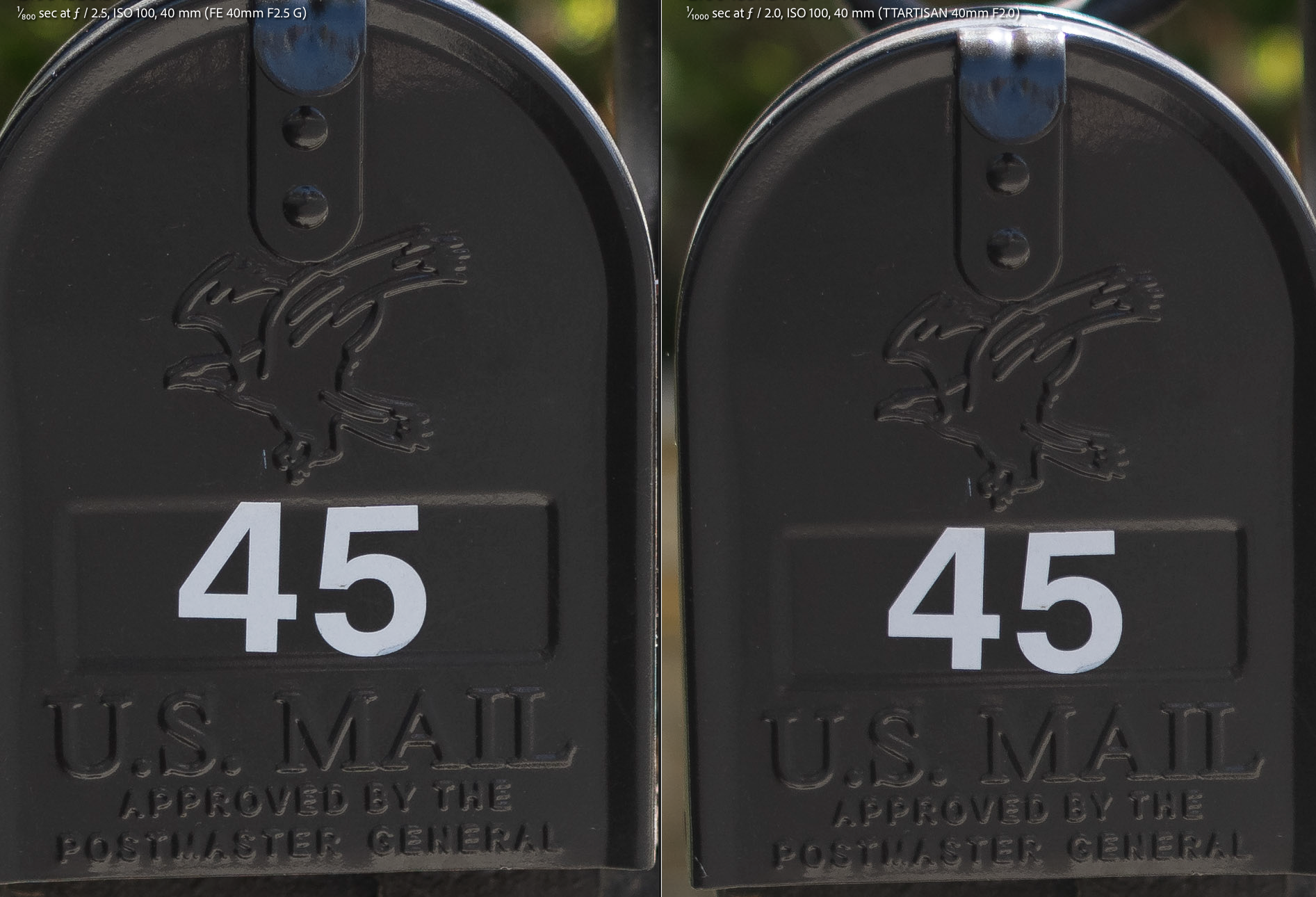
Center sharpness is quite similar between both lenses although the Sony has slight edge. You can see the mailbox appears larger with the Sony, which makes sense given the slightly longer focal length. I'd estimate it at about 37mm vs 40mm.
Aug 21, 2025 at 03:46 PM
Steve Spencer Offline • • • • • • • Upload & Sell: On
Fred Miranda wrote:
Here's a close-up at pixel level of the specular highlights from both lenses. Notice how much cleaner the TTA’s bokeh looks in comparison.
yes the TTA highlights are cleaner, but the bokeh circles are also less round
Steve Spencer wrote:
yes the TTA highlights are cleaner, but the bokeh circles are also less round
The TTA has stronger optical vignetting and noticeably higher tonal vignetting. Both are excellent compact lenses with different compromises, but for the price, the TTA is an absolute steal. The Sony stands out with its superior AF performance and higher performance across the frame.
Fred Miranda wrote:
Another comparison showing the FOV and blur difference at the same distance. It also shows that the overall rendering is quite similar, except the TTA produces cleaner inner highlight structure.
Thank you, Fred, for the comparison. I got dizzy looking at the background in both. The TTA is slightly smoother for sure. The smaller size and a slightly wider FOV are enticing.
Jonas B wrote:
[...]
I noticed some improvement: In AF-C focus locks better onto something when using the back focusing button. But... the lens AF is worse after updating as the focus now is pulsating around the target when closing down to f/4 or smaller aperture opening. That is in AF-C. I haven't tried any other AF setting. [...]
The pulsating, the focusing mechanism quickly and clearly audibly, goes back and forth around the focus point is hard to avoid. Wherever i pointed the camera, also at targets with a clear vertical line, the pulsating is there if at AF-C and f/4 or smaller opening.
Switching to AF-S or DMF puts an end to the pulsating. But... then there is another problem. The AF gets slow. The aperture mechanism closes and opens the blades slower than anything I have seen in a long time.
This is with my camera, a Sony A1: the aperture is closed to say f/4 position. Pressing the shutter release button (or any other focusing button of your choice) makes the camera open up (a bit slower than with any Sony lens), focus (a bit slower again) and close down (a bit slow, yes, again). Now you can take the image. If in DMF mode and wanting to adjust or check the focus the known MF problem with the lens focusing in clearly visibly steps when turning the focusing ring shows as well.
Compared to the Sony 40G the new TTA 40/2 is better in some ways. We have a somewhat faster lens, the background bokeh balls are smoother in some situations (the 40G makes rounder balls), the price is very much lower. Maybe something more.
Then the Sony 40G is better at everything else.
I hope the people at TTArtisan figure out how to update the lens making it usable in AF-C. Someone will find out. I'm sending my copy back.
Jonas B wrote:
The pulsating, the focusing mechanism quickly and clearly audibly, goes back and forth around the focus point is hard to avoid. Wherever i pointed the camera, also at targets with a clear vertical line, the pulsating is there if at AF-C and f/4 or smaller opening.
Switching to AF-S or DMF puts an end to the pulsating. But... then there is another problem. The AF gets slow. The aperture mechanism closes and opens the blades slower than anything I have seen in a long time.
This is with my camera, a Sony A1: the aperture is closed o say f74 position. Pressing the shutter release button (or any other focusing button of your choice) makes the camera open up (a bit slower than with any Sony lens), focus (a bit slower again) and close down (a bit slow, yes, again). Now you can take the image. If in DMF mode and wanting to adjust or check the focus the MF problem with the lens focusing in clearly visibly steps when turning the focusing ring.
Compared to the Sony 40G the new TTA 40/2 is better in some ways. We have a somewhat faster lens, the background bokeh balls are smoother in some situations (the 40G makes rounder balls), the price is very much lower. Maybe something more.
Then the Sony 40G is better at everything else.
I hope the people at TTArtisan figure out how to update the lens making it usable in AF-C. Someone will find out. I'm sending my copy back....Show more →
Sad that these issues are extending to Sony copies this time. The AF is completely unreliable. I'd never recommend this lens, in this state, vs the native option for any mount, simply because you cannot trust the autofocus in any regard.
I can't figure out how they knocked the 75/2 out of the park and crapped the bed so bad with the 40/2 which should have been a very similar build out.
TTA has been completely silent with me this time, and have copped to getting some not-so-good feedback from others, including on Sony. They clearly didn't do enough pre-release testing.
And Dustin's E copy demonstrates hard vignetting (14:10 among others).
With the TTA 40/2, from f/2 to f/4, there's noticeable vignetting, but it's not mechanical. The strongest vignetting appears at f/2, which requires a strong correction in Lightroom, though it can be fully corrected. From f/2.8 to f/4, vignetting gradually lessens and doesn't need heavy adjustments. By f/5.6, vignetting stops improving and is roughly the same as at f/4.
However, starting at f/8, the very corners begin to darken significantly, and it's no longer easily corrected because it becomes more mechanical in nature. The worst is at f/16, which likely matches the sample image from the review above.
Is this a problem? Yes and no. It's a compromise for having a fast lens in a very compact size. Personally, I see vignetting as part of a lens' character and rarely try to remove it completely, so shooting wide open with this lens is fine for me.
That said, if you're using the lens stopped down for street or landscape photography, the vignetting may be more noticeable. In that scenario, a lens like the Sony 40/2.5 might offer more versatility.
Here is a sequence from f/2 until f/16 without any correction:
I have no issues with the normal vignetting the lens seems to have, but the mechanical vignette 1) seems to vary copy to copy, 2) is inconsistent in nature as to when it appears, and 3) TTA proved that they can improve/eliminate it (the whole Z 75 saga).
There are other lenses of similar FL and speed that don't exhibit the issue, so I don't personally accept that it just is what it is. As it stands, it feels like buyers of this lens are playing a copy lottery which I detest.
RoamingScott wrote:
I have no issues with the normal vignetting the lens seems to have, but the mechanical vignette 1) seems to vary copy to copy, 2) is inconsistent in nature as to when it appears, and 3) TTA proved that they can improve/eliminate it (the whole Z 75 saga).
There are other lenses of similar FL and speed that don't exhibit the issue, so I don't personally accept that it just is what it is. As it stands, it feels like buyers of this lens are playing a copy lottery which I detest.
my copy doesn't seem to have this mechanical vignetting issue, i wonder if it is inconsistent manufacturing of the rear baffle that leads this variation.
sebboh wrote:
my copy doesn't seem to have this mechanical vignetting issue, i wonder if it is inconsistent manufacturing of the rear baffle that leads this variation.
That is my current hypothesis and what I pointed TTA to weeks ago. It's also possible that the extreme distortion during focus breathing could be related and improvable.
sebboh wrote:
my copy doesn't seem to have this mechanical vignetting issue, i wonder if it is inconsistent manufacturing of the rear baffle that leads this variation.
sebboh wrote:
what distances are you seeing it? that also makes me think the baffle might be the culprit.
Long distances. A vignetting test showed it so probably at infinity or close to infinity. Then also at some other images focused at least 20 meters away.