fredmiranda.com
Login

Moderated by: Fred Miranda
  New fredmiranda.com Mobile Site
  New Feature: SMS Notification alert
  New Feature: Buy & Sell Watchlist
  

FM Forums | Micro Four Thirds Forum | Join Upload & Sell

       2       3       end
  

What am I missing?


wastedimages
Offline
• •
Upload & Sell: Off
p.1 #1 · What am I missing?


I have been spending a quite a bit of time lately volunteering at my local nature reserve which in turn has made me think of trying wildlife photography.
As I have a Nikon, I automatically identified the 180-600 as the lens I need and I have started saving.
While researching technique on YouTube I saw lots of videos mentioning M43 for wildlife which has me confused a bit.
I get that the crop factor is very useful but the trade off for light gathering seems really severe.
Am I correct in thinking that F5-F6.3 on M43 is F10-F12.6 FFE? Im guessing high ISO is the only way around this?
When I think of my local nature reserve, I think of heavy shaded woodland areas, and I struggle to see how that would work. If I also think of birds who like early mornings or evenings when light levels are lower, again I struggle to see how that works.
I know I am missing something as I have seen some of the images in this forum which are stunning, so I know good shots are possible.
Apart from that there are benefits

Nikon + 180-600 = 2800g
OM1 + 100-400 = 1600g

That weight difference isn't to be sniffed at.
Also the weather sealing on the OM1 is alot better - not sure how the lenses compare though.
I would gain a much better EVF with the OM1

possible savings on not having to buy a better tripod as well

My Nikon will remain my EDC, Im purely looking at a wildlife setup, as when I look around, I could get a 2nd hand OM system and 100-400 lens for not that much more than a new Nikon 180-600


Jul 12, 2025 at 06:12 AM
sum1sgrampa
Offline
• • • • •
Upload & Sell: On
p.1 #2 · What am I missing?


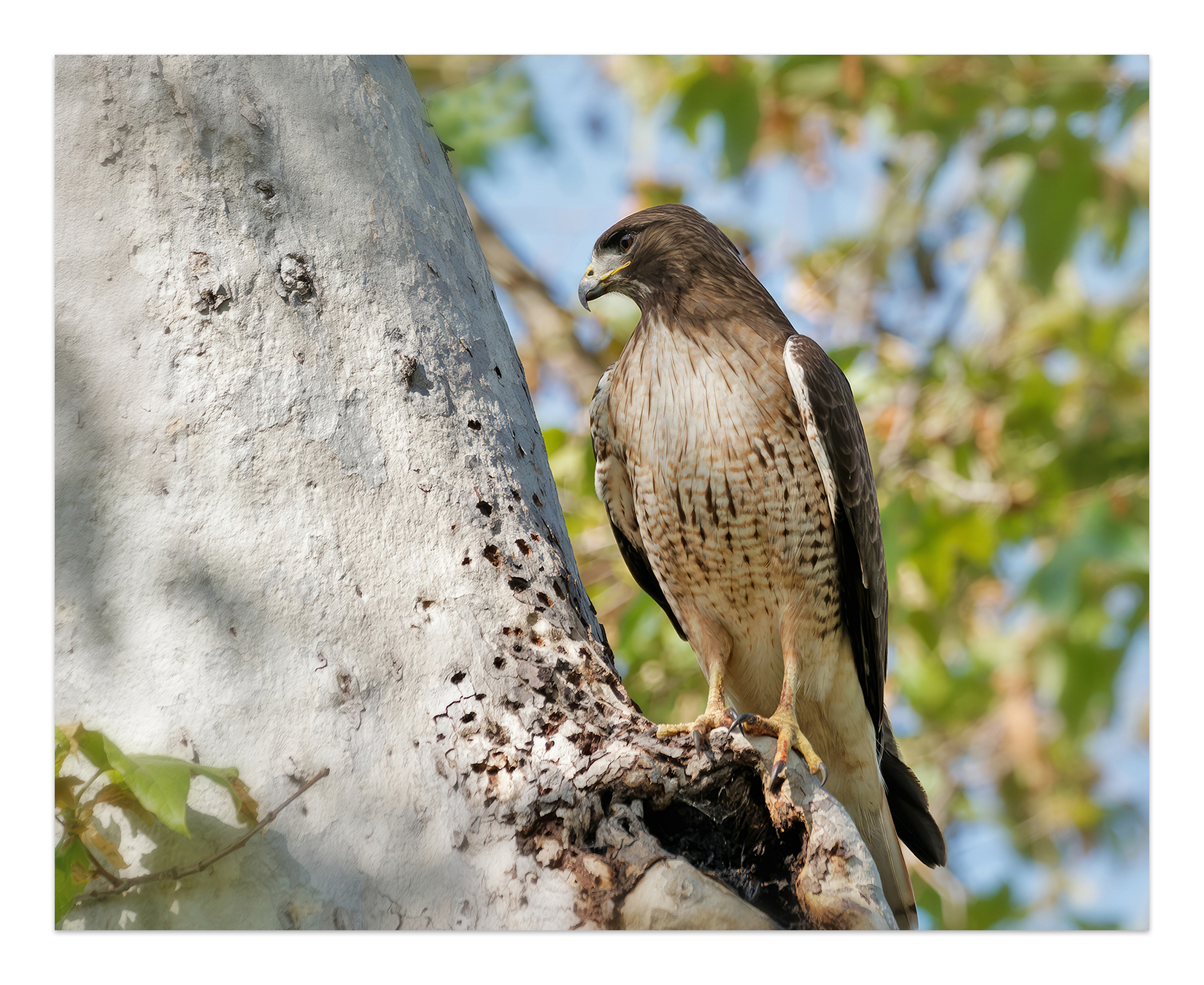
I've been shooting a Z9 and Z 180-600 since the 180-600 was released. And alongside that I've been shooting an OM-1 and Olympus 100-400 for over a year. I am not a very technical person so anyone can feel free to correct me if I'm wrong. Regarding the light gathering, I don't believe you give up anything. A 6.3 lens is a 6.3 lens regardless of the crop factor. Both lenses transmit the same amount of light at 6.3. But you are correct, the DOF is affected.
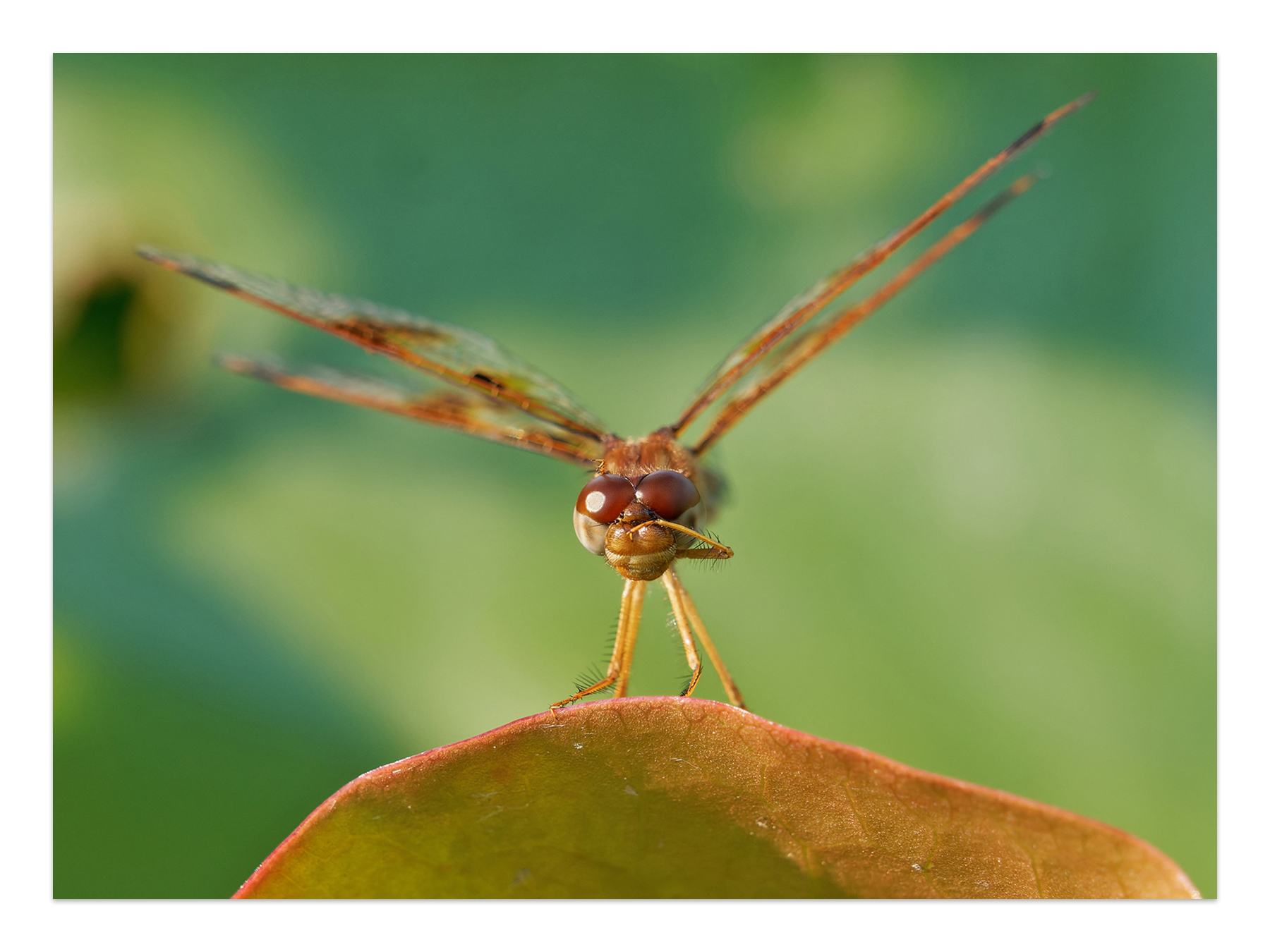
After much deliberation, I just shipped off my Z9, 180-600, and some other Z lenses to MPB in exchange for an OM-1 ll and the OM System 150-600 and some cash. There were a number of reasons for my decision. First and foremost is weight and size. I'm finding I'm not using the Z system enough to justify keeping it. The weight savings between the Z9/180-600 and OM-1/150-600 is three pounds. At my age that's a big difference. The OM will be much more packable. I'm tired of juggling two different systems and I enjoy shooting the OM system that much that I don't want to get rid of it. Muscle memory and all that. The OM-1 does everything the Z9 does FOR MY USES. Some things even better. I'm really getting into insects, Dragonfly, Butterfly, that type of thing. I'm constantly switching lenses on the single body. Now I'll be able to have either the 150-600 or the 100-400 on one body and the 90 macro on the other. No more lenses lying in the weeds and much quicker to switch between the two. There's no question that the Z9 is a much smoother and more intuitive body than the OM-1 but I'm okay with the switch. The only thing I think I'm going to miss is the 180-600 on the full frame Z9 has beautiful out of focus rendering for a 6.3 lens. Much better than my Sigma 150-600 S that I shot with for seven years. So I'm expecting I'll have to work a little harder to achieve that for some wildlife subjects with the OM system but that's fine.
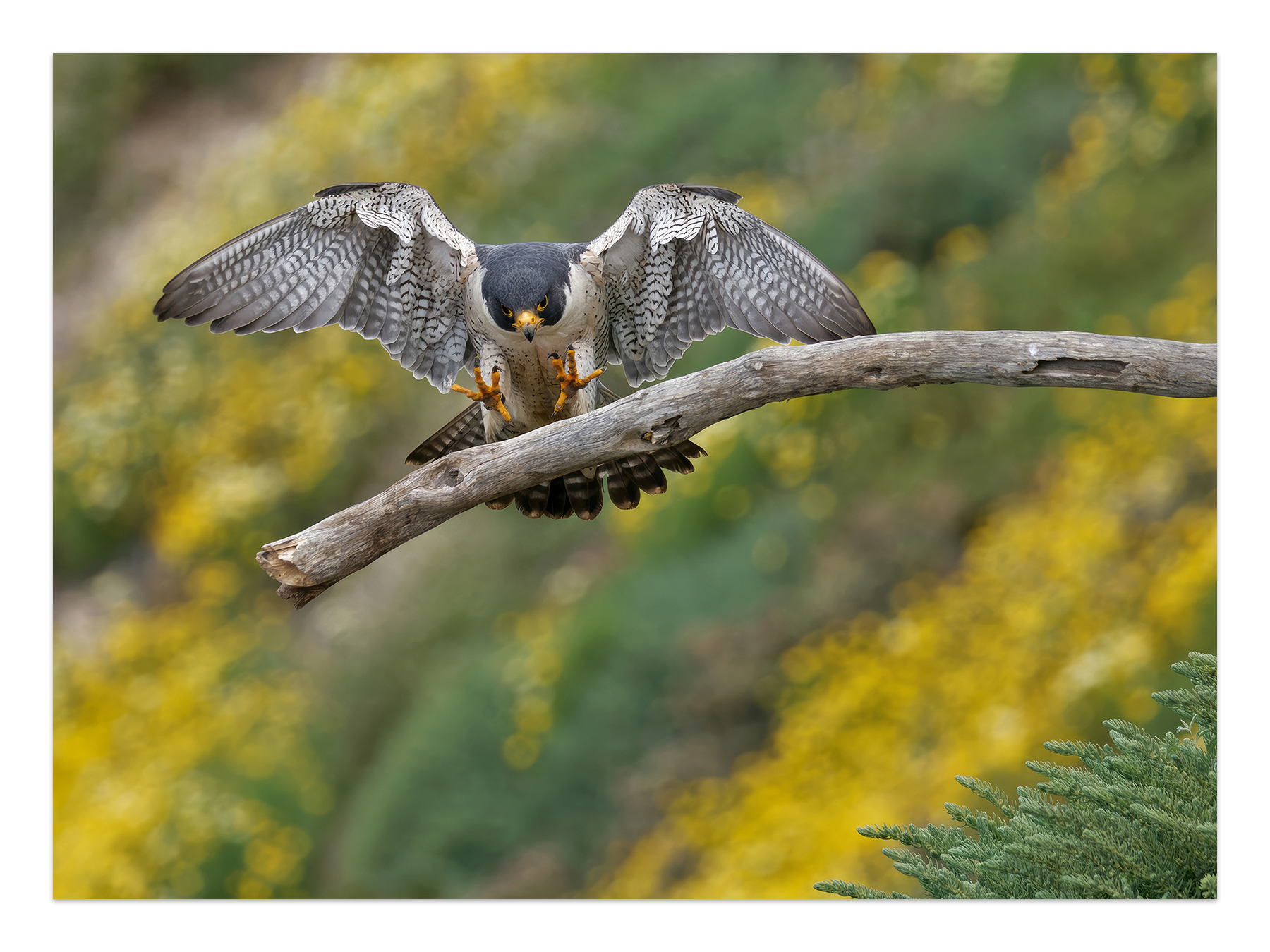
I'm of the opinion that there is no more capable combo out there for wildlife right now, for the $$, than the OM-1 and Olly 100-400. I'm convinced that I would have missed the last shot I'm posting here if I was using my Z9/180-600. I saw this Peregrine streaking in from my left and disappear below the cliff I was standing on. I knew from experience that there was a good possibility that he would fly up and land on that perch. There is no time to track the bird as he appears in an instant from below the cliff face. I immediately swung around and focused on the branch and started firing. This is a problem area for the Z9, grabbing that branch in an instant. To be fair, not sure if it's a Z9 problem or a 180-600 problem but the OM-1 nailed it. This is also a situation where the increased depth of field was a big advantage as I grabbed focus on the branch not the bird.
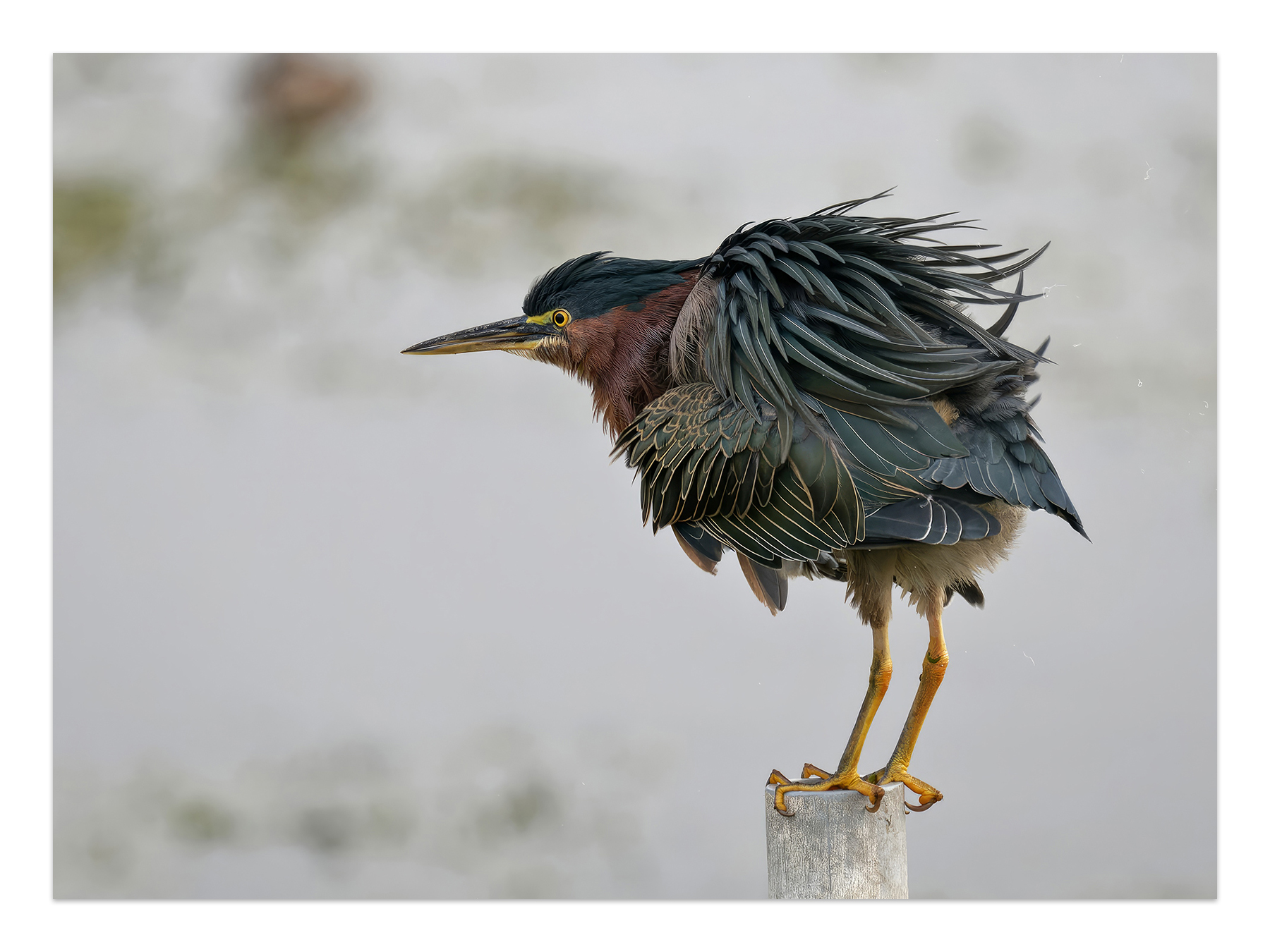
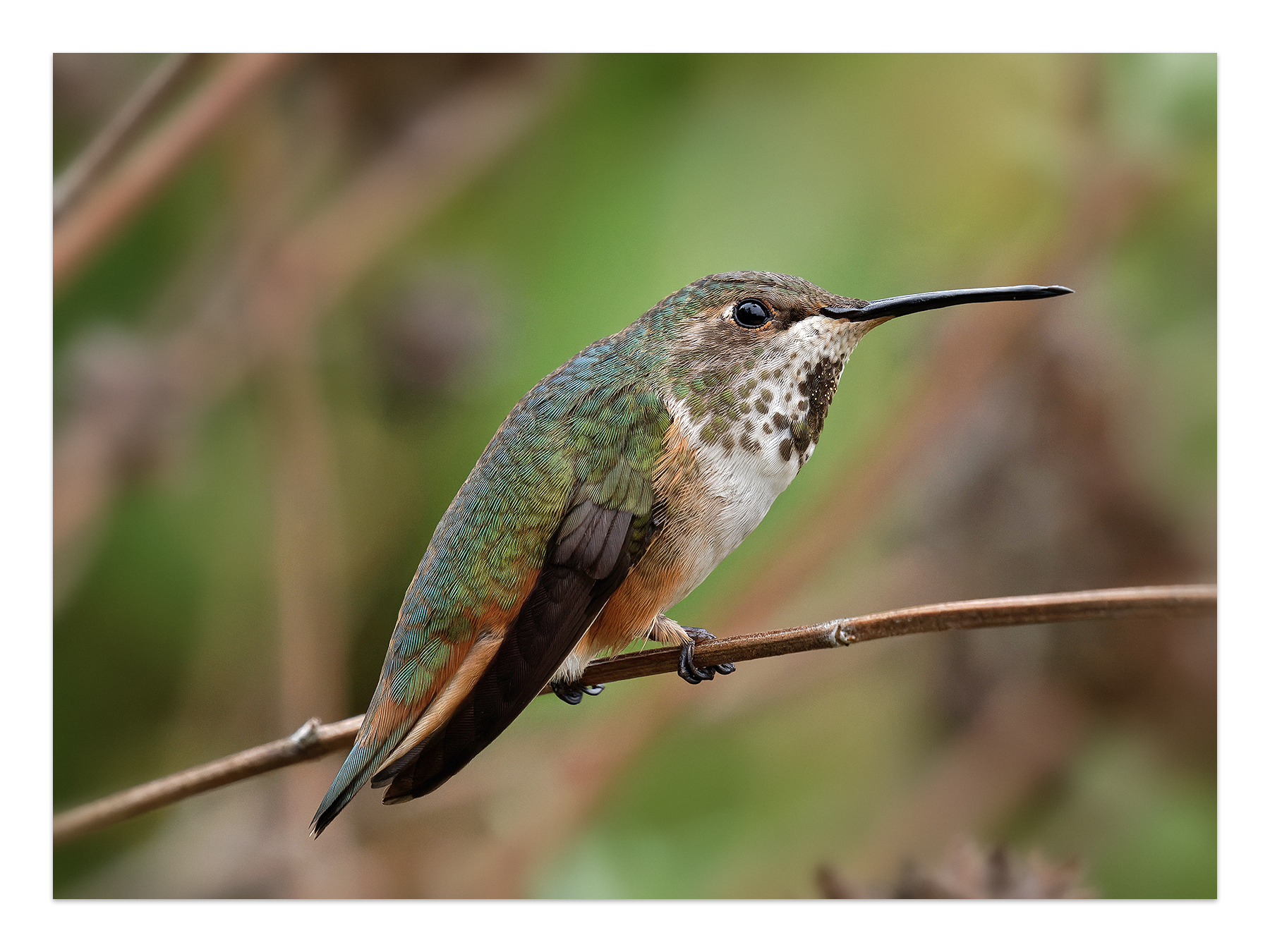
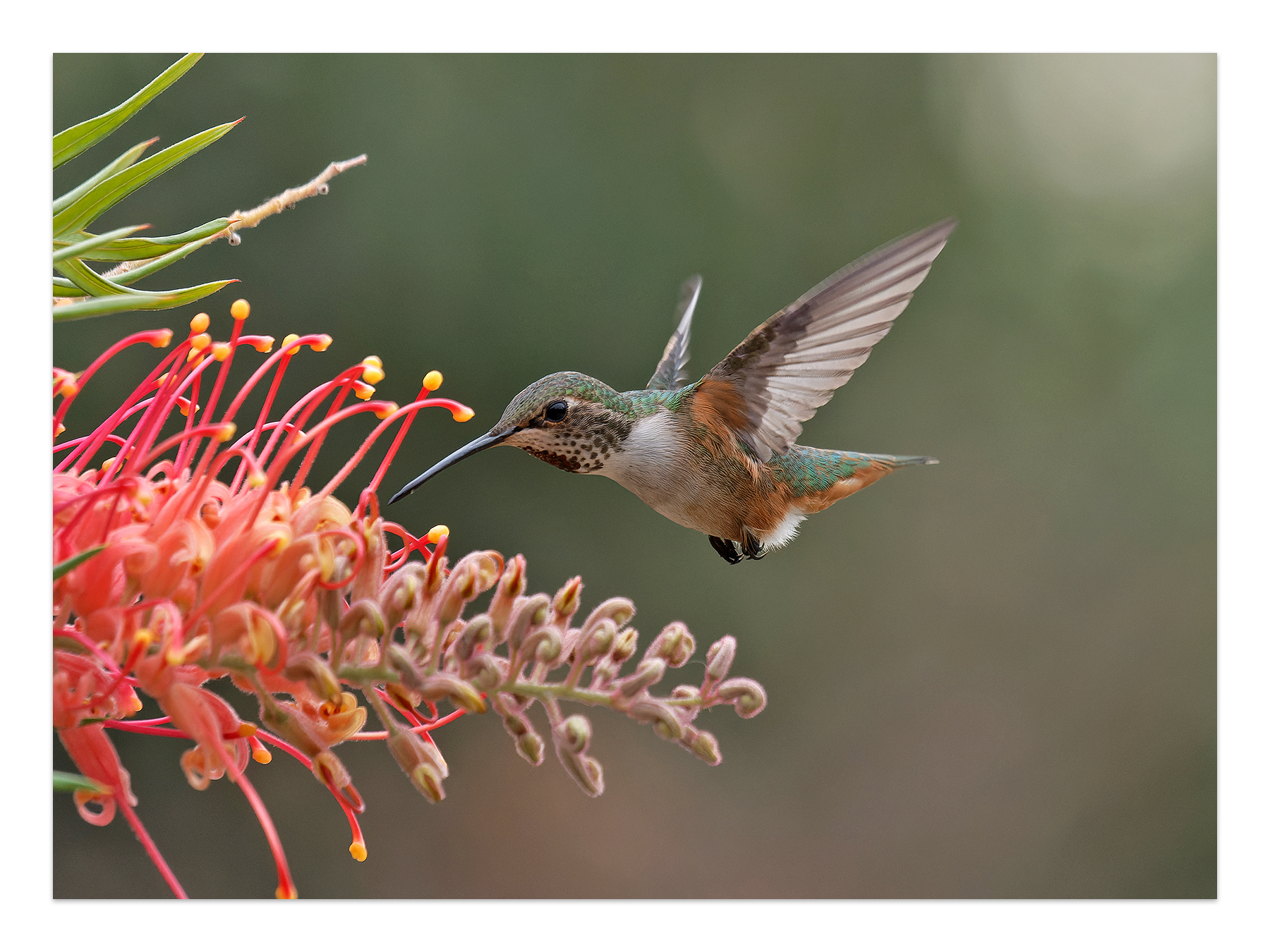
All with the 100-400 original version.
I realize this is much more info than you were asking for
Gary


ISO 1000


ISO 1000


ISO 1250


ISO 1250


ISO 1000


ISO 1250


Edited on Jul 12, 2025 at 09:12 AM · View previous versions


Jul 12, 2025 at 07:56 AM
wastedimages
Offline
• •
Upload & Sell: Off
p.1 #3 · What am I missing?


Thank you for your comments.
If I take the 150-600 into consideration then there isn't really a weight saving for me as that lens is only about 100g lighter than the 180-600. I don't have a Z9 though which is a chunky camera.
How are you finding the noise at high ISO, as the dragonflies in my nature reserve tend to be in the more shady areas? I would expect my usage to be very similar to yours, and I cant deny, 200-800 is a very useful range when the crop factor is taken into account.
Also I don't really know how much zoom I need, my longest lens is my 105mm macro, I started looking at 180-600 partly because of price and there were a few comments about 100-400 not being enough on FF for bird photography.

edit

Wow, those are some stunning shots, thank you for sharing

Edited on Jul 12, 2025 at 08:50 AM · View previous versions


Jul 12, 2025 at 08:23 AM
sum1sgrampa
Offline
• • • • •
Upload & Sell: On
p.1 #4 · What am I missing?


wastedimages wrote:
Thank you for your comments.
If I take the 150-600 into consideration then there isn't really a weight saving for me as that lens is only about 100g lighter than the 180-600. I don't have a Z9 though which is a chunky camera.
How are you finding the noise at high ISO, as the dragonflies in my nature reserve tend to be in the more shady areas? I would expect my usage to be very similar to yours, and I cant deny, 200-800 is a very useful range when the crop factor is taken into account.
Also I don't really know how much
...Show more

Just to be very clear, I'm in no way suggesting one system over the other. I absolutely loved my Z9/180-600 combo. Honestly, I'm still struggling with the decision As crazy as it sounds, any IQ advantage was probably the lowest on my list of considerations. I've shown 18x24 prints from both systems and the subject matter plays a larger role in their "print worthiness".
And I'm not excited about going back to an extending zoom. The short zoom throw of the 180-600 cannot be underestimated. That's a very large advantage right there. But everything's a trade off.
I agree, 400 is not nearly enough for most wildlife applications but that also depends on what type of wildlife and where you are. Little birds, no way. Big waders in Florida, different story.
As far as high ISO, I'm rarely shooting at over ISO 1600 and with today's software I consider that low for wildlife. I open my Raw files in DxO and then usually run them through Topaz AI after light editing in Photoshop. I rarely use the actual noise reduction slider in Topaz. I find it introduces too many artifacts. Just running the file through seems to do enough to lessen the noise.
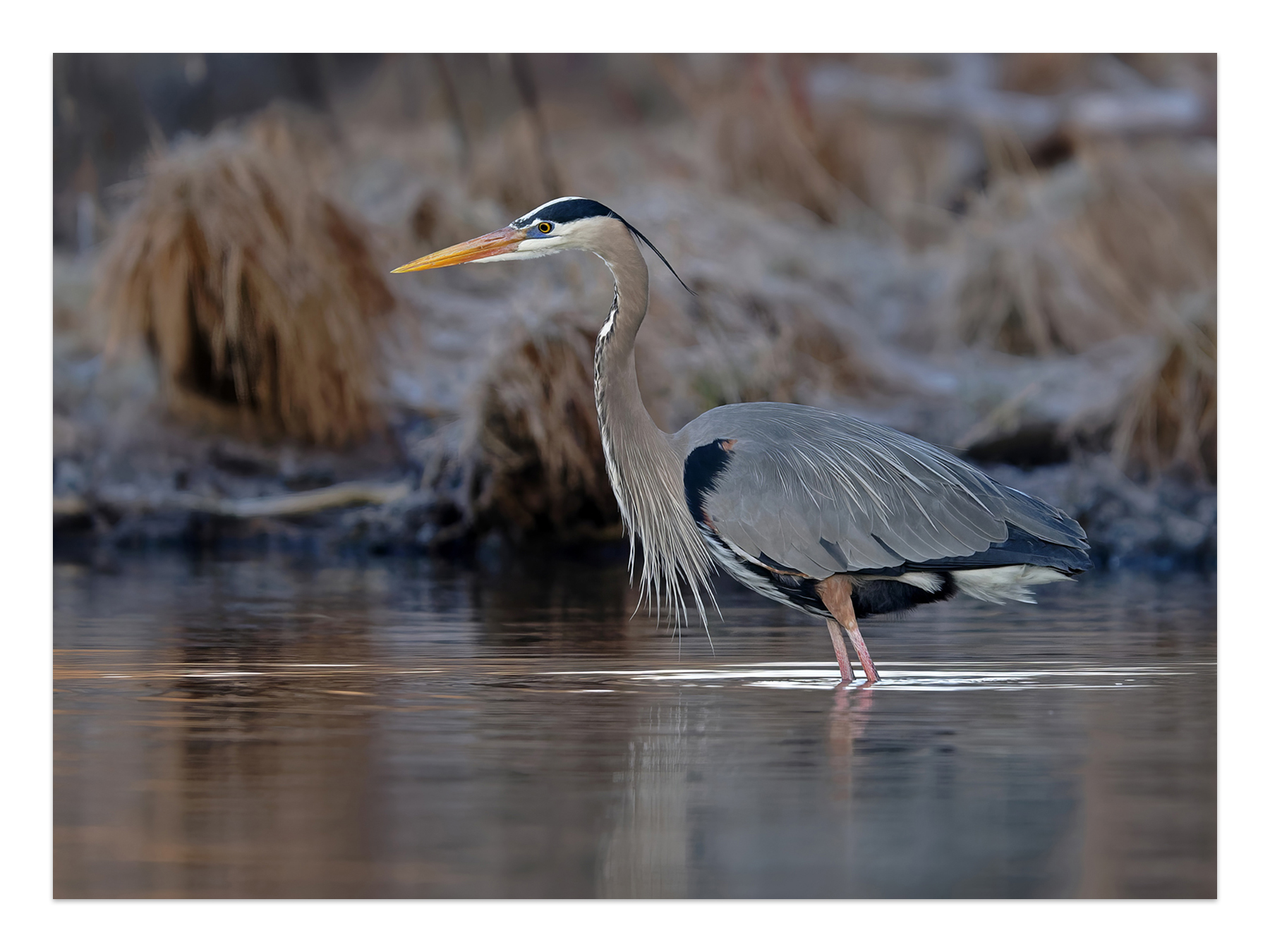
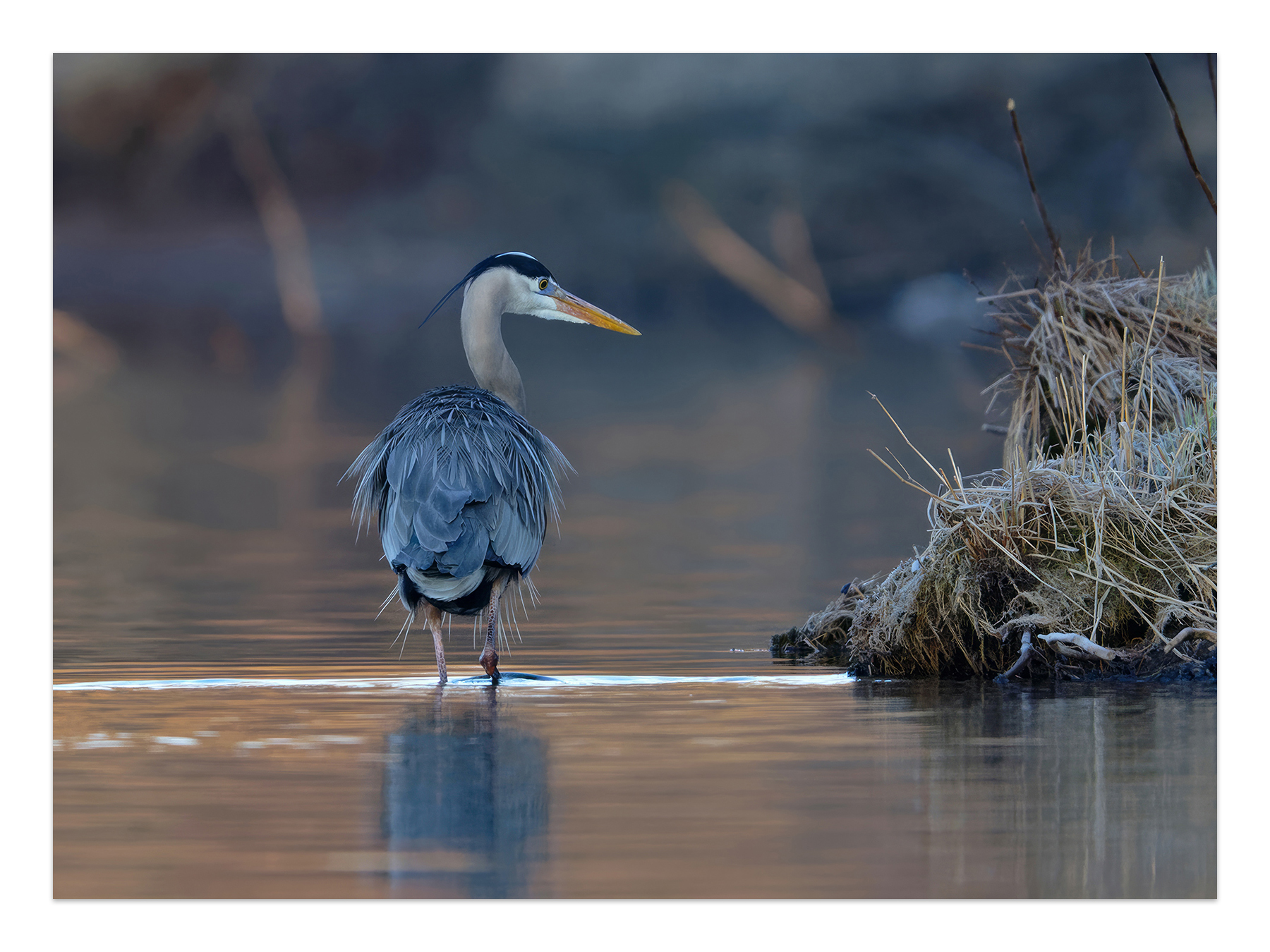
Here's an example of what I meant by the OOF areas from the 180/600 on the Z9. Really nice IMHO. That's a fantastic lens, especially for the $$. There's a very real possibility I may come to regret this decision but it is what it is


Jul 12, 2025 at 08:44 AM
johnvanr
Offline
• • • • •
Upload & Sell: On
p.1 #5 · What am I missing?


You don’t lose light gathering and there is a 300mm (600 mm equivalent) f/4 lens. But if you need high iso, MFT will be more noisy, though software can alleviate some of that.

It also depends on which Nikon camera you have. The Olympus OM-1 (II) is a stellar wildlife camera, but so are some Nikon cameras.


Jul 12, 2025 at 09:32 AM
ruthenium
Offline
• • • •
Upload & Sell: On
p.1 #6 · What am I missing?


Regarding "A 6.3 lens is a 6.3 lens regardless of the crop factor. Both lenses transmit the same amount of light at 6.3"

This seems physically impossible.
At 600mm f6.3, the lens is open to 600/6.3 = 95.2mm.
At 400mm f6.3, the lens is open to 400/6.3 = 63.5mm.
The surface area of the former is larger by (95.2/63.5)^2 = 2.25 times. This means 1.3 stops more light.

Of course, if the FF 600mm image is going to be cropped to 800mm (the equivalent of micro-four-thirds 400mm), then 44% of the light that passed through the lens would be discarded and the difference should become relatively small.

For another example, the light gathering with Olympus 300mm F4 is not the same as with Sony 600mm F4. The latter has a two-times larger iris (150 vs 75mm) and transmits 4 times more light. The difference is 2 stops of light.


Jul 12, 2025 at 10:35 AM
wastedimages
Offline
• •
Upload & Sell: Off
p.1 #7 · What am I missing?


It might come down to cost, if I look at Panamoz pricing the OM1 ii + 100-400 = £257
The 180-600 is £1370

Im going to look for somewhere to rent the 180-600, I know where I will start taking photo's but I don't really have any idea if the 180-600 zoom range is enough or perhaps too much for where I know the birds typically are.


Jul 12, 2025 at 12:15 PM
jmmaher
Offline
• • •
Upload & Sell: On
p.1 #8 · What am I missing?


ruthenium wrote:
Regarding "A 6.3 lens is a 6.3 lens regardless of the crop factor. Both lenses transmit the same amount of light at 6.3"

This seems physically impossible.
At 600mm f6.3, the lens is open to 600/6.3 = 95.2mm.
At 400mm f6.3, the lens is open to 400/6.3 = 63.5mm.
The surface area of the former is larger by (95.2/63.5)^2 = 2.25 times. This means 1.3 stops more light.

Of course, if the FF 600mm image is going to be cropped to 800mm (the equivalent of micro-four-thirds 400mm), then 44% of the light that passed through the lens would be discarded and the difference should
...Show more

I have read this before and it makes sense but when using a full frame camera versus a m4/3 I don’t see a 1.3 or two difference in metering for the same scene. Have you tried this and what have you seen in usage?

I am traveling and can not test this but from my observations in the past I didn’t see this. While the amount of light passing through FF is more it is also covering a larger sensor. Doesn’t this alter the calculation?


Jul 12, 2025 at 01:09 PM
sum1sgrampa
Offline
• • • • •
Upload & Sell: On
p.1 #9 · What am I missing?


ruthenium wrote:
Regarding "A 6.3 lens is a 6.3 lens regardless of the crop factor. Both lenses transmit the same amount of light at 6.3"

This seems physically impossible.
At 600mm f6.3, the lens is open to 600/6.3 = 95.2mm.
At 400mm f6.3, the lens is open to 400/6.3 = 63.5mm.
The surface area of the former is larger by (95.2/63.5)^2 = 2.25 times. This means 1.3 stops more light.

Of course, if the FF 600mm image is going to be cropped to 800mm (the equivalent of micro-four-thirds 400mm), then 44% of the light that passed through the lens would be discarded and the difference should
...Show more

This is contrary to everything I've read on this subject but as I said, I am not a technical person so I can't defend what I said. It was just my understanding from reading about the subject over time. It's very possible that I'm wrong. here's a discussion https://www.fredmiranda.com/forum/topic/1767836/. But it doesn't actually make things any clearer


Jul 12, 2025 at 03:22 PM
sum1sgrampa
Offline
• • • • •
Upload & Sell: On
p.1 #10 · What am I missing?


wastedimages wrote:
It might come down to cost, if I look at Panamoz pricing the OM1 ii + 100-400 = £257
The 180-600 is £1370

Im going to look for somewhere to rent the 180-600, I know where I will start taking photo's but I don't really have any idea if the 180-600 zoom range is enough or perhaps too much for where I know the birds typically are.


Which Nikon Z camera will you be using ?


Jul 12, 2025 at 03:31 PM


Search in Used Dept. 

ruthenium
Offline
• • • •
Upload & Sell: On
p.1 #11 · What am I missing?


jmmaher wrote:
I have read this before and it makes sense but when using a full frame camera versus a m4/3 I don’t see a 1.3 or two difference in metering for the same scene. Have you tried this and what have you seen in usage?

I am traveling and can not test this but from my observations in the past I didn’t see this. While the amount of light passing through FF is more it is also covering a larger sensor. Doesn’t this alter the calculation?


Yes, I tried this, but there is no need to reinvent the wheel. Photographic equivalence is a classical well established subject, beaten to death. There are many authoritative publications. One that is regularly mentioned is this
https://www.josephjamesphotography.com/equivalence/#definitions
I am going to copy-paste a long relevant quote.

"For a given scene and exposure time, 25mm f/1.4 on mFT is equivalent to 31mm f/1.8 on 1.6x (Canon APS-C), 33mm f/1.9 on 1.5x (all others' APS-C), and 50mm f/2.8 on FF (FX), where "equivalent to" means:

The photos all have the same diagonal angle of view (25mm x 2 = 31mm x 1.6 = 33mm x 1.5 = 50mm) and aperture diameter 25mm / 1.4 = 31mm / 1.8 = 33mm f/1.8 = 50mm / 2.8 = 18mm).
-The photos all have the same perspective when taken from the same position.
-The photos all have the same DOF (as well as diffraction softening) when they are taken from the same position with the same focal point and have the same display size.
-The photos all have the same motion blur for the same exposure time (regardless of pixel count).
-The same total amount of light is projected on the sensor for the same scene, DOF, exposure time, vignetting, and lens transmission (e.g. if the 25mm lens is t/1.6 at f/1.4, the 31mm lens is t/2 at f/1.8, the 33mm lens is t/2.1 at f/1.9, and the 50mm lens is t/3.2 at f/2.8).
-The same total light projected on the larger sensor will result in a lower exposure than the smaller sensor (the same total light over a larger area results in a lower density of light on the sensor).The larger sensor system will use a concomitantly higher ISO setting for a given lightness on the LCD playback and/or for the OOC (out-of-the-camera) jpg due to the lower exposure.  For example, ISO 200 on mFT is equivalent to ISO 250 on 1.6x which is equivalent to ISO 800 on FF.
-However, the same total light will result in the same noise if the sensors record the same proportion of light falling on them (same QE) and add in the same electronic noise (the noise from the sensor and supporting hardware), regardless of pixel count and ISO setting.  It should be noted that sensors of the same, or nearly the same, generation typically record very nearly the same proportion of light falling on them regardless of brand, size, or pixel count (a notable exception would be BSI tech which records a third to half a stop more light for a given exposure than non-BSI tech) and that the electronic noise matters only for the portions of the photo made with very little light.  It should also be understood that, for a given exposure, the ISO setting affects noise only inasmuch as higher ISO settings result in less electronic noise than lower ISO settings -- e.g. a photo "properly exposed" at f/2.8 1/100 ISO 1600 will be less noisy than a photo of the same scene at f/2.8 1/100 ISO 200 pushed to the same lightness.
-In addition, if the 25mm lens at f/1.4 in the example above is twice as sharp (lp/mm), the 31mm lens is 1.6x as sharp at f/1.8, and the 33mm lens is 1.5x as sharp at f/1.9 as the 50mm lens at f/2.8 (or any equivalent relative apertures), the sensors have the same number of pixels, and the AA filter introduces the same blur, then all systems will also resolve the same in the photo (lw/ph).


Jul 12, 2025 at 06:15 PM
ruthenium
Offline
• • • •
Upload & Sell: On
p.1 #12 · What am I missing?


jmmaher wrote:
While the amount of light passing through FF is more it is also covering a larger sensor. Doesn’t this alter the calculation?


The size of a sensor has nothing to do with the amount of light that passes through the attached lens. Sensors convert photons to photos but the number of photons that reach a sensor does not depend on this sensor size. There are only two physical parameters that determine exposure: the diameter of the entrance pupil (iris) of the lens in front of the sensor and the time the sensor is open to the incoming light.

The size of the sensor correlates with ISO: the larger is the sensor, the higher ISO value the camera must set for the same amount of light. For mFT ISO, the four-times larger FF sensor must have four times higher ISO when both sensors receive the same total amount of light. Thus, it is not the smaller but larger sensors that require the use of higher ISO values under equivalent conditions.
The concern is always about the light coming through a lens, when it comes to exposure. A larger sensor doesn't and can't collect more light than a small sensor if the same total amount of light falls on both sensors.


Jul 12, 2025 at 06:38 PM
ruthenium
Offline
• • • •
Upload & Sell: On
p.1 #13 · What am I missing?


jmmaher wrote:
I have read this before and it makes sense but when using a full frame camera versus a m4/3 I don’t see a 1.3 or two difference in metering for the same scene. Have you tried this and what have you seen in usage?

I am traveling and can not test this but from my observations in the past I didn’t see this. While the amount of light passing through FF is more it is also covering a larger sensor. Doesn’t this alter the calculation?


One relevant example where I documented an ISO difference between a mFT and a FF system is this
https://www.fredmiranda.com/forum/topic/1861266/
There, I recived useful advice from @dclark on photographic equivalence:

https://www.fredmiranda.com/forum/topic/1861266/0&year=2024#16567570


Jul 12, 2025 at 06:57 PM
johnvanr
Offline
• • • • •
Upload & Sell: On
p.1 #14 · What am I missing?


ruthenium wrote:
Regarding "A 6.3 lens is a 6.3 lens regardless of the crop factor. Both lenses transmit the same amount of light at 6.3"

This seems physically impossible.
At 600mm f6.3, the lens is open to 600/6.3 = 95.2mm.
At 400mm f6.3, the lens is open to 400/6.3 = 63.5mm.
The surface area of the former is larger by (95.2/63.5)^2 = 2.25 times. This means 1.3 stops more light.

Of course, if the FF 600mm image is going to be cropped to 800mm (the equivalent of micro-four-thirds 400mm), then 44% of the light that passed through the lens would be discarded and the difference should
...Show more

The MFT light also has to cover a smaller sensor, so each pixel still gets the same amount of light.


Jul 13, 2025 at 01:28 AM
wastedimages
Offline
• •
Upload & Sell: Off
p.1 #15 · What am I missing?


I think I am going to struggle for light no matter which system I choose. Most of the wildlife in my local reserve is active at either pre-dawn or dawn. Plus we all know that dawn or blue hour is the best light and good light is makes for great backgrounds.
With an aperture range of 5.6-6.3 and the need for fast shutter speeds for birds, I am looking at high ISO values to get the required shot. Although I can see a very good argument for M43 and the extra reach it brings, I am concerned about low light capabilities, I am sure that in normal daylight hours there would be no issues, but in shaded woodland or very early mornings where light is low I think I will struggle on full frame let alone using the smaller sensor.

This is all theory right now, I have no wildlife experience, though it is something I plan to rectify soon. At this stage I am just trying to predict the scenarios where I will be taking photo's and trying to get an idea of the kit I will need


Jul 13, 2025 at 04:57 AM
gmccroskery
Offline
• • •
Upload & Sell: On
p.1 #16 · What am I missing?


wastedimages wrote:
I think I am going to struggle for light no matter which system I choose. Most of the wildlife in my local reserve is active at either pre-dawn or dawn. Plus we all know that dawn or blue hour is the best light and good light is makes for great backgrounds.
With an aperture range of 5.6-6.3 and the need for fast shutter speeds for birds, I am looking at high ISO values to get the required shot. Although I can see a very good argument for M43 and the extra reach it brings, I am concerned about low light capabilities,
...Show more

My suggestion is that you consider renting whatever you need to compare both systems. The obvious problem with that is you are familiar with Nikon and not familiar with the OM-1 Mkll. Also, there are a ton of videos from photographers who normally shoot FF and who have used the m4/3's setup and give their honest assessment of plusses and minuses.

If you are relatively young and in good health, dealing with a rather bulky FF system may work fine for you -- I'm 78 Yrs. old and for me m4/3's is almost essential -- I want my shooting experience to be fun, as well as productive.
One other thing I would add is that the OM-1 Mkll offers some very useful functions the Nikon does not, for shooting situations other than wildlife -- e.g. In-camera Focus Stacking, hand held High Resolution Mode, Starry AF, Keystone Compensation, Live Time and Live Composite Modes, Live ND and Live GND Modes, etc..

Greg


Jul 13, 2025 at 08:19 AM
ruthenium
Offline
• • • •
Upload & Sell: On
p.1 #17 · What am I missing?


johnvanr wrote:
The MFT light also has to cover a smaller sensor, so each pixel still gets the same amount of light.


First, I believe that I made a mistake in my first post where I calculated that the 600mm f6.3 and 400mm f6.3 are different by 1.3 stops of light. The difference should be greater, in favour of the FF system because of a greater FoV at 600mm vs the mFT at 400 mm. Not only the diameter of the entrance pupil of the 600mm lens is larger (95.2mm) but also it draws more light than the 400mm (equivalent to 800mm on FF) from the extended FoV.
Comparing non-equivalent systems can be less straightforward than dealing with equivalent systems.

Back to your comment "The MFT light also has to cover a smaller sensor, so each pixel still gets the same amount of light."
I wish I knew what you mean - sorry about this. N photons that hit an mFT or FF sensor should produce the same signal from the sensor, assuming the same quantum efficiency of the sensors.

In general, the concept of equivalence is well-developed in the literature. For example, a detailed paper on "Equivalence theory for cross-format photographic image quality comparisons" was published by D. Andrew Rowlands in Optical Engineering 2018, 57(11), 110801
www.spiedigitallibrary.org/journals/Optical-Engineering/volume-57/issue-11/110801/Equivalence-theory-for-cross-format-photographic-image-quality-comparisons/10.1117/1.OE.57.11.110801.pdf

I am going to copy-paste some of the relevant paragraphs (note that R is the crop factor, e.g. R = 2 between mFT and FF):
"Equivalent photos can be produced by different formats provided an “equivalent” combination of focal length f, f-number N, and ISO setting S is used on each respective format:
• equivalent focal lengths are related through R;
• equivalent f-numbers are related through R; and
• equivalent ISO settings are related through R2 (R squared)."

My example: mFT 20mm f1.4 and FF 40mm f2.8 will produce equivalent photos when the cameras are set to the same SS.
The FF ISO is going to be 4 x mFT ISO, e.g. 6400 (FF) vs. 1600 (mFT).

Another quote: "Equivalent photos are defined as photos taken using cameras based on different sensor
formats that have the following characteristics:
(1) the same perspective;
(2) the same framing (or AFoV);
(3) the same display dimensions;
(4) the same DoF;
(5) the same shutter speed; and
(6) the same lightness."

"Equivalence theory enables photographers to calculate the equivalent focal lengths, f-numbers, and ISO settings required on different camera formats in order to produce equivalent photos, i.e., photos with the same appearance characteristics including perspective, framing (AFoV), DoF, and shutter speed."
"the same entrance pupil diameter is required on each format in order to produce equivalent photos and that equivalent photos are produced using the same amount of light."

Importantly, this paper demonstrates that the dynamic range of cameras that have sensors of different sizes is practically the same when the camera systems capture equivalent images. Note that this is at the equivalent ISO, such as for example mFT ISO 1600 and FF ISO 6400. One can easily see that this observation is true by looking at the Photographic Dynamic Range (PDR) values that are readily available from photonstophotos. It is often said that noise and dynamic range are the two sides of the same coin. Indeed, equivalent photos must display the same amount of noise and the same signal-to-noise ratio.

Finally, it is true that a FF and mFT camera systems that have equivalent focal lengths (e.g., FF 50mm and mFT 25mm) and set to the same SS, the same aperture f-number (e.g. both at f2.8), and the same ISO gain (e.g. both at ISO 200) and used from the same spot at the same distance to a subject should produce correctly exposed images that have the same framing. These images are not going to be EQUIVALENT because the mFT image should have a more shallow DoF and, most importantly, the signal-to-noise ratio that is 1/4th (25%) of that for the FF system, because under the above conditions the mFT sensor received only 1/4 (25%) of the number of photons that hit the FF sensor. This is a natural consequence of the surface area of the entrance pupil of the FF lens at 50mm f2.8 being four times larger than that of the mFT lens at 25mm f2.8.


Jul 13, 2025 at 08:27 AM
Robin Smith
Offline
• • • •
Upload & Sell: Off
p.1 #18 · What am I missing?


What an amazingly complex way of looking at this. Poor OP if he has waded through all this will be thoroughly confused. At any equivalent aperture, m43 lenses with the same field of view as an FF lens have the same light gathering ability, but 2 stops greater depth of field. There are penalties associated with the MFT system due to increased noise noticeable at higher ISOs, but noise reduction in post processing can reduce this as it can for a FF system.

Edited on Jul 13, 2025 at 01:03 PM · View previous versions


Jul 13, 2025 at 08:48 AM
az-dave
Offline
• • •
Upload & Sell: Off
p.1 #19 · What am I missing?


I may be thinking about this wrong but it seems that everyone wants to make m43 to look like full frame when for macro and wildlife the greater depth of field can be an advantage so if we do the inverse to get m43 FOV and DOF for a 300 f4 on full frame we would need to be at 600 F8 with either a slower shutter speed or 2 more stops of ISO. There has to be more to it then I am thinking about. Thoughts?

Dave


Jul 13, 2025 at 11:53 AM
wastedimages
Offline
• •
Upload & Sell: Off
p.1 #20 · What am I missing?


gmccroskery wrote:
My suggestion is that you consider renting whatever you need to compare both systems. The obvious problem with that is you are familiar with Nikon and not familiar with the OM-1 Mkll. Also, there are a ton of videos from photographers who normally shoot FF and who have used the m4/3's setup and give their honest assessment of plusses and minuses.

If you are relatively young and in good health, dealing with a rather bulky FF system may work fine for you -- I'm 78 Yrs. old and for me m4/3's is almost essential -- I want my shooting experience to
...Show more

I am slowly working my way through the videos now


Jul 13, 2025 at 12:23 PM
       2       3       end


FM Forums | Micro Four Thirds Forum | Join Upload & Sell

       2       3       end


Welcome back
Log in to your account