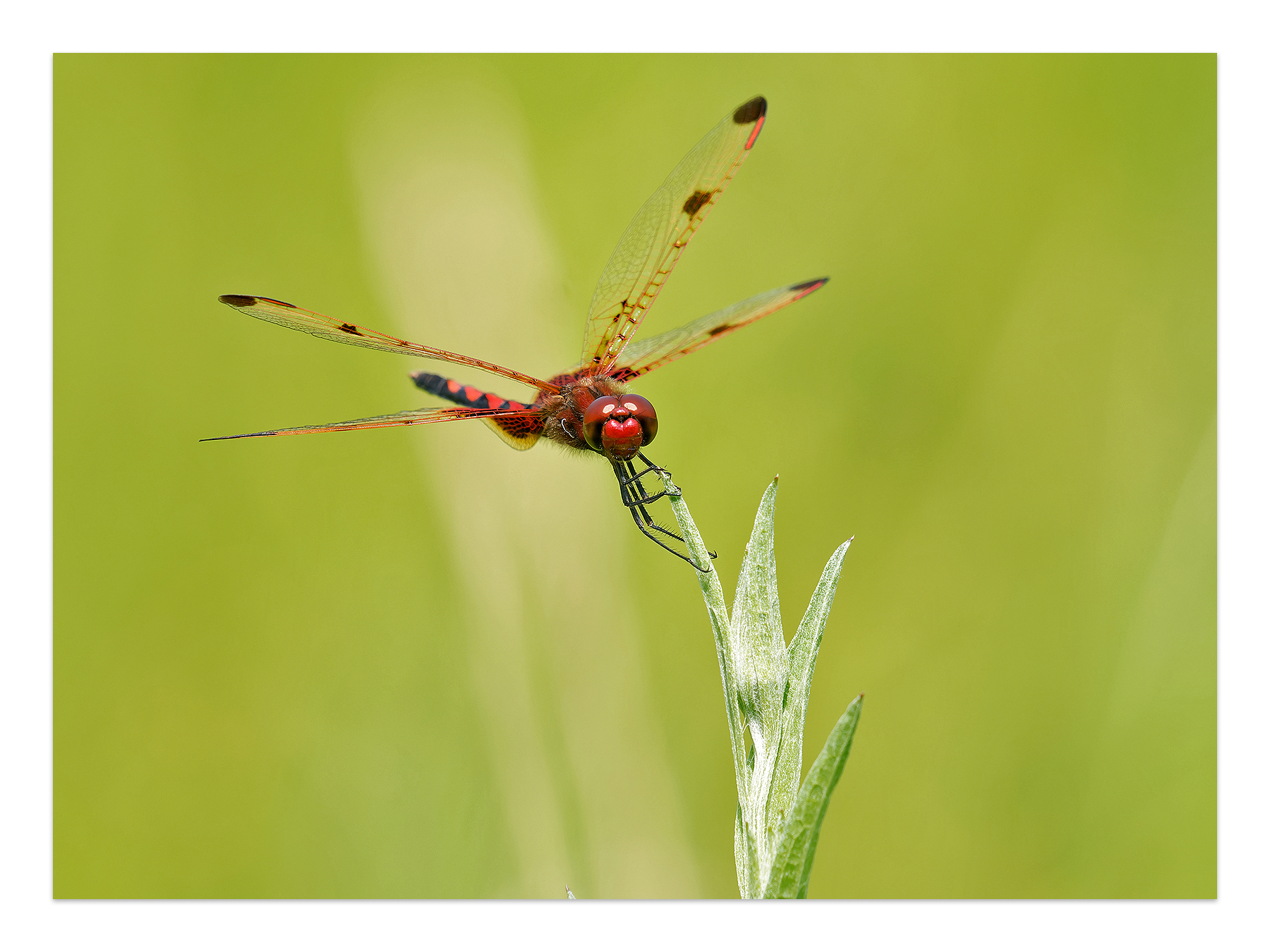
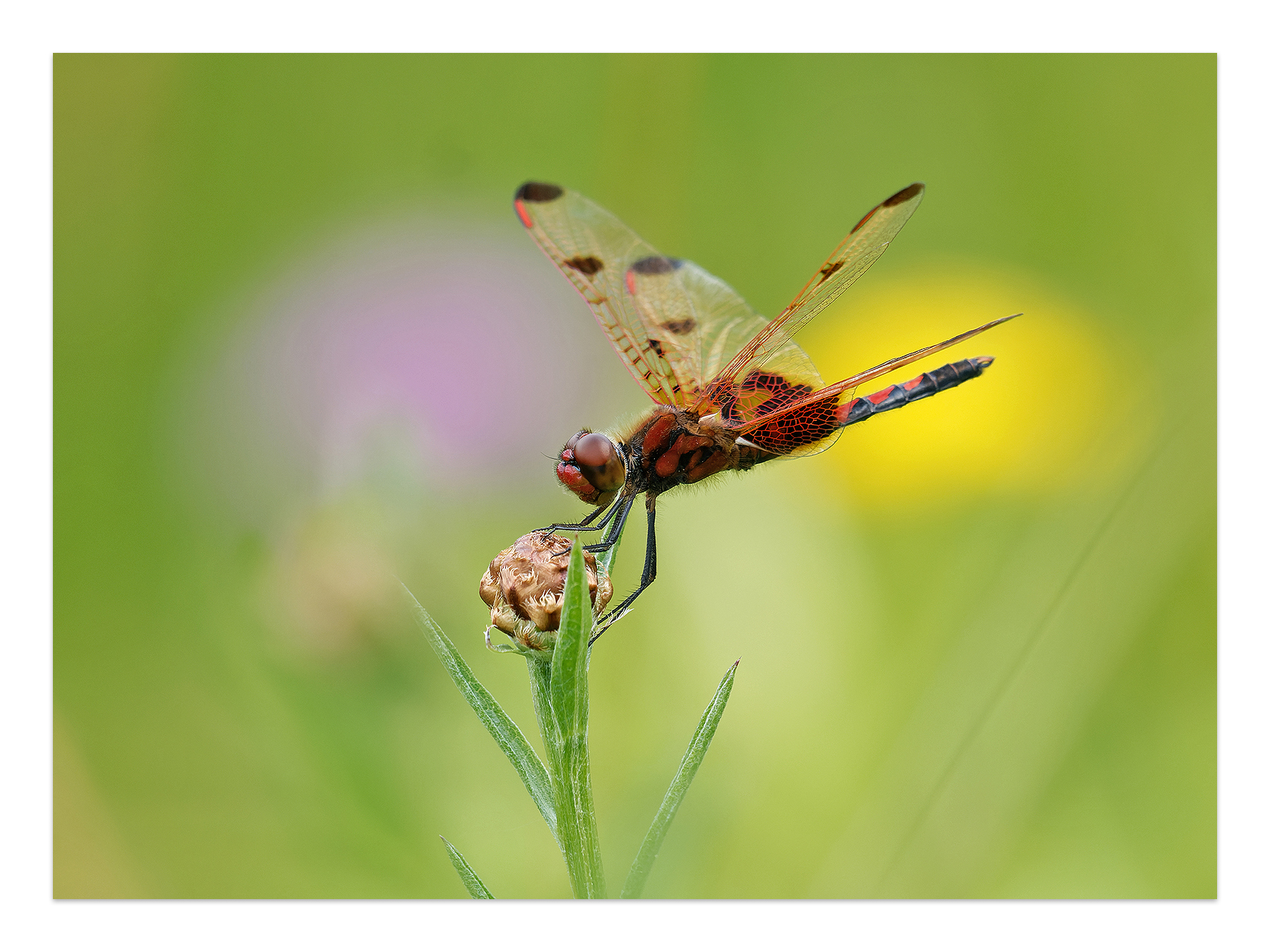
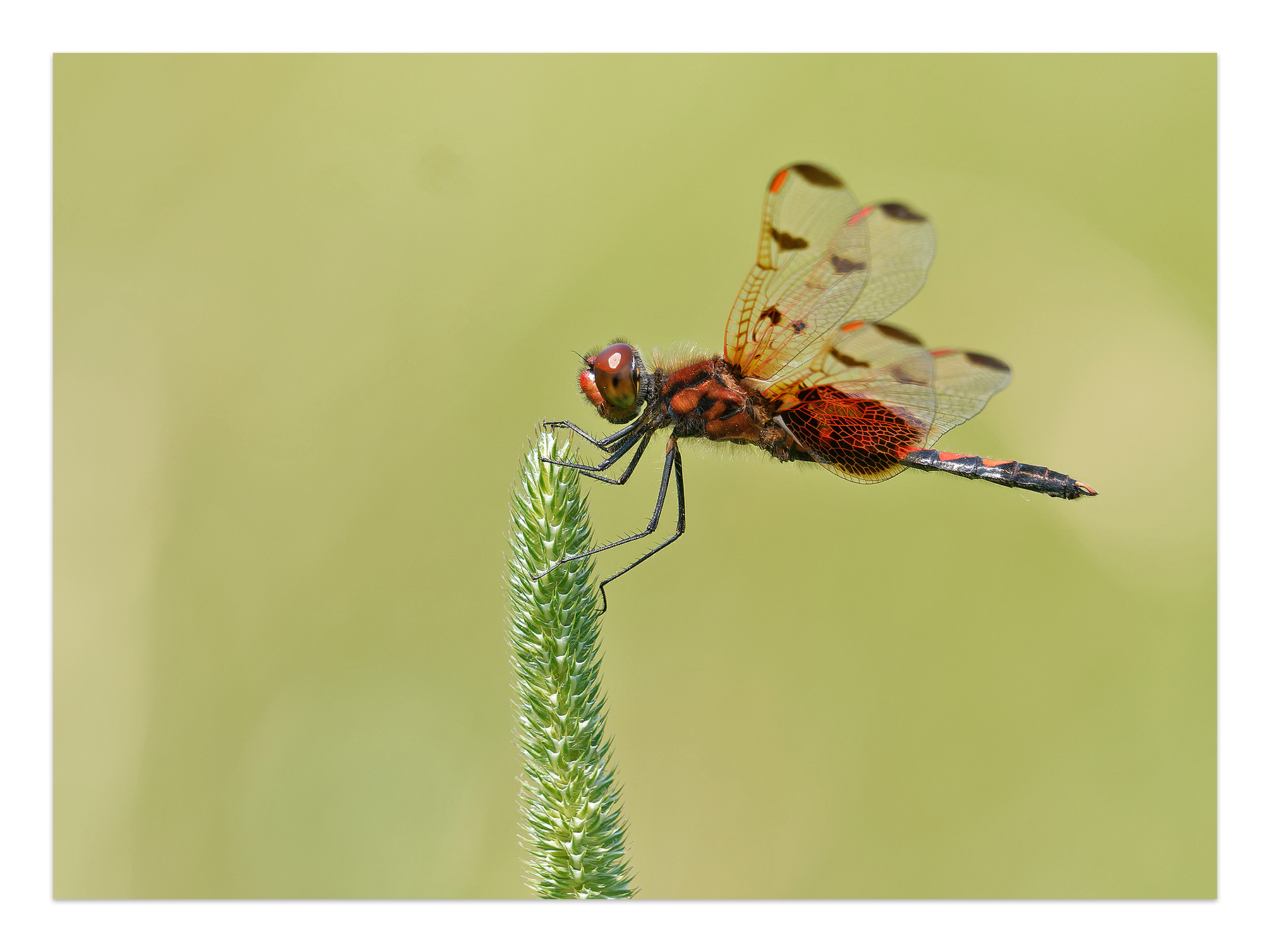
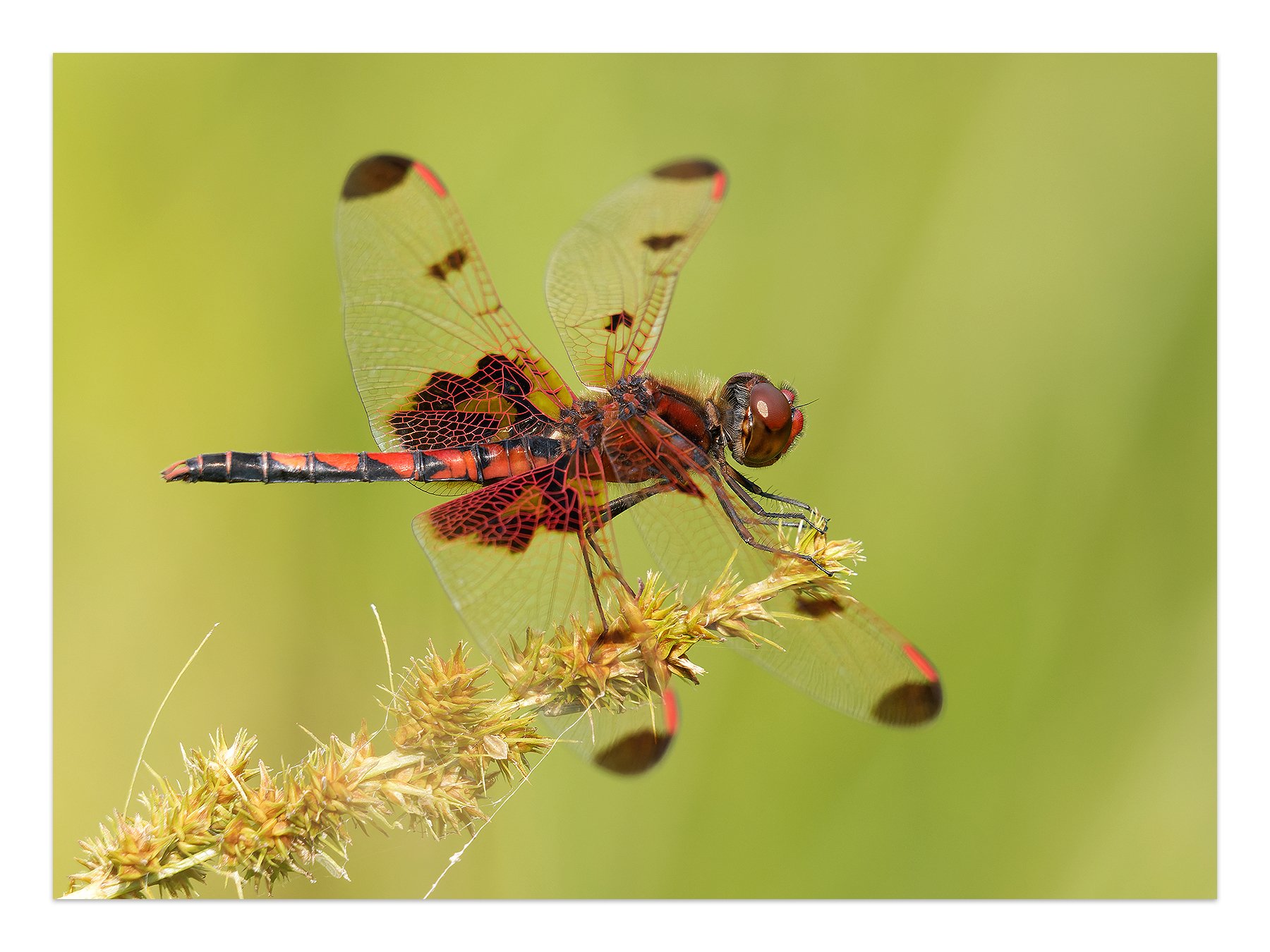
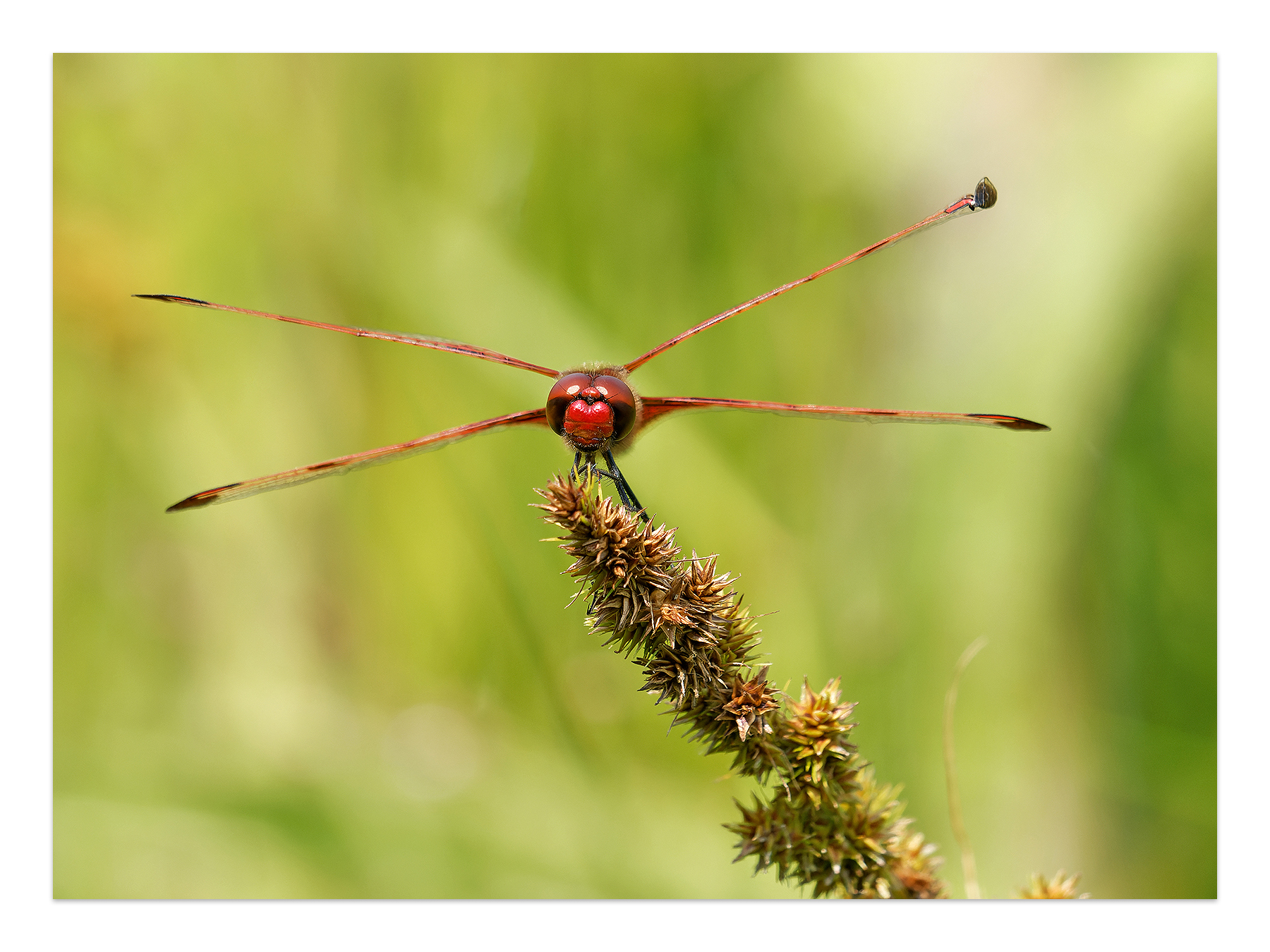
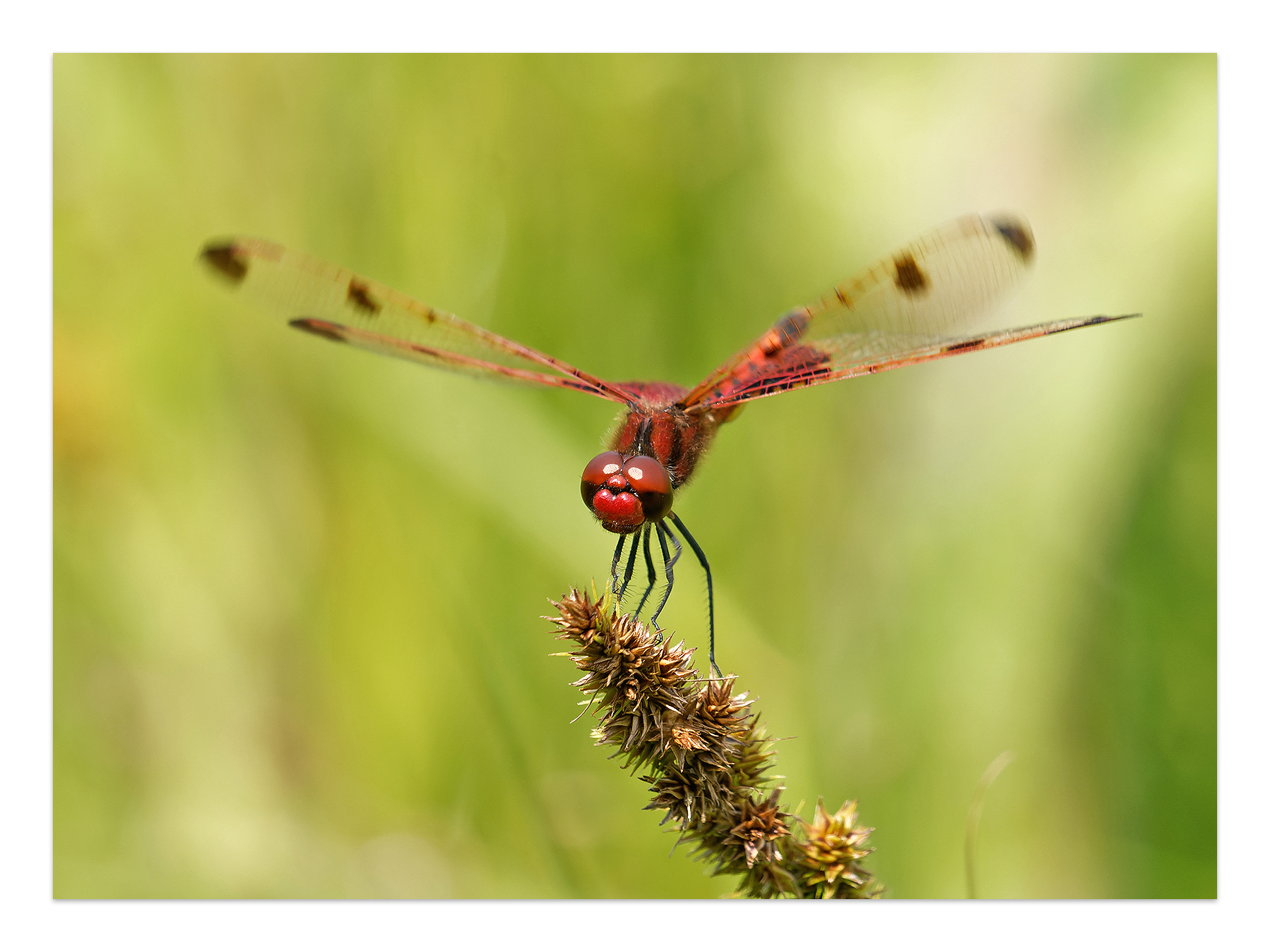
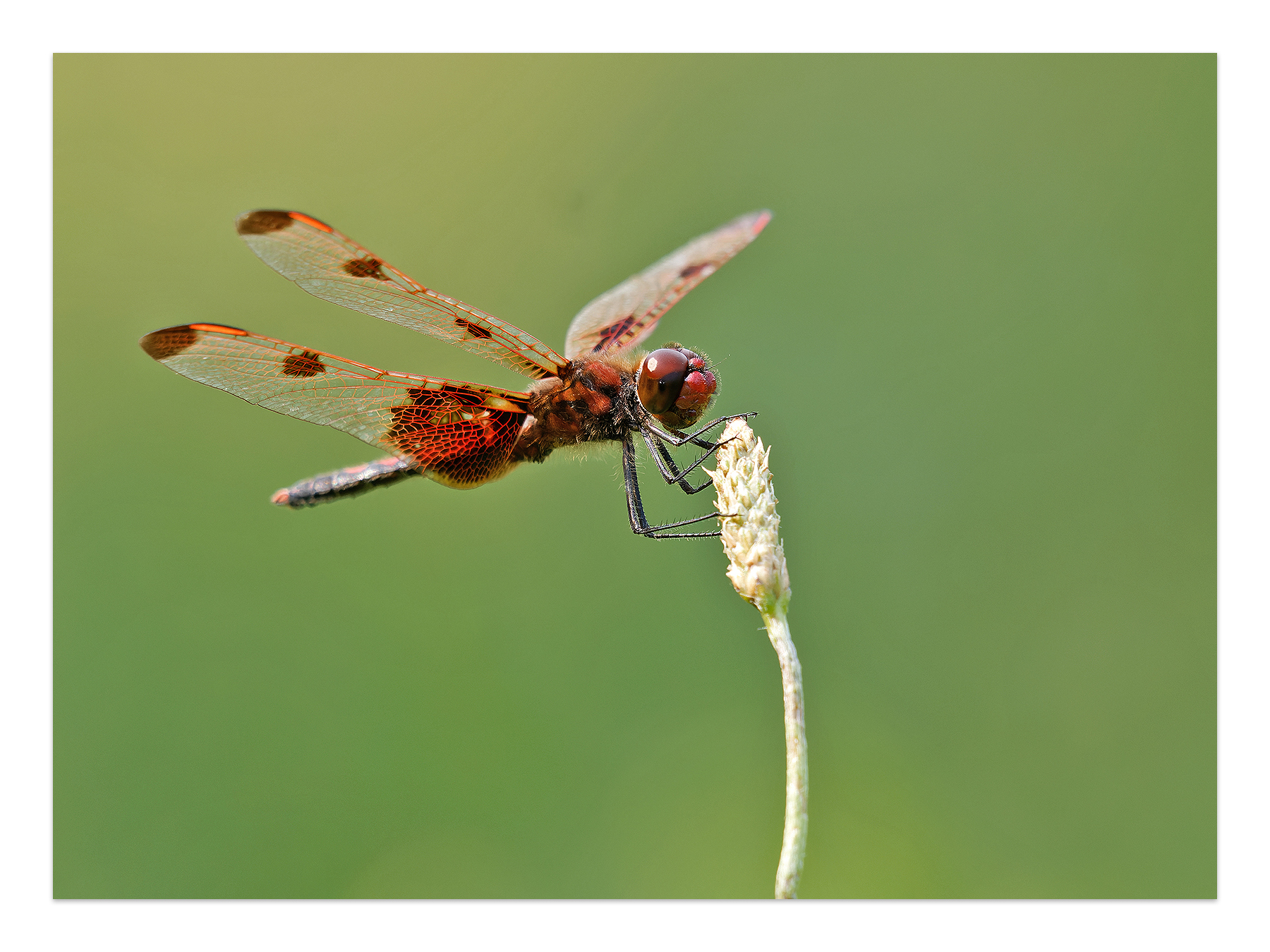
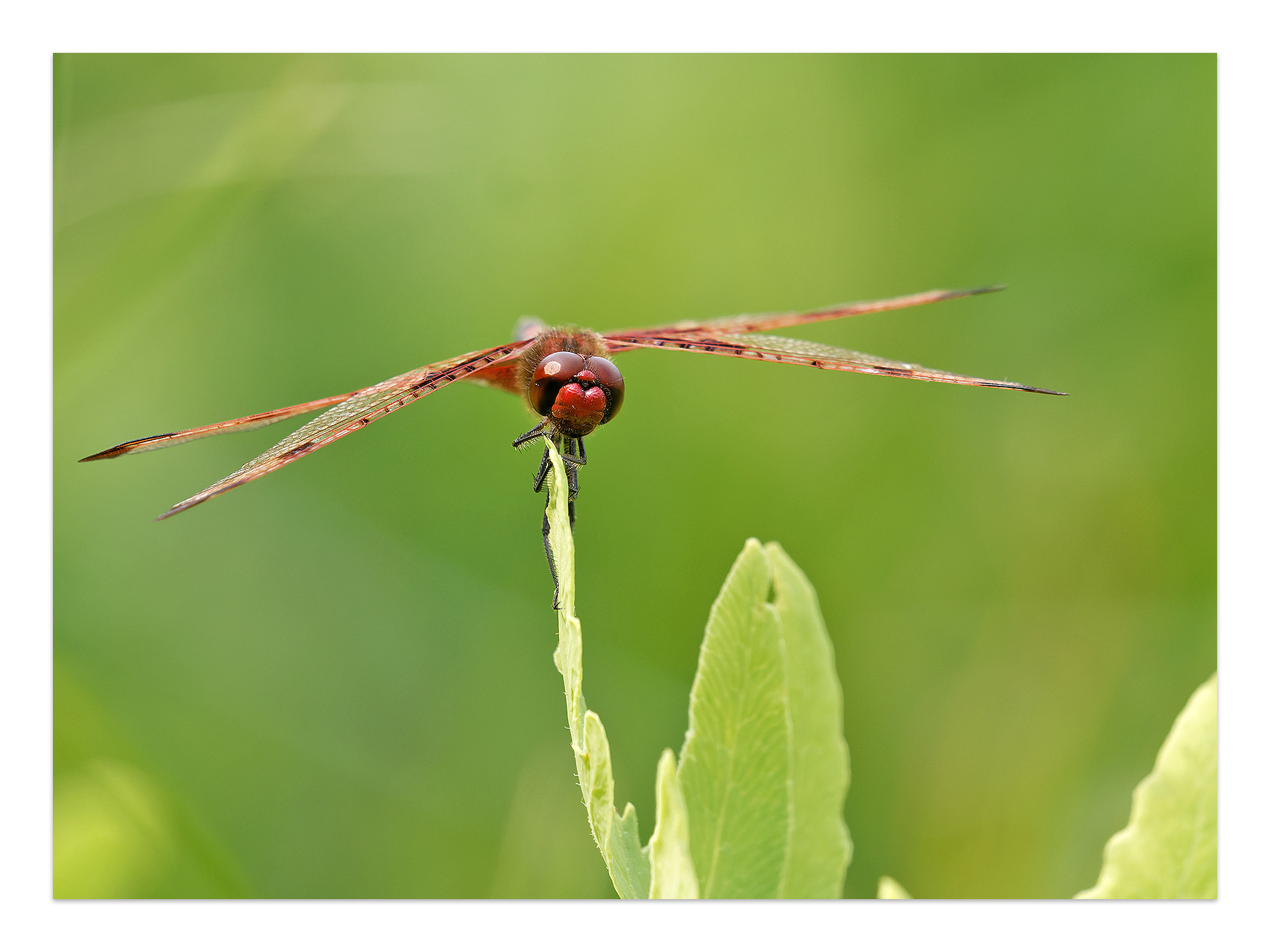
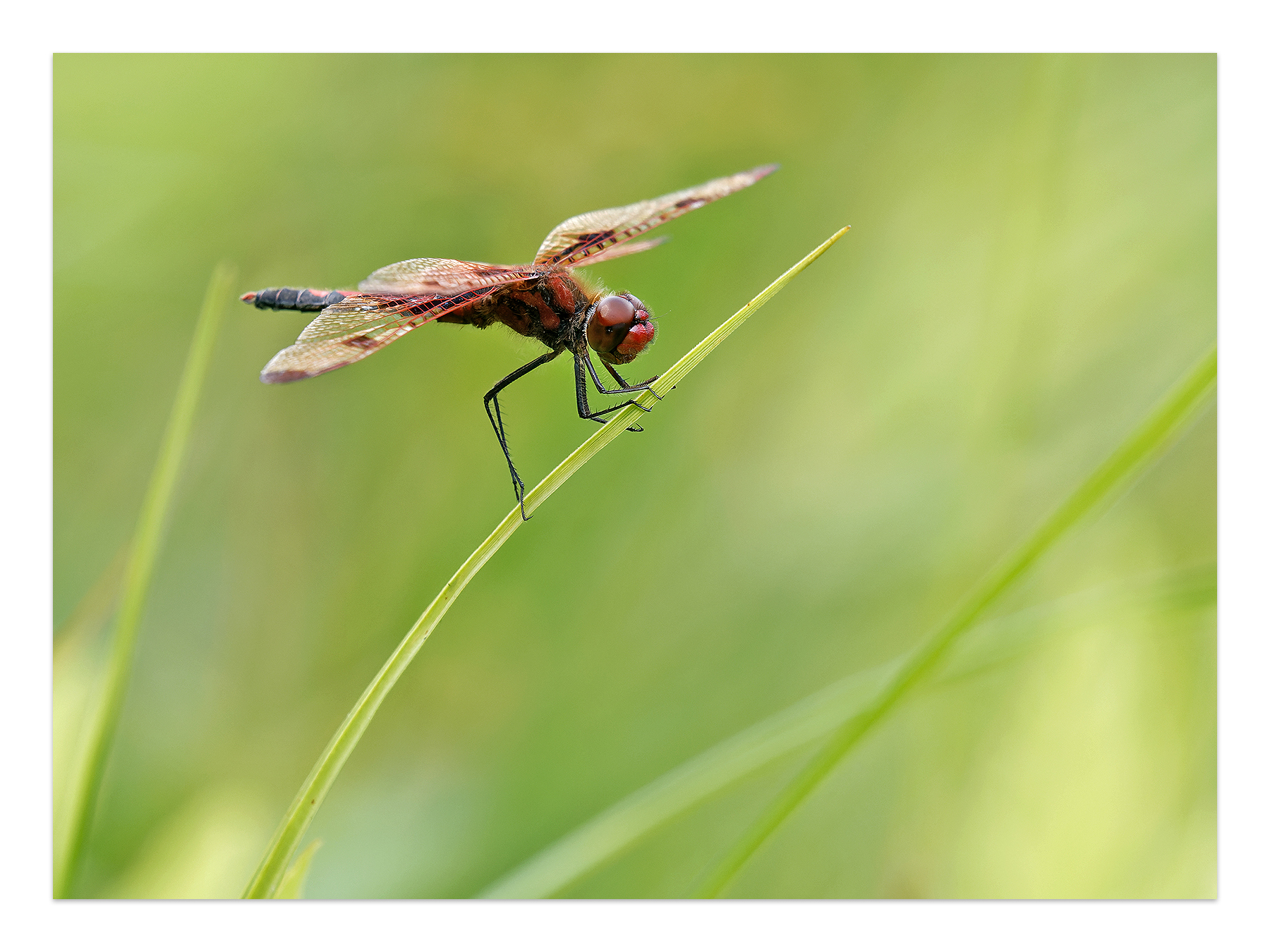
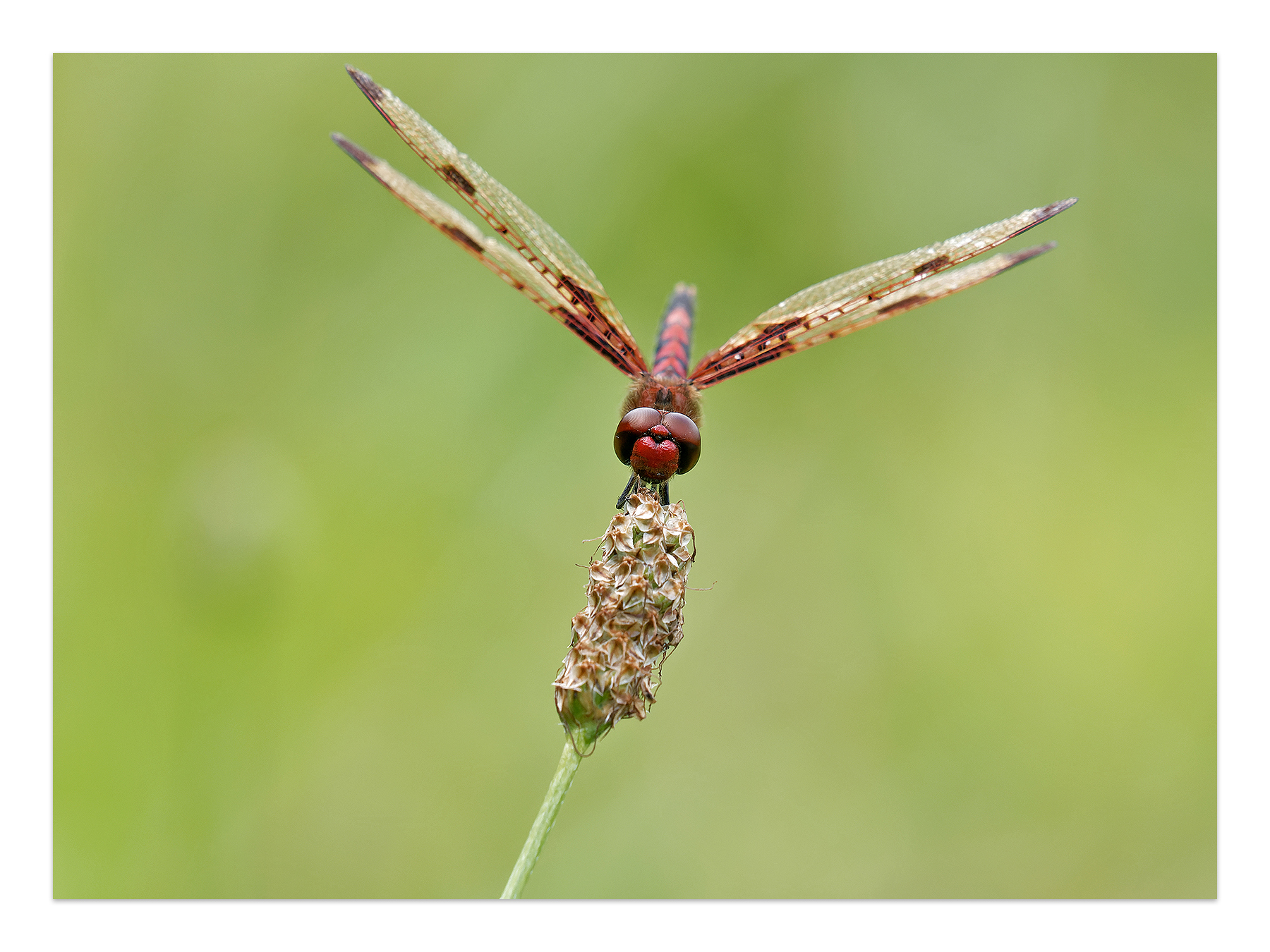
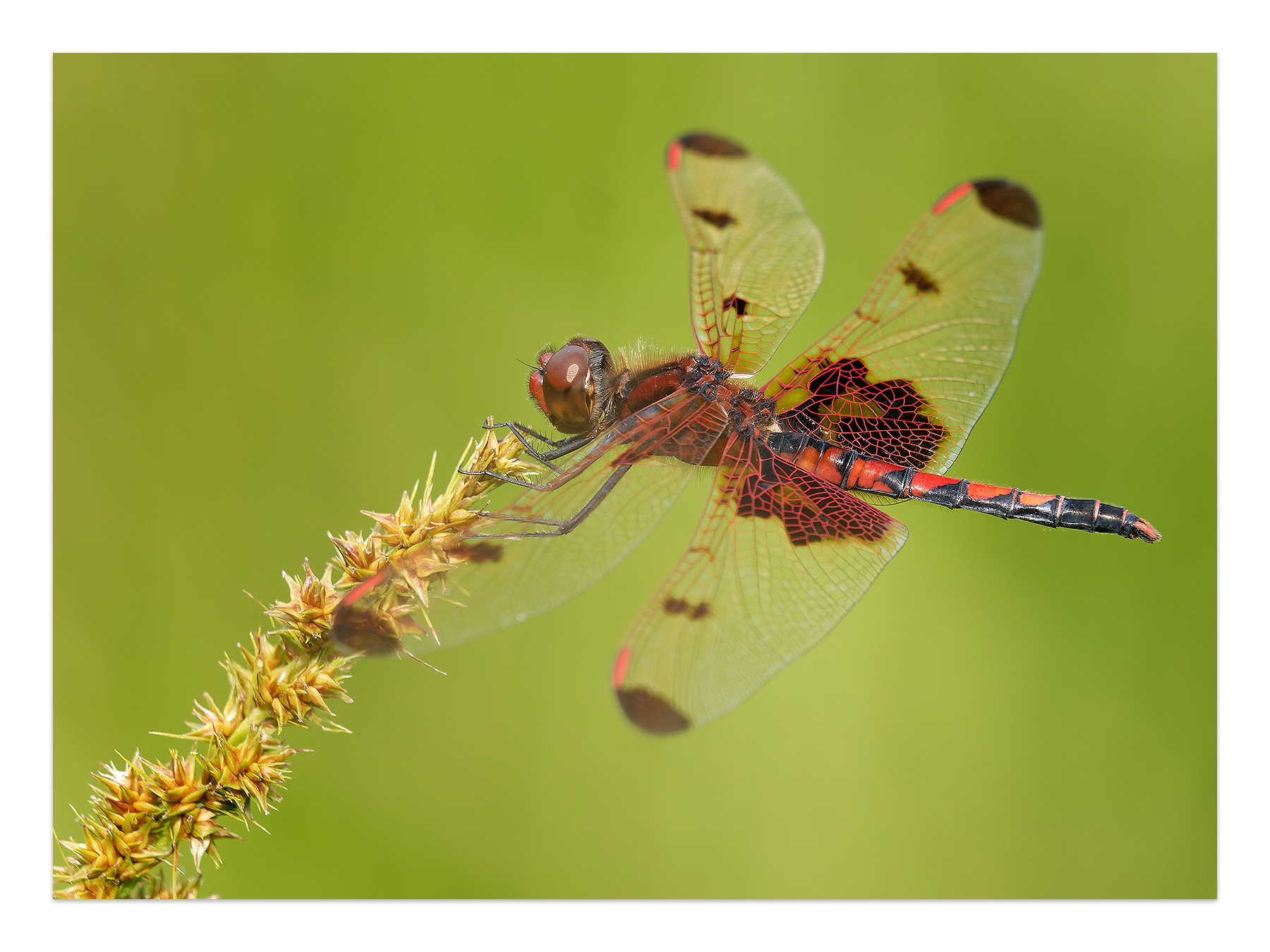
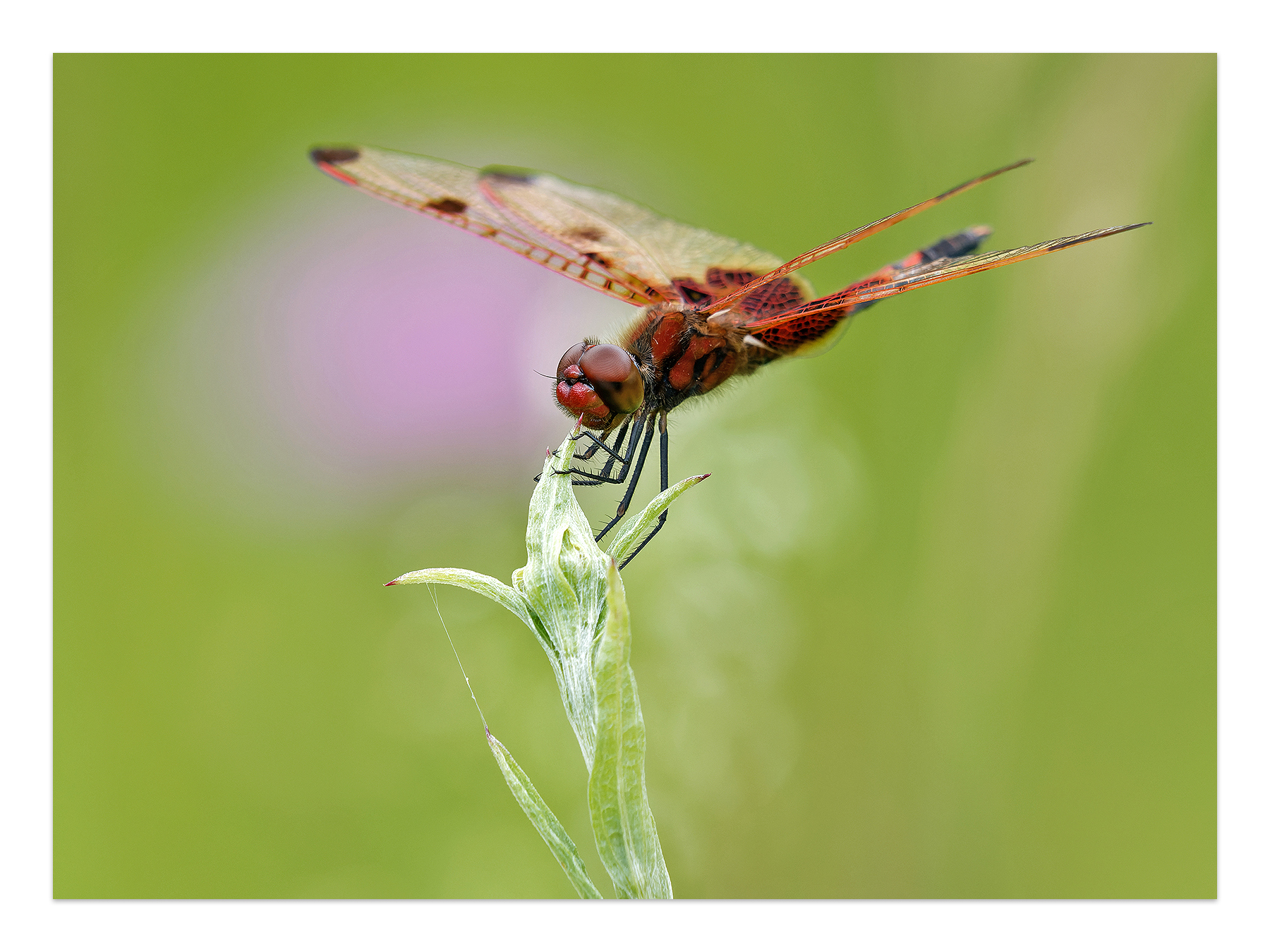
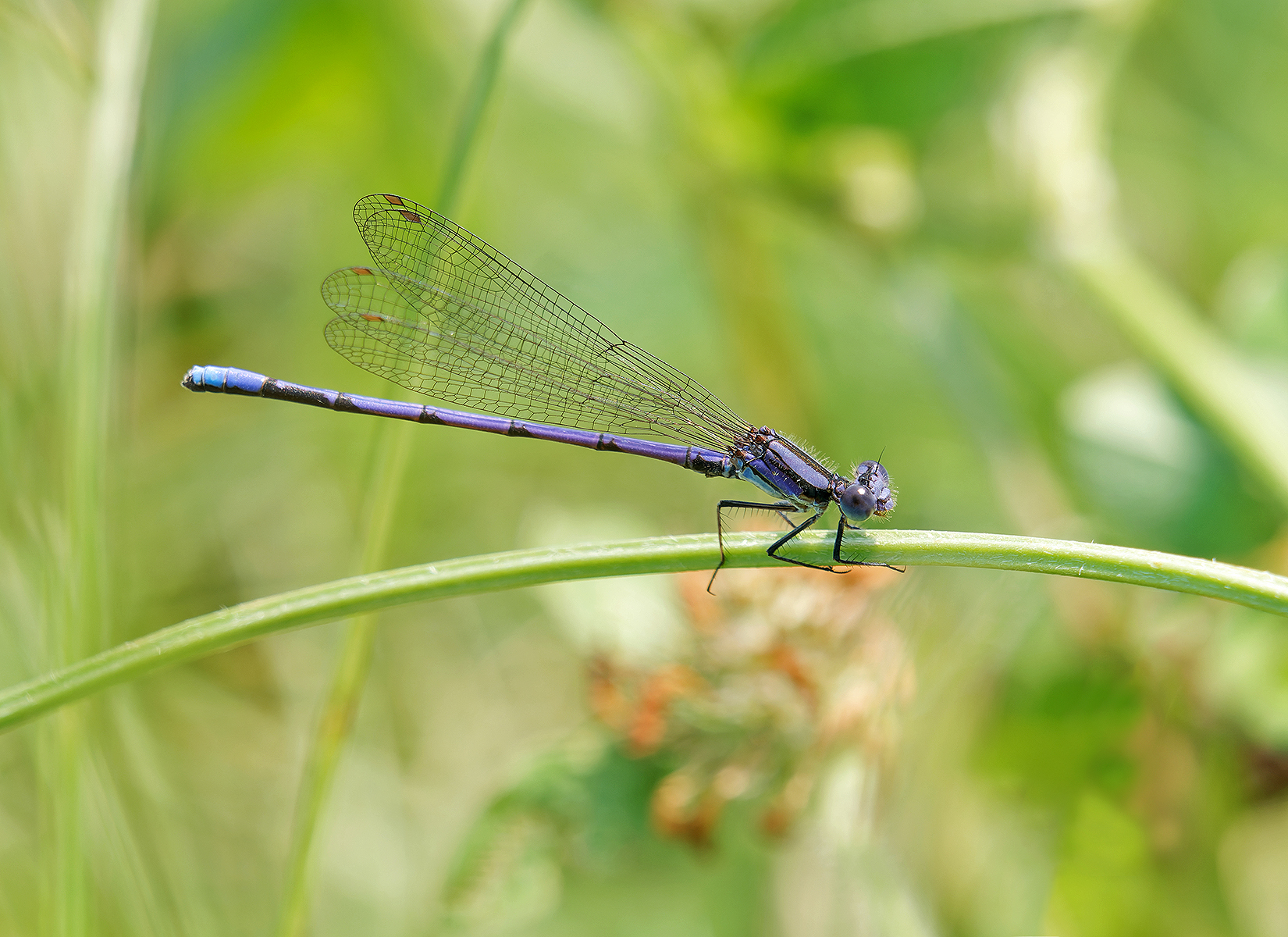
Or possibly a Meadowhawk. Not certain of the ID. I spent a couple hours crawling around in the weeds alongside a local pond yesterday trying to isolate these beautiful little Dragonflies. They each seemed to have their own territory of about fifteen to twenty feet along the shore.
All with the OM-1 and Olympus 100-400
Thanks for taking a look !
Gary
Beautiful shots, Gary! No.'s 3,4,7 & 11 are my favorites.
Dragonflies are amazing -- I need to shoot them more often. They are incredibly territorial -- but I don't have to tell you that.
Happy 4th!
this type of pictures of a dragonfly are so much better and easier to get with the zoom instead of a macro lens
it's very difficult to get close with a macro lens without scaring them .. then I think that pictures like this really do their best as semimacro pictures both in terms of background and that you get a little environment in the pictures
Stunning capture! The crisp detail on the wings and the perfect depth of field really make the subject pop against that buttery smooth background. Beautiful timing and composition, macro work at its finest!
gmccroskery wrote:
Beautiful shots, Gary! No.'s 3,4,7 & 11 are my favorites.
Dragonflies are amazing -- I need to shoot them more often. They are incredibly territorial -- but I don't have to tell you that.
Happy 4th!
Ronny Olsson wrote:
this type of pictures of a dragonfly are so much better and easier to get with the zoom instead of a macro lens
it's very difficult to get close with a macro lens without scaring them .. then I think that pictures like this really do their best as semimacro pictures both in terms of background and that you get a little environment in the pictures
a really nice and good set my friend!
voted
Ronny
Without a doubt Ronny. A long lens is the way to go. And the ridiculously close MFD of this 100-400 makes it a great Butterfly,Dragonfly lens. As I'm sure you're aware, I'm at 800mm only 4 feet away from my subject. Compare that to say the Nikon Z 800 6.3 with a MFD of over 16 feet. Good luck even finding a tiny subject at that distance
Really appreciate your kind comments.
Gary
As other folks have said, short(ish) telephotos are the appropriate tools for photographing dragonflies (and butterflies). My preferred set up on a Nikon cropped frame dSLR is a 300 mm f/4 prime with a 32 mm extension tube. This rig focuses to about a meter/yard and allows one to fill the frame with a dragonfly. (One still needs to crop some with the smaller damselflies.)
Here is a photo of a female calico pennant I made this afternoon with the gear described above. The red spheres on this individual's thorax are mites which sometimes occur on some individuals of many species.
morris wrote:
I think you have mastered the dragonfly images Gary. A delight to view
Morris
Thanks much Morris
---------------------------------------------
johnohio wrote:
They keep getting better and better with every post. Super nice work on these.
John
Thank you John. The best part is after a couple hours of concentrating on these little guys I realize that I've thought of nothing else the entire time.
Tommyy wrote:
Stunning capture! The crisp detail on the wings and the perfect depth of field really make the subject pop against that buttery smooth background. Beautiful timing and composition, macro work at its finest!
Really appreciate your comments Tommyy. Welcome to the forum !
Gary
As other folks have said, short(ish) telephotos are the appropriate tools for photographing dragonflies (and butterflies). My preferred set up on a Nikon cropped frame dSLR is a 300 mm f/4 prime with a 32 mm extension tube. This rig focuses to about a meter/yard and allows one to fill the frame with a dragonfly. (One still needs to crop some with the smaller damselflies.)
Here is a photo of a female calico pennant I made this afternoon with the gear described above. The red spheres on this individual's thorax are mites which sometimes occur on some individuals of many species.
Ext tubes are certainly an option, as your fine image demonstrates. Personally, I find them too restricting and compromising but to each their own. Here's an uncropped Damsel.
OM-1 OLYMPUS M.100-400mm F5.0-6.3 lens400mmf/8.01/500s640 ISO0.0 EV
sum1sgrampa wrote:
Ext tubes are certainly an option, as your fine image demonstrates. Personally, I find them too restricting and compromising but to each their own. Here's an uncropped Damsel.
Yes, there are many ways to solve this "problem".
I'm still 'stuck' in the dSLR era. I have too much value in lenses to consider moving to micro 4/3 yet. However, it seems (in a quick peak around the web) that most of the micro 4/3 lenses which are similar to yours have nice short minimum focus distances which as your photos show are ideal for this type of photography.
Hmmm... I wonder what the CFO would say if I broached the subject of a new camera and a lens or two?
P.S. The damselfly you photographed is a male variable dancer.
fgorga wrote:
Yes, there are many ways to solve this "problem".
I'm still 'stuck' in the dSLR era. I have too much value in lenses to consider moving to micro 4/3 yet. However, it seems (in a quick peak around the web) that most of the micro 4/3 lenses which are similar to yours have nice short minimum focus distances which as your photos show are ideal for this type of photography.
Hmmm... I wonder what the CFO would say if I broached the subject of a new camera and a lens or two?
P.S. The damselfly you photographed is a male variable dancer....Show more →
I get it. Took me a long time to make the switch also. There are "better" options than the 100-400, the Olly 300 f4 comes to mind. But the good news is by today's standards, an OM-1 and Olly 100-400 are dirt cheap.