I'm sure you can generate fake EXIF data with AI if needed. There are various authentication methods for image files, but not so much with jpegs on the internet.
It could be an AI bot online was claiming the image was AI.
EB-1 wrote:
I'm sure you can generate fake EXIF data with AI if needed. There are various authentication methods for image files, but not so much with jpegs on the internet.
It could be an AI bot online was claiming the image was AI.
EBH
Thanks for the response.
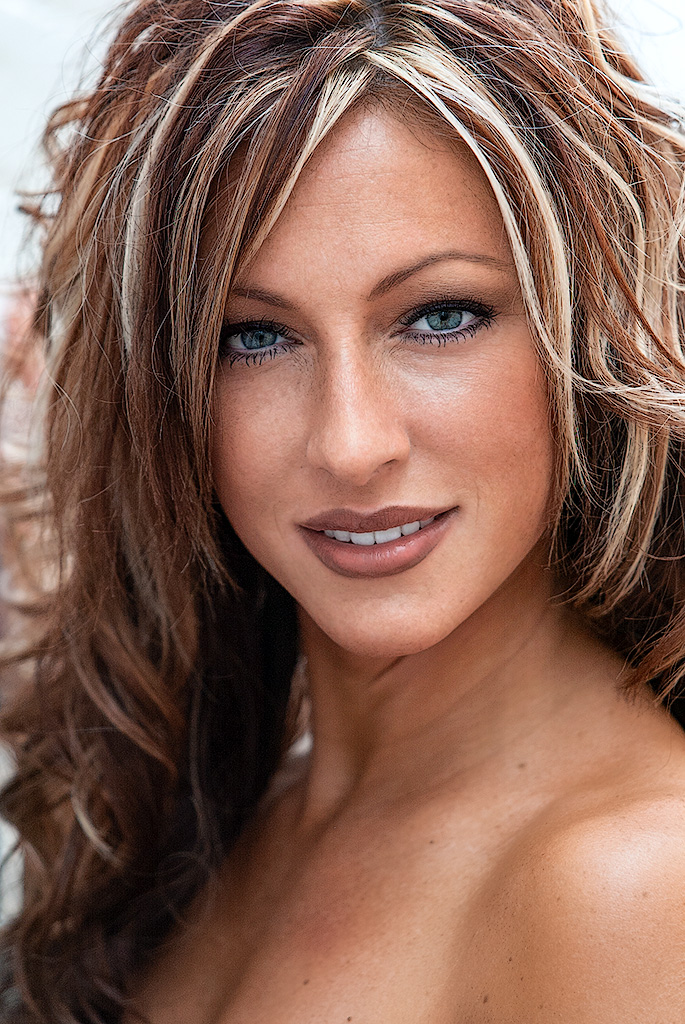
I posted the image on a FB group and one of the responses was that it appeared to be AI generated.
Besides just me saying "nuh uh", it got me wondering if there might be some way to prove it one way or the other.
Funny about the comment you got on FB about it appearing to be Ai. The exif data on the photo above suggests just the opposite. Yeah, suppose it could be generated but personally I doubt that occurred.
What does it matter? You can't determine the facts about any image ever posted or printed. They are all distortions of reality. Every advancement in post-processing technology makes it easier to distort that reality and makes it easier to hide the methods used to distort images.
To me, your image looks slightly AI generated. So what?
A lot of my images look like CRAP, and I can eliminate the EXIF or change it. So what?
I don’t have a solid answer to the “does… AI… have EXIF?”
My first thought would be that it does not, since many of the elements of the EXIF data set would not exist with an image that did not come from a camera or a place — no f-stop, shutter speed, ISO, exposure time, location, camera and. lens used, and much more.
But then it occurred to me that the EXIF data elements could be populated, especially some for things like subject descriptions and so forth.
The easy answer, I suppose, iis simply to download some AI images and look for the EXIF.
Of course, AI can generate all kinds of stuff that isn’t real. If it can come up with an image of something/something that does not exist, then than it can undoubtedly also create EXIF data and populate the data fields.
As far as how to answer someone who accuses you of using AI to create an image, just answer them however you think best. If you are not using AI, then say so. If they don’t let go, don’t worry about it — ignore them.
As far as proving that an image is “real” — or the alternative of proving that it is not — that could be easy or difficult, depending on the image and the situation. If the photo involves a person, you could get the person to attest to its providence.
Can you prove that an image IS AI-generated? There are tells, and there have been articles about it. If you want to dig into an image very deeply you can look for things like differences in the noise content in areas of the frame, for little goof-up like elements of the image in places that make no sense, and so on. One fun trick is to look at an image in the spot-removal screen in and Adobe product, as that can amplify issue around edges and related to noise.
Part of it is the old CCD sensor technology from 2001 and part may be the ways the eyes look. Some of the doubters were probably toddlers when LB was taking that image. At the time I doubt anyone outside of LEO and legal was concerned that chain of custody and data integrity would be needed decades later to demonstrate the image was not AI generated. AI probably doesn't go back to the 1D era anyways.
I don’t have a solid answer to the “does… AI… have EXIF?”.............
---------------------------------------------
EB-1 wrote:
Part of it is the old CCD sensor technology from 2001.........
EBH
In all honesty, there have been some "enhancements" done to this image. I ran it through Portrait Pro for a little skin smoothing and a couple of makeup adjustments. Does that constitute AI generation? Perhaps I'm just not understanding what AI generation entails.
In all honesty, there have been some "enhancements" done to this image. I ran it through Portrait Pro for a little skin smoothing and a couple of makeup adjustments. Does that constitute AI generation? Perhaps I'm just not understanding what AI generation entails.
That would be AI (Actual Intelligence) rather than AI (Artificial Intellegence.). ;-)
But you may be getting at the issue with the photograph. something about it does _look_ artificial, and I can’t quite put my finger on it. Is it something about the model’s eyes? Her expression? I”m not sure. But there is a quality about the image that seems sort of “doll-like” and odd.
No, I’m definitively not saying it is AI, but viewers are reacting to something about it, I think.
gdanmitchell wrote:
That would be AI (Actual Intelligence) rather than AI (Artificial Intellegence.). ;-)
But you may be getting at the issue with the photograph. something about it does _look_ artificial, and I can’t quite put my finger on it. Is it something about the model’s eyes? Her expression? I”m not sure. But there is a quality about the image that seems sort of “doll-like” and odd.
No, I’m definitively not saying it is AI, but viewers are reacting to something about it, I think.
LarryBeemer wrote:
In all honesty, there have been some "enhancements" done to this image. I ran it through Portrait Pro for a little skin smoothing and a couple of makeup adjustments. Does that constitute AI generation? Perhaps I'm just not understanding what AI generation entails.
When people prior to tools like ChatGPT talked about AI in computers, they generally are referring to programs that ran a bunch of "if" statements. Later, programs could use machine learning to figure out what images (in this context) are in focus, or peak action, or had acne in them. I have a feeling that tools like Portrait Pro are at least partially based on machine learning to figure out how to enhance existing portraits.
That's not the same as LLMs, such as ChatGPT, Claude, Grok, etc. create text from whole cloth -- or image generative AI such as Midjouney, or Stable Diffusion that create images from scratch. There are tools that enhance images that combine generative AI with an existing photo as a base to enhance it a way that cannot be done with traditional photography editing techniques.




 Don't let those bozos get to you.
